EFF is on the front lines of the fight against tech-enabled tyranny, but we aren't alone. Our team depends on your help to fight back against the surveillance state.
One of the people who joined the fight for digital rights is EFF client Will Freeman. Will created the website DeFlock.me to reveal the dangers of automated license plate readers (ALPRs)—cameras that collect location data on every vehicle they see and upload that to a massive nationwide police database. Deflock.me turns the tables by enlisting ordinary people to track the locations of tens of thousands of ALPR cameras.
But when the police spy-tech company Flock Safety went after Will's website with legal threats citing trademark law, he saw it for what it was: an attempt to silence critics and dim the light on mass surveillance.
The company will try everything it can to downplay the criticism, but EFF will be right there demanding accountability.
"I was totally unprepared to receive a cease & desist letter. I can see how most people would be bullied into submission by a threat like that. That's when I remembered Dave Maass from the EFF introduced himself via email several weeks before, so I reached out for help," Freeman says.
And that's when EFF stepped in. Recognizing DeFlock.me as a quintessential expression of grassroots advocacy and a form of criticism protected by the U.S. First Amendment, EFF's lawyers helped Will fight back. And the Big Surveillance Tech flinched.
But these battles against Flock's Spying tools rage on. In cities around the country, privacy advocates are pressuring officials to block or end contracts for ALPRs—and winning. The company will try everything it can to downplay the criticism, but EFF will be right there demanding accountability.
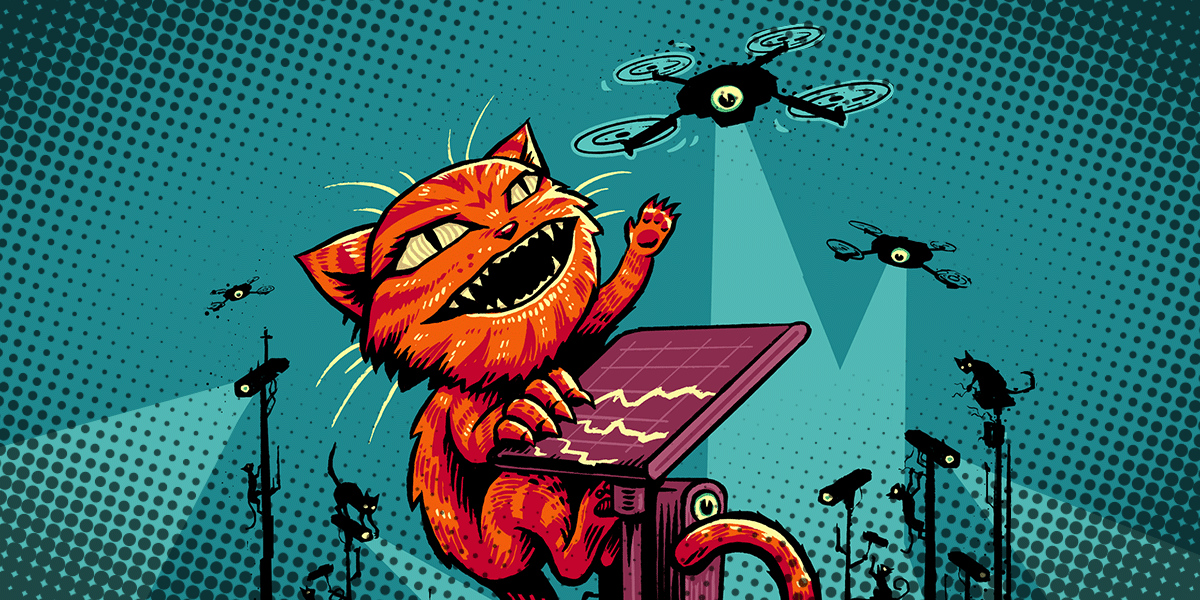
Get the new Claw Back member t-shirt featuring a fierce feline swatting at community surveillance. You might empathize with him, but there’s a better way. Let’s end the law enforcement contracts, harmful practices, and twisted logic that enable mass spying in the first place.
"I'm really grateful the EFF was able to step in and help. Without them, free speech would be only for those wealthy enough to defend themselves against billion dollar companies. We've grown a lot since then and are expanding our efforts to expose and push back against mass surveillance on our streets," Freeman says.
stop mass surveillance tech today when you join EFF
____________________
EFF is a member-supported U.S. 501(c)(3) organization. We've received top ratings from the nonprofit watchdog Charity Navigator since 2013! Your donation is tax-deductible as allowed by law.
Building on the momentum of NVIDIA GTC Taipei at COMPUTEX 2026, the conversation has moved beyond AI experimentation to the industrialization of intelligence. Organizations are rapidly deploying AI Factories – high-performance, purpose-built computing infrastructures designed to manufacture intelligence at an unprecedented scale. AI’s next phase is agentic. Autonomous AI agents are reshaping enterprise operations—and demand security architectures that can keep pace with the speed and scale of innovation. We are proud to announce the integration of Palo Alto Networks Cortex XSIAMwith the NVIDIA DOCA Argus framework, a breakthrough that brings real-time, AI-powered security operations directly into the heart of the NVIDIA AI factory.
By operating on the NVIDIA BlueFielddata processor, DOCA Argus provides situational awareness through real-time memory analysis at the silicon level. This allows Cortex XSIAM to detect kernel-level rootkits and "living-off-the-land" attacks without installing security agents on the host system.
This innovation builds upon our proven foundation with Palo Alto Networks Prisma AIRS, where AI Runtime Security is deployed natively on NVIDIA BlueField, and powered by NVIDIA DOCA, bringing defense in depth. This integration enables offload , isolation and acceleration of security in AI factories.
Purpose-Built Observability for the AI Factory
Deployed consistently across the AI factory,DOCA Argus monitors and correlates AI application processes, network telemetry, and data access to detect sophisticated anomalies that traditional tools miss. With this integration, Cortex XSIAM recognizes the high-fidelity data from DOCA Argus as a native Palo Alto Networks sensor, allowing for better decisions with the new intelligence gathered directly from the host.
By integrating Cortex XSIAM with the NVIDIA DOCA Argus framework, we leverage the innovations of two industry leaders to deliver a seamless, high-performance SecOps ecosystem for your most valuable AI assets.
Why This Integration Is a Game-Changer for SecOps
Process Introspection: Residing on NVIDIA BlueField, DOCA Argus has the unique ability to correlate network telemetry with deep process inspection.
Anomaly Detection: By analyzing traffic and host behavior simultaneously, XSIAM can detect sophisticated anomalies (e.g., lateral movement or data exfiltration) that traditional tools miss.
Unified Intelligence: Cortex XSIAM recognizes the security and alert information in this high-fidelity data, providing security teams with end-to-end visibility and dedicated security dashboards specifically for their AI infrastructure.
Native integration of DOCA Argus with XSIAM
Palo Alto Networks Prisma AIRS Across the NVIDIA AI Factory
The inclusion of Prisma AIRS in NVIDIA AI Factory validated design delivers a unified security platform, providing proactive, defense-in-depth security across critical layers of the AI ecosystem.
Serving as the network enforcement engine for this architecture, Prisma AIRS secures the infrastructure of the modern AI Factory. By unifying protection and visibility into a single automated fabric, it eliminates the traditional trade-off between security and agility, allowing organizations to innovate at machine speed without compromising performance or governance.
Beyond enforcement, the broader Prisma AIRS platform acts as the security blueprint for the entire enterprise AI ecosystem—consolidating fragmented point-tools to slash total cost of ownership while providing end-to-end observability from the data plane to the model layer. The platform scales dynamically alongside your AI clusters to safeguard raw datasets, build Layer 7 micro-perimeters around autonomous agents, and protect proprietary model weights from external threats—all without throttling mission-critical performance.
By deploying the AI Runtime Firewall directly on NVIDIA BlueField, we establish a foundational network security layer that is fully offloaded, isolated, and accelerated. This provides pervasive protection across the Enterprise AI Factory without sacrificing critical compute resources.
Securing the NVIDIA AI factory requires the entire Prisma AIRS suite, which secures the AI lifecycle through five specialized pillars:
AI Model Security: Protects against model tampering, malicious scripts and data exfiltration attacks before deployment.
AI Red Teaming: Advanced threat simulation and vulnerability discovery to enable the safety, security and integrity of your AI and Agents deployments.
AI Runtime Security Firewall: Protects against prompt injection, data leakage, abuse and AI-specific runtime threats across distributed inference flows.
AI Agent Gateway acts as the control plane for the AI enterprise – governing tool calls, model access and external connections. Every agent interaction is enforced through centralized policies.
Agent Identity Security assigns each agent a governed identity with precise permissions and full traceability, ensuring actions are attributable and enforceable.
A Forward-Looking Architecture: Embracing Vera NVIDIA BlueField-4 STX
Looking ahead to the next frontier of enterprise-scale agentic AI, Palo Alto Networks is closely aligning its platform approach with the NVIDIA Vera BlueField-4 STX architecture, extending protections to AI data storage infrastructure. As AI data demands surge, high-throughput, large-scale environments require a move toward hardware-isolated, performance-neutral protection to support the rapid growth of critical AI applications.
Operating within an isolated trust domain on future BlueField-4 silicon, our inline security capabilities will maintain strict, policy-driven controls independently of the host operating system and storage systems. This co-design enables critical forward-looking innovations for data, agents, and context memory, ensuring security is offloaded, isolated and accelerated to support the next generation of the AI Factory.
NVIDIA BlueField-4
Key Takeaways
Our ongoing collaboration with NVIDIA focuses on these essential pillars for reimagining AI security:
Deliver the industry-leading security platform reinvented for the unique demands of the AI factory. High-throughput, large-scale environments require a move toward hardware-isolated and performance-neutral protection to support the rapid growth of critical AI applications. By offloading AI Runtime Firewall directly to the NVIDIA BlueField, we enable zero-latency protection and strict data governance that neutralizes threats (like model theft) while maintaining peak performance and the integrity of your proprietary models.This architecture embeds security directly into the infrastructure, out of the way of app developers.
Transform the SOC and achieve deep visibility across AI environments by leveraging Cortex XSIAM to provide real-time detections and automated response. By connecting infrastructure protection with this centralized intelligence, you can secure the AI journey, from development in the factory to operations at the secure industrial edge.
Zero-Trust for AI Infrastructure: This helps ensure that as your operations scale toward multi-agent architectures, your security footprint is fully offloaded, isolated, and accelerated to protect advanced inference flows, autonomous agents, and data pipelines without throttling performance.
Unified Platform Architecture: Beyond standalone point tools, the Prisma AIRS platform serves as a unified security fabric that spans the entire AI lifecycle—from safeguarding raw data to autonomous agents.
Deploy Bravely
The Palo Alto Networks platform approach delivers a comprehensive solution to secure an enterprise's entire AI ecosystem. By integrating Cortex XSIAM with the NVIDIA DOCA Argus framework, we are extending this comprehensive, deep visibility and protection to the very heart of the AI Factory. With this integration, security teams can leverage an agentless approach via DOCA Argus to gain deep visibility into AI systems hosts by simply downloading the content pack from the Cortex Marketplace.
The Palo Alto Networks platform secures the entire AI journey, protecting the infrastructure, intelligent applications, agents and data it produces. With the inclusion of Prisma AIRS in NVIDIA Enterprise AI Factory Validated Design, we have delivered the blueprint for secure AI.
Palo Alto Networks and NVIDIA are redefining security for the AI factory. Together, we are ensuring your security architecture is as fast, scalable and innovative as the intelligence it protects, empowering you to scale AI production with reduced latency and stronger governance. Discover more through the Palo Alto Networks partner directory, or read the official press release from NVIDIA for more details.
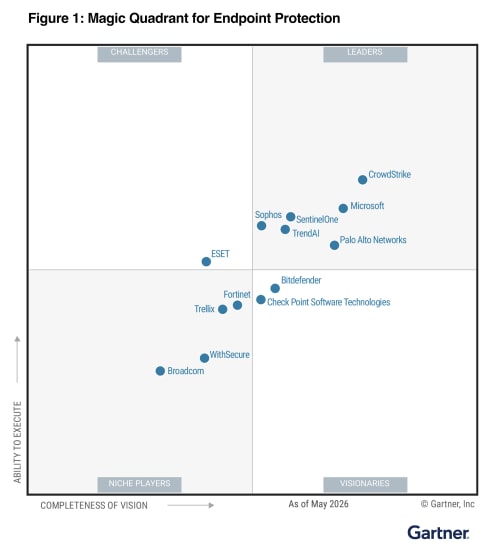
I am incredibly proud to share that Palo Alto Networks has been named a Leader in the 2026 Gartner® Magic Quadrant for Endpoint Protection Platforms for the fourth consecutive year. For us, this recognition is a testament to our team's relentless vision as we continue to define endpoint defense—from the pioneer days of XDR to the new frontier of agentic AI.
We believe our repeated recognition as a Leader is built on a single, uncompromising commitment to our customers and partners: empowering organizations with reduced overhead, rapid threat response, a strengthened security posture, and the resilient protection required to close the most critical security gaps. We are now leading the shift into the agentic era. While AI agents significantly boost enterprise productivity, they also introduce novel attack surfaces that legacy EDR tools are unable to protect. As the pioneer of XDR, we are committed to defining the next generation of cybersecurity by securing this new frontier.
Cortex® XDR is helping customers:
Secure Agentic AI with Koi: Gain unprecedented visibility, guardrails, and control over AI agents and agentic tools before they become a liability.
Stop the Unseen: Leverage battle-tested prevention powered by behavioral analytics, and industry-leading automation and response.
Unify Your Defense: Consolidate your endpoint and workspace security with a proven, four-time industry Leader.
We are incredibly proud to be recognized as a Leader once again, an acknowledgement that belongs just as much to our customers and partners as it does to us. Your trust, feedback, and real-world challenges keep us sharp and dictate our roadmap. At the end of the day, our continued leadership is built on one core promise: make each day more secure than the day before.
To get the full story and a comprehensive analysis of the endpoint security market, I invite you to read the 2026 Gartner Magic Quadrant report.
Gartner, Magic Quadrant for Endpoint Protection Platforms, By Deepak Mishra, Evgeny Mirolyubov, Nikul Patel, May 29, 2026
Gartner and Magic Quadrant are trademarks of Gartner, Inc. and/or its affiliates. Gartner does not endorse any company, vendor, product or service depicted in its publications, and does not advise technology users to select only those vendors with the highest ratings or other designation. Gartner publications consist of the opinions of Gartner’s business and technology insights organization and should not be construed as statements of fact. Gartner disclaims all warranties, expressed or implied, with respect to this publication, including any warranties of merchantability or fitness for a particular purpose.
In the rush to block young people from certain parts of the internet, lawmakers are creating a privacy and security nightmare for everyone. This scenario is already playing out globally. Help us stop it and keep the web open and accessible for all.
Even with the best intentions, every online age verification scheme has the same result: users are forced to reveal sensitive personal information to third parties simply to access the web. Once that valuable data is centralized, it becomes an immediate target for leaks, hacks, and misuse. This isn’t hypothetical: it hasalreadyhappenedseveraltimes.
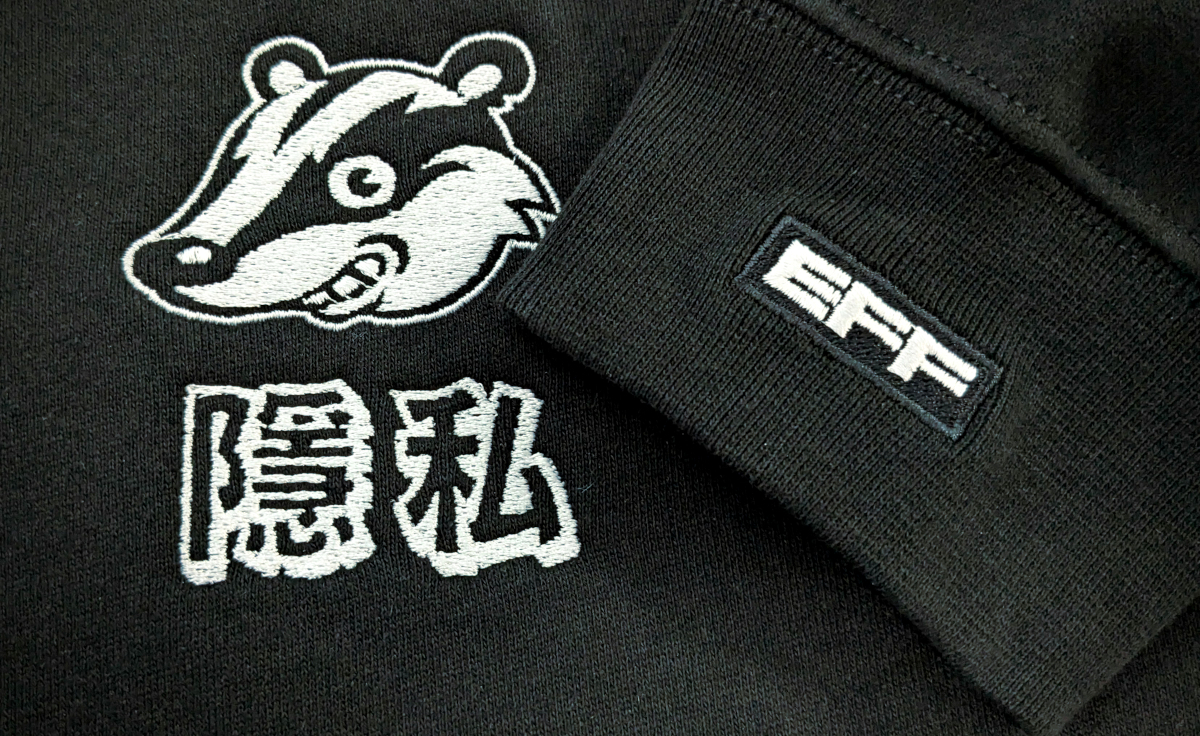
Support digital rights in EFF's new Claw Back member t-shirt and Privacy Badger Crewneck.
Thanks to our members, EFF is on the front lines fighting against online age gating and identity verification online. We’re working with lawmakers to pass better policies, educating the public, and fighting the wildfire of age verification proposals around the world. Now all we need is you.
🐝 No, It’s Not a Bug
We all want young people to be safe online, but we don’t need to trade everyone's digital rights to achieve it. These new restrictive mandates are used to justify government-led censorship and expanded surveillance. That's no accident.
Whether you trust today’s lawmakers or not, handing anyone keys to new forms of censorship and surveillance is a serious risk. Because history shows us that these powers are always abused. It’s time to demand better.
EFF is a member-supported U.S. 501(c)(3) organization. We've received top ratings from the nonprofit watchdog Charity Navigator since 2013! Your donation is tax-deductible as allowed by law.
We recently updated our privacy policy for the first time since 2022. Most of the changes are clarifications, reorganizations, and improvements in transparency, particularly around how third-party tools that run parts of our site operate. But one change is substantive enough that we want to address it directly.
The Change You Should Know About: Opt-In Email Tracking
We want to know how we’re doing with our advocacy: which campaigns get your attention and which do not, which topics you are very interested in, which less so, and which not at all. It helps us to do our work better and to prioritize or rethink our strategies as we push to build support for freedom, justice and innovation around the world.
So, to give us a rough picture of how we’re doing, we are introducing the option for you to provide explicit, opt-in consent for us to see how you interact with the emails we send you. That includes whether you open emails, and whether you click on the links inside them.
We know what you’re thinking: Doesn’t EFF strongly oppose nonconsensual tracking? You bet we do. Sneaky email tracking is ubiquitous on the web and EFF’s opposition to it remains unchanged. We have never used email tracking pixels and we’re not changing that. We’re not building profiles and we’re not sharing the data and we’re definitely not selling it.
But we do want to give you the option of allowing us to learn about how our communications are landing with you. Here’s how consent will work. We will ask, and if you say yes, we’ll be able to see whether you opened an email or not, and whether you clicked on any links. That's it.
If you say no, or ignore the ask entirely, nothing will change and we’ll do no tracking.
If you say yes, you can change your mind and opt out at any time by clicking an opt-out link in any future email or by contacting membership@eff.org.
We have heard many EFF members say that EFF is one of the only organizations that they trust with consent to track their emails. That trust is important, and we do not take it lightly. But it led us to think that if we ask, enough of you would agree that we could have a better picture of how our campaigns and other emails to you are landing and that, in turn, could help us decide what to double down on and what to change.
By giving you a real ability to consent, EFF is taking a very different path than most of the web. Asking isn’t the norm; it’s more or less never an option to say no and dark patterns often make it hard even if it looks like you can. Unfortunately, estimates have shown that 2/3s of emails received by users contain tracking, regardless of whether the senders received explicit consent at the time when a recipient signs up to receive their mailings. Automatic, nonconsensual tracking doesn’t have to be the default, and it shouldn’t be.
We hope our approach works and it inspires others. It shouldn’t be an abnormality that users are not tracked by default, and that only users who feel comfortable doing so choose to consent to tracking. We hope that our example will show mailing platforms, organizations, and users that a privacy-protective approach is better and worth doing and can still give an email sender a solid understanding what campaigns and other messages resonate with recipients. We weighed this decision carefully. We know that email tracking is something we've criticized when used covertly or without meaningful consent and that many people don’t like at all. For EFF, an opt-in requirement isn't a formality. It's the key distinction between a sneaky strategy and an aboveboard relationship with you. And to us, it’s just a common sense approach based on respect.
It’s also consistent with our advocacy and approach to technology. We have said for many years that strong consumer privacy laws must require real opt-in consent before data is collected. And we have walked our talk in other ways as well, including in pushing for Do Not Track policies and in Privacy Badger, which protects you from ads and trackers that violate the principle of user consent.
Again, this behavior has been our suggestion for privacy policies, and privacy laws. In 2022 we released a guide for nonprofits that recommended the following:
Not tracking email open rates can, unfortunately, sometimes cause list “hygiene” problems, because it becomes difficult to know whether email subscribers on your list are still interested. You can send occasional emails to ensure subscribers want to receive emails, either using open or click tracking, and informing people that the purpose of that specific email is to determine active subscribers. The essential point is to let users know when you are using tracking, and to do it in a limited way when possible....
The Internet Archive found that while they preferred to use no open tracking in their emails to subscribers, too many unreachable email addresses had been added to their list over the years, and some email addresses had even become spam traps. To continue working with their email service provider, they needed to activate some tracking. They needed email open data to know whether an email address was still active or not; but they didn’t need or want gender, age, or demographic data. They settled on informing users that their email open rates are being tracked, and offering the alternate option to sign up for plain-text versions of their emails, which won't transmit any data at all.
In 2019, we recommended that all strong consumer privacy laws must include opt-in consent for data collection. We wrote:
Right to opt-in consent
New legislation should require the operators of online services to obtain opt-in consent to collect, use, or share personal data, particularly where that collection, use, or transfer is not necessary to provide the service.
Any request for opt-in consent should be easy to understand and clearly advise the user what data the operator seeks to gather, how they will use it, how long they will keep it, and with whom they will share it. This opt-in consent should also be ongoing—that is, the request should be renewed any time the operator wishes to use or share data in a new way, or gather a new kind of data. And the user should be able to withdraw consent, including for particular purposes, at any time.
Opt-in consent is better than opt-out consent. The default should be against collecting, using, and sharing personal information. Many consumers cannot or will not alter the defaults in the technologies they use, even if they prefer that companies do not collect their information.
We are sticking to those recommendations, which unfortunately are not yet the law, and following our principles.
We hope that you will feel comfortable opting in, but we also respect that you need to make that decision for yourself, and that you may need to change it as you go. We’ll do our part to make that as clear and easy as possible. And if you do agree, we’ll be grateful for getting a chance to learn a little more about how we’re doing, hopefully in ways that can make us even more effective at ensuring that technology supports freedom, justice and innovation for all the people of the world.
Other Changes: Clarity and Stronger Protections
The rest of the update is largely about being more precise and provide more transparency into our practices.
Cookies on eff.org: The new policy tightens our cookie practices. Previously, we carved out exceptions for "remember me" and logged-in users; now we don't use persistent ID cookies on the eff.org domain at all. We also clarified that other EFF-operated sites‚ like acteff.org and shopeff.org‚ have their own cookie policies and that our policies aren’t the ones that apply there. We’re not happy that you have to navigate multiple policies like this, but it’s one of the ways that the cookie ecosystem has gotten unfortunately complex. We want to be sure you know that and know where to look for all the information.
Third-party tool transparency: Similarly, while the vast majority of EFF’s public-facing websites, online tools and tech projects are created internally, self-hosted, and self-maintained, some of them are not. In this new policy, we are working to be more detailed and explicit in the new policy about those third-party services, and how they operate under their own privacy policies, not solely ours.
To help you understand exactly what choices you have when using these tools, we're publishing dedicated Privacy Guides for each of them. The first is live now for our shop, which runs on Shopify: EFF Shopify Privacy Guide. Guides for our other third-party tools are coming soon. As always, we recommend installing Privacy Badger to limit exposure from third-party tracking.
Overall, EFF believes that when a project like the Atlas of Surveillance doesn't exist, and we think it should, we build it and maintain it. But what matters most to us is protecting your digital rights. So the time required to maintain and upgrade the tools we have built has to be weighed against our need to build new projects to fight new fights. And sometimes, a tool that was needed when we built it, like EFF’s Action Center, can be replaced by something that can take some of the weight off our internal staff.
To help make space for new projects, we carefully investigate services we rely on—like our campaign tools, payment processors, and online shop—and look for third party options that are the best in the industry and offer a level of privacy our users deserve. In this new privacy policy we try to give you as much information about those third-party services as we can.
GDPR data management: We added a clear, dedicated process for users in the EU and elsewhere to request deletion of their personal data. Email info@eff.org with the subject line "GDPR Data Deletion Request" and we'll respond within the legally required timeframe.
Data retention: We reorganized and clarified how long we keep different types of records (communications, financial records, donation paperwork) into a cleaner list. The substance is unchanged, but the structure should make it easier to find what's relevant to you.
Action Center: You may notice that the previous policy included a dedicated section on our Action Center - how we handled your campaign participation data, what we retained, and so on. That section is gone because we're transitioning our campaign tools to a third-party provider. This is the kind of situation the new third-party transparency language addresses: that provider operates under its own privacy policy, which we'll link to in its dedicated Privacy Guide. Our commitment to your privacy in those contexts doesn't change‚ it just lives in a different place now.
What Hasn't Changed
The fundamentals remain what they've always been: we don't sell your information, we don't share it with third parties without your real (not manufactured or dark-patterned) consent, outside of legal requirements we cannot change. We actively push back on legal demands we believe are improper. EFF's mission is to protect your digital rights, and our own practices will continue to reflect that. The changes we’ve described above will help us in that mission.
The evolved NextWave Partner Program raises expectations while strengthening enablement, incentives and the Partner Development Fund to support partner growth and reinvestment.
Levels and specializations are more closely aligned to next-generation security priorities, helping partners deepen expertise and making partner distinctions more meaningful for customers.
These changes help create a more capable partner ecosystem, with deeper capabilities, greater alignment with customer needs, and a stronger foundation to support the future of security.
Cybersecurity partnerships are operating in a more demanding environment. As customers consolidate vendors, modernize security architectures and adopt artificial intelligence (AI) across the enterprise, they’re placing greater expectations on partners to help guide decisions across network, cloud and security operations. They also want clearer evidence that their selected partners have invested in growing the skills and expertise needed to support more integrated and fast-changing security priorities.
The Palo Alto Networks NextWave Partner Program has evolved to help partners meet these heightened expectations. As security delivery becomes broader and more strategic, customers are placing more weight on what a partner’s credentials actually represent. That’s why stronger performance and enablement requirements are part of our reimagined program. The new requirements help partners better understand what they need to build real capability and advance within our program. They also give more substance to the designations customers see when choosing a partner.
Our objective was never simply to raise the standards for engagement in our program. It was to inspire partners at all levels – Registered, Innovator, Platinum and Diamond – to invest deliberately and continuously in learning, so they can deepen their proficiency and earn specializations that will help them stay competitive and build and deliver the future of security.
Why Requirements and Incentives Had to Evolve Together
Raising performance expectations was only part of the work in evolving the NextWave program. We also wanted to give our partners compelling reasons to invest in the capabilities Palo Alto Networks wants to see scale. That meant looking more closely at how standards, specializations and incentives fit together, and how we can help accelerate mutual success.
We are providing our partners with better access, better visibility and better support for learning and enablement. In turn, we are recognizing and rewarding partners for their efforts to develop and maintain the competency, capability and capacity needed to go to market successfully with Palo Alto Networks.
This approach, shaped largely by partner feedback, is designed to make incentives easier to access while still directing partner investment toward deeper specialization and next-gen security capabilities. Program levels and product specializations help define what partners need to do to grow within our program and to excel at selling, supporting or delivering Palo Alto Networks products and services.
The program’s Partner Development Fund adds another dimension to this evolved model. It gives all partners a more deliberate way to reinvest a portion of their earned incentives into the capabilities they need to stay competitive and innovate, including training, certification, workshops, demos and other strategic activities that help strengthen their team’s overall readiness over time. In that sense, the program is both rewarding current performance and driving mutual growth.
Training and Enablement that Move with the Market
As we continue to strengthen our partner program, Palo Alto Networks is refreshing courses, updating certification paths and redesigning training to better reflect the customer needs that partners are helping to address today, including emerging areas like AI security.
Notable improvements:
Introduced more online, on-demand learning experiences across all products and across all roles, including sales, technical presales and post-sales professionals.
Expanded access to lab environments for hands-on experiences, as well as access to perform demos for customers.
Injected AI roleplay into learning experiences to help sales and presales teams improve their ability to educate customers about our products and services while addressing questions or concerns.
Instituted a continuous education component that encourages partners to stay current with certifications and other program requirements, so they don’t need to be tested annually.
Our aim with these changes is to keep learning options relevant, practical and easier to engage in and apply in practice. We believe product and services training should help partners deepen expertise, validate skills and stay current as technologies, customer expectations and threats shift. It should also recognize the experience many professionals already bring to the table, with learning paths that are rigorous without being repetitive or unnecessarily burdensome.
Ultimately, the impact of providing more effective enablement for our partners (and outlining clear requirements for advanced specializations and total certified staff for specific partner paths) positively impacts the customer experience through more informed conversations, stronger design guidance and more consistent support across the entire security lifecycle.
A More Focused Program to Help Accelerate Next-Generation Security
Part of what makes the current evolution of the NextWave program so significant is its focus on helping partners build the bench strength they will need to stay competitive as security becomes more platform-driven, AI-influenced and interconnected across domains. The program also encourages bookings tied to next-generation security priorities, helping direct partner investment toward the areas customers are prioritizing most. That focus is especially visible in areas such as Idira®, Prisma® SASE, Cortex® Cloud and Cortex, where customer demand and program priorities are increasingly aligned.
The benefits of that alignment extend beyond the partner organization. Customers gain access to partners that are better prepared to support more connected security strategies without adding unnecessary complexity. They can work with partners that are building expertise around the technologies and use cases becoming more central to modern enterprise security programs.
This kind of alignment also strengthens the broader ecosystem. It creates a clearer connection between customer needs, partner capabilities and Palo Alto Networks platform strategy. It’s the value exchange in cybersecurity in action: Ongoing investment in knowledge, skills and services that helps partners grow while giving customers faster time-to-value realization.
What Stronger Program Requirements Mean for Customers
For customers, stronger requirements for our Nextwave program can make partner distinctions more meaningful. A specialization or program level should point to something real, such as training completed, certifications maintained and expertise developed. While those accomplishments don’t guarantee security outcomes, they do provide evidence that a partner has built the depth needed to support more complex environments.
Partner distinctions are also reinforced through an active compliance framework rather than treated as a one-time achievement. Partners have ongoing visibility into their progress and can be recognized immediately throughout the year as they meet requirements. Reviews take place on a defined cycle, and status changes are subject to oversight. Taken together, these elements add credibility to the designations customers see and give them more weight in the partner selection process.
This becomes increasingly important as customers look for security partners that can do more than support a single transaction or product decision. Many are seeking guidance at the architecture stage and during implementation, and expecting continuity as IT environments evolve and new risks emerge. It also raises the level of scrutiny that partner selection deserves:
Is a partner specialized in the areas most relevant to the customer’s priorities?
Do they have the certifications and technical expertise required to support the solutions being considered?
Can they provide the level of guidance, implementation support and ongoing engagement the relationship will require over time?
In a fast-moving security market, questions like these can help customers make more informed decisions about which partners are best equipped to deliver long-term value.
What Partners Should Do Now
Now that we’ve introduced our new program requirements, partners should take stock of whether their certifications, specializations and go-to-market priorities are aligned to where customer demand and the future of security are headed. Steps partners can take:
Evaluate your current book of business: Consider where you may be missing growth opportunities because the right specializations aren’t yet in place. Those gaps can affect both business momentum and the ability to earn incentives.
Reflect on the current direction of your practice: Which customer conversations are signaling the need for deeper expertise? Which areas of next-generation security are becoming more central to your future? These questions can help guide your next investments by clarifying where your practice needs to build more depth sooner rather than later.
Review certifications and specializations with growth in mind: Look at where new specializations could open the door to additional incentives and stronger alignment with customer demand, while ensuring your team’s existing certifications and specializations remain on track for the next compliance cycle.
Partners that take the time now to assess our new requirements and create a plan to meet them will be better positioned to advance within and benefit from our partner program, while developing the capabilities needed to help build the future of security.
Partners with a designated Palo Alto Networks Channel Business Manager can get detailed data and analysis now on their progress and performance in the Nextwave program, including the status of their certifications and which team members have engaged in training, demos and more. In the second half of 2026, we plan to make the same dashboard capabilities and insights directly available to all partners, so they can understand exactly what they need to do to excel in our program. These red-yellow-green dashboards are simple but powerful tools, and we are eager to put them in our partners’ hands soon.
Over the past few weeks, we have reached a critical turning point in cybersecurity. Following the launch of our Frontier AI Defense initiative, we’ve continued testing the latest frontier models (including Anthropic’s Mythos and Claude Opus 4.7, as well as OpenAI’s GPT-5.5-Cyber) as part of the Trusted Access for Cyber program.
The urgency to innovate continues to ramp up. As Lee Klarich recently detailed in his Defender's Guide to the Frontier AI Impact on Cybersecurity, our current landscape is defined by a brief three-to-five-month window to gain a strategic advantage over attackers. To outsmart AI-based exploits, enterprises must decisively address vulnerabilities across their code and stand up the right security stack to enable real-time, automated defenses.
With such a ticking clock in front of us, acting rapidly and at-scale to support our customers is paramount. Today, we exponentially grow our scale of delivery by expanding our Frontier AI Alliance.
Since introducing this initiative, our collaboration with initial partners – Accenture, Deloitte, IBM, NTT DATA, and PwC – has already begun changing the defensive math for our customers. This is a moment that calls for radical collaboration across the entire security ecosystem, so today we are proud to welcome a new cohort of strategic partners – Cognizant, HCLTech, Kyndryl, TCS, Infosys, McKinsey & Company, Orange Cyberdefense, and Wipro – who will join us in delivering AI readiness at scale.
While this expansion significantly increases our reach, this is only the beginning. We are committed to a continuous evolution of this alliance and will be adding more critical partners in the future across the globe to ensure our customers have the most robust defense network possible.
By combining our technology with these partners’ deep consulting expertise, we are delivering:
Machine-Speed Security: Natively integrating Frontier AI to provide real-time, automated defense against autonomous threats.
Intelligence-Led Resilience: Leveraging Unit 42® experts to fast-track the discovery and remediation of exposures at machine speed.
Hardened Defenses: Utilizing early access to frontier models from partners like OpenAI and Anthropic to simulate and block attack chains before they hit the mainstream.
The stakes are high. The attack cycle has compressed with the time from initial access to data exfiltration collapsing to just 39 seconds. Machine-speed MTTR (mean time to respond) is no longer an ambitious goal, it is a requirement.
This initiative underscores our commitment to providing every client with integrated, real-time protection.
This blog contains forward-looking statements that involve risks, uncertainties and assumptions, including, without limitation, statements regarding the benefits, impact, or performance or potential benefits, impact or performance of our products and technologies or future products and technologies. These forward-looking statements are not guarantees of future performance, and there are a significant number of factors that could cause actual results to differ materially from statements made in this blog. We identify certain important risks and uncertainties that could affect our results and performance in our most recent Annual Report on Form 10-K, our most recent Quarterly Report on Form 10-Q, and our other filings with the U.S. Securities and Exchange Commission from time-to-time, each of which are available on our website at investors.paloaltonetworks.com and on the SEC's website at www.sec.gov. All forward-looking statements in this blog are based on information available to us as of the date hereof, and we do not assume any obligation to update the forward-looking statements provided to reflect events that occur or circumstances that exist after the date on which they were made.
Millions of people around the world use EFF's Privacy Badger. This browser extension blocks the hidden trackers that twist your web browsing into a commodity for Big Tech, advertisers, scammers, and data brokers. But did you know that we’re trying to solve an issue that’s even bigger than creepy ads and user profiling? You can help.
Online tracking isn't just creepy and unethical. It also enables government surveillance. Widespread commercial surveillance and weak privacy laws allow data brokers to harvest your data and sell it to law enforcement agencies including the FBI, CBP, and ICE. The government exploits this system to buy sensitive information about you that they would ordinarily need a warrant to collect, like your location over time.
Privacy is a human right because it gives you a fundamental measure of security and freedom. That is why we at EFF focus on your ability to have private conversations and interact with the world using technologies that you choose. But when tools that many of us must rely on serve corporate surveillance, they also feed government surveillance. We owe it to ourselves to fight the mass spying used to control and intimidate people. Let’s do this.
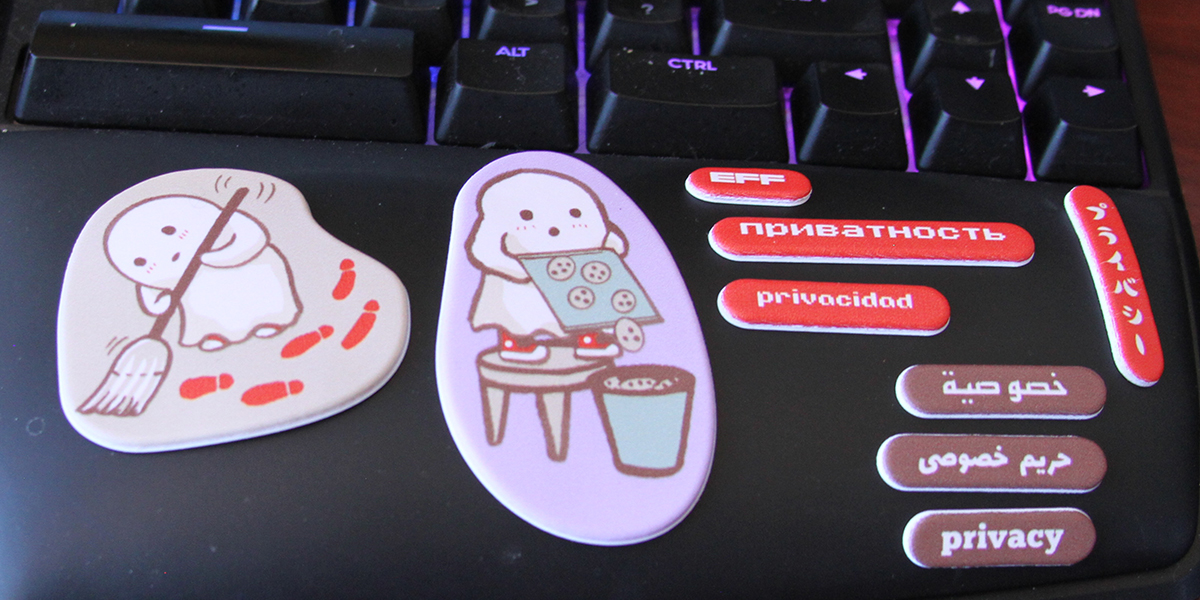
You can also get a set of puffy stickers as a token of thanks. Our little Ghostie protects privacy in Arabic, English, Japanese, Persian, Russian, and Spanish.
Claw Back! This year’s member t-shirt is hot off the press featuring an orange cat swatting at the street-level surveillance equipment multiplying in our communities. You might empathize with him, but there’s a better way. Let’s end the law enforcement contracts, harmful practices, and twisted logic that enable mass spying in the first place.
EFF is a member-supported U.S. 501(c)(3) organization. We've received top ratings from the nonprofit watchdog Charity Navigator since 2013! Your donation is tax-deductible as allowed by law.
By now, you’ve heard about the latest frontier AI models that are remarkably good at finding vulnerabilities in code and creating potential exploits. So good, in fact, that these models have been significantly limited from general use in an attempt to give defenders time to find and fix vulnerabilities before attackers find and exploit them.
For context, on April 7, 2026, we began testing Anthropic’s Claude Mythos model as a launch partner for Project Glasswing. Our conclusion was clear: The latest models are extraordinarily capable at finding vulnerabilities and changing them into critical exploit paths in near-real-time. In Defender's Guide to the Frontier AI Impact on Cybersecurity, I shared our early findings and recommendations.
Since then, we’ve continued testing the latest frontier AI models, including Anthropic’s Mythos and Claude Opus 4.7 and OpenAI’s GPT-5.5-Cyber as part of the Trusted Access for Cyber program. The big question just a few weeks ago was: “Are we overstating the model capabilities?” With more testing, I can confidently say we weren’t. In fact, these models are likely even better at finding vulnerabilities than we initially realized. Today, we’re providing an update on our ongoing research, our learnings uncovered in the process, and the approach we’re taking to protect our customers.
Find and Fix Before Attackers Find and Exploit
Today, we released our May “Patch Wednesday” security advisories, our monthly cadence of transparent vulnerability disclosure and remediation. This is the first time where the majority of findings were the result of frontier AI models scanning our code.
These are the results of the full, initial scan of over 130 products across all three platforms.
As of today, we’ve patched all important vulnerabilities in our SaaS delivered products, and all customer-operated products now have patches available.
Today’s advisory covers 26 CVEs (representing 75 issues) versus our usual volume (typically less than 5 CVEs in a month); none of which are being exploited in the wild. Note, this excludes CyberArk vulnerabilities, which are disclosed in their normal process.
It's important to understand this isn’t a one-and-done situation. We’re now rescanning, applying all our learnings about how to provide the right context and threat intelligence to the models. We intend to fix every vulnerability we find before advanced AI capabilities become widely available to adversaries.
While incredibly powerful, AI models aren’t simply magic. To achieve high-fidelity results, you need to build AI scanning harnesses, leverage context, guardrails and threat intelligence. We’ve also discovered a variance across models, due to variations in their training. A multimodel approach is required to identify the superset of vulnerabilities. And finally, while the immediate priority is finding and fixing the vulnerabilities that organizations currently have, the longer-term shift is incorporating these models directly into the software development lifecycle. This is the light at the end of the tunnel: A future where software is secure by design.
Four Steps Every Organization Needs to Take Immediately
Regardless of the current restricted access, we believe these capabilities will flow more broadly to other models. We now estimate a narrow three-to-five-month window for organizations to outpace the adversary before AI-driven exploits start to become the new norm. This impending vulnerability deluge demands urgency. Organizations that haven’t put appropriate safeguards in place will face an entirely new class of risk. Here’s what we recommend:
Find and Fix Vulnerabilities In Your Applications, Products and Code
Find and fix before attackers find and exploit.
Leverage AI models to identify vulnerabilities across all codebase.
Apply the same AI scanning to your open-source supply chain, and remediate or mitigate findings.
Run accelerated patching tightly coordinated with product and development teams.
Assess, Reduce and Remediate Your Exposure
Reduce what is reachable by attackers, secure what must be accessible, such as customer-facing applications.
Attack surface management products, like Cortex Xpanse®, have never been more critical for finding and reducing exposure.
The latest frontier AI models are very adept (with the right AI scanning harness) at evaluating exposures, understanding security misconfigurations and prioritizing attack-path reachability.
Audit your supply chain, including AI infrastructure, runtime environments and model dependencies.
Ensure Attack Protections
Vulnerability exploits are typically just one step of a multi-step attack lifecycle. Ensuring best-in-class protections is now even more important for preventing breaches.
Map current sensor coverage to identify critical blind spots in detection, prevention and telemetry.
Deploy best-in-class XDR everywhere with an emphasis on real-time ML-based detection and prevention of attacks with all hosts on-premises and cloud included.
Deploy Agentic Endpoint Security to secure wide-scale adoption of vibe coding and AI security across the enterprise (e.g. Prisma AIRS® and our recent acquisition of Koi are now a necessity for securing the agentic endpoint).
Secure enterprise browsers with AI-based security are a must have for securing where users now do their work.
Zero trust and Identity Security are foundational to securing every user and connection, extending to internal segmentation and outbound application connections.
Deploy Real-Time Security Operations
Autonomous AI-driven attacks will drive attack lifecycles to minutes requiring every SOC to achieve single-digit mean time to detect (MTTD) and mean time to respond (MTTR).
Attack detections must be AI/ML-driven to detect even frequently changing and novel attacks at scale.
These AI detections must operate against a wide range of first party and third party data sources. A best in class AI SOC must operate on ALL relevant data sources.
Automation, both natively integrated and throughout the SOC lifecycle, is necessary to achieve single-digit MTTR. This automation will increasingly be agentic.
This must be delivered as a platform to remove seams and gaps created by point solutions.
Assess and act as quickly as possible.
Fighting AI with AI — AI Frontier Security Innovations Coming Soon
So far, frontier AI models only find new attacks, not new attack techniques. This means that with the right innovations, we can expand our use of AI to solve the security challenges that organizations are facing, and deliver what our customers need to stay ahead of the ever-evolving threat landscape, including:
Reimagining virtual patching with proactive, high-fidelity content updates across network, endpoint and cloud security – We expect that across open source and technology suppliers there will be a deluge of patches, and virtual patching will provide a mitigation layer necessary to give your teams time to update. We expect to roll out the first phase of capabilities very soon.
Enhanced attack preventions, including cyber-LLM trained ML and small language models (SML) and behavior protections – Early testing with Cortex XDR® and our network security security services, such as WildFire® malware prevention, indicate high protection coverage from the types of attacks created using these new frontier AI models.
Using these models to scan our code, applications and even security configurations – Our intention is to productize these capabilities and incorporate them into our platforms.
Unit 42 — We’re Here to Help
We recognize that not everyone has the capacity and/or expertise to action all of the recommendations to effectively counter frontier AI-driven risks in the short timeframe mandated by AI innovation. Our Unit 42 Frontier AI Defense service is designed to discover and remediate your current exposure before attackers do, strengthen controls that reduce exposure and contain impact and modernize security operations so teams can detect and respond at machine speed.
This is a pivotal moment for our industry. While the scale of the challenge presented is real, I’m confident in our ability to solve it. We’re here to help our customers navigate this transition and ensure that as the landscape continues to evolve, the advantage remains with the defender.
Forward-Looking Statements
This blog contains forward-looking statements that involve risks, uncertainties and assumptions, including, without limitation, statements regarding the benefits, impact, or performance or potential benefits, impact or performance of our products and technologies or future products and technologies. These forward-looking statements are not guarantees of future performance, and there are a significant number of factors that could cause actual results to differ materially from statements made in this blog. We identify certain important risks and uncertainties that could affect our results and performance in our most recent Annual Report on Form 10-K, our most recent Quarterly Report on Form 10-Q, and our other filings with the U.S. Securities and Exchange Commission from time-to-time, each of which are available on our website at investors.paloaltonetworks.com and on the SEC's website at www.sec.gov. All forward-looking statements in this blog are based on information available to us as of the date hereof, and we do not assume any obligation to update the forward-looking statements provided to reflect events that occur or circumstances that exist after the date on which they were made.
Built on the Pioneers of PAM (privileged access management): Idira is Palo Alto Networks next-generation identity security platform, extending privileged access controls to every human, machine and AI agent identity in the AI enterprise.
Zero Standing Privilege by Default: Idira replaces static, always-on access with dynamic privilege, granted just-in-time on a single control plane.
AI-Driven Identity: AI runs natively inside Idira to surface hidden entitlements, unmanaged accounts, recommend least privilege, and remediate to close the gap between attackers who move in 72 minutes and defenders who historically took days.
Since Palo Alto Networks and CyberArk came together in February, customers have been asking me the same question: What does the future of identity security actually look like?
I am proud to introduce Idira, the next-generation identity security platform from Palo Alto Networks. Idira secures every identity in the AI enterprise (human, machine, AI agent) on a single control plane that discovers risk, applies privilege dynamically, and governs the full lifecycle from first access to last session.
Idira begins with a belief shaped by more than 20 years of working on this problem. Privilege is the most challenging aspect of identity security. For a generation, the industry learned how to manage it well for a small population – administrators inside the most security-sensitive organizations in the world. That was necessary. But it is no longer enough.
The moment has come to extend that same rigor to every identity, because every identity today carries the power to move the business, or enable an attacker. That is the journey Idira takes us on. From privilege controls for administrators, to privilege controls for every identity.
Attackers Are Not Breaking In. They Are Logging In.
For most of the last two decades, identity security was built on a comfortable assumption: One can maintain a firm divide between a small number of powerful administrators and a much larger number of ordinary users; that is enough to secure the organization. That assumption no longer holds.
Our Chairman and CEO, Nikesh Arora, calls it the “IAM fallacy,” and the data in the 2026 Identity Security Landscape Report makes clear why it is time to retire this assumption.
Machine identities now outnumber humans by 109 to 1. Of those, 79 are AI agents.
91% of organizations already run autonomous agents in production.
90% of organizations suffered an identity-related breach in the past 12 months. 83% of organizations suffered two or more incidents.
The old model is not failing because identity became less important. It is failing because identity and privilege became universal and ubiquitous.
Every major breach I have studied over the last two years follows the same pattern. An attacker steals a credential. They move laterally using standing access that should have expired. They escalate privilege. They reach the data, the infrastructure or the business systems they came for: Okta, MGM, Microsoft. Different industries. Different scales. The same pattern.
One overprivileged identity unlocks the entire enterprise.
And when defenders have a chance to respond, they are already behind and disadvantaged. 97% of practitioners tell us that fragmented tools add 12 hours to every identity incident response time. All while Unit 42® has observed the fastest attackers move from a first foothold to exfiltration in as little as 72 minutes.
Identity is now the enterprise perimeter. And the perimeter was built for a threat model that no longer exists.
Every Identity Is Privileged — Idira’s First Fundamental Principle
The premise of Idira is simple. Every identity in your organization is privileged.
Every login, every token, every service account, every workload, every AI agent can trigger a workflow, call an API, or reach sensitive data. Some can create and destroy infrastructures, direct organizational spend, or create new identities. Privilege is no longer reserved for a small class of administrators. It is distributed across the enterprise, quietly and continuously, every second of the day.
The controls that protect privilege cannot be reserved for the few, either.
Idira changes three things from day one.
First, We Discover
Idira continuously finds every identity, every entitlement and every access path across your entire environment: humans, machines, workloads, secrets, certificates and AI agents everywhere – on the network, in the cloud, on servers and endpoints, in the browser. If someone or something can authenticate, Idira knows it is there, knows what it can reach, and evaluates how much of that access is actually necessary.
Second, We Control
Idira replaces static, always-on accounts attackers rely on with dynamic privileges that exist only in the moment of use. Zero standing privilege moves from aspiration to default, and it applies equally to the administrator logging into production, the developer deploying code, and the AI agent calling a tool. This is the shift to identity-centric active security.
Third, We Govern
Idira automates the identity lifecycle end-to-end. Governance stops being a quarterly compliance exercise and becomes a continuous enforcement loop. The 12-hour fragmentation tax closes.
This is what I mean when I say we are democratizing privilege controls. We are not loosening them. We are extending the strongest privilege controls the industry has ever built to every identity that now carries the weight of the business, without penalizing these identities for the powers they carry.
Already Better Together
Idira is not launching into an empty runway. We have been executing against this roadmap since the day we joined Palo Alto Networks, and the early results give us real confidence in what comes next.
Earlier this year at the RSA Conference, we launched Next-Generation Trust Security (NGTS), the first network-native platform to automate certificate lifecycle management and accelerate post-quantum readiness. That matters because 71% of organizations have not yet automated certificate renewal. As public TLS lifetimes compress to 47 days and manual workloads multiply, that gap becomes more than an operational burden. It becomes a business continuity risk.
NGTS closes it in the network itself.
As one of the core platforms of Palo Alto Networks along with Strata® and Cortex®, Idira is providing deep identity integrations across the entire portfolio to enhance platform value for customers. Prisma® Browser delivers privileged access directly in the place where enterprise users work. Prisma AIRS 3.0 natively integrates with Idira to extend deep identity security and privilege controls to AI agents. Cortex will receive first-party identity signals to sharpen detection and take automatic identity- and privilege-driven response actions when indicators of compromise are detected.
Customers are already seeing the impact. Northern Trust improved password compliance by 137 percent. Panasonic Information Systems rebuilt its security operations around identity. Healthfirst grounded its zero trust program in identity-first controls. PDS Health secured clinical access for more than 900 practices. They had different problems with the same answer.
Different challenges. One answer. One platform. Consistent privilege controls applied to every identity that matters.
AI Makes This Urgent. AI Makes This Possible.
AI has changed the speed, scale and economics of identity risk.
Frontier models have crossed a threshold. Anthropic's Claude Mythos Preview has already identified thousands of zero-day vulnerabilities across the operating systems and browsers that businesses rely on every day. Every exposed secret, every standing admin path, every forgotten service account can now be discovered, validated and weaponized faster than most security teams can respond. 55% of the decision-makers in our 2026 survey named AI-enabled threats as their top identity concern.
If frontier models are rewriting the economics of attack, the only credible response is to rewrite the economics of defense with the same technology.
Idira is how we do that in identity. AI is built into the platform to surface hidden entitlements, identify risky access combinations, recommend the least privilege automatically, and drive surgical remediation. That same intelligence lets attackers find the weakest link in 72 minutes and helps defenders close it in seconds.
When code cannot be patched fast enough, identity becomes the control plane that can still adapt at machine speed.
Same Mission, Stronger Together
For more than two decades, the pioneers of privileged access have management-built controls trusted to safeguard the world's most critical environments. That mission created a category and earned the trust that made today possible.
Idira carries that mission forward and expands it to match the scale of the problem we now face.
This is the first wave, not the last. The roadmap extends privilege controls to workforce identity, advances machine and agentic identity security, and unifies a fragmented market into one platform. We are building it in the open, shaped by the customers in the room with us at IMPACT and by the realities they face every day.
The future of identity security will not be defined by access alone. It will be defined by control. See what Idira is built to deliver.
Forward-Looking Statements
This blog contains forward-looking statements that involve risks, uncertainties and assumptions, including, without limitation, statements regarding the benefits, impact, or performance or potential benefits, impact or performance of our products and technologies or future products and technologies. Any unreleased services, integrations or features (and any services or features not generally available to customers) referenced in this or other press releases or public statements are not currently available (or are not yet generally available to customers) and may not be delivered when expected or at all. Customers who purchase Palo Alto Networks applications should make their purchase decisions based on services and features currently generally available.
For the last several months, we have had early, unbounded access to the latest frontier AI models. What we’ve seen from that vantage point has made it clear that the window for organizations to get ahead of what’s coming is shorter than most leaders realize.
We have moved past the era of incremental AI improvements into a threat landscape shift. Our testing has revealed a step-change in capability that demonstrates an intuitive understanding of software vulnerabilities. This is more than faster code generation, it is a shift from AI as an assistant to AI as an autonomous agent capable of discovering and chaining flaws at a scale that most defenders aren’t prepared for.
These capabilities will not stay confined to controlled environments for long. When Mythos first launched, we predicted a six-month window before attackers gained access. We now believe that timeline has accelerated significantly.
To meet this inflection point, defense must operate at the speed of the adversary. That is why Palo Alto Networks has introduced Frontier AI Defense. This initiative unites our AI-native security platforms with Unit 42® consulting and threat expertise with strategic partners to deliver continuous protection, prioritized risk mitigation and autonomous remediation.
What the Threat Looks Like Now
The latest frontier models, including OpenAI’s GPT-5.5-Cyber, Anthropic’s Mythos and Claude Opus 4.7, and the specialized variants emerging across major labs, represent roughly a 50% improvement in coding efficiency over their predecessors. That number sounds incremental, but in practice, it’s the threshold at which AI crosses from a helpful assistant into an autonomous operator.
Based on our testing and review, we found four key developments that, taken together, redefine the modern threat landscape:
Vulnerability Discovery at Scale: Frontier AI is exceptionally effective at identifying vulnerabilities across massive, complex codebases. In our testing, three weeks of model-assisted analysis matched a full year of manual penetration testing, with broader coverage.
Exploit Chaining & Synthesis: What is more consequential than individual discovery is the models’ ability to think like an attacker. They link multiple lower-severity issues into single, critical exploit paths, seeing full-stack logic, including SaaS and public-facing surfaces, in ways traditional scanners cannot.
Attack Cycle Compression: In AI-assisted scenarios, the time from initial access to exfiltration has collapsed to as little as 25 minutes. Detection and response measured in hours is no longer a viable standard; single-digit MTTR (Mean Time to Respond) is the new floor.
The Unsupervised Attack Surface: Rapid AI development and decentralized innovation are creating a massive, unsupervised attack surface in real-time. As local AI agents become commonplace, every desktop is now effectively a server, yet most organizations lack visibility into the code their own employees are generating and deploying.
Our Approach
These emerging threats form the foundation of how we have architected our platform response for the agentic era – Frontier AI Defense. Our approach moves beyond traditional, reactive defense to provide a comprehensive framework built to outpace frontier-AI-enabled attackers. This initiative is defined by:
Advanced Access: We leverage early access to frontier AI models to harden defenses and simulate attacks before they reach the mainstream.
Intelligence-Led Resilience: Unit 42 experts leverage frontier AI to fast-track discovery and remediation of exposures at machine speed through our Unit 42 Frontier AI Defense service.
Unified Global Ecosystem: We provide the scale required for global protection through our Frontier AI Alliance of elite partners, including Accenture, Armadin, Deloitte, IBM, NTT DATA, and PwC.
Machine Speed Security: By natively integrating Frontier AI across our platforms, we deliver the automated, real-time defense necessary to counter autonomous threats.
The Window Is Open. It Won’t Be for Long.
The capabilities we tested under early-access conditions are expected to become widely available over the next several months. Success in this new environment requires adapting your cybersecurity stack before these tools are in the hands of every adversary.
The threat has never been more sophisticated. The window to prepare for this shift is closing. And we're here to help secure your future at the edge of the frontier.
Last week, we released apkeep version 1.0.0, the latest edition of our command-line Android package downloading software. Rather than indicating major changes for the project, this milestone instead signifies arriving at a relatively stable and mature place after gradual iteration on the project over the course of over four years.
You can now provide a token generated by the Aurora Store’sdispenser to log in anonymously for app downloads.
Users can specify their owndevice profiles when downloading apps from Google Play, which the store uses to deliver the app variant which works for your particular device specifications.
We’ve also fixed an authentication bug introduced by the Play Store API.
In addition to the various Linux, Windows, and Android environments we support, we’re also happy to announce that since the last release in October we’ve been included in Homebrew for macOS users!
How Researchers Use apkeep to Understand the Android App Landscape
Researchers and users contributed most of the features of this release, including downloading dex metadata containing Google’s Cloud Profiles. This feature helps them use the tool in their own research of highlighting how these Android compilation profiles can be a vital source of information for evaluating dynamic testing. Numerous other projects have cited apkeep usage in their own workflows. For example, Exodus Privacy uses it to power the εxodus tool’s downloads when they monitor the privacy properties of apps. Various research teamshavenoted their own use of the tool in whitepapers, including one team who used the tool to download 21,154 apps in a widespread study of Android evasive malware. We are proud to provide a reliable tool in the toolbox they use to power their work.
What’s in Store for apkeep?
Our goals with apkeep have remained constant: provide a reliable, fast, and safe way to download apps from multiple app providers, not just the Google Play Store. While we’ve focused on it as the major Android app provider of choice across much of the world, we’ve expanded support to other stores as well, such as F-Droid for downloading open source apps. We’d like to continue broadening apkeep’s list of supported providers, to make it easy to do comparative analysis of apps provided in different contexts. For this, we’d love your contributions.
How You Can Help
If you’re using apkeep as part of your own toolbox (whether using it to do malware analysis, auditing apps, or simply using it as an app archiving tool), let us know! And if you like what we do, please consider donating to EFF to support our work.
To deliver this critical edge, our Unit 42 Frontier AI Defense will now leverage Anthropic’s Claude Security, powered by Opus 4.7. By integrating one of the world’s most advanced AI models, we are empowering our customers to outpace automated threats. Through Frontier AI Defense, organizations can rapidly assess their security posture, remediate vulnerabilities and harden their infrastructure against next-generation, AI-driven attacks.
We are utilizing Claude Security’s deep technical reasoning to enable our customers to find and fix vulnerabilities with unprecedented speed. This includes:
AI-Driven Exposure Analysis – Identifying complex exploit chains that turn minor findings into critical risks.
Scalable Application Analysis – Performing deep-stack code reviews at a scale and depth previously unavailable.
Agentic Defense – Powering autonomous workflows that detect and remediate threats at machine speed, backed by human oversight.
Palo Alto Networks is also participating in Anthropic's Cyber Verification Program, which credentials security teams for legitimate defensive use of frontier models.
The threat timeline is accelerating. Within months, AI-driven attack capabilities will become a standard fixture of the threat landscape. Palo Alto Networks is dedicated to ensuring our global customers are equipped with the modern frontier AI models necessary to stay secure both today and tomorrow.
Frontier AI is changing what is possible for attackers. To meet this escalating threat, Palo Alto Networks is teaming up with Armadin, the new offensive security company founded by Kevin Mandia. This partnership expands our newly introduced Unit 42 Frontier AI Defense service, scaling our ability to identify and remediate AI-driven exposures, and accelerating protection across the enterprise.
Over the past few weeks, we’ve spoken with hundreds of CISOs who universally feel the urgency on the frontlines. Security leaders need to know exactly where they stand against the AI-driven attacks happening right now, and the ones coming in the next six months.
Expanding Frontier AI Defense — The External AI Hyperattack Assessment
For organizations seeking to actively pressure-test their perimeter, this partnership introduces an autonomous, AI-driven offensive assessment of your external attack surface.
This added layer identifies real attack paths and proves exploitability across internet-facing assets. The platform begins with passive discovery, validating publicly exposed assets, cloud resources and secrets. Next, Armadin deploys a coordinated swarm of autonomous AI attack agents, operating at machine speed across your external footprint.
These agents execute active reconnaissance, launch attacks and exploit vulnerabilities in parallel, using over 50,000 templates. Upon initial access, the swarm simulates post-exploitation behavior to demonstrate impact, logging every attack chain as decision-grade evidence of exploitable risk.
Decision-Grade Proof of Exploitable Risk
With this added layer of autonomous simulation, Unit 42 Frontier AI Defense provides an even more rigorous, pressure-tested view of an organization's external attack surface. This allows our experts to accurately simulate the tradecraft of the most capable, AI-equipped threat actors, compressing complex attack lifecycles from days into minutes.
AI may change what is possible for attackers, but in the hands of defenders, it becomes a decisive advantage. This partnership is another important step in making sure that advantage stays with the defenders.
A member of Project Glasswing and OpenAI’s Trusted Access for Cyber (TAC) program, Palo Alto Networks remains the only company equipped to deliver this strategic level of partnership through Unit 42 Frontier AI Defense and the Frontier AI Alliance, driven to integrate cutting-edge technologies into our products and services.
Expand Strategic Collaboration to Secure the AI Enterprise
The transition from generative AI to agentic AI represents one of the most significant shifts in the history of enterprise technology. As organizations move from simple chatbots to autonomous agents that can execute business processes, the attack surface isn't just changing, it's exploding.
At Google Cloud Next 2026 in Las Vegas, Palo Alto Networks is proud to announce a series of groundbreaking integrations with Google Cloud. These innovations are designed to do more than just monitor the new AI-driven landscape; they are built to secure it by design. AI deployment is currently outpacing AI governance. By embedding our security platform into Google Cloud’s infrastructure, we are giving today’s enterprises the foundation to become the autonomous organizations of tomorrow.
Here is a look at the four major milestones of our partnership being unveiled this week.
Secure AI Agents with Google Cloud + Prisma AIRS
As autonomous AI agents become the new enterprise standard, security can no longer be an afterthought; it must be architectural. By integrating Prisma AIRS™ natively with Google Cloud Gemini Enterprise Agent Platform, we provide the proactive defenses required to govern complex agentic workflows. This integration ensures that as you scale your autonomous workforce, your security scales with it, providing comprehensive operational integrity without hindering the speed of innovation.
We are delivering capabilities across three critical pillars:
Protecting Agent-Specific Runtime Risks: In an agentic ecosystem, the primary risk is unauthorized or a destructive action taken by the AI agents themselves. Prisma AIRS secures the "agent-to-tool" interface, preventing poisoned context from triggering malicious scripts or destructive actions. The solution monitors agent execution in real-time, so agents cannot leak sensitive credentials or tool schemas, maintaining the boundary between agents and their access to enterprise data.
Securing the GenAI Application Surface: Modern AI applications and agents require a secure-by-design approach. Prisma AIRS AI Runtime Security™ provides prevention of more than 30 adversarial prompt injection and jailbreak techniques, as well as malicious code and URLs within LLM outputs. Prisma AIRS utilizes over 1,000 predefined patterns out of the box and ML-powered Enterprise DLP to stop sensitive data leakage.
Enforcing Enterprise AI Safety and Grounding: Trust in AI is built on the consistency and safety of its output. Prisma AIRS allows organizations to define safety policies in natural language and filter toxic content across eight distinct categories to protect brand reputation. Using contextual grounding, Prisma AIRS can prevent misleading outputs that contradict internal RAG data, keeping agents tied to real facts.
This integration ensures that as you scale your autonomous workforce, your security posture scales with it, providing operational integrity without hindering the speed of innovation.
Security-as-Code for Prisma AIRS Integration with Application Design Center (ADC)
The traditional bolt-on approach to security is no longer viable in a cloud-first world. Google Cloud’s Application Design Center (ADC) is revolutionizing how applications are built, using an intuitive canvas and natural language via Gemini Code Assist.
Palo Alto Networks is announcing that it will be published as a template within the Application Design Center, providing more capabilities to engineering teams:
Drag-and-Drop Security – Visually "snap" VM-Series firewalls and Prisma AIRS AI protections directly into network flows.
AI-Driven Architecture – Use natural language prompts to generate secure-by-default, multiregion architectures.
Simultaneous Deployment – Deploy entire application stacks and security services in a single, unified workflow, ensuring protection is present from the very first minute of deployment.
Zero-Day Protection at Scale with Advanced Malware Sandboxing for Google Cloud NGFW Enterprise
The battle against malware has shifted to the cloud. Modern attacks are faster, more evasive and capable of bypassing traditional defenses.
That is why we are excited to announce Advanced WildFire®, powered by Palo Alto Networks, natively integrated into Google Cloud NGFW Enterprise, delivering AI-driven malware prevention directly within Google Cloud environments.
This integration embeds inline sandboxing and real-time threat intelligence directly into Google Cloud’s distributed firewall to stop advanced and unknown threats before they impact workloads, enabling:
Secure Detonation – Suspicious files are safely executed in a controlled sandbox environment to uncover hidden and unknown threats.
Inline Traffic Inspection – Inbound and outbound traffic is analyzed in real time to prevent lateral movement of malicious payloads across cloud environments.
AI-Driven Threat Prevention – Leverages global threat intelligence by Palo Alto Networks to block zero-day threats before they compromise workloads.
With Advanced WildFire embedded directly into Google Cloud NGFW Enterprise, organizations can extend consistent protection across their cloud infrastructure while maintaining operational simplicity.
Cloud NGFW Enterprise Advanced Malware Sandboxing will be available in Public Preview soon.
Defining the Future with the Google Cloud Marketplace
Palo Alto Networks has joined the Google Cloud Marketplace Agent-as-a-Service as a launch partner to introduce the Prisma AIRS Model Security agent. Operating as an Agent-as-a-Service, this solution scans AI models for vulnerabilities and policy noncompliance before they reach production.
Available in the Agent Gallery inside Gemini Enterprise, this marketplace offering runs entirely within the customer’s own Google Cloud environment, providing both new and existing Prisma AIRS users a seamless and simple deployment experience inside Gemini Enterprise.
Securing AI Innovation at Scale
The collaboration between Palo Alto Networks and Google Cloud is built on a shared vision: Security should be an accelerator for innovation, not a bottleneck. As we look toward the future of the AI-powered enterprise, our commitment remains to provide the most robust, platform-driven security for every workload, every agent and every interaction.
Want to see these integrations in action? Contact your Palo Alto Networks representative to learn more about how we are securing the future of the cloud together. If you’re attending Google Cloud Next 2026, join us at these sponsored sessions:
The Google Cloud and Palo Alto Networks Partnership
As AI agents move into business-critical environments, they are transforming everything from security operations to internal workflows. However, scaling these AI applications introduces unprecedented hurdles for security executives, from detecting "shadow AI" and unsanctioned usage to governing complex nonhuman identities across multimodel environments.
To overcome these challenges, organizations need more than just tools; they need a layered architecture built on a foundation of platformization. The long-standing partnership between Palo Alto Networks and Google Cloud provides this essential framework, offering customers:
Integrated Security Ecosystems: Seamlessly manage the full agent lifecycle with visibility and observability across your entire AI infrastructure.
Jointly Engineered Solutions: Leverage over 80 co-engineered integrations designed to eliminate the tradeoff between a cloud-native experience and best-in-class security.
Proven Scale and Performance: Benefit from a partnership that has already delivered impactful, AI-driven solutions to protect joint customers from evolving threats.
Google Cloud Marketplace enables customers to discover, try, buy and use industry-leading applications that have been validated to run on Google Cloud. Palo Alto Networks has closed $2.4 billion in GCP bookings, helping address evolving customer needs, such as simplified procurement and seamless deployment.
Kevin Ichhpurani, President, Global Partner Ecosystem at Google Cloud:
We’re pleased to celebrate Palo Alto Networks as our Global Technology Partner of the Year… Palo Alto Networks has consistently delivered impactful, AI-driven security solutions that help Google Cloud customers better protect their organizations from evolving threats.
The extensive, long-standing collaboration between Palo Alto Networks and Google Cloud includes jointly engineered offerings, built on 80 solution integrations that help customers build, run and secure AI-enhanced cloud infrastructure and applications with end-to-end protection.
Palo Alto Networks Wins 2026 Global Technology Google Cloud Partner of the Year Award
At Google Cloud Next, Palo Alto Networks has been recognized with four 2026 Google Cloud Partner of the Year awards. By partnering with Google Cloud, we help customers securely leverage the power of the cloud and AI-driven growth with comprehensive cloud-native security offerings. Wins included the following:
Global Technology
Marketplace: Technology
Marketplace: Security
Security: Artificial Intelligence
These Partner of the Year Awards underscore our expanding partnership with Google Cloud. We share a mutual dedication to improve cloud, network security and AI observability, as well as the progress we’ve made in protecting our joint customers from today’s and tomorrow’s cyberthreats.
By combining our industry-leading security engineering with Google Cloud’s industry-leading cloud infrastructure and services, we’re providing advanced protection for every stage of a customer’s digital journey. We want customers to feel secure from the formative steps of lifting workloads into the cloud, to expanding digital innovation across platforms, to reaching new levels of business scale and velocity.
Protecting these journeys requires alignment and modernization of infrastructure (lift and shift), applications (refactoring) and user access models (zero trust). It requires an advanced AI drive security operations transformation across all IT domains, leveraging machine learning and sophisticated models to minimize human interventions and unguarded sides.
Our relationship with Google Cloud is based on a deep engineering relationship, yielding integrated solutions that help customers achieve better digital outcomes. Our partnership can help your organization eliminate tradeoffs between a cloud-native experience and best-in-class security. We have more than 80 co-engineered integrations, helping to improve and protect hybrid workers, cloud migrations and application modernization efforts.
We remain committed to our goals of outpacing cyberthreats, helping customers at every stage of their cloud journey, and creating a world where tomorrow is more secure than today.
Whether you’re just beginning your cloud journey or managing complex transformational projects, our jointly engineered, AI-driven solutions are designed to deliver seamless, scalable security. Explore the dynamic partnership between Palo Alto Networks and Google Cloud. Join us at Google Cloud Next '26 in Las Vegas from April 22-24 to discover how to secure your development lifecycle from code to cloud.
Palo Alto Networks recently joined the DNS-OARC community as a Platinum Member. Together, our organizations share a commitment to advancing collaboration in research and operational excellence across the global DNS ecosystem. DNS is critical to both internet infrastructure and security, and this collaboration facilitates the sharing of real-world insights among researchers and practitioners.
Our Contribution
We help organizations secure their digital environment with a comprehensive portfolio of cybersecurity solutions spanning Network, Cloud, Security Operations, AI and Identity. Trusted by more than 70,000 customers worldwide and informed by Unit 42® Threat Intelligence, their AI-driven platforms help organizations reduce complexity, modernize with confidence, and securely enable innovation.
As a Platinum Member, our subject matter experts will actively participate in the DNS-OARC community by engaging in discussions and contributing to research on evolving DNS threats and network challenges. The growing intersection of DNS and security makes access to intelligence and experience increasingly important. It strengthens the community’s ability to respond to emerging challenges and improves resilience across the internet.
Through our participation, our customers will gain stronger protection informed by community-driven intelligence and real-world operational insight. These learnings are continuously integrated into our threat intelligence and security capabilities. Our participation signals our support for DNS-OARC’s mission of fostering open dialogue and shared learning across the DNS ecosystem. This collaboration helps bridge DNS operations with broader security practices, improving coordination between operators, researchers and security practitioners.
Our Commitment to the DNS-OARC and Global Communities
Collaboration between our organizations strengthens the connection among DNS operations and modern security practices by bringing together operational insight and a global community dedicated to advancing the internet’s resilience.
For the DNS-OARC community, our commitment enhances knowledge sharing around evolving DNS threats, large-scale network operations and practical approaches to emerging challenges.
For organizations and customers, it reinforces a stronger alignment between DNS infrastructure and security, expands access to community-driven intelligence and supports more resilient, well-informed defenses.
Tong Zhao, Senior Manager of DNS Security Engineering, Palo Alto Networks:
We recognize the critical role of DNS-OARC in DNS operations and research. The teams from Palo Alto Networks believe that our DNS-OARC membership aligns perfectly with our goals. We are eager to participate in and contribute to the DNS community.
Our partnership with the DNC-OARC highlights the value of open collaboration in helping both the community and its participants stay ahead of an increasingly complex threat landscape. To learn more about how our expertise and insights support DNS-OARC’s mission to improve the security and stability of the internet’s DNS, visit DNS-OARC.
Acting swiftly with intent, together with Accenture, Deloitte, IBM, NTT DATA and PwC
With the imminent release of unbounded frontier models, the barrier to entry for sophisticated cyberattacks has vanished. Anthropic’s Mythos represents a 50% leap in coding capability over previous models. It’s a leap that, as Lee Klarich stated, translates into autonomous agents capable of both surfacing a massive surge of vulnerabilities and exploiting them faster than we’ve ever seen or imagined.
In this new era, business continuity requires more than just better tools; it requires a unified ecosystem of experts capable of orchestrating a defense that matches this new pace of attack.
As we drive the industry standard for addressing these emerging risks with our Unit 42® Frontier AI Defense, we’ve united an alliance of global transformation leaders, starting with Accenture, Deloitte, IBM, NTT DATA and PwC, and will continue to scale these alliances to ensure every enterprise has a rapid path to AI resilience.
By combining the world’s most advanced AI security platform with deep industry expertise, we are delivering the security assessment and rapid protection needed to help customers stop emerging threats and keep their business resilient.
Rex Thexton, Chief Technology Officer, Accenture Cybersecurity:
As AI-driven attacks accelerate to machine speed, organizations must rethink how they protect critical assets. Together with Palo Alto Networks, we're helping clients automate protection and reduce risk. By enabling an autonomous defense posture that detects and responds in minutes, we can empower organizations to scale their AI innovation with confidence.
Deborah Golden, principal, Deloitte:
As AI-driven threats accelerate, our mission is to help clients move even faster. By combining Deloitte's implementation experience with Palo Alto Networks' AI blueprint, we are rapidly delivering more complete security coverage to clients with near-real-time responsiveness, turning potential vulnerabilities into a foundation for resilient innovation.
Mark Hughes, Global Managing Partner of Cybersecurity Services, IBM Consulting:
In an environment where frontier models let attackers move faster than ever, organizations need defenses that can keep up. Joining the Frontier AI Alliance strengthens our commitment to helping organizations prepare for this new class of agentic, machine speed threats. IBM Autonomous Security plus Palo Alto Networks technologies bring together interoperable, vendor-agnostic digital workers that operate across an organization's full security stack, enabling security programs to act as a system rather than a collection of disconnected tools.
Sandip Gupta, Head of Global Strategic Alliances, NTT DATA:
Frontier AI is reshaping the economics of cyber defense. As threat actors move faster and operate with greater automation, organizations need a more resilient and adaptive approach to protecting business continuity. Through the Frontier AI Alliance, NTT DATA is combining Palo Alto Networks' innovation with its global cybersecurity solutions and deep industry experience to help clients close critical security gaps, reduce complexity and strengthen resilience against AI-powered threats.
Morgan Adamski, Principal and Cyber, Data, & Technology Risk Leader, PwC:
As AI-enabled cyber risk accelerates in both speed and scale, organizations cannot remediate issues fast enough through traditional approaches. Palo Alto Networks Unit 42 Frontier AI Defense combines Palo Alto Networks innovation in vulnerability discovery with PwC's expertise to prioritize what matters, accelerate remediation, and build governance and resilience frameworks that operate at machine speed.
01/05
By engaging directly with Palo Alto Networks, or working with our partners through the Frontier AI Alliance, our customers can move past the complexity of building an AI-ready defense from scratch and gain:
Accelerated Immunity: Go from a high-exposure state to a hardened posture using a prevalidated AI Defense Blueprint, delivering coverage in weeks, not years.
On-Demand Expertise: Our partners provide the specialized prompting and verification required to make the latest AI Frontier models work for the defender.
Operational Resilience: While Unit 42 provides the Frontier AI Exposure Analysis, our ecosystem partners provide the boots on the ground to remediate those findings and leverage our product portfolio to deliver AI-readiness to your enterprise.
The threat of Mythos-class models is imminent, but the path to resilience is clear. Whether you are looking for an immediate strategic assessment or a deep operational overhaul, the Frontier AI Alliance is ready to move at the speed of your business.

 Login
Login

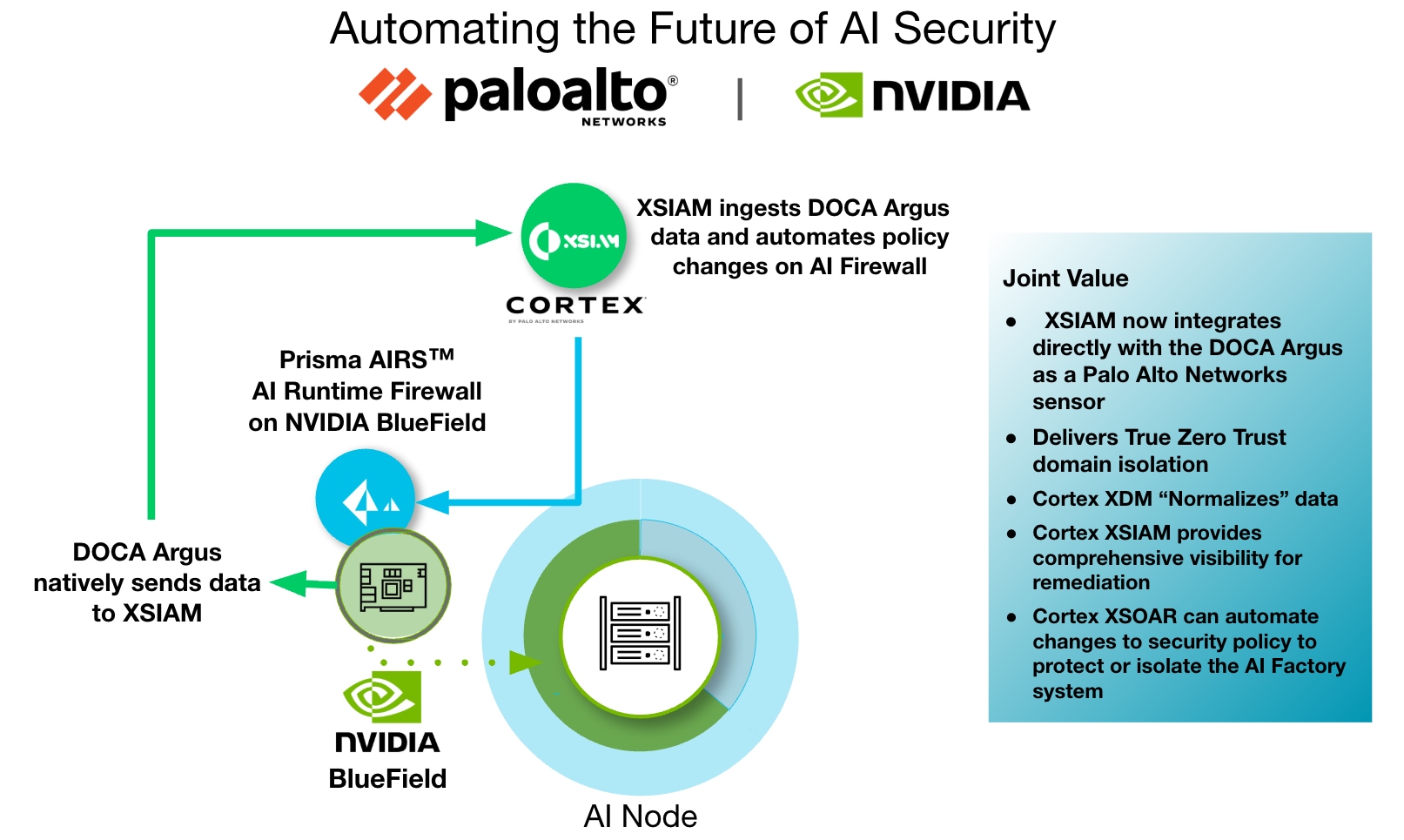
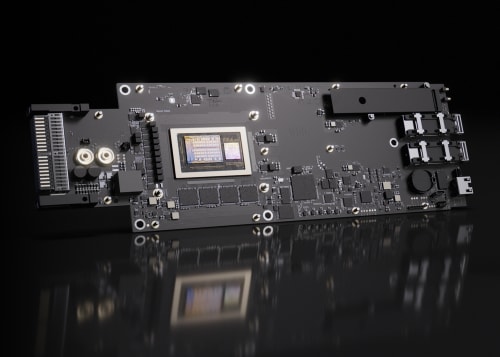


 for Endpoint Protection Platforms for the fourth consecutive year. For us, this recognition is a testament to our team's relentless vision as we continue to define endpoint defense—from the pioneer days of XDR to the new frontier of agentic AI.