Reading view

Congress Must Reject New Insufficient 702 Reauthorization Bill

Speaker Johnson has introduced a new fig leaf over the American surveillance state, the Foreign Intelligence Accountability Act. Introduced with only days to go before Section 702 of the Foreign Intelligence Surveillance Act (FISA) expires and the U.S. government loses one of its most invasive surveillance programs, the bill does nothing to make any of the substantial changes privacy advocates have been asking for --- most notably, it fails to give us a real warrant requirement for the FBI to snoop through the private conversations of people on U.S. soil.  

Section 702 needs to be reauthorized by Congress every few years. These reauthorizations give us a chance to tinker with the language of the law and introduce some much-needed reforms. This attempt at reauthorization has been particularly fraught, but there is still time for Congress to include real protection for Americans’ civil liberties and rights. We need to make sure that when an FBI agent wants to look through Americans’ conversations scooped up as part of a national security intelligence program, they need a warrant signed by a judge just as if they were trying to search your email account or your house. 

This new bill mandates that a civil liberties protection officer at the Director of National Intelligence review all queries of U.S. persons made by the FBI under this program to make sure no laws have been broken. It’s bad enough to let the intelligence community police itself, and what’s more, the assessment for illegality would be made after a U.S. person has already been spied on. This is hardly the reform we need and will likely just lead to continued abuse with no real accountability or consequences.  

The bill “prohibits targeting United States persons,” but so does current law. This “change” does absolutely nothing to address what’s really happening—which is that surveillance of people in the United States is usually justified as “incidental” because Americans aren’t the “target” of the surveillance. The bill does not create a warrant requirement, it does not create any new transparency requirements, and it does not protect Americans’ privacy.  

We urge Congress, and we urge you to write to your Congresspeople, to tell them this: Reject the surveillance state’s latest smokescreen known as the Foreign Intelligence Accountability Act and keep pushing for real reforms.  
  •  

Keep Pushing: We Get 10 More Days to Reform Section 702

In a dramatic middle-of-the-night stand off, a bipartisan set of lawmakers pushing for true reform and privacy protections for Americans bought us some more time to fight! They are holding out for, at a minimum, the requirement of an actual probable cause warrant for FBI access to information collected under the mass spying program known as 702.


A reauthorization with virtually no changes was defeated because a core group of lawmakers held strong; they know that people are hungry for real reform that protects the privacy of our communications. We now have a 10-day extension to continue to push Congress to pass a real reform bill. 


The Lawmakers rallied late Thursday night to reject a proposed amendment that made gestures at privacy protections, but it would not have improved on the status quo and would have reauthorized Section 702 for five more years to boot. 

Take action

TELL congress: 702 Needs Reform

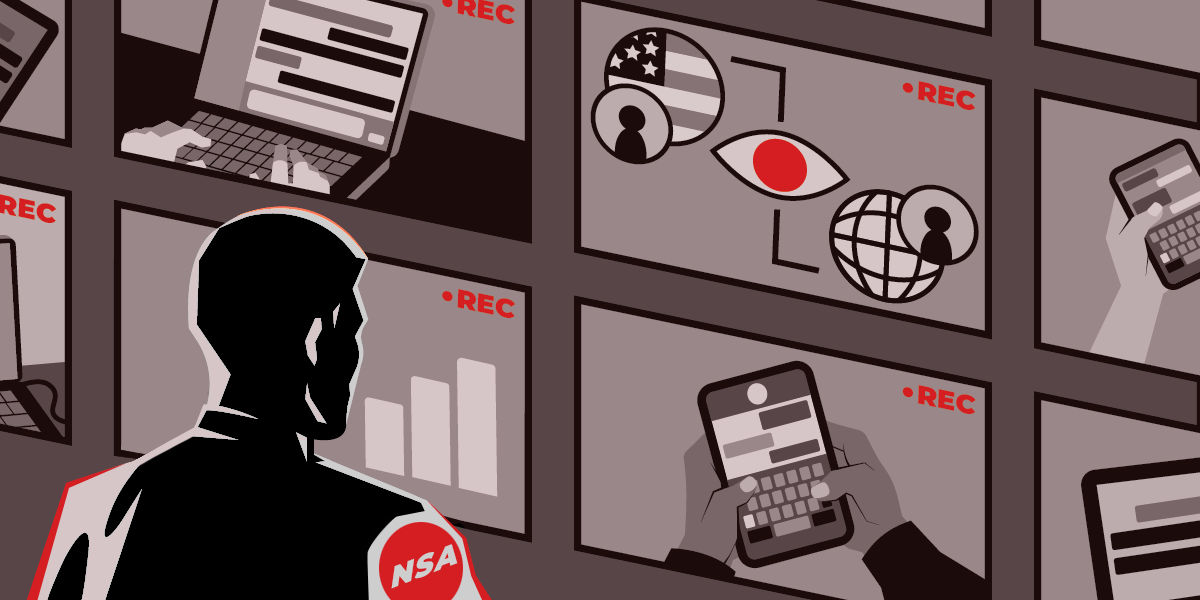
Section 702 is rife with problems, loopholes, and compliance issues that need fixing. The National Security Agency collects full conversations being conducted by and with targets overseas – including by and with Americans in the U.S. –  and stores them in massive databases. The NSA then allows other agencies, including the Federal Bureau of Investigation, to access untold amounts of that information. In turn, the FBI takes a “finders keepers” approach to this data: they reason that since it's already collected under one law, it’s OK for them to see it. 

Under current practice, the FBI can query and even read the U.S. side of that communication without a warrant. What’s more, victims of this surveillance  won’t even know and have very few ways of finding out that their communications have been surveilled. EFF and other civil liberties advocates have been trying for years to know when data collected through Section 702 is used as evidence against them.  

Reforming Section 702 is even more urgent because of revelations hinted at by Senator Ron Wyden’s public statements concerning a “secret interpretation” of the law that enables surveillance of Americans, and a public  “Dear Colleague” letter he sent to fellow Senators about FBI abuse of Section 702. 

That’s right—the way the government conducts mass surveillance is so secret and unaccountable even the way they interpret the law is classified. 

 “In many cases these will be law-abiding Americans having perfectly legitimate, often sensitive, conversations,” Wyden wrote. “These Americans could include journalists, foreign aid workers, people with family members overseas - even women trying to get abortion medication from an overseas provider. Congress has an obligation to protect our country from foreign threats and protect the rights of these and other Americans.” 

We have 10 days to make it clear to Congress: 702 needs real reforms. Not a blanket  reauthorization. Not lip service to change. Real reform.

Take action

TELL congress: 702 Needs Reform

  •  

We Need You: Our Privacy Cannot Afford a Clean Extension of Section 702

We go through this every couple of years: Section 702 of the Foreign Intelligence Surveillance Act (FISA), which of Americans’ communications with foreign persons overseas is up for renewal. As always, Congress can reauthorize it with or without changes, or just let it expire. We know, we know, it’s a pain to have to do this every few years–but it gives us a chance to lift the hood of this behemoth tool of government surveillance and tinker with how it works. That’s why it’s so important right now to urge your Member of Congress not to pass any bill that reauthorizes Section 702 without substantial reforms.   

Take action

TELL congress: 702 Needs Reform

Section 702 is rife with problems, loopholes, and compliance issues that need fixing. The National Security Agency (NSA) collects full conversations being conducted by surveillance targets overseas and stores them, allowing the Federal Bureau of Investigation (FBI) to operate in a “finders keepers” mode of surveillance—they reason that it's already collected, so why can’t they look at those conversations? There, the FBI can query and even read the U.S. side of that communication without a warrant. The problem is, people who have been spied on by this program won’t even know and have very few ways of finding out. EFF and other civil liberties advocates have been trying for years to know when data collected through Section 702 is used as evidence against them.  

There’s simply no excuse for any Member of Congress to support a "clean" reauthorization of Section 702. Anyone who votes to do so does not take your privacy seriously. Full stop.  

The intelligence community and its defenders in Congress, as always, seem more interested in defending their rights to read your private communications than in protecting your right to privacy. It’s not really a compromise between safety and privacy if it's always your privacy that gets sacrificed. Now, we’re drawing a line in the sand: Congress cannot pass a clean extension.  

Use this EFF tool to write to your Member of Congress and tell them not to pass a clean reauthorization of Section 702.  

Take action

TELL congress: 702 Needs Reform

  •  

Congress Is Dropping the Ball with a Clean Extension of FISA

Two years ago, Congress passed the “Reforming Intelligence and Securing America” Act (RISAA) that included nominal reforms to Section 702 of the Foreign Intelligence Surveillance Act (FISA). The bill unfortunately included some problematic expansions of the lawbut it also included a relatively big victory for civil liberties advocates: Section 702 authorities were only extended for two years, allowing Congress to continue the important work of negotiating a warrant requirement for Americans as well as some other critical reforms

However, Congress clearly did not continue this work. In fact, it now appears that Congress is poised to consider another extension of this program without even attempting to include necessary and common sense reforms. Most notably, Congress is not considering a requirement to obtain a warrant before looking at data on U.S. persons that was indiscriminately and warrantlessly collected. House Speaker Mike Johnson confirmed that “the plan is to move a clean extension of FISA … for at least 18 months.” 

Even more disappointing, House Judiciary Chair Jim Jordan, who has previously been a champion of both the warrant requirement and closing the data broker loophole, told the press he would vote for a clean extension of FISA, claiming that RISAA included enough reforms for the moment.

It’s important to note RISAA was just a reauthorization of this mass surveillance program with a long history of abuse. Prior to the 2024 reauthorization, Section 702 was already misused to run improper queries on peaceful protesters, federal and state lawmakers, Congressional staff, thousands of campaign donors, journalists, and a judge reporting civil rights violations by local police. RISAA further expanded the government’s authority by allowing it to compel a much larger group of people and providers into assisting with this surveillance. As we said when it passed, overall, RISAA is a travesty for Americans who deserve basic constitutional rights and privacy whether they are communicating with people and services inside or outside of the US.

Section 702 should not be reauthorized without any additional safeguards or oversight. Fortunately, there are currently three reform bills for Congress to consider: SAFE, PLEWSA, and GSRA. While none of these bills are perfect, they are all significantly better than the status quo, and should be considered instead of a bill that attempts no reform at all. 

Mass spyingaccessing a massive amount of communications by and with Americans first and sorting out targets second and secretlyhas always been a problem for our rights.  It was a problem at first when President George W. Bush authorized it in secret without Congressional or court oversight. And it remained a problem even after the passage of Section 702 in 2008 created the possibility of  some oversight. Congress was right that this surveillance is dangerous, and that's why it set Section 702 up for regular reconsideration. That reconsideration has not occurred, even as the circumstances of the NSA, Justice Department, and FBI leadership, have radically changed. Reform is long overdue, and now it's urgent.  

  •  

Bonus Podcast Episode: Privacy’s Defender - Cindy Cohn with Cory Doctorow

While How to Fix the Internet is on hiatus, we wanted to share a great conversation with you from last week. EFF Executive Director Cindy Cohn spoke with bestselling novelist, journalist, and EFF Special Advisor Cory Doctorow about Cindy’s new book, “Privacy’s Defender: My Thirty-Year Fight Against Digital Surveillance” (MIT Press).

play
Privacy info. This embed will serve content from simplecast.com

 Listen on Spotify Podcasts Badge Listen on Apple Podcasts Badge  Subscribe via RSS badge

You can also listen to this episode on the Internet Archive or watch the video on YouTube.

Part memoir, part battle cry, “Privacy’s Defender” is the story of Cindy’s fights alongside the visionaries who looked at the early internet and understood that the legal and political battles over this new technology - the Crypto Wars, the NSA’s dragnet, the FBI gag orders - were really over the future of free speech, privacy, and power for all. 

This conversation was recorded on Tuesday, March 10 in front of a packed house at San Francisco’s iconic City Lights Bookstore. For more about the book and Cindy’s national book tour - with stops in places including Seattle, Silicon Valley, Denver, Boston, Ann Arbor, Iowa City, Washington DC and New York City - check out https://www.eff.org/Privacys-Defender  

And finally, stay tuned to this feed; we’re working on a special podcast series featuring key players and moments from the book! 

Resources: 

  •  
❌