Reading view

VICTORY: Meta Strips Facial Recognition Code From Smart Glasses App After Public Outcry

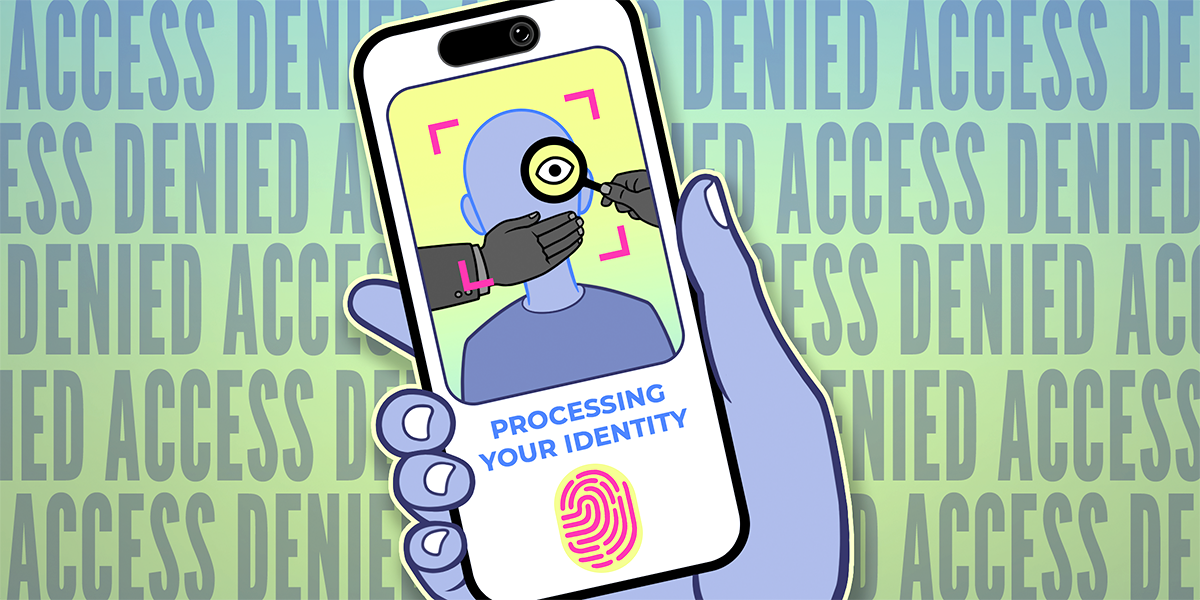
Just days after a damning WIRED report exposed that Meta had quietly embedded facial recognition technology (FRT) code into millions of phones, the tech giant has quietly acquiesced in demands to reverse course.

Last week, researchers identified code in Meta AI, a companion app for its line of smart glasses, that could convert images of faces into unique biometric signatures to identify strangers in public. EFF’s Threat Lab verified these findings through static analysis, and reminded consumers to think twice before buying or using Meta’s surveillance glasses. 

Just as quietly as Meta embedded this code, the app’s June 5th app update appears to have quietly removed all those features and systems. Gone is the face-recognition technology, the code meant to trigger “Person recognized” alerts, and the machine learning models and databases  designed to detect, digitize, and store the biometric signatures of people users engage with.

When WIRED broke the news last week, Meta’s executives immediately went on the defensive. Yet, their actions speak louder than their tweets: less than 48 hours after the public caught wind of their plans, Meta quietly launched an update to scrub nearly all traces of the FRT system from their app.

But this quiet deletion of code does not equal a permanent change of heart. Meta previously used face recognition, and stopped only after it faced the legal and financial consequences. Now the company has refused to answer WIRED’s inquiries on whether it plans to bring the NameTag system back in the future, or what they did with any data they may have already collected during internal testing. 

There are billions of reasons not to turn Meta’s customers into a distributed surveillance machine. This whiplash behavior proves exactly why we cannot rely on the "good will" of Big Tech to protect our digital rights. We need robust, enforceable consumer privacy laws, complete with a private right of action that allows everyday people to sue companies that violate their biometric privacy.

While we won this round, Meta's FRT ambitions probably aren't going away. EFF will keep watching.

  •  

Age Verification is a Privacy Nightmare

In the rush to block young people from certain parts of the internet, lawmakers are creating a privacy and security nightmare for everyone. This scenario is already playing out globally. Help us stop it and keep the web open and accessible for all.

JOIN EFF

Protect the web for everyone

Even with the best intentions, every online age verification scheme has the same result: users are forced to reveal sensitive personal information to third parties simply to access the web. Once that valuable data is centralized, it becomes an immediate target for leaks, hacks, and misuse. This isn’t hypothetical: it has already happened several times.

By age gating the web, we serve up a honeypot of private info ripe for bad actors. But you can help us stop this when you join EFF.

A person wears an EFF Claw Back member t-shirt on the left. A person on the right wears a black sweatshirt with the Privacy Badger mascot on the chest.

Support digital rights in EFF's new Claw Back member t-shirt and Privacy Badger Crewneck.

Thanks to our members, EFF is on the front lines fighting against online age gating and identity verification online. We’re working with lawmakers to pass better policies, educating the public, and fighting the wildfire of age verification proposals around the world. Now all we need is you.

🐝 No, It’s Not a Bug

We all want young people to be safe online, but we don’t need to trade everyone's digital rights to achieve it. These new restrictive mandates are used to justify government-led censorship and expanded surveillance. That's no accident.

Whether you trust today’s lawmakers or not, handing anyone keys to new forms of censorship and surveillance is a serious risk. Because history shows us that these powers are always abused. It’s time to demand better.

Join EFF today

Help us claw back your privacy

____________________

EFF is a member-supported U.S. 501(c)(3) organization. We've received top ratings from the nonprofit watchdog Charity Navigator since 2013! Your donation is tax-deductible as allowed by law.

  •  

More License Plate Reader Mission Creep: School Residency Verification, Background Checks, and Noise Complaints

An EFF analysis of millions of searches of Flock Safety automated license plate reader (ALPR) data by police has uncovered a troubling pattern: in the absence of a warrant requirement to search ALPR databases, law enforcement agencies have moved beyond specific investigations to use these surveillance networks for virtually any whim.

Our findings suggest that the absence of a warrant requirement has fostered a culture of unrestricted access to sensitive location data, allowing agencies to leverage that data beyond the scope of specific criminal investigations.

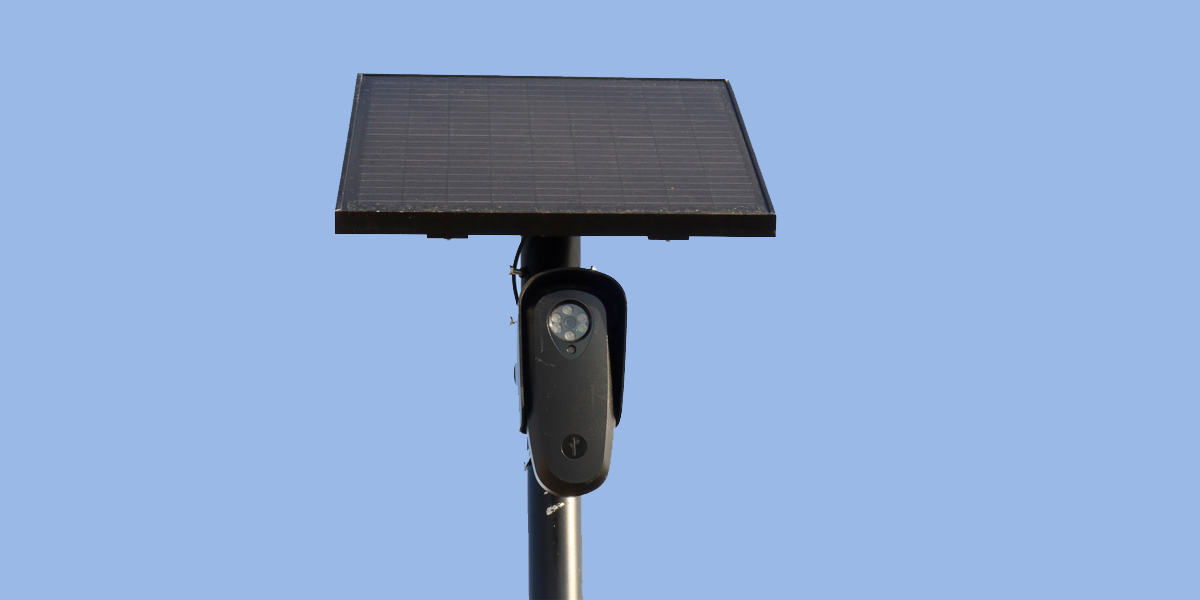
As a refresher: Law enforcement agencies lease or purchase camera systems from Flock Safety and then mount them by the side of the road and at intersections to document every vehicle that passes, including the plate, make, model, color and distinguishing characteristics, along with the date, time and location of where it was seen. 

Law enforcement's talking points—often scripted by the company itself—trumpet their role in solving high-stakes crimes. But the data reveals a different story. What they're not saying is that ALPRs are also frequently used for extremely low-level investigations, such as verifying whether a student lives within a particular school zone. In some cases, police have even used this tech to conduct employment background checks and investigations into loud music complaints. Recently, a motorcyclist was even targeted for simply holding a cell phone while riding.

The reach of this ALPR surveillance is amplified by the nature of the indiscriminate sharing these technologies encourage. Most agencies choose to share broadly, often as part of a nationwide pool, making it common for a single city's system to be searched hundreds of thousands of times each month. By analyzing these "network audit logs," privacy advocates and journalists have uncovered evidence of the technology being used to surveil protesters, abortion-seekers, immigrants, and even ethnic Roma populations

While these high-profile abuses are shocking, the more mundane uses are also problematic, signaling a massive, unchecked mission creep that has turned an alleged “crime-fighting” tool into a universal tracker of everyone’s movements. 

Residency Checks

School systems in the U.S. conduct "residency verification" investigations of their parents or guardians to ensure enrolled children live in the district. To carry out these checks, some school districts have enlisted law enforcement officers for help, leveraging ALPR databases to track the comings and goings of families across the region. 

Buford City Schools in Georgia, which serves only about 6,000 students, illustrates the scale of this prying. Between January 2025 and March 2026, school police ran more than 375 searches where officers listed school residency verification, or simply "RV," as the reason for the search. That accounts for more than half of all ALPR searches in that period, and in those three months of 2026, three-quarters of all searches were related to residency verification. 

School officials stand by the searches. "[B]ecause Buford City Schools is a highly sought-after district, we experience ongoing challenges with residency fraud," a spokesperson told Appen Media, which shared the email with EFF. "Flock Safety is one of the tools we use to verify residency and protect the integrity of the Buford City School System for families who live within the district."

A search of ALPR data will show a lot more than whether a family lives within the right zone. In these Buford cases, officers ran some searches across more than 5,800 different networks nationwide. Every time a plate is searched, it can reveal personal information about a family: when they go to the doctor, when they go to worship, when they go out at night, and where they travel on vacation. None of that is the school district's business, and these searches are a huge invasion of privacy. 

While Buford was by the far the most prolific, it wasn't the only agency to run school residency checks. For example, Delhi Township Police Department (DTPD) in Ohio ran 35 searches related to students in five schools in a three-month period during spring 2025, and similarly stood by the practice, citing a warning given to parents that submitting a false statement of residency may be a felony. 

After EFF sent an inquiry to DTPD, the agency conducted a brief investigation and found that "these searches were not done to verify residency upon submission, but to investigate cases where it was believed the form was filled out with false information." DTPD did not say what kind of evidence was required to establish suspicion before an ALPR query, nor did it offer information on how many of these investigations turned out to be justified. 

However, the official told EFF: "in response to your inquiry, the department will be implementing a change to how these queries are documented in the Flock system and internally, to increase accountability and help avoid any confusion moving forward."

Other agencies that ran school residency searches include Cortland Police Department in Ohio and Lincoln Police Department in Alabama. Several agencies also ran searches with "residency," "residency investigation" or "residency verification" as the reason, but that could refer to a number of public services. These agencies include Ridgeland Police Department in Mississippi, Fairfield County Sheriff's Office in South Carolina, Manteno Police Department in Illinois, Illinois Department of Natural Resources, and Mora County Sheriff's Office in New Mexico. 

Background Checks

Few people would imagine that applying for a government job would open you up to an ALPR search. Yet, several law enforcement agencies ran searches through the Flock network related to employment. 

For example:

  • Jefferson County Sheriff's Office in Missouri ran six searches across 2,853 networks, documenting "employment" in the reason field.
  • Little Elm Police Department in Texas ran 10 searches across 6,306 networks, documenting "EMPLOYMENT" in the reason field.
  • Ridgeland Police Department in Mississippi ran two searches across more than 6,000 networks documenting "employment background inv" in the reason field.
  • Texas City Police Department, Texas ran three searches across 728 networks, documenting "pre employment background" in the reason field. 
  • Zion Police Department in Illinois ran a research across 585 networks documenting "Employee Background" in the reason field. 

Davidson Police Department in North Carolina logged a search listed as "Employment Background," but in response to an inquiry from EFF, the chief described this as "poor choice of words by our investigator." He further stated that the agency does not use ALPRs as part of employment background checks, but in this case, the agency shared that a potential violation of a protective order came to light during a background check, hence the reference to it in the search log.

In addition to the agencies mentioned, several agencies ran searches that simply referred to "background check" or "background checks," which could be related to employment or perhaps some other issue, such as a concealed weapons permit, for example. These include Avon Police Department in Indiana, Rockford Police Department in Illinois, San Bernardino County Sheriff's Office in California, and Seaford Police Department in Delaware.

Noise Complaints

Many people have probably been irritated at some point or another by a car blasting a deep bassline or even the infamous "whistle tip." Some may have even called the cops to complain about a neighbor’s house party. But that's a far cry from the types of serious crimes that Flock and its customers have claimed that the ALPR systems would be used to solve. 

Yet, EFF identified 26 agencies where officers felt it was appropriate to pry into a driver's life because of a noise complaint, ranging from house parties to loud exhausts to just "music": 

A table of agencies and their searches that relate to noise complaints.

Some of these agencies searched upwards of 6,500 networks’ cameras—the equivalent of launching a nationwide goose chase over a booming subwoofer or a busted muffler. 

When Mission Creep Is Just Plain Creepy

An observant reader of this report may have noticed that Ridgeland Police Department in Mississippi ran searches in all three of the categories we reported above.

However, after the city first installed the Flock Safety cameras, the then-police chief told the press that the technology helps solve cases that range from "theft to crimes of violence"—without disclosing that the range would extend much further.

When police and salespeople trot out cherry-picked cases to argue that a mass surveillance technology is an "important" tool,  they obfuscate that it's a convenient shortcut around due process. For serious crimes, police can already go through the standard legal process: making the case to a judge on why they should get a search warrant for location data, whether it's from cell phones or service providers. But police treat ALPR databases as if no such threshold exists, giving them free rein to track a person’s movements without a sliver of judicial oversight.

When police and salespeople trot out cherry-picked cases to argue that a mass surveillance technology is an "important" tool,  they obfuscate that it's a convenient shortcut around due process.

"This is the same as if I put a police officer on the side of the road with a pen and a notepad and he writes down every license plate number that drives by,” the former chief said, repeating a commonly circulated talking point. 

That rhetoric may sound reasonable if we were just talking about a single camera on a street corner, but Ridgeland now operates more than 50 cameras—the equivalent of one for every 500 residents—and maintains access to tens of thousands more. 

If the chief had stood in front of the city’s aldermen and asked for permission to search more than 20,000 cameras so his officers could investigate the high crime of "music," it’s quite unlikely that they would have been nodding their heads along. 

Ridgeland Police Department did not respond to EFF’s requests for comment.

  •  

The Science is Not Settled: How Weak Evidence is Fueling a National Push to Ban Social Media for Youth

As statehouses ramp up for 2026, we’re seeing a familiar and concerning trend of lawmakers rushing to regulate the internet based on shockingly shaky science. From the California State Assembly to the Massachusetts and Minnesota legislatures, a wave of bills is crashing against the digital lives of young people, with proponents of these measures framing social media access as a "public health epidemic," or a "mental health crisis," even though we have yet to see any of the settled science that those labels usually invoke.

As a digital rights organization dedicated to the civil liberties of all users, EFF’s expertise lies in reminding lawmakers that young people enjoy largely the same free speech and privacy rights as adults. EFF is not a social science research shop, but we can read the emerging research. What that research shows is much more nuanced than what is claimed by those proposing to ban young people from social media, and it is clear that research and theories used to justify these sweeping bans is far from settled. The rush to ban access to digital platforms is being fueled by "pop psychology" narratives and a collection of statistically flawed studies that do not meet the rigorous standards required for such a massive infringement on youth autonomy and constitutional rights.

The Lie of A "Settled" Consensus

The current legislative push relies heavily on a specific, media-friendly narrative that the "great rewiring" of the adolescent brain is a proven fact. This theory suggests that smartphones and social media are the primary, if not sole, drivers of a global uptick in teen anxiety, depression, eating disorders, self harm, etc. While this narrative makes for a compelling airport-bookstore read, it quickly collapses under the scrutiny of the broader scientific community.

Independent researchers, including developmental psychologists from institutions like the University of California, Irvine, and Brown University, have repeatedly found that the evidence for such claims is mixed, blurry, and often contradictory. Large-scale meta-analyses covering dozens of countries have failed to show a consistent, measurable association between the rollout of social media and a decline in global well-being. In reality, we are seeing a classic case of what many of our middle school science teachers warned us about: "correlation" being sold as “causation."  

Additionally, the studies used to support these measures often fail to account for or exclude significant alternative explanations for rising teen anxiety and depression, such as the lasting impact of pandemic-era isolation, the persistent threat of school gun violence, and mounting economic or climate-related stress. By focusing narrowly on social media, these findings frequently overlook the broader societal factors that also impact youth mental health.

The Cult of the "Anxious" Expert

The current push for blanket social media bans relies almost exclusively on the work of Jonathan Haidt, particularly his book The Anxious Generation. While Haidt is an amiable and brilliant storyteller, he is not a clinical psychologist or a specialist in child development. He is a social psychologist who writes about moral psychology at a business school. Nonetheless, the book has made it to every Best Seller list, and with Haidt revered as an expert on podcasts with massive reach, like Oprah, Joe Rogan, Michelle Obama, and Trevor Noah—his message has been heard by a large subset of society, which primarily relies on: no smartphones or social media before age 16, phone-free schools, and more “unsupervised, real-world independence.”

To highlight Haidt’s reach when it comes to legislation banning social media: the California committee analysis for the proposed California social media ban mentions Haidt 20 times; the Governor of Utah promoted the book as a “must-read” months before signing the nation’s first social media ban; Haidt is cited in bill analysis for the bill banning social media in Florida; his work is mentioned in a federal bill aiming to ban phones in schools; and he provided formal testimony before the U.S. Senate Judiciary Committee (Subcommittee on Technology, Privacy, and the Law) in May 2022. 

While Haidt’s research has been paramount to legislation stripping millions of young people of their rights to expression and connection, his conclusions are not without challenge, and many experts in the field argue that the evidence is less than ironclad. 

The “Bad Science” Fueling Social Media Bans

While we can admit that Jonathan Haidt’s "great rewiring" theory makes for a gripping narrative, we cannot ignore that independent researchers and statisticians have identified significant flaws in the data used to justify it. Which means we are currently watching policymakers legislate blanket bans based on evidence that would be rejected in almost any other field of public health.

The reality is that research has consistently disproven the oft-assumed link between social media use and poor mental health in youth, and actually indicates that moderate internet use is a net positive for teens’ development, and negative outcomes are usually due to either lack of access or excessive use. In one major study of 100,000 adolescents, a “U-shaped association emerged where moderate social media use was associated with the best well-being outcomes, while both no use and highest use were associated with poorer well-being.” We also know that young people’s relationship with social media is complex, as it provides them essential spaces for civic engagement, identity exploration, and community building—particularly for LGBTQ+ and marginalized youth who may lack support in their physical environments. 

But again, the image Haidt presents in his book is increasingly at odds with the broader academic consensus. As mentioned, critics argue that the evidence for the mental health impacts of social media is mixed, blurry, and often misinterpreted. NYU statistics expert Aaron Brown, writing for Reason, notes that many of the studies in Haidt’s exhaustive reference list are statistically unreliable or fail to show a strong causal link. Prof. Candace Odgers, a leading voice in psychological science, explains the "selection effect" that legislators often ignore:

“Hundreds of researchers, myself included, have searched for the kind of large effects suggested by Haidt. Our efforts have produced a mix of no, small and mixed associations. Most data are correlative. When associations over time are found, they suggest not that social-media use predicts or causes depression, but that young people who already have mental-health problems use such platforms more often or in different ways from their healthy peers.”

This raises a fundamental question of legislative responsibility: If the science is not settled, how can legislators confidently declare a “public health crisis” to justify stripping away young people’s First Amendment rights? By bypassing the rigorous, nuanced findings of the scientific community in favor of a more convenient narrative, legislators are choosing emotion over evidence. Before imposing such draconian restrictions on young people’s access to information, policymakers have an obligation to do the heavy lifting: to dig into the actual research and listen to the experts who are sounding the alarm on oversimplified conclusions.

The Dangers of "Social Contagion" Narrative

Perhaps the most troubling aspect of Haidt’s crusade is its overlap with ideological rhetoric that pathologizes the identities of marginalized youth, and how that makes its way through efforts to ban social media for youth. A recurring theme in the literature favored by proponents of social media bans is the idea of "social contagion"—specifically regarding the rise in young people identifying as transgender or non-binary. Haidt dedicates an entire chapter of his book to this (ch.6, pt 3, p. 165), talking about “Why Social Media Harms Girls More Than Boys,” stating that: 

“The recent growth in diagnoses of gender dysphoria may also be related in part to social media trends, [...] the fact that gender dysphoria is now being diagnosed among many adolescents who showed no signs of it as children all indicate the social influence and sociogenic transmission may be at work as well.”

These harmful theories suggesting that social media is "infecting" young people with gender dysphoria are false and not supported by peer-reviewed clinical research. But by legitimizing "experts" who promote these debunked theories, legislators—especially those in states like California who pride themselves on being a sanctuary for LGBTQ+ youth—are inadvertently platforming the same rhetoric used in other states to ban gender affirming care for youth. This "social contagion" narrative is a tool of exclusion, not a scientific reality, and we must be wary of any "public health" argument that treats community-building and self-discovery among marginalized young people as a "purported mental illness" spread via TikTok.

A Better Path: Digital Wellness, Not Bans

Fortunately, there is a measured, evidence-based alternative already emerging. California's A.B. 2071, for instance, is a student-authored "digital wellness" bill that offers a measured, evidence-based alternative rather than prohibition. The bill advocates for a curriculum that teaches students how to manage algorithms, recognize cyberbullying, and regulate their own relationship with technology. Instead of trying to completely shield young people from social media, education-based approaches empower young people and have the benefit of providing skills that stay with a young person long after they leave the classroom. 

JustLeadershipUSA, a criminal justice organization, has a slogan that rings true in this instance too: “Those closest to the problem are closest to the solution.” So let’s start listening to what our young people are asking us for—more education—instead of imposing paternalistic, disempowering bans.

Legislating With Precision instead of Emotion 

Adolescent mental health struggles are a complex, multifaceted crisis. It is a crisis that has existed for as long as time, and has been driven by economic instability, the opioid epidemic, the threat of school violence, amongst other issues. To pin all of society's woes on a smartphone app is not just a scientific error; it is a policy failure that ignores the real, material needs of young people both online and off.

Legislators must stop legislating as "anxious parents" and start acting as measured policymakers. Because for some youth, social media platforms are a lifeline. UNICEF and other global human rights organizations have warned that age-related restrictions and blanket bans can backfire in three critical ways: isolating marginalized youth (like LGBTQ+ youth, students in rural areas, foster youth, or those with disabilities) who social media is often the only place they can find a supportive community; necessitating invasive mass collection of biometric data or government-issued IDs from all users, including adults; and pushing young people toward less-regulated, "darker" corners of the web where content moderation is non-existent and the risks of actual exploitation are significantly higher.

Legislators have a valid interest in protecting children, but that interest must be pursued through tailored, measured approaches. We cannot allow emotions or a collection of flawed data sets to justify a historic rollback of digital rights. 

  •  

Utah’s New Law Targeting VPNs Goes Into Effect May 6th

Update, May 11, 2026: Utah has agreed to not enforce the VPN law until Sept. 3, 2026 after Aylo, the parent company of Pornhub.com, challenged the law in court.

For the last couple of years, we’ve watched the same predictable cycle play out across the globe: a state (or country) passes a clunky age-verification mandate, and, without fail, Virtual Private Network (VPN) usage surges as residents scramble to maintain their privacy and anonymity. We've seen this everywhere—from states like Florida, Missouri, Texas, and Utah, to countries like the United Kingdom, Australia, and Indonesia

Instead of realizing that mass surveillance and age gates aren't exactly crowd favorites, Utah lawmakers have decided that VPNs themselves are the real issue.

On May 6, 2026, Utah will become, to EFF’s knowledge, the first state in the nation to target the use of VPNs to avoid legally mandated age-verification gates. While advocates in states like Wisconsin successfully forced the removal of similar provisions due to constitutional and technical concerns, Utah is proceeding with a mandate that threatens to significantly undermine digital privacy rights. 

What the Bill Does

Formally known as the “Online Age Verification Amendments,” Senate Bill 73 (SB 73) was signed by Governor Spencer Cox on March 19, 2026. While the majority of the bill consists of provisions related to a 2% tax on revenues from online adult content that is set to take effect in October, one of the more immediate concerns for EFF is the section regulating VPN access, which goes into effect this coming Wednesday.

The VPN Provisions

The new law explicitly addresses VPN use in Section 14, which amends Section 78B-3-1002 of existing Utah statutes in two primary ways:

  1. Regulation based on physical location: Under the law, an individual is considered to be accessing a website from Utah if they are physically located there, regardless of whether they use a VPN, proxy server, or other means to disguise their geographic location.
  2. Ban on sharing VPN instructions: Commercial entities that host "a substantial portion of material harmful to minors" are now prohibited from facilitating or encouraging the use of a VPN to bypass age checks. This includes providing instructions on how to use a VPN or providing the means to circumvent geofencing.

By holding companies liable for verifying the age of anyone physically in Utah, even those using a VPN, the law creates a massive "liability trap." Just like we argued in the case of the Wisconsin bill, if a website cannot reliably detect a VPN user's true location and the law requires it to do so for all users in a particular state, then the legal risk could push the site to either ban all known VPN IPs, or to mandate age verification for every visitor globally. This would subject millions of users to invasive identity checks or blocks to their VPN use, regardless of where they actually live. 

JOIN EFF

HELP US STOP THESE VPN BILLS ACROSS THE COUNTRY

"Don't Ask, Don't Tell"

In practice, SB 73 is different from the Wisconsin proposal in that it stops short of a total VPN ban. Instead, it discourages using VPNs by imposing the liability described above and by muzzling the websites themselves from sharing information about VPNs. This raises significant First Amendment concerns, as it prevents platforms from providing basic, truthful information about a lawful privacy tool to their users. 

Unlike previous drafts seen in other states, SB 73 doesn't explicitly ban the use of a VPN. Under a "don't ask, don't tell" style of enforcement, websites likely only have an obligation to ask for proof of age if they actually learn that a user is physically in Utah and using a VPN. If a site doesn’t know a user is in Utah, their broader obligation to police VPNs remains murky. So, while SB 73 isn’t as extreme as the discarded Wisconsin proposal, it remains a dangerous precedent.

Technical Feasibility

Then there is also the question of technical feasibility: Blocking all known VPN and proxy IP addresses is a technical whack-a-mole that likely no company can win. Providers add new IP addresses constantly, and no comprehensive blocklist exists. Complying with Utah’s requirements would require impossible technical feats.

The internet is built to, and will always, route around censorship. If Utah successfully hampers commercial VPN providers, motivated users will transition to non-commercial proxies, private tunnels through cloud services like AWS, or residential proxies that are virtually indistinguishable from standard home traffic. These workarounds will emerge within hours of the law taking effect. Meanwhile, the collateral damage will fall on businesses, journalists, and survivors of abuse who rely on commercial VPNs for essential data security.

These provisions won't stop a tech-savvy teenager, but they certainly will impact the privacy of every regular Utah resident who just wants to keep their data out of the hands of brokers or malicious actors.

Uncharted Territory

Lawmakers have watched age-verification mandates fail and, instead of reconsidering the approach, have decided to wage war on privacy itself. As the Cato Institute states: 

“The point is that when an internet policy can be avoided by a relatively common technology that often provides significant privacy and security benefits, maybe the policy is the problem. Age verification regimes do plenty of damage to online speech and privacy, but attacking VPNs to try to keep them from being circumvented is doubling down on this damaging approach."

Attacks on VPNs are, at their core, attacks on the tools that enable digital privacy. Utah is setting a precedent that prioritizes government control over the fundamental architecture of a private and secure internet, and it won’t stop at the state’s borders. Regulators in countries outside the U.S. are still eyeing VPN restrictions, with the UK Children’s Commissioner calling VPNs a “loophole that needs closing” and the French Minister Delegate for Artificial Intelligence and Digital Affairs saying VPNs are “the next topic on my list” after the country enacted a ban on social media for kids under 15.

As this law goes into effect, we are entering uncharted territory. Lawmakers who can’t distinguish between a security tool and a "loophole" are now writing the rules for one of the most complex infrastructures on Earth. And we can assure that the result won't be a safer internet, only an increasingly less private one.

SUPPORT EFF  

BECOME AN EFF MEMBER TODAY

  •  

Rep. Finke Was Right: Age-Gating Isn’t About Kids, It’s About Control

When Rep. Leigh Finke spoke last month before the Minnesota House Commerce Finance and Policy Committee to testify against HF1434, a broad-sweeping proposal to age-gate the internet, she began with something disarming: agreement.

“I want to support the basic part of this,” she said, the shared goal of protecting young people online. Because that is not controversial: everyone wants kids to be safe. But HF1434, Minnesota’s proposed age-verification bill, simply won’t “protect children.” It mandates that websites hosting speech that is protected by the First Amendment for both adults and young people to verify users’ identities, often through government IDs or biometric data. As we’ve discussed before, the bill’s definition of speech that lawmakers deem “harmful to minors” is notoriously broad—broad enough to sweep in lawful, non-pornographic speech about sexual orientation, sexual health, and gender identity.

Rep. Finke, an openly transgender lawmaker, next raised a point that her critics have since tried to distort: age-verification laws like the Minnesota bill are already being used to block young LGBTQ+ people from exercising their First Amendment rights to access information that may be educational, affirming, or life-saving. Referencing the Supreme Court case Free Speech Coalition v. Paxton, she noted that state attorneys general have been “almost jubilant” about the ability to use these laws to restrict queer youth from accessing content. “We know that ‘prurient interest’ could be for many people, the very existence of transgender kids,” she added, referring to the malleable legal standard that would govern what content must be age-gated under the law. 

But despite years’ worth of evidence to back her up, Finke has faced a wave of attacks from countless media outlets and religious advocacy groups for her statements. Rep. Finke’s testimony was repeatedly mischaracterized as not having young people’s best interests in mind, when really she was accurately describing the lived reality of LGBTQ+ youth and advocating in support of their access to vital resources and community.

In fact, this backlash proves her point. Beyond attempting to silence queer voices and to scare other legislators from speaking up against these laws, it reveals how age-verification mandates are part of a larger effort to give the government much greater control of what young people are allowed to say, read, or see online. 

Rep. Finke was also right that these proposals are bad policy; they prevent all young people from finding community online, and that they violate young people and adults' First Amendment rights.

Why FSC v. Paxton Matters

Rep. Finke was similarly right to bring up the Paxton case, because beyond the troubling Supreme Court precedent it produced, Texas’s age-verification law also drew eager support from an extraordinary number of amicus briefs from anti-LGBTQ organizations (some even designated hate groups by the Southern Poverty Law Center). 

In FSC v. Paxton, the Supreme Court gave Texas the green light to require age verification for sites where at least one-third of the content is sexual material deemed “harmful to minors,” which generally means explicit sexual content. This ruling, based on how young people do not have a First Amendment right to access explicit sexual content, allows states to enact onerous age-verification rules that will block adults from accessing lawful speech, curtail their ability to be anonymous, and jeopardize their data security and privacy. These are real and immense burdens on adults, and the Court was wrong to ignore them in upholding Texas’ law. 

But laws enacted by other states and Minnesota HF 1434 go further than the Texas statute. Rather than restricting young people from accessing sexual content, these proposals expand what the state deems “harmful to minors” to include any speech that may reference sex, sexuality, gender, and reproductive health. But young people have a First Amendment right to both speak on those topics and to access information online about them.

We will continue to fight against all online age restrictions, but bills like Minnesota’s HF 1434, which seek to restrict young people from accessing speech about their bodies, sexuality, and other truthful information, are especially pernicious.

EFF and Rep. Finke are on the same page here: age verification mandates create immense harm to our First Amendment rights, our right to privacy, as well as our online safety and security. These proposals also fully ignore the reality that LGBTQ young people often rely on the internet for information they cannot get elsewhere. 

But the Paxton case, and the coalition behind it, illustrates exactly how these laws can be weaponized. They weren’t there just to stand up for young people’s privacy online—they were there to argue that the state has a compelling interest in shielding minors from material that, in practice, often includes LGBTQ content. Ultimately, these groups would like to age-gate not just porn sites, but also any content that might discuss sex, sexuality, gender, reproductive health, abortion, and more.

Using Children as Props to Enact Censorship 

The coalition of organizations that filed amicus briefs in support of Texas’s age verification law tells us everything we need to know about the true intentions behind legislating access to information online: censorship, surveillance, and control. After all, if the race to age-gate the internet was purely about child safety, we would expect its strongest supporters to be child-development experts or privacy advocates. Instead, the loudest advocates are organizations dedicated to policing sexuality, attacking LGBTQ+ folks and reproductive rights, and censoring anything that doesn’t fit within their worldview.

Below are some of the harmful platforms that the organizations supporting the age-gating movement are advancing, and how their arguments echo in the attacks on Rep. Finke today:

Policing sexuality, bodily autonomy, and reproductive rights

Many of the organizations backing age-verification laws have spent decades trying to restrict access to accurate sexual health information and reproductive care.

Groups like Exodus Cry, for example, who filed a brief in support of the Texas AG in the SCOTUS case, frame pornography as part of a broader moral crisis. Founded by a Christian dominionistactivist, Exodus Cry advocates for the criminalization of porn and sex work, and promotes a worldview that defines “sexual immorality” as any sexual activity outside marriage between one man and one woman. Its leadership describes the internet as a battleground in a “pornified world” that has to be reclaimed. Another brief in support of the age-verification law was filed by a group of organizations including the Public Advocate of the United States (an SPLC-designated hate group) and America’s Future. America’s Future is an organization that was formed to “revitalize the role of faith in our society” and fiercely advocates in favor of trans sports bans

These groups see age-verification laws as attractive solutions because they create a legal mechanism to wall off large swaths of content that merely mentions sex from not only young people but millions of adults, too.

Attacking LGBTQ+ Rights

Several of the most prominent legal advocates behind age-verification laws have also led the crusade against LGBTQ+ equality. The internet that these groups envision is one that heavily censors critical and even life-saving LGBTQ+ resources, community, and information. 

The Alliance Defending Freedom (ADF), for instance (which is another SPLC-designated hate group), built its reputation on litigation aimed at rolling back LGBTQ+ protections—including  allowing businesses to refuse service to same-sex couples, criminalizing same-sex relationships abroad, and restricting transgender rights

The internet that these groups envision is one that heavily censors critical and even life-saving LGBTQ+ resources, community, and information. 

Then there’s other groups like Them Before Us and Women’s Liberation Front, both of which submitted amici in support of the Texas Attorney General and are devoted to upending LGBTQ+ rights in the United States. Them Before Us says it’s “committed to putting the rights and well-being of children ahead of the desires and agendas of adults.” But it’s also running a campaign to “End Obergefell,” the 2015 Supreme Court case that upheld the right to same-sex marriage, and has been on the cutting edge of transphobic campaigning and pseudoscientific fearmongering about IVF and surrogacy. The Women’s Liberation Front, on the other hand, is an organization that has a long track record of supporting transphobic policies such as bathroom bills, bans on gender-affirming healthcare, and efforts to define “sex” strictly as the biological sex assigned at birth. 

Through cases like FSC v. Paxton, groups like these three continue to advance a vision of society that creates government mandates to enforce their worldviews over personal freedom, while hiding behind a shroud of concern for children’s safety. But when they also describe LGBTQ+ people as “evil” threats to children and run countless campaigns against their human rights, they are being clear about their intentions. This is why we continue to say: the impact of age verification measures goes beyond porn sites.

Expanding censorship beyond the internet into real-life public spaces

As we’ve said for years now, the push to age-gate the internet is part of a broader campaign to control what information people can access in public life both on- and offline. Many of the same organizations advancing these proposals claim to be acting on behalf of young people, but their arguments consistently use children as props to justify giving the government more control over speech and information.

Many of the organizations advocating for online age verification have also supported book bans, attacks on DEI policies and education, and efforts to remove LGBTQ+ materials from schools and libraries. Two of the organizations who supported the Texas Attorney General, Citizens Defending Freedom and Manhattan Institute, have led campaigns around the country to “abolish DEI” and ban classical books like “The Bluest Eye” by Toni Morrison from school libraries. These efforts are not different from the efforts to restrict access to the internet—they reflect a broader strategy to restrict access to ideas or information that these groups find objectionable. And they discourage free thought, inquiry, and the ability for people to decide how to live their lives. 

These campaigns rely on the same core argumentthat certain ideas are inherently dangerous to young people and must therefore be restricted. But that framing misrepresents an important reality: if lawmakers genuinely want to address harms that young people experience online, they should start by listening to young people themselves. When EFF spoke directly with young people about their online experiences, they overwhelmingly rejected restrictions on their access to the internet and came back with nuanced and diverse perspectives. Once that principle—that certain ideas are inherently dangerous—is accepted, the internet, once a symbol of free expression, connection, creativity, and innovation, becomes the next logical target. 

Once that principle—that certain ideas are inherently dangerous—is accepted, the internet, once a symbol of free expression, connection, creativity, and innovation, becomes the next logical target. 

This also wouldn’t be the first time a vulnerable group is used as a prop to advance internet censorship laws. We’ve seen this playbook during the debate over FOSTA/SESTA, where many of the same advocates claimed to speak for trafficking victims/survivors and sex workers, while pushing legislation that ultimately censored online speech and harmed the very communities it invoked. It’s a familiar pattern: you invoke a vulnerable group, frame certain speech as a threat, and use that as a way to expand government control over the flow of information. And as we said in the fight against FOSTA: if lawmakers are serious about addressing harms to particular communities, they should start by talking to those communities. This means that lawmakers seeking to address online harms to young people should be talking to young people, not groups who claim their interests. 

Rep. Finke Was Not Radical. She Was Right.

The Paxton case, and the coalition backing age verification laws in the U.S., shows us exactly why the messaging around these laws draws superficial support from parents and lawmakers. But we’ve heard the quiet part said out loud before. Marsha Blackburn, a sponsor of the federal Kids Online Safety Act, has said that her goal with the legislation was to address what she called “the transgender” in society. When lawmakers and advocacy groups frame queer existence itself as a threat to young people, age-verification laws become ideological enforcement instead of regulatory policy.

When lawmakers and advocacy groups frame queer existence itself as a threat to young people, age-verification laws become ideological enforcement instead of regulatory policy.

In defending free speech, privacy, and the right of young people to access truthful information about themselves, Rep. Leigh Finke was not radical—she was right. She was warning that broad, ideologically driven laws will be used to erase, silence, and isolate young people under the banner of child protection. 

What’s at stake in the fight against age verification is not just a single bill in a single state, or even multiple states, for that matter. It’s about whether “protecting children” becomes a legal pretext for embedding government control over the internet to enforce specific moral and religious judgments—judgments that deny marginalized people access to speech, community, history, and truth—into law. 

And more people in public office need the courage of Rep. Finke to call this out.

  •  

EFF to Wisconsin Legislature: VPN Bans Are Still a Terrible Idea

Update, February 25, 2026: In response to widespread pushback, Wisconsin lawmakers have removed the provision banning VPN services from S.B. 130 / A.B. 105. The bill now awaits Governor Tony Evers’ signature. While the removal of the VPN provision is a positive step, EFF continues to oppose the bill. Advocates and residents across Wisconsin are urged to maintain pressure and encourage Governor Evers to veto the bill.

Wisconsin’s S.B. 130 / A.B. 105 is a spectacularly bad idea.

It’s an age-verification bill that effectively bans VPN access to certain websites for Wisconsinites and censors lawful speech. We wrote about it last November in our blog “Lawmakers Want to Ban VPNs—And They Have No Idea What They're Doing,” but since then, the bill has passed the State Assembly and is scheduled for a vote in the State Senate tomorrow.

In light of this, EFF sent a letter to the entire Wisconsin Legislature urging lawmakers to reject this dangerous bill.

You can read the full letter here.

The short version? This bill both requires invasive age verification for websites that host content lawmakers might deem “sexual” and requires that those sites block any user that connects via a Virtual Private Network (VPN). VPNs are a basic cybersecurity tool used by businesses, universities, journalists, veterans, abuse survivors, and ordinary people who simply don’t want to broadcast their location to every website they visit.

As we lay out in the letter, Wisconsin’s mandate is technically unworkable. Websites cannot reliably determine whether a VPN user is in Wisconsin, a different state, or a different country. So, to avoid liability, websites are faced with an unfortunate choice: either resort to over-blocking IP addresses commonly associated with commercial VPNs, block all Wisconsin users’ access, or mandate nationwide restrictions just to avoid liability. 

The bill also creates a privacy nightmare. It pushes websites to collect sensitive personal data (e.g. government IDs, financial information, biometric identifiers) just to access lawful speech. At the same time, it broadens the definition of material deemed “harmful to minors” far beyond the narrow categories courts have historically allowed states to regulate. The definition goes far beyond the narrow categories historically recognized by courts (namely, explicit adult sexual materials) and instead sweeps in material that merely describes sex or depicts human anatomy. This approach invites over-censorship, chills lawful speech, and exposes websites to vague and unpredictable enforcement. That combination—mass data collection plus vague, expansive speech restrictions—is a recipe for over-censorship, data breaches, and constitutional overreach.

If you live in Wisconsin, now is the time for you to contact your State Senator and urge them to vote NO on S.B. 130 / A.B. 105. Tell them protecting young people online should not mean undermining cybersecurity, chilling lawful speech, and forcing residents to hand over their IDs just to browse the internet.

As we said last time: Our privacy matters. VPNs matter. And politicians who can't tell the difference between a security tool and a "loophole" shouldn't be writing laws about the internet.

  •  

Discord Voluntarily Pushes Mandatory Age Verification Despite Recent Data Breach

Update February 25, 2026: Discord announced yesterday that it will delay the global rollout of its age verification system to the "second half of 2026", instead of March. The company also said it has announced stricter requirements for partners offering facial age estimation, including that the process must be entirely on-device— Discord said one of its initial partners, Persona, "did not meet that bar."

Discord has begun rolling out mandatory age verification and the internet is, understandably, freaking out.

At EFF, we’ve been raising the alarm about age verification mandates for years. In December, we launched our Age Verification Resource Hub to push back against laws and platform policies that require users to hand over sensitive personal information just to access basic online services. At the time, age gates were largely enforced in polities where it was mandated by law. Now they’re landing in platforms and jurisdictions where they’re not required.

Beginning in early March, users who are either (a) estimated by Discord to be under 18, or (b) Discord doesn't have enough information on, may find themselves locked into a “teen-appropriate experience.” That means content filters, age gates, restrictions on direct messages and friend requests, and the inability to speak in “Stage channels,” which are the large-audience audio spaces that power many community events. Discord says most adults may be sorted automatically through a new “age inference” system that relies on account tenure, device and activity data, and broader platform patterns. Those whose age isn’t estimated due to lack of information or who are estimated to not be adults will be asked to scan their face or upload a government ID through a third-party vendor if they want to avoid the default teen account restrictions.

We’ve written extensively about why age verification mandates are a censorship and surveillance nightmare. Discord’s shift only reinforces those concerns. Here’s why:

The 2025 Breach and What's Changed Since

Discord literally won our 2025 “We Still Told You So” Breachies Award. Last year, attackers accessed roughly 70,000 users’ government IDs, selfies, and other sensitive information after compromising Discord’s third-party customer support system.

To be clear: Discord is no longer using that system, which involved routing ID uploads through its general ticketing system for age verification. It now uses dedicated age verification vendors (k-ID globally and Persona for some users in the United Kingdom).

That’s an improvement. But it doesn’t eliminate the underlying potential for data breaches and other harms. Discord says that it will delete records of any user-uploaded government IDs, and that any facial scans will never leave users’ devices. But platforms are closed-source, audits are limited, and history shows that data (especially this ultra-valuable identity data) will leak—whether through hacks, misconfigurations, or retention mistakes. Users are being asked to simply trust that this time will be different.

Age Verification and Anonymous Speech

For decades, we’ve taught young people a simple rule: don’t share personal information with strangers online.

Age verification complicates that advice. Suddenly, some Discord users will now be asked to submit a government ID or facial scan to access certain features if their age-inference technology fails. Discord has said on its blog that it will not associate a user’s ID with their account (only using that information to confirm their age) and that identifying documents won’t be retained. We take those commitments seriously. However, users have little independent visibility into how those safeguards operate in practice or whether they are sufficient to prevent identification.

Even if Discord can technically separate IDs from accounts, many users are understandably skeptical, especially after the platform’s recent breach involving age-verification data. For people who rely on pseudonymity, being required to upload a face scan or government ID at all can feel like crossing a line.

Many people rely on anonymity to speak freely. LGBTQ+ youth, survivors of abuse, political dissidents, and countless others use aliases to explore identity, find support, and build community safely. When identity checks become a condition of participation, many users will simply opt out. The chilling effect isn’t only about whether an ID is permanently linked to an account; it’s about whether users trust the system enough to participate in the first place. When you’re worried that what you say can be traced back to your government ID, you speak differently—or not at all.

No one should have to choose between accessing online communities and protecting their privacy.

Age Verification Systems Are Not Ready for Prime Time

Discord says it is trying to address privacy concerns by using device-based facial age estimation and separating government IDs from user accounts, retaining only a user’s age rather than their identity documents. This is meant to reduce the risks associated with retaining and collecting this sensitive data. However, even when privacy safeguards are in place, we are faced with another problem: There is no current technology that is fully privacy-protective, universally accessible, and consistently accurate. Facial age estimation tools are notoriously unreliable, particularly for people of color, trans and nonbinary people, and people with disabilities. The internet has now proliferated with stories of people bypassing these facial age estimation tools. But when systems get it wrong, users may be forced into appeals processes or required to submit more documentation, such as government-issued IDs, which would exclude those whose appearance doesn’t match their documents and the millions of people around the world who don’t have government-issued identity documents at all.

Even newer approaches (things like age inference, behavior tracking, financial database checks, digital ID systems) expand the web of data collection, and carry their own tradeoffs around access and error. As we mentioned earlier, no current approach is simultaneously privacy-protective, universally accessible, and consistently accurate across all demographics. 

That’s the challenge: the technology itself is not fit for the sweeping role platforms are asking it to play.

That’s the challenge: the technology itself is not fit for the sweeping role platforms are asking it to play.

The Aftermath

Discord reports over 200 million monthly active users, and is one of the largest platforms used by gamers to chat. The video game industry is larger than movies, TV, and music combined, and Discord represents an almost-default option for gamers looking to host communities.

Many communities, including open-source projects, sports teams, fandoms, friend groups, and families, use Discord to stay connected. If communities or individuals are wrongly flagged as minors, or asked to complete the age verification process, they may face a difficult choice: submit to facial scans or ID checks, or accept a more restricted “teen” experience. For those who decline to go through the process, the result can mean reduced functionality, limited communication tools, and the chilling effects that follow. 

Most importantly, Discord did not have to “comply in advance” by requiring age verification for all users, whether or not they live in a jurisdiction that mandates it. Other social media platforms and their trade groups have fought back against more than a dozen age verification laws in the U.S., and Reddit has now taken the legal fight internationally. For a platform with as much market power as Discord, voluntarily imposing age verification is unacceptable. 

So You’ve Hit an Age Gate. Now What?

Discord should reconsider whether expanding identity checks is worth the harm to its communities. But in the meantime, many users are facing age checks today.

That’s why we created our guide, “So You’ve Hit an Age Gate. Now What?” It walks through practical steps to minimize risk, such as:

  • Submit the least amount of sensitive data possible.
  • Ask: What data is collected? Who can access it? How long is it retained?
  • Look for evidence of independent, security-focused audits.
  • Be cautious about background details in selfies or ID photos.

There is unfortunately no perfect option, only tradeoffs. And every user will have their own unique set of safety concerns to consider. Amidst this confusion, our goal is to help keep you informed, so you can make the best choices for you and your community.

In light of the harms imposed by age-verification systems, EFF encourages all services to stop adopting these systems when they are not mandated by law. And lawmakers across the world that are considering bills that would make Discord’s approach the norm for every platform should watch this backlash and similarly move away from the idea.

If you care about privacy, free expression, and the right to participate online without handing over your identity, now is the time to speak up.

Join us in the fight.

  •  

The Year States Chose Surveillance Over Safety: 2025 in Review

2025 was the year age verification went from a fringe policy experiment to a sweeping reality across the United States. Half of the U.S. now mandates age verification for accessing adult content or social media platforms. Nine states saw their laws take effect this year alone, with more coming in 2026.

The good news is that courts have blocked many of the laws seeking to impose age-verification gates on social media, largely for the same reasons that EFF opposes these efforts.  Age-verification measures censor the internet and burden access to online speech. Though age-verification mandates are often touted as "online safety" measures for young people, the laws actually do more harm than good. They undermine the fundamental speech rights of adults and young people alike, create new barriers to internet access, and put at risk all internet users' privacy, anonymity, and security.

If you're feeling overwhelmed by this onslaught of laws and the invasive technologies behind them, you're not alone. That's why we've launched EFF's Age Verification Resource Hub at EFF.org/Age—a one-stop shop to understand what these laws actually do, what's at stake, why EFF opposes all forms of age verification, how to protect yourself, and how to join the fight for a free, open, private, and safe internet. Moreover, there is hope. Although the Supreme Court ruled that imposing age-verification gates to access adult content does not violate the First Amendment on its face, the legal fight continues regarding whether those laws are constitutional. 

As we built the hub throughout 2025, we also fought state mandates in legislatures, courts, and regulatory hearings. Here's a summary of what happened this year.

The Laws That Took Effect (And Immediately Backfired)

Nine states’ age verification laws for accessing adult content went into effect in 2025:

Predictably, users didn’t stop accessing adult content after the laws went into effect, they just changed how they got to it. As we’ve said elsewhere: the internet always routes around censorship. 

In fact, research from the New York Center for Social Media and Politics and the public policy nonprofit the Phoenix Center confirm what we’ve warned from the beginning: age verification laws don’t work. Their research found:

  • Searches for platforms that have blocked access to residents in states with these laws dropped significantly, while searches for offshore sites surged.
  • Researchers saw a predictable surge in VPN usage following the enactment of age verification laws, where for example, Florida saw a 1,150% increase in VPN demand after its law took effect.

As foretold, when platforms block access or require invasive verification, it drives people to sites that operate outside the law—platforms that often pose greater safety risks. Instead of protecting young people, these laws push them toward less secure, less regulated spaces.

Legislation Watch: Expanding Beyond “Adult Content”

Lawmakers Take Aim at Social Media Platforms

Earlier this year, we raised the alarm that state legislatures wouldn’t stop at adult content. Sure enough, throughout 2025, lawmakers set their sights on young people’s social media usage, passing laws that require platforms to verify users’ ages and obtain parental consent for accounts belonging to anyone under 18. Four states already passed similar laws in previous years.  These laws were swiftly blocked in courts because they violate the First Amendment and subject every user to surveillance as a condition of participation in online speech. 

Warning Labels and Time Limits

​​And it doesn’t stop with age verification. California and Minnesota passed new laws this year requiring social media platforms to display warning labels to users. Virginia’s SB 854, which also passed this year, took a different approach. It requires social media platforms to use “commercially reasonable efforts” to determine a user's age and, if that user is under 16, limits them to one hour per day per application by default unless a parent changes the time allowance.

EFF is opposed to these laws as they have serious First Amendment concerns. And courts have agreed: in November 2025, the U.S. District Court for the District of Colorado temporarily halted Colorado's warning label law, which would have required platforms to display warnings to users under 18 about the negative impacts of social media. We expect courts to similarly halt California and Minnesota’s laws.

App Store and Device-Level Age Verification

2025 also saw the rise of device-level and app-store age verification laws, which shift the obligation to verify users onto app stores and operating system providers. These laws seriously impact users’ (adults and young people alike) from accessing information, particularly since these laws block a much broader swath of content (not only adult or sexual content), but every bit of content provided by every application. In October, California Governor Gavin Newsom signed the Digital Age Assurance Act (AB 1043), which takes a slightly different approach to age verification in that it requires “operating system providers”—not just app stores—to offer an interface at device/account setup that prompts the account holder to indicate the user’s birth date or age. Developers must request an age signal when applications are downloaded and launched. These laws expand beyond earlier legislation passed in other states that mandate individual websites implement the law, and apply the responsibility to app stores, operating systems, or device makers at a more fundamental level.

Again, these laws have drawn legal challenges. In October, the Computer & Communications Industry Association (CCIA) filed a lawsuit arguing that Texas’s SB 2420 is unconstitutional. A separate suit, Students Engaged in Advancing Texas (SEAT) v. Paxton, challenges the same law on First Amendment grounds, arguing it violates the free speech rights of young people and adults alike. Both lawsuits argue that the burdens placed on platforms, developers, and users outweigh any proposed benefits.

From Legislation to Regulation: Rulemaking Processes Begin

States with existing laws have also begun the process of rulemaking—translating broad statutory language into specific regulatory requirements. These rulemaking processes matter, because the specific technical requirements, data—handling procedures, and enforcement mechanisms will determine just how invasive these laws become in practice. 

California’s Attorney General held a hearing in November to solicit public comment on methods and standards for age assurance under SB 976, the “Protecting Our Kids from Social Media Addiction Act,” which will require age verification by the end of 2026. EFF supported the legal challenge to S.B. 976 since its passage, and federal courts have blocked portions of the law from taking effect. Now in the rulemaking process, EFF submitted comments raising concerns about the discriminatory impacts of any proposed regulations.

New York's Attorney General also released proposed rules for the state’s Stop Addictive Feeds Exploitation (SAFE) for Kids Act, describing which companies must comply and the standards for determining users’ age and obtaining parental consent. EFF submitted comments opposing the age verification requirements in September of 2024, and again in December 2025.

Our comments in both states warn that these rules risk entrenching invasive age verification systems and normalizing surveillance as a prerequisite for online participation.

The Boundaries Keep Shifting

As we’ve said, age verification will not stop at adult content and social media. Lawmakers are already proposing bills to require ID checks for everything from skincare products in California to diet supplements in Washington. Lawmakers in Wisconsin and Michigan have set their targets on virtual private networks, or VPNs—proposing various legislation that would ban the use of VPNs to prevent people from bypassing age verification laws. AI chatbots are next on the list, with several states considering legislation that would require age verification for all users. Behind the reasonable-sounding talking points lies a sprawling surveillance regime that would reshape how people of all ages use the internet. EFF remains ready to push back against these efforts in legislatures, regulatory hearings, and court rooms.

2025 showed us that age verification mandates are spreading rapidly, despite clear evidence that they don't work and actively harm the people they claim to protect. 2026 will be the year we push back harder—like the future of a free, open, private, and safe internet depends on it.

This is why we must fight back to protect the internet that we know and love. If you want to learn more about these bills, visit EFF.org/Age

This article is part of our Year in Review series. Read other articles about the fight for digital rights in 2025.

  •  

States Take On Tough Tech Policy Battles: 2025 in Review

State legislatures—from Olympia, WA, to Honolulu, HI, to Tallahassee, FL, and everywhere in between—kept EFF’s state legislative team busy throughout 2025.

We saw some great wins and steps forward this year. Washington became the eighth state to enshrine the right to repair. Several states stepped up to protect the privacy of location data, with bills recognizing your location data isn't just a pin on a map—it's a powerful tool that reveals far more than most people realize. Other state legislators moved to protect health privacy. And California passed a law making it easier for people to exercise their privacy rights under the state’s consumer data privacy law.

Several states also took up debates around how to legislate and regulate artificial intelligence and its many applications. We’ll continue to work with allies in states including California and Colorado to proposals that address the real harms from some uses of AI, without infringing on the rights of creators and individual users.

We’ve also fought some troubling bills in states across the country this year. In April, Florida introduced a bill that would have created a backdoor for law enforcement to have easy access to messages if minors use encrypted platforms. Thankfully, the Florida legislature did not pass the bill this year. But it should set off serious alarm bells for anyone who cares about digital rights. And it was just one of a growing set of bills from states that, even when well-intentioned, threaten to take a wrecking ball to privacy, expression, and security in the name of protecting young people online.

Take, for example, the burgeoning number of age verification, age gating, age assurance, and age estimation bills. Instead of making the internet safer for children, these laws can incentivize or intersect with existing systems that collect vast amounts of data to force all users—regardless of age—to verify their identity just to access basic content or products. South Dakota and Wyoming, for example, are requiring any website that hosts any sexual content to implement age verification measures. But, given the way those laws are written, that definition could include essentially any site that allows user-generated or published content without age-based gatekeeping access. That could include everyday resources such as social media networks, online retailers, and streaming platforms.

Lawmakers, not satisfied with putting age gates on the internet, are also increasingly going after VPNs (virtual private networks) to prevent anyone from circumventing these new digital walls. VPNs are not foolproof tools—and they shouldn’t be necessary to access legally protected speech—but they should be available to people who want to use them. We will continue to stand against these types of bills, not just for the sake of free expression, but to protect the free flow of information essential to a free society.

This article is part of our Year in Review series. Read other articles about the fight for digital rights in 2025.

  •  

The Breachies 2025: The Worst, Weirdest, Most Impactful Data Breaches of the Year

Another year has come and gone, and with it, thousands of data breaches that affect millions of people. The question these days is less, Is my information in a data breach this year? and more How many data breaches had my information in them this year? 

Some data breaches are more noteworthy than others. Where one might affect a small number of people and include little useful information, like a name or email address, others might include data ranging from a potential medical diagnosis to specific location information. To catalog and talk about these breaches we created the Breachies, a series of tongue-in-cheek awards, to highlight the most egregious data breaches. 

In most cases, if these companies practiced a privacy first approach and focused on data minimization, only collecting and storing what they absolutely need to provide the services they promise, many data breaches would be far less harmful to the victims. But instead, companies gobble up as much as they can, store it for as long as possible, and inevitably at some point someone decides to poke in and steal that data. Once all that personal data is stolen, it can be used against the breach victims for identity theft, ransomware attacks, and to send unwanted spam. It has become such a common occurrence that it’s easy to lose track of which breaches affect you, and just assume your information is out there somewhere. Still, a few steps can help protect your information.

With that, let’s get to the awards.

The Winners

The Say Something Without Saying Anything Award: Mixpanel

We’ve long warned that apps delivering your personal information to third-parties, even if they aren’t the ad networks directly driving surveillance capitalism, presents risks and a salient target for hackers. The more widespread your data, the more places attackers can go to find it. Mixpanel, a data analytics company which collects information on users of any app which incorporates its SDK, suffered a major breach in November this year. The service has been used by a wide array of companies, including the Ring Doorbell App, which we reported on back in 2020 delivering a trove of information to Mixpanel, and PornHub, which despite not having worked with the company since 2021, had its historical record of paying subscribers breached.    

There’s a lot we still don’t know about this data breach, in large part because the announcement about it is so opaque, leaving reporters with unanswered questions about how many were affected, if the hackers demanded a ransom, and if Mixpanel employee accounts utilized standard security best practices. One thing is clear, though: the breach was enough for OpenAI to drop them as a provider, disclosing critical details on the breach in a blog post that Mixpanel’s own announcement conveniently failed to mention.

The worst part is that, as a data analytics company providing libraries which are included in a broad range of apps, we can surmise that the vast majority of people affected by this breach have no direct relationship with Mixpanel, and likely didn’t even know that their devices were delivering data to the company. These people deserve better than vague statements by companies which profit off of (and apparently insufficiently secure) their data.

The We Still Told You So Award: Discord

Last year, AU10TIX won our first The We Told You So Award because as we predicted in 2023, age verification mandates would inevitably lead to more data breaches, potentially exposing government IDs as well as information about the sites that a user visits. Like clockwork, they did. It was our first We Told You So Breachies award, but we knew it wouldn’t be the last. 

Unfortunately, there is growing political interest in mandating identity or age verification before allowing people to access social media or adult material. EFF and others oppose these plans because they threaten both speech and privacy

Nonetheless, this year’s winner of The We Still Told You So Breachies Award is the messaging app, Discord — once known mainly for gaming communities, it now hosts more than 200 million monthly active users and is widely used to host fandom and community channels. 

In September of this year, much of Discord’s age verification data was breached — including users’ real names, selfies, ID documents, email and physical addresses, phone numbers, IP addresses, and other contact details or messages provided to customer support. In some cases, “limited billing information” was also accessed—including payment type, the last four digits of credit card numbers, and purchase histories. 

Technically though, it wasn’t Discord itself that was hacked but their third-party customer support provider — a company called Zendeskthat was compromised, allowing attackers to access Discord’s user data. Either way, it’s Discord users who felt the impact. 

The Tea for Two Award: Tea Dating Advice and TeaOnHer

Speaking of age verification, Tea, the dating safety app for women, had a pretty horrible year for data breaches. The app allows users to anonymously share reviews and safety information about their dates with men—helping keep others safe by noting red flags they saw during their date.

Since Tea is aimed at women’s safety and dating advice, the app asks new users to upload a selfie or photo ID to verify their identity and gender to create an account. That’s some pretty sensitive information that the app is asking you to trust it with! Back in July, it was reported that 72,000 images had been leaked from the app, including 13,000 images of photo IDs and 59,000 selfies. These photos were found via an exposed database hosted on Google’s mobile app development platform, Firebase. And if that isn’t bad enough, just a week later a second breach exposed private messages between users, including messages with phone numbers, abortion planning, and discussions about cheating partners. This breach included more than 1.1 million messages from early 2023 all the way to mid-2025, just before the breach was reported. Tea released a statement shortly after, temporarily disabling the chat feature.

But wait, there’s more. A completely different app based on the same idea, but for men, also suffered a data breach. TeaOnHer failed to protect similar sensitive data. In August, TechCrunch discovered that user information — including emails, usernames, and yes, those photo IDs and selfies — was accessible through a publicly available web address. Even worse? TechCrunch also found the email address and password the app’s creator uses to access the admin page.

Breaches like this are one of the reasons that EFF shouts from the rooftops against laws that mandate user verification with an ID or selfie. Every company that collects this information becomes a target for data breaches — and if a breach happens, you can’t just change your face. 

The Just Stop Using Tracking Tech Award: Blue Shield of California

Another year, another data breach caused by online tracking tools. 

In April, Blue Shield of California revealed that it had shared 4.7 million people’s health data with Google by misconfiguring Google Analytics on its website. The data, which may have been used for targeted advertising, included: people’s names, insurance plan details, medical service providers, and patient financial responsibility. The health insurance company shared this information with Google for nearly three years before realizing its mistake.

If this data breach sounds familiar, it’s because it is: last year’s Just Stop Using Tracking Tech award also went to a healthcare company that leaked patient data through tracking code on its website. Tracking tools remain alarmingly common on healthcare websites, even after years of incidents like this one. These tools are marketed as harmless analytics or marketing solutions, but can expose people’s sensitive data to advertisers and data brokers. 

EFF’s free Privacy Badger extension can block online trackers, but you shouldn’t need an extension to stop companies from harvesting and monetizing your medical data. We need a strong, federal privacy law and ban on online behavioral advertising to eliminate the incentives driving companies to keep surveilling us online. 

The Hacker's Hall Pass Award: PowerSchool

 In December 2024, PowerSchool, the largest provider of student information systems in the U.S., gave hackers access to sensitive student data. The breach compromised personal information of over 60 million students and teachers, including Social Security numbers, medical records, grades, and special education data. Hackers exploited PowerSchool’s weak security—namely, stolen credentials to their internal customer support portal—and gained unfettered access to sensitive data stored by school districts across the country.

PowerSchool failed to implement basic security measures like multi-factor authentication, and the breach affected districts nationwide. In Texas alone, over 880,000 individuals’ data was exposed, prompting the state's attorney general to file a lawsuit, accusing PowerSchool of misleading its customers about security practices. Memphis-Shelby County Schools also filed suit, seeking damages for the breach and the cost of recovery.

While PowerSchool paid hackers an undisclosed sum to prevent data from being published, the company’s failure to protect its users’ data raises serious concerns about the security of K-12 educational systems. Adding to the saga, a Massachusetts student, Matthew Lane, pleaded guilty in October to hacking and extorting PowerSchool for $2.85 million in Bitcoin. Lane faces up to 17 years in prison for cyber extortion and aggravated identity theft, a reminder that not all hackers are faceless shadowy figures — sometimes they’re just a college kid.

The Worst. Customer. Service. Ever. Award: TransUnion

Credit reporting giant TransUnion had to notify its customers this year that a hack nabbed the personal information of 4.4 million people. How'd the attackers get in? According to a letter filed with the Maine Attorney General's office obtained by TechCrunch, the problem was a “third-party application serving our U.S. consumer support operations.” That's probably not the kind of support they were looking for. 

TransUnion said in a Texas filing that attackers swept up “customers’ names, dates of birth, and Social Security numbers” in the breach, though it was quick to point out in public statements that the hackers did not access credit reports or “core credit data.” While it certainly could have been worse, this breach highlights the many ways that hackers can get their hands on information. Coming in through third-parties, companies that provide software or other services to businesses, is like using an unguarded side door, rather than checking in at the front desk. Companies, particularly those who keep sensitive personal information, should be sure to lock down customer information at all the entry points. After all, their decisions about who they do business with ultimately carry consequences for all of their customers — who have no say in the matter.

The Annual Microsoft Screwed Up Again Award: Microsoft

Microsoft is a company nobody feels neutral about. Especially in the infosec world. The myriad software vulnerabilities in Windows, Office, and other Microsoft products over the decades has been a source of frustration and also great financial rewards for both attackers and defenders. Yet still, as the saying goes: “nobody ever got fired for buying from Microsoft.” But perhaps, the times, they are a-changing. 

In July 2025, it was revealed that a zero-day security vulnerability in Microsoft’s flagship file sharing and collaboration software, SharePoint, had led to the compromise of over 400 organizations, including major corporations and sensitive government agencies such as the National Nuclear Security Administration (NNSA), the federal agency responsible for maintaining and developing the U.S. stockpile of nuclear weapons. The attack was attributed to three different Chinese government linked hacking groups. Amazingly, days after the vulnerability was first reported, there were still thousands of vulnerable self-hosted Sharepoint servers online. 

Zero-days happen to tech companies, large and small. It’s nearly impossible to write even moderately complex software that is bug and exploit free, and Microsoft can’t exactly be blamed for having a zero-day in their code. But when one company is the source of so many zero-days consistently for so many years, one must start wondering whether they should put all their eggs (or data) into a basket that company made. Perhaps if Microsoft’s monopolistic practices had been reined in back in the 1990s we wouldn’t be in a position today where Sharepoint is the defacto file sharing software for so many major organizations. And maybe, just maybe, this is further evidence that tech monopolies and centralization of data aren’t just bad for consumer rights, civil liberties, and the economy—but also for cybersecurity. 

The Silver Globe Award: Flat Earth Sun, Moon & Zodiac

Look, we’ll keep this one short: in October of last year, researchers found security issues in the flat earther app, Flat Earth, Sun, Moon, & Clock. In March of 2025, that breach was confirmed. What’s most notable about this, aside from including a surprising amount of information about gender, name, email addresses and date of birth, is that it also included users’ location info, including latitude and longitude. Huh, interesting.

The I Didn’t Even Know You Had My Information Award: Gravy Analytics

In January, hackers claimed they stole millions of people’s location history from a company that never should’ve had it in the first place: location data broker Gravy Analytics. The data included timestamped location coordinates tied to advertising IDs, which can reveal exceptionally sensitive information. In fact, researchers who reviewed the leaked data found it could be used to identify military personnel and gay people in countries where homosexuality is illegal

The breach of this sensitive data is bad, but Gravy Analytics’s business model of regularly harvesting and selling it is even worse. Despite the fact that most people have never heard of them, Gravy Analytics has managed to collect location information from a billion phones a day. The company has sold this data to other data brokers, makers of police surveillance tools, and the U.S. government

How did Gravy Analytics get this location information from people’s phones? The data broker industry is notoriously opaque, but this breach may have revealed some of Gravy Analytics’ sources. The leaked data referenced thousands of apps, including Microsoft apps, Candy Crush, Tinder, Grindr, MyFitnessPal, pregnancy trackers and religious-focused apps. Many of these app developers said they had no relationship with Gravy Analytics. Instead, expert analysis of the data suggests it was harvested through the advertising ecosystem already connected to most apps. This breach provides further evidence that online behavioral advertising fuels the surveillance industry

Whether or not they get hacked, location data brokers like Gravy Analytics threaten our privacy and security. Follow EFF’s guide to protecting your location data and help us fight for legislation to dismantle the data broker industry. 

The Keeping Up With My Cybertruck Award: Teslamate

TeslaMate, a tool meant to track Tesla vehicle data (but which is not owned or operated by Tesla itself), has become a cautionary tale about data security. In August, a security researcher found more than 1,300 self-hosted TeslaMate dashboards were exposed online, leaking sensitive information such as vehicle location, speed, charging habits, and even trip details. In essence, your Cybertruck became the star of its own Keeping Up With My Cybertruck reality show, except the audience wasn’t made up of fans interested in your lifestyle, just random people with access to the internet.

TeslaMate describes itself as “that loyal friend who never forgets anything!” — but its lack of proper security measures makes you wish it would. This breach highlights how easily location data can become a tool for harassment or worse, and the growing need for legislation that specifically protects consumer location data. Without stronger regulations around data privacy, sensitive location details like where you live, work, and travel can easily be accessed by malicious actors, leaving consumers with no recourse.

The Disorder in the Courts Award: PACER

Confidentiality is a core principle in the practice of law. But this year a breach of confidentiality came from an unexpected source: a breach of the federal court filing system. In August, Politico reported that hackers infiltrated the Case Management/Electronic Case Files (CM/ECF) system, which uses the same database as PACER, a searchable public database for court records. Of particular concern? The possibility that the attack exposed the names of confidential informants involved in federal cases from multiple court districts. Courts across the country acted quickly to set up new processes to avoid the possibility of further compromises.

The leak followed a similar incident in 2021 and came on the heels of a warning to Congress that the file system is more than a little creaky. In fact, an IT official from the federal court system told the House Judiciary Committee that both systems are “unsustainable due to cyber risks, and require replacement.”

The Only Stalkers Allowed Award: Catwatchful

Just like last year, a stalkerware company was subject to a data breach that really should prove once and for all that these companies must be stopped. In this case, Catwatchful is an Android spyware company that sells itself as a “child monitoring app.” Like other products in this category, it’s designed to operate covertly while uploading the contents of a victim’s phone, including photos, messages, and location information.

This data breach was particularly harmful, as it included not just the email addresses and passwords on the customers who purchased the app to install on a victim’s phone, but also the data from the phones of 26,000 victims’ devices, which could include the victims’ photos, messages, and real-time location data.

This was a tough award to decide on because Catwatchful wasn’t the only stalkerware company that was hit this year. Similar breaches to SpyX, Cocospy, and Spyic were all strong contenders. EFF has worked tirelessly to raise the alarm on this sort of software, and this year worked with AV Comparatives to test the stalkerware detection rate on Android of various major antivirus apps.

The Why We’re Still Stuck on Unique Passwords Award: Plex

Every year, we all get a reminder about why using unique passwords for all our accounts is crucial for protecting our online identities. This time around, the award goes to Plex, who experienced a data breach that included customer emails, usernames, and hashed passwords (which is a fancy way of saying passwords are scrambled through an algorithm, but it is possible they could still be deciphered).

If this all sounds vaguely familiar to you for some reason, that’s because a similar issue also happened to Plex in 2022, affecting 15 million users. Whoops.

This is why it is important to use unique passwords everywhereA password manager, including one that might be free on your phone or browser, makes this much easier to do. Likewise, credential stuffing illustrates why it’s important to use two-factor authentication. Here’s how to turn that on for your Plex account.

The Uh, Yes, Actually, I Have Been Pwned Award: Troy Hunt’s Mailing List

Troy Hunt, the person behind Have I Been Pwned? and who has more experience with data breaches than just about anyone, also proved that anyone can be pwned. In a blog post, he details what happened to his mailing list:

You know when you're really jet lagged and really tired and the cogs in your head are just moving that little bit too slow? That's me right now, and the penny has just dropped that a Mailchimp phish has grabbed my credentials, logged into my account and exported the mailing list for this blog.

And he continues later:

I'm enormously frustrated with myself for having fallen for this, and I apologise to anyone on that list. Obviously, watch out for spam or further phishes and check back here or via the social channels in the nav bar above for more.

The whole blog is worth a read as a reminder that phishing can get anyone, and we thank Troy Hunt for his feedback on this and other breaches to include this year.

Tips to Protect Yourself

Data breaches are such a common occurrence that it’s easy to feel like there’s nothing you can do, nor any point in trying. But privacy isn’t dead. While some information about you is almost certainly out there, that’s no reason for despair. In fact, it’s a good reason to take action.

There are steps you can take right now with all your online accounts to best protect yourself from the the next data breach (and the next, and the next):

  • Use unique passwords on all your online accounts. This is made much easier by using a password manager, which can generate and store those passwords for you. When you have a unique password for every website, a data breach of one site won’t cascade to others.
  • Use two-factor authentication when a service offers it. Two-factor authentication makes your online accounts more secure by requiring additional proof (“factors”) alongside your password when you log in. While two-factor authentication adds another step to the login process, it’s a great way to help keep out anyone not authorized, even if your password is breached.
  • Delete old accounts: Sometimes, you’ll get a data breach notification for an account you haven’t used in years. This can be a nice reminder to delete that account, but it’s better to do so before a data breach happens, when possible. Try to make it a habit to go through and delete old accounts once a year or so. 
  • Freeze your credit. Many experts recommend freezing your credit with the major credit bureaus as a way to protect against the sort of identity theft that’s made possible by some data breaches. Freezing your credit prevents someone from opening up a new line of credit in your name without additional information, like a PIN or password, to “unfreeze” the account. This might sound absurd considering they can’t even open bank accounts, but if you have kids, you can freeze their credit too.
  • Keep a close eye out for strange medical bills. With the number of health companies breached this year, it’s also a good idea to watch for healthcare fraud. The Federal Trade Commission recommends watching for strange bills, letters from your health insurance company for services you didn’t receive, and letters from debt collectors claiming you owe money. 

(Dis)Honorable Mentions

According to one report, 2025 had already seen 2,563 data breaches by October, which puts the year on track to be one of the worst by the sheer number of breaches.

We did not investigate every one of these 2,500-plus data breaches, but we looked at a lot of them, including the news coverage and the data breach notification letters that many state Attorney General offices host on their websites. We can’t award the coveted Breachies Award to every company that was breached this year. Still, here are some (dis)honorable mentions we wanted to highlight:

Salesforce, F5, Oracle, WorkComposer, Raw, Stiizy, Ohio Medical Alliance LLC, Hello Cake, Lovense, Kettering Health, LexisNexis, WhatsApp, Nexar, McDonalds, Congressional Budget Office, Doordash, Louis Vuitton, Adidas, Columbia University, Hertz, HCRG Care Group, Lexipol, Color Dating, Workday, Aflac, and Coinbase. And a special nod to last minute entrants Home Depot, 700Credit, and Petco.

What now? Companies need to do a better job of only collecting the information they need to operate, and properly securing what they store. Also, the U.S. needs to pass comprehensive privacy protections. At the very least, we need to be able to sue companies when these sorts of breaches happen (and while we’re at it, it’d be nice if we got more than $5.21 checks in the mail). EFF has long advocated for a strong federal privacy law that includes a private right of action.

  •  

10 (Not So) Hidden Dangers of Age Verification

It’s nearly the end of 2025, and half of the US and the UK now require you to upload your ID or scan your face to watch “sexual content.” A handful of states and Australia now have various requirements to verify your age before you can create a social media account.

Age-verification laws may sound straightforward to some: protect young people online by making everyone prove their age. But in reality, these mandates force users into one of two flawed systems—mandatory ID checks or biometric scans—and both are deeply discriminatory. These proposals burden everyone’s right to speak and access information online, and structurally excludes the very people who rely on the internet most. In short, although these laws are often passed with the intention to protect children from harm, the reality is that these laws harm both adults and children. 

Here’s who gets hurt, and how: 

   1.  Adults Without IDs Get Locked Out

Document-based verification assumes everyone has the right ID, in the right name, at the right address. About 15 million adult U.S. citizens don’t have a driver’s license, and 2.6 million lack any government-issued photo ID at all. Another 34.5 million adults don't have a driver's license or state ID with their current name and address.

Specifically:

  • 18% of Black adults don't have a driver's license at all.
  • Black and Hispanic Americans are disproportionately less likely to have current licenses.
  • Undocumented immigrants often cannot obtain state IDs or driver's licenses.
  • People with disabilities are less likely to have current identification.
  • Lower-income Americans face greater barriers to maintaining valid IDs.

Some laws allow platforms to ask for financial documents like credit cards or mortgage records instead. But they still overlook the fact that nearly 35% of U.S. adults also don't own homes, and close to 20% of households don't have credit cards. Immigrants, regardless of legal status, may also be unable to obtain credit cards or other financial documentation.

   2.  Communities of Color Face Higher Error Rates

Platforms that rely on AI-based age-estimation systems often use a webcam selfie to guess users’ ages. But these algorithms don’t work equally well for everyone. Research has consistently shown that they are less accurate for people with Black, Asian, Indigenous, and Southeast Asian backgrounds; that they often misclassify those adults as being under 18; and sometimes take longer to process, creating unequal access to online spaces. This mirrors the well-documented racial bias in facial recognition technologies. The result is that technology’s inherent biases can block people from speaking online or accessing others’ speech.

   3.  People with Disabilities Face More Barriers

Age-verification mandates most harshly affect people with disabilities. Facial recognition systems routinely fail to recognize faces with physical differences, affecting an estimated 100 million people worldwide who live with facial differences, and “liveness detection” can exclude folks with limited mobility. As these technologies become gatekeepers to online spaces, people with disabilities find themselves increasingly blocked from essential services and platforms with no specified appeals processes that account for disability.

Document-based systems also don't solve this problem—as mentioned earlier, people with disabilities are also less likely to possess current driver's licenses, so document-based age-gating technologies are equally exclusionary.

   4.  Transgender and Non-Binary People Are Put At Risk

Age-estimation technologies perform worse on transgender individuals and cannot classify non-binary genders at all. For the 43% of transgender Americans who lack identity documents that correctly reflect their name or gender, age verification creates an impossible choice: provide documents with dead names and incorrect gender markers, potentially outing themselves in the process, or lose access to online platforms entirely—a risk that no one should be forced to take just to use social media or access legal content.

   5.  Anonymity Becomes a Casualty

Age-verification systems are, at their core, surveillance systems. By requiring identity verification to access basic online services, we risk creating an internet where anonymity is a thing of the past. For people who rely on anonymity for safety, this is a serious issue. Domestic abuse survivors need to stay anonymous to hide from abusers who could track them through their online activities. Journalists, activists, and whistleblowers regularly use anonymity to protect sources and organize without facing retaliation or government surveillance. And in countries under authoritarian rule, anonymity is often the only way to access banned resources or share information without being silenced. Age-verification systems that demand government IDs or biometric data would strip away these protections, leaving the most vulnerable exposed.

   6.  Young People Lose Access to Essential Information 

Because state-imposed age-verification rules either block young people from social media or require them to get parental permission before logging on, they can deprive minors of access to important information about their health, sexuality, and gender. Many U.S. states mandate “abstinence only” sexual health education, making the internet a key resource for education and self-discovery. But age-verification laws can end up blocking young people from accessing that critical information. And this isn't just about porn, it’s about sex education, mental health resources, and even important literature. Some states and countries may start going after content they deem “harmful to minors,” which could include anything from books on sexual health to art, history, and even award-winning novels. And let’s be clear: these laws often get used to target anything that challenges certain political or cultural narratives, from diverse educational materials to media that simply includes themes of sexuality or gender diversity. What begins as a “protection” for kids could easily turn into a full-on censorship movement, blocking content that’s actually vital for minors’ development, education, and well-being. 

This is also especially harmful to homeschoolers, who rely on the internet for research, online courses, and exams. For many, the internet is central to their education and social lives. The internet is also crucial for homeschoolers' mental health, as many already struggle with isolation. Age-verification laws would restrict access to resources that are essential for their education and well-being.

   7.  LGBTQ+ Youth Are Denied Vital Lifelines

For many LGBTQ+ young people, especially those with unsupportive or abusive families, the internet can be a lifeline. For young people facing family rejection or violence due to their sexuality or gender identity, social media platforms often provide crucial access to support networks, mental health resources, and communities that affirm their identities. Age verification systems that require parental consent threaten to cut them from these crucial supports. 

When parents must consent to or monitor their children's social media accounts, LGBTQ+ youth who lack family support lose these vital connections. LGBTQ+ youth are also disproportionately likely to be unhoused and lack access to identification or parental consent, further marginalizing them. 

   8.  Youth in Foster Care Systems Are Completely Left Out

Age verification bills that require parental consent fail to account for young people in foster care, particularly those in group homes without legal guardians who can provide consent, or with temporary foster parents who cannot prove guardianship. These systems effectively exclude some of the most vulnerable young people from accessing online platforms and resources they may desperately need.

   9.  All of Our Personal Data is Put at Risk

An age-verification system also creates acute privacy risks for adults and young people. Requiring users to upload sensitive personal information (like government-issued IDs or biometric data) to verify their age creates serious privacy and security risks. Under these laws, users would not just momentarily display their ID like one does when accessing a liquor store, for example. Instead, they’d submit their ID to third-party companies, raising major concerns over who receives, stores, and controls that data. Once uploaded, this personal information could be exposed, mishandled, or even breached, as we've seen with past data hacks. Age-verification systems are no strangers to being compromised—companies like AU10TIX and platforms like Discord have faced high-profile data breaches, exposing users’ most sensitive information for months or even years. 

The more places personal data passes through, the higher the chances of it being misused or stolen. Users are left with little control over their own privacy once they hand over these immutable details, making this approach to age verification a serious risk for identity theft, blackmail, and other privacy violations. Children are already a major target for identity theft, and these mandates perversely increase the risk that they will be harmed.

   10.  All of Our Free Speech Rights Are Trampled

The internet is today’s public square—the main place where people come together to share ideas, organize, learn, and build community. Even the Supreme Court has recognized that social media platforms are among the most powerful tools ordinary people have to be heard.

Age-verification systems inevitably block some adults from accessing lawful speech and allow some young people under 18 users to slip through anyway. Because the systems are both over-inclusive (blocking adults) and under-inclusive (failing to block people under 18), they restrict lawful speech in ways that violate the First Amendment. 

The Bottom Line

Age-verification mandates create barriers along lines of race, disability, gender identity, sexual orientation, immigration status, and socioeconomic class. While these requirements threaten everyone’s privacy and free-speech rights, they fall heaviest on communities already facing systemic obstacles.

The internet is essential to how people speak, learn, and participate in public life. When access depends on flawed technology or hard-to-obtain documents, we don’t just inconvenience users, we deepen existing inequalities and silence the people who most need these platforms. As outlined, every available method—facial age estimation, document checks, financial records, or parental consent—systematically excludes or harms marginalized people. The real question isn’t whether these systems discriminate, but how extensively.

  •  
❌