Reading view

EFF Launches New Offline Campaign for Saudi Wikipedian Osama Khalid

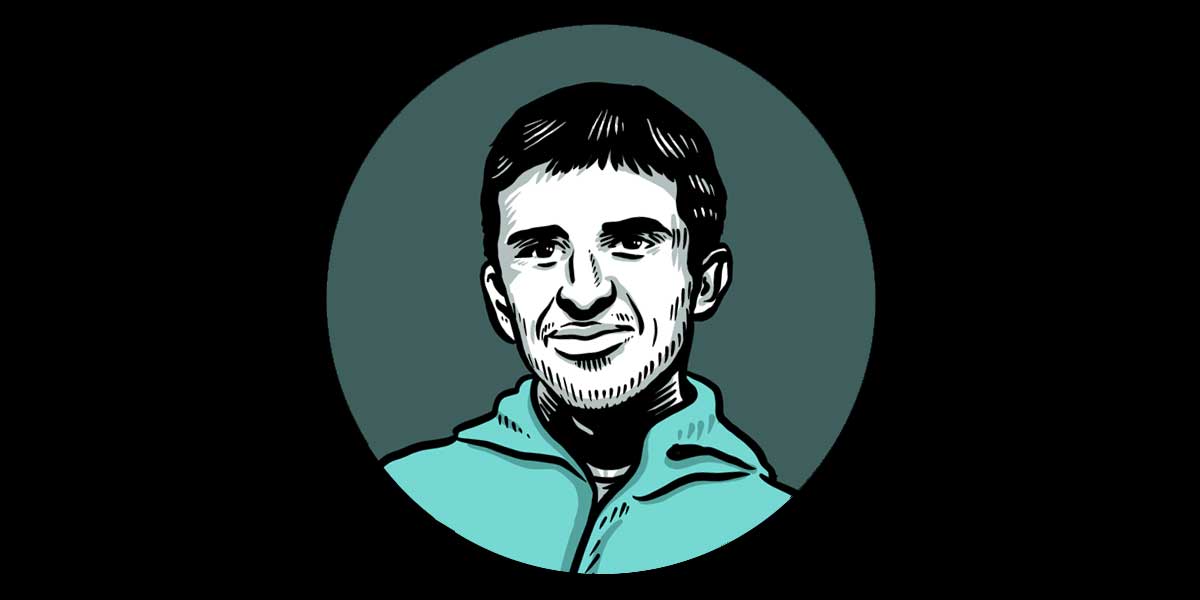
Osama Khalid was just twelve years old when he began contributing to Wikipedia Arabic. In the height of the blogging era, he became a prolific blogger, publishing writings on his home country of Saudi Arabia, meetups he attended, and his opinions and observations about open source technology and freedom of expression. He advocated for internet freedom, contributed time and translations to various projects—including EFF’s HTTPS Everywhere—and was a thoughtful presence at the conferences he attended around the world…all while training to become a pediatrician.

In July of 2020, he was detained amid a wave of arbitrary arrests carried out by the Saudi authorities during the Covid-19 lockdown and initially given a five-year prison sentence. That sentence was later increased on appeal to 32 years, then reduced in 2023 to 25 years, and again to 14 years this past September. In a joint letter that we signed on to in April, the Saudi human rights organization ALQST, which has been leading the campaign for Osama’s release, wrote: “The huge discrepancy between sentences handed down at different stages in the case underscores the arbitrary manner in which sentencing is carried out in the Saudi judicial system.”

So, what was his “crime”? Sharing information online that conflicted with official narratives. Osama’s Wikipedia contributions included pages on critical human rights issues in Saudi Arabia, including the treatment of women’s rights activist Loujain al-Hathloul (herself an EFF client) and Saudi Arabia’s infamous al-Ha’ir prison. His blog, which has since been taken offline, included articles such as one criticizing government plans for the surveillance of encrypted platforms.

Over the years, we’ve campaigned for the release of a number of individuals imprisoned for their speech. Our contributions to the campaigns of Ola Bini, the Swedish software developer who has been targeted by the government of Ecuador for the past seven years, and Alaa Abd El Fattah, have had real impact. These cases are reminders that attacks on free expression are rarely confined to borders: governments around the world continue to use vague cybercrime laws, national security claims, and politically motivated prosecutions to silence critics, technologists, journalists, and activists.

Supporting these two—and others we’ve highlighted in our Offline project—has never been about defending only individuals. It has also been about defending the principle that writing code, sharing ideas, criticizing governments, and organizing online should not be treated as crimes. Public pressure, international solidarity, legal advocacy, and sustained campaigning can shift the political cost of repression—and, in some cases, help secure meaningful protections for those targeted.

That’s why we’re highlighting Osama’s case and will continue to work with partners including ALQST to advocate for his release. Osama Khalid, like so many human rights defenders, journalists, and internet users detained by the Saudi government, deserves to be free.

  •  

EFF and 18 Organizations Urge UK Policymakers to Prioritize Addressing the Roots of Online Harm

EFF joins 18 organizations in writing a letter to UK policymakers urging them to address the root causes of online harm—rather than undermining the open web through blunt restrictions.

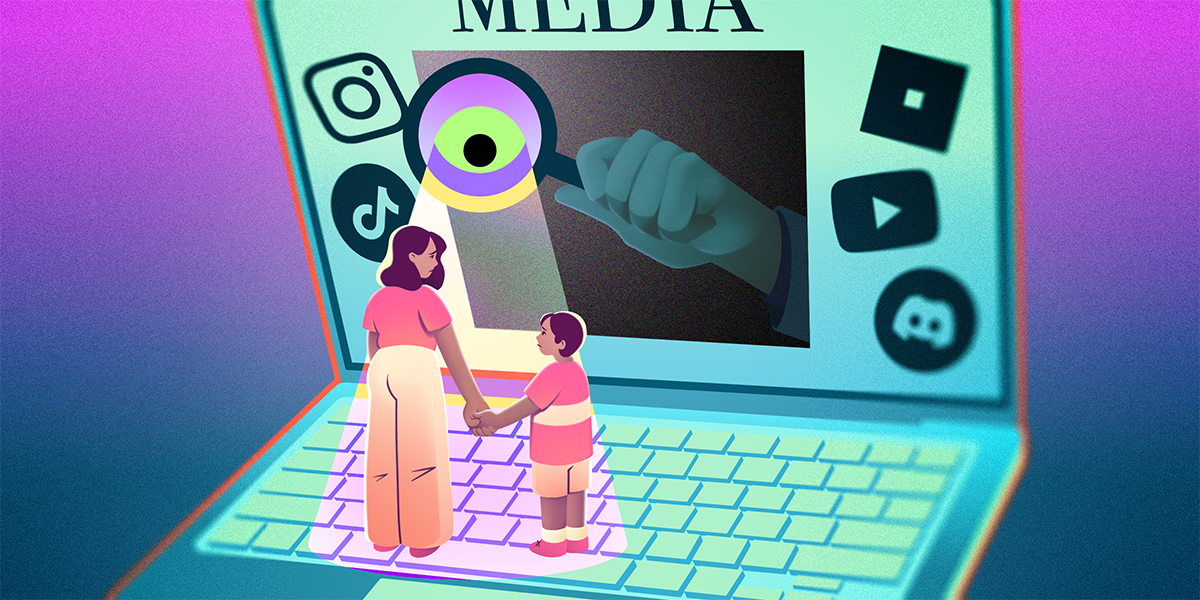
The coalition, which includes Mozilla, Tor Project, and Open Rights Group, warns that proposed measures following the passage of the Children’s Wellbeing and Schools Bill risk fundamentally reshaping the internet in harmful ways. Chief among these proposals are sweeping age-gating requirements and access restrictions that would apply not only to young people, but effectively to all users.

While framed as efforts to protect children online, these policies rely heavily on age assurance technologies that are either inaccurate, privacy-invasive, or both. As the letter notes, mandating such systems across a wide range of services—from social media and video games to VPNs and even basic websites—would force users to verify their identity simply to access the web. This creates serious risks, including expanded surveillance, data breaches, and the erosion of anonymity.

Beyond privacy concerns, the signatories argue that these measures threaten the core architecture of the open internet. Age-gating at scale could fragment the web into a patchwork of restricted jurisdictions, limit access to information, and entrench the dominance of powerful gatekeepers like app stores and platform ecosystems. In doing so, policymakers risk weakening the very qualities—interoperability, accessibility, and openness—that have made the internet a global public resource.

The letter also emphasizes what’s missing from the current policy approach: meaningful efforts to address the underlying drivers of online harm. Many digital platforms are designed to maximize engagement and profit through pervasive data collection and targeted advertising, often at the expense of user safety and autonomy. Rather than imposing access bans, the coalition calls on UK policymakers to hold companies accountable for these systemic practices and to prioritize user rights by design.

Importantly, the signatories highlight that the internet remains a vital space for young people: offering access to information, support networks, and opportunities for expression that may not exist offline. Policies that restrict access risk cutting off these lifelines without meaningfully reducing harm.

The message is clear: protecting users online requires more than heavy-handed restrictions. It demands thoughtful, rights-respecting policies that tackle the business models and design choices driving harm, while preserving the open, global nature of the web.

  •  

Digital Hopes, Real Power: From Connection to Collective Action

This is the fifth and final installment of a blog series reflecting on the global digital legacy of the 2011 Arab uprisings. You can read the rest of the series here.

If the Arab Spring was defined by optimism about what the internet could do, the years since have been marked by a more sober understanding of what it takes to defend it. 

Back in 2011, the term “digital rights” was still fairly new. While in the decades prior, open source and hacker communities—as well as a handful of organizations including EFF—had advocated for digital freedoms, it was through the merging of disparate communities from around the world in the 2000s that digital rights came to be more clearly understood as an extension of fundamental human rights.

In 2011, we observed that there were only a few organizations focused on digital rights in the region. Groups like Nawaat, which emerged from the Tunisian diaspora under the Ben Ali regime; the Arab Digital Expression Foundation, formed to promote the creative use of technology; and SMEX, which was initially created to teach journalists and others about social media but has grown to become a powerful force in the region, led the way. Since that time, dozens of organizations have emerged throughout the region to promote freedom of expression, innovation, privacy, and digital security.

Understanding how the digital rights movement evolved in the Middle East and North Africa requires a closer look at the communities that shaped it, and the organizations that are carrying on the fight today. Perspectives from people and organizations that were key to these efforts offer critical insight into how the movement has grown and what challenges lie ahead.

Reem Almasri, a senior researcher and digital sovereignty consultant, says that:

‘Digital rights’ emerged as a term around the Arab Spring, when the internet was still a fairly unregulated space, we were still trying to figure out the tech companies’ policies, and force governments to look at the internet as a fundamental right like water and electricity.

But then the need to converge digital rights to everyday rights—economic, political, social rights—and to connect it to geopolitics has started to be thought about, and to be in discussion as well. And to not look at digital rights as a separate field from everything else that’s affecting it, from the geopolitical context.

Mohamad Najem, who co-founded SMEX in 2008 and has led it to become the largest organization in the region, told me that, at the time, “Nobody gave [social media] a lot of attention in our region.” Their work was “a positive approach to social media, how we can democratize sharing information, how we can share more from civil society, change people’s minds, et cetera.”

“After that phase,” he continues, “we can think about 2012-2013—after the Arab Spring, as an organization we started looking at the infrastructure of the internet, and how freedom of expression and privacy are affected. That’s when we started looking more at what we call digital rights.”

Towards Tech Accountability

In the aftermath of the Arab Spring, social media companies moved from a largely hands-off approach to governance toward more formalized—and often opaque—content moderation systems. Platforms expanded their trust and safety teams and began working more closely with civil society through trusted partnerships in the region and globally. But, Mohamad Najem says:

After the expansion of tech accountability itself and the adaptation of tech companies, we’ve noticed that it’s not taking us anywhere. Gradually we’ve come to a new phase where it feels like tech accountability is an economy by itself that is not leading to real results. So the next phase for us at least and maybe for others in global majority communities is how we can focus on digital public good, how we can push more governments, private and public institutions to adopt more open source software, to look at the ecosystem and understand the US threats happening now, et cetera.

Another group that has played a key role in the fight for digital rights and tech accountability in the region is 7amleh, a Palestinian organization that was founded in 2013. At the time, says Jalal Abukhater:

[I]t was unique and interesting in Palestinian society to have a human rights organization dedicated fully to the topic of digital rights, you know, human rights in a digital format. However, with the years, we saw various milestones, we saw progress of policy decisions and movements through the Israeli government to influence content moderation in Big Tech companies. We saw problems there as an organization.

7amleh took a leading stance in fighting to preserve the digital rights of Palestinians during a period where there was a very strong influence through the Israeli government. There was actually quite important reporting coming through 7amleh on the situation of online content moderation at a time when it wasn’t really a topic being discussed but it was very clearly a situation where there was major influence by government and political suppression happening as a result.

An Ever-Expanding Ecosystem

While in the early days, the digital rights movement attracted specialists, today, people from other fields have recognized how digital rights intersect with their work, and the digital rights community has embraced them.

Almasri says:

Because the digital rights movement has been decentralizing and has stopped being a speciality, it stopped being an exclusive thing for digital rights specialists, since of course the internet not only in the Arab region but all over the world has become a fundamental infrastructure for running any kind of sensitive operations, or operations in general…all types of organizations, and companies, and initiatives are thinking about their digital security, about how internet laws are affecting the use of the internet, or putting them at risk, and how surveillance technologies are affecting their operations.

Abukhater credits the collaborative work that emerged within the region over the years in building the movement’s strength:

[Today], civil society and digital civil society have many forums, many coalitions and networks, but it’s always important to remember that this is work that builds over many years of experience, and relationships, and networks—that it’s different parties coming to support each other at different phases to ensure that this kind of work succeeds and that this ecosystem is sustained globally with support from partner organizations which were very crucial in ensuring that this ecosystem is sustained, especially in Palestine.

Growing Collaborations

Conferences like Bread and Net, first held in Beirut in 2018, and the Palestine Digital Activism Forum (PDAF), first held in Ramallah in 2017, bring activists, academics, journalists, and other practitioners together to network and learn about each other’s work. The pandemic, conflict, and other barriers haven’t stopped either conference from carrying on: PDAF has become an annual virtual event that draws big-name speakers, while Bread & Net has spaced out its meetings but continues to draw bigger crowds each time. 

Almasri credits these meetings with expanding the movement beyond the traditional techies and activists who first got involved. “You see a wide spectrum of different fields. You see artists, archivists, journalists joining these conversations, which is definitely on the brighter side of things when it comes to this field, or this scene.”

She also credits the emergence of alliances such as the Middle East Alliance for Digital Rights (MADR, of which EFF is a member), founded in 2020 by individuals and organizations who had been working together for many years to formalize those collaborations.

“Other than the collaborations at the advocacy level, [MADR] creates a sort of pressure point on Big Tech, on content moderation policies, allows for certain coordination at the level of the UN, et cetera, which I see as really positive because it brings some of the redundant efforts together and helps decide on priorities.”

Looking Forward

In thinking about the future of the movement, Almasri and Najem agree that digital rights are no longer a niche. In Najem’s words, “It’s about everything else…it’s about everything.” 

Almasri adds:

[W]hen it comes to priorities, things that this scene has been working on, I feel that October 7 [2023] was a big turning point in the way that digital rights activists, researchers, and academics—this field—is looking at digital rights in general. Of course, there is the major question of the need to revise tactics to fight Israel’s tech-enabled genocide that is also empowered by the global economy, big tech, and governments of the world?  What alliances should we start building on a regional and global level?

She sees ‘digital sovereignty,’ the ability of people and communities to choose, control, and use technology that serves their needs and values, as one of the next big topics for the movement to tackle, as debates over who owns and hosts our data have sharpened amid revelations that U.S. companies have played a role in regional conflicts.

There have been pockets of debates on how to achieve digital sovereignty, especially from human rights organizations documenting war crimes … There’s an awareness of how the dependence on US-based providers, cloud storage, even hosting infrastructure is a risk, especially after how using these services has been weaponized against the digital existence of certain organizations in the region that have been deplatformed or had their content removed on platforms like Meta and YouTube because their content doesn’t align with the foreign policy of the United States…so it raises a big question about how we look at digital independence, what is the spectrum of independence that civil society in the region can achieve, and in relation to what’s available as well.

Almasri also points to the role of researchers in the region:

There has been a lot more research on the political economy of surveillance technologies, so not only looking at how governments are using them, but their supply chain, who’s investing in these technologies, and how geopolitical networks empowered their proliferation in the hands of governments.

This is where studies looking at the political economy of AI and the military become important, trying to understand how this field of weapons, the military, and AI grew together as part of this global capitalist system rather than looking at these technologies in silos, that is. Looking at the proliferation of these technologies from a geopolitical point of view, looking at the bigger ecosystem rather than zooming in to the specifics of it. I think this has been a big development in the way that we look at digital rights, and the way that digital rights have been converged and integrated into the geopolitical scene.

As the global digital rights community continues to expand, it’s clear that the questions at its core are no longer just about access or expression, but about power—who holds it, how it is exercised, and who is left out of its protections. What began as a fight to keep the internet open has become a broader effort to reimagine it—an effort that is grappling with questions of infrastructure, ownership, and the global inequalities embedded in both.

And yet, despite the scale of these challenges, the movement’s strength lies in the solidarity, the ecosystems, and the networks it has spent more than a decade building. From the early days of the blogging and techie communities to the increasingly powerful digital rights community, advocates in the region have gone up against dictators, endured war and repression, yet remain determined to push forward.

  •  

Speaking Freely: Lizzie O'Shea

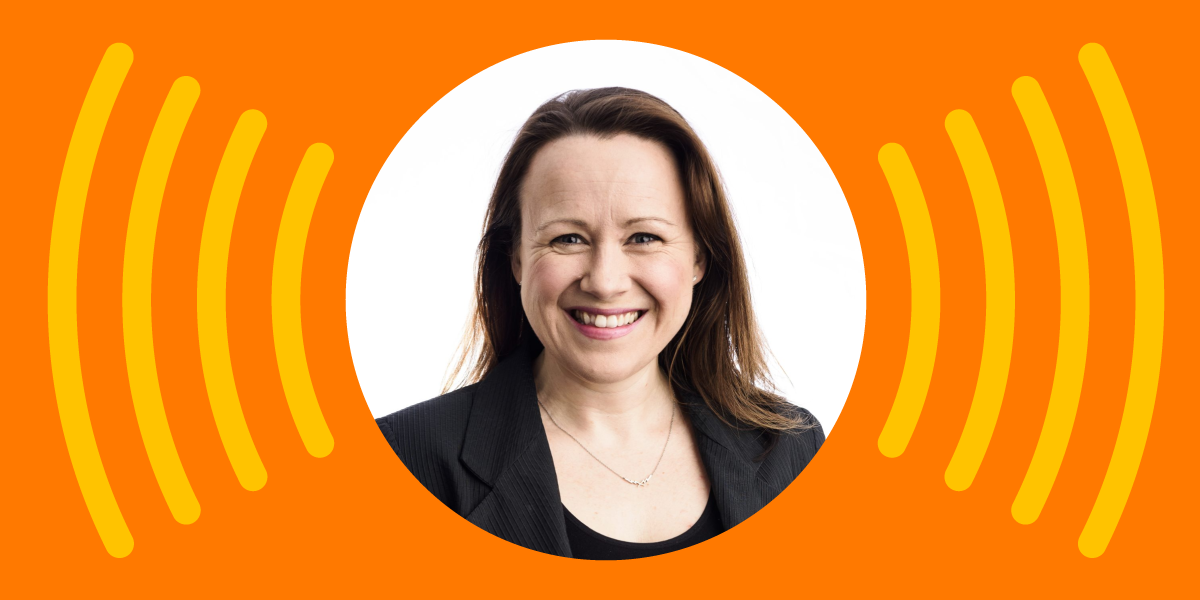
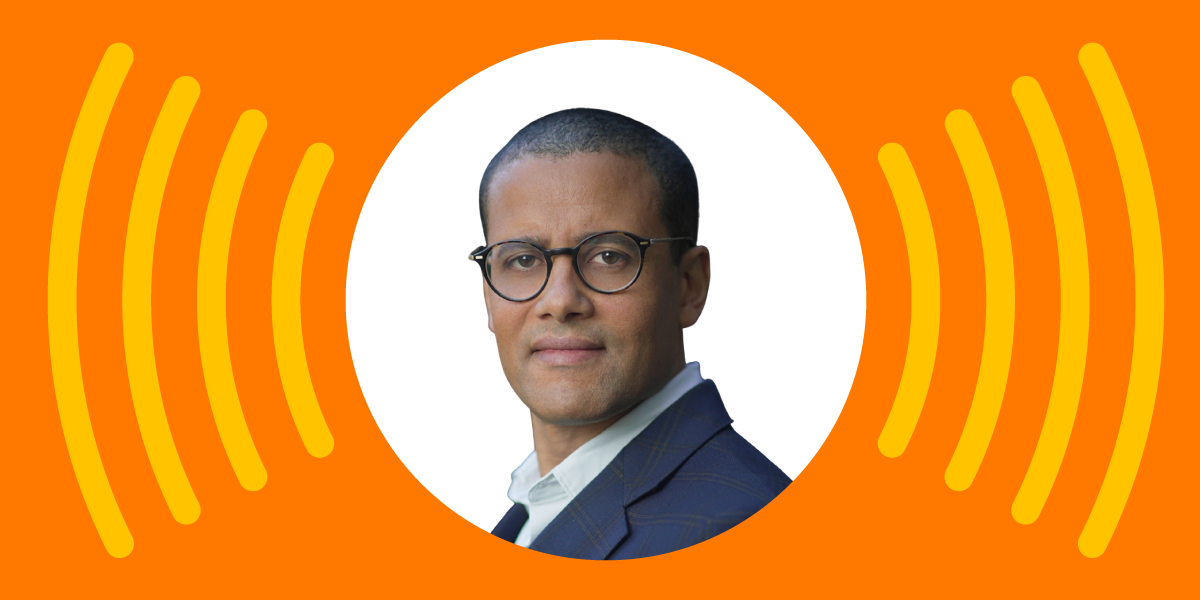
Lizzie O’Shea is an Australian lawyer, author, and the founder and chair of Digital Rights Watch, which advocates for freedom, fairness, and fundamental rights in the digital age. She sits on the board of Blueprint for Free Speech, and in 2019 was named a Human Rights Hero by Access Now.

Interviewer: Jillian York

Jillian York: Hi, good morning, or rather, good evening for you.

Lizzie O’Shea: Hi Jillian, it's great to be here. 

JY: I'm going to start with asking a question that I try to kick off every interview with, which is, what does free speech or free expression mean to you?

LO: Yes, so Digital Rights Watch, which is the organization I founded and I chair, is focused on fundamental rights and freedoms in the online world. And so freedom of speech is obviously a big part of that. It's obviously a very vexed right, partly because of its heritage and interpretation in places like the United States, which sometimes sits in contrast culturally to other parts of the world. Certainly, if you ask Australians about it, they do not want to have a culture of free speech that looks like the United States. 

Australians understand that freedom of expression is a really important component of democracy. So one of my jobs is to make the claim that curtailing freedom of speech, including in online settings, can have a real impact on democracy. And I think that's fundamentally true, and you don't want to wait until it's too late to be able to make that argument, to ensure that the policies are in place to protect that freedom. So I think it's a really important freedom. It's got a vexed history and expression in the modern online world, but many people still instinctively understand that those in power see speech as something that is important to challenging their authority, and so it can be a really important place to fight back and protect democracy and other rights from being impacted by those who hold power at the moment.

JY: I want to ask you about your book. You're a critic of techno-utopianism. Your book, Future Histories, came out right before the pandemic, if I recall, and it looks to the past for lessons for our technological and cultural future. I really appreciated your take on Elon Musk. So I guess what I want to ask you about is two things. What, in your view, has changed since you wrote it?

LO: Yeah, that's a really interesting question. I must admit, I was thinking about it the other day whether some of what I wrote really holds up. And I think the fundamentals are still true, in the sense that I still believe that a lot of the discussions and debates we have about technology today are presented as fundamentally novel when they are very old, ancient discussions and debates about how power should be distributed through society, and how technology enables that kind of power distribution or works against it, right? So I feel like that fundamental analysis, whatever contribution to the field, is still valid, of course. In some ways though, those technical systems have become more opaque, like the artificial intelligence industry and how that's been built off the back of years of exploitation of personal information and centralization of power in technology companies. Those things have become more powerful and concentrated and difficult to understand—if you're not deep in the weeds—beyond an instinctive understanding that something's going a bit wrong, perhaps. 

So in some ways those trends have exacerbated things in ways that I think many other contributors, yourself included, have brought a really important set of analyses to these discussions. More generally, though, one of my fundamental understandings of how I frame some of these arguments is that there are two sources of power, right? Government power and corporate power that really shape how the online world is developing. And post-pandemic, there's a lot greater skepticism, criticism, and outright distrust of government authorities seeking to do work to protect people from some of those corporate excesses. Now that's obviously something that is much more part of American culture as opposed to European culture, and in Australia, we sit somewhere in between. But that skepticism and that mistrust of institutions, I don't know that that serves us well. I'm somebody who does treat with criticism policies put forward by government, because I think it's our job as civil society people, as people part of a social movement that want to have rights at the center of our society, to be critical of those in power and make sure that they're being held accountable. But that mistrust has fundamentally shifted how possible it is to do that in an effective way. And I think that poses real challenges for people who want to see government policy look different to how it is and how you can bring people into a sense of trust, investing in a democratic rights based society, rather than rejection and cynicism being the overriding, overriding kind of factor in how they shape their political arguments. Which is a real challenge, I think, for people like us who rely on some of that mistrust and skepticism in order to fuel the fire of some of these campaigns, but do want to see people still invested in democratic processes.

JY: Yeah, absolutely. So speaking of policies, you're in Australia, where the government's enacted some of the strictest social media laws for minors in the world, I would say. In one of our most recent interviews, which was with Jacob Mchangama, we talked about how the comparison of social media to Big Tobacco is spreading, and this idea that there's no utility in social media for minors, that it's a net harm. I'm curious what your thoughts are on that, and then we can dive into the more nitty gritty bits of the Australian law.

LO: I think that's a great place to start, because the overwhelming sense in how this policy was presented to the public in Australia is that this is a very dangerous place for young people to be, and that desperate times call for desperate measures. “We don't have time to fix these spaces. We need to just restrict access.” It's described as a delay. Many, including me, describe it as a ban for under 16 year olds. So what has been very interesting in this discussion is who's been left out of the conversation. And if you talk to young people—and there are many organizations working with young people—and you talk to them about what they use social media for, they often say that they wish adults understood that they used it for different reasons, or they're scared about different things than what adults think they might be scared of. And so that kind of fundamental failure of communication, which I suppose is not a surprise, when these people don't actually have the power to vote, have the power to do things a normal legal person would do, is somewhat unsurprising.

But when you're making policy about these people, that can be quite impactful, it can have very detrimental impacts. And if you take a human rights approach, that is your job to think about the negative impact on human rights, and what you're going to do about it, it's not really good enough. And this has been an experiment that Australia has led on, very much, looking for headlines, for a perception of boldness. Some of that claim is legitimate in the sense that they want to be seen to be taking action, and a lot of people feel very concerned that governments aren't prepared to take action against big tech companies. So, some of that is a valid feeling. But I think in this context, we lose so much when we don't actually listen to the people affected, and listen to the myriad ways in which they use social media. Some things they're concerned about, some things they find harmful, some things they're really sick of. But there's so many ways in which they use it to find a sense of community, to find a sense of empowerment, to talk to people they would never otherwise be able to access, sometimes because they're isolated, socially, geographically, whatever it may be, and it's so disappointing to me that that kind of part of the conversation was not had as we debated this particular policy.

JY:  So, what do you think some of the harms are for youth who can't access social media? What are young people losing out on? Who is harmed by these laws?

LO:  It's a great question. When we do a human rights analysis, we have to think about who's harmed by a particular policy, even if we think it's overall justified on a utilitarian ground, say it's better off for everyone overall who's harmed, is a really important question, and so much of that has been absent from this discussion. So it's not just me. It's like hundreds and hundreds of experts in Australia and organizations that represent many, many people, have provided commentary and input into this process and expressed many concerns about this policy, and there's a few different ways in which people are harmed. 

So the first thing, of course, is that if you require that age verification occur, you're engaging in a privacy violation for many people, there are cyber security risks with collecting that kind of information. There's deterrent effects and the like. Now that may not concern you, or you may think that's a justifiable kind of infringement on privacy rights, but I think that's worth mentioning. It is quite significant, especially in a world in which age verification doesn't tend to work very well on any measure. There are very serious cybersecurity risks that have been associated with age verification processes and the like. So it's certainly not nothing. The other set of people that are harmed are particularly vulnerable people. 

There's a variety of people who are still accessing social media. So it looks like about seven in ten of young people on the early data who had social media accounts are still accessing social media now. Now these are early figures, so there's a lot to be said for looking at how this works in a year's time, for example. But I think one of the interesting things to think about is when those people, young people, who are on still on social media—in breach of this ban or in defiance of this ban, however you want to put it—might need to engage in help seeking behavior, there may be a deterrent there, because they know that the law is they're not supposed to be accessing social media. So that is a selection of young people that we're particularly concerned about. And then, more generally, of course, there's a whole cohort of people who are particularly vulnerable. Maybe they're LGBTIQ, maybe they're in an isolated geographic area, far away from a city. Maybe they're experiencing harm at home and have no one to talk to about it. There's all sorts of ways in which young people use social media to manage their own challenges, harms, difficulties, and very effectively. They find people to talk to about their problems when other people may not be available to them. And that is an issue that is hard to map, right? We know that there's been an increase in calls to things like Kids Helpline, which does what it says on the tin. So those kinds of things have seen an increase. But I think that is something that is harder to map, but still very, very important, and may result in people going to other parts of the internet as well to seek help in different ways that might also not be very safe for them. 

More generally it's worth remembering that if platforms can say with some confidence, from a policy perspective, that young people are no longer on their platform, there is less incentive to design for them as well, which is another associated problem. Now, it remains unclear as to how platforms are dealing with that issue, especially in light of the most recent data, which suggests that a lot of young people remain on the platforms. But that's an issue. Do we then allow platforms to no longer design in a way that respects the autonomy of young people, the safety of them, their security and the like, because they have special needs and interests and all those sorts of things. So that's another problem. There's lots of operational problems. There's lots of conceptual ones. I don't think many of these have been considered or accounted for in the process.

JY: Absolutely, those are the same things that worry me as well. Okay, let's talk about the campaign. So what has the pushback to this, to the law, looked like, and what changes were you calling for?

LO: Well, if I can Jillian, what I might start with is where the push came from. Because I think that's quite instructive. One of the key sets of institutions that were pushing for this ban were mainstream news organizations, and we're learning a bit more about this over time, but the Murdoch press and other large news organizations in Australia—Australia has one of the most concentrated media environments in the world—were pushing for this ban. There was a petition run on one of their websites that was gathering tens of thousands of signatures. There were also others. Then there was a lot of advocacy towards specific kinds of political leaders in the country, and then a kind of competitive race to see who could be the most extreme in terms of putting forward a policy. But it's certainly the case that this very powerful set of actors in our democracy, at least, were a key driver of this campaign for a social media ban for young people. Now, I think there's a sense of moralism about it, a sense of desperation about it, tapping into genuine fears from parents, you know, and the like. And you know, The Anxious Generation, the book by Jonathan Haidt, has obviously been very influential with many people, but the research is still a bit unclear, right? About what this all means. And lots and lots of researchers will tell you that that book isn't making a reasonable argument based on the data that we have, right? So, it's a very febrile environment for this kind of discussion, and those kinds of institutional actors were incredibly important in getting this on the political agenda.

We then had an electoral campaign, definitely a vision that conservative politics would push for this. So labor politics, you know, center left politics pushed for it, and won the election, right? Not on this issue alone, but it was in that environment in which this policy was developed. There was a very small amount of time for submissions, for policy discussion about it. Initially, the government had said they weren't going to do it because they were concerned that the age verification technology wasn't up to scratch. That changed very, very quickly, and then the policy was introduced. I think it was in six days, some very small amount of time. So many different child rights organizations, academics, institutions, filed policy submissions to discuss this, did a lot of advocacy work, but the passage of time between the announcement of the proposal and the passage of the legislation was extremely short, and what followed has been a year of discussion around whether this was a good thing, a year of testing age verification technology, often finding it wanting, but setting up a set of of preferred providers that platforms could use in order to satisfy the legislative requirements. A lot of lobbying from platforms as to whether they're in or out. There was a big discussion about whether YouTube should be in or out. And a lot of back room dealing between relevant politicians and big tech companies. So the whole thing is very unseemly, and we're now in the world where it's been introduced, a lot of failure for it to actually operationalize now. Now, it may be that that changes over time, but that's quite telling, right? 

It's telling also because I don't think all parents particularly like this proposal either. It's very popular, but there's certainly a section of parents that are facilitating their children's continued access to social media. And I think that's interesting in itself. Part of what it is—something we were talking about actually earlier in our conversation—people don't like governments telling them how to parent their children. That has taken some very negative expressions in parts of the world, you know, resistance to things like the availability of medicine and treatment for kids who might be trans. But in this context, it's like, “I'm not going to let the government tell me that I can't let my kid on social media.” So, I don't think it's clarified much in the debate in terms of understanding how platforms behave towards young people, what they could do better, of which there's many things, and then how we get to the world in which children are able to be online but better protected. I'm not sure this proposal has contributed to that. It's really muddied the waters about what the government is capable of doing, what it should be doing, and what platforms, you know, what should be the process that platforms go through when thinking about designing for children.

JY: That's such a great answer. Thank you. And actually, that brings me to another question, which is so in your ideal world, taking this law, being able to throw it out the window if you want…What would you what would you want to see, not just from social media, but from from the platforms, from governments, both for the sake of youth, but also, you know, for all of us.

LO: I think that is the exact right question to be asking, and it's a good time that we've managed to talk now, because actually, in the interim, what's come out is at the first draft that we've got of a Children's Online Privacy Code. And to me, that is really revealing, because it is designed to apply to all services that might be accessed by children, like all online services, and it has a really kind of sophisticated understanding of what consent might look like, where you need help with getting consent, when it comes to parents or adults that are supportive in your life. And then at different ages that might look a bit different, like you might get notified if consent has been refused by your caregiver, for example, if you've wanted to do something. So there's a more sophisticated understanding of what consent looks like, and a range of different restrictions on when private, when personal information can be collected and used.

It's got things in it that I don't particularly like. I would like to see a prohibition on the commercial exploitation of children's personal information, because I don't think any targeted advertising is justified, for example. And I think that kind of measure of that commercial exploitation is hugely problematic. I think we have to think about what deletion looks like. I think you should have a right to deletion, for example. But you know, we also have to respect that children grow into young adults, that making decisions at 16 might look quite different to when they're three. So what you do with their personal information, how they carry that forward into their adult lives might be different depending on the age and so that kind of privacy reform actually is the fundamental thing. I’m sure your listeners don’t need reminding of this.

That is my favorite right. Because I think restricting access to personal information is a rights-respecting way to improve the online environment for everybody. And what I think is really interesting about this Children's Online Privacy Code that is still in draft form, is that all these things should be available to adults as well. Like adults in Australia don't have the right to deletion at the moment. We don't have a right to comprehensively know where our information has traveled and to delete it. You know, look, we have fewer rights than Californians, for example, certainly fewer rights than Europeans. What this code has highlighted is that, in fact, all people should be enjoying this kind of protection that comes from restricting access and use of personal information and giving people more control over that, because that personal information is the raw material of the business model, and it leads to a very loose approach to its collection and leads to many negative downstream consequences, I would argue, including business models that prioritize engagement, that prioritize and monetize polarizing, extremist content, mis- and disinformation.

I think we could have a real crack at trying to ameliorate some of these problems, or certainly reduce their impact, if we started that fundamental raw material that fuels the business model. So that, I think, is a really telling alternative that we're now considering as a society, and I like to think that people will come to an understanding that you can you can find ways to elevate improve the online world, particularly for young people, without restricting their access to that online world in a way that is empowering for them, rather than patronizing or infantilizing. 

JY: I completely agree, and I think it's funny that people often see privacy and expression at odds with each other, when actually I think privacy enhances expression.

LO: I think it makes spaces safer, makes people freer to be able to say what they think, but also to have those discussions in ways that are more meaningful, that can help find connections, even across divisions, rather than exploiting that division for profit, which is so much of the current business model.

JY: Are there any other things happening in Australia that EFF’s readers should know about?

LO: Well, we're about to go through the second tranche of our privacy reform. So we did engage in our first tranche of privacy reform. We have a Privacy Act that was passed in 1988 and hasn't been meaningfully updated in the decades since. So we got a few small changes, which included the enabling provision to allow a Children's Online Privacy Code to be developed, which is why we're getting the benefit of that now. But we're about to see a range of different privacy laws introduced. What the content is, of course, will be the subject of a lot of discussion and debate. We're going to argue for the right to deletion, the right to a private right of action for privacy harms, better processes for consent, and improved definitions of personal information to really bring Australia in line with lots of other similar jurisdictions around the world. And we're really keen to advance that for all the reasons that I just mentioned. 

The other big change that I think is coming is that, you know, which is perhaps more on topic for this conversation, is that we've had this online safety policy that is constantly being touted as the first in the world, and world leading and this and that, and it's really been a very flawed and vexed process working out how we could develop codes that were designed to govern how certain services were provided in the digital age, in line with safety expectations. There’s been a lot of focus on complaints and take down notices and things like that, there's obviously been that vexed litigation with Elon Musk, trying to get him to take down a particular video, and ultimately, the failure of our regulators to succeed on that front, I think, probably correctly, because giving a regulator in Australia the right to take down content from anywhere in the world seems to me a very concerning development, if that was allowed to proceed. So this history of online safety, it's been a big part of successive Australian governments’ identities. We're about to see the introduction of a digital duty of care. So that's certainly the stated position of government. What that looks like in practice, I think will be really interesting. 

I like the idea of a digital duty of care. I like the idea of a flexible, overarching concept. What the content is, though, will be really important. So what I would like to see is proactive disclosure of harm or risk of harm, and then actions taken by platforms to do it. So more onus on platforms to provide transparency about what they know about how their online spaces are being used and what might be harmful. I mean, there's a question around whether we'll see an introduction of a civil right, something similar following from the litigation that’s taken place in California and New Mexico, and that is going to be leading, really, multiple claims that are being made all around the country in the US, against companies like Meta and Google and other social media platforms. So I think there may be a flow-on effect from that, as in, it might turn into a civil right to sue for failure to meet the requirements of digital duty of care. But I'm really interested to hear from any of your listeners, or anyone who's working in this space about what the content should be of that digital duty of care, because there's obviously limits as well. Like it can be not rights-respecting, and we're interested in making sure that's not the case. And I think there's probably a range in which it could be more protective or less and working out how to do that—there are examples from around the world, but that's going to be something I reckon we could use help with that we want to get right and make use of that opportunity as best we can. 

The last thing I'll say, I suppose, is that our government is always looking for ways to deal with mis- and disinformation, and that comes with real risks of censorship. And so, I think there's a strong argument to focus on privacy reform, because it's a rights-respecting reform as an antidote to mis- and disinformation. Greater transparency on platforms—I think about how they prioritize content in your feed, for example, can be useful, or reporting on what content is really popular, like ad libraries. There's all sorts of ways in which we can introduce greater transparency, but I do worry that as governments around the world feel emboldened to do so, they might look for more ways to to remove content, to be more involved in content moderation policies that have the real potential to to become censorship if we're not careful. So that's the other abiding concern I've got about Australian policy at the moment.

JY: One of my big concerns now too, is all of these authoritarian governments watching Australia, watching the UK, and enacting laws that are modeled on, but much more severe than than the ones in those places? Do you share that concern? 

LO:  Yeah. I mean, the other way in which it's come about in Australia, certainly like anti-doxxing laws, which, at the moment, we've got laws on our books that came about attached to a privacy reform. I'm hesitant to say it's a privacy reform, because it's not, but it's very egregious. It's a criminal offense to disclose basic details about someone online, if it's done with a set of intents and the like, about their particular status as a group, and that, I think you could drive a truck through in terms of how you could interpret it, right? There's such a wide variance, and bringing a proceeding against someone like prosecuting them for that is such a life altering experience. And I think if governments did want to focus on particular activists. And I'm particularly thinking of, you know, the way it was framed was certainly around the the discussion and debate about the genocide unfolding in Gaza. Like, I think, particularly about that movement, they're very vulnerable to crackdowns by government for speech that is perceived to be unacceptable by government. 

And I'm not even trying to debate it. I think there's certainly antisemitic commentary occurring in Australia, and indeed, there have been some people, like genuine Nazis arrested, which, you know is, is a different kettle of fish. But I think progressive movements, not just the defense of Palestine movement, but lots of other progressive movements are a particular risk of those kinds of laws. But I think mis- and disinformation is the other vehicle. So we have to be very careful about giving platforms, giving regulators both the mandate and then the authority to police content based on particular criteria. And often what they talk about, or they talked about in proposals that have now died in Australia, were things like public health issues. So, you know, that's a particular consent that drives a lot of people who are very concerned about the years of Covid up the wall. So it inspires a lot of reaction to it. But I think there's lots of ways in which undermining political stability is put forward as a proposal, as a justification for removing content. That's just so broad that I think you could really start to see censorship. It's just not good enough. I just don't think we can tolerate those kinds of proposals. I like to think that's not the case in Australia, but I just think there's a tendency among governments now to see this as an opportunity. It's an anxiety lots people have about mis- and disinformation, and so they draw on that as a mandate to act. And I think we should be very cautious about those proposals.

JY: Definitely. Okay, I’m going to ask the final question that I ask everyone. Who is your free speech or free expression hero? Or someone from history, or even someone personal who has influenced you?

LO: There’s a chapter in my book where I talk about the Paris Commune, which happened a long time ago, but I still think it’s a really interesting experiment in applied democracy. This is when a bunch of communauts took over Paris and started doing things differently in a variety of different ways. Gustave Coubert is this artist who’s leading the artist collective during this time, and I always found him entertaining because he would paint things that weren’t expected. So, often, nudes that were considered quite scandalous because they were everyday women who weren’t angelic or Madonna-esque in their style, but he’s got a very famous painting of female genitalia—

JY: Yes! Facebook took it down! [laughs]

LO: Exactly. It’s always been a very confrontational image. People find it sexist sometimes, because they think it’s very pornographic. I understood it differently. It’s called “The Origin of the World,” so I sort of see it as a force of giving life. Interpret however you like, the point is that Facebook couldn’t tolerate it and took it down. There’s a nice little bit of litigation where a schoolteacher had a page where he was teaching people that art, and Facebook could just not tolerate this art. In my mind, it was so telling that a communaut from hundreds of years before was basically revealing, as an expert troll almost, how conservatives—someone like Mark Zuckerberg—view, and how he shapes these platforms. And how they subtly reshape what we think is appropriate, what we think is free, what we think is within the realms of good society. And that you really do need artists telling you that that might not be true, and they’re some of the most effective actors at revealing that about those who hold power, like reshaping our understanding about what acceptable debate is, and how we can show power to be exercised in our online world, where in other circumstances it might be quite okay.

I love that story, and I love the communauts. There’s a lot of beautiful writing about them, there’s a beautiful book called Communal Luxury where they talk about all the different ways in which they were trying to reimagine their society and do it collectively, from things like having the first union of women but also having the design of clothes and furniture look different. I want to see a world in which people take that power in both the micro and macro and start to reshape their society in really creative ways. And I feel like digital technology has the real capability of allowing that to occur and I want to revive that sense of concrete democracy rather than just delegated democracy or deferred representative democracy where you tell someone else what you want but don’t have a say in a lot of decisions. And so, that really grassroots idea of democracy is something, and I think we’re in a world in which that could really occur with the assistance of digital technology. It’s a matter of working out how to bring it into being. And that’s what I see this movement as doing. People with digital rights as being their primary concern are trying to recreate that world so that there’s more communal, collective spaces for discussing what the future should look like.

  •  

EFF Calls on Kuwait to Release Journalist Ahmed Shihab-Eldin

EFF calls on the Kuwaiti government to immediately release journalist Ahmed Shihab-Eldin. An award-winning journalist and television host who worked for Al Jazeera for many years, Shihab-Eldin—a dual American-Kuwaiti citizen—was arrested in Kuwait on March 3 while visiting family. The Committee to Protect Journalists (CPJ) reported yesterday that it is believed he has been charged with spreading false information, harming national security, and misusing his mobile phone.

According to the Guardian, Shihab-Eldin published footage of a U.S. Air Force F-15 E Strike Eagle crash, and posted to his Substack about the incident, noting that video circulating online showed local residents assisting the crash survivors. 

Kuwait is one of several countries that has recently cracked down on reporting amidst the ongoing war. Kuwait’s Ministry of Interior posted on X on March 3—the same day Shihab-Eldin was arrested—warning people in the country “not to photograph or publish any clips or information related to missiles or relevant locations.” Earlier this month, the UN Office of the High Commissioner for Human Rights (OHCHR) highlighted a new decree in Kuwait banning the circulation of reports that seek to “undermine the prestige of the military” or erode public trust in it. 

As reported by local media, the decree states that “those who intentionally publish statements or news or circulate false reports and rumors about military authorities resulting in weakening the trust in them and their morale, in addition to undermining their prestige, are punishable by three to 10 years in jail and a fine between KD 5,000 and 10,000.” The decree also imposes a penalty ranging from seven years to life imprisonment for “authorized people who cause financial loss or damage to the military authorities while carrying out a transaction, operation, project or case or obtaining any profit from such deals.”

In contrast to neighboring Gulf states, Kuwait has historically allowed the press to operate with relative freedom, and even introduced a law in 2020 protecting the right to access information. In practice, however, the government exercises considerable control over the media. Furthermore, there are several laws, including cybercrime legislation introduced in 2016, that restrict freedom of expression.

EFF is deeply concerned that Ahmed has not been seen nor heard from in nearly six weeks. We call on the government of Kuwait to immediately release Ahmed Shihab-Eldin. 


  •  

Digital Hopes, Real Power: The Rise of Network Shutdowns

This is the fourth installment of a blog series reflecting on the global digital legacy of the 2011 Arab uprisings. You can read the rest of the series here.

Iran’s internet has been intermittently disrupted for months. After years of bombardment, Gaza’s telecommunications infrastructure remains fragile. In India, recurring shutdowns and throttling have become a routine response to protests and unrest, cutting millions off from news, work, and basic services. Across dozens of other countries, governments increasingly treat connectivity itself as something that can be weaponized—cut, slowed, or selectively restored to shape what people can see, say, and share. In 2024 alone, authorities imposed 304 internet shutdowns across 54 countries—the highest number ever recorded.

In 2011, when protesters in Tunisia, Egypt, and beyond used social media to broadcast their uprisings to the world, many observers heralded a new era of networked freedom. Governments, however, responded quickly by developing and refining systems of control that have only grown more sophisticated over time. Today’s landscape of regulation, blackouts, and degraded networks reflects that trajectory, as early experiments in censorship and disruption have hardened into a durable system of control—what began as an emergency measure has become a normalized infrastructure of control.

A Brief History of Internet Shutdowns

Egypt’s 2011 internet shutdown wasn’t the first. Although the government’s heavy-handed response after just two days of protests caught the world’s attention, Guinea, Nepal, Myanmar, and a handful of other countries had previously enacted shutdowns. But Egypt marked a turning point. In the years that followed, shutdowns increased sharply worldwide, suggesting that governments had taken note—adopting network disruptions as a tactic for suppressing dissent and limiting the flow of information within and beyond their borders.

On January 28, 2011, at 12:34 a.m. local time, five of Egypt’s internet service providers (ISPs) shut down their networks. At least one provider—Noor, which also hosted the Egyptian stock exchange—remained online, leaving only about 7% of the country connected. 

In the aftermath of President Hosni Mubarak’s resignation, rights groups sought to understand how such a sweeping shutdown had been possible—and how future incidents might be prevented. There was no centralized “kill switch.” Instead, authorities leveraged the country’s highly consolidated telecommunications sector, which all operate by government license. With only a handful of ISPs, a small number of directives was enough to bring most of the network offline.

In the years following Egypt’s 2011 shutdown, telecommunications companies—many of which had been directly implicated in enabling state-ordered disruptions—began to organize around a shared set of human rights challenges. Beginning that same year, a group of operators and vendors quietly convened to examine how the UN Guiding Principles on Business and Human Rights applied to their sector, particularly in contexts where government demands could translate into sweeping restrictions on access. By 2013, this effort had formalized into the Telecommunications Industry Dialogue, bringing together major global firms to develop common principles on freedom of expression and privacy and, through a partnership with the Global Network Initiative, engage more directly with civil society. The initiative reflected a growing recognition that telecom companies—unlike platforms—operate at a critical chokepoint in the network. But it also underscored the limits of voluntary approaches: while the Dialogue helped establish shared norms, it did little to constrain the legal and political pressures that continue to drive shutdowns—or to prevent companies from complying with them.

From Emergency Measure to Legal Authority

If the early aughts were defined by improvised shutdowns, the years since have seen governments formalize their power to control networks. What was once exceptional is now often embedded in law.

In India, the 2017 Temporary Suspension of Telecom Services Rules—issued under the Telegraph Act—provided a clear legal pathway for cutting connectivity. The Telecommunications Act, 2023, further entrenched the government’s ability to enact shutdowns, granting the central and state governments, or “authorised officers” the power to suspend telecommunications services in the interest of public safety or sovereignty, or during emergencies. The government has used these measures repeatedly, particularly in Jammu and Kashmir. India’s Software Freedom Law Centre’s Shutdown Tracker shows India as instigating more than 900 shutdowns, 447 of which were in Jammu and Kashmir.

In Kazakhstan, shutdowns have also become common. Over the years, the government has passed legislation that allows state agencies to shut down the internet. The 2012 law on national security enabled the government to disrupt communications channels during anti-terrorist operations and to contain riots. In 2014 and 2016, laws were further amended to expand the number of actors able to shut down the internet without a court decision, and a government decree in 2018 enabled shutdowns in the event of a “social emergency.” 

Elsewhere, governments have built or expanded legal and technical frameworks that enable similar control over information flows. Ethiopia’s state-dominated telecom sector has facilitated sweeping shutdowns during periods of conflict, including the war in Tigray, where the internet was disconnected for more than two years. In Iran, authorities have developed regulatory and infrastructural capacity to isolate domestic networks from the global internet, allowing them to restrict external visibility while maintaining limited internal connectivity. This year alone, Iranians have spent one third of the year offline. And amidst the ongoing war, Iranian officials have made it clear that the internet is a privilege for those who toe the government’s official line.

Even where laws do not explicitly authorize shutdowns, broadly worded provisions around national security or public order are routinely used to justify them. The result is a growing legal architecture that treats network disruptions not as extraordinary measures, but as standard tools for managing populations.

When that authority is exercised over a population beyond a state’s own citizens, the consequences can be even more severe. Israel’s Ministry of Communications controls the flow of communications in and out of Palestine and has used that power to shut down internet access during periods of conflict. Over the past two and a half years, Gaza has experienced repeated outages, and experts now estimate that roughly 75% of its telecommunications infrastructure has been damaged—leaving essential services severely disrupted.

Elections and the Expansion of Control

Historically, most blackouts have occurred during moments of intense political tension. But authorities are increasingly using them as a tool to preempt dissent.

In 2024, as more than half the world’s population headed to the polls, shutdowns followed. That year alone, authorities imposed 304 internet shutdowns across 54 countries—the highest number ever recorded, surpassing the previous record set just a year earlier. The geographic spread also widened significantly, with shutdowns affecting more countries than ever before. The Comoros imposed a shutdown for the first time, while other countries, such as Mauritius, instituted broad bans on social media platforms during elections.

At least 24 countries holding elections in 2024 had a prior history of shutdowns, putting billions of people at risk of disruptions during critical democratic moments.

What stands out is not just the scale, but the normalization. Notably, the number of shutdowns in 2025 broke the record set the year prior. Whereas network disruptions were once a rare occurrence, they are now a routine measure, increasingly treated by authorities as a standard response to periods of heightened political sensitivity. 

Civil Society Fights Back

Governments use all sorts of justifications—national security, curbing the spread of disinformation, and even preventing students from cheating on exams—for internet shutdowns. But civil society is watching, and documenting, network disruptions and their impact on citizens.

In 2016, as shutdowns became an increasingly common tool of state control, Access Now launched the #KeepItOn campaign to coordinate global advocacy against network disruptions. The campaign includes a coalition composed of 345 advocacy groups (including EFF), research centers, detection networks, and others who work together to report on, and fight back against, internet shutdowns. Anyone can get involved by signing on to campaign action alerts, sharing their story, or reporting a shutdown in their jurisdiction.

Ending this harmful practice remains the goal. In 2016, the UN passed a landmark resolution supporting human rights online and condemning internet shutdowns, and UN agencies have continued to warn against the practice. But the fight to change government practices remains an uphill battle, leading civil society—and even companies—to get creative. 

During repeated shutdowns in Gaza, grassroots efforts mobilised to distribute eSIMs so Palestinians could stay connected. In 2024, EFF recognized Connecting Humanity, a Cairo-based non-profit providing eSIM access in Gaza, with its annual award for its vital work. Satellite internet such as Starlink has been supplied to people in Ukraine and Iran, though it, too, is not immune to state control. Alongside these efforts, civil society continues to share practical guidance on circumventing shutdowns and maintaining access to information.

EFF’s mission is to ensure that technology supports freedom, justice, and innovation for all people of the world—and we’ll continue to fight back against internet shutdowns wherever they occur.

This is the fourth installment of a blog series reflecting on the global digital legacy of the 2011 Arab uprisings. Read the rest of the series here.

  •  

War as a Pretext: Gulf States Are Tightening the Screws on Speech—Again

War does not only reshape borders. It also reshapes what can be seen, said, and remembered. 

When governments invoke “misinformation” during wartime, they often mean something simpler: speech they do not control. Since the escalation of conflict between the United States, Israel, Iran, and related spillover attacks in the Gulf, several governments have intensified efforts to silence dissent and restrict the flow of information.

Journalism under pressure

For journalists, the space to operate—already constrained in much of the Gulf—is narrowing further. Across the region, several countries (including the UAE, Qatar, and Jordan) have restricted access to conflict areas, warned of legal consequences for publishing footage, and drawn red lines around wartime reporting. These measures weaken independent coverage, elevate official narratives, and make it harder for the public to get an accurate account of events on the ground.

Reporters Without Borders has documented an intensifying crackdown on journalists across Gulf countries and Jordan, including restrictions on reporting, legal threats, and heightened risks for those who deviate from official narratives. This aligns with the broader warning from the UN that repression of civic space and freedom of expression has significantly deepened across the region during the war.

Criminalizing speech, one post at a time

For ordinary internet users, the restrictions are just as severe. Since February, hundreds of people have reportedly been arrested across the region for social media activity linked to the war. In many Gulf states, the legal infrastructure enabling this is already well-established: expansive cybercrime and media laws criminalize vaguely defined offenses such as “spreading rumors,” “undermining public order,” or “insulting the state”. In wartime, these provisions become catch-all tools: flexible enough to apply to nearly any form of dissent.

In Bahrain, authorities have reportedly cracked down on people who protested or shared footage of the conflict online. The Gulf Centre for Human Rights has reported 168 arrests in the country tied to protests and online expression, with defendants potentially facing serious prison terms if convicted.

In the UAE, authorities have arrested nearly 400 people for recording events related to the conflict and for circulating information they described as misleading or fabricated. Police have claimed this material could stir public anxiety and spread rumors, and state-linked reporting has described the crackdown as part of a broader effort to defend the country from digital misinformation.

Saudi Arabia has also intensified restrictions, issuing a statement on March 2 banning the sharing of rumors or videos of unknown origin, and issuing a campaign discouraging residents from taking or posting photos. The campaign included a hashtag that reads “photography serves the enemy.” Journalists have been prevented from documenting the aftermath of airstrikes on the country. Kuwait, Qatar, and Jordan have adopted similar restrictions on wartime imagery and reporting.

Qatar’s Interior Ministry has arrested more than 300 people for filming, circulating, or publishing what the ministry deemed to be misleading information. Taken together, these measures show how quickly wartime speech is being folded into existing legal systems designed to punish dissent.

The regional playbook

What’s striking is how consistent these measures are across different countries. As we recently wrote, governments across the broader region have enacted sweeping cybercrime and media laws over the past fifteen years, which they are now putting to use. Across different countries, the same tools are being used: existing laws, fresh bans on sharing wartime imagery, and tighter restrictions on journalists and reporting. The vocabulary changes slightly from place to place, but the logic is the same: national security, public order, rumors, and social stability are justifications for control.

This is not just a series of isolated incidents. It is a regional playbook for silencing critics and narrowing the public record. Gulf states have long relied on censorship and surveillance; the war has simply made those methods easier to justify and harder to challenge.

From “digital hopes” to digital control

As we’ve documented in our ongoing blog series, digital platforms were once seen—at least in part—as spaces that could expand public discourse in the region. But as we’ve also argued, those early “digital hopes” have given way to systems of regulation and control. 

The current crackdown is a continuation of that trajectory, not a temporary departure from it. States are not just reacting to the war; they are leveraging it to consolidate long-standing ambitions to dominate the digital public sphere.

It may be tempting to see these measures as temporary, but emergency powers—like the one enacted in Egypt following the 1981 assassination of Anwar Sadat that lasted for more than three decades—have a way of sticking around. Legal precedents that are set during wartime often become normalized—or reinvoked during times of crisis, as occurred in 2015, when France brought back a 1955 law related to the Algerian War of Independence amidst the Paris attacks.

And the stakes are high. As we’ve seen in Syria and Ukraine, regulations and platform policies can cause wartime human rights documentation to disappear. When journalists are constrained and eyewitness footage is criminalized, accountability is weakened. And when arrests become widespread, people learn to self-censor.

Protecting freedom of expression in times of conflict is a requirement for accountability, not a concession to disorder. When people can document, report, and share information freely, it becomes harder for abuses to be hidden behind official narratives. Even in wartime, the public interest is best served by defending the space to tell the truth, not by silencing speech.

  •  

EFF’s Submission to the UN OHCHR on Protection of Human Rights Defenders in the Digital Age

Governments around the world are adopting new laws and policies aimed at addressing online harms, including laws intended to curb cybercrime and disinformation, and ostensibly protect user safety. While these efforts are often framed as necessary responses to legitimate concerns, they are increasingly being used in ways that restrict fundamental rights.

In a recent submission to the United Nations Office of the High Commissioner for Human Rights, we highlighted how these evolving regulatory approaches are affecting human rights defenders (HRDs) and the broader digital environment in which they operate.

Threats to Human Rights Defenders

Across multiple regions, cybercrime and national security laws are being applied to prosecute lawful expression, restrict access to information, and expand state surveillance. In some cases, these measures are implemented without adequate judicial oversight or clear safeguards, raising concerns about their compatibility with international human rights standards.

Regulatory developments in one jurisdiction are also influencing approaches elsewhere. The UK’s Online Safety Act, for example, has contributed to the global diffusion of “duty of care” frameworks. In other contexts, similar models have been adopted with fewer protections, including provisions that criminalize broadly defined categories of speech or require user identification, increasing risks for those engaged in the defense of human rights.

At the same time, disruptions to internet access—including shutdowns, throttling, and geo-blocking—continue to affect the ability of HRDs to communicate, document abuses, and access support networks. These measures can have significant implications not only for freedom of expression, but also for personal safety, particularly in situations of conflict or political unrest.

The expanded use of digital surveillance technologies further compounds these risks. Spyware and biometric monitoring systems have been deployed against activists and journalists, in some cases across national borders. These practices result in intimidation, detention, and other forms of retaliation.

The practices of social media platforms can also put human rights defenders—and their speech—at risk. Content moderation systems that rely on broadly defined policies, automated enforcement, and limited transparency can result in the removal or suppression of speech, including documentation of human rights violations. Inconsistent enforcement across languages and regions, as well as insufficient avenues for redress, disproportionately affects HRDs and marginalized communities.

Putting Human Rights First

These trends underscore the importance of ensuring that regulatory and corporate responses to online harms are grounded in human rights principles. This includes adopting clear and narrowly tailored legal frameworks, ensuring independent oversight, and providing effective safeguards for privacy, expression, and association.

It also requires meaningful engagement with civil society. Human rights defenders bring essential expertise on the local and contextual impacts of digital policies, and their participation is critical to developing effective and rights-respecting approaches.

As digital technologies continue to shape civic space, protecting the individuals and communities who rely on them to advance human rights remains an urgent priority.

You can read our full submission here.

  •  

Speaking Freely: Jacob Mchangama

Interviewer: Jillian York

Jacob Mchangama is a Danish lawyer, human-rights advocate, and public commentator. He is the founder and director of Justitia, a Copenhagen-based think tank focusing on human rights, freedom of speech, and the rule of law. His new book with Jeff Kosseff, The Future of Free Speech: Reversing the Global Decline of Democracy's Most Essential Freedom, comes out on April 7th.

Jillian York: Welcome, Jacob. I'm just going to kick off with a question that I ask everyone, which is: what does free speech mean to you?

Jacob Mchangama: I like to use the definition that Spinoza, the famous Dutch renegade philosopher, used. He said something along the lines, and I'm paraphrasing here, that free speech is the right of everyone to think what they want and say what they think, or the freedom to think what they want and say what they think. I think that's a pretty neat definition, even though it may not be fully exhaustive from sort of a legal perspective, I like that. 

JY: Excellent. I really like that. I'd like to know what personally shaped your views and also what brought you to doing this work for a living. 

JM: I was born in Copenhagen, Denmark, which is a very liberal, progressive, secular country. And for most of my youth and sort of young adulthood, I did not think much about free speech. It was like breathing the air. It was essentially a value that had already been won. This was up until sort of the mid-naughties. I think everyone was sort of surfing the wave of optimism about freedom and democracy at that time. 

And then Denmark became sort of the epicenter of a global battle of values over religion, the relationship between free speech and religion with the whole cartoon affair. And that's really what I think made me think deep and hard about that, that suddenly people were willing to respond to cartoonists using crayons with AK-47s and killings, but also that a lot of people within Denmark suddenly said, “Well, maybe free speech doesn't include the right to offend, and maybe you're punching down on a vulnerable minority,” which I found to be quite an unpersuasive argument for restricting free speech. 

But what's also interesting was that you saw sort of how positions on free speech shifted. So initially, people on the left were quite apprehensive about free speech because they perceived it to be about an attack on minorities, in this case, Muslim immigrants in Denmark. Then the center right government came into power in Denmark, and then the narrative quickly became, well, we need to restrict certain rights of hate preachers and others in order to defend freedom and democracy. And then suddenly, people on the right who had been free speech absolutists during the cartoon affair were willing to compromise on it, and people on the left who had been sort of, well, “maybe free speech has been taken too far” were suddenly adamant that this was going way too far, and unfortunately, that is very much with us to this day. It's difficult to find a principled, consistent constituency for free speech. 

JY: That's a great way of putting it. I feel like, with obvious differences from country to country, it feels like that kind of polarization is true everywhere, including the bit about flipping sides. I guess my next question, then, is: what do you feel like most people get wrong about free speech?

JM: I think there's a tendency—and I'm talking especially in the West, in the traditional free and open democracies—I think there's a huge tendency to take all the benefits of free speech for granted and focus myopically on the harms, real and perceived, of speech. I mean, just the fact that you and I can sit here, you know, I don't know where you are in the world, but you and I can have a direct, live, uncensored conversation…that is something that you know was unimaginable not that long ago, and we just take that for granted. We take it for granted that we can have access to all the information in the world that would previously have required someone to spend years in libraries, traveling the world, finding rare manuscripts.

We take it for granted, but this is the difference between us and say dissidents in Iran or Russia or Venezuela. We take it for granted that we can go online and vent against our governments and say things, and we can also vent things on social issues that might be deeply offensive to other people, but generally we don't face the risk of being imprisoned or tortured. But that's just not the case in many other countries. 

So, I think those benefits, and also, I would say, when you look at the historical angle, every persecuted or discriminated against group that has sought and achieved a higher degree of equal dignity, equal protection under the law, has relied on speech. First they relied on speech, then they could rely on free speech at some point, but initially they didn't have free speech right? So whether it's abolitionist the civil rights movement in the United States, you know my good friend Jonathan Rauch, who was sort of at the forefront of of securing same sex marriage in the United States, knows that was a fight that very much relied on speech. And women's rights…fierce women, who would protest outside the White House and burn in effigy figures of the President, would go to prison. Women didn't have political power. They didn't have guns. They didn't have economic power, they had speech, and that's what you need, to petition the government, to shine a light on abuse, to rally other allies and so on. And I think unfortunately, we've unlearned those hugely important precedents for why we have free speech today. 

JY: I’m definitely going to come back to that. But first I want to ask you about the new book you have coming out with Jeff Kosseff, The Future of Free Speech: Reversing the Global Decline of Democracy's Most Essential Freedom. I'm very excited, I’ve pre-ordered it. 

So, in light of that, I’ve got a two part question: First, what are some of the trends that concern you the most about what’s going on today? And then, what do you think we need to do to ensure that there is a future for free speech?

JM: So first of all, I was thrilled to be able to write it with Jeff, because Jeff is such an authority on First Amendment section 230 issues. But from the personal perspective, you could say that this book sort of continues where my previous book on the history of free speech finishes.

And so, based on the idea that we are living through a free speech recession that has become particularly acute in this digital age, where we see what I term as various waves of elite panic that lead to attempts to impose sort of top down controls on online speech in particular—and this is not only in the countries where you'd expect it, like China and Russia and Iran, but increasingly also in open democracies that used to be the heartland of free speech—there's a tendency, I think, in democracies, to view free speech no longer as sort of a competitive advantage against authoritarian states, or a right that would undermine authoritarians, but as sort of a Trojan horse which allows the enemies of democracies, both at home and abroad, to weaponize free speech against democracy, and so that's why the overwhelming

legislative initiatives and framing of free speech is often “this is a danger.” This is something we need to do something about. We need to do something about disinformation. We need to do something about hate speech. We need to do something about extremism. We need to do something about, you know, we need to have child safety laws. We need age verification. And you know, you know the list all too well. 

JY: I do, absolutely.

JM: Where I think where free speech advocates often fall short, is that we're very good at sort of talking about the slippery slope and John Stuart Mill and all these things, and that's important, but very often we don't have compelling proposals to sell to people who are not sort of civil libertarians at heart, and who are generally in favor of free speech, but who are frightened about particular developments at particular manifestations of speech that they think have become so dangerous to you know, freedom, democracy, whatever interest that they're willing to compromise free speech. 

And so we try to point to some concrete examples of—giving life to the old cliché—fighting bad speech with better speech. So some of those examples are counter speech. There are some great examples. One of them is from Brazil, where there was a black weather woman who was the first black weather woman to be sort of on a prominent TV channel, and she was met with brutal racism. So, you know, what should have been a happy moment for her became quite devastating. And so there was this NGO that printed billboards of these very nasty racist comments, blurred the identity of the user who had said it, but then put them in the neighborhoods where these people lived. So that was a very powerful way to confront Brazilians with the fact that, you know, racism is alive. It's right here in your neighborhood. And you know they used the N word and everything, and nothing was censored in terms of this racism, which was put right in front of it of everyone, and it actually led to a lot of people sort of deleting their comments and someone apologizing, and led to, I think, a fruitful debate in Brazilian society. 

Then you have other types of counter speech. One of them is a Swedish journalist called Mina Dennert. She started the “I am here” movement. So it's a counter speech movement, which I think spans 150,000 volunteers across 15 countries. And they use counter speech online, typically on Meta platforms, I think, where they essentially gather together and push back against hate speech, not necessarily to convince the speaker that they're wrong, but to give support to those who are the victims, but also to essentially convince what is often termed the movable middle, to show them that there are people who disagree with racist hate speech, and there's actually empirical data to suggest that these can be effective strategies. You can also use humor. 

Daryl Davis is a very extreme example. He's a black jazz musician who has made it his life mission to befriend members of the KKK. And he has converted around 200 members of the KKK, to essentially leave it and he does that by just having a conversation. Because if your worldview is that blacks are inferior and should not enjoy equal rights, and you have a conversation with someone in a way where it becomes impossible for you to uphold that worldview, because the person in front of you is clearly someone who's intelligent, articulate, who can counter all your your preconceived notions, then it becomes very difficult to uphold that worldview right? And you can imagine that those members who leave the KKK then become agents of change within their former communities. 

So there are various counter speech strategies that have shown a promise, and at the Future of Free Speech [think tank] that I direct, we've developed these toolkits, and we do teachings around the world, I think we've translated them into nine or ten languages. So it's not a panacea, obviously, to everything that's going on, but it's something quite practical, I think. And the good thing about it is also that it doesn't depend on an official definition of hate speech. If you're concerned about a particular type of speech, you can use counter speech to counter it. But you're not engaging in censorship, and we don't have to agree on what the definition of hate speech is. In that way, it’s hopefully an empowering tool. 

And another example: we talk about how Taiwan has been quite an inspiring case for using crowd sourced fact checking, for using sort of a bottom up approach to fighting disinformation from China, but also around Covid, so zero lockdowns and no centralized censorship, and they’re doing better than a lot of Western democracies that use more illiberal methods and the crowd sourced fact checking pioneered in Taiwan is what inspired Bird Watch on Twitter prior to its being taking over by Elon Musk, and which is now community notes on X, which I actually think for all the things you might dislike about X, is a feature that is quite promising. 

JY: Definitely.  I absolutely agree with that, and I'm really glad you mentioned your previous book, which I loved, and the idea of a free speech recession. 

You’ve done so much of this work all over the world, and have learned from people in different places and tried to understand the challenges they’re facing in terms of free speech. We actually started this project, Speaking Freely, primarily to share those different perspectives and to bring them to our readership, the majority of which comes from the U.S. What I’d like to ask you, then, is what do you feel that we in the “West” or in more open societies have to learn from free speech activists in the rest of the world?

JM: Just…the bravery of say, Iranians who now face complete—and this was even before the attacks by the US and Israel—complete internet bans. But who have also relied on social media platforms and digital creativity to circumvent official propaganda and censorship. I think those types of societies provide sort of a real time experiment, right? You know, okay, we have we have social media, and it's messy, and sometimes it's ugly, and sometimes some of these tech companies do things that we disapprove of, but you know the cure in terms of further government control, for instance, let's say, getting rid of section 230, adding age verification laws, trying to create exceptions to the First Amendment in cyberspace…we have societies where that is happening, albeit, of course, at a very extreme scale. But would you really trade the freedoms, however messy they are, for that kind of society? 

And then, I also worry a lot about the state of affairs in Europe, where I'm from, where it's not unusual if you're in Germany, to have the police show up at your door if you've insulted a powerful politician. For the book, I interviewed an Israeli, Jewish woman who lives in Berlin. She's on the far left and very opposed to to Israel's policies, and she's been arrested four times for for protesting with a plaque that says, “as an Israeli Jew, stop the genocide in Gaza.” And again, you can agree or disagree whether there's a genocide, but that's just political speech. Yet the optics of a Jew—an Israeli, Jewish woman—being arrested by German police in Berlin in the name of fighting antisemitism is, I think, absurd, right? 

JY: I’m laughing only because I think I’ve said that exact sentence in an interview with the German press.

JM: But this is the reality right now. And I think it's also a good example of the fact that there have been people on the left in Europe who have said, well, we need to do something about the far right. And therefore it's okay to crack down, you know, use hate speech laws and so on. And then October 7 happened, and suddenly you see a lot of minorities and people on the left who are becoming the targets of laws against hate speech or glorification of terrorism and so on and so forth. And I think that's a powerful case for why you want a pretty hard nosed principle of consistent protection of free speech, also online. And, given the priorities of the current administration in the United States, I think that if the First Amendment and section 230 were not in place in the United States, the kind of laws that you have in Europe would be very moldable for the current administration to go after. I mean, it’s already going after its enemies, real and perceived, but it often loses in court exactly because of constitutional protections, including the First Amendment. But if that protection wasn't there, they would be much more successful, I think, in going after speech that they don't like.

JY: That’s such a fantastic answer, and I’m in total agreement. I was actually living in Berlin until quite recently and saw quite a bit of that firsthand. It’s really troubling. 

I want to shift course for a moment. We hopefully have some young people reading this as well, and I think right now in this moment where age verification proposals are happening everywhere—which we at EFF are really concerned about—it’s important to speak to them as well. What advice would you give to young readers who are coming of age around the topic of free speech and who are interested in doing this sort of work?

JM: I think young people are obviously immersed in the digital age, and some of them may never have opened a physical book. I don't know. Maybe it's a Boomer prejudice when I say that, but, but, I don't think it's a stretch to imagine that the vast majority of speech and expression that they're confronted with is through devices of a sort. I think it's crucial to understand that, you know, the system of free speech was developed before that, and so not to focus solely on thinking about free speech only through the lens of the digital age. What came before it is really important to give you some perspective.

So that’s one thing, but I also have two kids, aged 13 and 16, so I’ve thought a lot and fought a lot about some of these issues. I understand where some of the age verification concerns come from. I have parental controls on my children's phones and devices, and try to control it as best as possible, because I do think there can be harms if you spend too much time. But on the other hand, I would also say—and this goes back to the harms and benefits—sometimes there's this analogy that people want to make that social media is like tobacco, which I think is such a poor comparison, because, you know, no one in the world would disagree that tobacco is extremely harmful, right? It's cancerous and all kinds of other things. There are no benefits to tobacco, but social media access, I think, is very different. For instance, I moved to the United States with my family three years ago. My children had no problem speaking English, doing well in school because of YouTube. They could speak almost with the accent, they were immersed into cultural idioms, and they could learn stuff. And also in terms of connections, they have friends back home, it would be very difficult for them to stay in touch the same way that they can now and have connections, if it wasn't due to technology. And so I think that social media for minors also has benefits that make it very, very different from the tobacco analogy. 

Plus, I also think, and here I'm pointing my finger at Jonathan Haidt, that some of the evidence that is being pushed for these kinds of bans seem not to reflect scientific consensus, and that there's a lot of subject matter experts who actually think that the case is much more muddled than than the message that he has pushed in his best selling book, but which is now going the rounds. 

But it amazed me to look at. First of all, let me say I've admired Jonathan Haidt for a long time. I loved his previous work, but I just feel like his crusade on social media for minors and age verification is…in a certain sense, he's gone down some of the roads that he warned against in some of his previous books, in terms of motivated reasoning and confirmation bias and so on. But I saw Jonathan Haidt praise the Minister of Digital Affairs for Indonesia for their age verification bill that is supposed to come into effect now. Indonesia is a country that right now, I think, has a bill in place that will give further powers to the government to ban LGBT content, and what’s the justification? Protecting children. It is a country where someone uploaded a Tiktok video where they said an Islamic prayer before eating pork…two years in prison, right? So it's a country that is in the lower half of Freedom House's Freedom on the Net rankings. So it's amazing to me that a good liberal Democrat like Jonathan Haidt would essentially lend his legitimacy to a country like Indonesia when no one, no serious person, can be in doubt that these kinds of laws will be used and abused by a country like Indonesia to crack down on religious and political, sexual minorities and dissent in general.

JY: Absolutely. And that actually fits really well with something that I've been thinking a lot about too. I know you've written a lot about the Brussels effect and I'm trying to look at the ways in which a similar effect—not necessarily coming from Brussels, of course—is shaping internet regulation in different directions, in terms of laws influencing other laws.

Now, in terms of laws influencing other laws, age verification is, I think, one of the big ones. I mean, seeing these laws modeled after things that the UK or Australia or the U.S. has proposed, and then, just being made so much worse, and then sometimes echoing back here as well. And I think Indonesia is such a great example of that.

JM: Yeah. I mean, Australia sort of opened the Pandora’s box, and everyone is rushing in now, and I think the consequences are likely to be grave, and I think it fits into another issue which I think is even more concerning, that is this rehabilitation or of the concept of digital sovereignty. If you went back 10 years ago and talked about digital sovereignty, you would say, “Well, this is something that they do in China or Russia,” but now digital sovereignty is shouted from the rooftops in Brussels and democracies. 

And you know, I could maybe understand, if digital sovereignty meant, yes, we're going to protect our critical infrastructure, or we don't want to be overly reliant on American tech platforms, given the Trump administration's hostility towards Europe. But digital sovereignty now essentially means a concept of sovereignty which asserts that governments and institutions like the European Union have powers to determine what types of information and ideas their citizens should be confronted with. Now look up Article 19 in the Universal Declaration of Human Rights, what does it say? Everyone has the right to free expression, which includes, and I'm paraphrasing here, the right to share and impart ideas across frontiers, regardless of media, right? You know this. So now we're reverting back to an idea of free expression, which says that the government can now control what type of information that…if a foreign government or information that purports to undermine democratic values in a society, then the government has a right to censor it or require that an intermediary take mitigating steps towards it. I mean, I think that is really a recipe for disaster.

JY: I’m so glad you talked about that. I don’t even think everyone talking about digital sovereignty is working with the same definition. 

JM: No no, digital sovereignty can mean a lot of things. But there’s no doubt that it’s now being stretched to also include pure information and ideas rather than critical infrastructure or industrial policy where it may have a more benign role to play.

JY: Absolutely. Well, we’ve covered a lot of territory, so I’m going to ask you my favorite question, the one we ask everyone: Who is your free speech hero?

JM: I think my free speech hero would be Frederick Douglass. To me, he’s just someone who epitomizes not only being a principled defender of free speech, but someone who did free speech in practice. In his autobiography—he wrote three, I think—but in one of them there’s a foreword by the great abolitionist William Lloyd Garrison, and he describes watching and listening to Frederick Douglass give one of his first public speeches in Nantucket in 1841 and Garrison describes the impact that Douglass had on this crowd and he says something along the lines of: “I think I never hated slavery so much as in that very moment.” So you can almost feel the impact of Douglass’s speech, and that’s the gold standard, right, for what speech can do and why it should be free.

JY: Such a great answer. Thank you.

JM: Thank you.


  •  

Digital Hopes, Real Power: From Revolution to Regulation

This is the second installment of a blog series reflecting on the global digital legacy of the 2011 Arab uprisings. You can read the first post here.

From Russia—where wartime censorship and more stringent platform controls have choked dissenting voices—to Nigeria, with its aggressive takedown orders turning social media into political battlegrounds, and to Turkey, where sweeping “disinformation” laws have made platforms heavily policed spaces, freedom of expression online is under attack. Per Freedom House’s 2023 Freedom on the Net Report, 66% of internet users live where political or social sites are blocked, and 78% are in countries where people have been arrested for online posts. New social media regulations have emerged in dozens of countries in the past year alone.

The online landscape looks markedly different than it did fifteen years ago. Back then, social media was still new and largely free from legal restrictions: platforms moderated content in response to user reports, governments rarely targeted them directly, and blocks (when they happened) were temporary, with censorship mostly focused on whole websites that VPNs or proxies could easily bypass. The internet was far from free, but governments’ crude tactics left space for circumvention.

Those early restrictions, as crude as they were, marked the start of a rapid evolution in online censorship. Governments like Thailand, which blocked thousands of YouTube videos in 2007 over critical content, and Turkey, which demanded takedowns from YouTube before blocking the site entirely, tested legal and technical pressures to mute dissent and force platforms’ compliance. By 2011, governments weren't just reacting—they had learned to pressure platforms into becoming instruments of state censorship, shifting their playbooks from blunt blocks to sophisticated systems of control that simple VPNs could no longer reliably bypass. Governments across the region were watching closely, and by the time the 2011 uprisings began, they were prepared to respond.

Looking Back

After learning that a Facebook page—We Are All Khaled Said, honoring a young man killed by police brutality—sparked Egypt’s street protests, Western media hailed online platforms as engines of democracy. Revolution co-creator Wael Ghonim told a journalist: “This revolution started on Facebook.” That claim was debated and contested for years; critically, Facebook had suspended the page two months earlier over pseudonyms violating its real-name policy, restoring it only after advocates intervened. 

Once the protests moved to the streets, Egypt’s government—alert to social media’s power—quickly blocked Facebook and Twitter, then enacted a near-total shutdown (more on that in part 4 of this series). As history shows, the measures didn’t stop the revolution, and Egyptian president Hosni Mubarak stepped down. For a brief moment, freedom appeared to be on the horizon. Unfortunately, that moment was short-lived.

Egypt’s Digital Dystopia

Just as the Egyptian military government quashed revolution in the streets, they also shut down  online civic space. Today, Egypt’s internet ranks low on markers of internet freedom. The military government that has ruled Egypt since 2013 has imprisoned human rights defenders and enacted laws—including 2015’s Counter-terrorism Law and 2018’s Cybercrime Law—that grant the state broad authority to suppress speech and prosecute offenders.

The 2018 law demonstrates the ease with which cybercrime laws can be abused. Article 7 of the law allows for websites that constitute “a threat to national security” or to the “national economy” to be blocked. The Association of Freedom of Thought and Expression (AFTE) has criticized the loose definition of “national security” contained within the law, as “everything related to the independence, stability, security, unity and territorial integrity of the homeland.” Notably, individuals can also be penalized—and sentenced to up to six months imprisonment—for accessing banned websites.

Articles 25, which prohibits the use of technology to “infringe on any family principles or values in Egyptian society,” and 26, which prohibits the dissemination of material that “violates public morals,” have been used in recent years to prosecute young people who use social media in ways in which the government disapproves. Many of those prosecuted have been young women; for instance, belly dancer Sama Al Masry was sentenced to three years in prison and fined 300,000 Egyptian pounds under Article 26.

Beyond Egypt: Regional Trends

Egypt’s trajectory reflects a wider regional and global pattern. In the years following the uprisings, governments moved quickly to formalize legal authority over digital space, often under the banner of combating cybercrime, terrorism, or “false information.” These laws often contain vaguely worded provisions criminalizing “misuse of social media” or “harming national unity,” giving authorities wide discretion to prosecute speech.

In Qatar and Bahrain, a social media post can result in up to five years in jail. In 2018, prominent Bahraini human rights defender Nabeel Rajab was convicted of “spreading false rumours in time of war”, “insulting public authorities”, and “insulting a foreign country” for tweets he posted about the killing of civilians in Yemen and sentenced to five years imprisonment

Two years later, Qatar amended its penal code by setting criminal penalties for spreading “fake news.” Article 136 (bis) sets criminal penalties for broadcasting, publishing, or republishing “rumors or statements or false or malicious news or sensational propaganda, inside or outside the state, whenever it is intended to harm national interests or incite public opinion or disturb the social or public order of the state” and sets a punishment of a maximum of five years in prison, and/or 100,000 Qatari riyals. The penalty is doubled if the crime is committed in wartime.

Now, as war has once again reached the region, these laws are being put to the test. Bahraini authorities have arrested at least 100 people in relation to protests or expression related to the war, while Qatar has arrested more than 300 people on charges of spreading “misleading information.”

And in the UAE, at least 35 people—most or all of whom are foreign nationals—have been arrested and “accused of spreading misleading and fabricated content online that could harm national defence efforts and fuel public panic,” according to the Times of India. The arrests fall under the UAE’s 2022 Federal Decree Law No. 34 on Combating Rumours and Cybercrimes which—says Human Rights Watch—is, along with the country’s Penal Code, “used to silence dissidents, journalists, activists, and anyone the authorities perceived to be critical of the government, its policies, or its representatives.”

From Regional Practice to Global Pattern

Today roughly four out of five countries worldwide have enacted cybercrime legislation, a dramatic expansion over the past decade, with many governments adopting or revising such laws in the years following the Arab uprisings. 

Outside the region, other nations have repurposed these laws to police speech. In Nigeria, journalists have been detained under the Cybercrime Act, with dozens of prosecutions documented since 2015. Bangladesh’s Digital Security Act has been used in thousands of cases—including hundreds against journalists—while in Uganda, authorities have prosecuted political critics under computer misuse laws for social media posts. 

Cybercrime laws are only one piece of a broader toolkit that governments now deploy to control digital spaces. Over the past decade, authorities have introduced sweeping “disinformation” laws, platform liability rules, age verification laws, and data localization requirements that force companies to store data domestically or appoint legal representatives within national jurisdictions. These measures give governments leverage over global technology firms, enabling them to demand faster content removals, obtain user data, or threaten steep fines and throttling if platforms fail to comply. Rather than relying solely on blunt instruments like blocking entire websites, states increasingly govern speech through layered regulatory systems that pressure platforms to police users on the state’s behalf.

The platforms too have changed. The same social media companies that were once championed as tools of democratic mobilization now operate in more constrained environments—and often act as willing participants in repressing speech. Facing financial penalties and the prospect of being blocked entirely, many companies expanded compliance with takedown requests after 2011, as can be seen in the companies’ own transparency reports. They later invested heavily in automated technologies that remove vast quantities of content before it is ever publicly available.

Rights groups around the world, including EFF, have warned that these dynamics disproportionately impact historically marginalized and vulnerable groups, as well as journalists and other human rights defenders. Research by the Palestinian digital rights organization 7amleh and reporting by Human Rights Watch have documented how content moderation policies, government pressure, and opaque enforcement mechanisms increasingly converge—leaving activists, journalists, and human rights defenders caught between state censorship and platform governance.

The New Architecture of Repression

Looking back now, it’s clear that, fifteen years ago, governments were caught off guard. They crudely blocked platforms, shut down networks, and scrambled to contain movements they did not fully understand. But in the years since, states have systematically adapted, transforming what were once reactive measures into durable systems of control.

Today’s controls are embedded in law, outsourced to platforms, and justified through the language of security, safety, and order. Cybercrime statutes, disinformation frameworks, and platform regulations form a layered architecture that allows states to shape online expression at scale while maintaining a veneer of legality. In this system, repression is often procedural, bureaucratic, and continuous.

The question is no longer whether the internet can enable dissent, but whether it can still sustain it under these conditions.

This is the second installment of a blog series reflecting on the global digital legacy of the 2011 Arab uprisings. Read the rest of the series here.

  •  

Digital Hopes, Real Power: Reflecting on the Legacy of the Arab Spring

This is the first installment of a blog series reflecting on the global digital legacy of the 2011 Arab uprisings.

A new generation of protesters, raised on social media and often fluent in the tools of digital dissent, has taken to the streets in recent months and years. In Bangladesh, Iran, Togo, France, Uganda, Nepal, and more than a dozen other countries, young people have harnessed digital tools to mobilize at scale, shape political narratives, and sustain movements that might once have been easier to ignore or suppress.

The tools at their disposal are vast, allowing them to coordinate quickly and turn local grievances into visible, transnational moments of dissent. But each new tactic is met in turn: governments now implement draconian regulations and deploy sophisticated surveillance systems, content manipulation, and automated censorship to pre-empt, predict, and punish collective action. 

This cycle of digital empowerment and repression is not new. In many ways, its roots can be traced to the 2011 uprisings that rippled across the Middle East and North Africa. Often referred to as the “Arab Spring,” these movements didn’t just reshape politics…they transformed how we talk about the internet, and how governments respond in times of protest, crisis, and conflict. Fifteen years later, the legacy of that moment still defines the terms of resistance and control in the digital age.

At the time, we were sold the comforting narrative that the internet would help bring about democracy, that connectivity itself was revolutionary, and that Silicon Valley’s products—particularly social media platforms—were aligned with the people. It was a narrative that tech executives were sometimes happy to amplify and certain Western governments were happy to believe. 

But the same networks that helped protesters to organize and broadcast their demands beyond their own borders laid the groundwork for new forms of repression. Over the years, the same tools that were once celebrated as tools of dissent have become instruments for tracking, harassing, and prosecuting dissenters.

This series examines the digital legacy of the 2011 uprisings that shook the region: how governments refined censorship and surveillance after 2011, how platforms alternately resisted and enabled those efforts, and how a new generation of civil society has pushed back.

"Over the years, the same tools that were once celebrated as tools of dissent have become instruments for tracking, harassing, and prosecuting dissenters."

When Tunisian fruit vendor Mohamed Bouazizi set himself on fire on December 17, 2010, after repeated harassment by local officials, he could not have known the chain reaction his act would spark. After nearly twenty-three years in power, President Zine El Abidine Ben Ali faced a public fed up with repression. Protests spread across Tunisia, ultimately forcing him to flee.

In his final speech, Ben Ali promised reforms: a freer press and fewer internet restrictions. He left before either materialized. For Tunisians, who had lived for years under normalized censorship both online and off, the promises rang hollow.

At the time, Tunisia’s internet controls were among the most restrictive in the world. Reporting by the exiled outlet Nawaat documented a sophisticated filtering regime: DNS tampering, URL blocking, IP filtering, keyword censorship. Yet despite that machinery, Tunisians built a resilient blogging culture, often relying on circumvention tools to push information beyond their borders. When protests began—and before international media caught up—they were ready.

Eleven days after Ben Ali fled, Egyptians took to the streets. International headlines rushed to label it a “Twitter revolution,” mistaking a tool for a movement. Egypt’s government drew a similar conclusion. On January 26, authorities blocked Twitter and Facebook. The next day, they shut down the internet almost entirely, a foreshadowing of what we’d see fifteen years later in Iran.

As Egyptians fought to free their country from President Hosni Mubarak’s autocratic rule, protests swept across the region to Bahrain, where demonstrators gathered at the Pearl Roundabout before facing a brutal crackdown; to Syria, where early calls for reform spiraled into one of the most devastating conflicts of the century; to Morocco, where the February 20 Movement pushed for constitutional change. Outside of the region, movements took shape in Spain, Greece, Portugal, Iceland, the United States, and beyond.

In each context, digital platforms helped circulate images, testimonies, and tactics across borders. They created visibility—and, in turn, inspired a playbook. Governments watched not only their own populations but one another, quickly learning how to disrupt networks, identify organizers, and seize back control of the narrative.

Cause and Effect

To be clear, the internet didn’t create these movements. Decades of repression, corruption, labor organizing, and grassroots activism did. Later research confirmed what many in the region already understood: digital tools helped people share information and coordinate action, but they were neither the spark nor the engine of revolt.

But regardless, the myth of the “Twitter revolution” had consequences. The breathless coverage, and rapid policy reactions that followed shaped state strategy around the world. Governments across the region and well beyond invested heavily in surveillance technologies, developed new legal mechanisms, increased their own social media presence, and found ways to influence platforms. Internet blackouts, once rare, became a normalized tool of crisis response. And companies were forced into increasingly public decisions about whether to resist state pressure or comply.

When it comes to the internet, the legacy of the 2011 uprisings that swept the region and beyond is a story about power: how states moved to consolidate control online, how platforms—often under pressure—have narrowed the space for dissent, and how civil society has been forced to evolve to defend it.

This five-part series will take a deeper look at how the internet as a space for dissent and for hope has changed over the past fifteen years throughout the region and well beyond.  

  •  

Admiring Our Heroes for International Women’s Day: Five Women In Tech That EFF Admires

In honor of International Women’s Day, we asked five women at EFF about women in digital rights, freedom of expression, technology, and tech activism who have inspired us.  

Anna Politkovskaya 

Jillian York, Activist 
This International Women’s Day, I want to honor the memory of Anna Politkovskaya, the Russian investigative journalist who relentlessly exposed political and social abuses, endured harassment and violence for her work, and was ultimately killed for telling the truth. I had just started my career when I learned of her death, and it forced me to confront that freedom of expression isn’t an abstract principle but rather something people risk—and sometimes lose—their lives for. 

Her story reminds me that journalism at its best is an act of moral courage, not just a profession. In the face of threats, poison, and relentless pressure to stay silent, she chose to continue writing about what she saw, insisting that ordinary people’s lives were worth the world’s attention. She refused to compromise with power, even when she knew it could cost her life. To me, defending freedom of expression means defending those like Anna who bear witness to injustice, prioritize truth, and hold power to account for those whose voices are silenced.  

Cindy Cohn 

Corynne McSherry, Legal Director 
There are so many women who have shaped tech history—most of whom are still unsung heroes—that it’s hard to single out just one. But it’s easier this year because it’s a chance to celebrate my boss, Cindy Cohn, before she leaves EFF for her next adventure.  

Cindy has been fighting for our digital rights for 30 years, leading EFF’s legal work and eventually the whole organization. She helped courts understand that code is speech deserving of constitutional protections at a time when many judges weren’t entirely sure what code even was. She led the fight against NSA spying, and even though outdated and ill-fitting doctrines like the state secrets privilege prevented courts from ruling on the obvious unconstitutionality of the NSA’s mass surveillance program, the fight itself led to real reforms that have expanded over time.   

I’ve worked closely with her for much of her EFF career, starting in 2005 when we sued Sony for installing spyware in millions of computers, and I’ve seen firsthand her work as a visionary lawyer, outstanding writer, and tireless champion for user privacy, free expression, and innovation. She’s also warm and funny, with the biggest heart in the world, and I’m proud to call her a friend as well as a mentor.  

Donate to Support EFF's Work

Your donations empower EFF to do even more.

Jane

Sarah Hamid, Activist 
When talking about women in tech, we usually mean founders, engineers, and executives. But just as important are the women who quietly built the practices that underpin today’s movement security culture. 

For as long as social movements have organized in the shadow of state surveillance, women have been designing the protocols, mutual aid networks, and information flows that keep people alive. Those threats feel ever-escalating: fusion‑center monitoring of protests, federal agencies infiltrating and subpoenaing encrypted Signal and social media chats, prosecutors mining search histories.  

In the late 1960s and early 1970s, the underground Jane abortion counseling service—formally the Abortion Counseling Service of Women’s Liberation—built what we would now recognize as a feminist infosec project for abortion access. Jane connected an estimated 11,000 people with safer abortions before Roe v. Wade, using a single public phone number—Call Jane—paired with code names, compartmentalized roles, and minimal records so no one person held the full story of who needed care, who was providing it, and where. When Chicago police raided the collective in 1972, members destroyed their index‑card files rather than let them become a ready‑made map of patients and helpers—an analog secure‑deletion choice that should feel familiar to anyone who has ever wiped a phone or locked down a shared drive. 

The lesson we should take from Jane is a set of principles that still hold in our encrypted‑but‑insecure present: Collect less, separate what you do collect, and be ready to burn the file box. When a search query, a location ping, or a solidarity post can become evidence, treating information as both lifeline and liability is not paranoia—it is care work.  

Ebele Okobi

Babette Ngene, Director of Public Interest Technology 
In the winter of 2013, I had just landed my first job at the intersection of tech and human rights, working for a prominent nonprofit and I was encouraged to attend regular tech and policy events around town. One such event on internet governance was happening at George Washington University,  focusing on multi-stakeholder engagement on internet policy and governance issues, with companies, nonprofits, and government representatives in attendance. I was inexperienced with these topics, and I’ll admit I was a bit intimidated. 

Then I saw her. She was the only woman on the opening panel, an African woman, an accomplished woman. Not only was she a respected lawyer at Yahoo at the time, but her impressive background, presence, and confident speaking style immediately inspired me. She made me feel like I, too, belonged in that room and could become a powerful voice. 

Ebele Okobi would go on to become one of the most powerful and respected voices in the tech and human rights space, known for her advocacy for digital rights and responsible innovation across Africa and the broader global majority during her tenure at Facebook. Beyond her corporate advocacy, Ebele has consistently championed ethical technology and social justice. She embodies the leadership qualities I value most: empathy, speaking truth to power, integrity, and authenticity. 

I remain in the tech and human rights space because I saw her, because seeing her made me feel seen. Representation truly does matter.  

Ada Lovelace 

Allison Morris, Chief Development Director 
I’m not a lawyer, activist, or technologist; I’m a fundraiser and a lover of stories. And what storyteller at EFF couldn’t help but love Ada Lovelace? The daughter of Lord Byron—the human embodiment of Romanticism—Ada was an innovator in math and science and, ultimately, the writer of the first computer program.  

Lovelace saw the potential in Charles Babbage’s theoretical General Purpose Computer (which was never actually built) and created the foundations of modern computing long before the digital age. In creating the first computer code, Lovelace took Babbage’s concept of a machine that could perform mathematical calculations and realized that it could manipulate symbols as well as numbers. 

Given the expectations of women in her time and the controversy of what work should be attributed to Lovelace as opposed to the man she often worked with, I can’t help but be inspired by her story.  

Women in tech deserve more and brighter spotlights. At EFF, we’ve had the honor of celebrating some of our heroes at our annual EFF Awards, including many women who are leading the digital rights community. For International Women’s Day, we also highlighted the contributions of just a few of these recipients from the last decade, whose work to protect privacy, speech, and creativity online has had a global impact.

  •  

Speaking Freely: Yazan Badran

Interviewer: Jillian York

Yazan Badran is an assistant professor in international media and communication studies at the Vrije Universiteit Brussel, and a researcher at the Echo research group. His research focuses on the intersection between media, journalism and politics particularly in the MENA region and within its exilic and diasporic communities.

*This interview has been edited for length and clarity. 

Jillian York: What does free speech or free expression mean to you?

Yazan Badran: So I think there are a couple of layers to that question. There's a narrow conception of free speech that is related to, of course, your ability to think about the world.

And that also depends on having the resources to be able to think about the world, to having resources of understanding about the world, having resources to translate that understanding into thoughts and analysis yourself, and then being able to express that in narratives about yourself with others in the world. And again, that also requires resources of expression, right?

So there's that layer, which means that it's not simply the absence of constraints around your expression and around your thinking, but actually having frameworks that activate you expressing yourself in the world. So that's one element of free expression or free speech, or however you want to call it. 

But I feel that remains too narrow if we don't account also for the counterpart, which is having frameworks that listen to you as you express yourself into the world, right? Having people, institutions, frameworks that are actively also listening, engaging, recognizing you as a legitimate voice in the world. And I think these two have to come together in any kind of broad conception of free speech, which entangles you then in a kind of ethical relationship that you have to listen to others as well, right? It becomes a mutual responsibility from you towards the other, towards the world, and for the world towards you, which also requires access to resources and access to platforms and people listening to you.

So I think these two are what I, if I want to think of free speech and free expression, I would have to think about these two together. And most of the time there is a much narrower focus on the first, and somewhat neglecting the second, I think.

JY: Yeah, absolutely. Okay, now I have to ask, what is an experience that shaped these views for you?

YB: I think two broad experiences. One is the…let's say, the 2000s, the late 2000s, so early 2010 and 2011, where we were all part of this community that was very much focused on expression and on limiting the kind of constraints around expression and thinking of tools and how resources can be brought towards that. And there were limits to where that allowed us to go at a certain point.

And I think the kind of experiences of the Arab uprisings and what happened afterwards and the kind of degeneration across the worlds in which we lived kind of became a generative ground to think of how that experience went wrong or how that experience fell short.

And then building on that, I think when I started doing research on journalism and particularly on exiled journalists and thinking about their practice and their place in the world and the fact that in many ways there were very little constraints on what they could do and what they could voice and what they could express, et cetera.

Not that there are no constraints, there are always constraints, but that the nature of constraints were different - they were of the order of listening; who is listening to this? Who is on the other side? Who are you engaged in a conversation with? And that was, from speaking to them, a real kind of anxiety that came through to me.

JY: I think you're sort of alluding to theory of change…

YB: Yes, to some extent, but also to…when we think about our contribution into the world, to what kind of the normative framework we imagine. As people who think about all of these structures that circulate information and opinion and expressions, et cetera, there is often a normative focus, where there should be, about opening up constraints around expression and bringing resources to bear for expression, and we don't think enough of how these structures need also to foster listening and to foster recognition of these expressions.

And that is the same with, when we think about platforms on the internet and when we think about journalism, when we think about teaching… For example, in my field, when we think about academic research, I think you can bring that framework in different places where expression is needed and where expression is part of who we are. Does that make sense?

JY:  Absolutely. It absolutely makes sense. I think about this all the time. I'm teaching now too, and so it's very, very valuable. Okay, so let's shift a little bit. You're from Syria. You've been in Brussels for a long time. You were in Japan in between. You have a broad worldview, a broad perspective. Let’s talk about press freedom.

YB: Yeah, I've been thinking about this because, I mean, I work on journalism and I'm trying to do some work on Syria and what is happening in Syria now. And I feel there are times where people ask me about the context for journalistic work in Syria. And the narrow answer and the clear answer is that we've never had more freedom to do journalism in the country, right? And there are many reasons. Part of it is that this is a new regime that perhaps doesn't still have complete control over the ground. There are differentiated contexts where in some places it's very easy to go out and to access information and to speak to people. In other places, it's less easy, it's more dangerous, etc. So it's differentiated and it's not the same everywhere.

But it's clear that journalists come out and in from Syria. They can do their job relatively unmolested, which is a massive kind of change, contrast to the last thirteen or fourteen years where Syria was an information black hole. You couldn't do anything.

But that remains somewhat narrow in thinking about journalism in Syria. What is journalism about Syria in this context? What kind of journalism do we need to be thinking about? In a place that is in, you know, ruins, if not material destruction, then economic and societal disintegration, et cetera. So there are, I think, two elements. Sure, you can do journalism, but what kind of journalism is being done in Syria? I feel that we have to be asking a broader question about what is the role of information now more broadly in Syria? 

And that is a more difficult question to answer, I feel. Or a more difficult question to answer positively. Because it highlights questions about who has access to the means of journalism now in Syria? What are they doing with it? Who has access to the sources, and can provide actual understanding about the political or economic developments that are happening in the country. Very few people who have genuine understanding of the processes are going into building a new regime, a new state. In general, we have very, very little access. There are few avenues to participate and gain access to what is happening there.

So sure, you can go on the ground, you can take photos, you can speak to people, but in terms of participating in that broader nation-building exercise that is happening; this is happening at a completely different level to the places that we have access to. And with few exceptions, journalism as practiced now is not bringing us closer to these spaces. 

In a narrow sense, it's a very exciting time to be looking at experiments in doing journalism in Syria, to also be seeing the interaction between international journalists and local journalists and also the kind of tensions and collaborations and discussion around structural inequalities between them; especially from a researcher’s perspective. But it remains very, very narrow. In terms of the massive story, which is a complete revolution in the identity of the country, in its geopolitical arrangement, in its positioning in the world, and that we have no access to whatsoever. This is happening well over our heads—we are almost bystanders. 

JY:  That makes sense. I mean, it doesn't make sense, but it makes sense. What role does the internet and maybe even specifically platforms or internet companies play in Syria? Because with sanctions lifted, we now have access to things that were not previously available. I know that the app stores are back, although I'm getting varied reports from people on the ground about how much they can actually access, although people can download Signal now, which is good. How would you say things have changed online in the past year?

YB:  In the beginning, platforms, particularly Facebook, and it's still really Facebook, were the main sphere of information in the country. And to a large extent, it remains the main sphere where some discussions happen within the country.

These are old networks that were reactivated in some ways, but also public spheres that were so completely removed from each other that opened up on each other after December. So you had really almost independent spheres of activity and discussion. Between areas that were controlled by the regime, areas that were controlled by the opposition, which kind of expanded to areas of Syrian refugees and diaspora outside.

And these just collapsed on each other after 8th of December with massive chaos, massive and costly chaos in some ways. The spread of disinformation, organic disinformation, in the first few months was mind-boggling. I think by now there's a bit of self-regulation, but also another movement of siloing, where you see different clusters hardening as well. So that kind of collapse over the first few months didn't last very long.

You start having conversations in isolation of each other now. And I'm talking mainly about Facebook, because that is the main network, that is the main platform where public discussions are happening. Telegram was the public infrastructure of the state for a very long time, for the first six months. Basically, state communication happened through Telegram, through Telegram channels, also causing a lot of chaos. But now you have a bit more stability in terms of having a news agency. You have the television, the state television. So the importance of Telegram has waned off, but it's still a kind of parastructure of state communication, it remains important.

I think more structurally, these platforms are basically the infrastructure of information circulation because of the fact that people don't have access to electricity, for example, or for much of the time they have very low access to bandwidth. So having Facebook on their phone is the main way to keep in touch with things. They can't turn on the television, they can't really access internet websites very easily. So Facebook becomes materially their access to the world. Which comes with all of the baggage that these platforms bring with them, right? The kind of siloing, the competition over attention, the sensationalism, these clustering dynamics of these networks and their algorithms.

JY: Okay, so the infrastructural and resource challenges are real, but then you also have the opening up for the first time of the internet in many, many years, or ever, really. And as far as I understand from what friends who’ve been there have reported, is that nothing being blocked yet. So what impact do you see or foresee that having on society as people get more and more online? I know a lot of people were savvy, of course, and got around censorship, but not everyone, right?

YB: No, absolutely, absolutely not everyone. Not everyone has the kind of digital literacy to understand what going online means, right? Which accounts for one thing, the avalanche of fake information and disinformation that is now Syria, basically.

JY: It's only the second time this has happened. I mean, Tunisia is the only other example I can think of where the internet just opened right up.

YB: Without having gateways and infrastructure that can kind of circulate and manage and curate this avalanche of information. While at the same time, you have a real disintegration in the kind of social institutions that could ground a community. So you have really a perfect storm of a thin layer of digital connectivity, for a lot of people who didn't have access to even that thin layer, but it's still a very thin layer, right? You're connecting from your old smartphone to Facebook. You're getting texts, et cetera, and perhaps you're texting with the family over WhatsApp. And a real collapse of different societal institutions that also grounded you with others, right? The education system, of different clubs and different neighborhoods, small institutions that brought different communities together of the army, for example, universities, all of these have been disrupted over the past year in profound ways and along really communitarian ways as well. I don't know the kind of conditions that this creates, the combination of these two. But it doesn't seem like it's a positive situation or a positive dynamic.

JY:  Yeah, I mean, it makes me think of, for example, Albania or other countries that opened up after a long time and then all of a sudden just had this freedom.

YB: But still combined, I mean, that is one thing, the opening up and the avalanche, and that is a challenge. But it is a challenge that perhaps within a settled society with some institutions in which you can turn to, through which you can regulate this, through which you can have countervailing forces and countervailing forums for… that’s one thing. But with the collapse of material institutions that you might have had, it's really creating a bewildering world for people, where you turn back and you have your family that maybe lives two streets away, and this is the circle in which you move, or you feel safe to move.

Of course, for certain communities, right? That is not the condition everywhere. But that is part of what is happening. There's a real sense of bewilderment in the kind of world that you live in. Especially in areas that used to be controlled by the regime where everything that you've known in terms of state authority, from the smallest, the lowliest police officer in your neighborhood, to people, bureaucrats that you would talk to, have changed or your relationship to them has fundamentally changed. There's a real upheaval in your world at different levels. And, you know, and you're faced with a swirling world of information that you can't make sense out of.

JY: I do want to put you on the spot with a question that popped into my head, which is, I often ask people about regulation and depending on where they're working in the world, especially like when I'm talking to folks in Africa and elsewhere. In this case, though, it's a nation-building challenge, right? And so—you're looking at all of these issues and all of these problems—if you were in a position to create press or internet regulation from the ground up in Syria, what do you feel like that should look like? Are there models that you would look to? Are there existing structures or is there something new or?

YB:  I think maybe I don't have a model, but I think maybe a couple of entry points that you would kind of use to think of what model of regulation you want is to understand that there the first challenge is at the level of nation building. Of really recreating a national identity or reimagining a national identity, both in terms of a kind of shared imaginary of what these people are to each other and collectively represent, but also in terms of at the very hyper-local level of how these communities can go back to living together.

And I think that would have to shape how you would approach, say, regulation. I mean, around the Internet, that's a more difficult challenge. But at least in terms of your national media, for example, what is the contribution of the state through its media arm? What kind of national media do you want to put into place? What kind of structures allow for really organic participation in this project or not, right? But also at the level of how do you regulate the market for information in a new state with that level of infrastructural destruction, right? Of the economic circuit in which these networks are in place. How do you want to reconnect Syria to the world? In what ways? For what purposes?

And how do you connect all of these steps to open questions around identity and around that process of national rebuilding, and activating participation in that project, right? Rather than use them to foreclose these questions.

There are also certain challenges that you have in Syria that are endogenous, that are related to the last 14 years, to the societal disintegration and geographic disintegration and economic disintegration, et cetera. But on top of that, of course, we live in an information environment that is, at the level of the global information environment, also structurally cracking down in terms of how we engage with information, how we deal with journalism, how we deal with questions of difference. These are problems that go well beyond Syria, right? These are difficult issues that we don't know how to tackle here in Brussels or in the US, right? And so there's also an interplay between these two. There's an interplay between the fact that even here, we are having to come to terms with some of the myths around liberalism, around journalism, the normative model of journalism, of how to do journalism, right? I mean, we have to come to terms with it. The last two years—of the Gaza genocide—didn't happen in a vacuum. It was earth shattering for a lot of these pretensions around the world that we live in. Which I think is a bigger challenge, but of course it interacts with the kind of challenges that you have in a place like Syria.

JY: To what degree do you feel that the sort of rapid opening up and disinformation and provocations online and offline are contributing to violence?

YB: I think they're at the very least exacerbating the impact of that violence. I can't make claims about how much they're contributing, though I think they are contributing. I think there are clear episodes in which the kind of the circulation of misinformation online, you could directly link it to certain episodes of violence, like what happened in Jaramana before the massacre of the Druze. So a couple of weeks before the Druze, there was this piece of disinformation that led to actual violence and that set the stage to the massive violence later on. During the massacres on the coast, you could also link the kind of panic and the disinformation around the attacks of former regime officers and the effects of that to the mobilization that has happened. The scale of the violence is linked to the circulation of panic and disinformation. So there is a clear contribution. But I think the greater influence is how it exacerbates what happens after that violence, how it exacerbates the depth, for example, of divorce between between the population of Sweida after the massacre, the Druze population of Sweida and the rest of Syria. That is tangible. And that is embedded in the kind of information environment that we have. There are different kinds of material causes for it as well. There is real structural conflict there. But the kind of ideological, discursive, and affective, divorce that has happened over the past six months, that is a product of the information environment that we have.

JY: You are very much a third country, 4th country kid at this point. Like me, you connected to this global community through Global Voices at a relatively young age. In what ways do you feel that global experience has influenced your thinking and your work around these topics, around freedom of expression? How has it shaped you?

YB: I think in a profound way. What it does is it makes you to some extent immune from certain nationalist logics in thinking about the world, right? You have stakes in so many different places. You've built friendships, you've built connections, you've left parts of you in different places. And that is also certainly related to certain privileges, but it also means that you care about different places, that you care about people in many different places. And that shapes the way that you think about the world - it produces commitments that are diffused, complex and at times even contradictory, and it forces you to confront these contradictions. You also have experience, real experience in how much richer the world is if you move outside of these narrow, more nationalist, more chauvinistic ways of thinking about the world. And also you have kind of direct lived experience of the complexity of global circulation in the world and the fact, at a high level, it doesn't produce a homogenized culture, it produces many different things and they're not all equal and they're not all good, but it also leaves spaces for you to contribute to it, to engage with it, to actively try to play within the little spaces that you have.

JY: Okay, here’s my final question that I ask everyone. Do you have a free speech hero? Or someone who's inspired you?

YB: I mean, there are people whose sacrifices humble you. Many of them we don't know by name. Some of them we do know by name. Some of them are friends of ours. I keep thinking of Alaa [Abd El Fattah], who was just released from prison—I was listening to his long interview with Mada Masr (in Arabic) yesterday, and it’s…I mean…is he a hero? I don’t know but he is certainly one of the people I love at a distance and who continues to inspire us.

JY: I think he’d hate to be called a hero.

YB: Of course he would. But in some ways, his story is a tragedy that is inextricable from the drama of the last fifteen years, right? It’s not about turning him into a symbol. He's also a person and a complex person and someone of flesh and blood, etc. But he's also someone who can articulate in a very clear, very simple way, the kind of sense of hope and defeat that we all feel at some level and who continues to insist on confronting both these senses critically and analytically.

JY: I’m glad you said Alaa. He’s someone I learned a lot from early on, and there’s a lot of his words and thinking that have guided me in my practice. 

YB: Yeah, and his story is tragic in the sense that it kind of highlights that in the absence of any credible road towards collective salvation, we're left with little moments of joy when there is a small individual salvation of someone like him. And that these are the only little moments of genuine joy that we get to exercise together. But in terms of a broader sense of collective salvation, I think in some ways our generation has been profoundly and decisively defeated.

JY:  And yet the title of his book, “you have not yet been defeated.”

YB: Yeah, it's true. It's true.

JY: Thank you Yazan for speaking with me.

  •  

Speaking Freely: Sami Ben Gharbia

Interviewer: Jillian York

Sami Ben Gharbia is a Tunisian human rights campaigner, blogger, writer and freedom of expression advocate. He founded Global Voices Advocacy, and is the co-founder and current publisher of the collective media organization Nawaat, which won the EFF Award in 2011

Jillian York: So first, what is your personal definition, or how do you conceptualize freedom of expression?

Sami Ben Gharbia: So for me, freedom of expression, it is mainly as a human. Like, I love the definition of Arab philosophers to human beings, we call it “speaking animal”. So that's the definition in logic, like the science of logic, meditated on by the Greeks, and that defines a human being as a speaking animal, which means later on. Descartes, the French philosopher, describes it like the Ergo: I think, so I am. So the act of speaking is an act of thinking, and it's what makes us human. So this is my definition that I love about freedom of expression, because it's the condition, the bottom line of our human being. 

JY: I love that. Is that something that you learned about growing up?

SBG: You mean, like, reading it or living?

JY: Yeah, how did you come to this knowledge?

SBG: I read a little bit of logics, like science of logic, and this is the definition that the Arabs give to define what is a human being; to differentiate us from, from plants or animals, or, I don't know, rocks, et cetera. So the humans are speaking, animals, 

JY: Oh, that's beautiful. 

SBG: And by speaking, it's in the Arabic definition of the word speaking, it's thinking. It's equal to thinking. 

JY: At what point, growing up, did you realize…what was the turning point for you growing up in Tunisia and realizing that protecting freedom of expression was important?

SBG: Oh, I think, I was born in 1967 and I grew up under an authoritarian regime of the “father” of this Tunisian nation, Bourghiba, the first president of Tunisia, who got us independence from France. And during the 80s, it was very hard to find even books that speak about philosophy, ideology, nationalism, Islamism, Marxism, etc. So to us, almost everything was forbidden. So you need to hide the books that you smuggle from France or from libraries from other cities, et cetera. You always hide what you are reading because you do not want to expose your identity, like you are someone who is politically engaged or an activist. So, from that point, I realized how important freedom of expression is, because if you are not allowed even to read or to buy or to exchange books that are deemed to be controversial or are so politically unacceptable under an authoritarian regime, that's where the fight for freedom of expression should be at the forefront of of any other fights. That's the fight that we need to engage in in order to secure other rights and freedoms.

JY: You speak a number of languages, at what point did you start reading and exploring other languages than the one that you grew up speaking?

SBG: Oh, I think, well, we learn Arabic, French and English in school, and like, primary school, secondary school, so these are our languages that we take from school and from our readings, etc, and interaction with other people in Tunisia. But my first experience living in a country that speaks another language that I didn't know was in Iran. So I spent, in total, one and a half years there in Iran, where I started to learn a fourth language that I really intended to use. It's not a Latin language. It is a special language, although they use almost the same letters and alphabet with some difference in pronunciation and writing, but but it was easy for an Arab speaking native Tunisian to learn Farsi due to the familiarity with the alphabets and familiarity with the pronunciation of most of the alphabet itself. So, that's the first case where I was confronted with a foreign language. It was Iran. And then during my exile in the Netherlands, I was confronted by another family of languages, which is Dutch from the family of Germanic languages, and that's the fifth language that I learned in the Netherlands. 

JY: Wow. And how do you feel that language relates to expression? For you?

SBG: I mean…language, it's another word. It's another universe. Because language carries culture, carries knowledge, carries history, customs. So it's a universe that is living. And once you learn to speak a new language, actually, you embrace another culture. You are more open in the way of understanding and accepting differences between other cultures, and I think that's how it makes your openness much more elastic. Like you accept other cultures more, other identities, and then you are not afraid anymore. You're not scared anymore from other identities, let's say, because I think the problem of civilization and crisis or conflict starts from ignorance—like we don't know the others, we don't know the language, we don't know the customs, the culture, the heritage, the history. That's why we are scared of other people. So the language is the first, let's say, window to other identity and acceptance of other people

JY: And how many languages do you speak now?

SBG: Oh, well, I don't know. Five for sure, but since I moved to exile a second time now, to Spain, I started learning Spanish, and I've been traveling a lot in Italy, started learning some some Italian, but it is confusing, because both are Latin languages, and they share a lot of words, and so it is confusing, but it is funny. I'm not that young to learn quickly, but I'm 58 years old, so it's not easy for someone my age to learn a new language quickly, especially when you are confused about languages from the same family as Latin.

JY: Oh, that's beautiful, though. I love that. All right, now I want to dig into the history of [2011 EFF Award winner] Nawaat. How did it start?

SBG: So Nawaat started as a forum, like in the early 2000s, even before the phenomena of blogs. Blogs started later on, maybe 2003-4, when they became the main tools for expression. Before that, we had forums where people debate ideas, anything. So it started as a forum, multiple forums hosted on the same domain name, which is Nawaat.org and little by little, we adopted new technology. We moved it. We migrated the database from from the forum to CMS, built a new website, and then we started building the website or the blog as a collective blog where people can express themselves freely, and in a political context where, similar to many other countries, a lot of people express themselves through online platforms because they are not allowed to express themselves freely through television or radio or newspaper or magazines in in their own country. 

So it started mainly as an exiled media. It wasn't journalistically oriented or rooted in journalism. It was more of a platform to give voices to the diaspora, mainly the exiled Tunisian diaspora living in exile in France and in England and elsewhere. So we published Human Rights Reports, released news about the situation in Tunisia. We supported the opposition in Tunisia. We produced videos to counter the propaganda machine of the former President Ben Ali, etc. So that's how it started and evolved little by little through the changing in the tech industry, from forums to blogs and then to CMS, and then later on to to adopt social media accounts and pages. So this is how it started and why we created it that like that was not my decision. It was a friend of mine, we were living in exile, and then we said, “why not start a new platform to support the opposition and this movement in Tunisia?” And that's how we did it at first, it was fun, like it was something like it was a hobby. It wasn't our work. I was working somewhere else, and he was working something else. It was our, let's say hobby or pastime. And little by little, it became our, our only job, actually.

JY: And then, okay, so let's come to 2011. I want to hear now your perspective 14 years later. What role do you really feel that the internet played in Tunisia in 2011?

SBG: Well, it was a hybrid tool for liberation, etc. We know the context of the internet freedom policy from the US we know, like the evolution of Western interference within the digital sphere to topple governments that are deemed not friendly, etc. So Tunisia was like, a friend of the West, very friendly with France and the United States and Europe. They loved the dictatorship in Tunisia, in a way, because it secured the border. It secured the country from, by then, the Islamist movement, et cetera. So the internet did play a role as a platform to spread information and to highlight the human rights abuses that are taking place in Tunisia and to counter the narrative that is being manipulated then by the government agency, state agency, public broadcast channel, television news agency, etc. 

And I think we managed it like the big impact of the internet and the blogs by then and platforms like now. We adopted English. It was the first time that the Tunisian opposition used English in its discourse, with the objective to bridge the gap between the traditional support for opposition and human rights in Tunisia that was mainly was coming from French NGOs and human rights organization towards international support, and international support that is not only coming from the traditional, usual suspects of Human Rights Watch, Amnesty International, Freedom House, et cetera. Now we wanted to broaden the spectrum of the support and to reach researchers, to reach activists, to reach people who are writing about freedom elsewhere. So we managed to break the traditional chain of support between human rights movements or organizations and human rights activists in Tunisia, and we managed to broaden that and to reach other people, other audiences that were not really touching what was going on in Tunisia, and I think that's how the Internet helped in the field of international support to the struggle in Tunisia and within Tunisia. 

The impact was, I think, important to raise awareness about human rights abuses in the country, so people who are not really politically knowledgeable about the situation due to the censorship and due to the problem of access to information which was lacking in Tunisia, the internet helped spread the knowledge about the situation and help speed the process of the unrest, actually. So I think these are the two most important impacts within the country, to broaden the spectrum of the people who are reached and targeted by the discourse of political engagement and activism, and the second is to speed the process of consciousness and then the action in the street. So this is how I think the internet helped. That's great, but it wasn't the main tool. I mean, the main tool was really people on the ground and maybe people who didn't have access to the internet at all.

JY: That makes sense. So what about the other work that you were doing around that time with the Arabloggers meetings and Global Voices and the Arab Techies network. Tell us about that.

SBG: Okay, so my position was the founding director of Global Voices Advocacy, I was hired to found this, this arm of advocacy within Global Voices. And that gave me the opportunity to understand other spheres, linguistic spheres, cultural spheres. So it was beyond Tunisia, beyond the Arab world and the region. I was in touch with activists from all over the world. I mean by activists, I mean digital activists, bloggers that are living in Latin America or in Asia or in Eastern Europe, et cetera, because one of the projects that I worked on was Threatened Voices, which was a map of all people who were targeted because of their online activities. That gave me the opportunity to get in touch with a lot of activists.

And then we organized the first advocacy meeting. It was in Budapest, and we managed to invite like 40 or 50 activists from all over the world, from China, Hong Kong, Latin America, the Arab world, Eastern Europe, and Africa. And that broadened my understanding of the freedom of expression movement and how technology is being used to foster human rights online, and then the development of blog aggregators in the world, and mainly in the Arab world, like, each country had its own blog aggregator. That helped me understand those worlds, as did Global Voices. Because Global Voices was bridging the gap between what is being written elsewhere, through the translation effort of Global Voices to the English speaking world and vice versa, and the role played by Global Voices and Global Voices Advocacy made the space and the distance between all those blogospheres feel very diminished. We were very close to the blogosphere movement in Egypt or in Morocco or in Syria and elsewhere. 

And that's how, Alaa Abd El Fattah and Manal Bahey El-Din Hassan and myself, we started thinking about how to establish the Arab Techies collective, because the needs that we identified—there was a gap. There was a lack of communication between pure techies, people who are writing code, building software, translating tools and even online language into Arabic, and the people who are using those tools. The bloggers, freedom of expression advocates, et cetera. And because there are some needs that were not really met in terms of technology, we thought that bringing these two words together, techies and activists would help us build new tools, translate new tools, make tools available to the broader internet activists. And that's how the Arab Techies collective was born in Cairo, and then through organizing the Arabloggers meetings two times in Beirut, and then the third in Tunisia, after the revolution. 

It was a momentum for us, because it, I think it was the first time in Beirut that we brought bloggers from all Arab countries, like it was like a dream that was really unimaginable but at a certain point, but we made that happen. And then what they call the Arab revolution happened, and we lost contact with each other, because everybody was really busy with his or her own country's affairs. So Ali was really fully engaged in Egypt myself, I came back to Tunisia and was fully engaged in Tunisia, so we lost contact, because all of us were having a lot of trouble in their own country. A lot of those bloggers, like who attended the Arab bloggers meetings, few of them were arrested, few of them were killed, like Bassel was in prison, people were in exile, so we lost that connection and those conferences that brought us together, but then we've seen SMEX like filling that gap and taking over the work that started by the Arab techies and the Arab bloggers conference.

JY: We did have the fourth one in 2014 in Amman. But it was not the same. Okay, moving forward, EFF recently published this blog post reflecting on what had just happened to Nawaat, when you and I were in Beirut together a few weeks ago. Can you tell me what happened?

SBG: What happened is that they froze the work of Nawaat. Legally, although the move wasn't legal, because for us, we were respecting the law in Tunisia. But they stopped the activity of Nawaat for one month. And this is according to an article from the NGO legal framework, that the government can stop the work of an NGO if the NGO doesn't respect certain legal conditions; for them Nawaat didn't provide enough documentation that was requested by the government, which is a total lie, because we always submit all documentation on time to the government. So they stopped us from doing our job, which is what we call in Tunisia, an associated media. 

It's not a company, it's not a business. It's not a startup. It is an NGO that is managing the website and the media, and now it has other activities, like we have the online website, the main website, but we also have a festival, which is a three day festival in our headquarters. We have offline debates. We bring actors, civil society, activists, politicians, to discuss important issues in Tunisia. We have a quality print magazine that is being distributed and sold in Tunisia. We have an innovation media incubation program where we support people to build projects through journalism and technology. So we have a set of offline projects that stopped for a month, and we also stopped publishing anything on the website and all our social media accounts. And now what? It's not the only one. They also froze the work of other NGOs, like the Tunisian Association of Democratic Women, which is really giving support to women in Tunisia. Also the Tunisian Forum for Social and Economic Rights, which is a very important NGO giving support to grassroots movements in Tunisia. And they stopped Aswat Nissa, another NGO that is giving support to women in Tunisia. So they targeted impactful NGOs. 

So now what? It's not an exception, and we are very grateful to the wave of support that we got from Tunisian fellow citizens, and also friendly NGOs like EFF and others who wrote about the case. So this is the context in which we are living, and we are afraid that they will go for an outright ban of the network in the future. This is the worst case scenario that we are preparing ourselves for, and we might face this fate of seeing it close its doors and stop all offline activities that are taking place in Tunisia. Of course, the website will remain. We need to find a way to keep on producing, although it will really be risky for our on-the-ground journalists and video reporters and newsroom team, but we need to find a solution to keep the website alive. As an exiled media it's a very probable scenario and approach in the future, so we might go back to our exile media model, and we will keep on fighting.

JY: Yes, of course. I'm going to ask the final question. We always ask who someone’s free speech hero is, but I’m going to frame it differently for you, because you're somebody who influenced a lot of the way that I think about these topics. And so who's someone that has inspired you or influenced your work?

SBG: Although I started before the launch of WikiLeaks, for me Julian Assange was the concretization of the radical transparency movement that we saw. And for me, he is one of the heroes that really shaped a decade of transparency journalism and impacted not only the journalism industry itself, like even the established and mainstream media, such as the New York Times, Washington Post, Der Spiegel, et cetera. Wikileaks partnered with big media, but not only with big media, also with small, independent newsrooms in the Global South. So for me, Julian Assange is an icon that we shouldn't forget. And he is an inspiration in the way he uses technology to to fight against big tech and state and spy agencies and war crimes.

  •  
❌