❌

Reading view

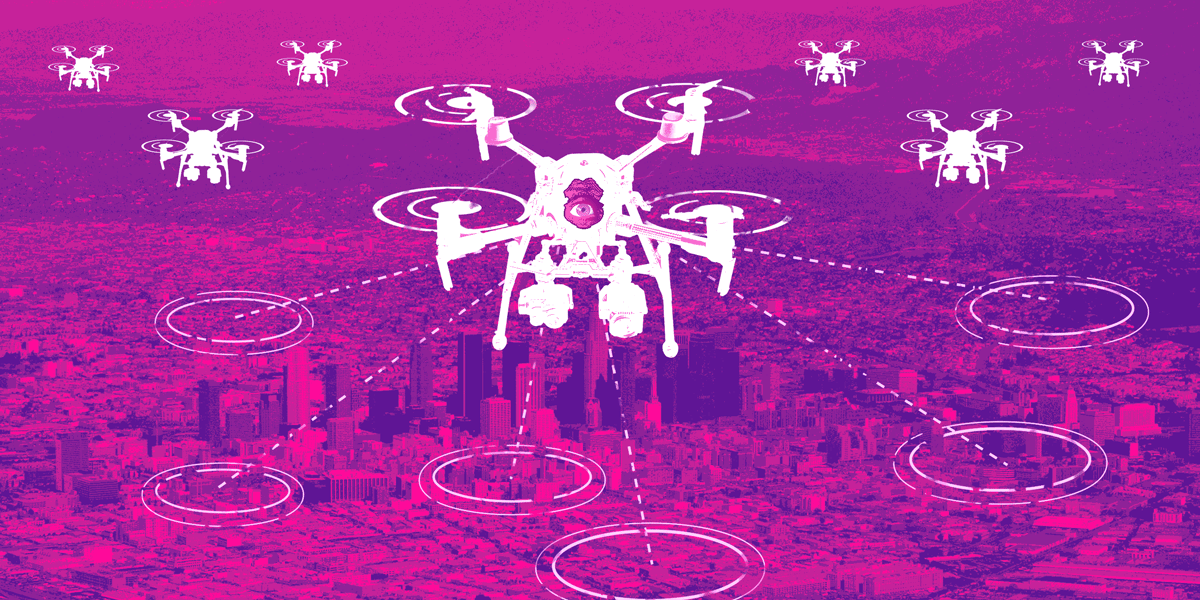
EFF to San Francisco Police: Drones are Powerful Surveillance Tools That Require a Robust Policy

The San Francisco Police Department (SFPD) began regularly deploying drones two years ago and has since expanded their use in a way that has outpaced its documented policy and evaded existing local and state oversight of these devices. 

The department has a new proposed policy, which continues to be grossly inadequate in protecting privacy and civil liberties. At best, the draft policy continues the SFPD’s pattern of putting vague guardrails on a powerful surveillance tool, but at worst, if implemented, the policy could effectively usher in sweeping, non-targeted, and unspecified general surveillance over the city with few guardrails.

EFF has repeatedly opposed the unaccountable development of the SFPD’s drone program and recently sent a comment to the Police Commission, the local civilian oversight body, about the SFPD’s new proposed policy. 

The SFPD has been sidestepping oversight of its drones since 2024. In March 2024, San Francisco voters approved a heavily-funded, billionaire-backed measure, Proposition E, which sought to expand police access to surveillance technology. Among its impacts, Prop E removed drones from oversight required by the 2019 Surveillance Technology Ordinance. Nonetheless, in its haste to purchase drones after Prop E passed, the SFPD knowingly violated California’s AB 481, a state statute requiring law enforcement agencies to get approval from their local elected governing body before purchasing military equipment, including drones. Eventually the SFPD sought retroactive approval from the Board of Supervisors and, soon after, announced that it would be launching a drone-as-first-responder (DFR) program.

Now, San Francisco finally has an opportunity to update the SFPD’s guidance in a way that won’t quickly become stale, as has happened while the SFPD steadily increases the purposes for drone use. Though drones were initially identified as tools to use for specific actions such as vehicle pursuits and active criminal investigations, within a year, the SFPD expanded use cases to include patrol, i.e. unrelated to a specific incident. Along with this mission creep, the SFPD has also steadily and exponentially increased the number of drone flights, from roughly 350 deployments in 2024, to over 1,100 from January to August 2025, to over 3,500 in just the first five months of 2026.

The original draft of an updated policy brought by the SFPD to the local Police Commission, a civilian oversight body, earlier this month provided limited details and proposed allowing police to treat drone flights as an extension of their patrol abilities, paving the way for general surveillance, including of First Amendment-protected activity. The proposal received significant community pushback, and the San Francisco Public Defender’s Office authored a letter describing the policy’s shortcomings. That letter was signed by over a dozen local, state, and national groups, including EFF. 

Based on these concerns, the Police Commission deferred taking action until the SFPD addressed them. The SFPD then revised its proposed policy, but this, too, falls short of providing practical guidance to officers and protecting civil liberties, as the Public Defender’s Office identified in a follow-up letter signed by over 40 organizations, including EFF.

EFF’s additional comment to the Police Commission, in part, calls out the incredible gap in oversight of these ballooning drone flights and the immense data collection they facilitate:

The revised policy states that “[unmanned aerial vehicles] may be used as an asset in any situation in which a member may be deployed for a public safety response or when a member onviews criminal activity” but fails to define what is meant by a “public safety response.” The revised policy also provides a definition of “Drone as First Responders,” but it fails to provide any more detail about appropriate DFR deployment. Without appropriate safeguards around deployment and use, drones could be deployed to every call for service, even in situations that are ultimately deemed nonincidents, collecting data along the way that is then stored for 30 days. This type of general patrol could effectively become general surveillance, which SFPD acknowledges is an inappropriate use of their drones and yet is still possible under the vague terms of the current DGO. 

The Police Commission is set to consider the matter on October 14. You can read EFF’s full comment here.

  •  

Robot Police Officers

We’ve taken one small step towards robot police officers: a drone capable of disarming a suspect:

In a June 22 video posted on the Sacramento County Sheriff’s Office’s Instagram page, an officer wearing goggles can be seen operating a drone to retrieve a knife from an armed suspect hiding inside a cluttered house. “After not responding to negotiators, a drone was deployed inside the residence,” the post says. “Drone pilots located the suspect hiding in a corner of a garage” and then used a high-powered magnet attached to the drone to grab the knife out of the suspect’s hand. In the video ­ which is soundtracked by the “Mission: Impossible” theme song—the intercepted knife can be seen spinning around in the air as the drone carries it back to the deputies.

Slashdot thread.

  •  

Drone as First Responder Programs: 2025 in Review

Drone as first responder (DFR) adoption really took off in 2025. Though the concept has been around since 2018, this year saw more normalization of the technology, its integration into more real-time crime center structures, and the implementation of automated deployment of drones.

A DFR program features a fleet of camera-equipped drones, which can range from just a couple to dozens or more. These are deployed from a launch pad in response to 911 calls and other calls for service, sometimes operated by a drone pilot or, increasingly, autonomously directed to the call location. The appeal is the promise of increased “situational awareness” for officers headed to a call. This video offers a short explanation of DFR, and for a list of all of the cities we know use drones, including DFR programs, check out EFF’s Atlas of Surveillance. 

Major Moves from the FAA and Forthcoming Federal Issues

In order to deploy a drone beyond where it can be seen, operators need to receive a waiver from the Federal Aviation Administration (FAA), and all DFR programs require this. Police departments and technology vendors have complained that the process takes too long, and in May, FAA finalized reworked requirements, leading to a flood of waiver requests. An FAA spokesperson reported that in the first two months of the new waiver process, it had approved 410 such waivers, already accounting for almost a third of the approximately 1,400 DFR waivers that had ever been granted.

The federal government made other major moves on the drone front this year. A month after the new waivers went to effect, President Trump issued an Executive Order with aspirations for advancing the country’s drone industry. And at the end of the year, one of the largest drone manufacturers in the world and one of the biggest purveyors of law enforcement drones, DJI, will be banned from launching new products in the U.S. unless the federal government conducts a security audit that was mandated by the National Defense Authorization Act. However, at the moment, it doesn’t seem like that audit will happen, and if it doesn’t, it won’t be surprising to see other drone manufacturers leveraging the ban to boost their own products. 

Automated Drone Deployment and Tech Integrations

Early iterations of drone use required a human operator, but this year, police drone companies began releasing automated flying machines that don’t require much human intervention at all. New models can rely on AI and automated directions to launch and direct a drone. 

This article is part of our Year in Review series. Read other articles about the fight for digital rights in 2025.

This was the year we saw DFR integrated with other tools and tech companies teamed up to bring even more powerful surveillance. Flock Safety added automated license plate readers (ALPR) to their drones. Axon and Skydio built on the partnership they launched in 2024. Drone manufacturer Brinc teamed up with Motorola Solutions on a DFR program. Drone company Paladin teamed up with a company called SkyeBrowse to add 3-D mapping of the environment to their list of features. 

DFR also is increasingly part of the police plans for real-time crime centers, meaning that the footage being captured by these flying cameras is being integrated into other streams and analyzed in ways that we’re still learning about. 

Transparency Around DFR Deployments

Transparency around adoption, use, and oversight is always crucial, particularly when it comes to police surveillance, and EFF has been tracking the growth of DFR programs across the country. We encourage you to use your local public records laws to investigate them further. Examples of the kinds of requests and the responsive documents people have already received — including flight logs, policies, and other information — can be found on MuckRock. 

The Problem with Drones

Flying cameras are bad enough. They can see and record footage from a special vantage point, capturing video of your home, your backyard, and your movements that should require clear policies around retention, audits, and use, including when the cameras shouldn’t be recording. We’re also seeing that additional camera analysis and other physical features that can be added (so-called “payloads”) — like thermal cameras and even tear gas — can make drones even more powerful and that police technology companies are encouraging DFR as part of surveillance packages.

It's important that next year we all advocate for, and enforce, standards in adopting and using these DFRs. Check the Atlas to see if they are used where you live and learn more about drones and other surveillance tools on EFF’s Street-Level Surveillance Hub.

This article is part of our Year in Review series. Read other articles about the fight for digital rights in 2025.

  •  
❌