Reading view

Your VLAN Isn’t an Air Gap: Six Hard Truths From the New CI Fortify Guidance

More than 30 Minnesota water systems were hit in one coordinated cyber attack. Within days, the Five Eyes told critical infrastructure operators to be ready to pull the plug.  Thirty water systems in two days  Over two days in late July, a coordinated cyber attack hit more than 30 community water systems across Minnesota. The treatment plant in Braham went offline. Plymouth lost cellular communications to two water towers and its wastewater lift stations. Maple Plain declared a local state of emergency. Early reporting points to internet-exposed programmable logic controllers (PLCs) as the way in, and investigators are examining links to Iranian affiliated activity. […]

The post Your VLAN Isn’t an Air Gap: Six Hard Truths From the New CI Fortify Guidance appeared first on Check Point Blog.

  •  

LG to Ban Residential Proxies from Smart TV Apps

The home appliance giant LG Electronics USA said this week it plans to suspend any apps built for its smart TVs that turn one’s television into an always-on residential proxy node. The move comes less than a month after researchers found that more than 42 percent of games and other apps available for download on LG’s webOS store allow unknown third-parties to route their Internet traffic through a user’s TV.

Proxy SDK prevalence among smart TV apps for LG (webOS) and Samsung (Tizen OS) televisions. Image: Spur.us.

On July 2, we featured research by the security firm Spur that examined the prevalence of residential proxy software development kits (SDKs) in smart TV apps. Spur found more than 42 percent of apps available for download on LG smart TVs include SDKs that turn one’s television in a proxy node indefinitely, and that more than a quarter of the apps made for Samsung’s Tizen operating system had similar residential proxy components.

Responding to questions about Spur’s research, LG Senior Vice President John Taylor told KrebsOnSecurity the company was working with app developers to remove the residential proxy option from their apps on the webOS platform. Developers that fail to comply, he said, will find their apps suspended.

“A residential proxy network is not an intended use for LG smart TVs, and LG Electronics is working with developers to remove the residential proxy option from their apps on the webOS platform,” Taylor said. “If this option is not removed, these apps will be suspended.”

Taylor said LG is committed to keeping residential proxy networks out of its smart TV apps going forward, and that the company’s review of those apps is “well underway now.”

“As part of our ongoing efforts to enhance platform quality and the user experience, LG will continue to strengthen our evaluation process for developer-submitted apps, including those that incorporate residential proxy SDKs,” Taylor wrote in an emailed statement.

App makers looking for ways to monetize their creations can turn to residential proxy providers, which pay developers to include SDKs that turn the user’s device into a residential proxy node that is rented to paying customers. In the case of LG and Samsung smart TVs, Spur found residential proxy SDKs bundled with everything from simple games like Pac-Man to screensavers and file utilities.

A Pac-Man smart TV app from Bright Data offers users the choice between viewing ads in the game or agreeing to allow their TV to serve as a residential proxy node. Image: Spur.us.

Spur’s report found the residential proxy network Bright Data accounted for a majority of proxy SDKs across both Samsung and LG smart TVs. In a statement shared with KrebsOnSecurity, Bright Data said its network is built on consent and responsibility and operates by LG and Samsung terms.

“Every peer opts in through a dedicated screen and receives value in return; every customer is vetted, and our practices have now undergone a second independent audit by PwC,” the statement reads. “We remain committed to an open, transparent internet where legitimate businesses, researchers, and institutions can responsibly access data that lives in the public domain.”

Bright Data and other proxy providers named in Spur’s report all say they follow rigorous know-your-customer processes to validate legitimate uses of their services, which is often heavily tied to content-scraping activities by said customers. The proxy companies also say they incorporate technological countermeasures to prevent proxy service customers from being able to interact with and control other devices on the proxy user’s local network.

Spur argues the problem is not that residential proxy networks exist, but rather that they are being embedded at scale in devices that most consumers do not think of as computers and are not equipped to audit.

“A one-time consent prompt buried in a TV app is not a substitute for meaningful transparency, ongoing control, and platform oversight,” Spur’s Trevor Sutter wrote. “The risk is amplified when consent comes from individuals within the household who use the device but shouldn’t give consent, such as minors.”

LG’s announcement that it is culling residential proxy SDKs from its app store is welcome news, but the company recently came under fire for another questionable partnership: Pimping McAfee security products via software drivers included in its high-end LCD monitors.

Earlier this week, the Youtube channel Gamers Nexus showed that certain LG LCD monitors will automatically install an app that promotes paid McAfee antivirus subscriptions, and that the app arrives through Windows Update without an approval prompt.

Update, July 22, 1:06 p.m. ET: Added statement from Bright Data.

  •  

Energy, Healthcare, and Finance: Why Midwest Industries Are Facing Surging Cyber Attacks

Across the United States, the average organization faced slightly fewer cyber attacks per week in May 2026 than it did a year earlier, according to Check Point Research — the national figure was essentially flat year over year. In the Central US, however, the trend ran the other way. Organizations there faced more attacks than a year ago, and more than the national average — as they did in every month of 2026.  Through the first five months of the year, the typical Central US organization faced about 1,552 cyber attacks per week, roughly 7% above the national average of […]

The post Energy, Healthcare, and Finance: Why Midwest Industries Are Facing Surging Cyber Attacks appeared first on Check Point Blog.

  •  

Check Point Engage Public Sector 2026: AI Is the New Battlefield

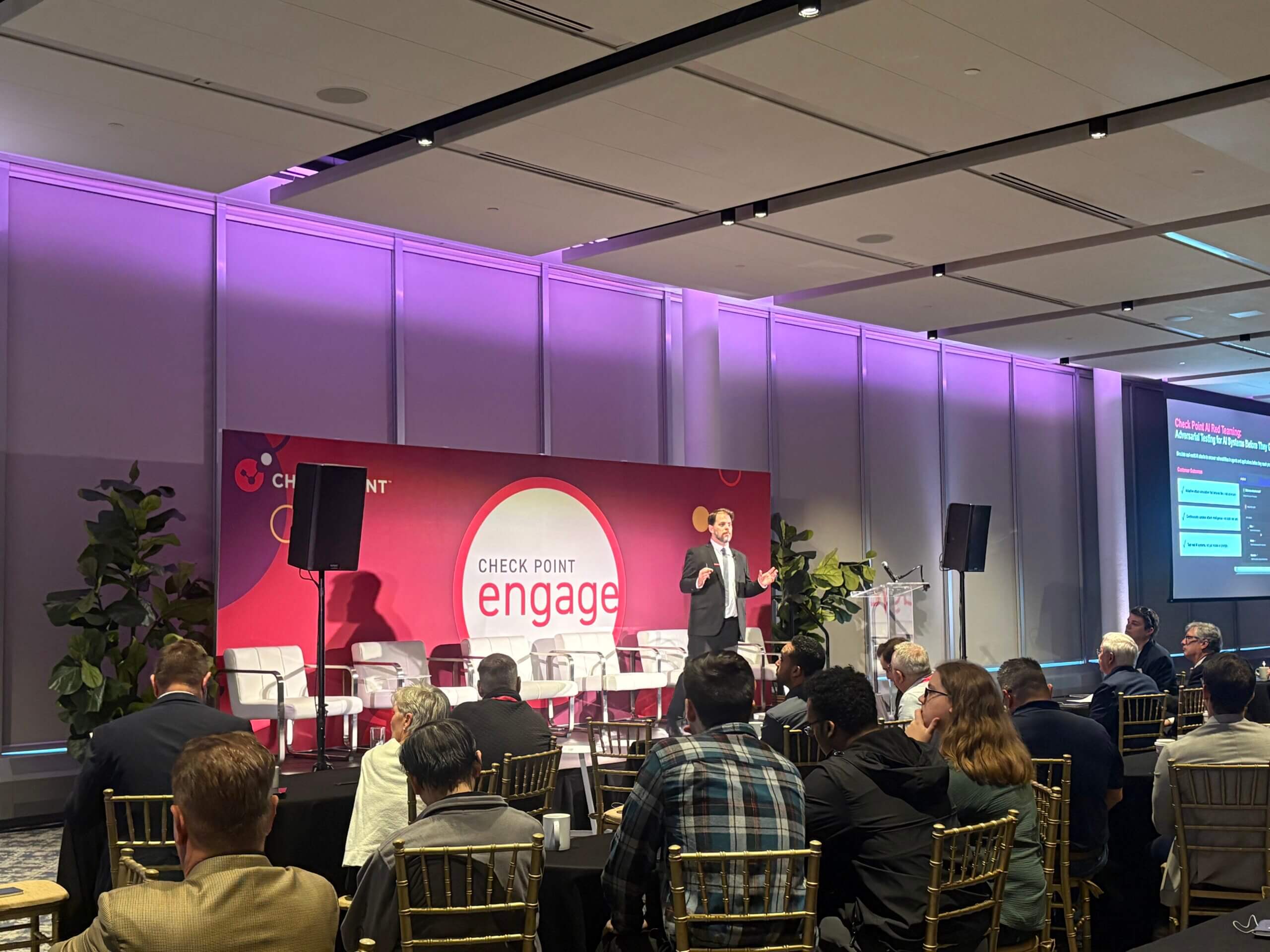
Last week, public sector leaders, cyber security practitioners, and technology experts gathered at the International Spy Museum in Washington, D.C. for Check Point Engage Public Sector: Securing the Mission of Public Sector Organizations in a Hyperconnected AI World. And what was on everyone’s mind? You guessed it – how federal and other public sector organizations secure mission-critical operations in an era where AI is transforming both cyber security defense and cyber warfare. What the audience learned across our several superb panel discussions was that AI has definitively become a challenging and fast-evolving battleground in the push and pull between attackers […]

The post Check Point Engage Public Sector 2026: AI Is the New Battlefield appeared first on Check Point Blog.

  •  

The 2026 U.S. Midterms Have a Cyber Problem, But it’s Not at the Ballot Box

As the U.S. approaches the 2026 elections in November, the greatest threat to voting integrity will likely not be from hackers targeting voting machines or altering ballots, but from a growing war over reality itself.   Voter influence operations are increasingly focused on manipulating the information environment surrounding voters, flooding social media and search results with misleading narratives and fake content, and impersonated news sources designed to erode trust in what people see and hear online. Sophisticated operators have already cloned major media brands like Reuters, The Washington Post, and Fox News using look-alike domains that can fool even attentive readers at a glance. In this new era of AI-powered disinformation, the […]

The post The 2026 U.S. Midterms Have a Cyber Problem, But it’s Not at the Ballot Box appeared first on Check Point Blog.

  •  

Check Point Cyber Security Now Available Across All Levels of U.S. Government

We’re proud to announce that Check Point has earned GovRAMP Authorization for the Check Point Infinity Platform for Government. This is a big milestone for the company and is a reflection of our unparalleled prevention-first capabilities, which were recently ranked #1 for the fourth consecutive year in Miercom’s 2026 Hybrid Mesh Network Security Assessment (Check Point achieved the top overall security effectiveness score of 99.8%, with 100% phishing detection and 99.9% AI-powered malware prevention versus leading competitors).  Combined with FedRAMP Authorization achieved in 2025, this means Check Point now delivers security-vetted protection across federal, state, local, and tribal governments, providing a consistent, trusted cyber security framework across all levels of U.S. public sector operations.  This […]

The post Check Point Cyber Security Now Available Across All Levels of U.S. Government appeared first on Check Point Blog.

  •  

Wrangling Windows Event Logs with Hayabusa & SOF-ELK (Part 2)

But what if we need to wrangle Windows Event Logs for more than one system? In part 2, we’ll wrangle EVTX logs at scale by incorporating Hayabusa and SOF-ELK into my rapid endpoint investigation workflow (“REIW”)! 

The post Wrangling Windows Event Logs with Hayabusa & SOF-ELK (Part 2) appeared first on Black Hills Information Security, Inc..

  •  

Wrangling Windows Event Logs with Hayabusa & SOF-ELK (Part 1)

In part 1 of this post, we’ll discuss how Hayabusa and “Security Operations and Forensics ELK” (SOF-ELK) can help us wrangle EVTX files (Windows Event Log files) for maximum effect during a Windows endpoint investigation!

The post Wrangling Windows Event Logs with Hayabusa & SOF-ELK (Part 1) appeared first on Black Hills Information Security, Inc..

  •  

Stop Spoofing Yourself! Disabling M365 Direct Send

Remember the good ‘ol days of Zip drives, Winamp, the advent of “Office 365,” and copy machines that didn’t understand email authentication? Okay, maybe they weren’t so good! For a […]

The post Stop Spoofing Yourself! Disabling M365 Direct Send appeared first on Black Hills Information Security, Inc..

  •  
❌