Reading view

EFF in the Press: 2025 in Review

EFF’s attorneys, activists, and technologists don’t just do the hard, endless work of defending our digital civil liberties — they also spend a lot of time and effort explaining that work to the public via media interviews. 

EFF had thousands of media mentions in 2025, from the smallest hyperlocal outlets to international news behemoths. Our work on street-level surveillance — the technology that police use to spy on our communities — generated a great deal of press attention, particularly regarding automated license plate readers (ALPRs). But we also got a lot of ink and airtime for our three lawsuits against the federal government: one challenging the U.S. Office of Personnel Management's illegal data sharing, a second challenging the State Department's unconstitutional "catch and revoke" program, and the third demanding that the departments of State and Justice reveal what pressure they put on app stores to remove ICE-tracking apps.

Other hot media topics included how travelers can protect themselves against searches of their devices, how protestors can protect themselves from surveillance, and the misguided age-verification laws that are proliferating across the nation and around the world, which are an attack on privacy and free expression.

On national television, Matthew Guariglia spoke with NBC Nightly News to discuss how more and more police agencies are using private doorbell cameras to surveil neighborhoods. Tori Noble spoke with ABC’s Good Morning America about the dangers of digital price tags, as well as with ABC News Live Prime about privacy concerns over OpenAI’s new web browser.

play
Privacy info. This embed will serve content from youtube.com
play
Privacy info. This embed will serve content from youtube.com


In a sampling of mainstream national media, EFF was cited 33 times by the Washington Post, 16 times by CNN, 13 times by USA Today, 12 times by the Associated Press, 11 times by NBC News, 11 times by the New York Times, 10 times by Reuters, and eight times by National Public Radio. Among tech and legal media, EFF was cited 74 times by Privacy Daily, 35 times by The Verge, 32 times by 404 Media, 32 times by The Register, 26 times by Ars Technica, 25 times by WIRED, 21 times by Law360, 21 times by TechCrunch, 20 times by Gizmodo, and 14 times by Bloomberg Law.

Abroad, EFF was cited in coverage by media outlets in nations including Australia, Bangladesh, Belgium, Canada, Colombia, El Salvador, France, Germany, India, Ireland, New Zealand, Palestine, the Philippines, Slovakia, South Africa, Spain, Trinidad and Tobago, the United Arab Emirates, and the United Kingdom. 

EFF staffers spoke to the masses in their own words via op-eds such as: 

And we ruled the airwaves on podcasts including: 

We're grateful to all the intrepid journalists who keep doing the hard work of reporting accurately on tech and privacy policy, and we encourage them to keep reaching out to us at press@eff.org.

This article is part of our Year in Review series. Read other articles about the fight for digital rights in 2025.

  •  

EFF’s ‘How to Fix the Internet’ Podcast: 2025 in Review

2025 was a stellar year for EFF’s award-winning podcast, “How to Fix the Internet,” as our sixth season focused on the tools and technology of freedom. 

It seems like everywhere we turn we see dystopian stories about technology’s impact on our lives and our futuresfrom tracking-based surveillance capitalism, to street level government surveillance, to the dominance of a few large platforms choking innovation, to the growing efforts by authoritarian governments to control what we see and saythe landscape can feel bleak. Exposing and articulating these problems is important, but so is envisioning and then building solutions. That’s where our podcast comes in. 

EFF's How to Fix the Internet podcast offers a better way forward. Through curious conversations with some of the leading minds in law and technology, EFF Executive Director Cindy Cohn and Activism Director Jason Kelley explore creative solutions to some of today’s biggest tech challenges. Our sixth season, which ran from May through September, featured: 

  • Digital Autonomy for Bodily Autonomy” – We all leave digital trails as we navigate the internetrecords of what we searched for, what we bought, who we talked to, where we went or want to go in the real worldand those trails usually are owned by the big corporations behind the platforms we use. But what if we valued our digital autonomy the way that we do our bodily autonomy? Digital Defense Fund Director Kate Bertash joined Cindy and Jason to discuss how creativity and community can align to center people in the digital world and make us freer both online and offline. 
  • Love the Internet Before You Hate On It” – There’s a weird belief out there that tech critics hate technology. But do movie critics hate movies? Do food critics hate food? No! The most effective, insightful critics do what they do because they love something so deeply that they want to see it made even better. Molly Whitea researcher, software engineer, and writer who focuses on the cryptocurrency industry, blockchains, web3, and other tech joined Cindy and Jason to discuss working toward a human-centered internet that gives everyone a sense of control and interaction; open to all in the way that Wikipedia was (and still is) for her and so many others: not just as a static knowledge resource, but as something in which we can all participate. 
  • Why Three is Tor's Magic Number” – Many in Silicon Valley, and in U.S. business at large, seem to believe innovation springs only from competition, a race to build the next big thing first, cheaper, better, best. But what if collaboration and community breeds innovation just as well as adversarial competition? Tor Project Executive Director Isabela Fernandes joined Cindy and Jason to discuss the importance of not just accepting technology as it’s given to us, but collaboratively breaking it, tinkering with it, and rebuilding it together until it becomes the technology that we really need to make our world a better place. 
  • Securing Journalism on the ‘Data-Greedy’ Internet” – Public-interest journalism speaks truth to power, so protecting press freedom is part of protecting democracy. But what does it take to digitally secure journalists’ work in an environment where critics, hackers, oppressive regimes, and others seem to have the free press in their crosshairs? Freedom of the Press Foundation Digital Security Director Harlo Holmes joined Cindy and Jason to discuss the tools and techniques that help journalists protect themselves and their sources while keeping the world informed. 
  • Cryptography Makes a Post-Quantum Leap” – The cryptography that protects our privacy and security online relies on the fact that even the strongest computers will take essentially forever to do certain tasks, like factoring prime numbers and finding discrete logarithms which are important for RSA encryption, Diffie-Hellman key exchanges, and elliptic curve encryption. But what happens when those problemsand the cryptography they underpinare no longer infeasible for computers to solve? Will our online defenses collapse? Research and applied cryptographer Deirdre Connolly joined Cindy and Jason to discuss not only how post-quantum cryptography can shore up those existing walls but also help us find entirely new methods of protecting our information. 
  • Finding the Joy in Digital Security” – Many people approach digital security training with furrowed brows, as an obstacle to overcome. But what if learning to keep your tech safe and secure was consistently playful and fun? People react better to learning and retain more knowledge when they're having a good time. It doesn’t mean the topic isn’t seriousit’s just about intentionally approaching a serious topic with joy. East Africa digital security trainer Helen Andromedon joined Cindy and Jason to discuss making digital security less complicated, more relevant, and more joyful to real users, and encouraging all women and girls to take online safety into their own hands so that they can feel fully present and invested in the digital world. 
  • Smashing the Tech Oligarchy” – Many of the internet’s thorniest problems can be attributed to the concentration of power in a few corporate hands: the surveillance capitalism that makes it profitable to invade our privacy, the lack of algorithmic transparency that turns artificial intelligence and other tech into impenetrable black boxes, the rent-seeking behavior that seeks to monopolize and mega-monetize an existing market instead of creating new products or markets, and much more. Tech journalist and critic Kara Swisher joined Cindy and Jason to discuss regulation that can keep people safe online without stifling innovation, creating an internet that’s transparent and beneficial for all, not just a collection of fiefdoms run by a handful of homogenous oligarchs. 
  • Separating AI Hope from AI Hype” – If you believe the hype, artificial intelligence will soon take all our jobs, or solve all our problems, or destroy all boundaries between reality and lies, or help us live forever, or take over the world and exterminate humanity. That’s a pretty wide spectrum, and leaves a lot of people very confused about what exactly AI can and can’t do. Princeton Professor and “AI Snake Oil” publisher Arvind Narayanan joined Cindy and Jason to discuss how we get to a world in which AI can improve aspects of our lives from education to transportation—if we make some system improvements first—and how AI will likely work in ways that we barely notice but that help us grow and thrive. 
  • Protecting Privacy in Your Brain” – Rapidly advancing "neurotechnology" could offer new ways for people with brain trauma or degenerative diseases to communicate, as the New York Times reported this month, but it also could open the door to abusing the privacy of the most personal data of all: our thoughts. Worse yet, it could allow manipulating how people perceive and process reality, as well as their responses to ita Pandora’s box of epic proportions. Neuroscientist Rafael Yuste and human rights lawyer Jared Genser, co-founders of The Neurorights Foundation, joined Cindy and Jason to discuss how technology is advancing our understanding of what it means to be human, and the solid legal guardrails they're building to protect the privacy of the mind. 
  • Building and Preserving the Library of Everything” – Access to knowledge not only creates an informed populace that democracy requires but also gives people the tools they need to thrive. And the internet has radically expanded access to knowledge in ways that earlier generations could only have dreamed ofso long as that knowledge is allowed to flow freely. Internet Archive founder and digital librarian Brewster Kahle joined Cindy and Jason to discuss how the free flow of knowledge makes all of us more free.

This article is part of our Year in Review series. Read other articles about the fight for digital rights in 2025.

  •  

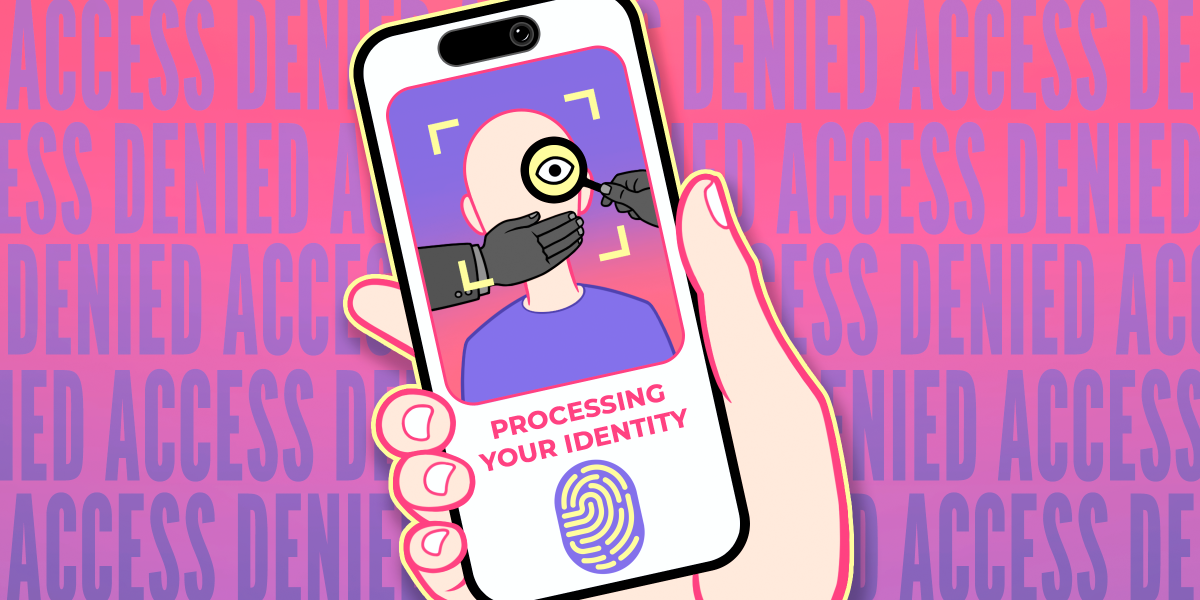
EFF Launches Age Verification Hub as Resource Against Misguided Laws

EFF Also Will Host a Reddit AMA and a Livestreamed Panel Discussion

SAN FRANCISCO—With ill-advised and dangerous age verification laws proliferating across the United States and around the world, creating surveillance and censorship regimes that will be used to harm both youth and adults, the Electronic Frontier Foundation has launched a new resource hub that will sort through the mess and help people fight back. 

To mark the hub's launch, EFF will host a Reddit AMA (“Ask Me Anything”) next week and a free livestreamed panel discussion on January 15 highlighting the dangers of these misguided laws. 

“These restrictive mandates strike at the foundation of the free and open internet,” said EFF Activist Molly Buckley. “While they are wrapped in the legitimate concern about children's safety, they operate as tools of censorship, used to block people young and old from viewing or sharing information that the government deems ‘harmful’ or ‘offensive.’ They also create surveillance systems that critically undermine online privacy, and chill access to vital online communities and resources. Our new resource hub is a one-stop shop for information that people can use to fight back and redirect lawmakers to things that will actually help young people, like a comprehensive privacy law.” 

Half of U.S. states have enacted some sort of online age verification law. At the federal level, a House Energy and Commerce subcommittee last week held a hearing on “Legislative Solutions to Protect Children and Teens Online.” While many of the 19 bills on that hearing’s agenda involve age verification, none would truly protect children and teens. Instead, they threaten to make it harder to access content that can be crucial, even lifesaving, for some kids. 

It’s not just in the U.S.  Effective this week, a new Australian law requires social media platforms to take reasonable steps to prevent Australians under the age of 16 from creating or keeping an account. 

We all want young people to be safe online. However, age verification is not the panacea that regulators and corporations claim it to be; in fact, it could undermine the safety of many. 

Age verification laws generally require online services to check, estimate, or verify all users’ ages—often through invasive tools like government ID checks, biometric scans, or other dubious “age estimation” methods—before granting them access to certain online content or services. These methods are often inaccurate and always privacy-invasive, demanding that users hand over sensitive and immutable personal information that links their offline identity to their online activity. Once that valuable data is collected, it can easily be leaked, hacked, or misused.  

To truly protect everyone online, including children, EFF advocates for a comprehensive data privacy law. 

EFF will host a Reddit AMA on r/privacy from Monday, Dec. 15 at 12 p.m. PT through Wednesday, Dec. 17 at 5 p.m. PT, with EFF attorneys, technologists, and activists answering questions about age verification on all three days. 

EFF will host a free livestream panel discussion about age verification at 12 p.m. PDT on Thursday, Jan. 15. Panelists will include Cynthia Conti-Cook, Director of Research and Policy at the Collaborative Research Center for Resilience; a representative of Gen Z for Change; EFF Director of Engineering Alexis Hancock; and EFF Associate Director of State Affairs Rindala Alajaji. RSVP at https://www.eff.org/livestream-age. 

For the age verification resource hub: https://www.eff.org/age 

For the Reddit AMA: https://www.reddit.com/r/privacy/  

For the Jan. 15 livestream: https://www.eff.org/livestream-age  


Contact: 
Molly
Buckley
Activist

  •  
❌