Reading view

“Stealth Crawlers” Are Not a Threat to the Open Web. Bills Targeting Them Would Be.

There’s a new boogeyman in the battles over AI: so-called “stealth crawlers.” We’ll admit it—the term “stealth crawlers” sounds quite nefarious. In reality, they’re anything but.

“Stealth crawlers” are simply automated tools to access and collect public web data—without disclosing the user’s identity. Private crawlers like these facilitate all kinds of important work that benefits the public, including investigative reporting, academic research, cybersecurity protection, and more.

Anonymous crawling enables some of the most publicly beneficial uses of the open web.

Many publishers want to unmask crawlers anyways—and are pushing for new legislation that would give them new powers to do so. These legislative proposals threaten the open web, user privacy, and valuable research without directly addressing the problems they’re supposedly intending to solve.

Alarmingly, these harmful proposals are gaining traction. The New York state legislature has already passed such a bill, the NY Stealth Crawler Protection Act, which is now on Governor Hochul’s desk. We expect to see similar bills introduced in other states, and potentially in Congress. That’s a big problem for the open web—and the many benefits it provides.

Anonymous crawling is worth protecting

Anonymous crawling enables some of the most publicly beneficial uses of the open web. Researchers, journalists, and other watchdog groups use unidentified automated tools to gather the information necessary to hold powerful institutions accountable and protect the public.

Anonymous crawling fuels important investigative journalism. For example, The Markup, a non-profit news site, used anonymous crawlers to investigate potentially anti-competitive practices by tech companies, such as Amazon’s tendency to prioritize Amazon brands and Amazon-exclusive products over competitors with higher ratings. The crawlers identified themselves as ordinary Firefox browsers to web servers, which allowed The Markup to understand how Amazon search results pages would appear to ordinary users. Similarly, ProPublica used an automated tool designed to simulate an ordinary Amazon customer to reveal that the site steered shoppers to more expensive products over cheaper alternatives.

Anonymous web scraping is also crucial for cybersecurity professionals, who use automated tools to monitor the web for information that helps them protect against malicious attackers. Privacy tools, including EFF’s own Privacy Badger, also crawl sites anonymously to identify trackers without compromising user privacy.

However, without the ability to scrape anonymously, these tools would likely be blocked. Sites can—and do—block crawlers operated by researchers, journalists, and activists who criticize them. For example, Facebook shut down accounts belonging to researchers who used automated tools to study misinformation on the platform and demanded that they take down published research. Many sites block automated access by anyone who hasn’t paid to crawl public webpages.    

Unmasking crawlers threatens the open web

News publishers—and their allies in government—say that unmasking crawlers is necessary to protect news organizations from technological strain caused by AI-related crawling, and fears that AI could reduce news sites’ traffic and ad revenue. These are legitimate concerns.

But enacting broad, reactionary restrictions on automated access is not the answer. Legislation targeting anonymous crawling threatens the open web, user privacy, and valuable research without actually addressing these technological and potential economic harms of scraping.

The New York state legislature recently passed the NY Stealth Crawler Protection Act, a law that would make it illegal to crawl news websites without revealing who is operating the crawler and all possible future uses of the data collected by the crawler. The law would give websites the power to obtain court orders that unmask anyone using an unidentified crawler—without any evidence that they broke the law.

Laws like the New York bill sweep far beyond AI, and do not meaningfully address the technological or potential harms of AI-related web scraping. These policies would chill beneficial crawling by allowing publishers to veto lawful public access, giving them the power to block not just bad actors, but also security professionals, researchers, dissidents, or anyone who has not paid for a license to view public text. This needlessly undermines the free and open internet.

Digital news publishers—like most websites—face real technological challenges in the AI era. While web crawling has been around for decades, with the proliferation of AI, crawlers now collect far more public web data than they used to. This pushes servers closer to their maximum capacity, and if some bots collect information too aggressively, they may strain web servers to the point that it degrades site performance. The problem is not anonymity—so unmasking crawlers won’t solve it. The real problem is overaggressive crawling, which can be effectively addressed with technical measures that target harmful conduct without impeding anonymous access to information.

A better path forward

There are other, far less harmful ways to protect publishers from the harms these “stealth crawler” laws claim to target. Addressing the harms of AI-related crawling requires policies that narrowly target the causes of these issues–without undermining free expression and the open web. Policies that target crawlers and scrapers are anything but.

  •  

Automated Moderation Is Here to Stay—Accountability Must Keep Pace

This post is part 2 in a series about automated content moderation. Read the first post here.

When whistleblower Frances Haugen leaked a set of documents from Meta in 2020, among the revelations was a jarring statistic: The company’s algorithms designed to detect terrorist content incorrectly deleted nonviolent Arabic-language content 77 percent of the time, while failing to detect hate speech under the company’s own policies in many instances. Meta’s own transparency report released later that year demonstrated similar findings. Five years later, researchers in the region report that overzealous moderation remains a problem, while paths to remedy have all but collapsed.

Where these systems are faltering in Arabic, they’re positively failing in less-resourced languages. As a 2025 report from the Center for Democracy and Technology found, labeled datasets in certain languages and dialects such as Maghrebi Arabic and Kiswahili contain inconsistencies, bias, and inaccuracies due to the limited hiring of annotators who actually speak the languages as well as shifts in the languages themselves. An investigation into ChatGPT’s outputs in several low-resource languages demonstrates the depth of problem.

But language disparities are just one of several concerns as automated moderation becomes more widespread. From the systemic suppression of content from Palestine to the repeated misclassification of LGBTQ+ content as adult or explicit material, these varied examples demonstrate the risks of overreliance on automated moderation—and the need for stronger safeguards.

Transparency, Cultural Competence, Appeals

As we discussed in Part 1 of this series, automated systems can process content at a scale that humans never could, potentially enabling better moderation at scale and alleviating the psychological load on ill-paid moderators whose jobs require them to view incredibly disturbing content. But automated systems also reproduce existing biases, struggle to understand context, and often make mistakes that disproportionately affect journalists, activists, artists, and other vulnerable and marginalized communities.

As Rachel Griffin wrote in 2023, “Perfectly accurate moderation is not only technically out of reach but intrinsically impossible.” Despite those intrinsic flaws, there is a great deal companies, policymakers, and civil society can do to help ensure that highly-automated systems operate in ways that respect human rights, minimize predictable harms, and provide meaningful accountability when they fail. If companies are going to continue relying on automation to moderate users’ speech—and there is little reason to believe they won’t—then accountability must evolve alongside these technologies.

That evolution can start with committing to the Santa Clara Principles 2.0. These principles, first outlined in 2020 and re-launched in 2021 after substantial international input, reflect the needs and expectations of the global community and specifically address automation. The first Foundational Principle states:

Companies should ensure that human rights and due process considerations are integrated at all stages of the content moderation process, and should publish information outlining how this integration is made. Companies should only use automated processes to identify or remove content or suspend accounts, whether supplemented by human review or not, when there is sufficiently high confidence in the quality and accuracy of those processes. Companies should also provide users with clear and accessible methods of obtaining support in the event of content and account action. 

Drawing on the Santa Clara Principles 2.0, international human rights standards, and years of research documenting the shortcomings of automated moderation, we propose eight recommendations for policymakers thinking about regulation and companies deploying AI-assisted content moderation systems.

  1. Automated technologies should help, not replace, human moderators. For example, automated systems can help flag and prioritize content for review, while humans can interpret context, handle sensitive cases, and refine system performance.
  2. Companies must be transparent about when and how automation is used in content decisions.
  3. Companies must regularly audit their automated systems for bias, with particular attention to low-resource languages, vulnerable and marginalized communities, and conflict zones.
  4. Users must have the ability to appeal, and to provide context when they believe human or automated moderation decisions have wrongfully removed their content. Appeals should be promptly evaluated and decided by human moderators.
  5. Companies should regularly assess the human rights impact of their moderation decisions, and issue public statements of the results
  6. If they rely on third-party vendors, companies should carefully (and regularly) audit those vendors for compliance with these same principles
  7. Lawmakers should avoid promoting and passing legislation that effectively or explicitly mandates automated moderation systems
  8. Policymakers should also refrain from attempting to dictate platforms technical and design choices to favor or disfavor particular expression.

These recommendations understand that automated content moderation isn’t just a technical problem for clever engineers and product teams to solve. Because content moderation shapes public discourse and fundamental rights, its design and oversight must respond to the concerns of policymakers, civil society, independent researchers, and the communities most affected by these systems.

This is the second post in a 2-part series on automated content moderation. Read the first post here.

  •  

Automated Moderation Is Here to Stay

This blog post is part 1 of a 2-part series. The second part sets out recommendations for companies and policymakers.

Six years ago—one month into a global pandemic—we argued that the automated moderation processes many platforms were rapidly adopting should be highly transparent, easily appealable, and temporary. We warned that "protocols adopted in times of crisis often persist when the crisis is over."

That warning proved prescient. The use of automation and artificial intelligence (AI) to identify, flag, and moderate content has become the new norm—a permanent feature of how platforms govern speech online. In this two part series, we’re take stock of this new norm, and considering what platforms can and should do to ensure that AI serves online expression rather than stifling it.

A brief history of automated content moderation

From spam filtering and keyword blacklists to the hash-matching technologies used to identify child sexual abuse material and terrorist content, automated technologies have been used in commercial content moderation for many years. While these tools have long posed risks to freedom of expression, their use was, for quite some time, relatively limited in scope.

Then, in 2017, a blog post published by Facebook (now Meta) described the company's "fairly recent" use of artificial intelligence to identify, classify, and remove violent extremist content. At the same time, Facebook emphasized caution, noting that it did not want to suggest there was "any easy technical fix."

Just one year later, Mark Zuckerberg appeared before the U.S. Senate's Commerce and Judiciary Committees and disclosed that "99 percent of the ISIS and Al Qaida content" removed by Facebook was flagged by AI "before any human sees it." He also stated that Facebook was "developing A.I. tools that can identify certain classes of bad activity proactively and flag it for our team at Facebook." At the time, we raised concerns about the ethical implications of using AI in this manner.

Then came 2020. The sudden reduction of the human moderation workforce, combined with a dramatic increase in social media use—and with it, a surge in misinformation—created the perfect conditions for platforms to expand their reliance on AI-driven moderation. It quickly became apparent that companies'—and particularly Meta's—approach to moderation during the pandemic represented a backslide in transparency, freedom of expression, and access to remedy. The increased reliance on automation was a significant factor.

The costs and benefits of AI content moderation

We knew in 2020 that the use of AI to moderate content would present problems for online freedom of expression. Today, those problems are well-documented. A 2025 joint declaration by special rapporteurs and representatives of the United Nations (UN), Organization for Security and Co-operation in Europe (OSCE), Organization of American States (OAS), and African Commission on Human and Peoples’ Rights (ACHPR) states:

“The use of AI content moderation can lead to over-removal, discrimination and censorship. Reliance on inherently biased datasets and opaque training processes can amplify pre-existing inequalities, risking homogenisation of expression, and erasure of linguistic and cultural diversity.”

EFF and many of our allies have documented these impacts. For example, our 2019 paper co-authored with Witness and Syrian Archive examined the impact of extremist content regulations—and their implementation through automation and AI—on human rights documentation. A 2020 report from Human Rights Watch highlighted the consequences of these removals, noting: "There is no way of knowing how much potential evidence of serious crimes is disappearing without anyone's knowledge."

The Center for Democracy and Technology's recent series on content moderation in the Global South demonstrates persistent inequities in content moderation of four “low-resource” languages—so-called because the relative scarcity of training data makes it more difficult to develop equitable and accurate AI models for them. 

Content moderation often disproportionately impacts vulnerable and historically marginalized groups, and AI content moderation is no different. GLAAD recognizes the role AI plays in scaling content moderation but notes that “when moderation systems lack nuance, transparency, and human oversight, they can fail to curb harassment and wrongly suppress legitimate LGBTQ content.”

These failures are not incidental. They are a predictable consequence of deploying automated systems to make complex judgments about language, culture, context, and identity at scale.

All of that said, automated content moderation can offer important benefits. The primary one: helping to spare human content moderators who must review content that varies from whimsical to horrific, often for little pay and with devastating mental health consequences. Outsourcing this work to the bots can offer some relief—though it’s worth noting that the humans hired to train the AI models face a similar dynamic.

In addition, AI models could potentially be trained over time to be more precise, accurate, and dynamic, helping to mitigate over-censorship and disinformation. The jury is still out on whether this potential will be realized; what we do know is that new approaches to the persistent problem of over and under-enforcement are desperately needed.

Automated moderation is no longer an experiment

Getting the balance between real costs and potential benefits depends a lot on the details: how automated systems are designed, trained, implemented, and audited.  

Despite advances in the sophistication and scale of automated moderation systems, many of the transparency, accountability, and due process safeguards advocated by civil society, researchers, and human rights experts have yet to be fully realized. At the same time, automated systems have become increasingly central to how platforms enforce their rules and govern online speech.

The question today is not whether companies will use AI to moderate content, but under what conditions they should do so. And now as ever, the answer is not that the public should just trust that platforms’ deployment of increasingly powerful systems will serve, rather than inhibit online expression. In fact, as automated systems become more sophisticated and more deeply embedded in platform governance, the need for transparency and accountability becomes more urgent. 

This is part 1 of a 2-part series. You can read the second part here.

  •  

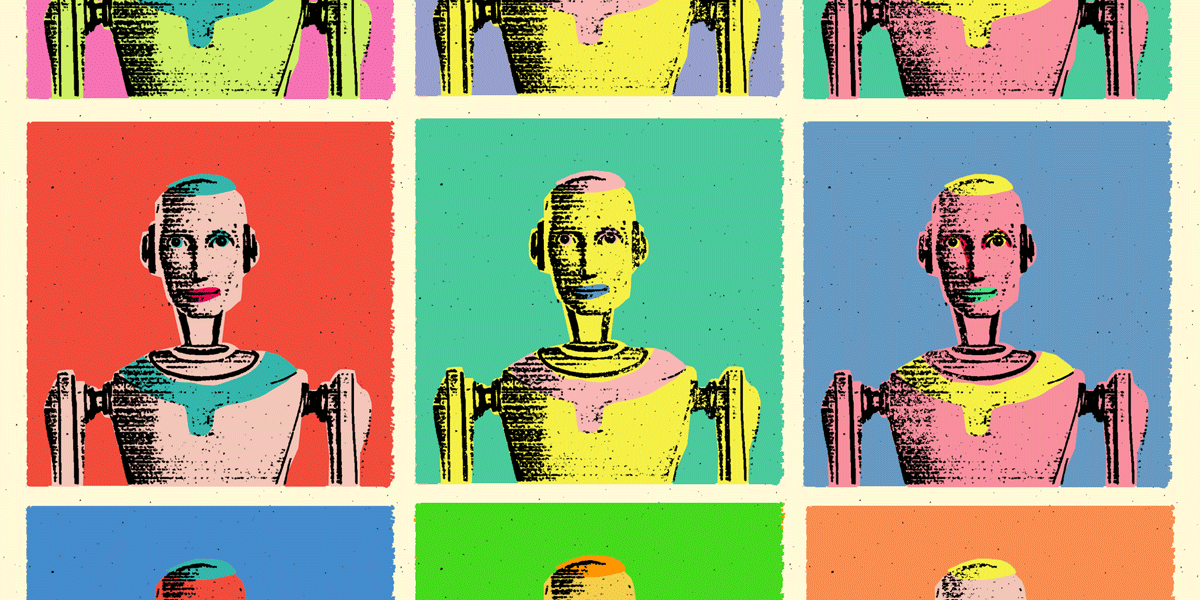
Help EFF Cut the AI Hype

In the global race to build and dominate the AI industry, it can sure seem like the interests of ordinary people sit last on the agenda. It's just the opposite for EFF. While companies furiously jam AI tools into their veins and your eyeballs, EFF’s technologists, activists, and attorneys have been meticulously cutting through the hype to ensure AI can serve your privacy and free expression. Technology has leaned into a new era, and this summer you can help EFF fight for the people.

JOIN EFF

Over the next two weeks, we’re encouraging you to support the cause as an EFF member for as little as $10 each month. You can get great member swag every year like our privacy puffy stickers, Claw Back t-shirt, and Privacy Badger Crewneck.

A person wears an EFF Claw Back member t-shirt on the left. A person on the right wears a black sweatshirt with the Privacy Badger mascot on the chest.

Fight mass surveillance! Pictured: Claw Back member t-shirt and Privacy Badger Crewneck.

AI tools—beyond their marketing fluff—demonstrate both incredible potential and real danger. With the support of members around the world, EFF detangles the possibilities from the anxieties and threats with the care and nuance it deserves. In recent months, EFF:

The scope of AI, both the good and the bad, multiplies every day. If we want the AI-powered benefits of efficiency, scientific discovery, and greater accessibility to knowledge, then we also need strong protections against surveillance, harms to creativity and innovation online, perpetuating systemic bias, and privacy violations now.

With AI taking over the public consciousness, you can be assured that EFF will never stop advocating for you. Together, we can ensure that technology supports freedom, justice, and innovation for all people.

Join EFF

____________________

EFF is a member-supported U.S. 501(c)(3) organization. We've received top ratings from the nonprofit watchdog Charity Navigator since 2013! Your donation is tax-deductible as allowed by law.

  •  
❌