Reading view

Internet Age Gates Are a Growing Global Threat

The internet is an essential resource for young people and adults to access information, explore community, and find themselves—both inside countries and across continents. Yet governments around the world continue to introduce and implement legislation requiring all online users to verify their ages before accessing the digital space. In some cases, politicians are going further, putting forth proposals to ban social media for younger users.  

In late 2025, Australia’s government rolled out the first complete ban on users under 16 from having social media accounts. In this sweeping regime, platforms are required to introduce age assurance tools to block under-16s, demonstrate that they have taken “reasonable steps” to deactivate accounts used by under-16s, and prevent any new accounts being created, or face fines of up to 49.5 million Australian dollars ($32 million USD). The 10 banned platforms—Instagram, Facebook, Threads, Snapchat, YouTube, TikTok, Kick, Reddit, Twitch, and X—have each said they’ll comply with the legislation, which led to young people losing access to their accounts overnight. Reddit is currently challenging the law in Australian courts on constitutional grounds. Recent research notes how the ban is preventing teenagers from accessing news in the country. 

In the United Kingdom, rules took effect in mid-2025 under the Online Safety Act that require all online services available in the country to assess whether they host content considered harmful to children; if so, these services must introduce age checks to prevent children from accessing such content. Online services are also required to change their algorithms and moderation systems to ensure that content defined as harmful, like violent imagery, is not shown to young people. 

This approach is reckless, short-sighted, and we’ve already seen it introduce more harm to the young people that it is trying to protect. The UK’s scramble to find an effective age verification method shows us that there isn't one, and we’ve spent years urging UK politicians to abandon any measures that require platforms to collect data or remove privacy protections around users’ identities. 

Earlier this year, Indonesia’s Communications and Digital Affairs Minister, Meutya Hafid, announced that users under 16 would have their accounts on “high risk” platforms deactivated from 28 March. The platforms subject to this ban are YouTube, TikTok, Facebook, Instagram, Threads, X, Bigo Live, and Roblox; with Hafid noting how this policy would make Indonesia “the first non-Western country to delay children's access to digital spaces according to age.”

Similarly, the Malaysian government has recently pushed forward with plans to ban users under 16 from having accounts on social media platforms with at least 8 million users in Malaysia, including Facebook, Instagram, TikTok, and YouTube. Users under the age of 16 are being told to download or transfer their data from these platforms in one month before the restrictions are applied. Platforms failing to comply with the ban may face penalties of up to $2.5 million USD.

In Latin America, Brazil approved a new law in 2025 establishing that providers of information technology products and services directed to children and teenagers, or likely to be accessed by them, must conduct age checks when their products and services offer risks to underage users. Regulation requires age assurance for products and services that are not allowed for children and adolescents in accordance with Brazilian legislation. App stores and operating systems are required to provide age signals for other providers. 

While the law is already in force, full compliance with its obligations is expected for early 2027, after the approval of further regulations and a transition period, and the authority responsible for enforcing the law is the Brazilian National Data Protection Agency. The list of concerns regarding the implementation of the law include: the wide scope of products and services that may fall within age-check obligations, how these obligations can affect non-proprietary operating systems and free software projects, and how effective the law's crucial data protection safeguards will be in a context of likely widespread age checks for accessing content online.

Similarly, the European Union has taken large steps towards mandatory age verification that could undermine privacy, expression, and participation rights for everyone. Politicians are promoting an EU-wide approach to age verification through its age verification “app,” which will be fully interoperable with the Digital Identity Wallet. While this mini-app has been announced as technically ready to be rolled out “for citizens to use,” it comes with its own realm of potential privacy and security concerns, such as long-term identifiers (which could result in tracking) and over-exposure of personal information. 

The European Commission also supports age verification in various legislative initiatives, from proposals that would allow or mandate companies to scan our communication (“Chat Control”) to non-binding guidelines of existing laws, such as the Digital Services Act. The EU Parliament, too, has proposed an EU digital minimum age of 16 for access to social media, a move that aligns with EU Commission’s president Ursula von der Leyen’s recent public support for measures inspired by Australia’s model. To all these initiatives EFF has provided one consistent response: mandatory age verification measures are not the right way to protect young people. 

These proposals restrict the fundamental rights of young people to speak to each other and to access information. They also force all internet users, not just those under a certain age, to upload private data—like a face scan or passport—in order to access a website or service. In considering the vast scope of privacy issues pertaining to the collection, storage, and sharing of this personal information, the problems of age verification in restricting free speech are compounded by these reckless and harmful approaches to verification. 

The problem of censorship and surveillance goes far beyond the borders of the internet. EFF continues to explore support for legislative and litigation challenges that recognize how these laws harm everyone’s rights to privacy, free expression and due process.


  •  

LGBT Q&A Season 1 Recap: Staying Safer Online

Last year during LGBTQ+ Pride month, we launched an LGBT Q&A where we answered your most pressing digital rights questions on EFF’s Instagram and TikTok  accounts. 

Ahead of LGBT Q&A Season 2 launching next week, we’re posting a recap with some of the questions we answered. Check them out below.

  1. You wanted to know: How to stay safe when dating online.
  2. You asked: I'm a 17 year old trans woman and my address is public on the Internet. What steps can I take to mitigate this risk? 
  3. You wondered about: Tips for staying safe at Budapest Pride.
  4. You questioned: Why does homophobic content I report on social media not get removed?  
  5. You asked: What pictures are safe to use on dating apps?
  6. You wanted to know: Is it safe to have gay, trans, and Palestinian flags in my bio? 

We’re here to help build an online space where you get to decide what aspects of yourself you share with others, how you present to the world, and what things you keep private. Join us to make the internet private, safe, and full of pride.

  •  

EFF Testifies to Congress on Protecting Americans’ Rights from Government AI

Governments must not adopt emerging and powerful AI technologies without also adopting strong and clear safeguards to protect Constitutional rights, EFF Senior Policy Analyst Dr. Matthew Guariglia testified today to the House Homeland Security Subcommittee on Cybersecurity and Infrastructure Protection. 

During the hearing on “The AI Security Landscape: How Frontier Models, Agentic AI, and AI Coding Tools Are Reshaping Cybersecurity and Critical Infrastructure Resilience,” he explained that the use of generative AI for the purposes of mass government surveillance would supercharge unconstitutional violations of civil liberties. He also highlighted how government secrecy, in addition to the black box of for-profit proprietary technology, prevents the public and lawmakers from knowing when AI models make mistakes, including errors that seriously impact the cybersecurity of critical infrastructure and the lives of individuals.  

“AI also has a track record of getting things wrong—from false citations on legal briefs to a major AI mistake that sent DHS recruits to the field without proper training. There are likely more consequential examples that we do not even know about because of classification that would prevent a more thorough accounting," he said in his opening remarks.

play
Privacy info. This embed will serve content from youtube.com


“At this level the question is not how do we rein in AI, it’s how do we rein in the agencies that would unleash AI on the American public,” Matthew said in response to a question by Subcommittee Ranking Member Delia Ramirez, D-Ill.  

You can read his full testimony as prepared here. 

  •  

More License Plate Reader Mission Creep: School Residency Verification, Background Checks, and Noise Complaints

An EFF analysis of millions of searches of Flock Safety automated license plate reader (ALPR) data by police has uncovered a troubling pattern: in the absence of a warrant requirement to search ALPR databases, law enforcement agencies have moved beyond specific investigations to use these surveillance networks for virtually any whim.

Our findings suggest that the absence of a warrant requirement has fostered a culture of unrestricted access to sensitive location data, allowing agencies to leverage that data beyond the scope of specific criminal investigations.

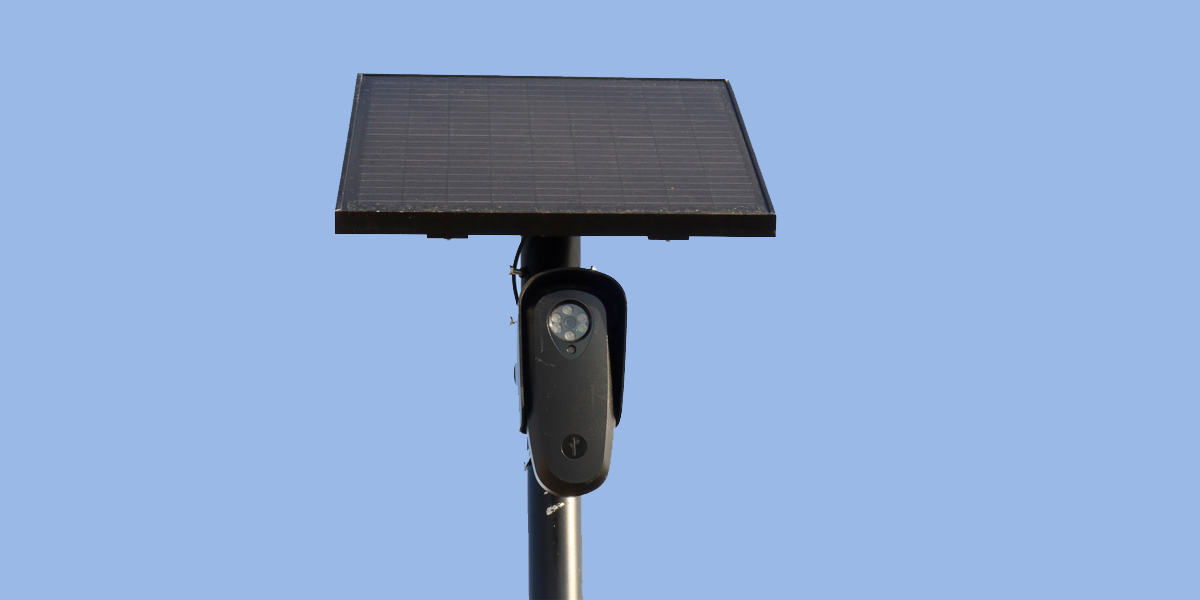
As a refresher: Law enforcement agencies lease or purchase camera systems from Flock Safety and then mount them by the side of the road and at intersections to document every vehicle that passes, including the plate, make, model, color and distinguishing characteristics, along with the date, time and location of where it was seen. 

Law enforcement's talking points—often scripted by the company itself—trumpet their role in solving high-stakes crimes. But the data reveals a different story. What they're not saying is that ALPRs are also frequently used for extremely low-level investigations, such as verifying whether a student lives within a particular school zone. In some cases, police have even used this tech to conduct employment background checks and investigations into loud music complaints. Recently, a motorcyclist was even targeted for simply holding a cell phone while riding.

The reach of this ALPR surveillance is amplified by the nature of the indiscriminate sharing these technologies encourage. Most agencies choose to share broadly, often as part of a nationwide pool, making it common for a single city's system to be searched hundreds of thousands of times each month. By analyzing these "network audit logs," privacy advocates and journalists have uncovered evidence of the technology being used to surveil protesters, abortion-seekers, immigrants, and even ethnic Roma populations

While these high-profile abuses are shocking, the more mundane uses are also problematic, signaling a massive, unchecked mission creep that has turned an alleged “crime-fighting” tool into a universal tracker of everyone’s movements. 

Residency Checks

School systems in the U.S. conduct "residency verification" investigations of their parents or guardians to ensure enrolled children live in the district. To carry out these checks, some school districts have enlisted law enforcement officers for help, leveraging ALPR databases to track the comings and goings of families across the region. 

Buford City Schools in Georgia, which serves only about 6,000 students, illustrates the scale of this prying. Between January 2025 and March 2026, school police ran more than 375 searches where officers listed school residency verification, or simply "RV," as the reason for the search. That accounts for more than half of all ALPR searches in that period, and in those three months of 2026, three-quarters of all searches were related to residency verification. 

School officials stand by the searches. "[B]ecause Buford City Schools is a highly sought-after district, we experience ongoing challenges with residency fraud," a spokesperson told Appen Media, which shared the email with EFF. "Flock Safety is one of the tools we use to verify residency and protect the integrity of the Buford City School System for families who live within the district."

A search of ALPR data will show a lot more than whether a family lives within the right zone. In these Buford cases, officers ran some searches across more than 5,800 different networks nationwide. Every time a plate is searched, it can reveal personal information about a family: when they go to the doctor, when they go to worship, when they go out at night, and where they travel on vacation. None of that is the school district's business, and these searches are a huge invasion of privacy. 

While Buford was by the far the most prolific, it wasn't the only agency to run school residency checks. For example, Delhi Township Police Department (DTPD) in Ohio ran 35 searches related to students in five schools in a three-month period during spring 2025, and similarly stood by the practice, citing a warning given to parents that submitting a false statement of residency may be a felony. 

After EFF sent an inquiry to DTPD, the agency conducted a brief investigation and found that "these searches were not done to verify residency upon submission, but to investigate cases where it was believed the form was filled out with false information." DTPD did not say what kind of evidence was required to establish suspicion before an ALPR query, nor did it offer information on how many of these investigations turned out to be justified. 

However, the official told EFF: "in response to your inquiry, the department will be implementing a change to how these queries are documented in the Flock system and internally, to increase accountability and help avoid any confusion moving forward."

Other agencies that ran school residency searches include Cortland Police Department in Ohio and Lincoln Police Department in Alabama. Several agencies also ran searches with "residency," "residency investigation" or "residency verification" as the reason, but that could refer to a number of public services. These agencies include Ridgeland Police Department in Mississippi, Fairfield County Sheriff's Office in South Carolina, Manteno Police Department in Illinois, Illinois Department of Natural Resources, and Mora County Sheriff's Office in New Mexico. 

Background Checks

Few people would imagine that applying for a government job would open you up to an ALPR search. Yet, several law enforcement agencies ran searches through the Flock network related to employment. 

For example:

  • Jefferson County Sheriff's Office in Missouri ran six searches across 2,853 networks, documenting "employment" in the reason field.
  • Little Elm Police Department in Texas ran 10 searches across 6,306 networks, documenting "EMPLOYMENT" in the reason field.
  • Ridgeland Police Department in Mississippi ran two searches across more than 6,000 networks documenting "employment background inv" in the reason field.
  • Texas City Police Department, Texas ran three searches across 728 networks, documenting "pre employment background" in the reason field. 
  • Zion Police Department in Illinois ran a research across 585 networks documenting "Employee Background" in the reason field. 

Davidson Police Department in North Carolina logged a search listed as "Employment Background," but in response to an inquiry from EFF, the chief described this as "poor choice of words by our investigator." He further stated that the agency does not use ALPRs as part of employment background checks, but in this case, the agency shared that a potential violation of a protective order came to light during a background check, hence the reference to it in the search log.

In addition to the agencies mentioned, several agencies ran searches that simply referred to "background check" or "background checks," which could be related to employment or perhaps some other issue, such as a concealed weapons permit, for example. These include Avon Police Department in Indiana, Rockford Police Department in Illinois, San Bernardino County Sheriff's Office in California, and Seaford Police Department in Delaware.

Noise Complaints

Many people have probably been irritated at some point or another by a car blasting a deep bassline or even the infamous "whistle tip." Some may have even called the cops to complain about a neighbor’s house party. But that's a far cry from the types of serious crimes that Flock and its customers have claimed that the ALPR systems would be used to solve. 

Yet, EFF identified 26 agencies where officers felt it was appropriate to pry into a driver's life because of a noise complaint, ranging from house parties to loud exhausts to just "music": 

A table of agencies and their searches that relate to noise complaints.

Some of these agencies searched upwards of 6,500 networks’ cameras—the equivalent of launching a nationwide goose chase over a booming subwoofer or a busted muffler. 

When Mission Creep Is Just Plain Creepy

An observant reader of this report may have noticed that Ridgeland Police Department in Mississippi ran searches in all three of the categories we reported above.

However, after the city first installed the Flock Safety cameras, the then-police chief told the press that the technology helps solve cases that range from "theft to crimes of violence"—without disclosing that the range would extend much further.

When police and salespeople trot out cherry-picked cases to argue that a mass surveillance technology is an "important" tool,  they obfuscate that it's a convenient shortcut around due process. For serious crimes, police can already go through the standard legal process: making the case to a judge on why they should get a search warrant for location data, whether it's from cell phones or service providers. But police treat ALPR databases as if no such threshold exists, giving them free rein to track a person’s movements without a sliver of judicial oversight.

When police and salespeople trot out cherry-picked cases to argue that a mass surveillance technology is an "important" tool,  they obfuscate that it's a convenient shortcut around due process.

"This is the same as if I put a police officer on the side of the road with a pen and a notepad and he writes down every license plate number that drives by,” the former chief said, repeating a commonly circulated talking point. 

That rhetoric may sound reasonable if we were just talking about a single camera on a street corner, but Ridgeland now operates more than 50 cameras—the equivalent of one for every 500 residents—and maintains access to tens of thousands more. 

If the chief had stood in front of the city’s aldermen and asked for permission to search more than 20,000 cameras so his officers could investigate the high crime of "music," it’s quite unlikely that they would have been nodding their heads along. 

Ridgeland Police Department did not respond to EFF’s requests for comment.

  •  
❌