Reading view

Google's New Remote Attestation Scheme is As Bad As Its Old One

Google owes its existence to the open web, but today, its technological “innovations” have much to do with locking users into a “walled garden.” The latest of these is “reCAPTCHA Mobile Verification,” an experimental initiative that will let companies block users if they are running independent, "de-googled" versions of Android. These “indie Android” versions are favored by people who want to protect their privacy and their attention by blocking trackers and ads. Worse, this is just the latest in a line of similarly user-hostile measures. 

Long before “agentic AI,” we had the idea that software would act as your agent on the internet. That's why the old-fashioned technical term for a browser is a “user agent.” Your browser acts on your behalf to retrieve information and then show it to you, in the format you choose. It's your agent. 

This is a powerful and profound idea. It is because browsers are our “agents” that we expect them to accept our directives, say, by blocking pop-ups, or by turning off autoplay sound, or by blocking commercial surveillance trackers. 

Your browser does all that because your browser works for you. The reason your browser can work for you is that the web is an open, standardized technology. In theory, anyone who follows the standards published by the World Wide Web Consortium (W3C) can make a browser, and that web browser can connect to any web server. Browsers and servers are interoperable. It's the same force that means you can put anyone's gas in your gas-tank, or anyone's shoelaces in your shoes, or anyone's milk on your cereal. 

But what if manufacturers could dictate those choices to you? What if your light socket refused to use a lightbulb unless it was officially blessed by the socket's manufacturer? What if your dishwasher refused to wash your dishes unless you bought them from one of the manufacturer's “dish partners?” What if your toaster refused to toast “unauthorized bread?” 

It's hard to see how a company could win its market with this strategy. After all, if the dishes are really better than the competition's, you'd buy them voluntarily, without any need for law or technology to force the matter. The only reason to make a dishwasher that refuses a rival's dishes is if the manufacturer's own dishes are ugly, expensive, and/or badly made. 

But once a company owns the marketonce they've achieved dominance by buying out their rivals; by bribing potential competitors to stay out of their lane; and by engaging in deceptive conduct to trap key suppliers and customersthey can cement their dominance by blocking interoperability, keeping out rival dishes, milk, gas, lightbulbs, shoelaces and bread, capturing their whole market and squeezing it. 

Once a company owns the market, they can cement their dominance by blocking interoperability.

That's what Google has done, and that's what Google wants to do more of Google's commercial behavior has been so unethical, deceptive and abusive that the company just lost three federal antitrust cases. This thrice-convicted monopolist paid Applemore than $20b/year to stay out of the search market: It cheated app vendors, ripping them off with sky-high junk fees and onerous conditions that raised prices while lowering the share of your spending that went to the companies whose products you were paying for. It cheated advertisers, rigging the ad market to gouge businesses on ad prices and underinvesting to fight rampant ad-fraud, sucking hundreds of billions out of the productive economy for overpriced ads that no one saw. 

Google wasn't always this way. The “don't be evil” company owes its very existence to the open web ecosystem. When the company started to index the web in 1998, it was playing on an open field, where any web server could talk to any “user agent,” even one whose user was a startup like Google, that was making a copy of every page on the server. 

For years, Google thrived on the open web, and built open technologies. Androidthe mobile operating system that Google bought in 2005 was presented as an “open” alternative to existing mobile offerings, and as the mobile market collapsed into two companiesGoogle and AppleGoogle always presented Android as the open alternative to Apple's “walled garden.” But there were always ways in which Google's “open” Android wasn't exactly open. The company engaged in illegal “tying” arrangements that forced hardware vendors and carriers to lock out versions of Android that were created by Google's competitors. 

In other words, even though Google offered a mobile platform that was (mostly) technically open, it found other ways to try to choke off the market oxygen for alternative Android versions that tried to capitalize on that technical openness. 

But life finds a way. The existence of an open, modifiable, tinkerer-friendly mobile operating system meant Android hackers could create alternatives to Google's (de facto) walled garden, which thrived in the cracks in that garden wall. Operating systems like CalyxOS, PureOS and Graphene offered a more private, more secure Android experience, one that was largely “de-Googled,” blocking Google's relentless acquisition of your private data. 

And Google's data-hunger is relentless. Android exfiltrates a chunk of your personal and behavioral data every five minutes. The “resting heartbeat” of Android surveillance pulses and pulses, irrespective of whether you're using your device, and the instant you unlock your screen, that heartbeat quickens, sending even more data to the company. All that data has proven irresistible to authoritarian governments. Donald Trump's enforcers have seized on Google data as a vital source of information about the identity of protesters and the location of migrants hunted by ICE. 

So there are plenty of reasons why users would seek out these de-Googled alternatives to Android, finding them in spite of Google's efforts to block access to competing technologies. The worse it got, the better those alternatives looked. 

Perhaps this explains Google's years-long effort to increase the technical barriers to using modified versions of Android, beefing these up to match the commercial restrictions that stand in the way of a de-Googled existence. 

Back in 2023, Google floated the idea of “Web Environment Integrity” (WEI), a set of modifications to web standards that would force your computer to disclose its operating environment to the web servers it connected to, even if you objected to this disclosure. 

WEI was a form of “remote attestation.” That's when your device uses a sub-processor (sometimes called a “Technical Protection Module” or “TPM”) or a walled off part of its main processor (sometimes called a “secure enclave”) to produce a cryptographically signed description of your device and its configuration: which hardware, software, plug-ins, and settings you're running. 

Take away our ability to block obnoxious digital content and you guarantee that we will be flooded with it.

When you connect to a server, it demands that your device send this “attestation” before it handles your request. If your device won't provide this data, or if the server doesn't like (or recognize) your device and its details, it can refuse to deal with you. And because the attestation is prepared by a TPM or a secure enclave that you can't modify or override, you don't get to decide which facts about your device it's allowed to see. 

Practically speaking, this means that remote attestation lets a server refuse to deal with you until you turn off your ad-blocker and your tracker-blocker. It means that the server can discriminate against users who block auto-play sound and video, who block pop-ups, who put the tab in the background when it's playing a mandatory pre-roll ad. 

WEI was especially disturbing in light of Google's plan to kill ad-blockers and privacy blockers through updates to Chrome, an effort that continues to this day. 

These blockers are an important part of the dynamic between web publishers and their users. In the real world, when you get an offer, you can make a counter-offer. That's all an ad-blocker is: a way for users to respond to a server whose opening bid is, “How about you give me all your data and let me take over your computer in exchange for showing you this page?” with “How about 'Nah?'

We didn't get rid of pop-up ads by making them illegal, or by boycotting advertisers who used them. We got rid of pop-up ads when web users installed pop-up blockers, which made pop-up ads pointless. Take away our ability to block obnoxious digital content and you guarantee that we will be flooded with it. 

These kinds of modifications aren't just used to block adsthey're also key to accessibility. People who have photosensitive epilepsy or suffer from low-contrast vision problems use add-ons to reformat pages so they can safely and legibly access them. 

WEI's creators said they were only trying to put the web on a level playing field with apps, which routinely disclose facts about your device to the companies whose servers you connect to, without asking you, and even if you don’t want them to. Apps are a source of bottomless enshittification, not least because (unlike the web), they enjoy special, dangerous legal protections that make it very legally risky to modify them. WEI wasn't an effort to level the playing field between apps and the webit was a race to the bottom, an attempt to make the web as enshittification-friendly as apps. 

Public outrage to WEI killed the project, but Google's commitment to augmenting its illegal commercial lockdown efforts with technical lockdowns never ended. Now, Google has rolled out an experimental “reCAPTCHA Mobile Verification” that uses an app, your camera, and your device's TPM or secure enclave to produce an attestation about your Android device. 

This will make it much easier for the apps and other services you interact with to block your device if you run an Android alternative, or if you install a mod that overrides the actions of Google's stock Android. 

This is a terrible ideait's every bit as bad as WEI was. In an age in which Big Tech is ever-more tied to authoritarian governments, redesigning our devices to tell strangers things we don't want them to know isn't just shortsighted, it's inexcusable. 


  •  

Enshittification Merch That Actually Fights Enshittification 

Enshittification isn't just a sweary word to describe the accelerating decay of the online platforms, apps, and services that we rely on.  

It's a framework for understanding the structural incentives that make tech companies enemies of their own users over time—the surveillance business model, the erosion of privacy, the monopoly power that eliminates alternatives, the regulatory capture that prevents accountability.  

SUPPORT EFF

GET LimITED EDITION MERCH + FIGHT ENSHITTIFICATION

These are some of EFF's core fights and have been for over 35 years. EFF sues. EFF advocates. EFF codes. And EFF wins. EFF is the most profound and powerful disenshittifying force on the planet Earth, and I’ve been proud to fight alongside them for nearly 25 of those years.  

One of the lessons you learn in battles with very long timelines against very powerful actors is that these battles are deeply serious, and because of that they must also be fun. “Enshittification” took off as a shorthand in part because of the minor license to vulgarity it confers. It's slightly crass for a reason: getting people to engage with the abstract issues of tech policy can be hard at the best of times. No one knows this better than my colleagues at EFF, who consistently surprise me with their ability to make complex, technical concepts concrete, memorable, and sometimes even joyful. 

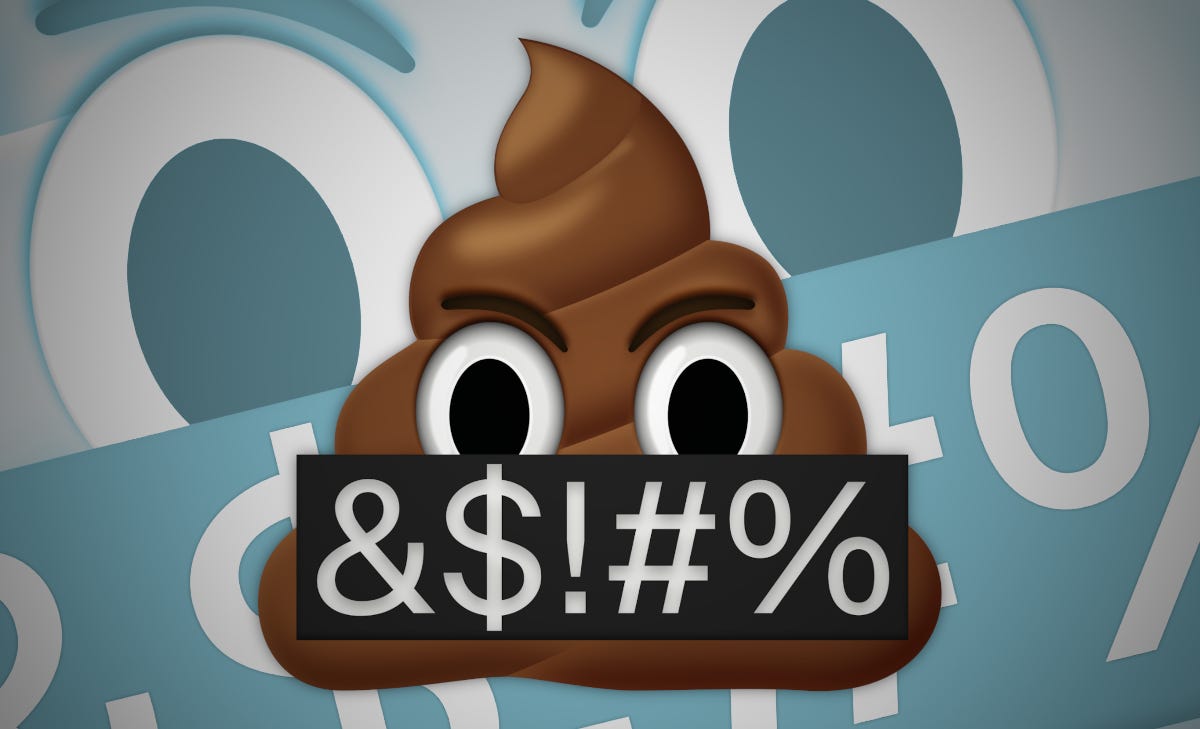
Words matter, but so do visuals. For the cover of the U.S. edition of my book, Enshittification, designer Devin Washburn of No Ideas studio created an iconic variation of the "pile of poo" emoji, with angry eyebrows and a grawlix-scrawled censor bar over its mouth. It instantly became the symbol of enshittification I’d been looking for. 

A digital illustration of an angry poop emoji holding a black sign reading "&!#%", set against a blue and gray background tiled with oversized "& !#%" characters.

I liked it so much I ordered a couple hundred enamel pins and a couple thousand vinyl stickers and handed them out to people I met on my 33-city book tour. Even when giving them away, I was inundated with requests to buy more of them.  

I've since bought out Devin's rights to the image and released it under a Creative Commons Attribution 4.0 license—free for anyone to use, remix, or build on, including commercially, with attribution. The high-resolution files are on Wikimedia CommonsFlickr, and the Internet Archive (including a PSD with an ink-density adjustment layer). It belongs to the commons now. 

But I made sure EFF had first crack at the design for their “official merch,” and they've done right by it. There are two items available now in the EFF shop, and all proceeds go directly to EFF's work defending digital rights. I’ve spent years admiring EFF’s merch and consistent, creative visual identity, so it fills me with pride to see this more-than-a-mere-poop-emoji in their shop.  

A recognizable visual shorthand is a genuine organizing tool. When someone sees the enshittification emoji, they know what the conversation is about. When you wear the pin or slap the sticker on your laptop, you're signaling that you understand what's happening to the internet, and that you know we can do better.  

You can get a $5 sticker:

An angry poop emoji sticker affixed to the coiled spring mechanism inside a vending machine. The sticker depicts a scowling poop emoji holding a black sign reading "&$!#%".

A hand with black nail polish and a gold ring holds an angry poop emoji sticker against a white door. The sticker shows a scowling poop emoji holding a black sign reading "&$!#%".

Or a $10 pin:

A close-up of an enamel pin on the lapel of a tan jacket. The pin depicts an angry poop emoji holding a black banner reading "&$!#%".

An enamel pin clipped to the nose bridge of black-framed sunglasses resting on a wooden surface. The pin depicts a scowling poop emoji holding a black banner reading "&$!#%". 

 Because the design is CC-licensed, you don't have to buy one. You can make your own merch, your own swag, your own illustrations. I made a lawn flag for my front garden.

A  small white garden flag on a metal stake, planted among cacti and succulents in a sunny yard. The flag depicts an angry poop emoji holding a sign reading "&$!#%". 

But if you do want to buy a sticker or pin, you can do so while supporting the most profound and powerful disenshittifying force on the planet Earth—the Electronic Frontier Foundation.

SUPPORT EFF

GET LimITED EDITION MERCH + FIGHT ENSHITTIFICATION


  •  

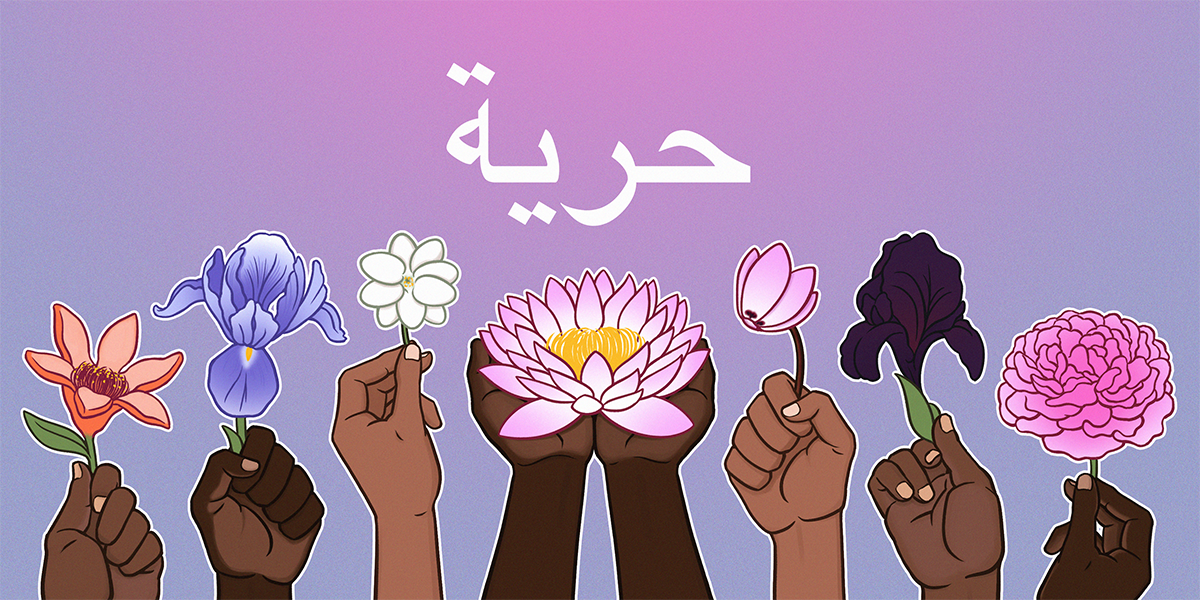
Digital Hopes, Real Power: From Connection to Collective Action

This is the fifth and final installment of a blog series reflecting on the global digital legacy of the 2011 Arab uprisings. You can read the rest of the series here.

If the Arab Spring was defined by optimism about what the internet could do, the years since have been marked by a more sober understanding of what it takes to defend it. 

Back in 2011, the term “digital rights” was still fairly new. While in the decades prior, open source and hacker communities—as well as a handful of organizations including EFF—had advocated for digital freedoms, it was through the merging of disparate communities from around the world in the 2000s that digital rights came to be more clearly understood as an extension of fundamental human rights.

In 2011, we observed that there were only a few organizations focused on digital rights in the region. Groups like Nawaat, which emerged from the Tunisian diaspora under the Ben Ali regime; the Arab Digital Expression Foundation, formed to promote the creative use of technology; and SMEX, which was initially created to teach journalists and others about social media but has grown to become a powerful force in the region, led the way. Since that time, dozens of organizations have emerged throughout the region to promote freedom of expression, innovation, privacy, and digital security.

Understanding how the digital rights movement evolved in the Middle East and North Africa requires a closer look at the communities that shaped it, and the organizations that are carrying on the fight today. Perspectives from people and organizations that were key to these efforts offer critical insight into how the movement has grown and what challenges lie ahead.

Reem Almasri, a senior researcher and digital sovereignty consultant, says that:

‘Digital rights’ emerged as a term around the Arab Spring, when the internet was still a fairly unregulated space, we were still trying to figure out the tech companies’ policies, and force governments to look at the internet as a fundamental right like water and electricity.

But then the need to converge digital rights to everyday rights—economic, political, social rights—and to connect it to geopolitics has started to be thought about, and to be in discussion as well. And to not look at digital rights as a separate field from everything else that’s affecting it, from the geopolitical context.

Mohamad Najem, who co-founded SMEX in 2008 and has led it to become the largest organization in the region, told me that, at the time, “Nobody gave [social media] a lot of attention in our region.” Their work was “a positive approach to social media, how we can democratize sharing information, how we can share more from civil society, change people’s minds, et cetera.”

“After that phase,” he continues, “we can think about 2012-2013—after the Arab Spring, as an organization we started looking at the infrastructure of the internet, and how freedom of expression and privacy are affected. That’s when we started looking more at what we call digital rights.”

Towards Tech Accountability

In the aftermath of the Arab Spring, social media companies moved from a largely hands-off approach to governance toward more formalized—and often opaque—content moderation systems. Platforms expanded their trust and safety teams and began working more closely with civil society through trusted partnerships in the region and globally. But, Mohamad Najem says:

After the expansion of tech accountability itself and the adaptation of tech companies, we’ve noticed that it’s not taking us anywhere. Gradually we’ve come to a new phase where it feels like tech accountability is an economy by itself that is not leading to real results. So the next phase for us at least and maybe for others in global majority communities is how we can focus on digital public good, how we can push more governments, private and public institutions to adopt more open source software, to look at the ecosystem and understand the US threats happening now, et cetera.

Another group that has played a key role in the fight for digital rights and tech accountability in the region is 7amleh, a Palestinian organization that was founded in 2013. At the time, says Jalal Abukhater:

[I]t was unique and interesting in Palestinian society to have a human rights organization dedicated fully to the topic of digital rights, you know, human rights in a digital format. However, with the years, we saw various milestones, we saw progress of policy decisions and movements through the Israeli government to influence content moderation in Big Tech companies. We saw problems there as an organization.

7amleh took a leading stance in fighting to preserve the digital rights of Palestinians during a period where there was a very strong influence through the Israeli government. There was actually quite important reporting coming through 7amleh on the situation of online content moderation at a time when it wasn’t really a topic being discussed but it was very clearly a situation where there was major influence by government and political suppression happening as a result.

An Ever-Expanding Ecosystem

While in the early days, the digital rights movement attracted specialists, today, people from other fields have recognized how digital rights intersect with their work, and the digital rights community has embraced them.

Almasri says:

Because the digital rights movement has been decentralizing and has stopped being a speciality, it stopped being an exclusive thing for digital rights specialists, since of course the internet not only in the Arab region but all over the world has become a fundamental infrastructure for running any kind of sensitive operations, or operations in general…all types of organizations, and companies, and initiatives are thinking about their digital security, about how internet laws are affecting the use of the internet, or putting them at risk, and how surveillance technologies are affecting their operations.

Abukhater credits the collaborative work that emerged within the region over the years in building the movement’s strength:

[Today], civil society and digital civil society have many forums, many coalitions and networks, but it’s always important to remember that this is work that builds over many years of experience, and relationships, and networks—that it’s different parties coming to support each other at different phases to ensure that this kind of work succeeds and that this ecosystem is sustained globally with support from partner organizations which were very crucial in ensuring that this ecosystem is sustained, especially in Palestine.

Growing Collaborations

Conferences like Bread and Net, first held in Beirut in 2018, and the Palestine Digital Activism Forum (PDAF), first held in Ramallah in 2017, bring activists, academics, journalists, and other practitioners together to network and learn about each other’s work. The pandemic, conflict, and other barriers haven’t stopped either conference from carrying on: PDAF has become an annual virtual event that draws big-name speakers, while Bread & Net has spaced out its meetings but continues to draw bigger crowds each time. 

Almasri credits these meetings with expanding the movement beyond the traditional techies and activists who first got involved. “You see a wide spectrum of different fields. You see artists, archivists, journalists joining these conversations, which is definitely on the brighter side of things when it comes to this field, or this scene.”

She also credits the emergence of alliances such as the Middle East Alliance for Digital Rights (MADR, of which EFF is a member), founded in 2020 by individuals and organizations who had been working together for many years to formalize those collaborations.

“Other than the collaborations at the advocacy level, [MADR] creates a sort of pressure point on Big Tech, on content moderation policies, allows for certain coordination at the level of the UN, et cetera, which I see as really positive because it brings some of the redundant efforts together and helps decide on priorities.”

Looking Forward

In thinking about the future of the movement, Almasri and Najem agree that digital rights are no longer a niche. In Najem’s words, “It’s about everything else…it’s about everything.” 

Almasri adds:

[W]hen it comes to priorities, things that this scene has been working on, I feel that October 7 [2023] was a big turning point in the way that digital rights activists, researchers, and academics—this field—is looking at digital rights in general. Of course, there is the major question of the need to revise tactics to fight Israel’s tech-enabled genocide that is also empowered by the global economy, big tech, and governments of the world?  What alliances should we start building on a regional and global level?

She sees ‘digital sovereignty,’ the ability of people and communities to choose, control, and use technology that serves their needs and values, as one of the next big topics for the movement to tackle, as debates over who owns and hosts our data have sharpened amid revelations that U.S. companies have played a role in regional conflicts.

There have been pockets of debates on how to achieve digital sovereignty, especially from human rights organizations documenting war crimes … There’s an awareness of how the dependence on US-based providers, cloud storage, even hosting infrastructure is a risk, especially after how using these services has been weaponized against the digital existence of certain organizations in the region that have been deplatformed or had their content removed on platforms like Meta and YouTube because their content doesn’t align with the foreign policy of the United States…so it raises a big question about how we look at digital independence, what is the spectrum of independence that civil society in the region can achieve, and in relation to what’s available as well.

Almasri also points to the role of researchers in the region:

There has been a lot more research on the political economy of surveillance technologies, so not only looking at how governments are using them, but their supply chain, who’s investing in these technologies, and how geopolitical networks empowered their proliferation in the hands of governments.

This is where studies looking at the political economy of AI and the military become important, trying to understand how this field of weapons, the military, and AI grew together as part of this global capitalist system rather than looking at these technologies in silos, that is. Looking at the proliferation of these technologies from a geopolitical point of view, looking at the bigger ecosystem rather than zooming in to the specifics of it. I think this has been a big development in the way that we look at digital rights, and the way that digital rights have been converged and integrated into the geopolitical scene.

As the global digital rights community continues to expand, it’s clear that the questions at its core are no longer just about access or expression, but about power—who holds it, how it is exercised, and who is left out of its protections. What began as a fight to keep the internet open has become a broader effort to reimagine it—an effort that is grappling with questions of infrastructure, ownership, and the global inequalities embedded in both.

And yet, despite the scale of these challenges, the movement’s strength lies in the solidarity, the ecosystems, and the networks it has spent more than a decade building. From the early days of the blogging and techie communities to the increasingly powerful digital rights community, advocates in the region have gone up against dictators, endured war and repression, yet remain determined to push forward.

  •  

Digital Hopes, Real Power: From Revolution to Regulation

This is the second installment of a blog series reflecting on the global digital legacy of the 2011 Arab uprisings. You can read the first post here.

From Russia—where wartime censorship and more stringent platform controls have choked dissenting voices—to Nigeria, with its aggressive takedown orders turning social media into political battlegrounds, and to Turkey, where sweeping “disinformation” laws have made platforms heavily policed spaces, freedom of expression online is under attack. Per Freedom House’s 2023 Freedom on the Net Report, 66% of internet users live where political or social sites are blocked, and 78% are in countries where people have been arrested for online posts. New social media regulations have emerged in dozens of countries in the past year alone.

The online landscape looks markedly different than it did fifteen years ago. Back then, social media was still new and largely free from legal restrictions: platforms moderated content in response to user reports, governments rarely targeted them directly, and blocks (when they happened) were temporary, with censorship mostly focused on whole websites that VPNs or proxies could easily bypass. The internet was far from free, but governments’ crude tactics left space for circumvention.

Those early restrictions, as crude as they were, marked the start of a rapid evolution in online censorship. Governments like Thailand, which blocked thousands of YouTube videos in 2007 over critical content, and Turkey, which demanded takedowns from YouTube before blocking the site entirely, tested legal and technical pressures to mute dissent and force platforms’ compliance. By 2011, governments weren't just reacting—they had learned to pressure platforms into becoming instruments of state censorship, shifting their playbooks from blunt blocks to sophisticated systems of control that simple VPNs could no longer reliably bypass. Governments across the region were watching closely, and by the time the 2011 uprisings began, they were prepared to respond.

Looking Back

After learning that a Facebook page—We Are All Khaled Said, honoring a young man killed by police brutality—sparked Egypt’s street protests, Western media hailed online platforms as engines of democracy. Revolution co-creator Wael Ghonim told a journalist: “This revolution started on Facebook.” That claim was debated and contested for years; critically, Facebook had suspended the page two months earlier over pseudonyms violating its real-name policy, restoring it only after advocates intervened. 

Once the protests moved to the streets, Egypt’s government—alert to social media’s power—quickly blocked Facebook and Twitter, then enacted a near-total shutdown (more on that in part 4 of this series). As history shows, the measures didn’t stop the revolution, and Egyptian president Hosni Mubarak stepped down. For a brief moment, freedom appeared to be on the horizon. Unfortunately, that moment was short-lived.

Egypt’s Digital Dystopia

Just as the Egyptian military government quashed revolution in the streets, they also shut down  online civic space. Today, Egypt’s internet ranks low on markers of internet freedom. The military government that has ruled Egypt since 2013 has imprisoned human rights defenders and enacted laws—including 2015’s Counter-terrorism Law and 2018’s Cybercrime Law—that grant the state broad authority to suppress speech and prosecute offenders.

The 2018 law demonstrates the ease with which cybercrime laws can be abused. Article 7 of the law allows for websites that constitute “a threat to national security” or to the “national economy” to be blocked. The Association of Freedom of Thought and Expression (AFTE) has criticized the loose definition of “national security” contained within the law, as “everything related to the independence, stability, security, unity and territorial integrity of the homeland.” Notably, individuals can also be penalized—and sentenced to up to six months imprisonment—for accessing banned websites.

Articles 25, which prohibits the use of technology to “infringe on any family principles or values in Egyptian society,” and 26, which prohibits the dissemination of material that “violates public morals,” have been used in recent years to prosecute young people who use social media in ways in which the government disapproves. Many of those prosecuted have been young women; for instance, belly dancer Sama Al Masry was sentenced to three years in prison and fined 300,000 Egyptian pounds under Article 26.

Beyond Egypt: Regional Trends

Egypt’s trajectory reflects a wider regional and global pattern. In the years following the uprisings, governments moved quickly to formalize legal authority over digital space, often under the banner of combating cybercrime, terrorism, or “false information.” These laws often contain vaguely worded provisions criminalizing “misuse of social media” or “harming national unity,” giving authorities wide discretion to prosecute speech.

In Qatar and Bahrain, a social media post can result in up to five years in jail. In 2018, prominent Bahraini human rights defender Nabeel Rajab was convicted of “spreading false rumours in time of war”, “insulting public authorities”, and “insulting a foreign country” for tweets he posted about the killing of civilians in Yemen and sentenced to five years imprisonment

Two years later, Qatar amended its penal code by setting criminal penalties for spreading “fake news.” Article 136 (bis) sets criminal penalties for broadcasting, publishing, or republishing “rumors or statements or false or malicious news or sensational propaganda, inside or outside the state, whenever it is intended to harm national interests or incite public opinion or disturb the social or public order of the state” and sets a punishment of a maximum of five years in prison, and/or 100,000 Qatari riyals. The penalty is doubled if the crime is committed in wartime.

Now, as war has once again reached the region, these laws are being put to the test. Bahraini authorities have arrested at least 100 people in relation to protests or expression related to the war, while Qatar has arrested more than 300 people on charges of spreading “misleading information.”

And in the UAE, at least 35 people—most or all of whom are foreign nationals—have been arrested and “accused of spreading misleading and fabricated content online that could harm national defence efforts and fuel public panic,” according to the Times of India. The arrests fall under the UAE’s 2022 Federal Decree Law No. 34 on Combating Rumours and Cybercrimes which—says Human Rights Watch—is, along with the country’s Penal Code, “used to silence dissidents, journalists, activists, and anyone the authorities perceived to be critical of the government, its policies, or its representatives.”

From Regional Practice to Global Pattern

Today roughly four out of five countries worldwide have enacted cybercrime legislation, a dramatic expansion over the past decade, with many governments adopting or revising such laws in the years following the Arab uprisings. 

Outside the region, other nations have repurposed these laws to police speech. In Nigeria, journalists have been detained under the Cybercrime Act, with dozens of prosecutions documented since 2015. Bangladesh’s Digital Security Act has been used in thousands of cases—including hundreds against journalists—while in Uganda, authorities have prosecuted political critics under computer misuse laws for social media posts. 

Cybercrime laws are only one piece of a broader toolkit that governments now deploy to control digital spaces. Over the past decade, authorities have introduced sweeping “disinformation” laws, platform liability rules, age verification laws, and data localization requirements that force companies to store data domestically or appoint legal representatives within national jurisdictions. These measures give governments leverage over global technology firms, enabling them to demand faster content removals, obtain user data, or threaten steep fines and throttling if platforms fail to comply. Rather than relying solely on blunt instruments like blocking entire websites, states increasingly govern speech through layered regulatory systems that pressure platforms to police users on the state’s behalf.

The platforms too have changed. The same social media companies that were once championed as tools of democratic mobilization now operate in more constrained environments—and often act as willing participants in repressing speech. Facing financial penalties and the prospect of being blocked entirely, many companies expanded compliance with takedown requests after 2011, as can be seen in the companies’ own transparency reports. They later invested heavily in automated technologies that remove vast quantities of content before it is ever publicly available.

Rights groups around the world, including EFF, have warned that these dynamics disproportionately impact historically marginalized and vulnerable groups, as well as journalists and other human rights defenders. Research by the Palestinian digital rights organization 7amleh and reporting by Human Rights Watch have documented how content moderation policies, government pressure, and opaque enforcement mechanisms increasingly converge—leaving activists, journalists, and human rights defenders caught between state censorship and platform governance.

The New Architecture of Repression

Looking back now, it’s clear that, fifteen years ago, governments were caught off guard. They crudely blocked platforms, shut down networks, and scrambled to contain movements they did not fully understand. But in the years since, states have systematically adapted, transforming what were once reactive measures into durable systems of control.

Today’s controls are embedded in law, outsourced to platforms, and justified through the language of security, safety, and order. Cybercrime statutes, disinformation frameworks, and platform regulations form a layered architecture that allows states to shape online expression at scale while maintaining a veneer of legality. In this system, repression is often procedural, bureaucratic, and continuous.

The question is no longer whether the internet can enable dissent, but whether it can still sustain it under these conditions.

This is the second installment of a blog series reflecting on the global digital legacy of the 2011 Arab uprisings. Read the rest of the series here.

  •  
❌