Reading view

The “Why” Behind NextWave’s New Requirements

Helping Partners Stay Competitive for the Future

Key Takeaways

  • The evolved NextWave Partner Program raises expectations while strengthening enablement, incentives and the Partner Development Fund to support partner growth and reinvestment.
  • Levels and specializations are more closely aligned to next-generation security priorities, helping partners deepen expertise and making partner distinctions more meaningful for customers.
  • These changes help create a more capable partner ecosystem, with deeper capabilities, greater alignment with customer needs, and a stronger foundation to support the future of security.

Cybersecurity partnerships are operating in a more demanding environment. As customers consolidate vendors, modernize security architectures and adopt artificial intelligence (AI) across the enterprise, they’re placing greater expectations on partners to help guide decisions across network, cloud and security operations. They also want clearer evidence that their selected partners have invested in growing the skills and expertise needed to support more integrated and fast-changing security priorities.

The Palo Alto Networks NextWave Partner Program has evolved to help partners meet these heightened expectations. As security delivery becomes broader and more strategic, customers are placing more weight on what a partner’s credentials actually represent. That’s why stronger performance and enablement requirements are part of our reimagined program. The new requirements help partners better understand what they need to build real capability and advance within our program. They also give more substance to the designations customers see when choosing a partner.

Our objective was never simply to raise the standards for engagement in our program. It was to inspire partners at all levels – Registered, Innovator, Platinum and Diamond – to invest deliberately and continuously in learning, so they can deepen their proficiency and earn specializations that will help them stay competitive and build and deliver the future of security.

Why Requirements and Incentives Had to Evolve Together

Raising performance expectations was only part of the work in evolving the NextWave program. We also wanted to give our partners compelling reasons to invest in the capabilities Palo Alto Networks wants to see scale. That meant looking more closely at how standards, specializations and incentives fit together, and how we can help accelerate mutual success.

We are providing our partners with better access, better visibility and better support for learning and enablement. In turn, we are recognizing and rewarding partners for their efforts to develop and maintain the competency, capability and capacity needed to go to market successfully with Palo Alto Networks.

This approach, shaped largely by partner feedback, is designed to make incentives easier to access while still directing partner investment toward deeper specialization and next-gen security capabilities. Program levels and product specializations help define what partners need to do to grow within our program and to excel at selling, supporting or delivering Palo Alto Networks products and services.

The program’s Partner Development Fund adds another dimension to this evolved model. It gives all partners a more deliberate way to reinvest a portion of their earned incentives into the capabilities they need to stay competitive and innovate, including training, certification, workshops, demos and other strategic activities that help strengthen their team’s overall readiness over time. In that sense, the program is both rewarding current performance and driving mutual growth.

Training and Enablement that Move with the Market

As we continue to strengthen our partner program, Palo Alto Networks is refreshing courses, updating certification paths and redesigning training to better reflect the customer needs that partners are helping to address today, including emerging areas like AI security.

Notable improvements:

  • Introduced more online, on-demand learning experiences across all products and across all roles, including sales, technical presales and post-sales professionals.
  • Expanded access to lab environments for hands-on experiences, as well as access to perform demos for customers.
  • Injected AI roleplay into learning experiences to help sales and presales teams improve their ability to educate customers about our products and services while addressing questions or concerns.
  • Instituted a continuous education component that encourages partners to stay current with certifications and other program requirements, so they don’t need to be tested annually.

Our aim with these changes is to keep learning options relevant, practical and easier to engage in and apply in practice. We believe product and services training should help partners deepen expertise, validate skills and stay current as technologies, customer expectations and threats shift. It should also recognize the experience many professionals already bring to the table, with learning paths that are rigorous without being repetitive or unnecessarily burdensome.

Ultimately, the impact of providing more effective enablement for our partners (and outlining clear requirements for advanced specializations and total certified staff for specific partner paths) positively impacts the customer experience through more informed conversations, stronger design guidance and more consistent support across the entire security lifecycle.

A More Focused Program to Help Accelerate Next-Generation Security

Part of what makes the current evolution of the NextWave program so significant is its focus on helping partners build the bench strength they will need to stay competitive as security becomes more platform-driven, AI-influenced and interconnected across domains. The program also encourages bookings tied to next-generation security priorities, helping direct partner investment toward the areas customers are prioritizing most. That focus is especially visible in areas such as Idira®Prisma® SASE, Cortex® Cloud™ and Cortex, where customer demand and program priorities are increasingly aligned.

The benefits of that alignment extend beyond the partner organization. Customers gain access to partners that are better prepared to support more connected security strategies without adding unnecessary complexity. They can work with partners that are building expertise around the technologies and use cases becoming more central to modern enterprise security programs.

This kind of alignment also strengthens the broader ecosystem. It creates a clearer connection between customer needs, partner capabilities and Palo Alto Networks platform strategy. It’s the value exchange in cybersecurity in action: Ongoing investment in knowledge, skills and services that helps partners grow while giving customers faster time-to-value realization.

What Stronger Program Requirements Mean for Customers

For customers, stronger requirements for our Nextwave program can make partner distinctions more meaningful. A specialization or program level should point to something real, such as training completed, certifications maintained and expertise developed. While those accomplishments don’t guarantee security outcomes, they do provide evidence that a partner has built the depth needed to support more complex environments.

Partner distinctions are also reinforced through an active compliance framework rather than treated as a one-time achievement. Partners have ongoing visibility into their progress and can be recognized immediately throughout the year as they meet requirements. Reviews take place on a defined cycle, and status changes are subject to oversight. Taken together, these elements add credibility to the designations customers see and give them more weight in the partner selection process.

This becomes increasingly important as customers look for security partners that can do more than support a single transaction or product decision. Many are seeking guidance at the architecture stage and during implementation, and expecting continuity as IT environments evolve and new risks emerge. It also raises the level of scrutiny that partner selection deserves:

  • Is a partner specialized in the areas most relevant to the customer’s priorities?
  • Do they have the certifications and technical expertise required to support the solutions being considered?
  • Can they provide the level of guidance, implementation support and ongoing engagement the relationship will require over time?

In a fast-moving security market, questions like these can help customers make more informed decisions about which partners are best equipped to deliver long-term value.

What Partners Should Do Now

Now that we’ve introduced our new program requirements, partners should take stock of whether their certifications, specializations and go-to-market priorities are aligned to where customer demand and the future of security are headed. Steps partners can take:

  • Evaluate your current book of business: Consider where you may be missing growth opportunities because the right specializations aren’t yet in place. Those gaps can affect both business momentum and the ability to earn incentives.
  • Reflect on the current direction of your practice: Which customer conversations are signaling the need for deeper expertise? Which areas of next-generation security are becoming more central to your future? These questions can help guide your next investments by clarifying where your practice needs to build more depth sooner rather than later.
  • Review certifications and specializations with growth in mind: Look at where new specializations could open the door to additional incentives and stronger alignment with customer demand, while ensuring your team’s existing certifications and specializations remain on track for the next compliance cycle.

Partners that take the time now to assess our new requirements and create a plan to meet them will be better positioned to advance within and benefit from our partner program, while developing the capabilities needed to help build the future of security.

Partners with a designated Palo Alto Networks Channel Business Manager can get detailed data and analysis now on their progress and performance in the Nextwave program, including the status of their certifications and which team members have engaged in training, demos and more. In the second half of 2026, we plan to make the same dashboard capabilities and insights directly available to all partners, so they can understand exactly what they need to do to excel in our program. These red-yellow-green dashboards are simple but powerful tools, and we are eager to put them in our partners’ hands soon.

Visit the NextWave Partner Portal to learn more.

The post The “Why” Behind NextWave’s New Requirements appeared first on Palo Alto Networks Blog.

  •  

Beyond the Frontier — Expanding the Ecosystem for Autonomous Defense

Over the past few weeks, we have reached a critical turning point in cybersecurity. Following the launch of our Frontier AI Defense initiative, we’ve continued testing the latest frontier models (including Anthropic’s Mythos and Claude Opus 4.7, as well as OpenAI’s GPT-5.5-Cyber) as part of the Trusted Access for Cyber program.

The urgency to innovate continues to ramp up. As Lee Klarich recently detailed in his Defender's Guide to the Frontier AI Impact on Cybersecurity, our current landscape is defined by a brief three-to-five-month window to gain a strategic advantage over attackers. To outsmart AI-based exploits, enterprises must decisively address vulnerabilities across their code and stand up the right security stack to enable real-time, automated defenses.

With such a ticking clock in front of us, acting rapidly and at-scale to support our customers is paramount. Today, we exponentially grow our scale of delivery by expanding our Frontier AI Alliance.

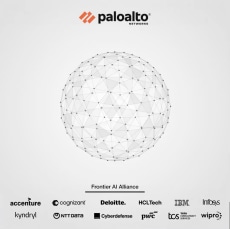
Since introducing this initiative, our collaboration with initial partners – Accenture, Deloitte, IBM, NTT DATA, and PwC – has already begun changing the defensive math for our customers. This is a moment that calls for radical collaboration across the entire security ecosystem, so today we are proud to welcome a new cohort of strategic partners – Cognizant, HCLTech, Kyndryl, TCS, Infosys, McKinsey & Company, Orange Cyberdefense, and Wipro – who will join us in delivering AI readiness at scale.

Frontier AI Alliance

While this expansion significantly increases our reach, this is only the beginning. We are committed to a continuous evolution of this alliance and will be adding more critical partners in the future across the globe to ensure our customers have the most robust defense network possible.

By combining our technology with these partners’ deep consulting expertise, we are delivering:

  • Machine-Speed Security: Natively integrating Frontier AI to provide real-time, automated defense against autonomous threats.
  • Intelligence-Led Resilience: Leveraging Unit 42® experts to fast-track the discovery and remediation of exposures at machine speed.
  • Hardened Defenses: Utilizing early access to frontier models from partners like OpenAI and Anthropic to simulate and block attack chains before they hit the mainstream.

The stakes are high. The attack cycle has compressed with the time from initial access to data exfiltration collapsing to just 39 seconds. Machine-speed MTTR (mean time to respond) is no longer an ambitious goal, it is a requirement.

This initiative underscores our commitment to providing every client with integrated, real-time protection.

Discover further details: Palo Alto Networks Frontier AI Defense.

Forward-Looking Statements

This blog contains forward-looking statements that involve risks, uncertainties and assumptions, including, without limitation, statements regarding the benefits, impact, or performance or potential benefits, impact or performance of our products and technologies or future products and technologies. These forward-looking statements are not guarantees of future performance, and there are a significant number of factors that could cause actual results to differ materially from statements made in this blog. We identify certain important risks and uncertainties that could affect our results and performance in our most recent Annual Report on Form 10-K, our most recent Quarterly Report on Form 10-Q, and our other filings with the U.S. Securities and Exchange Commission from time-to-time, each of which are available on our website at investors.paloaltonetworks.com and on the SEC's website at www.sec.gov.  All forward-looking statements in this blog are based on information available to us as of the date hereof, and we do not assume any obligation to update the forward-looking statements provided to reflect events that occur or circumstances that exist after the date on which they were made.

The post Beyond the Frontier — Expanding the Ecosystem for Autonomous Defense appeared first on Palo Alto Networks Blog.
  •  

Defender's Guide to the Frontier AI Impact on Cybersecurity: May 2026 Update

By now, you’ve heard about the latest frontier AI models that are remarkably good at finding vulnerabilities in code and creating potential exploits. So good, in fact, that these models have been significantly limited from general use in an attempt to give defenders time to find and fix vulnerabilities before attackers find and exploit them.

For context, on April 7, 2026, we began testing Anthropic’s Claude Mythos model as a launch partner for Project Glasswing. Our conclusion was clear: The latest models are extraordinarily capable at finding vulnerabilities and changing them into critical exploit paths in near-real-time. In Defender's Guide to the Frontier AI Impact on Cybersecurity, I shared our early findings and recommendations.

Since then, we’ve continued testing the latest frontier AI models, including Anthropic’s Mythos and Claude Opus 4.7 and OpenAI’s GPT-5.5-Cyber as part of the Trusted Access for Cyber program. The big question just a few weeks ago was: “Are we overstating the model capabilities?” With more testing, I can confidently say we weren’t. In fact, these models are likely even better at finding vulnerabilities than we initially realized. Today, we’re providing an update on our ongoing research, our learnings uncovered in the process, and the approach we’re taking to protect our customers.

Find and Fix Before Attackers Find and Exploit

Today, we released our May “Patch Wednesday” security advisories, our monthly cadence of transparent vulnerability disclosure and remediation. This is the first time where the majority of findings were the result of frontier AI models scanning our code.

  • These are the results of the full, initial scan of over 130 products across all three platforms.
  • As of today, we’ve patched all important vulnerabilities in our SaaS delivered products, and all customer-operated products now have patches available.
  • Today’s advisory covers 26 CVEs (representing 75 issues) versus our usual volume (typically less than 5 CVEs in a month); none of which are being exploited in the wild. Note, this excludes CyberArk vulnerabilities, which are disclosed in their normal process.

It's important to understand this isn’t a one-and-done situation. We’re now rescanning, applying all our learnings about how to provide the right context and threat intelligence to the models. We intend to fix every vulnerability we find before advanced AI capabilities become widely available to adversaries.

While incredibly powerful, AI models aren’t simply magic. To achieve high-fidelity results, you need to build AI scanning harnesses, leverage context, guardrails and threat intelligence. We’ve also discovered a variance across models, due to variations in their training. A multimodel approach is required to identify the superset of vulnerabilities. And finally, while the immediate priority is finding and fixing the vulnerabilities that organizations currently have, the longer-term shift is incorporating these models directly into the software development lifecycle. This is the light at the end of the tunnel: A future where software is secure by design.

Four Steps Every Organization Needs to Take Immediately

Regardless of the current restricted access, we believe these capabilities will flow more broadly to other models. We now estimate a narrow three-to-five-month window for organizations to outpace the adversary before AI-driven exploits start to become the new norm. This impending vulnerability deluge demands urgency. Organizations that haven’t put appropriate safeguards in place will face an entirely new class of risk. Here’s what we recommend:

  1. Find and Fix Vulnerabilities In Your Applications, Products and Code
    Find and fix before attackers find and exploit.
    • Leverage AI models to identify vulnerabilities across all codebase.
    • Apply the same AI scanning to your open-source supply chain, and remediate or mitigate findings.
    • Run accelerated patching tightly coordinated with product and development teams.
  2. Assess, Reduce and Remediate Your Exposure
    Reduce what is reachable by attackers, secure what must be accessible, such as customer-facing applications.
    • Attack surface management products, like Cortex Xpanse®, have never been more critical for finding and reducing exposure.
    • The latest frontier AI models are very adept (with the right AI scanning harness) at evaluating exposures, understanding security misconfigurations and prioritizing attack-path reachability.
    • Audit your supply chain, including AI infrastructure, runtime environments and model dependencies.
  3. Ensure Attack Protections
    Vulnerability exploits are typically just one step of a multi-step attack lifecycle. Ensuring best-in-class protections is now even more important for preventing breaches.
    • Map current sensor coverage to identify critical blind spots in detection, prevention and telemetry.
    • Deploy best-in-class XDR everywhere with an emphasis on real-time ML-based detection and prevention of attacks with all hosts on-premises and cloud included.
    • Deploy Agentic Endpoint Security to secure wide-scale adoption of vibe coding and AI security across the enterprise (e.g. Prisma AIRS® and our recent acquisition of Koi are now a necessity for securing the agentic endpoint).
    • Secure enterprise browsers with AI-based security are a must have for securing where users now do their work.
    • Zero trust and Identity Security are foundational to securing every user and connection, extending to internal segmentation and outbound application connections.
  4. Deploy Real-Time Security Operations
    Autonomous AI-driven attacks will drive attack lifecycles to minutes requiring every SOC to achieve single-digit mean time to detect (MTTD) and mean time to respond (MTTR).
    • Attack detections must be AI/ML-driven to detect even frequently changing and novel attacks at scale.
    • These AI detections must operate against a wide range of first party and third party data sources. A best in class AI SOC must operate on ALL relevant data sources.
    • Automation, both natively integrated and throughout the SOC lifecycle, is necessary to achieve single-digit MTTR. This automation will increasingly be agentic.
    • This must be delivered as a platform to remove seams and gaps created by point solutions.
    • Assess and act as quickly as possible.

Fighting AI with AI — AI Frontier Security Innovations Coming Soon

So far, frontier AI models only find new attacks, not new attack techniques. This means that with the right innovations, we can expand our use of AI to solve the security challenges that organizations are facing, and deliver what our customers need to stay ahead of the ever-evolving threat landscape, including:

  • Reimagining virtual patching with proactive, high-fidelity content updates across network, endpoint and cloud security – We expect that across open source and technology suppliers there will be a deluge of patches, and virtual patching will provide a mitigation layer necessary to give your teams time to update. We expect to roll out the first phase of capabilities very soon.
  • Enhanced attack preventions, including cyber-LLM trained ML and small language models (SML) and behavior protections – Early testing with Cortex XDR® and our network security security services, such as WildFire® malware prevention, indicate high protection coverage from the types of attacks created using these new frontier AI models.
  • Using these models to scan our code, applications and even security configurations – Our intention is to productize these capabilities and incorporate them into our platforms.

Unit 42 — We’re Here to Help

We recognize that not everyone has the capacity and/or expertise to action all of the recommendations to effectively counter frontier AI-driven risks in the short timeframe mandated by AI innovation. Our Unit 42 Frontier AI Defense service is designed to discover and remediate your current exposure before attackers do, strengthen controls that reduce exposure and contain impact and modernize security operations so teams can detect and respond at machine speed.

This is a pivotal moment for our industry. While the scale of the challenge presented is real, I’m confident in our ability to solve it. We’re here to help our customers navigate this transition and ensure that as the landscape continues to evolve, the advantage remains with the defender.

Forward-Looking Statements

This blog contains forward-looking statements that involve risks, uncertainties and assumptions, including, without limitation, statements regarding the benefits, impact, or performance or potential benefits, impact or performance of our products and technologies or future products and technologies. These forward-looking statements are not guarantees of future performance, and there are a significant number of factors that could cause actual results to differ materially from statements made in this blog. We identify certain important risks and uncertainties that could affect our results and performance in our most recent Annual Report on Form 10-K, our most recent Quarterly Report on Form 10-Q, and our other filings with the U.S. Securities and Exchange Commission from time-to-time, each of which are available on our website at investors.paloaltonetworks.com and on the SEC's website at www.sec.gov. All forward-looking statements in this blog are based on information available to us as of the date hereof, and we do not assume any obligation to update the forward-looking statements provided to reflect events that occur or circumstances that exist after the date on which they were made.

The post Defender's Guide to the Frontier AI Impact on Cybersecurity: May 2026 Update appeared first on Palo Alto Networks Blog.

  •  

From WarGames to Cyberwar

How Nations Hack, Why Attribution Fails, and What AI Changes

Executive Summary:
Code War author Allie Mellen, argues that cyberwarfare must be understood through a human and geopolitical lens to close the knowledge gap between the security community and the public.

Disclaimer:
This post reflects the perspectives shared in the book Code War: How Nations Hack, Spy, and Shape the Digital Battlefield, and does not represent the views of the publisher of this blog.


The summer of 1983, President Reagan watched WarGames at Camp David and couldn't get it out of his head. A week later, he walked into a White House meeting with cabinet members and Congress and launched into a detailed plot summary of a Matthew Broderick movie about a teenager who nearly hacks the world into nuclear war. The room full of defense experts sat uncomfortably, suppressing smirks. Then Reagan turned to General John Vessey, Chairman of the Joint Chiefs, and asked if something like that could actually happen.

Vessey came back a week later with an answer: "Mr. President, the problem is much worse than you think."

Fifteen months after that, Reagan signed a classified presidential directive titled "National Policy on Telecommunications and Automated Information Systems Security" – the first federal policy of its kind. A movie had done what years of expert warnings hadn't: It made the most powerful person in the world stop and ask the right question.

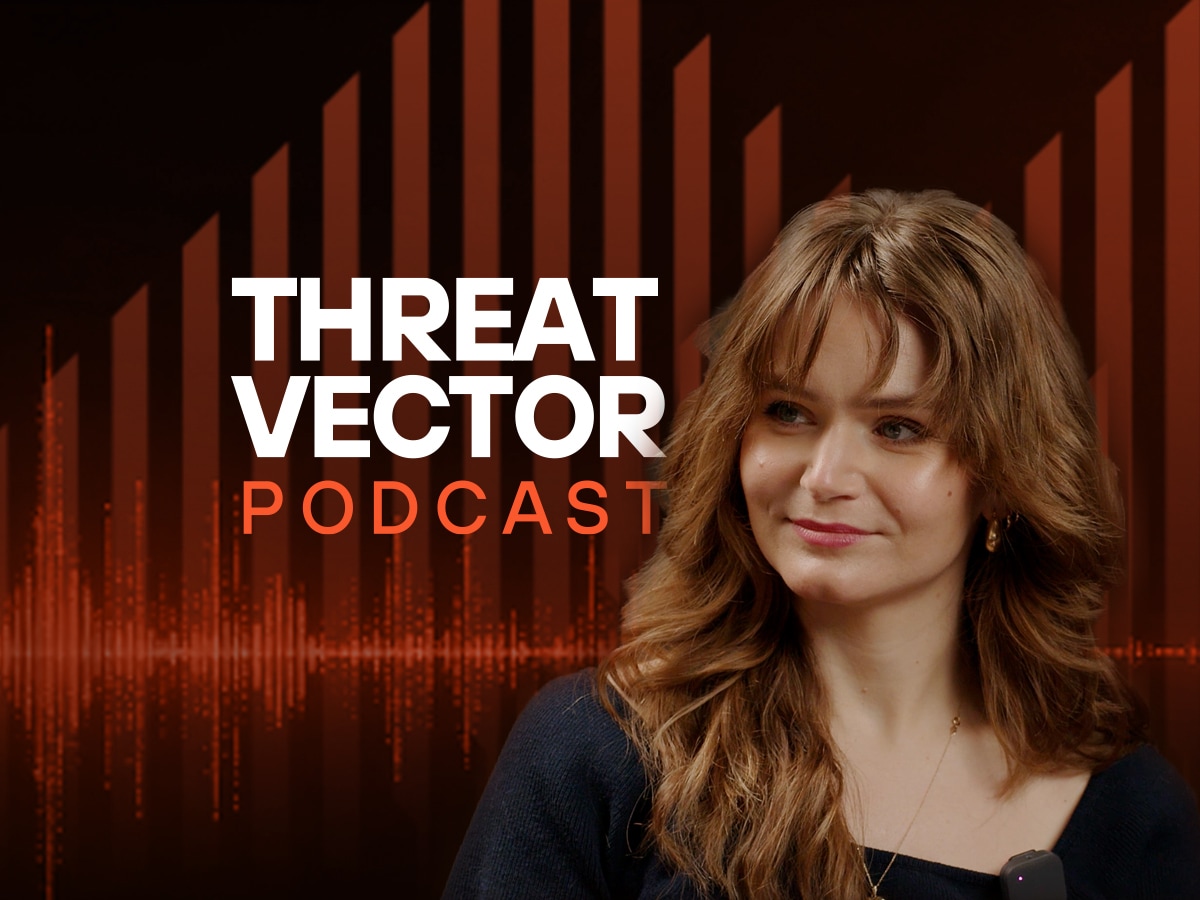
Allie Mellen, author of Code War: How Nations Hack, Spy, and Shape the Digital Battlefield, loves to tell this story, and it captures exactly why she wrote the book. In a conversation recorded at RSA 2025, Mellen joined Threat Vector host, David Moulton, to talk about nation-state threats, attribution pitfalls, and why the security industry's biggest problem isn't technical.

"They're human stories, and if we can communicate them that way to the general public, then we'll get more people interested in cybersecurity, invested in cybersecurity, and invested in protecting their data."

That gap, between what the security community understands and what everyone else grasps, is the core problem Mellen set out to solve. And in today's geopolitical moment, closing it has never been more urgent.

Every Nation Hacks Differently

One of the central arguments in Code War is that you can't understand a nation's cyber behavior without understanding its history, doctrine and social contract. China, Russia, Iran, North Korea and the U.S. each approach offensive and defensive cyber operations from completely different starting points, and those differences matter enormously to defenders.

China operates with patience. Its attacks tend to be low and slow, focused on long-term espionage rather than loud disruption. But that changes sharply in its own region, where operations targeting Taiwan are aggressive and relentless. Russia, by contrast, is bombastic; they want you to know it was Russia. Its influence operations have been some of the most effective in modern history, studied and imitated by Iran and others.

Interestingly, the very system China built to protect itself has become a liability in one specific domain. Because Chinese operators live behind the Great Firewall, without access to western social media, they lack the cultural fluency that makes Russian disinformation so effective. "They try to use memes, but it's like ‘uncanny valley’," Mellen explains. "They just slightly miss every time and so it doesn't go viral." The walled garden that gives China control over its own population makes it harder to manipulate everyone else's.

Attribution Is a Geopolitical Tool, Not Just a Technical One

Mellen is careful about attribution, and she wants defenders to be too. The standard technical signals (coding language, infrastructure patterns, operational hours) are necessary but not sufficient. Nation-states, especially the U.S., have developed tools specifically designed to mimic other actors' signatures. AI will make that problem significantly worse.

But the bigger issue is motivation. Mellen walks through a case from the Olympics where an attack was initially attributed to North Korea, even though North Korea was actively trying to normalize relations at the time by sending Kim Jong Un's sister to the games. The actual perpetrator was Russian, using a false flag to obscure its involvement. The lesson: Attribution requires asking not just "who has the technical capability?" but "who has the motive right now, given everything happening geopolitically?"

The pitfalls are real:

  • Tools once used exclusively by intelligence agencies are now publicly available, making code signatures unreliable.
  • Working-hours analysis is easy to spoof, especially for sophisticated actors.
  • Government-controlled research in adversarial nations can deliberately skew attribution findings.
  • False flag operations are increasingly sophisticated and harder to disentangle.

Why Your Data Is a Geopolitical Asset

One of the more powerful sections of the conversation centers on a question Mellen hears constantly: why would China care about my data?

Her answer cuts through the dismissiveness. These nations aren't collecting data out of idle curiosity. They're willing to constrain companies for it, invest billions in infrastructure for it, and in some cases, far worse. "Whether you wanna be involved in that system or not, you are involved in that system," she says. "And so you can either choose to take control of your information in that environment, or you can just pretend like it's not your problem."

The historical context she offers is striking. One of the driving forces behind GDPR in the EU was the collective memory of how Nazi Germany used data to target Jewish people during the Holocaust. Europe built privacy protections into law because it had seen what happens when governments gain unrestricted access to population data. That's not an abstract concern. It's a lesson written in history that the rest of the world is still catching up to.

AI Makes Everything Harder

Mellen isn't optimistic about the trajectory. Attribution is about to get much harder. Attacks are about to get much more dynamic. And AI is the reason for both.

She points to research on Chinese state-sponsored actors using AI to orchestrate attacks across the full kill chain, with only a couple of human checkpoints in the loop. The implication isn't just faster attacks. It's more adaptive malware that can adjust to different operating environments, more convincing disinformation that clears the cultural context bar, and reconnaissance-to-exploitation cycles that move faster than most defenders can process.

The constraints that have always slowed sophisticated attackers – understanding the operating system, identifying vulnerabilities, crafting exploits, mimicking attribution – all get easier with AI. All of that becomes more dynamic. And most enterprises, Mellen acknowledges, are not yet equipped to respond effectively.

The investment required is in the basics the industry has always struggled to get right, executed now at a pace and scale that demands automation and AI on the defensive side. Fighting AI with AI isn't a vendor talking point. It's the only math that works.

More to Explore

The nation-state threats Mellen describes aren't theoretical. Unit 42 responded to more than 750 major incidents in 2025. See what they found. Download the 2026 Global Incident Response Report.

Listen to the full conversation with Allie Mellen, author of Code War, on the Threat Vector podcast

The post From WarGames to Cyberwar appeared first on Palo Alto Networks Blog.

  •  

Idira — Our Journey to Democratize Privilege Controls

Key Takeaways

  • Built on the Pioneers of PAM (privileged access management): Idira™ is Palo Alto Networks next-generation identity security platform, extending privileged access controls to every human, machine and AI agent identity in the AI enterprise.
  • Zero Standing Privilege by Default: Idira replaces static, always-on access with dynamic privilege, granted just-in-time on a single control plane.
  • AI-Driven Identity: AI runs natively inside Idira to surface hidden entitlements, unmanaged accounts, recommend least privilege, and remediate to close the gap between attackers who move in 72 minutes and defenders who historically took days.

Since Palo Alto Networks and CyberArk came together in February, customers have been asking me the same question: What does the future of identity security actually look like?

At IMPACT, I got to answer that question.

I am proud to introduce Idira™, the next-generation identity security platform from Palo Alto Networks. Idira secures every identity in the AI enterprise (human, machine, AI agent) on a single control plane that discovers risk, applies privilege dynamically, and governs the full lifecycle from first access to last session.

Idira begins with a belief shaped by more than 20 years of working on this problem. Privilege is the most challenging aspect of identity security. For a generation, the industry learned how to manage it well for a small population – administrators inside the most security-sensitive organizations in the world. That was necessary. But it is no longer enough.

The moment has come to extend that same rigor to every identity, because every identity today carries the power to move the business, or enable an attacker. That is the journey Idira takes us on. From privilege controls for administrators, to privilege controls for every identity.

Attackers Are Not Breaking In. They Are Logging In.

For most of the last two decades, identity security was built on a comfortable assumption: One can maintain a firm divide between a small number of powerful administrators and a much larger number of ordinary users; that is enough to secure the organization. That assumption no longer holds.

Our Chairman and CEO, Nikesh Arora, calls it the “IAM fallacy,” and the data in the 2026 Identity Security Landscape Report makes clear why it is time to retire this assumption.

Based on responses from 2,930 cybersecurity decision-makers worldwide:

  • Machine identities now outnumber humans by 109 to 1. Of those, 79 are AI agents.
  • 91% of organizations already run autonomous agents in production.
  • 90% of organizations suffered an identity-related breach in the past 12 months. 83% of organizations suffered two or more incidents.

The old model is not failing because identity became less important. It is failing because identity and privilege became universal and ubiquitous.

Every major breach I have studied over the last two years follows the same pattern. An attacker steals a credential. They move laterally using standing access that should have expired. They escalate privilege. They reach the data, the infrastructure or the business systems they came for: Okta, MGM, Microsoft. Different industries. Different scales. The same pattern.

One overprivileged identity unlocks the entire enterprise.

And when defenders have a chance to respond, they are already behind and disadvantaged. 97% of practitioners tell us that fragmented tools add 12 hours to every identity incident response time. All while Unit 42® has observed the fastest attackers move from a first foothold to exfiltration in as little as 72 minutes.

Identity is now the enterprise perimeter. And the perimeter was built for a threat model that no longer exists.

Every Identity Is Privileged — Idira’s First Fundamental Principle

The premise of Idira is simple. Every identity in your organization is privileged.

Every login, every token, every service account, every workload, every AI agent can trigger a workflow, call an API, or reach sensitive data. Some can create and destroy infrastructures, direct organizational spend, or create new identities. Privilege is no longer reserved for a small class of administrators. It is distributed across the enterprise, quietly and continuously, every second of the day.

The controls that protect privilege cannot be reserved for the few, either.

Idira changes three things from day one.

First, We Discover

Idira continuously finds every identity, every entitlement and every access path across your entire environment: humans, machines, workloads, secrets, certificates and AI agents everywhere – on the network, in the cloud, on servers and endpoints, in the browser. If someone or something can authenticate, Idira knows it is there, knows what it can reach, and evaluates how much of that access is actually necessary.

Second, We Control

Idira replaces static, always-on accounts attackers rely on with dynamic privileges that exist only in the moment of use. Zero standing privilege moves from aspiration to default, and it applies equally to the administrator logging into production, the developer deploying code, and the AI agent calling a tool. This is the shift to identity-centric active security.

Third, We Govern

Idira automates the identity lifecycle end-to-end. Governance stops being a quarterly compliance exercise and becomes a continuous enforcement loop. The 12-hour fragmentation tax closes.

This is what I mean when I say we are democratizing privilege controls. We are not loosening them. We are extending the strongest privilege controls the industry has ever built to every identity that now carries the weight of the business, without penalizing these identities for the powers they carry.

Already Better Together

Idira is not launching into an empty runway. We have been executing against this roadmap since the day we joined Palo Alto Networks, and the early results give us real confidence in what comes next.

Earlier this year at the RSA Conference, we launched Next-Generation Trust Security (NGTS), the first network-native platform to automate certificate lifecycle management and accelerate post-quantum readiness. That matters because 71% of organizations have not yet automated certificate renewal. As public TLS lifetimes compress to 47 days and manual workloads multiply, that gap becomes more than an operational burden. It becomes a business continuity risk.

NGTS closes it in the network itself.

As one of the core platforms of Palo Alto Networks along with Strata® and Cortex®, Idira is providing deep identity integrations across the entire portfolio to enhance platform value for customers. Prisma® Browser™ delivers privileged access directly in the place where enterprise users work. Prisma AIRS™ 3.0 natively integrates with Idira to extend deep identity security and privilege controls to AI agents. Cortex will receive first-party identity signals to sharpen detection and take automatic identity- and privilege-driven response actions when indicators of compromise are detected.

Customers are already seeing the impact. Northern Trust improved password compliance by 137 percent. Panasonic Information Systems rebuilt its security operations around identity. Healthfirst grounded its zero trust program in identity-first controls. PDS Health secured clinical access for more than 900 practices. They had different problems with the same answer.

Different challenges. One answer. One platform. Consistent privilege controls applied to every identity that matters.

AI Makes This Urgent. AI Makes This Possible.

AI has changed the speed, scale and economics of identity risk.

Frontier models have crossed a threshold. Anthropic's Claude Mythos Preview has already identified thousands of zero-day vulnerabilities across the operating systems and browsers that businesses rely on every day. Every exposed secret, every standing admin path, every forgotten service account can now be discovered, validated and weaponized faster than most security teams can respond. 55% of the decision-makers in our 2026 survey named AI-enabled threats as their top identity concern.

Our answer is clear: We fight AI with AI.

If frontier models are rewriting the economics of attack, the only credible response is to rewrite the economics of defense with the same technology.

Idira is how we do that in identity. AI is built into the platform to surface hidden entitlements, identify risky access combinations, recommend the least privilege automatically, and drive surgical remediation. That same intelligence lets attackers find the weakest link in 72 minutes and helps defenders close it in seconds.

When code cannot be patched fast enough, identity becomes the control plane that can still adapt at machine speed.

Same Mission, Stronger Together

For more than two decades, the pioneers of privileged access have management-built controls trusted to safeguard the world's most critical environments. That mission created a category and earned the trust that made today possible.

Idira carries that mission forward and expands it to match the scale of the problem we now face.

This is the first wave, not the last. The roadmap extends privilege controls to workforce identity, advances machine and agentic identity security, and unifies a fragmented market into one platform. We are building it in the open, shaped by the customers in the room with us at IMPACT and by the realities they face every day.

The future of identity security will not be defined by access alone. It will be defined by control. See what Idira is built to deliver.


Forward-Looking Statements

This blog contains forward-looking statements that involve risks, uncertainties and assumptions, including, without limitation, statements regarding the benefits, impact, or performance or potential benefits, impact or performance of our products and technologies or future products and technologies. Any unreleased services, integrations or features (and any services or features not generally available to customers) referenced in this or other press releases or public statements are not currently available (or are not yet generally available to customers) and may not be delivered when expected or at all. Customers who purchase Palo Alto Networks applications should make their purchase decisions based on services and features currently generally available.

The post Idira — Our Journey to Democratize Privilege Controls appeared first on Palo Alto Networks Blog.
  •  
❌