❌

Reading view

Palo Alto Networks Brings Continuous AI Defense and Prisma AIRS to the OpenAI Marketplace

Palo Alto Networks announces that Unit 42® Continuous Frontier AI Defense and Prisma AIRS™ are now on the newly launched OpenAI Marketplace, making them directly available to OpenAI’s enterprise customers. Threat actors are deploying artificial intelligence to find and exploit vulnerabilities at unprecedented speed, compressing breach cycles by almost 97%—from weeks down to mere hours. Human-speed defense can no longer keep pace with adversaries executing automated, continuous attacks.

AI Investments: The OpenAI Marketplace Advantage

For enterprise organizations holding OpenAI spend commitments, this milestone offers a compelling 2-for-1 financial and strategic advantage. Security teams can now deploy machine-speed, proactive defense while retiring their pre-committed OpenAI spend.

Palo Alto Networks offers two flagship solutions available for procurement through the OpenAI Marketplace.

  • Unit 42® Continuous Frontier AI Defense: An always-on, expert-led agentic offensive security service that uses defender-grade models to discover, validate, and accelerate the remediation of exposures across applications and network assets before weaponization.
  • Prisma® AIRS™: A comprehensive AI security platform designed to provide complete discovery, risk assessment, runtime protection, identity and data governance, and observability for AI applications, agents, models, and artifacts across enterprise cloud platforms, SaaS environments, and endpoints.

Machine-Speed Defense with Unit 42 Continuous Frontier AI Defense

Unit 42 Continuous Frontier AI Defense is an expert-led, agentic offensive security service engineered to identify, validate, and remediate enterprise exposures as an organization’s environment changes.

This always-on, agentic service combines our offensive security experts with our proprietary multi-model harness, which uses defender-grade frontier models to discover vulnerabilities, validate real-world exploitability, and accelerate remediation across applications, identities, cloud infrastructure, and network assets as an organization’s environment changes. At the core of this capability is our proprietary multi-model software harness that dynamically routes security tasks to the optimal AI model, maximizing efficacy and coverage while managing the cost of frontier AI at scale.

The harness integrates defender-grade models, including OpenAI’s GPT-5.6-Cyber, and other commercial models alongside open-weight models and Unit 42 threat intelligence. By executing non-destructive adversary simulations across first- and third-party environments, the system proves actual exploitability and delivers prioritized remediation guidance including actionable fixes, code-level changes, and virtual patches. Organizations can pair this with Frontier Virtual Patching to block exploits long before official patches exist or CVEs are publicly disclosed.

The real-world impact of this proactive methodology was validated over six months of in-house testing and across more than 75 customer engagements backed by a $17 million R&D investment. During internal deployment within Palo Alto Networks, the service uncovered over two years’ worth of exposures in just three weeks. In customer assessments, the underlying analysis identified exposures in 100% of assessed organizations, with 37% rated high or critical severity. Crucially, over two-thirds of exposures found in third-party applications had no known CVE, proving the urgent necessity of continuous, AI-driven discovery.

Unit 42 Continuous Frontier AI Defense is available worldwide today on an annual subscription basis. Register for our upcoming Virtual Threat Briefing to see how we apply Frontier AI, our proprietary multi-model harness, and offensive security expertise to protect Palo Alto Networks and our customers.

To learn more about Unit 42 Continuous Frontier AI Defense, register for the upcoming Virtual Threat Briefing here.

Scale Enterprise AI Adoption Safely with Prisma AIRS

As OpenAI customers rapidly scale their use of powerful AI models, AI coding assistants, and autonomous agents, the enterprise attack surface is expanding faster than traditional security teams can manage. The transition to autonomous AI breaks traditional security boundaries, creating shadow AI blind spots, supply chain risks in open-source base models, unsafe actions from malicious inputs, and uncontrolled AI agents executing tasks with excessive permissions.

Prisma AIRS: Secure Every AI Ambition

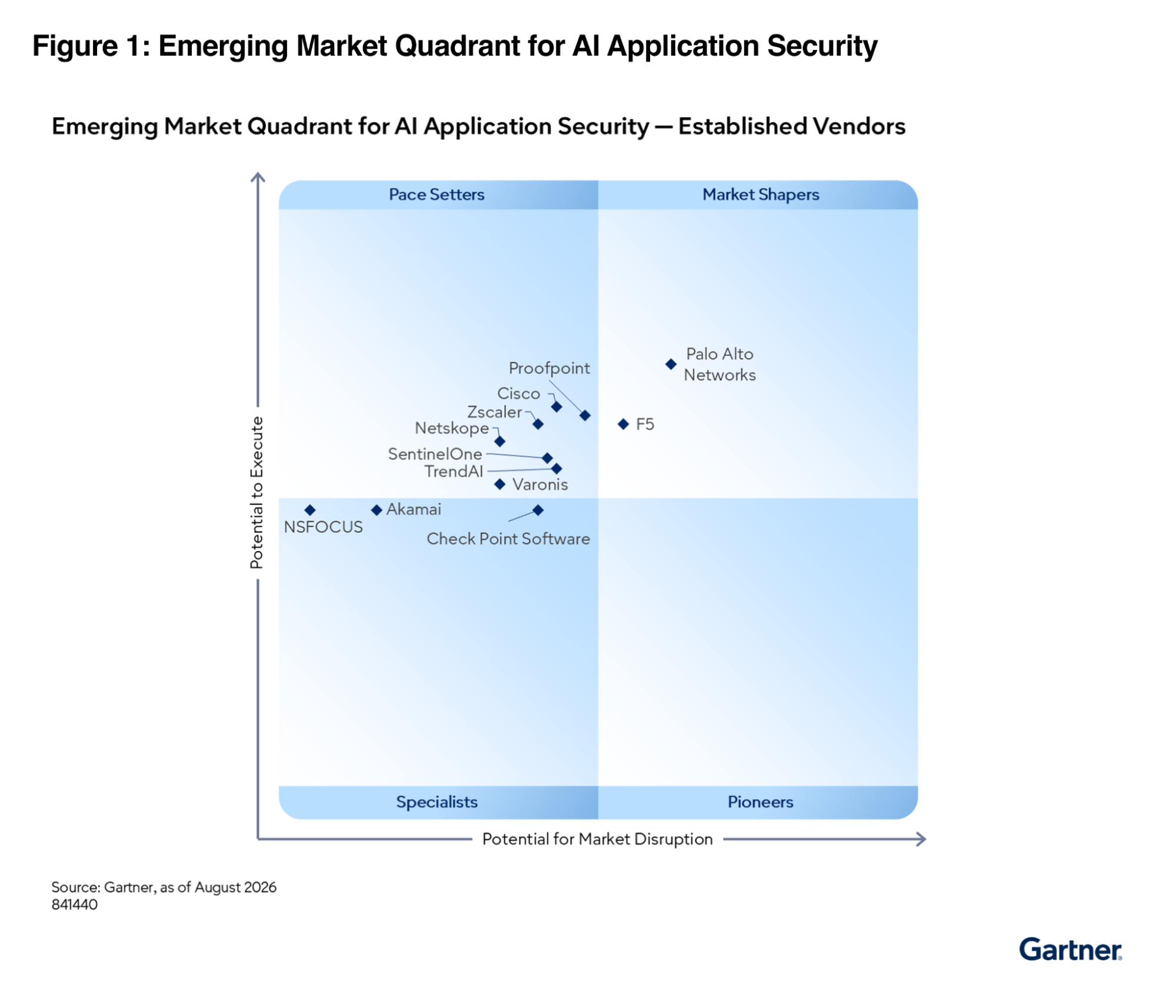
Prisma AIRS is the Palo Alto Networks unified AI security platform, enabling enterprises to accelerate AI adoption while maintaining control over sensitive data, agent identities, autonomous actions and AI costs. Recognized by Gartner as a Market Shaper in the September 2026 Emerging Market Quadrant for AI Application Security – Established Vendors, Palo Alto Networks brings together discovery, continuous risk assessment, real-time protection and centralized governance to secure AI applications and agents across enterprise environments.
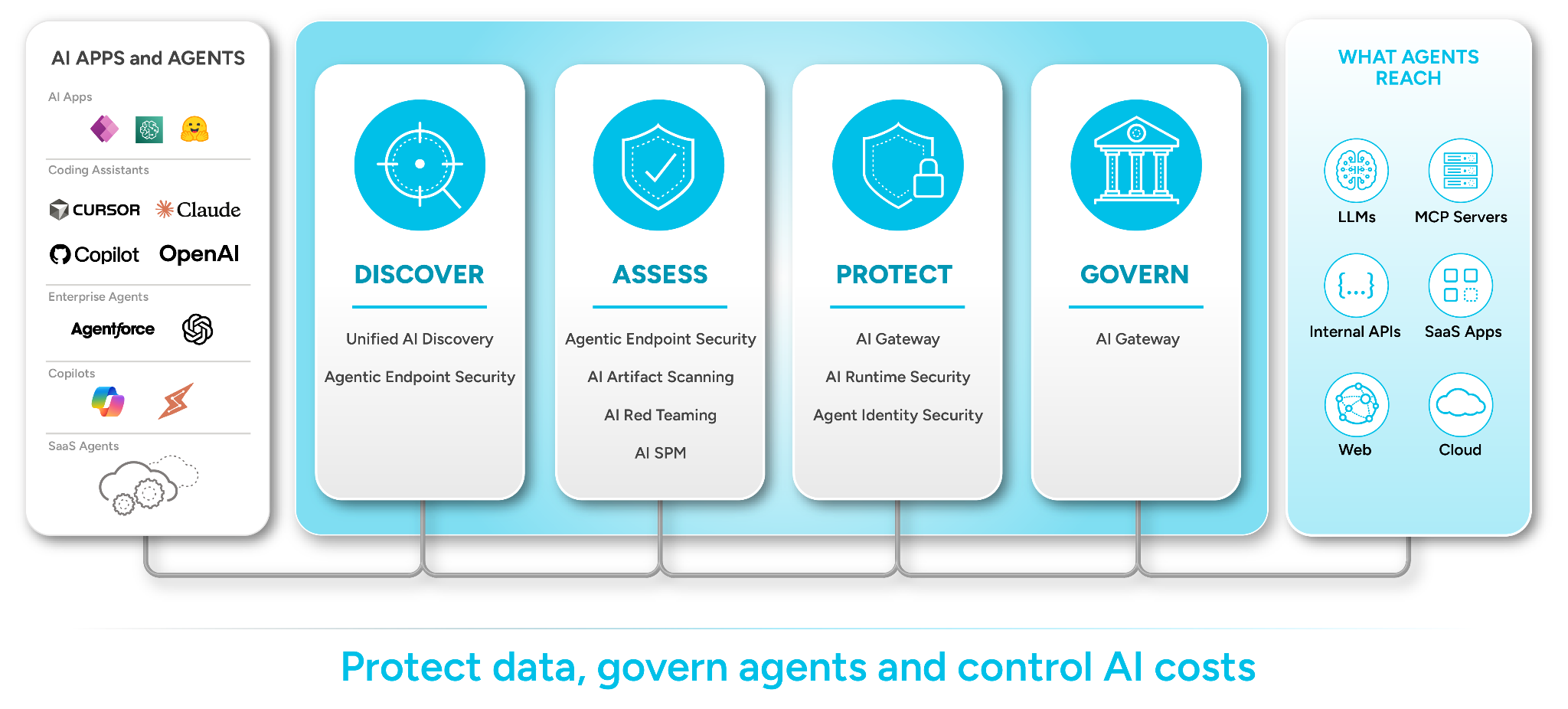
  • Gain Visibility Across Enterprise AI: Discover and inventory AI applications, coding assistants, autonomous agents and associated assets across endpoints, cloud and enterprise environments. Identify shadow AI and gain visibility into the AI systems operating across the organization.
  • Identify Risks Before They Become Threats: Continuously assess AI security posture, scan models and agent artifacts—including skills and MCP servers—for vulnerabilities and supply chain risks, and proactively red team AI applications and agents to uncover exploitable weaknesses before deployment.
  • Secure AI Interactions, Data and Agent Identities: Enforce real-time protection against prompt injection, malicious interactions and sensitive data exposure. Verify agent identities, enforce least-privilege access and prevent unauthorized actions as agents interact with enterprise systems and data.
  • Centralize AI Policy, Access and Spend: Use AI Gateway to govern connections to LLMs, MCP servers, APIs and enterprise services. Centralize policy enforcement, control model and provider access, monitor consumption and manage AI usage and costs across teams and applications.

Together, these capabilities help OpenAI enterprise customers secure AI-powered workflows, maintain accountability for autonomous actions and scale AI adoption with consistent security and governance.

Book a demo to see our AI Security solution in action.

The post Palo Alto Networks Brings Continuous AI Defense and Prisma AIRS to the OpenAI Marketplace appeared first on Palo Alto Networks Blog.

  •  

Millions of PHP Instances Exposed - What Organizations Need To Do Right Now

Two critical vulnerabilities in PHP (CVE-2026-109618 and CVE-2026-109619) have been published. Both vulnerabilities carry a severe CVSS score of 9.2 (more technical details are in the Unit 42 Threat Brief). 

This is not just another high-severity vulnerability disclosure, it marks the opening chapter in a massive acceleration of cyberthreats that will define the foreseeable future. Because PHP is widely used globally (by some estimates, more than half of all websites), the sheer scale of this is massive. Navigating this new reality demands immediate imperatives, including continuous, proactive vulnerability discovery before adversaries weaponize code, and a modern defense strategy that pairs traditional patching with real-time virtual patching. At a footprint of 22 million exposed instances, relying on manual remediation cycles alone is not a viable defense.

For context, exposures are typically in the thousands, for example around 50,000 potentially vulnerable exposed instances for recent NetScaler vulnerabilities, and about 16,000 exposed instances of BeyondTrust, potentially vulnerable to CVE-2026-1731. Pervasive open-source software introduces an exposure footprint on an entirely different order of magnitude. 

This situation illustrates what I shared in Defender’s Guide to the Frontier AI Impact on Cybersecurity. We’re officially in a new reality, and this is going to be an ongoing cycle.

An Accelerating Cycle

The latest frontier AI models are extraordinarily capable at finding vulnerabilities in code. We’ll see these models continue to surface critical issues at a pace faster than ever before.

But here’s the challenge: As soon as patches for vulnerabilities are available, attackers will reverse engineer the patch, locate the root flaw, and target them in near real time. It simply takes too long to apply patches to every system. This vulnerability deluge demands urgency and new technologies, such as virtual patching, are needed.

What Organizations Should Do Now

(1) Assess Your Open Source Inventory

Given the unprecedented speed at which new, critical vulnerabilities are being found with frontier AI, organizations need the ability to understand their true exposure at a moment’s notice. Attack surface management solutions have never been more critical for finding these blind spots across your entire codebase and supply chain. You can’t protect what you can’t see.

Additionally, services like Unit 42 Continuous Frontier AI Defense put defender-grade AI models in the hands of defenders to find and fix vulnerabilities before attackers can weaponize them.

(2) Prioritize Remediation Based on Reachability

You have to reduce what is reachable by attackers. You can't instantly patch everything everywhere, so prioritize what needs to be fixed first based on attack-path reachability. Secure what must be accessible to the public internet, and evaluate your environments to understand which of those exposed PHP instances carry the most immediate risk. For example, Cortex Xpanse and exposure management are great tools for determining reachability and automating remediation.

(3) Secure your AI deployments

While not the main focus for these PHP vulnerabilities, rapid deployment of AI across organizations is expanding the attack surface. All AI deployments must be secure AI deployments.

(4) Mitigate and Ensure Attack Protections

While you coordinate patching with your development teams, ensure best-in-class protections are in place to block the actual exploits. Mitigate against potential attacks immediately through proactive virtual patching and reducing overall exposure. Deploying high-fidelity virtual patches across your network and cloud security provides the mitigation layer necessary to give your teams the time they need to update the actual software safely.

Our new Frontier Virtual Patching capability delivered preemptive coverage for these PHP vulnerabilities ahead of today’s public disclosure. Additionally, Palo Alto Networks customers are protected from exploitation of these vulnerabilities by Advanced Threat Prevention available on our next-generation firewalls and Prisma Access.

(5) Deploy Real-Time Security Operations

Autonomous AI-driven attacks will drive attack lifecycles to minutes requiring every SOC to achieve single-digit mean time to detect (MTTD) and mean time to respond (MTTR).

The Path Forward: Institutionalize Defenses

This isn’t a one-and-done situation. With frontier AI compressing the patch-to-exploit window to minutes, assessing exposure, prioritizing reachability, mitigating and ensuring attack protections must become a continuous, automated motion.

This is a pivotal moment. While the scale of the challenge presented by frontier AI is real, I’m confident in our ability to solve it. Take the steps to secure your organization today, and build the foundation needed to ensure the advantage remains with the defender.

Mitigating Critical PHP Vulnerabilities (CVSS 9.2) at Machine Speed

When frontier AI models accelerate both vulnerability discovery and reverse-engineering of patches, traditional remediation creates an unavoidable window of exposure. Get started with Frontier Virtual Patching in Advanced Threat Prevention Plus to solve this structural delay.
Get Started

The post Millions of PHP Instances Exposed - What Organizations Need To Do Right Now appeared first on Palo Alto Networks Blog.
  •  

Advancing Agentic AI Security with Palo Alto Networks and NVIDIA

AI is moving from answering questions to taking action. Agents can use tools, access enterprise data, and carry out work across systems on our behalf or autonomously. This creates opportunities for businesses to move faster, but it also changes what security must protect. An agent’s identity, the authority it carries, and the actions it takes all become security decisions.

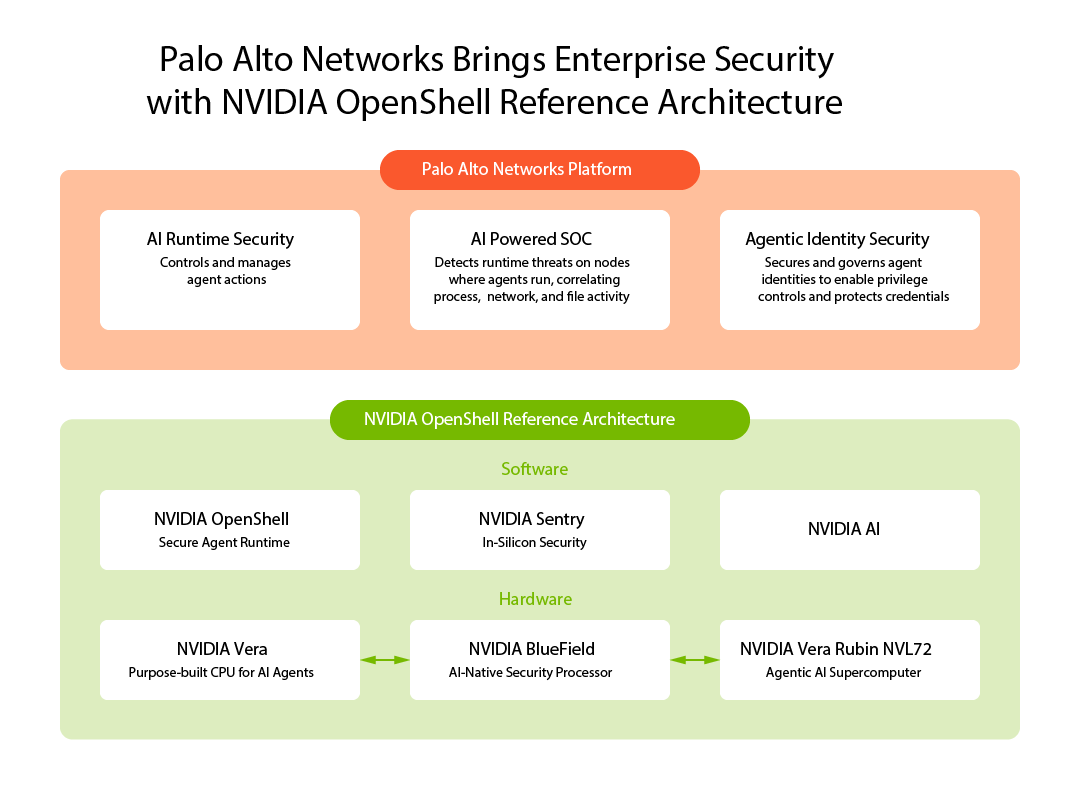
As enterprises put agents into production, they need controls that keep pace without hindering the work those agents are designed to do. Palo Alto Networks is working with NVIDIA to advance this goal across five connected areas in support of the NVIDIA OpenShell Reference Architecture for safe AI agents: an AI gateway on NVIDIA Vera CPU systems; runtime protection on NVIDIA BlueField DPUs; agent identity governance on NVIDIA Sentry; AI factory visibility through an AI-driven, agentic security operations center (SOC); and partner services that help customers implement a secure architecture.

Palo Alto Networks AI Runtime Security Extends Protection Across the AI Factory and Edge

Until now, the AI factory conversation has centered primarily on compute capacity and token generation. But as autonomous agents execute higher-stakes workloads, runtime security has become just as essential. Agents can be steered past their guardrails, and a compromised host cannot be trusted to accurately report what occurred. To be effective, security teams require visibility and enforcement that operate independently of the host environment.

Palo Alto Networks AI Runtime Security on NVIDIA BlueField DPUs isolates security processing in a dedicated infrastructure domain. Because BlueField sits in the path between agents and the models, data, and services they access, security policies are enforced in silicon — beyond the reach of a compromised host. This capability safeguards both GPU-accelerated AI workloads and CPU-based agent runtimes and is now generally available across AI factory and industrial edge deployments. Offloading security from the host node delivers two critical benefits: increased token throughput and stronger runtime protection across the entire AI factory.

Deployment at scale must be manageable. Our work with Spectro Cloud manages the deployment and operation of AI Runtime Security on BlueField DPUs, enabling consistent management across the AI factory infrastructure — from the data center to distributed edge environments. 

Idira Governs the Identity Behind Every Agent Action

Runtime protection answers what an agent is doing. Identity governance helps determine whether it is authorized to do it.

An agent may act for a person, a team, or an autonomous business process, often requiring access to multiple tools and data sources across the organization. Granting an agent broad, persistent access creates risk, while making access too restrictive limits its usefulness. To achieve the optimal balance of control and agent access, Palo Alto Networks is advancing an integration between agentic identity security and NVIDIA Sentry on BlueField — bringing identity and delegated authority closer to where agent interactions are governed.

The goal is to give each agent a verifiable identity, grant access appropriate to its task, and make its actions attributable. Once available, this solution will deliver zero-trust protection and tamper-resistant auditing for agents by moving the security controls — including identity — to the NVIDIA Bluefield DPU, separate from the host operating system. This addresses an immediate business need — enabling enterprises to scale agent deployments while retaining control over whose authority agents use and which resources they can reach.

Bringing AI Factory Signals into Cortex

Security teams need visibility into activity across the infrastructure that runs AI agents. Palo Alto Networks has announced an integration of Cortex XSIAM with NVIDIA DOCA Argus, which monitors host activity from BlueField’s independent trust domain. This provides security operations teams with runtime signals that do not rely on an agent installed on the host being monitored.

By bringing those signals together with network, cloud, and identity data in an AI-driven SOC, security teams can investigate AI infrastructure in the context of the broader enterprise. Palo Alto Networks is continuing to develop this foundation to support broader fleet visibility and more comprehensive response workflows — enabling security teams to identify unusual activity and act with greater confidence as AI deployments grow.

AI agents run within the NVIDIA OpenShell secure runtime, operated directly on the NVIDIA Vera CPU within the NVIDIA OpenShell Platform. Security observability is completely offloaded to the NVIDIA BlueField DPU. Operating out-of-band, NVIDIA Sentry, built on DOCA Argus, provides real-time memory and network inspection to detect threats without slowing AI inference. When malicious events or policy violations occur, DOCA Argus streams high-fidelity alerts directly to Palo Alto Networks Cortex XSIAM, where they can be automatically correlated and surfaced for rapid threat response. 

Turning Secure AI Factory Designs into Deployments

Customers need more than an architecture diagram to bring an AI factory into production. They need a practical path to design, validate, and operate security across compute, networking, applications, and the SOC.

Palo Alto Networks is working with strategic vendors , including Deloitte and World Wide Technology (WWT), to help customers plan and deploy secure NVIDIA AI factories. Deloitte’s Silicon-to-Service (S2S) offering, combined with its Secure AI Foundations, helps organizations implement AI use cases on NVIDIA AI infrastructure through validated architectures and managed services. By building security into the full AI factory stack, Deloitte helps clients balance performance, safety, and cost as they scale from pilot to production.  

WWT’s AI Proving Ground allows customers to evaluate and test an integrated stack before committing to production deployment.These engagements can help enterprises move from individual security components to a repeatable approach tailored to their environments and requirements.

Building Confidence into the Next Phase of Agentic AI

The value of agentic AI depends on an enterprise’s ability to give agents useful access while maintaining control over their actions. This requires runtime protection, governed identities, independent visibility, and a unified way to manage controls across the enterprise. 

Palo Alto Networks delivers comprehensive security across every layer of the AI factory through a unified platform. In collaboration with NVIDIA, we support the NVIDIA OpenShell Reference Architecture for enterprise governance, isolation, and security.  Together, we deliver the continuous protection needed to move safely from AI agent pilots to full-scale enterprise production.

To learn more about the general availability of AI Runtime Security on the BlueField DPU, read our blog, Palo Alto Networks Announces Support for NVIDIA Enterprise AI Factory. 

The post Advancing Agentic AI Security with Palo Alto Networks and NVIDIA appeared first on Palo Alto Networks Blog.
  •  

Reinventing Endpoint Security with Cortex XDR One

Enterprises spent the last two years racing to capture the vast potential of AI, authorizing AI agents to touch production code, internal databases, customer tickets and financial ledgers. Because these agents operate non-deterministically with broad capabilities, they can easily be manipulated into unexpected or malicious behavior. The result is agents breaking out of isolation, shifting AI risk from a hallucinating chatbot to an operational liability. 

The standard fixes, such as software containers or prompt-level guardrails, aren't sufficient to prevent malicious agent behavior. And traditional endpoint security was not designed to secure agents, which operate with real user access. Just as we pioneered XDR to include network, identity and cloud, we must now expand protection to secure agents in the enterprise. 

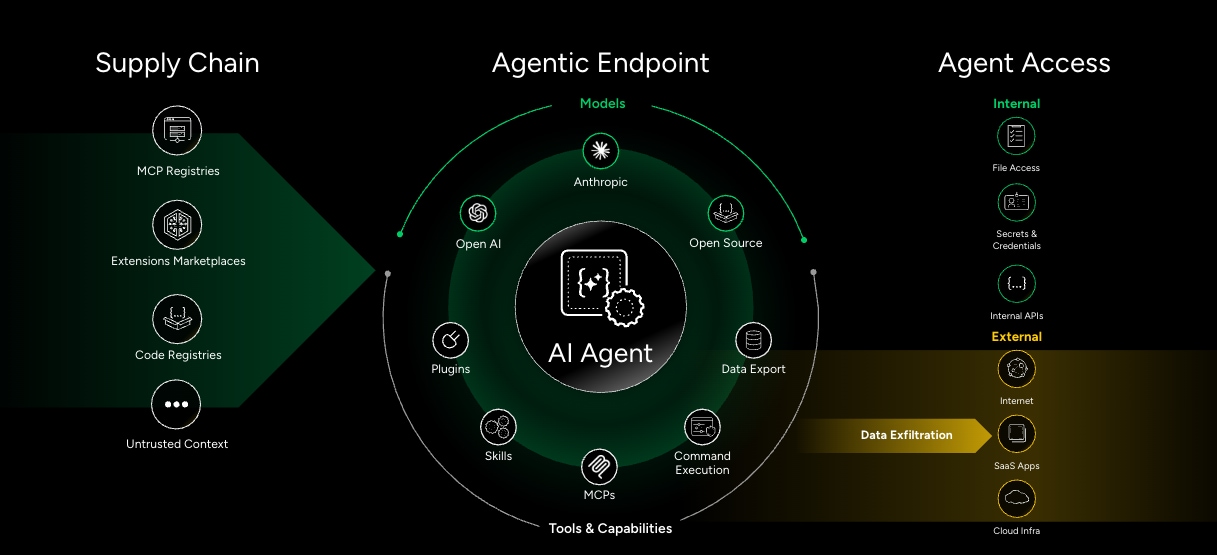
Cortex XDR One brings together XDR and Koi Agentic Endpoint Security to protect both traditional system processes and AI agents, delivering layered enforcement across an agent’s execution path. XDR One is designed to control an agent’s actions at the source, enforce hard boundaries at the operating system level, and spot rogue behavior through an AI-driven layer of defense.

An Emerging Security Blind Spot

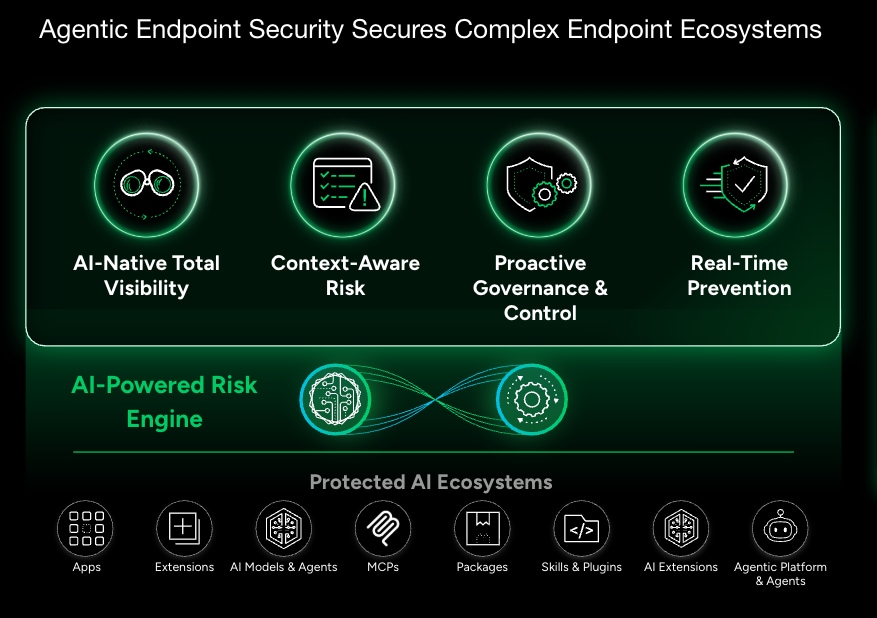
Endpoints have evolved from controlled execution environments into complex ecosystems of AI coding agents, AI co-pilots, MCP servers and personal agents with access to sensitive data and systems. These artifacts can bypass traditional controls and operate in critical blind spots. 

When an agent ingests an untrusted input, connects to a compromised enterprise app or executes an unauthorized command, it transforms from a productivity tool into an active risk vector. Because agents operate with real user permissions and non-deterministic behavior, security teams face a compounding set of enterprise challenges that extend far beyond simple prompt injections.

Employees are adopting personal AI agents and browser tools that bypass IT oversight, spreading shadow AI across endpoints. At the same time, attackers are exploiting connected systems to manipulate these agents. By poisoning the external data, databases, or SaaS applications an agent relies on, adversaries can alter its behavior indirectly without ever touching the AI model itself. Without hard boundaries, an agent can be tricked into escalating host privileges, bypassing local containers or executing arbitrary system commands. In short, the agent escapes its intended sandbox and becomes an unwitting insider threat.

AI Agents and Tools are on Nearly Every Endpoint

Adversaries are already exploiting this new vulnerability. In the ClawHavoc supply chain attack, adversaries targeted agents by uploading hundreds of malicious skills to OpenClaw's marketplace; once installed, these rogue skills broke runtime isolation to give remote attackers direct command-line access on the host. In a separate incident, Unit 42 research showed how agents can be tricked into revealing secret system prompts or sensitive information through indirect data poisoning from connected applications. Additionally, agents can bypass system and access controls when tricked into issuing unauthorized API calls or executing system tools under the guise of legitimate user permissions. Compounding these risks is the rise of shadow AI, as ungoverned, unmonitored agents deployed by employees silently inherit elevated system privileges without IT visibility.

When agentic AI was just emerging, we saw the potential risks it would bring and immediately sought out a solution to secure our internal AI workloads. Our InfoSec team found and deployed Koi while the startup was still in stealth mode. Impressed by Koi’s unique ability to secure new agentic endpoint behavior, we welcomed the talented Koi team into the Palo Alto Networks family to deliver this protection directly to our customers.

Cortex XDR One: Securing Every Endpoint and Agent from a Single Platform

XDR One integrates Cortex XDR and Cortex Agentic Endpoint Security with a single user interface and sensor, providing centralized visibility, management and investigation.

Agentic Endpoint Security for Complex Endpoint Ecosystems

From sanctioned agents to shadow AI, XDR One gives teams a real-time inventory of every AI artifact the moment it appears on an endpoint. Armed with visibility into all the agent activity in the enterprise, security teams can control what packages, extensions, agents and AI artifacts are allowed to be installed or used. For example, a CISO can evaluate which vibe coding agents are actually being used by engineering teams and make an informed decision about the productivity impact of removing access to a specific agent. 

Securing the modern endpoint requires unified defense across both the AI agent lifecycle and the underlying operating system. XDR One delivers this protection, from software installation to live execution. Within the agent layer, it enforces runtime guardrails to help stop prompt injections and destructive commands. Simultaneously at the OS layer, XDR One continuously monitors runtime process chains to block zero-day exploits and living-off-the-land attacks in real time without affecting performance. To complement these defenses, optimized small language models run directly on the endpoint sensor to guard against evasive, fileless threats even while offline and without sending sensitive code to the cloud. By stitching cross-domain telemetry into clear, end-to-end attack chains, XDR One cuts false positives by up to 95% and drives automated remediation in minutes.

Ultimately, consolidating this security telemetry onto a single sensor eliminates fragmented point tools and establishes a powerful operational foundation, equipping Cortex XSIAM with the critical data needed to better govern AI risk across the enterprise.

Flexible Protection with Standalone Agentic Endpoint Security or Native Integration

Cortex Agentic Endpoint Security (AES) specifically governs AI tools, MCP servers and agentic workflows running on those hosts. Organizations have the flexibility to deploy AES alongside existing third-party EDR environments using the Cortex targeted sensor.

However, organizations can simplify operations when AES and XDR come together natively in Cortex XDR One. By unifying agentic defense and extended detection and response into a single sensor and platform, XDR One bridges the gap between traditional host security and AI risks, delivering seamless visibility, management and real-time investigation.

Setting a New Baseline for Endpoint Security

The era of standalone EDR has passed. Just as XDR moved beyond siloed endpoint detection and response to encompass network, identity and cloud, securing the modern enterprise now demands native protection for autonomous AI workloads. EDR without integrated agentic security is incomplete and fundamentally legacy. Disconnected point solutions lack visibility into OS execution, while bolt-on EDR offerings fail to correlate the agent’s prompt and tool context with subsequent system behaviors. Relying on a bird of prey may seem like high-end security, until you discover it only swoops in after the wolf has already attacked the flock.

XDR One sets the new standard for endpoint security, providing unmatched visibility and preemptive control across both the OS and AI layers within a single sensor.

Scaling Enterprise AI with Confidence

While XDR One delivers complete standalone protection, security leaders grappling with this complex new attack surface can augment their team’s capabilities with Unit 42 MDR, which will now include Managed Agentic Endpoint Security. By combining XDR One telemetry with elite threat intelligence, Unit 42 experts deliver proactive threat hunting, incident investigation, and AI risk governance to strengthen overall resilience.

Securing the Agentic Frontier

As organizations race to adopt AI agents, security teams face a pivotal transition. The expansion of agentic capabilities across enterprise endpoints demands a security posture that treats agents with the same rigor and control as traditional system processes.

By unifying agentic endpoint defense and XDR into a single sensor and platform, XDR One sets a new standard for endpoint security in the agentic era. Whether deployed independently or backed by Unit 42 expertise, XDR One gives security leaders the visibility and control needed to eliminate shadow AI, enforce operational guardrails and accelerate their AI transformation.


Forward-Looking Statements
This blog contains forward-looking statements that involve risks, uncertainties and assumptions, including, without limitation, statements regarding the benefits, impact, or performance or potential benefits, impact or performance of our products and technologies or future products and technologies. Any unreleased services or features (and any services or features not generally available to customers) referenced in this or other press releases or public statements are not currently available (or are not yet generally available to customers) and may not be delivered when expected or at all. Customers who purchase Palo Alto Networks applications should make their purchase decisions based on services and features currently generally available.

The post Reinventing Endpoint Security with Cortex XDR One appeared first on Palo Alto Networks Blog.
  •  

Introducing Unit 42 Managed Agentic Endpoint Security

AI agents and AI-enabled tools are fundamentally changing how work gets done. From coding assistants to Model Context Protocol (MCP) servers, autonomous tools now access sensitive data, execute commands, and modify local workflows directly from the endpoint. Traditional endpoint security models fail to offer the visibility or governance required to manage these autonomous actions.

The security gap is already significant. Only 6% of organizations have an advanced AI security strategy. And the fastest attacks can move from initial access to data exfiltration in just 72 minutes, according to the 2026 Unit 42 Global Incident Response Report. As AI adoption grows, teams need context to prioritize risk and experts ready to respond so the business can continue adopting AI with confidence.

Today, we are announcing Unit 42 Managed Agentic Endpoint Security (Managed AES). We built the service on Cortex AES, our AI-native endpoint security platform that provides visibility, contextual risk intelligence and protection for AI agents and artifacts. Managed AES adds 24/7 Unit 42 expertise to help organizations put those capabilities into action. Backed by Unit 42 threat intelligence, our experts provide AI governance, threat hunting, investigation and response, and AI-related cyber hygiene. They apply human judgment to turn contextual intelligence into policy recommendations and prioritized actions as the environment evolves.

Continuous Expert Defense for the AI Environment

Managed AES brings continuous Unit 42 expertise to four areas of AI endpoint security.

  • Govern AI Adoption with Greater Confidence
    AI adoption often moves faster than security teams can assess it. Our experts help identify AI tools and associated risks, evaluate exposure and recommend improvements to policies and controls. Security leaders gain a clearer view of AI use across their environment.
  • Hunt for Emerging and Zero-Day Threats
    AI-related threats can emerge before they trigger a known alert. Our threat hunters use frontline threat intelligence and Cortex AES signals to proactively hunt across the customer’s AI environment. They evaluate findings, recommend action and refine policies and correlation rules to strengthen protection over time.
  • Investigate and Respond 24/7
    Our analysts continuously monitor activity, investigate suspicious behavior and take permitted actions on the customer’s behalf to contain AI-related threats. Security teams gain specialized support to understand what happened, determine the potential impact and prioritize next steps.
  • Continuously Strengthen AI-Related Cyber Hygiene
    Unit 42 assesses the customer’s AI security posture as adoption evolves. AI Security Posture Reports identify policy and control improvements, while Threat Impact Reports detail threats, potential impact, response actions taken and recommended next steps. These insights help teams prioritize improvements.

Expert Protection Across Your AES Environment

Organizations can choose the Cortex AES deployment model that best fits their environment while receiving the same 24/7 Unit 42 expertise.

  • Managed AES with Standalone Cortex AES
    Organizations can deploy Cortex AES alongside their existing endpoint security solution for AI-native visibility, contextual risk intelligence, governance and protection for AI agents and AI-enabled tools. Managed AES adds Unit 42 experts who help customers act on that visibility and risk intelligence.
  • Managed AES with Cortex XDR One
    Cortex XDR One brings together Cortex AES and Cortex XDR into a single sensor and console experience. It combines endpoint detection and response with AI-native security for AI agents and artifacts. Unit 42 experts provide 24/7 governance, threat hunting, investigation and response across the entire endpoint attack surface.

Securely Scale AI Adoption

Unit 42 Managed AES helps security teams understand how AI is being used, address risk before it escalates and respond quickly when threats emerge. By combining Cortex AES context with frontline threat intelligence and expert analysis, Managed AES helps businesses adopt AI with confidence.

Register for our upcoming webinar, The Next Era of Endpoint Security, to learn how Cortex AES and Unit 42 experts help your team govern AI risks, strengthen visibility and protect the agentic endpoint.

The post Introducing Unit 42 Managed Agentic Endpoint Security appeared first on Palo Alto Networks Blog.
  •  

The Blind Spot in Orbit: Why Space Could Be the Next Infrastructure Crisis

Are organisations becoming so reliant on third party space assets that they would face severe disruption if the assets were impacted by a cyber attack?

When most people think of space technology, they imagine routine weather forecasts or blue-dot navigation on a smartphone map. But behind those quiet satellite signals lies an invisible digital thread holding modern society together. From crop harvesting schedules to international flight routes and supermarket supply chains, daily life on Earth is deeply dependent on data from space.

Yet space security remains the cyber risk that very few in executive boardrooms are addressing. As the space economy surges toward a $1.01 trillion valuation by 2034, a dangerous blind spot has emerged. Cyber threats to orbital infrastructure are no longer a theoretical hazard—they are happening now.

Privatization Outpacing Security

Historically, space operations were the exclusive domain of governments operating in strictly air-gapped environments with near-zero tolerance for risk. Today, rapid commercial privatization has slashed launch costs, but speed to market is dangerously outstripping security by design. Commercial operators inherit standard enterprise IT vulnerabilities, complex supply chain risks, unpatched APIs, and operational technology gaps.

The systemic disconnect is stark:

Physical Consequences on the Ground

Unlike typical corporate breaches, orbital cyber attacks can trigger immediate physical impacts on Earth. Tampering with satellite telemetry can destabilize regional crop yields by altering planting schedules or paralyze commercial aviation by injecting false data into flight-navigation networks.

Crucially, these risks are not limited to assets in orbit. Ground-based power substations, telemetry command hubs, and downlink facility infrastructure have become primary cyber-physical targets. A coordinated cyber attack on local energy substations supporting satellite ground operations could sever communication links and ground control just as effectively as an in-orbit compromise.

A study commissioned by the European Space Agency (ESA) modeled the impact of a hypothetical 7-day satellite communications outage across ESA member states and Canada. The potential cost reaches up to €20 billion ($21.8 billion) in total economic losses. This includes €19 billion in maritime logistics and port bottlenecks, €558 million in direct aviation losses (canceling ~4,000 transatlantic flights), €352 million in lost connectivity for emergency services and remote communities, and €89.8 million from stalled offshore energy operations.

Aging Tech Meets Advanced Threat Actors

Geostationary satellites carry mission lifespans of 10 to 15 years, locking critical communications into legacy hardware designed before modern cyber threats existed. Nation-states and cybercriminals are exploiting these gaps; Palo Alto Networks Unit 42 threat intelligence currently tracks multiple state-sponsored groups actively targeting space-sector systems.

What Leaders Must Do Now

Governments and enterprise boards must recognize space-based timing, navigation, and observation as core national critical infrastructure. Leadership teams should execute four priorities immediately:

  1. Map Space Dependencies: Audit third-party services, cloud links, and automated logistics relying on satellite telemetry.
  2. Establish Terrestrial Backups: Build manual redundancies—including ground-based radio networks and offline inventory controls—for scenario planning when space signals go dark.
  3. Elevate Supply Chain Audits: Evaluate whether key vendors rely on single-point-of-failure commercial satellite constellations or unfortified ground substations.
  4. Update Risk Registers: Formally integrate space dependencies into corporate cyber risk registers.

Translating these action items into real-world operational resilience requires moving beyond static compliance policies. To protect complex ecosystems—where ground stations, power substations, cloud environments, and orbital data streams converge—organizations need a unified, platformized approach to security that provides continuous visibility across every link in the space supply chain.

In the modern threat landscape, business resilience, national sovereignty, and space security are inseparable. It is time for leaders to look up before an orbital breach brings ground operations to a standstill.

The post The Blind Spot in Orbit: Why Space Could Be the Next Infrastructure Crisis appeared first on Palo Alto Networks Blog.

  •  

NHS England evolves its cybersecurity strategy with Palo Alto Networks and IBM

The NHS has set an ambitious goal of achieving cyber resilience across healthcare organisations by 2030. Delivering on that vision requires technology, expertise and close collaboration across the public and private sectors.

This is clearly a highly complex task, but one we're delighted to help deliver in partnership with IBM. Through this partnership, Palo Alto Networks will provide advanced cloud-based perimeter technology, alongside IBM Consulting’s specialist guidance, implementation support and tailored onboarding for NHS organisations.

As health and care services continue to modernise, maintaining resilient, secure digital infrastructure has never been more important. Healthcare organisations are operating in an increasingly complex environment, with growing digital dependencies, expanding supply chains, evolving cyber threats and new technologies such as AI reshaping the landscape.

According to IBM's Cost of a Data Breach Report, healthcare continues to be one of the most impacted sectors globally when it comes to the financial consequences of cyber incidents. This highlights the importance of taking a proactive, long-term approach to cyber resilience across critical public services.

Palo Alto Networks' continued work with the NHS demonstrates the scale and complexity of securing modern healthcare environments. As organisations balance innovation, operational demands and evolving security requirements, there is a growing need for solutions that provide both strong protection and the flexibility to meet local needs.

Introducing the Next Generation of the NHS Secure Boundary Programme

Palo Alto Networks will deliver next-generation, cloud-based security solutions through the next iteration of the NHS Secure Boundary programme. The service has been designed to help strengthen cyber resilience across UK health and social care organisations while supporting the safe and reliable delivery of services.

Secure Boundary provides the capability to support a network spanning more than 1.5 million NHS staff, over 200 NHS trusts, more than 55,000 organisations handling health data and approximately 2 million devices under national cyber monitoring. The nationally integrated and centrally funded service embodies a "Defend as One" approach, helping organisations benefit from shared protection while retaining local control.

Secure Boundary supports NHS organisations through:

  • An AI-enabled cybersecurity capability designed to strengthen resilience and support the safe, reliable delivery of healthcare services.
  • Enhanced visibility and protection for internet traffic across the Health and Social Care Network.
  • Improved security for infrastructure and clinical applications operating across multiple service providers.
  • Increased protection for information shared across NHS organisations and trusted third parties.
  • Greater privacy and security for staff accessing web-based services, whether on-site or remotely.
  • A "Defend as One" approach that complements existing local security measures while allowing organisations to tailor policies to their specific requirements.
  • Reduced complexity through the consolidation of security tools and management processes.
  • Improved efficiency through a centrally funded model that helps reduce duplication of technology and investment.

The new Secure Boundary service represents a significant step forward in strengthening the NHS's digital resilience. By providing a more secure foundation for NHS services, it helps support operational continuity, safeguard sensitive information and enable healthcare teams to continue delivering high-quality care in communities across the UK for years to come.

If you would like to find out more about Secure Boundary and how it can help your organisation, please contact ukpubsec@paloaltonetworks.com. 


Forward-Looking Statements

This blog contains forward-looking statements that involve risks, uncertainties and assumptions, including, without limitation, statements regarding the benefits, impact, or performance or potential benefits, impact or performance of our products and technologies or future products and technologies. These forward-looking statements are not guarantees of future performance, and there are a significant number of factors that could cause actual results to differ materially from statements made in this blog. We identify certain important risks and uncertainties that could affect our results and performance in our most recent Annual Report on Form 10-K, our most recent Quarterly Report on Form 10-Q, and our other filings with the U.S. Securities and Exchange Commission from time-to-time, each of which are available on our website at investors.paloaltonetworks.com and on the SEC's website at www.sec.gov.  All forward-looking statements in this blog are based on information available to us as of the date hereof, and we do not assume any obligation to update the forward-looking statements provided to reflect events that occur or circumstances that exist after the date on which they were made.  


The post NHS England evolves its cybersecurity strategy with Palo Alto Networks and IBM appeared first on Palo Alto Networks Blog.

  •  

The Mango Strategy: A CEO’s Guide to AI Cybersecurity

Hope is not a strategy. Neither is nostalgia.

Mark Carney, Prime Minister of Canada


Business leaders cannot respond to AI-era cyber risk by longing for a simpler technology stack, slower decision-making or a security model built around a trusted internal network. AI is changing how organisations operate—and how adversaries identify and exploit weaknesses—faster than many leadership teams can anticipate.

Cybersecurity has therefore evolved from a “coconut strategy”, built around a hardened perimeter and trusted interior, to what I call a “mango strategy”. The modern enterprise and its digitally connected ecosystem have a porous, continuously changing edge, but it must place its strongest protection around the core: its data, identities, code repositories, applications, digital essentials and critical operations.

What is the CEO’s role in AI governance and cybersecurity?

This shift makes cybersecurity a CEO-level business priority. CEOs do not need to oversee every AI deployment, but they must define how the organisation adopts, governs and secures AI while maintaining resilience, accountability and trust. That means setting risk thresholds, assigning accountability, protecting critical data and identities, and ensuring that security can operate at the same machine-speed as autonomous systems.

Why autonomous AI agents require workforce-level oversight

Given this dual nature, business leaders cannot afford to ignore AI. Like water, AI adoption will find its way and follow the path of least resistance as a senior cybersecurity leader from a large European bank put it. Without clear governance, it can expose weak controls, while AI-enabled attackers can exploit those weaknesses at unprecedented speed and scale.

Some have suggested that CEOs should double as Chief AI Officers. However, as executive responsibilities expand, expecting a CEO to oversee day-to-day AI implementations while setting broader corporate vision is unrealistic. While the CEO may not manage specific AI initiatives, they must actively shape the overarching strategy, the “AI surround and framework”.

This leadership starts with developing and hiring highly capable talent to execute the vision. The CEO’s true value lies in ensuring that AI is embraced across every business unit, integrated into risk models, and governed by robust safeguards. Proper administration and oversight are no longer secondary concerns—they are core executive functions.

A critical dimension of this responsibility is governing the use of agentic AI. Autonomous agents function effectively as "authorized insiders." Custom-built for specific workflows, they leverage elevated privileges to access critical applications, databases, and proprietary tools around the clock.

In practice, these agents represent a new class of virtual employees. Though non-human, their operational impact is comparable to their human counterparts, yet they operate 24/7. CEOs must ensure that autonomous agents are deployed, monitored, and evaluated with the same rigors applied to the rest of the workforce.

How can leaders build resilience against AI-driven instability?

Translating this new operational reality into steady organizational resilience requires recognizing AI's broader societal impact. While the technology holds vast potential for good, it can also accelerate systemic and geopolitical instability when misused. For instance, recent developments in frontier AI models demonstrating advanced exploit-generation capabilities highlight the immediate necessity of defense-in-depth.

Palo Alto Networks CEO Nikesh Arora highlighted this shift in this article - Weaponised Intelligence -  “These are not incremental improvements. Imagine a horde of agents methodically cataloging every weakness in your technology infrastructure, constantly. Over the next six months, the barrier to entry for sophisticated attacks will continue to diminish. A hacker’s dream weapon will be available to anyone with a credit card and computer.”

To counter these emerging risks, leading AI developers and security organizations are actively collaborating. Through initiatives like Project Glasswing, partners across technology and financial services are stress-testing defender-grade models to harden critical software and establish proactive defenses before threats reach the wild.

These collaborative initiatives address the exact questions executive boards are asking today: Where are our exposure points, how severe are they, and how quickly can we contain them?

Answering these questions requires a strong security culture. Defining how an organization adopts and governs AI is now a core mandate for executive leadership. Even with specialized AI leadership in place, the CEO must drive the culture to align AI implementation with business values and strategic priorities.

Ultimately, executive leadership must set clear parameters: defining operational boundaries, establishing accountability, tracking key progress metrics, and encouraging responsible innovation within controlled risk thresholds.

Four cybersecurity priorities for the agentic AI era

The cybersecurity landscape has reached an inescapable inflection point: we have entered the "Agentic Era," where autonomous AI agents drive attacks at machine speed. In this environment, manual, reactive patching is no longer just slow—it is a mathematical dead end that can leave enterprises effectively unprotected.

Navigating this shift requires a deliberate transition from reactive measures to proactive architecture built on four strategic pillars:

  1. Fight Machine with real-time machine speed: Because automated adversaries can scan millions of endpoints and chain multiple low-severity vulnerabilities into catastrophic exploit paths, human-led response is a guaranteed failure. Organizations must move to a prevention-first posture, using AI-driven systems that natively integrate across network, cloud, and endpoint telemetry to block threats in real-time.
  2. The "Customer Zero" Mandate: The time between a model's release and its weaponization is shrinking to zero. Palo Alto Networks acts as "Customer Zero" by stress-testing frontier models during their development phase, hardening the security stack against specific autonomous logic capabilities well before they are public.
  3. Move Beyond "Find-and-Fix": Finding vulnerabilities is only half the battle. The new imperative is to prioritize remediation based on exploitability and reachability—identifying which vulnerabilities can be chained together by an attacker—rather than just severity. This requires shifting operations to machine-speed defense via unified platforms and services like Unit 42 Frontier AI Defense or virtual patching, allowing you to safely patch your digital essentials when real-time agentic attacks are happening.
  4. Prioritize Platformization: Fragmented security architectures—where point solutions cannot communicate—are an open invitation to automated lateral movement. A unified, data-driven architecture is a prerequisite for security, enabling a threat blocked at the endpoint to harden an organization’s perimeter.

How CEOs can create the defender’s advantage

For the C-suite, the takeaway is clear: Digital transformation and cybersecurity transformation are now inextricably linked. The organizations that adapt by rebuilding their architecture around unified data and autonomous prevention will hold the "defender's advantage," while those relying on legacy, manual workflows remain exposed to a rapidly accelerating threat landscape.

Nostalgia offers no protection against the speed and complexity of the modern threat landscape. Operating under the assumption that perimeters remain secure is a legacy mindset. 

As executive leaders refine their strategy for the AI era, two core principles should guide their approach:

  • Cybersecurity is a data issue, not a technology issue. The goal is to protect data, not just to harden infrastructure.
  • Many of our core best practices in cybersecurity, such as Zero Trust and modular platformization, are more appropriate than ever in the era of AI and automated agents. 

Helmut Reisinger is CEO for Europe, Middle East and Africa at Palo Alto Networks.

The post The Mango Strategy: A CEO’s Guide to AI Cybersecurity appeared first on Palo Alto Networks Blog.
  •  

Why OT Resilience Is Now a Boardroom Imperative

For decades, industrial cybersecurity rested on a comfortable assumption: operational technology (OT) was protected by physical isolation. The "air gap" guaranteed that power grids, manufacturing lines, and water systems remained safely disconnected from the chaos of the public internet.

That assumption is no longer just outdated - it is a strategic liability.

Driven by the imperative for real-time efficiency, predictive maintenance, and AI-led automation, industrial operations are integrating with enterprise IT and cloud environments at an unprecedented scale. Telemetry from Palo Alto Networks reveals a 332% surge in unique internet-exposed OT devices and services, bringing nearly 20 million OT-related assets onto the public internet.

Digital transformation has fundamentally redrawn the perimeter. What was once an engineering challenge managed on the plant floor has transformed into an existential risk that demands board-level oversight.

Every Industrial Asset Is Now a Digital Asset

Modernizing critical infrastructure is rarely framed as a security initiative; it is an operational mandate. Heavy machinery engineered to last thirty years is now instrumented with IoT sensors, managed through cloud-native platforms, and remotely monitored.

This connectivity creates tight dependencies between core business IT and physical operations. Modern industrial facilities rely on enterprise identity management, cloud telemetry, and continuous software updating to function day to day.

Consequently, a threat actor does not need to breach the factory floor to stop production.

When an enterprise IT network suffers an incident, executive leadership often initiates a manual shutdown of operational lines out of caution or because shared authentication mechanisms become unavailable. The business processes linking enterprise IT and OT have become functionally inseparable.

The Anatomy of Modern Industrial Threats

Attackers no longer require sophisticated, state-sponsored zero-day exploits to disrupt physical infrastructure. As seen in recent cyber incidents targeting municipal water systems in the US and the breach of a Polish power plant, threat actors continuously exploit basic internet exposure, unpatched vulnerabilities, weak default credentials, and unsegmented remote connections.

Threat dynamics across critical infrastructure have shifted toward two major vectors:

  • Low-Friction Initial Access: Basic internet discovery tools allow threat actors to identify exposed control systems and programmable logic controllers (PLCs) in minutes. Weak factory default passwords or unsegmented cellular modems provide direct entry points into physical operations.
  • Operational Blindness: Modern attacks deliberately target the reporting layer - such as HMI and SCADA interfaces - to suppress alarms and present "normal" operational telemetry to engineers, even while underlying physical processes operate dangerously out of specification.

Operational Realities and the Zero Trust Imperative

The integration of artificial intelligence and automated workflows into industrial environments accelerates this challenge. Beyond human engineers logging into control networks, automated software pipelines, third-party monitoring platforms, and autonomous AI agents are executing commands within OT environments.

Data from recent identity landscape research reveals that machine identities outnumber human identities by 109 to 1 across EMEA organizations.

In an environment populated by millions of interconnected human, machine and AI actors, implicit trust based on network location is dangerous. Applying Zero Trust to OT requires moving away from traditional perimeter defense toward continuous, explicit verification:

  • Verify Explicitly: Authenticate and authorize every access request - human or machine - regardless of where the request originates.
  • Enforce Least-Privilege Access: Limit access strictly to the assets and commands necessary for a specific operational role or process.
  • Assume Breach: Design networks under the assumption that enterprise systems are compromised, preventing lateral movement into physical control layers.

The Industrial "Red Button": Engineering for Containment

While IT security prioritizes data confidentiality, OT security prioritizes human safety, system availability, and operational continuity. Halting a processing facility or energy grid carries immediate financial, environmental, and regulatory consequences. Security controls designed for corporate office networks cannot simply be retrofitted onto plant floors.

Cyber resilience is measured not merely by prevention, but by limiting the blast radius when a breach occurs.

Leading industrial organizations are establishing a programmable "Red Button" capability - a combination of architectural micro-segmentation and automated playbooks. This architecture allows security teams to rapidly isolate critical physical operations from compromised IT networks or cloud dependencies without bringing production to a complete halt.

Five Strategic Actions for Executive Boards

With regulatory frameworks like NIS2 increasing direct accountability for senior leadership, OT cybersecurity requires strategic governance centered on comprehensive visibility, robust micro-segmentation, operational risk scoring, and virtual patching:

  • Establish Complete Asset Visibility: Eliminate dark corners across physical environments. Organizations must maintain a continuous, real-time inventory of every connected industrial asset, controller, and external dependency.
  • Embed Security by Design and Virtual Patching: Integrate cybersecurity requirements directly into industrial modernization programs from initiation. Deploy virtual patching mechanisms - such as Frontier Virtual Patching - to shield unpatchable legacy systems against rapidly evolving AI-driven threats.
  • Architect for Degraded Mode: Design critical infrastructure to maintain safe, baseline operations even if cloud access, enterprise IT, or external network connections are severed.
  • Practice Operational Recovery: Develop and stress-test incident response playbooks specifically designed for physical environments, including offline configuration backups and manual operational overrides.
  • Unify Risk Governance: Align executive leadership, security operations, and plant engineering around operational-based risk scoring and shared business metrics: physical safety, system uptime, and operational continuity.

Accelerating digital transformation should not mean compromising physical safety or operational stability. Palo Alto Networks provides an integrated platform built to address the unique constraints of operational environments. By combining AI-driven asset discovery, granular micro-segmentation, continuous risk assessment, and virtual patching across both enterprise IT and physical control networks, Palo Alto Networks empowers industrial organizations to modernize with confidence - securing operations, protecting revenue, and safeguarding national infrastructure.

Further interesting reading:

The post Why OT Resilience Is Now a Boardroom Imperative appeared first on Palo Alto Networks Blog.

  •  

Introducing Unit 42 Continuous Frontier AI Defense

Cybersecurity is in the middle of a generational shift. AI has disrupted a 30-year balance of power between defenders and adversaries.

Armed with agentic AI tools and open-weight models stripped of safety guardrails, threat actors are discovering, validating, and chaining exposures at machine speed. In a recent Unit 42 investigation, the attacker used more than 50 MITRE ATT&CK techniques to reduce weeks of methodical intrusion tradecraft into less than 10 hours—97% faster than a skilled red team could have done. Time-to-exfiltration has compressed to under an hour in real-world attacks. And when new CVEs are publicly disclosed, automated adversary scanners are weaponizing them within 15 minutes.

Defending at human speed is no longer viable. Organizations must close years of accumulated exposure while securing the AI they are rapidly adopting. That demands action on five fronts: continuously find and fix vulnerabilities, reduce exposure, secure AI infrastructure, unify attack prevention, and automate detection and response at machine speed.

Today, we are announcing Unit 42 Continuous Frontier AI Defense to put the first two priorities into practice. Powered by Anthropic's Mythos models and OpenAI's latest GPT cyber models, this always-on, agentic service combines our offensive security experts with proprietary multi-model harnesses to discover vulnerabilities, validate real-world exploitability, and accelerate remediation across applications, identities, cloud infrastructure, and network assets.

Led by our offensive security experts, this service discovers, validates and remediates exposures before they can be exploited. We use proprietary AI harnesses and gated capability models—powerful models restricted from public use—to discover vulnerabilities, prove real-world exploitability, and accelerate remediation across applications, identities, cloud infrastructure, and network assets as an organization’s environment changes.

Continuous Frontier AI Defense builds on Unit 42’s Frontier AI Defense, which launched in April and introduced Frontier AI Exposure Analysis, a point-in-time exposure analysis, and a security blueprint that benchmarks current capabilities to help organizations modernize their cybersecurity systems. In August, Unit 42 expanded the list of frontier AI models to include  OpenAI’s GPT-5.6-Cyber and Anthropic's Claude Mythos 5, giving organizations access to additional AI capabilities.

A Single AI Model Is Not a Security Strategy

Frontier models are powerful, but no single AI model is a cybersecurity silver bullet and the models require equally powerful AI scanning harnesses.

Unit 42 research evaluation of model performance across enterprise codebases and live environments revealed two stark operational realities:

  • Coverage caps: No single AI model catches more than 40% of vulnerabilities in a complex environment.
  • Visibility: Leading cyber models such as Anthropic Claude Mythos 5 and OpenAI GPT-5.6-Cyber have less than 10% overlap in the exposures they identify.

To solve the single model gaps, Continuous Frontier AI Defense runs on proprietary multi-model harnesses. These harnesses act as an intelligent orchestration layer, routing specific offensive testing tasks to the model best suited for the job. This approach aligns model strengths, eliminates individual gaps, and keeps compute spend economical.

We combine these frontier models with Unit 42 threat intelligence, and frontline security expertise to turn raw vulnerability data into verified, actionable protection. Zero Data Retention (ZDR) architectures protect enterprise source code and telemetry, so customer data is never retained or used to train public models.

What Happens When AI Meets Real Enterprise Architecture

We did not build this service on theoretical assumptions. We built and validated it internally  across Palo Alto Networks and across more than 100 customer engagements.

During our internal deployment, continuous Mythos-based scanning achieved over a year’s worth of traditional penetration testing results in just three weeks. The harness identified 3.2 times more high and critical vulnerabilities per product than legacy testing methods, and helped engineering teams cut mean time to remediate by 51%.

When we executed the service across customer environments, the frontline data delivered a clear warning:

  • Hidden exposures: In third-party applications, two out of three validated exposures had no known CVE. Vulnerability-only scanners will never see them.
  • High severity: 37% of identified exposures rated high or critical in severity.
  • Chained attack paths: Flaws rarely existed in isolation. In one financial sector engagement, our harness identified a sequence of individually minor flaws: an application payment link that failed to re-verify identity, a skipped one-time password check, and a session routing flaw. Chained together, an attacker could achieve complete account takeover and payment fraud without any victim action.

Moving from Discovery to Validated Protection

Finding weaknesses without fixing them only creates noise. And, security teams do not lack findings; they already have more alerts than they can act on. The bigger challenge is knowing which weaknesses an attacker can actually exploit and chain into a viable path to compromise, and then remediating them.

Unit 42 Continuous Frontier AI Defense translates findings directly into risk reduction:

  • Continuous Testing Engine: Provides a full-estate baseline scan followed by always-on testing as an organization’s environment changes.
  • Multi-Model AI Harness: Unit 42 deploys proprietary multi-model harnesses, the software architecture to route work to the model best suited for the task, improving efficacy and coverage while managing the cost of frontier AI at scale.
  • Leading Cyber Models: The harnesses are built around gated capability models, including Anthropic Claude Mythos 5 and OpenAI GPT-5.6-Cyber, as well as open weight models. 
  • Advanced Adversary Simulation: Proves real-world exploitability by validating end-to-end attack paths across first- and third-party web apps, APIs, cloud infrastructure, source code repositories, and network assets.
  • Accelerated Remediation: Delivers actionable and prioritized fixes, code-level guidance, and virtual patch recommendations. To implement virtual patches before vulnerabilities are publicly disclosed or official patches exist, organizations can pair this with Frontier Virtual Patching. 

Unit 42 Continuous Frontier AI Defense is available worldwide today on an annual subscription basis. Register for our upcoming virtual Threat Briefing to see how we apply Frontier AI, our proprietary multi-model harness, and offensive security expertise to protect Palo Alto Networks and our customers.

To learn more about Unit 42 Continuous Frontier AI Defense, register for the upcoming Virtual Threat Briefing here.

The post Introducing Unit 42 Continuous Frontier AI Defense appeared first on Palo Alto Networks Blog.

  •  

Defining the Standard for AI Security

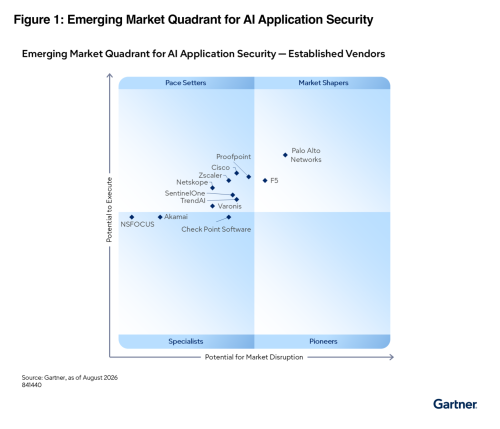
Palo Alto Networks Named a Market Shaper in 2026 September Gartner® Emerging Market Quadrant for AI Application Security — Established Vendors.

When we set out to solve AI security, we knew it was an audacious challenge to take on. Securing AI Coding, which I wrote about last week, is one example of how we are tackling this multidimensional problem. 

Today marks yet another major milestone in that journey. I am so proud to share that Palo Alto Networks has been recognized as a ‘Market Shaper’ in the September 2026 Gartner® Emerging Market Quadrant for AI Application Security – Established Vendors. 


To us, this recognition reflects our core commitment to help organizations address all emerging AI use cases: securing AI coding, enterprise AI applications and governing autonomous agents, through a unified approach. 

What Modern Enterprise AI Security Requires

Artificial intelligence is fundamentally changing how enterprise software is built, how digital experiences are delivered, and how work gets done.

In the report, Gartner defines ‘Market Shapers' as those that are building comprehensive platforms by acquiring innovative companies and introducing centralized management tools for AI workflows. They are also expanding traditional security capabilities into broader agent-based controls, using advanced access control and runtime monitoring to secure agentic actions.

We believe our position as a ‘Market Shaper’ reflects four core capabilities we provide through our AI Security Platform, Prisma AIRS for effective enterprise AI security today:

  • Secure AI Coding: Gain visibility into coding agents, extensions, skills, models and MCP servers, assess the artifacts they rely on, and establish controls over data, identity and agent actions. 
  • Secure Enterprise AI Applications: Reduce risk across the AI application lifecycle, from models and components to testing and runtime interactions. This helps organizations build and deploy AI faster while safeguarding sensitive data and business-critical applications.
  • Govern Agent Actions: Maintain control and accountability as autonomous agents interact with enterprise data, tools and systems. Clear identities and permissions help reduce unauthorized activity and contain unintended behavior.
  • Accelerate AI Adoption Without Losing Control: Scale AI with consistent governance across coding, enterprise applications and autonomous agents. Maintain centralized control over access, usage and spend, through an AI Gateway. 

Defending the AI Frontier Requires a Platform

AI coding agents, enterprise AI applications and autonomous agents may look like separate security problems. In practice, they increasingly depend on the same models, data, identities, tools and infrastructure. Attempting to secure each one with its own isolated point product only creates fragmentation at the exact point when enterprises need greater visibility and control

This is why we built Prisma AIRS, as the comprehensive AI security platform. It gives security teams a unified approach to discover AI, assess risk, protect runtime interactions, control agent identity and access, and govern connections to enterprise data and systems.

The goal is not to slow AI adoption. It is to give developers and business teams the freedom to use AI while giving security teams the visibility and control they need.

Read the research report to learn more: Gartner® Emerging Market Quadrant for AI Application Security – Established Vendors, September 2026.

Ready to take the next step: Schedule an AI Security Demo / Briefing 


Disclaimer

Source: Gartner, Emerging Market Quadrant for AI Application Security – Established Vendors, September 2026.

Gartner is a trademark of Gartner, Inc., and/or its affiliates.

Gartner does not endorse any company, vendor, product or service depicted in its publications, and does not advise technology users to select only those vendors with the highest ratings or other designation. Gartner publications consist of the opinions of Gartner’s business and technology insights organization and should not be construed as statements of fact. Gartner disclaims all warranties, expressed or implied, with respect to this publication, including any warranties of merchantability or fitness for a particular purpose.

The post Defining the Standard for AI Security appeared first on Palo Alto Networks Blog.
  •  

FedRAMP Moderate Authorization for Palo Alto Networks Quantum-Safe Security

Palo Alto Networks has achieved FedRAMP Moderate authorization for Quantum-Safe Security (QSS), a turnkey Automated Cryptography Discovery and Inventory (ACDI) solution. With this certification, federal agencies can deploy QSS immediately.  The authorization demonstrates that QSS meets stringent security requirements, enabling federal agencies to adopt cutting-edge technologies while safeguarding sensitive, unclassified data. QSS removes operational roadblocks by making cryptographic discovery, risk assessment and transition both continuous and actionable.

Palo Alto Networks Quantum-Safe Security dashboard

Accelerating Mandates for PQC Transition

Executive Order 14412 and OMB Memorandum M-26-15 have moved federal transition milestones well ahead of the original 2035 target. Federal agencies must now transition High Value Assets (HVA) and  high  impact  systems to post-quantum cryptography (PQC) for:

  • Key establishment: By December 31, 2030
  • Digital signatures: By December 31, 2031

Meeting these compressed timelines demands upgrading from static, manual inventory methods to continuous, automated cryptographic visibility. Traditional, annual spreadsheet audits are point-in-time snapshots that become obsolete the moment they are completed.

As the largest standalone cybersecurity provider, Palo Alto Networks leverages existing federal firewalls as distributed sensors within an integrated platform turns the network into an automated, real-time cryptographic control point. Agencies using the QSS solution will achieve high-fidelity visibility into their network-wide cryptographic posture and active algorithms immediately on Day 0, without introducing operational friction or deployment delays. By utilizing the native cryptographic discovery capabilities built into already deployed firewalls, agencies can activate their PQC migration plans without demanding a net-new, capital-intensive hardware acquisition. This makes Palo Alto Networks solution a fiscally responsible and rapid path to PQC migration execution. 

Technical Architecture: Discovery to Remediation

QSS operationalizes the full PQC migration lifecycle through a unified control plane built on three technical pillars:

  • Agentless Discovery: QSS transforms the existing Palo Alto Networks security fabric into a distributed sensor network, providing comprehensive  visibility into encrypted sessions, certificates, and tunnels. This approach identifies hidden cryptographic debt across diverse vendor ecosystems and IoT without forcing new agent rollouts or secondary hardware deployments.
  • Prioritized Risk Intelligence: The platform fuses automated cryptographic discovery with rich enterprise context, correlating the mathematical strength of ciphers and certificates against asset criticality and data sensitivity categorization. This multidimensional risk engine enables teams to move beyond raw technical alerts and focus resources on protecting long-lived, high-value data against Harvest Now, Decrypt Later (HNDL) attacks and cryptographic debt.
  • Active Inline Remediation: QSS moves beyond reporting to active risk reduction. For most legacy systems that cannot natively support PQC, Cipher Translation allows the firewall to translate weak classical encryption into quantum-safe standards at the network edge, shielding unpatchable assets without requiring application code changes.
Quantum-Safe Security Asset Inventory with Cryptography Risk featuring Harvest Now, Decrypt Later (HNDL) Prioritization

Immediate Implementation

The Executive Order on Securing the Nation Against Advanced Cryptographic Attacks confirms that PQC is a national security imperative, not just a compliance requirement. For agencies, that means treating the shift to post-quantum cryptography as a strategic initiative that protects critical data today and safeguards it against tomorrow's threats. Our FedRAMP Moderate authorization reinforces that Palo Alto Networks is a proven partner in that effort, helping agencies build a cohesive posture that is "Secured in America" and made for the needs of the U.S. government. We're committed to helping the public sector modernize with confidence.

Get Ahead of the Mandate

Stop guessing which digital locks to change first. Quantum-Safe Security transforms your existing infrastructure into a high-fidelity sensor network to neutralize "harvest now, decrypt later" (HNDL) risks without new architectural complexity. Explore our FedRAMP Moderate authorized platform to see how you can achieve zero-downtime cryptographic resilience and bridge the gap for unpatchable legacy systems via in-line enforcement.

The post FedRAMP Moderate Authorization for Palo Alto Networks Quantum-Safe Security appeared first on Palo Alto Networks Blog.
  •  

Palo Alto Networks Named a Leader in the 2026 Gartner® Magic Quadrant™ for Hybrid Mesh Firewall

Securing Every Environment at the Speed of Frontier AI

Recognized as a Leader for the second consecutive time and positioned furthest for Completeness of Vision. Palo Alto Networks is advancing hybrid mesh firewall with one integrated platform for preemptive protection, agentic operations, AI runtime security and quantum-safe security across the enterprise.


We are proud to share that Palo Alto Networks has been named a Leader in the 2026 Gartner® Magic Quadrant™ for Hybrid Mesh Firewall for the second consecutive time, and positioned furthest for Completeness of Vision.

We believe this recognition reflects the strength of our approach to network security: one natively integrated platform that delivers consistent protection, policy and operations across every environment.

It also comes at a pivotal moment for cybersecurity. Frontier AI is collapsing the time between vulnerability discovery and exploitation. AI applications and agents are creating new infrastructure and data risks. At the same time, the cryptographic reset is forcing enterprises to rethink how they establish and maintain digital trust.

Fragmented firewall architectures and manual security operations were never designed for this speed, scale or complexity, and can no longer keep pace.

One Platform Across Every Environment

Hybrid environments have traditionally required organizations to deploy and manage different security products across data centers, clouds, branches, campuses and remote users. The result is often fragmented policy, inconsistent protection and operational complexity.

Palo Alto Networks transforms hybrid mesh firewall from a collection of enforcement products into a unified, intelligent security platform, powered by Precision AI.

The  Strata Network Security Platform is our Hybrid Mesh Firewall, spanning hardware  (PA-Series), virtual (VM-Series), cloud-native (Cloud NGFW) and firewall-as-a-service (SASE) deployments with consistent policy, shared intelligence and threat prevention across environments. 

Strata Cloud Manager provides unified policy, visibility and AI-driven operations across these enforcement points. Beyond traditional firewall environments, the platform extends protection to the browser with Prisma Browser and to AI applications, models and agents with Prisma AIRS®.

Cloud-delivered security services, including Advanced Threat Prevention, Advanced WildFire, Advanced URL Filtering, and Advanced DNS Security deliver consistent, inline prevention across environments. Intelligence discovered in one part of the platform can strengthen protection everywhere, turning every enforcement point into a real-time prevention layer.

If you’re new to the concept of HMF, explore our primer on What Is a Hybrid Mesh Firewall and Why It Matters.

The Hybrid Mesh Firewall Market Is Evolving

Gartner’s 2026 Hybrid Mesh Firewall research describes a market moving toward more automated, intelligence-driven security platforms as organizations manage increasingly complex hybrid environments. 

The report identifies several trends shaping the evolution of hybrid mesh firewall, including the growing adoption of cloud-based management, AI-driven threat prevention, automation through LLM-based assistants, post-quantum cryptography and security capabilities for AI applications and workloads.

As these requirements evolve, organizations need a network security architecture that can deliver consistent protection and operations across hybrid environments while preparing for emerging AI and quantum-era risks.

Advancing Hybrid Mesh Firewall for the Frontier AI Era

Against this backdrop, Palo Alto Networks continues to advance the Strata Network Security Platform for the Frontier AI era.

Preempt attacks earlier: Advanced Threat Prevention Plus uses Frontier AI-powered vulnerability discovery and Frontier Virtual Patching to deliver preemptive protections, including before vulnerabilities are publicly disclosed or official patches are available.

Disrupt attacker infrastructure: Advanced IP Defense continuously identifies, validates and blocks attacker-controlled infrastructure in real time - even when adversaries use direct-to-IP communications, proprietary encryption, residential proxies or trusted cloud infrastructure to evade traditional security signals.

Operate at machine speed: Six purpose-built Network Security Agents in Strata Cloud Manager assist teams with deployment, troubleshooting, configuration management, posture optimization, threat investigation and data protection, with built-in guardrails and human oversight.

Secure AI and modernize digital trust: Prisma AIRS helps secure AI applications, models and agents across the AI lifecycle, while Quantum-Safe Security and Next-Generation Trust Security help organizations identify cryptographic risk and modernize digital trust. Read more about Palo Alto Networks’ approach to securing AI.

Together, these capabilities help organizations reduce exposure before attacks succeed, operate at machine speed, secure AI infrastructure and modernize digital trust for the post-quantum era.

Proven Security, Performance and Scale

A unified platform must deliver not only breadth, but also effective protection and reliable performance under demanding conditions.

Independent SecureIQLab testing demonstrated 99% security efficacy, with Palo Alto Networks scoring approximately 20 points higher than the next-best tested vendor. Miercom validation demonstrated up to 2–8 times higher AI traffic throughput, along with strong TLS inspection and stable performance under sustained load.

More than 75,000 organizations around the world rely on Palo Alto Networks to consolidate security, improve visibility and reduce risk across their hybrid environments.

This global scale provides intelligence that continuously strengthens the platform. Every attempted attack expands what the platform can learn, and every new detection can become protection for all customers.

Defining the Future of Hybrid Mesh Firewall

We believe being named a Leader for the second consecutive time reinforces our conviction in an integrated platform that delivers consistent prevention and operations everywhere an enterprise operates.

But we believe industry leadership is also about preparing customers for what comes next.

As Frontier AI accelerates attacks, autonomous systems reshape security operations and quantum risk changes the foundations of digital trust, enterprises need more than a collection of firewalls. They need an intelligent security platform that can transform shared intelligence into prevention across every environment.

Palo Alto Networks is building that future, helping organizations reduce exposure before attacks succeed, operate at machine speed, secure AI infrastructure and modernize digital trust for the post-quantum era.

Download the 2026 Gartner® Magic Quadrant™ for Hybrid Mesh Firewall to learn more about why Palo Alto Networks was named a Leader.


Gartner Disclaimer

Gartner, Magic Quadrant for Hybrid Mesh Firewall, 7 September 2026

This graphic was published by Gartner, Inc. as part of a larger research document and should be evaluated in the context of the entire document. The Garner document is available upon request from Palo Alto Networks.

Gartner does not endorse any company, vendor, product or service depicted in its publications, and does not advise technology users to select only those vendors with the highest ratings or other designation. Gartner publications consist of the opinions of Gartner’s business and technology insights organization and should not be construed as statements of fact. Gartner disclaims all warranties, expressed or implied, with respect to this publication, including any warranties of merchantability or fitness for a particular purpose.

Gartner and Magic Quadrant are a trademark of Gartner, Inc., and/or its affiliates.

The post Palo Alto Networks Named a Leader in the 2026 Gartner® Magic Quadrant™ for Hybrid Mesh Firewall appeared first on Palo Alto Networks Blog.
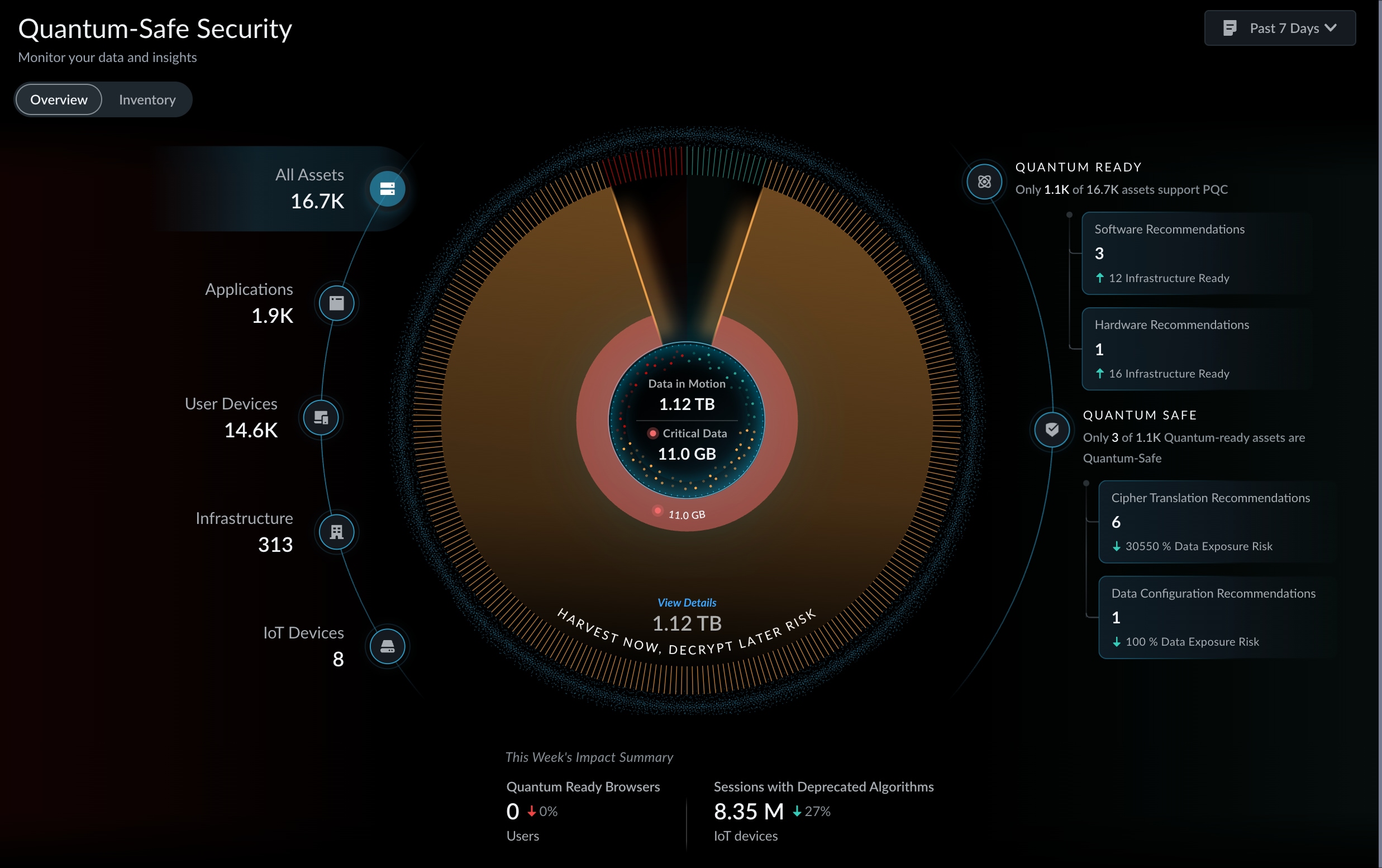
  •  

Unit 42 Defends Organizations Against Next-Gen Frontier AI Risks with Anthropic’s Mythos 5

Frontier AI has compressed attack timelines from weeks to minutes. 

For defenders to gain the upper hand, they need to fight back at machine speed. That’s why Palo Alto Networks Unit 42 launched Frontier AI Defense, our comprehensive service that pairs advanced frontier AI models with leading threat intelligence to uncover hidden risks, validate real attack paths, and accelerate remediation before adversaries strike. 

Today, in a major milestone for organizations to defend themselves against AI-powered attacks, Unit 42 is expanding its Frontier AI Exposure Analysis capabilities with Anthropic’s Claude Mythos 5, giving organizations access to its advanced cyber capabilities.

Unlocking High-Fidelity Security with the Right Models, Harness and Expertise

While incredibly powerful, achieving high-fidelity results with frontier AI requires three things: the right models, an advanced harness, and the expertise to run it. With Unit 42 Frontier AI Exposure Analysis, guided and reviewed by Unit 42 experts, Claude Mythos 5 goes beyond identifying exposures. It tests whether those exposures can actually be exploited, connects weaknesses into attack paths, and helps prioritize the most urgently needed fixes. That answers the questions conventional scanners alone cannot: Is this exploitable? What can an attacker reach from here? And what should we fix first?

Further, our research shows models have different strengths. Unit 42’s multi-model approach applies the model best suited for the task, improving coverage and results while allowing us to continuously incorporate the strongest new capabilities as models advance. 

Human expertise remains at the center. Unit 42 combines these models with our offensive security experts, global Palo Alto Networks telemetry, and Unit 42 Threat Intelligence to turn model output into validated attack paths, prioritized remediation, and clear defensive action.

How It Works

Our Frontier AI Defense service uses the most advanced AI models to discover exposures, test whether they are exploitable, validate attack paths and help customers prioritize what to fix first, including: 

  • Leading Cyber Models: Advanced AI applied to discovery, testing, and validation.
  • Multi-Model Harness: Dynamic routing for stronger results, wider coverage, and managed costs.
  • Exposure Discovery: Identification of vulnerabilities, misconfigurations, exposed credentials, and unmanaged attack surfaces across apps and networks.
  • Advanced Adversary Simulation: Live exploitability testing and end-to-end attack path validation.
  • Custom Remediation Plans: Prioritized fixes delivered directly into existing IT, development, and security workflows.

Security teams do not need more findings. They need to know which weaknesses lead to a viable attack path. Attackers do not think about applications, identity, cloud, and infrastructure in isolation. They look for ways to move across them to reach their objective.

By putting frontier models to work with Unit 42 experts, we can identify and validate those attack paths before attackers do, and help organizations close them first.

Visit Palo Alto Networks Frontier AI Defense to learn more.

The post Unit 42 Defends Organizations Against Next-Gen Frontier AI Risks with Anthropic’s Mythos 5 appeared first on Palo Alto Networks Blog.
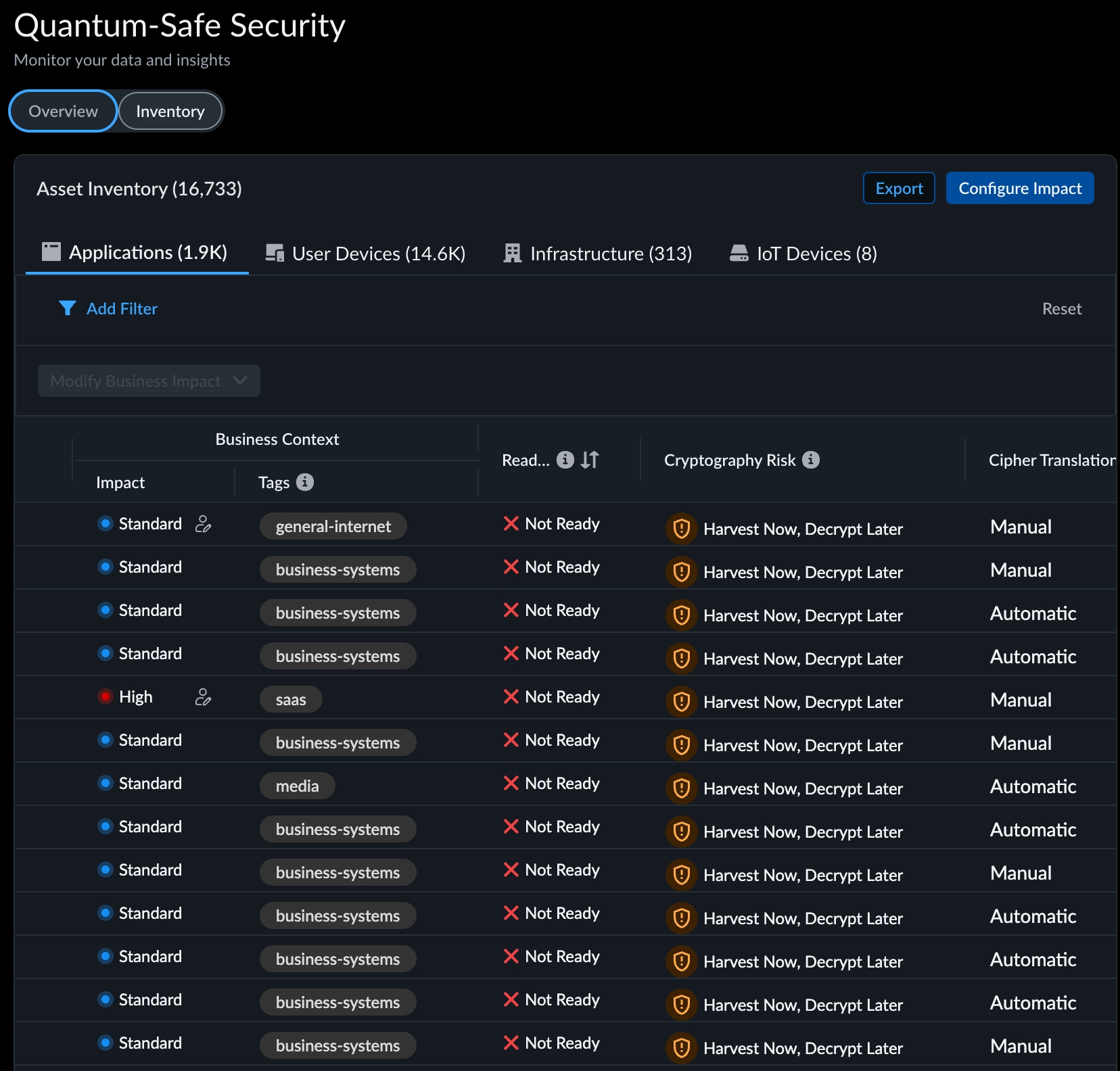
  •  

Prisma AIRS - Unified Data Protection for Claude

As AI adoption shifts from experimental tools to the business core, enterprises are deploying AI agents and assistants across every department. Developers are accelerating software delivery with Claude Code and business functions are collaborating in Claude.ai, Claude Cowork, and Claude Design, using Anthropic's Claude to fundamentally rewire how they operate and drive complex, autonomous workflows across their most critical tasks.

Broad AI adoption has forced enterprise security into a difficult paradox: secure the business without stalling innovation. Today, security teams must answer three critical questions: How do we prevent sensitive data from leaking into AI models? How do we intercept runtime attacks, like prompt injection, before they execute? And how do we enforce these guardrails consistently across every AI interaction, in real-time?

We are thrilled to announce that Palo Alto Networks Prisma AIRS API now directly integrates with Claude Enterprise via inference hooks.

Key Takeaways:

  • Synchronous Governance at the Speed of AI: Enforce critical runtime policy guardrails instantly before model inference occurs. By evaluating every Claude interaction in real-time, security teams can confidently enable high-speed AI innovation without introducing unacceptable risk or operational bottlenecks.
  • Extending Proven DLP to AI Workflows: Safeguard PII, intellectual property, and proprietary code across all Claude environments (Claude Code, Claude.ai, Claude Cowork) seamlessly. By directly leveraging your organization’s existing enterprise DLP policies, you get consistent, unified data protection without the friction of managing disparate rule sets.
  • Neutralizing AI-Specific Threats Proactively: Deploy enterprise AI with confidence by intercepting malicious activity before it executes. Proactively block sophisticated runtime threats, including prompt injections, jailbreaks, and toxic inputs, enabling your AI workflows to remain secure and your business operations uninterrupted.

How It Works

Setting up zero-trust governance for your Claude Enterprise environment takes just a few clicks:

  • Configure Claude Enterprise: In your Claude Enterprise organization settings, navigate to inference hooks, set the hook endpoint URL to your designated Prisma AIRS webhook URL, and include your custom Prisma AIRS API key in the custom headers (x-pan-token).
  • Activate Cryptographic Verification in Prisma AIRS: Claude generates a unique, one-time signing secret. You simply drop this signing secret into the Prisma AIRS UI.

Prisma AIRS securely stores the signing secret in an encrypted edge Key-Value Map (KVM) to cryptographically verify the authenticity of every incoming request before processing.

Unified Governance Across All Claude Surfaces

Before Claude reads a prompt, Claude POSTs the payload to Prisma AIRS, which evaluates the input against the configured security profile and returns a synchronous allow or deny verdict back to Claude.

Removing the Data Inspection Blind Spot

This Prisma AIRS integration natively leverages the Palo Alto Networks Enterprise DLP engine your organization already runs. Your current policies, custom definitions of "confidential," and compliance dashboards now instantly govern Claude. No redundant rule creation, and no new management overhead. Every prompt is classified in real-time, before anything reaches the model. Data Policy updates reach Claude the moment they reach everything else, and Claude events land in the same dashboards and audit reporting as every other channel. AI stops being the exception to your data protection strategy and becomes just another channel that is covered.

In practice, this helps prevent:

  • Accidental exposure of PII and regulated data: a Social Security number, card number, or patient record pasted into a prompt is detected  on the spot by advanced RegEx patterns and ML classifiers,  with Exact Data Matching (EDM) recognizing your actual customer records.   When policy requires, Prisma AIRS enforces a deny policy to help keep Claude usage stays aligned with GDPR, HIPAA, and PCI-DSS requirements.
  • Misuse of credentials in code: Developers working in Claude Code can't inadvertently submit hardcoded API keys, private tokens, or environment credentials into prompt context.
  • Disclosure of confidential business matters. Document classifiers flag prompts touching M&A, legal, or HR material — even when they contain no identifier a pattern could match.

AI Safety & Runtime Threat Protection

Simultaneously, Prisma AIRS inspects payloads for operational risks specific to large language models:

  • Prompt Injection & Jailbreak Attacks: Intercepts malicious attempts to manipulate model context or bypass system instructions.
  • Malicious Code & Malicious URLs: Prevents execution or processing of untrusted scripts and risky links embedded within prompts.
  • Toxic Content & Topic Guardrails: Enforces compliance with corporate policies and custom business topics.

If a prompt violates your security policy, Prisma AIRS issues a deny verdict. Claude immediately blocks the prompt, optionally presenting a user-facing explanation while returning a unique audit correlation code to your security telemetry dashboards.

Deploy Claude Without the Risk

The Prisma AIRS integration with Claude transforms security from a deployment bottleneck into a business enabler. You no longer have to choose between the operational control of Palo Alto Networks and the cognitive velocity of Claude.

Choose Your Path Forward:


Forward-Looking Statements

This blog contains forward-looking statements that involve risks, uncertainties and assumptions, including, without limitation, statements regarding the benefits, impact, or performance or potential benefits, impact or performance of our products and technologies or future products and technologies. These forward-looking statements are not guarantees of future performance, and there are a significant number of factors that could cause actual results to differ materially from statements made in this blog. We identify certain important risks and uncertainties that could affect our results and performance in our most recent Annual Report on Form 10-K, our most recent Quarterly Report on Form 10-Q, and our other filings with the U.S. Securities and Exchange Commission from time-to-time, each of which are available on our website at investors.paloaltonetworks.com and on the SEC's website at www.sec.gov.  All forward-looking statements in this blog are based on information available to us as of the date hereof, and we do not assume any obligation to update the forward-looking statements provided to reflect events that occur or circumstances that exist after the date on which they were made.

The post Prisma AIRS - Unified Data Protection for Claude appeared first on Palo Alto Networks Blog.
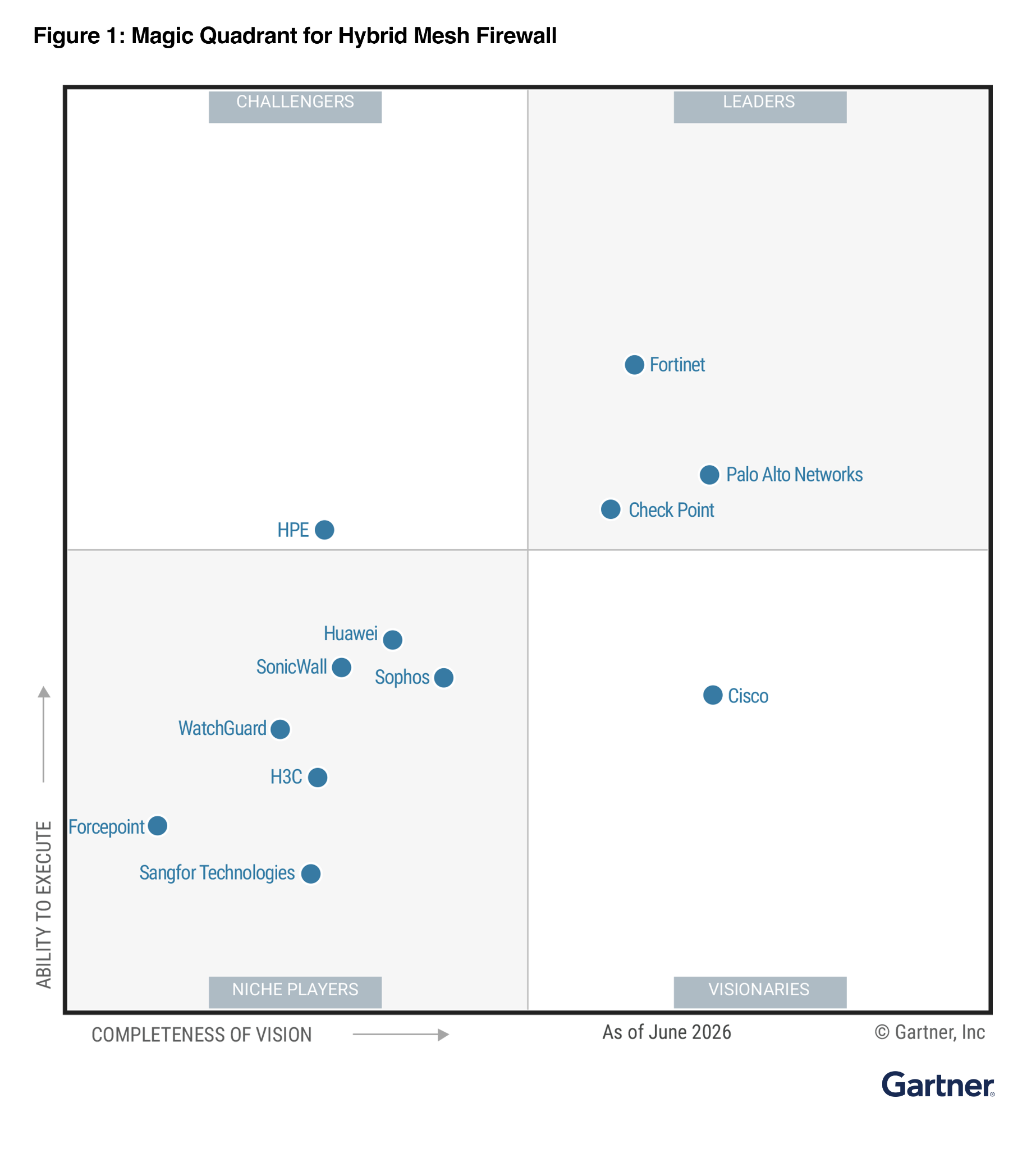
  •  

Announcing the General Availability of Prisma AIRS AI Gateway

Every modern enterprise is moving from an organization run by software to one orchestrated by AI, creating a tension between velocity and control. To resolve this tension, organizations require a unified architecture. Today, we are announcing the general availability of the Prisma AIRS AI Gateway, the AI control plane for the enterprise. 

Driven by the absolute conviction that an AI Gateway is foundational to the modern AI infrastructure stack, we are bringing AI innovations from the Portkey acquisition to Prisma AIRS just six weeks after closing. You can now scale AI at machine speed without compromising on enterprise-grade security and control.

Your AI Footprint is Outpacing Controls

Our next-generation firewall telemetry reveals that MCP activity climbed from 11% late last year to 41.4% by mid-2026. Monthly AI transaction volume grew twelve-fold over the same six months; some individual sessions moved hundreds of megabytes of enterprise data outbound. The AI footprint you can govern today is the smallest it will ever be.

Some of the most rapid AI adoption is happening with – coding assistants, enterprise agents and copilots.

  • Coding agents access code repositories, file systems, configurations, and credentials. When this context, including source code and secrets, is sent to a frontier model, it risks exposing sensitive data, and a runaway loop could burn a fortune in tokens overnight.
  • Enterprise agents run with broad access and standing privileges sharing context with each other. A single agent stretched beyond its scope can massively increase the risk of data breach, impact business reputation and customer trust.
  • Copilots now sit inside the SaaS and productivity tools employees already use. Copilots with broad access can surface data an employee was never meant to see.

As this enterprise data leaves when an AI request goes out, it creates a security and governance challenge at an unprecedented scale and speed.

What breaks when every team adopts AI 

AI adoption rapidly outpaces the security and governance infrastructure meant to secure it:

  • Shadow AI (Cost and usage are both hidden): You can't see the AI your teams already use or what it costs. 
  • Data Exposure (Sensitive data leaves without a trace): AI interactions can expose sensitive data, bypass policy and trigger unsafe outputs.
  • Agents Overstep (Actions run without accountability): Agents act across systems without clear identity, permission, or accountability. Keys get shared and agents run with broad, standing privileges, so no one can say which identity authorized a specific action or reverse it when an agent takes a wrong turn at machine speed.

Faced with this, most leaders either block traffic entirely or stay permissive and promise to govern later. Both approaches fail because they skip the critical step: seeing what agents do at runtime and controlling their actions while they happen.

Accelerate AI Adoption with Control

To scale AI adoption safely, you need a single control plane sitting between every AI interaction and the backend models. Prisma AIRS AI Gateway brings AI governance, identity and runtime controls together in one place. With the AI Gateway, you can:

  • Discover AI usage: Know exactly which apps, models, users, teams and agents are active, what they are accessing, and what they cost in a single unified view.
  • Govern AI interactions: Enforce central rules for model access, tool use and budgets while inspecting prompts and responses inline to prevent data leaks.
  • Secure every agent: Verify agent identities and enforce just-in-time, least-privilege access so autonomous systems only touch what they need, when they need it.

How the AI Gateway works 

Prisma AIRS AI Gateway sits inline between every AI interaction, model provider, and agentic interaction (Agent/AI App to LLMs, MCP Tool Calls, and A2A). It acts as a unified LLM, MCP, and A2A Gateway with a single enforcement point for all operational and security controls. Your teams keep using their existing coding assistants, enterprise agents, and copilots, while enforcement moves to the infrastructure layer where the platform team can own it.

Capabilities delivered through this unified control plane are:

Observability

Every request maps to a single unified view: tracking usage, users, projects, token counts, latency and cost so you can retire shadow AI infrastructure immediately.

Governance

Centrally define approved models, tools, and access without touching developer configurations. To drive FinOps and usage management, track every request's cost, tokens, and latency by team or project. Answer cost questions instantly, shut down unsanctioned AI usage, and proactively enforce budgets and rate limits before access is granted.

Coding Assistant Security

Protect credentials, proprietary code and development systems from risky AI actions. The gateway replaces raw provider keys with scoped credentials per user and team.

Operational Controls

Apply data protection, usage limits and policy checks as AI interactions happen. Traffic distributes via a Universal API across providers ensuring quotas are enforced and outages never stall your pipeline.

Agent Identity Security

Establish trusted identities by binding a verifiable, ephemeral identity to agents at execution. The AI Gateway acts as an enforcement point to enable only authenticated agents to make approved calls.

Runtime Security 

Powered by Prisma AIRS AI Runtime Security, the gateway inspects every prompt and response inline, stopping source code, secrets and customer data from leaving the network while neutralizing prompt injection attempts aligned with the OWASP LLM Top 10 and OWASP Top 10 for Agentic Applications.

Watch Anand Oswal break down why an AI gateway is foundational to this architecture.

the ai control plane of every enterprise

The AI Control Plane for the Enterprise

Prisma AIRS AI Gateway brings AI governance, identity and runtime controls together in one place. Point products filter text strings or route a single API call and they buckle under real enterprise volume.
Most products fail at scale. Prisma AIRS AI Gateway is built on an architecture tested in the most demanding enterprises for their ever evolving AI workloads: 

  • 68 Trillion+ tokens processed in the last month alone.
  • Sub-millisecond routing latency and inline inspection secures AI interactions without degrading user experience.
  • 99.999% availability helps ensure your AI operational pipeline does not experience a single point of failure.

Learn about Prisma AIRS AI Gateway and register for our webinar to see the AI Gateway in action. 

Your developers have already adopted their agents. The agentic enterprise is a reality. As the recently named "company to beat" in AI Security Platforms by Gartner, Palo Alto Networks is uniquely positioned to help you. Let’s build it securely, together.

The post Announcing the General Availability of Prisma AIRS AI Gateway appeared first on Palo Alto Networks Blog.

  •  

What It Takes to Secure Claude Cowork Across the AI Enterprise

You've watched the demos. Whether it's Claude Cowork, ChatGPT Enterprise, GitHub Copilot, Cursor, or internally developed agents, AI systems are no longer answering questions. They are connecting to enterprise data, invoking tools, making decisions, and executing multi-step workflows across applications without human intervention. The capability is real, and organizations are rapidly moving from experimentation to deployment.

Teams are no longer asking if they should use this, they have accepted agentic tools as the reality. But the board and the infosec team are asking a different question: can this capability be secured and controlled at enterprise scale? Can security teams prevent sensitive company data from being exchanged without oversight?

Anthropic built meaningful access controls into Cowork — role-based permissions, group spend limits, usage analytics and connector restrictions — so the answer is a qualified yes. Those controls handle who can use the tool and what they can connect to, but they don't answer whether a specific action inside a given session is safe. That gap is the one standing between a successful pilot and a successful org-wide rollout.

The Gap That a Demo Doesn’t Expose

The organization’s admin assigns roles, sets spend ceilings per user group and restricts which connectors have access to write to your database. Anthropic's OpenTelemetry support even lets your team pipe session events into your SIEM. These controls cover real ground, but they operate at the permissions level — answering whether a person is authorized to use the tool rather than whether what's happening inside a session is safe.

Consider what that gap looks like in practice. Let’s consider two scenarios. Your finance analyst has full Cowork access and uploads a quarterly forecast containing unannounced acquisition figures. The access controls confirm she is authorized to use the tool, but nothing evaluates whether that information should be exposed to a model. That's an AI data loss prevention risk, and access controls are blind to it.

The risk becomes greater when agents move beyond information retrieval and begin taking actions. Let’s say a scheduled Cowork automation is set up to pull weekly competitor pricing from the web. A target site embeds hidden instructions in its page content. The agent, running unattended, reads them as legitimate commands and begins modifying local files and triggering actions your team never authorized. By the time anyone notices, the agent has already acted.

The first scenario exposes a governance problem because your security team has no visibility into what data is flowing through AI tools across the organization. The second is a runtime security problem as there is nothing evaluating whether an action in progress is safe, regardless of whether the user was authorized to start it. Neither gap is addressed with the predefined controls in Cowork; both need to be solved before you can say yes to Cowork adoption in the whole organization.

Why Traditional Controls Break Down

Traditional enterprise software behaves predictably. Access controls work because administrators can reasonably anticipate what an authorized user or application will do once access is granted. 

AI systems operate differently. Agents combine models, tools, data sources, and reasoning paths dynamically at runtime. An authorized user may start with a simple request, but the resulting chain of actions may evolve in ways that were never explicitly programmed or anticipated. The challenge is no longer controlling who can access a system. The challenge is securing and governing what happens after access has been granted.

The Missing Layer is Runtime Security 

Anthropic's access controls establish who can use Cowork and what they can connect to. But as the examples above show, they don't protect against what happens inside a session: a finance analyst uploading sensitive acquisition data to the model, or a scheduled automation being hijacked by a malicious instruction embedded in a webpage it was directed to visit. What organizations working with Cowork need is a layer that enforces data and security controls and gives complete visibility at runtime across all Cowork agents in the enterprise every interaction boundary.

An AI runtime security layer that sits between your teams and the model providers such as  Anthropic, AWS Bedrock, Google Vertex or any combination, and evaluates risk in every interaction. It inspects every request, every tool call and detects sensitive data like client names, financial projections, internal pricing and contract terms.  It enforces agent identity controls, so every automated action is traceable to a specific workflow and owner. 

Your CISO gets the audit trail and your Infosec team gets the evidence.

The AI Enterprise Needs a Control Plane

The CIO needs the observability for all Cowork activity and costs. An AI control plane allows the CIO to set spending limits per team and use case across every AI tool from a single console. Procurement asks for a quarterly forecast across all AI spend, and you pull it from one place instead of aggregating reports from four different vendor dashboards. If you need to move providers for cost or compliance, the gateway reroutes traffic without disrupting your teams or breaking your workflows.

Claude Cowork may be where organizations begin scaling their AI journey, but it won't be the only AI tool your teams use. Developers will use coding assistants,  business teams will leverage the AI built into SaaS applications and data science teams will deploy custom agents for their workflows. New models, new providers and new workflows will continue to appear.

The challenge isn't just governing one AI application; it’s governing AI activity across the entire AI enterprise.

Everyone looks to secure each tool individually: configure Cowork's controls, configure your coding assistant's controls, configure your internal agents separately. But this approach doesn't scale. This is the sole purpose of the control plane. It sits above individual tools, applications and models and enforces  security policies,  across every AI interaction. 

Prisma AIRS AI Gateway provides that centralised control plane. Organizations that deploy Cowork behind our gateway get runtime security, data protection, agent identity controls, and full visibility, applied consistently, without changing how teams use the tool. The same gateway secures every other AI tool in your environment on the same terms.

Cowork may be where the journey begins, the gateway is what allows it to scale and secure the AI Enterprise.

The post What It Takes to Secure Claude Cowork Across the AI Enterprise appeared first on Palo Alto Networks Blog.
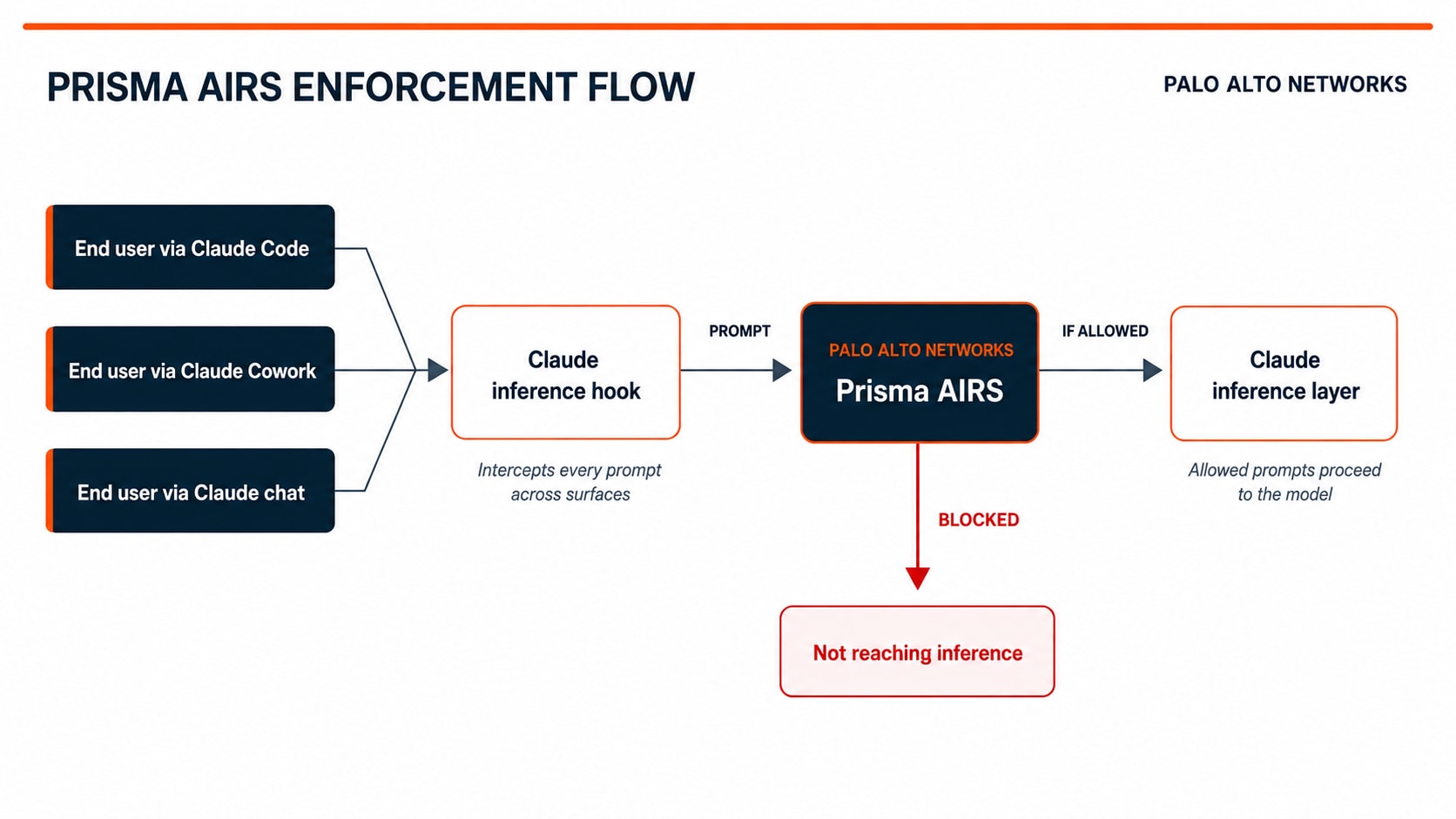
  •  

It Might Feel Like We’ve Been Here Before, But We Haven’t

As artificial intelligence (AI) adoption surges and organisations move from the ‘should we?’ phase to the ‘how do we?’ phase, it’s natural to evaluate the likelihood of positive returns on AI investments. That’s always been the case with the onset of each new technology paradigm: C-suite executives, guided by their boards and aided by technical and business teams, remain keenly focused on traditional metrics such as return on investment, shareholder equity, developing and extending competitive advantage, and ensuring superior customer relationships.

This time is different, however. I recently experienced that firsthand when I went to visit a major customer. My contact, a senior decision maker, gave me a pointed piece of advice about how to talk about AI with his boss, the CEO: “Please don’t say anything negative about AI.” The subtext was clear: The company was fully committed to AI and didn’t want any cognitive dissonance to dissuade them from their mission.

It's hard to imagine a CEO taking such an absolutist stance on previous technology waves, such as cloud, bring your own device, or the internet of things. CEOs, board members, and technical leaders would be pragmatic in evaluating the benefits of investments and put mileposts in place to gauge progress – and to determine if and how to proceed.

AI is certainly a different kind of paradigm, though. While no one is casting aside careful evaluation and monitoring of AI investments, the underlying assumption is that we’re stepping on the accelerator. We’re all enthused not only by its potential for transformation and innovation, but also by how this technology can be leveraged for remarkable societal good.

However, while the accelerating momentum toward AI and agentic systems is undeniable, it is vitally important to set aside the fervour around AI and take a sober look at how to deliver safe, secure, and tightly governed systems at enterprise scale. 

Many organisations are underestimating the challenges of AI governance, in large part because they think they’ve been here before. They already have many experiences of ensuring robust cybersecurity and strict governance for new technologies, as they’ve done for remote systems, cloud computing, the internet of things, and more. They already have a corporate commitment to doing governance correctly and a sound governance model. 

But this new era of AI and agentic systems is different. New challenges abound, and AI strategy, build-out, and governance must be in alignment from the start to ensure proper operational, ethical, and regulatory outcomes. 

Our intention with this Peer Insights guide is to raise what we believe are existential issues around governance for this powerful, complex, and unprecedented technology wave. Few technologies have merited the often overused phrase ‘inflection point’ more than AI. The speed of AI adoption is nothing short of breathtaking; however, today’s runaway embrace of AI is far stronger than our current ability to govern it. That’s because AI represents a fundamental shift in how organisations do their business, interact with customers, make vital decisions, and execute their plans. This isn’t just a technology play: It’s a strategy for success and survival for entire industries and our global economy. The stakes have never been higher.

CEOs care so passionately about AI because they see it changing nearly everything we’ve learned and believed to be true about organisational success and failure. CEOs are in their positions for one purpose: to grow the business. AI can do that by transforming their processes and sparking new ideas. When that customer representative forewarned me, I really wasn’t surprised to hear his CEO felt so strongly about AI: Research from BCG indicates that more than 94% of CEOs say they still plan to deploy AI irrespective of demonstrated business value, even if there is a lack of tangible ROI or financial benefits from the start. 

Which brings us to the central role of AI governance. As we all know, there are many fundamental elements to any governance strategy, starting with robust, scalable, and intelligent cybersecurity. Cybersecurity - the foundation of governance - also includes the twin imperatives of accountability (‘rogue AI’ being a real thing, after all) and regulatory compliance.

But good AI governance has to go even further. Operational integrity is key to good governance because so much sensitive and even proprietary data is poured into AI models and accessed through powerful agentic AI systems. Now more than ever, organisations have to be transparent with customers and trading partners about how their AI systems operate, what kind of data is accessed, and how it is protected. And that doesn’t just mean being upfront with customers by telling them when they are interacting with an AI agent. Let’s take a typical retail use case: Imagine you’re on a website looking at clothing, and the agent recommends specific styles of clothing in specific colours. True operational integrity would allow you to discover why and when the agent made those recommendations. Was it based on your prior purchasing history, or on your browsing patterns on a recent web session? AI and agentic governance take the guesswork out of the equation for those interacting with the system and help breed greater confidence and trust.

It's critically important for decision makers to view AI governance holistically, rather than through a series of narrow lenses. For instance, even though cybersecurity is the foundation of good AI governance, it’s a mistake to treat AI governance primarily as a cybersecurity problem. If asked about ownership of AI governance, CEOs cannot and should not reply, “Oh yeah, the CISO has that covered.”

AI governance is fundamentally an enterprise risk problem, which means everyone must be involved in creating, deploying, managing, evaluating, and adjusting AI governance guardrails on a real-time basis. Again, AI is a different kind of risk environment than any we’ve previously encountered. For the most part, organisations are simply not adequately prepared to apply the right level and right type of governance to AI and agentic systems. I’ve spent much of the past 15 years of my career building governance frameworks, and while it has never been easy, we have had the advantage of being able to control many of the variables – such as infrastructure and network access – impacting governance decisions. With AI and agentic, we no longer have that advantage.

To explore the critical and complex issues of AI governance, we’ve enlisted five leading voices to bring their real-world experience to the discussion. Together, our five authors help lay out the new rules of the road for governing AI and agentic systems at scale.

Just as my customer gave me a heads up about the realities of speaking with his boss about AI, I’d like to offer you a heads up about the realities of AI governance challenges before you read this Peer Insights guide. 

  1. Visibility is paramount for successful AI governance. As we learned during the growth of trends such as cloud, bring your own device, and remote work, our employees will push the envelope with a do-it-yourself mindset. These tech-savvy and resourceful users are already making rogue AI a reality, so organisations need more visibility than ever into where AI ‘science projects’ and sandboxes are operating without anyone’s knowledge.
  2. AI governance must reflect the stunning velocity of change in AI development and deployment. Not only does AI have its own never-imagined rate of change, but the technology is changing everything else faster – product development, supply chains, marketing programmes, and more. AI governance has to evolve just as rapidly. Governance in the AI world must be a living system, constantly evolving with new technology use cases.
  3. Trust boundaries are incredibly different and difficult to manage in AI governance. AI represents a new class of identity that simply didn’t exist before. That means AI doesn’t fit neatly into your existing identity management framework, making things like application whitelists and zero trust network access less effective.

Unfortunately, many CEOs, board members, and business executives simply don’t understand the profound importance and complexity of these issues. They may have been heartened by how they integrated generative AI into their technology frameworks and their business processes, but GenAI was pretty familiar territory for CIOs, CTOs, and CISOs. Agentic AI is different for several reasons, including its automation and self-learning capabilities. Don’t be lulled into a false sense of security: Agentic AI is not simply a refresh of GenAI.

As you get ready to dive into the following chapters, rethink how you define governance when applying it to AI systems and agentic AI. Most traditional governance models are imagined, constructed, and deployed as gates, preventing people from doing things or going places they shouldn’t. Instead, think of AI governance as a guardrail to guide and direct people to get the most out of AI without creating problems. With so much excitement and investment around AI, organisations – and their employees – want to get the most out of their AI and agentic systems. We all know people don’t want to hear “no, you can’t do that”, so an effective governance system should use guardrails to drive proper, responsible, and safe usage of the technology.

Finally, as complex as AI and agentic governance are and will continue to be, don’t overthink things in hopes of creating the perfect model – it doesn’t exist. My advice is to start now, even if the model and framework are imperfect, and then bring the business along with you.

We at Palo Alto Networks are excited to give you insights, ideas, and actions you can take away from the chapters of this guide. We encourage you to share what you learn with your colleagues, peers, and team members – and to take prudent steps to build an AI governance model that rewards innovation without allowing your organisation to drift into dangerous waters.


Click here to download the guide today. Visit Executive Edge, our C-level thought leadership platform, for more insights for EMEA CXOs.

Haider Pasha is VP & Chief Security Officer, EMEA, Palo Alto Networks

The post It Might Feel Like We’ve Been Here Before, But We Haven’t appeared first on Palo Alto Networks Blog.
  •  

A Defining Moment in Identity Security

Artificial intelligence (AI) is changing the enterprise faster than most security models were built to handle. In just a few years, it has become part of everyday enterprise work. And soon, AI agents will do much more than provide assistance. They will act autonomously across applications, workflows, data stores and infrastructure.

This shift is already changing the security conversation – as it should. When agents can act on behalf of users, systems and business processes, identity is no longer a supporting layer of cybersecurity. It becomes the control plane for deciding who or what can act, what they can access, how much privilege they should have and when that access should be removed. Fragmented tools weren’t built to support this level of real-time visibility and control. It requires a unified identity security platform.

Palo Alto Networks recent acquisition of CyberArk reflects our conviction that identity is a core platform pillar for securing the future of AI. Identity security is now a foundational layer across our portfolio, building on CyberArk's trusted privileged access management (PAM) heritage and extending it to address the complexity of hybrid, cloud-native, and AI-driven environments. It also advances Palo Alto Networks broader platformization strategy, driven by customer demand for integrated, AI-powered security solutions that reduce complexity and close gaps created by disparate point products.

For partners, the launch of Idira™, our next-generation identity security platform, represents a significant opportunity to help customers secure access, privilege and identity risk through a more unified platform approach. More than ever, our customers need knowledgeable, trusted advisers to help them rethink how identity connects to the rest of their security architecture across network security, cloud, security operations (SecOps) and the broader AI-enabled enterprise.

Identity Security is No Longer Human-Centered

Research for our 2026 Identity Security Landscape report found that 96% of organizations have human identities operating with access far beyond what is required for their roles. That finding is unsettling enough, but also consider how modern identity security must account for far more than human users and privileged administrators. It includes machine identities and AI agent identities, ranging from service accounts, workloads and APIs to secrets and certificates and to agents operating across multiple systems.

Our recent report on identity security also notes that there are now roughly 109 machine identities for every human identity. Each identity can carry privilege, create risk and expand the attack surface. That scale makes real-time discovery, governance and control of identities essential. Yet many organizations are still managing privilege in ways that weren’t built for the AI era. When identities can act across systems and attacks can move faster, standing privilege (i.e., always-on access rights granted to users or machines) becomes harder to defend.

The premise of Idira is that every identity within an enterprise is privileged. The platform helps enterprises move from the traditional operating model of human-centered identity architectures and static access tools to embrace one platform that secures every identity – human, machine and AI agent. Idira discovers identities, entitlements and access paths, dynamically applies privileges through just-in-time controls and continuously governs identity lifecycles.

These capabilities become even more crucial as customers work to reduce fragmentation across their security environments. They want better visibility, faster time to value, stronger controls and a simpler way to manage risk across the enterprise. They still need advisory, implementation and managed services expertise, but the conversation is no longer limited to firewalls, privileged access, cloud workloads or SOC operations in isolation. Customers want expert help in connecting these areas into a unified strategy that reflects how their environments actually operate, especially with AI in the mix.

The Identity Security Opportunity for Partners

My message to partners following our launch of Idira is simple but direct: Now is the time to seize this defining moment in identity security. The speed of business is accelerating, as is the speed of attacks. And we know many of our customers around the world are already trying to understand what AI means for their security architecture, operating model and risk posture.

Partners can help lead those conversations with customers. For specialized and regional partners, this might mean expanding the advisory conversation beyond a single domain of cybersecurity. For global systems integrators, it might involve creating a more scalable delivery model by reducing the cost and complexity of stitching together multiple vendor environments. We are also actively welcoming partners into the broader Palo Alto Networks ecosystem, creating new opportunities for identity-focused partners to expand their role across the full platformization strategy.

Across partner types, the identity security opportunity is both strategic and economic. By connecting identity security to the broader Palo Alto Networks platform strategy, partners can expand services offerings, deepen customer relationships and build a stronger model for helping customers reduce complexity, improve visibility, strengthen controls and get to value faster. 

But first, sales teams, technical teams, solution consultants and managed service teams need to understand how Idira fits into the Palo Alto Networks platformization strategy and where identity security connects to customer priorities. That means taking full advantage of the sales demos, AI role plays, technical enablement and other active learning resources in Palo Alto Networks newly evolved NextWave program.

I encourage you to move quickly to build your understanding of Idira’s role in securing human, machine and AI agent identities and the shift from standing privilege to dynamic access. Be prepared to talk with customers about identity security in the context of cloud, network, SASE and SOC transformation, as you can be assured questions will be coming. Also, think about the services and offerings you can build around this opportunity. Identity security assessments, privilege modernization, machine identity protection, AI agent identity readiness and broader platformization road maps can all help customers take practical steps toward strengthening security in the rapidly evolving AI era.

Our partners play a frontline role in driving Palo Alto Networks platformization strategy and enabling our shared success. To help your teams educate customers about AI-related identity risk and how Idira can help them secure every identity in the enterprise, human or not, explore the latest resources, enablement and partner tools available through the NextWave Partner Portal.

Key Takeaways

  • With the launch of Idira, identity security became a core pillar of Palo Alto Networks platformization strategy for the AI era.
  • Idira helps organizations secure every identity – human, machine and AI agent – with dynamic access, continuous governance and real-time control.
  • Partners have a timely opportunity to help customers reduce complexity, improve visibility and connect identity security to broader cloud, network, SASE and SecOps priorities.

The post A Defining Moment in Identity Security appeared first on Palo Alto Networks Blog.
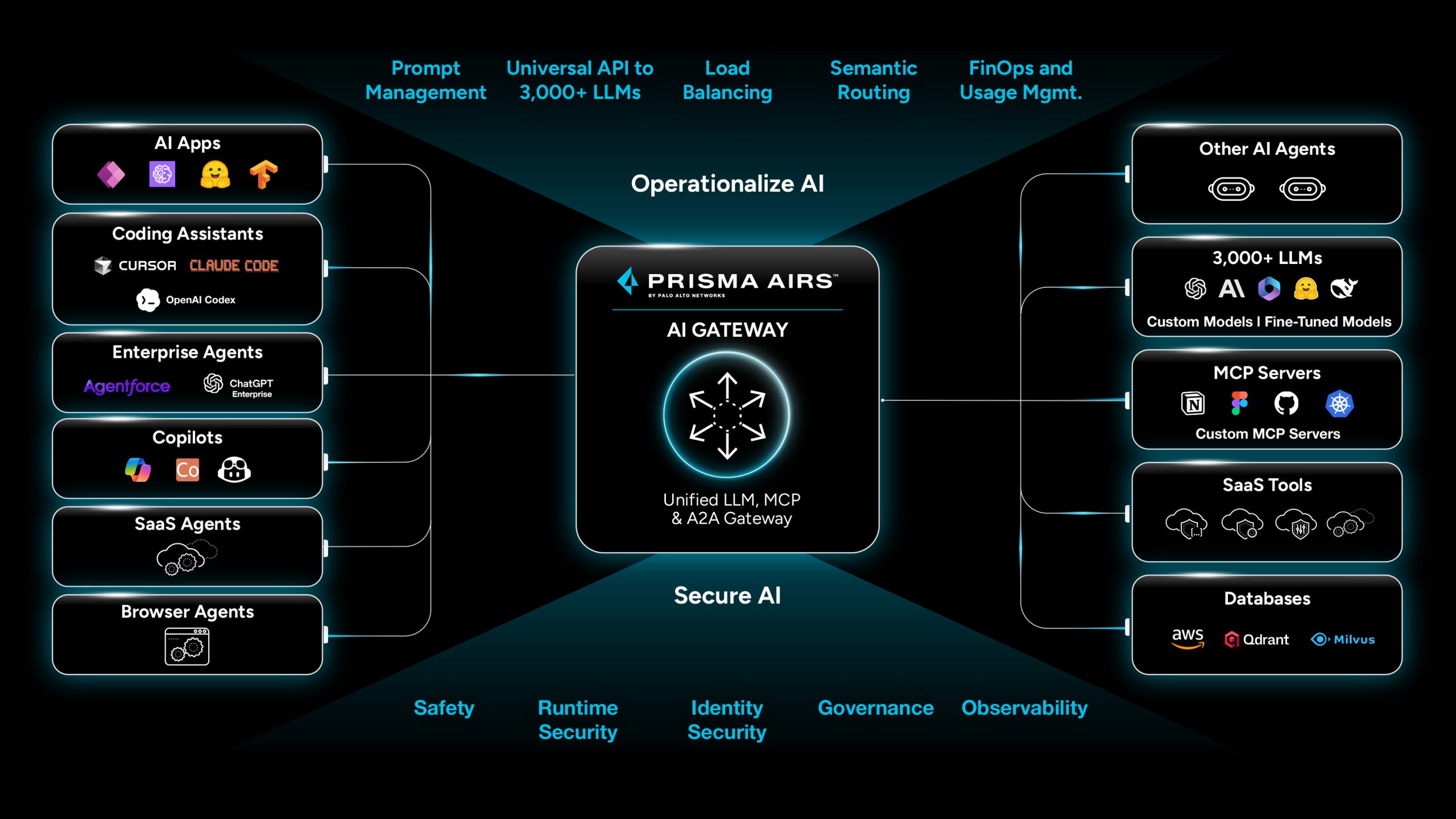
  •  

New Executive Order Accelerates Post-Quantum Readiness Amid the Cryptographic Reset

The White House Executive Order on securing the nation against advanced cryptographic attacks accelerates the mandatory timeline for post-quantum readiness.

For years, post-quantum cryptography has been discussed as an important, yet abstract future technical migration. Because of the uncertain timeline for quantum computing, it has been difficult for most organizations to prioritize quantum readiness against more immediate security demands.

That is changing.

Signed on June 22, 2026, the Executive Order mandates the transition of federal information systems to post-quantum cryptography and establishes a national policy to migrate them to NIST-approved standards. It also extends the urgency beyond government by directing support for critical infrastructure owners and operators, advancing requirements for federal contractors, and calling for cryptographic bill of materials guidance.

The order directly addresses harvest now, decrypt later risk and sets transition milestones for federal high-value assets and high-impact systems: 2030 for key establishment and 2031 for digital signatures.

While the order directly applies to U.S. Federal civilian agencies, it should be seen as a signal of broader policy and procurement momentum. Organizations that do business with the government, support critical infrastructure, or operate in regulated industries such as energy, financial services, and healthcare should expect post-quantum readiness expectations to accelerate.

Quantum risk has shifted from a long-term research concern to a national cybersecurity priority tied to sensitive data, critical infrastructure, federal systems, procurement, and the broader digital economy. For security teams, the challenge now is turning that urgency into an operational plan.

Operationalizing the quantum mandate

As quantum computing advances, widely used public-key cryptography will become vulnerable to future attacks. Even before a cryptographically relevant quantum computer exists, adversaries can capture encrypted data now with the goal of decrypting it later.

This “harvest now, decrypt later” risk is especially concerning for organizations that protect sensitive information with a long shelf life. The response cannot wait until the threat fully materializes.

The broader ripple effect matters because compliance alone will not equal readiness. As requirements flow into federal acquisition rules and contractor obligations, the vendor ecosystem will be pushed to support quantum-safe capabilities in the products and services that enterprises, critical infrastructure organizations, and regulated industries rely on.

Adding support for post-quantum algorithms is not the same as safely migrating to them. Support means a system can use new algorithms. Readiness means the organization knows where cryptography exists, which systems are exposed, which dependencies matter most, and how to execute changes without creating disruption or new risk.

That matters because post-quantum migration can affect more than cryptographic libraries. Larger cryptographic objects, new protocol behaviors, hybrid modes, hardware acceleration requirements, interoperability constraints, and legacy system limitations can create real performance, availability, and compatibility challenges if changes are made blindly.

This is why cryptographic visibility must lead to actionable migration planning.

Security teams cannot migrate what they cannot see. But visibility by itself is not enough. They also need to classify exposure, prioritize high-value systems and long-lived data, understand operational dependencies, and plan changes in a way that avoids disruption, downgrade risk, or incomplete migration.

Cryptographic bill of materials guidance will be an important step toward mapping cryptographic assets. But a CBOM should be the starting point, not the finish line. An inventory can show where cryptography exists, but readiness requires understanding business impact, migration complexity, interoperability risk, ownership, and the order in which changes should happen.

Post-quantum readiness is not just an algorithm swap. It is an operating model for managing cryptographic change at scale.

Five actions for post-quantum readiness

The path forward starts with five practical actions.

  • First, see cryptographic exposure. Organizations must gain visibility into cryptographic usage across all environments to mitigate the risks associated with undocumented encryption.
  • Second, prioritize what matters most. Cryptographic exposure varies in urgency. Organizations should prioritize protecting authentication, high-value assets, and long-lived sensitive data based on risk and business impact.
  • Third, modernize trust infrastructure. Existing systems rely on fixed cryptographic assumptions. Post-quantum readiness demands flexible infrastructure and trust services that support evolving standards.
  • Fourth, automate cryptographic change. Manual tracking with spreadsheets provides an incomplete, point-in-time snapshot that quickly becomes outdated and is insufficient for the coming changes. Automation allows organizations to manage cryptographic updates and trust operations in a consistent, controlled manner.
  • Fifth, govern readiness over time. Post-quantum migration requires continuous governance to track progress, align ownership, and adapt to evolving threats and standards.

These actions help security leaders move from awareness to readiness.

What this means for cybersecurity now

The Cryptographic Reset is already underway, driven by post-quantum risk, shorter certificate lifecycles, machine identity growth, fragmented cryptographic ownership, CA distrust events, and expanding digital infrastructure.

The organizations that move first will not simply be the ones that adopt new algorithms the fastest. They will be the ones that build the visibility, operating model, and governance needed to manage cryptographic change continuously.

Take the next step

Read the guide: The Post-Quantum Readiness Race Is On: Five Actions Security Leaders Can Take to Accelerate Crypto Agility.

More resources

The post New Executive Order Accelerates Post-Quantum Readiness Amid the Cryptographic Reset appeared first on Palo Alto Networks Blog.

  •  
❌