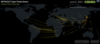
Executive Summary Between January 20 and 24, the town of Davos-Klosters, Switzerland hosted the annual World Economic Forum (WEF). Among the key highlights drawing media attention were several special addresses by prominent political figures. NETSCOUT’s ASERT team observed an increased volume of DDoS attacks shortly...
The world of DDoS-for-hire services has rapidly evolved, bringing with it increasingly complex challenges for organizations worldwide. These services, once limited to simple attack execution, have expanded to include automation, API integration, artificial intelligence, and infrastructure abuse.
Artificial intelligence (AI) is making its way into the DDoS-for-hire landscape, adding a new level of sophistication to these already powerful services. While still in its early stages, AI integration in DDoS attacks has begun to enhance the effectiveness and adaptability of these assaults.
Modern DDoS-for-hire platforms have evolved to include sophisticated infrastructure abuse capabilities, enabling attackers to disrupt entire networks and bypass traditional defenses. By targeting multiple assets within a network, leveraging geo-spoofing techniques, and incorporating IPv6 into their strategies, attackers have increased the complexity of defending against these threats.
Automation has become a cornerstone of modern DDoS-for-hire services, enhancing the scale and sophistication of attacks while reducing the need for continuous human oversight. This development has made it easier for attackers to deploy persistent, complex campaigns with minimal effort.
API-driven DDoS attacks pose unique challenges for cybersecurity teams. The speed and adaptability they provide mean that attacks can evolve rapidly. This flexibility leaves defenders scrambling to keep up, as conventional static defenses may not react quickly enough.
The proliferation of pre-attack reconnaissance tools embedded in DDoS-for-hire services has changed the nature of threat preparation. Once reserved for highly skilled adversaries, these capabilities are now available to attackers of all technical levels.
The rise of DDoS-for-hire services represents a significant shift in the cybersecurity landscape, pushing organizations to rethink and strengthen their defense strategies. In this first installment of a seven-part blog series, we break down how DDoS-for-hire platforms work, their expanding capabilities, and what this means for modern cyber defense.
Internet Archive under DDoS Attack On October 09, NETSCOUT’s ASERT observed a significant deviation of network traffic to archive.org. This both corroborates the public disclose from independent investigative journalist Brian Krebs that the site had been compromised and defaced ( Figure 1) and the claims ( 1, 2) by the...
NETSCOUT’s Director of Threat Intelligence, Richard Hummel, was featured on Patrick Donegan’s HardenStance to discuss the latest patterns in DDoS threat activity. In this interview, Hummel covered recent NETSCOUT findings spanning South Korea and Romania. These spikes in geopolitical DDoS attacks have varying intents...
Shortly after the declaration of victory in the Venezuelan presidential election, news outlets reported widespread protests across the country. Most of the news reported focuses on the turbulent situation in the streets, but ASERT could see the conflict spilling into the digital space.
Update July 24, 2024: The DDoS hacktivists continue to add members to a coalition they now call the "holy league" as part of their self-proclaimed "holy war" against Spain. The recent posts boasts 70 members and lists the following active groups: High Society InsanePakistan VoltActivist ShadowedWhisper ZBlackHat 7...
ASERT’s monitoring of DDoS attacks stemming from hacktivism and geopolitical tensions, discovered that South Korea was subject to widespread attacks. This digital assault is targeting various industries, including government and financial institutions, which can create significant disruption to public life.
Beginning around March 6, 2024, self-proclaimed DDoS hacktivist NoName057(16) turned their attention to the country of Moldova. Since early March, more than 50 websites have been targeted, according to posted “proof” by the groups involved in attacking the country.
In 2023, a barrage of cyber assaults against Sweden signaled a massive shift in global dynamics. As Sweden worked towards joining NATO and supporting Ukraine with arms and humanitarian aid, we saw a massive shift in the global DDoS landscape. These attacks did not only target Sweden but also Ukraine, Finland, The United States, and Russia.
Because adversaries leverage compromised and abusable online resources belonging to legitimate organizations and individuals to launch DDoS attacks, the tangible cost to attackers is nil, while the costs for unprepared defenders are immense.
While there are many obvious threats like hacktivists, nation-state adversaries and ransomware operators, there also lies a constant ever-growing undercurrent that we call nuisance traffic. The traffic is made up of undesirable, very often malicious and disruptive activity. It only materializes to the average user when its abrasive behavior erodes at our security, affecting our productivity and our ability to communicate through the connected world.
 Login
Login