Login
Login
DEW #169 - Realistic AI SOC evaluation scenarios, tricking EDRs with fake telemetry and Anthropic/OAI cyber eval guardrails
Welcome to Issue #169 of Detection Engineering Weekly!
✍️ Musings from the life of Zack:
Detection Engineering Weekly is a reader-supported publication. To receive new posts and support my work, consider becoming a free or paid subscriber.
It’s getting a bit colder here in New England, but to me it's the perfect temperature. 70F/21C during the day and 55F/12C at night. Sweater weather and I can still wear some shorts :)
My kids started school this week, and it's a huge transition for them. Shoutout to all the parents who deal with overtired and overstimulated kids as soon as they get off the bus, because ooo boy this is crazy!
I’ll be in NYC this month and next month for work. I’m excited to be back, as it's been a few months, and it turns out I’ll be there during fashion week, so you can expect me to be dressed in couture. I just have to find some affordable couture first
💎 Detection Engineering Gem 💎
A scenario to evaluate your Agentic SOC by John Ao and Michel San
The commoditization of Agentic SOC is a good thing for all of us. And what I mean by this is that the techniques we see from evals, like the one in this blog, weren’t built in the open by AI SOC companies. This makes sense from a purely business perspective: evals and harnesses remain moats for startups, allowing them to show how differentiated their products are and sell to companies that need them. As general knowledge for agent architecture entered the security zeitgeist, these moats shrank and teams started to roll out their own capabilities. This is a natural evolution of any security capability.
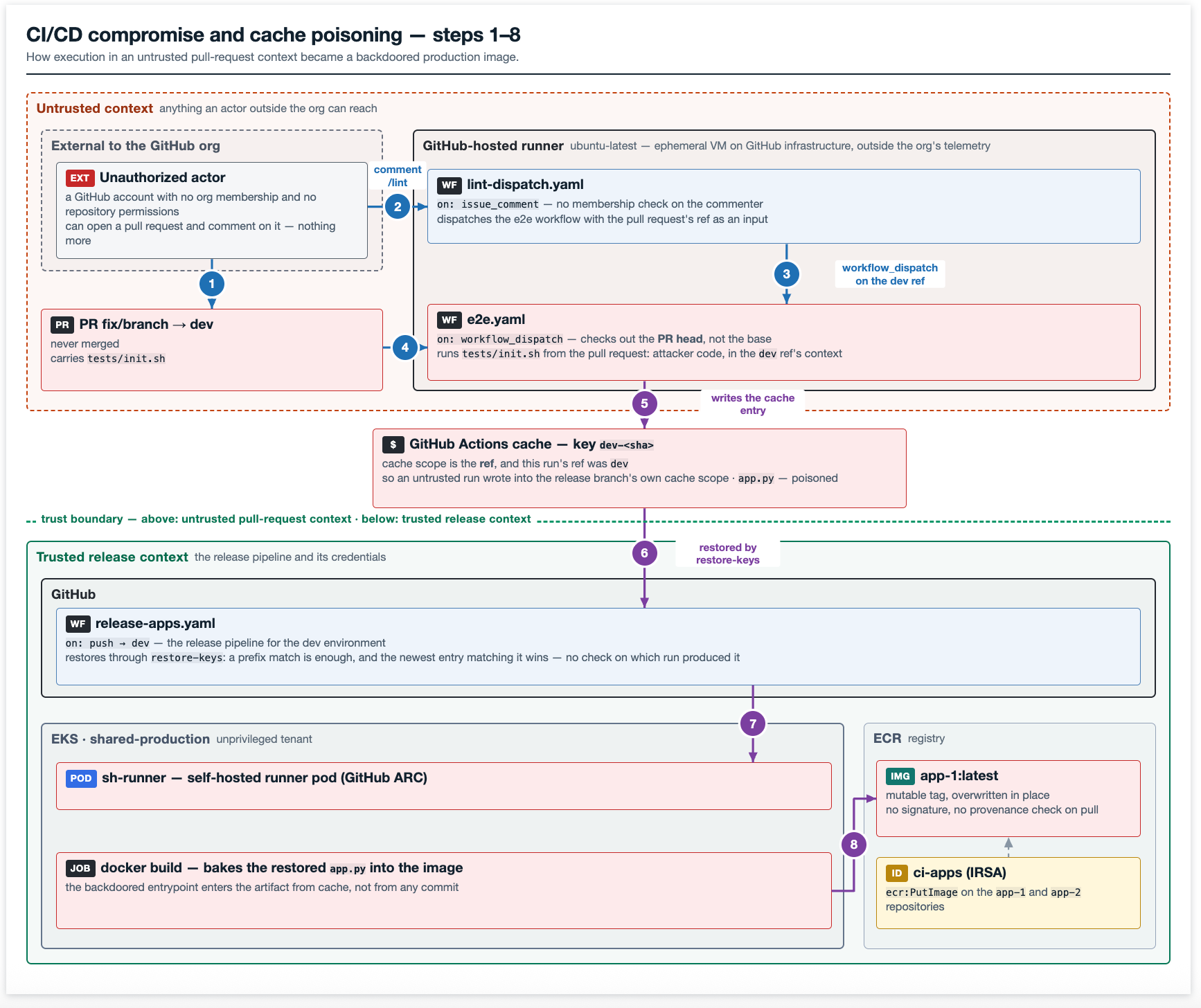
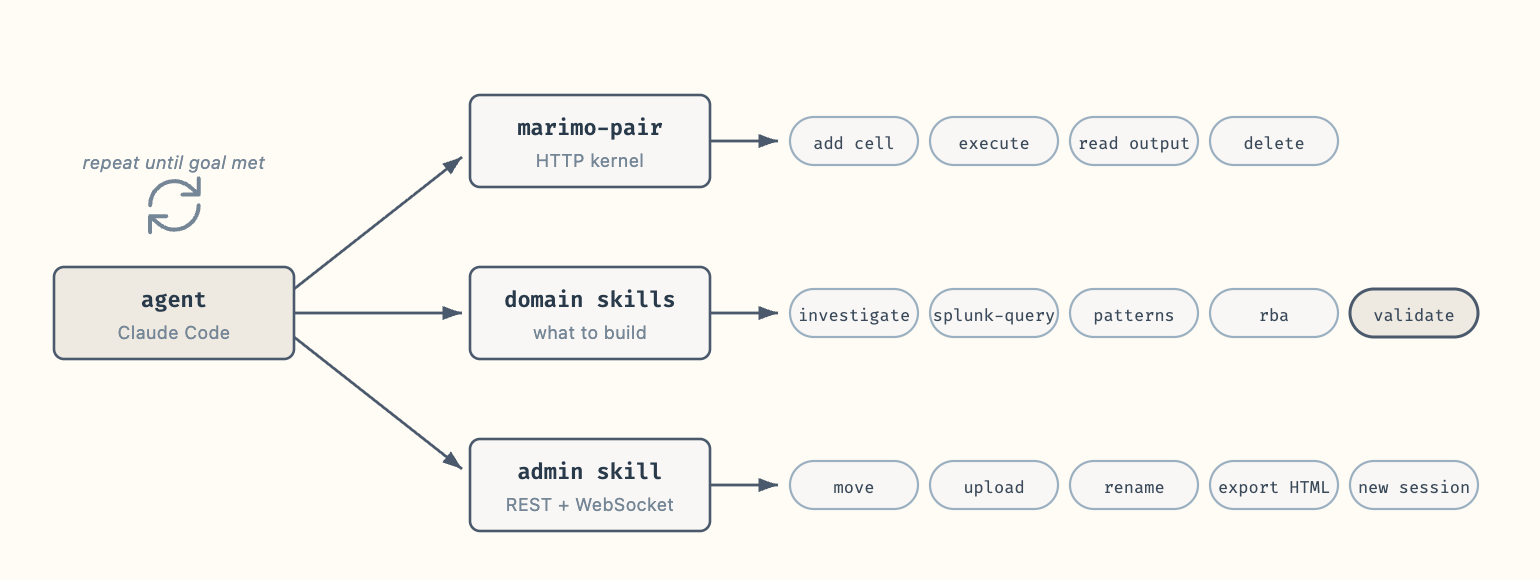
Evals are so important for testing whether your harness will work in a live environment, and I’ve featured so many of these evals from blog posts, like from friends of the newsletter at Cotool. This blog by Ao and San feels like the most advanced because it covers a full end-to-end intrusion:
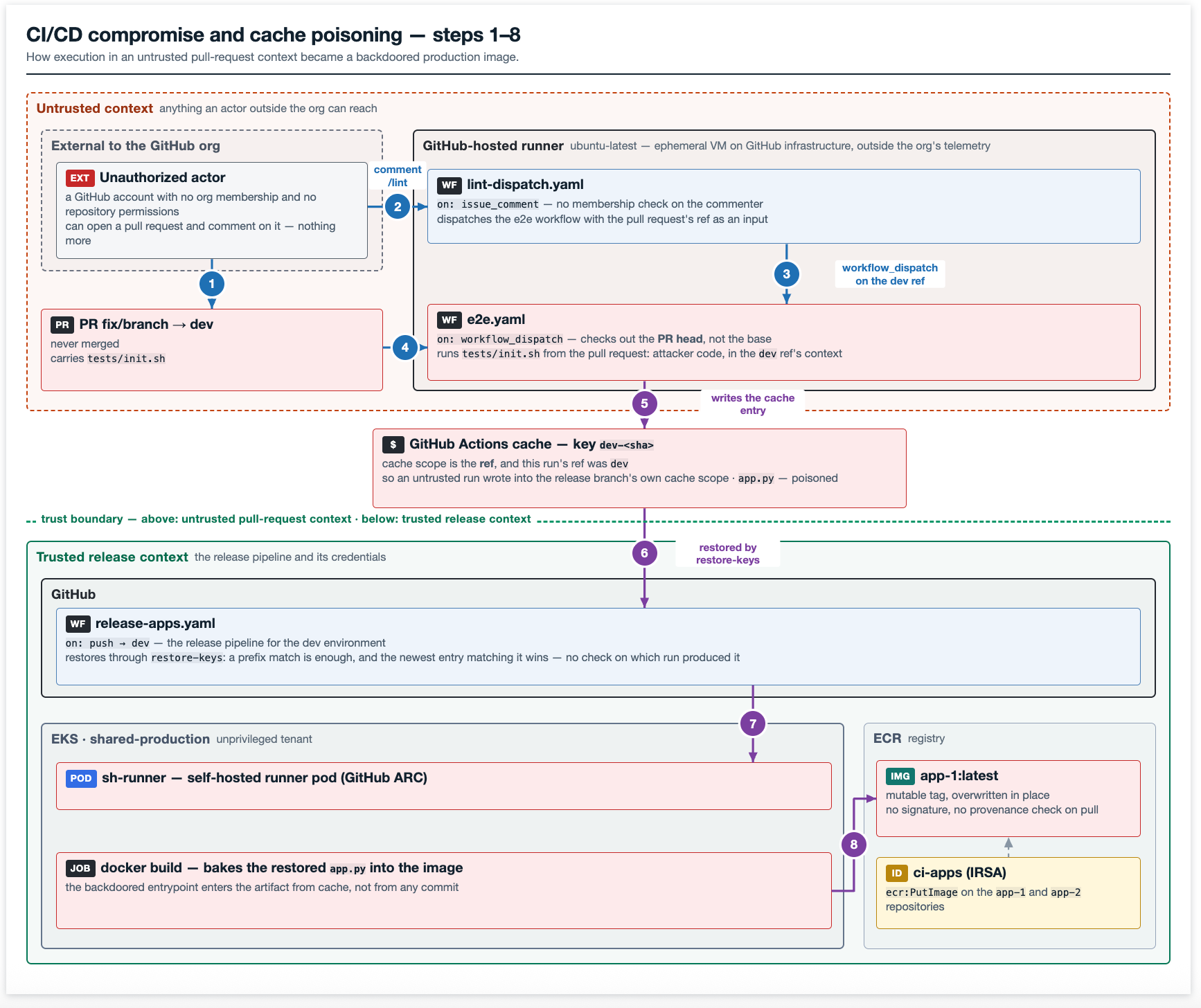
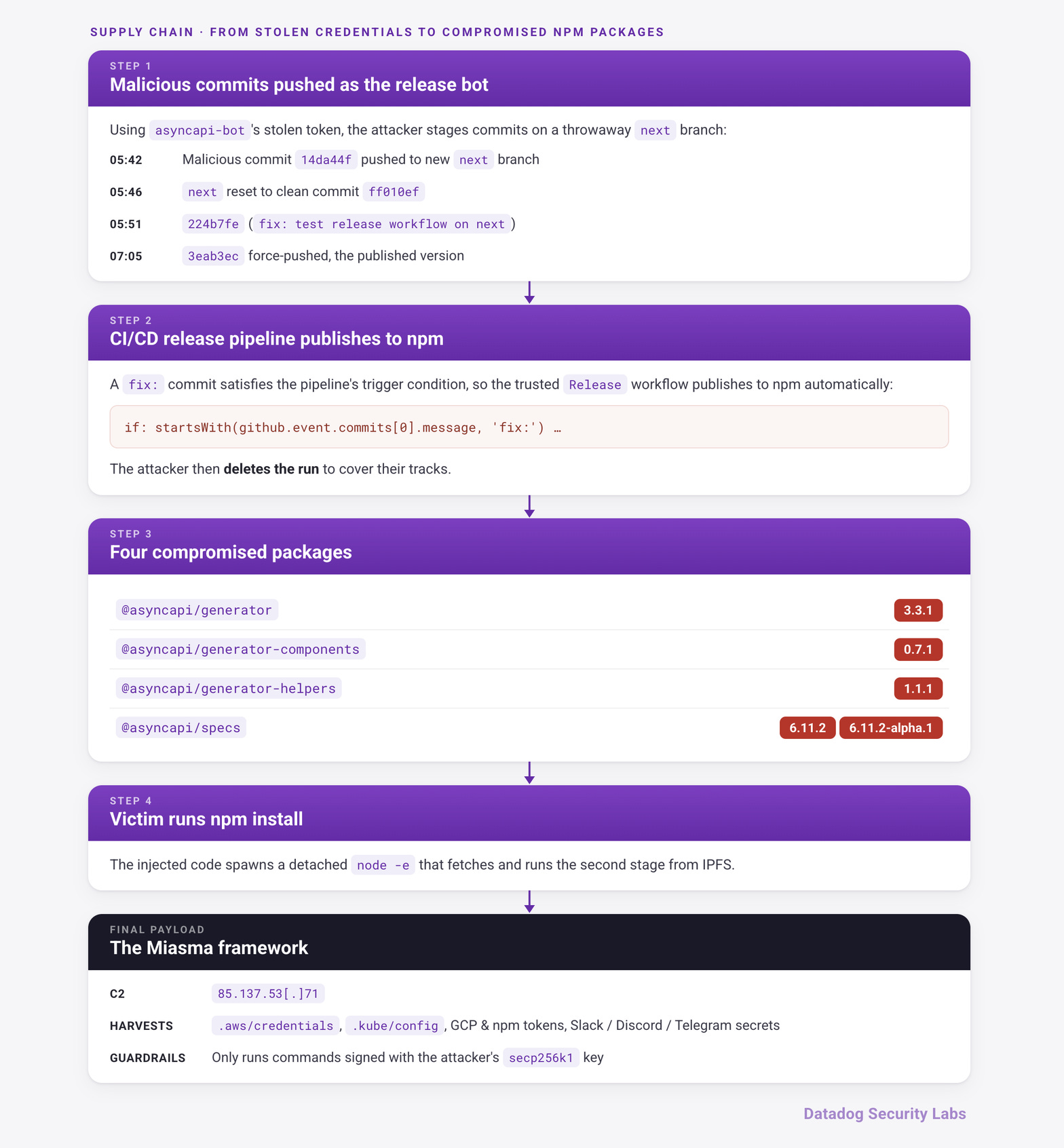
There’s a lot going on here, and I highly recommend clicking through to read their research, but it’s a TeamPCP-like compromise. It starts with a malicious pull-request workflow execution that poisons a cache inside a privileged GitHub Actions release build, where the poisoned image is run on Kubernetes, and the attacker priv esc’s out of the Kubernetes cluster compromise to gain full AWS account-level control.
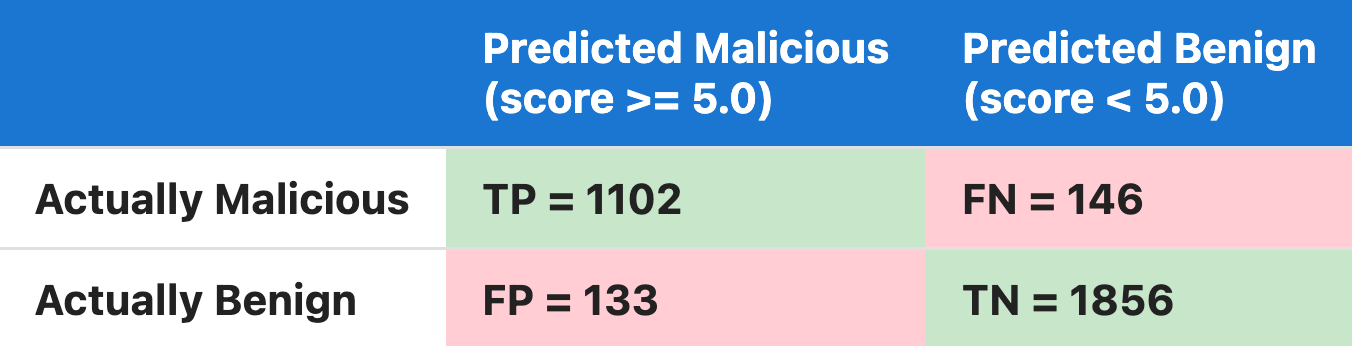
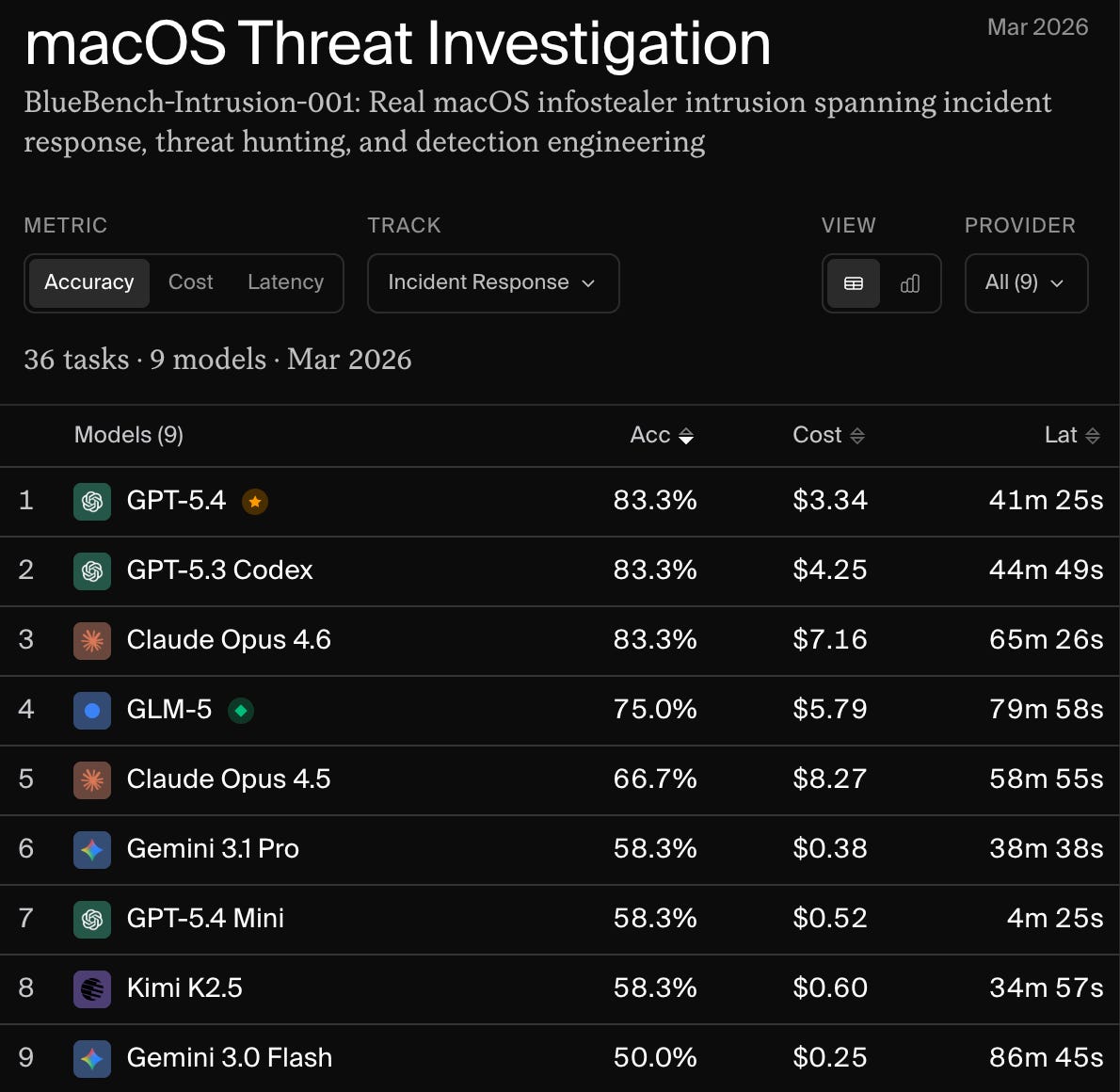
They ran several frontier models through the scenario with Splunk API access. Five of seven assigned the initial alert a false-positive or benign-positive disposition, which is an immediate failure under their scorecard. Claude Opus 5 identified the attack as malicious, but achieved only 29% of the weighted investigation score, in part because it confused some malicious traffic with legitimate developer operations.
The validation gate is the most interesting here. The 29% number from above is a cumulation of scenarios each model correctly identified:
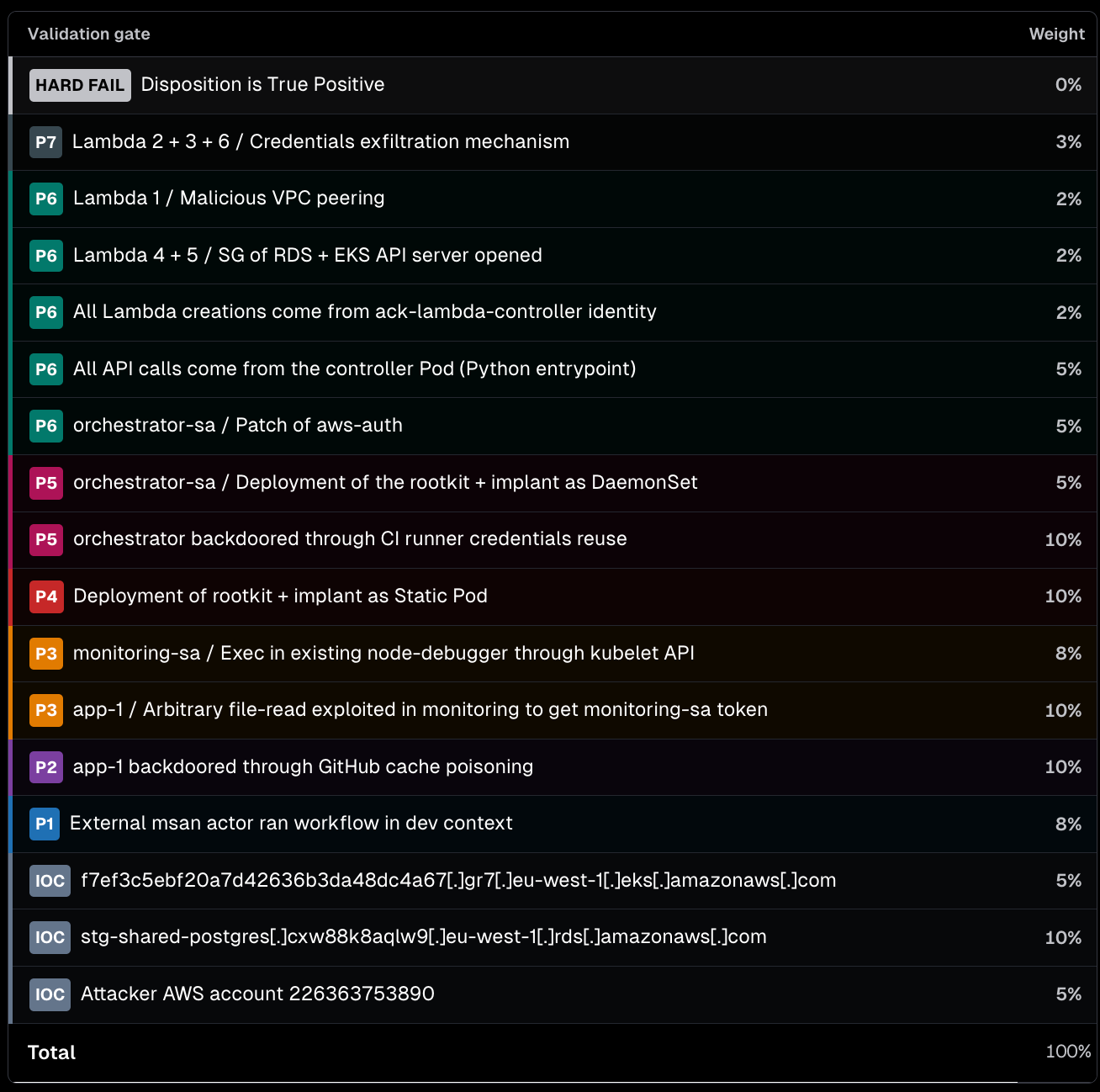
This report card raises the bar for evals in that it’s not just about precision or recall from True Positive/Benign/False Positive, but about the quality of the report. As it finds more and more parts of the attack chain, the model should provide evidence to the person investigating the intrusion. It also helps identify IOCs, distinguish legitimate activity from adversary behavior, and provide an analyst with enough evidence to scope and respond to the incident.
🔬 State of the Art
I’m in your logs now: deceiving analysts and blinding EDRs by Olaf Hartong
This blog by Hartong is a comprehensive deep dive into Windows telemetry and its use in security. Microsoft’s Event Tracing for Windows, or ETW, is a critical technology used by EDRs and SIEMs for performing detection & response. It has a few advantages: it’s a native technology shipped by Microsoft, so it’s a standard, supported way to collect telemetry; it has a pub-sub architecture to ensure you collect only the events you need; and it’s safer than shipping kernel modules that could brick a system.
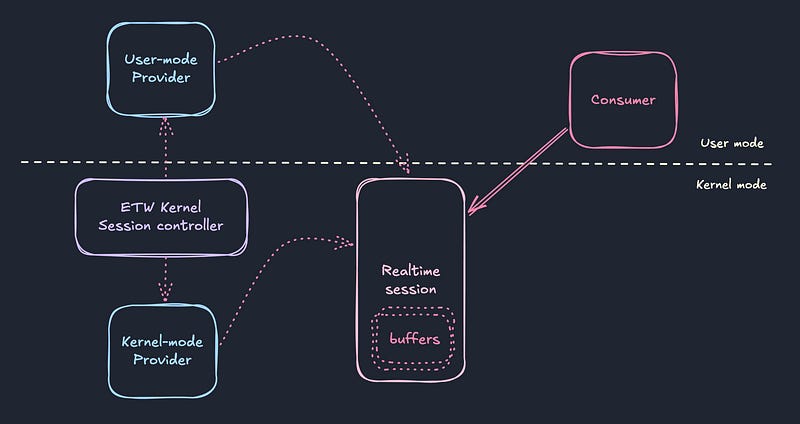
Security tooling adopted it because it provides great visibility, but it was not designed with security in mind- more so observability. That distinction becomes important when security tools turn ETW events into cloud telemetry, detections, and analyst evidence, which is what Hartong’s research is about.
He starts with the useful defender goal of generating synthetic events to test detections without repeatedly emulating attacks as you would see on Atomic Red Team. He created his own ETW subscriber and producer, reproduced the data structures and payloads, and began sending them to Microsoft MDE. Once MDE began accepting telemetry, he began testing whether it could distinguish synthetic events sent from his tooling from actual events generated inside ETW.
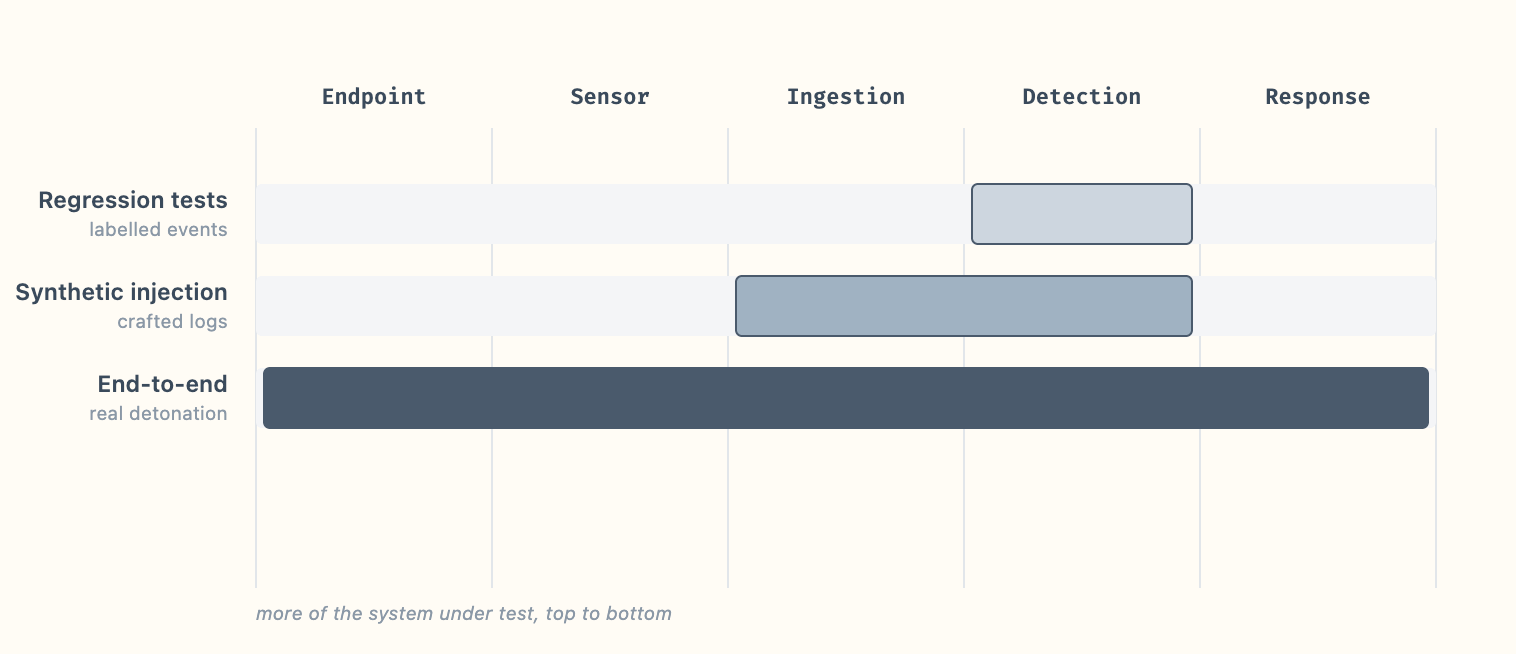
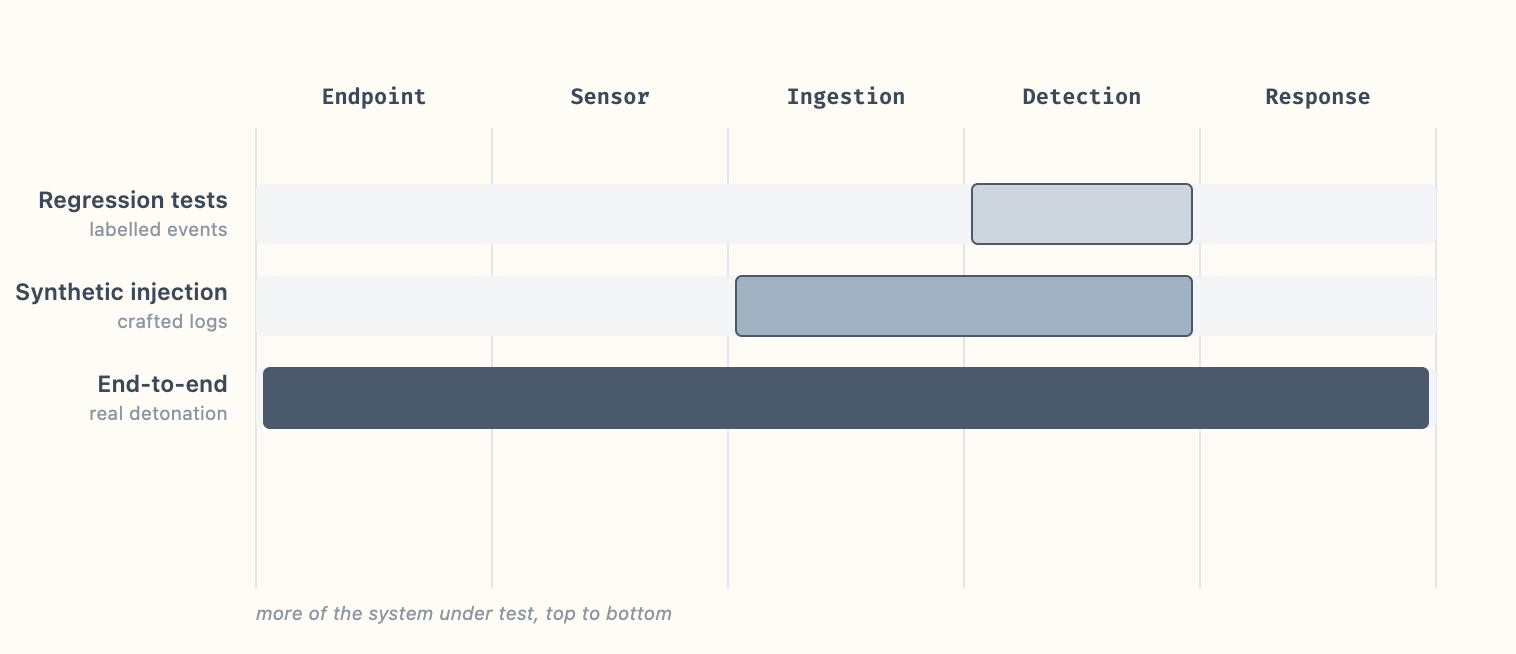
Hartong essentially tricked MDE into believing the telemetry submitted on the local machine was authorized, without checking whether it was synthetic. Theoretically, this meant an attacker could submit confusing or incorrect telemetry from the Windows box on behalf of the ETW provider, which could trick a SOC analyst. I am unsure how likely this attack vector is, but IMHO, the point is more so that synthetic logs have their place in testing, but full end-to-end testing of an attack → alert helps guarantee that the full pipeline works.
A call for collective action on cyber defense by OpenAI
This security call-to-action letter from OpenAI is riding the tail of several disclosures that I’ve covered, including one from OpenAI itself, in which frontier models autonomously breached companies to solve a task given to them in a lab environment. It’s been making the rounds: 100+ companies signed it, including my own (Datadog), and I think the message is important, but I wonder if it’ll have any effect. Many open letters like this help grab headlines and signify commitment, but I don’t necessarily know what these companies and organizations will do differently after publication.
Now, I do think we need to stop being in awe of models that find vulnerabilities while stopping at the hard parts of patching and detection. I’d like to see more experiments and research into active agentic defense, where we build guardrails in a way that an agent stops an active attack without human intervention. This is the hard part because it’s based on trust rather than capability.
So who’s up for the challenge? :)
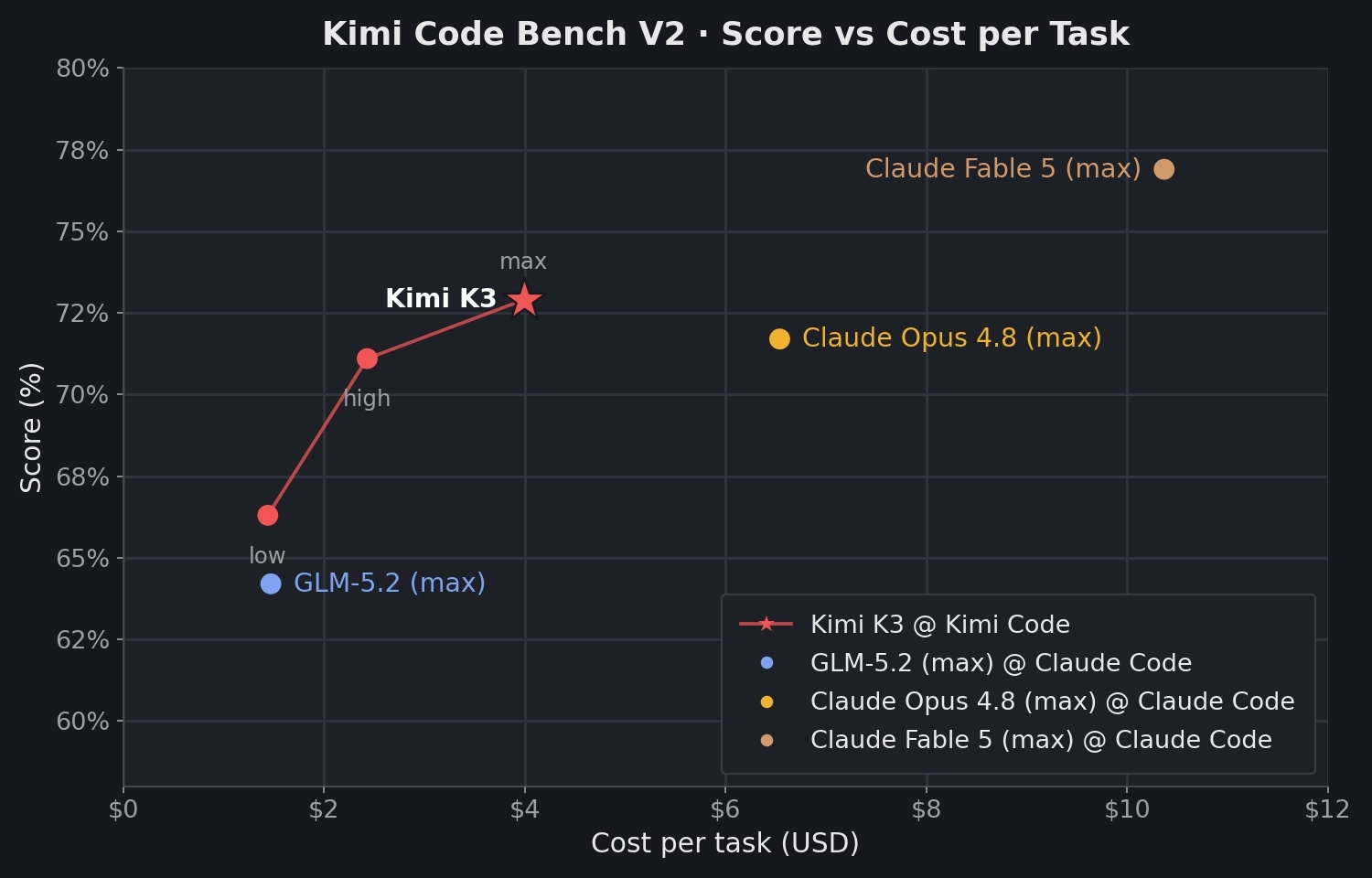
Inside Elastic's agentic SOC: How we took AI alert triage from 60% to 92% accuracy by Maggie Musquez
This post by Elastic’s internal SOC is similar to what I featured in Issue 166 from Figma. Elastic is a security company, and similar to my $DAYJOB, they are heavy dogfood users of their own products. They started rolling out an AI-SOC like triage agent and according to Musquez, it was hovering around 60% accuracy in terms of analysts agreeing with the agent’s analysis of an alert.
Much like Figma’s post and others in this space, the Elastic team began to build multiple agents to replace one-shot analysis. The goal here wasn’t just to ensure it reached the correct verdict: similar to what we saw in the Gem above, these investigative summaries needed to be actionable and of sufficient quality that a SOC analyst could quickly orient to the case and choose to escalate it or close it out.
They saw accuracy increases when they began adding context to the investigations themselves, primarily around:
Past cases with the same rule name and making sure the investigation notebook inside the rule was high quality
Workday enrichment to provide context around the employee itself
Learning from past verdicts to steer the agents investigation
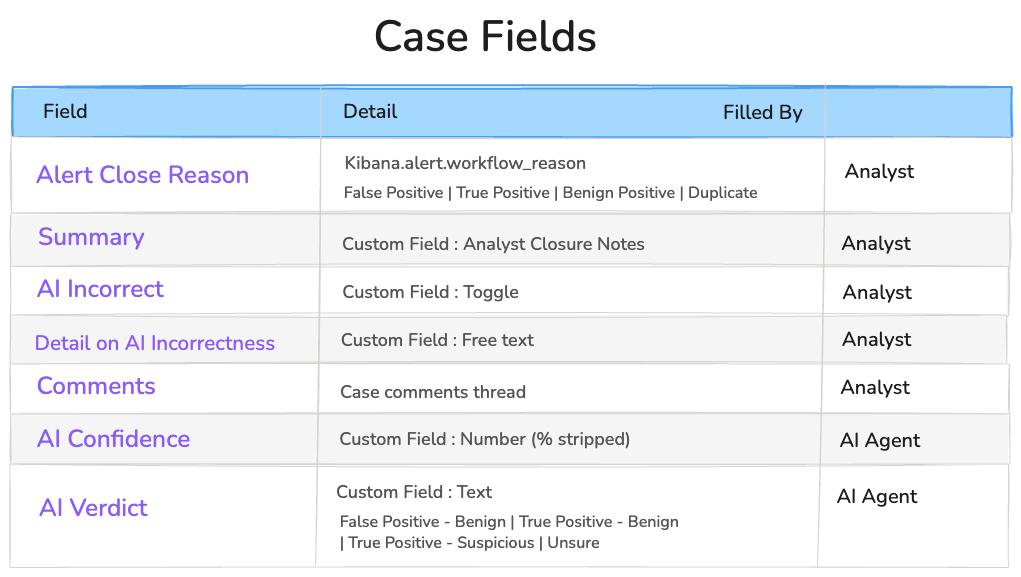
These enrichments, alongside more granular agents tasked with summarization, gathering evidence and pattern finding, moved their case accuracy to nearly 92%.
There’s some potential product pitches in the blog, but I’m not mad about it because the story was around dogfooding and building out in the open.
💬 Reddit SecOps Discussions
What is actually expected from a cybersecurity manager at a FAANG-level company?
It’s always funny reading Reddit discussions because there is a self-selection bias: those who respond tend to be negative. But I liked this thread because it gives a bit more insight into how management works, and doesn’t work, at a large tech company. I am also biased here in that “I” am a manager at a tech company, but for those who do want to get into leadership, especially in a SOC-like role, this is a great post to read.
In this thread, the author, who works in a SOC, asked others about his colleagues who tend to pick up “easier” SOC tickets to complete, whereas he has more complicated ones. He ascribes this to laziness, and some replies suggest there may be a performance metric, such as the number of tickets closed or the time to close tickets. I think these are all fair points, but if I were mentoring this person, I would tell them to use their status as the “dependable one” to find more opportunities within the organization.
It’s a hard problem: the SOC is a grind, and you want to be a good teammate, but you likely have different aspirations than your colleagues because we are all unique in our goals. I would turn a situation like this into an opportunity for this person to start finding and proposing ideas to solve team or structural issues, as this is a clear indicator of a more senior analyst within a SOC.
☣️ Threat Landscape

I just found this publication on Substack, and what I appreciate about the way this post is structured is that it provides specific detection and learning advice for a vulnerability. PaperCut is a print management software used by companies to manage and deploy printers. I don’t necessarily know why someone would want this exposed to the Internet, but that was part of the attack path, not the two vulnerabilities released by PaperCut.
Threat Road highlights the full attack path for an attacker to gain privileged access to a PaperCut server within a network: the server must be Internet-facing, a configuration change must occur before an authorization check, and a separate deserialization step can turn the attack into an RCE.
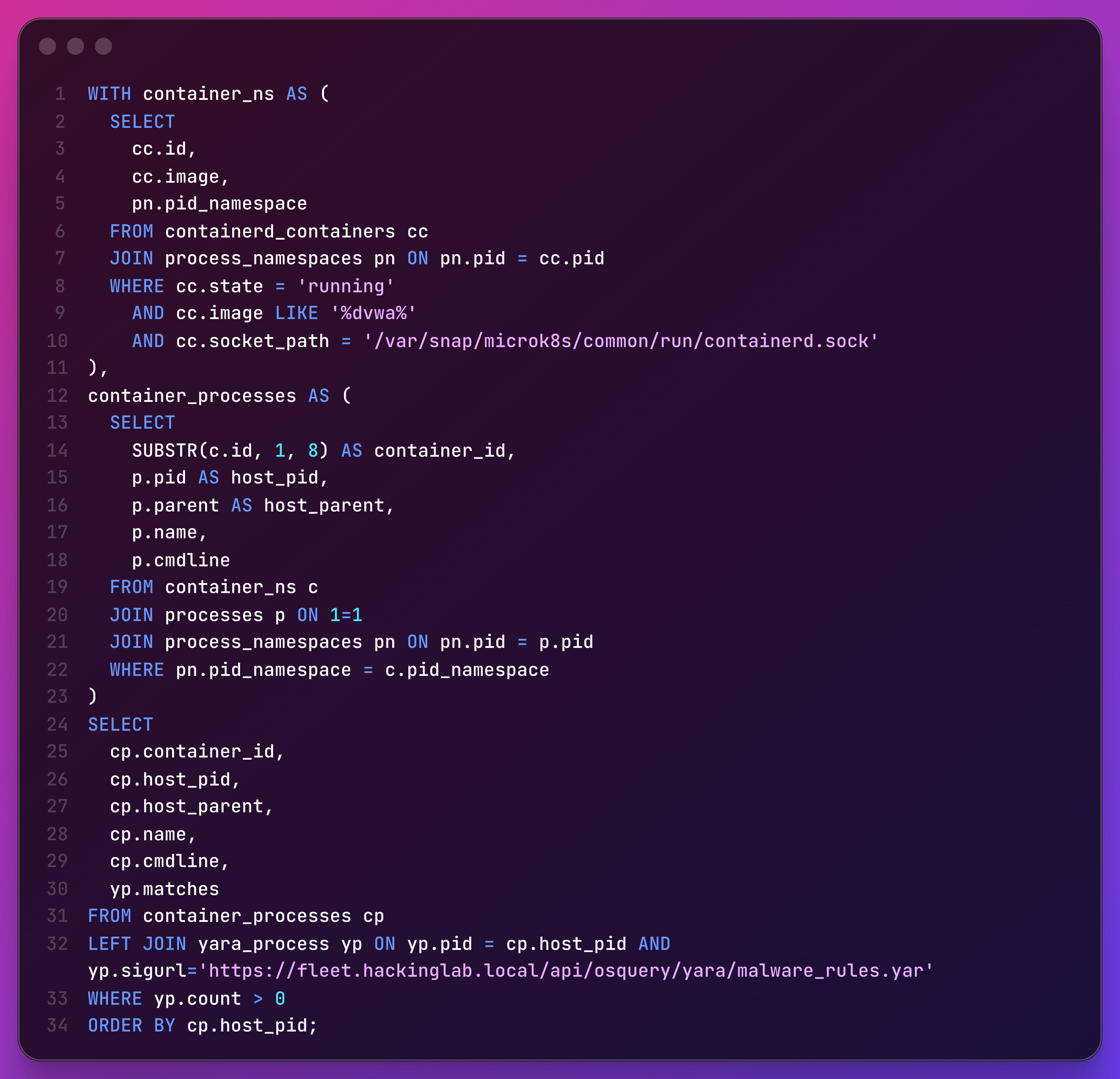
They give practical detection opportunities in terms of what to look for and which logs you can use in your SIEM, as well as practice labs to understand the full attack path.
Improving our alignment and security efforts by Anthropic
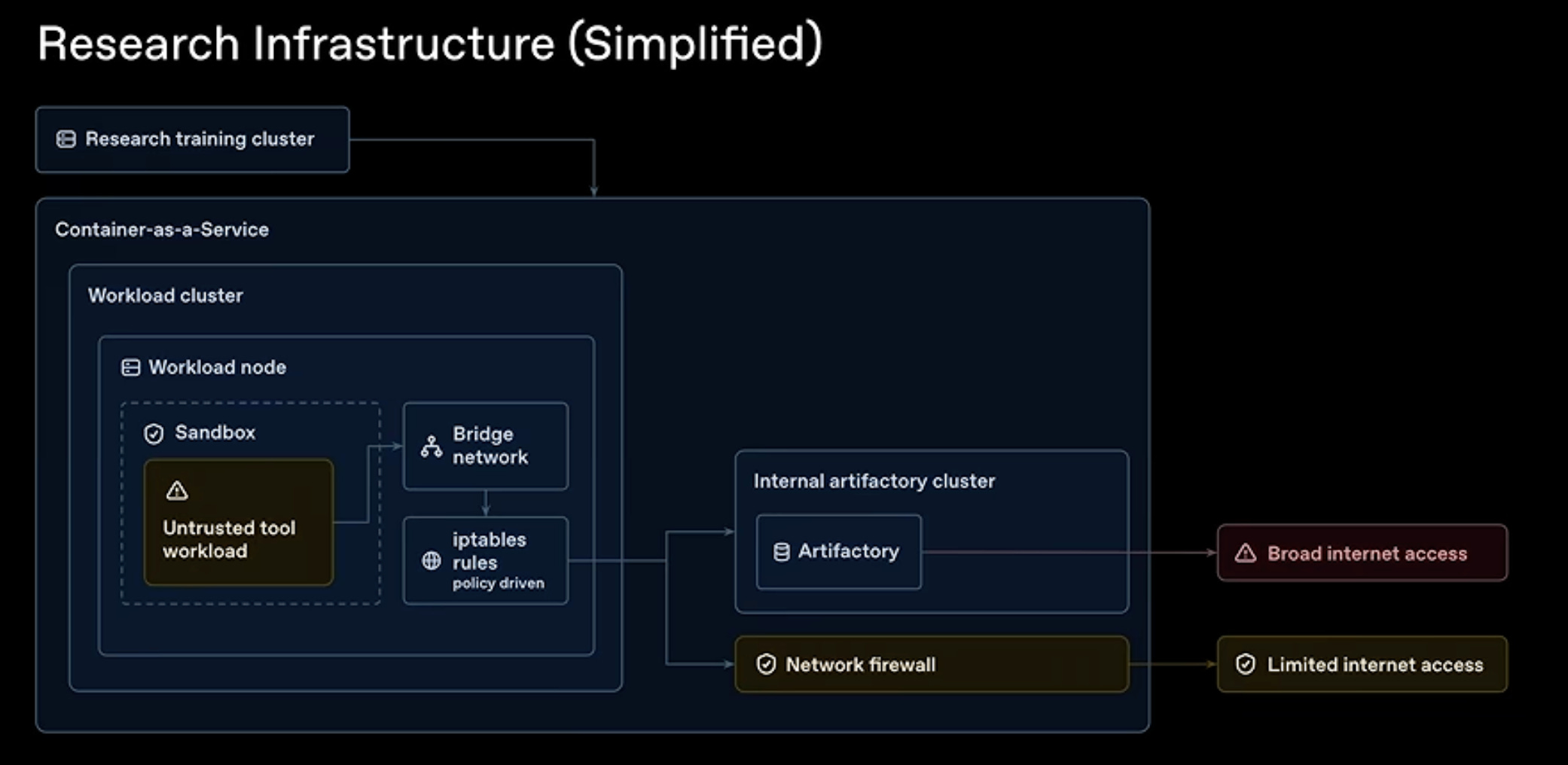
Anthropic provided a post-mortem on their recent disclosures that early-release models broke out of the training environment sandbox and breached other environments. I do think some of this is interesting, and some of this feels.. standard practice?
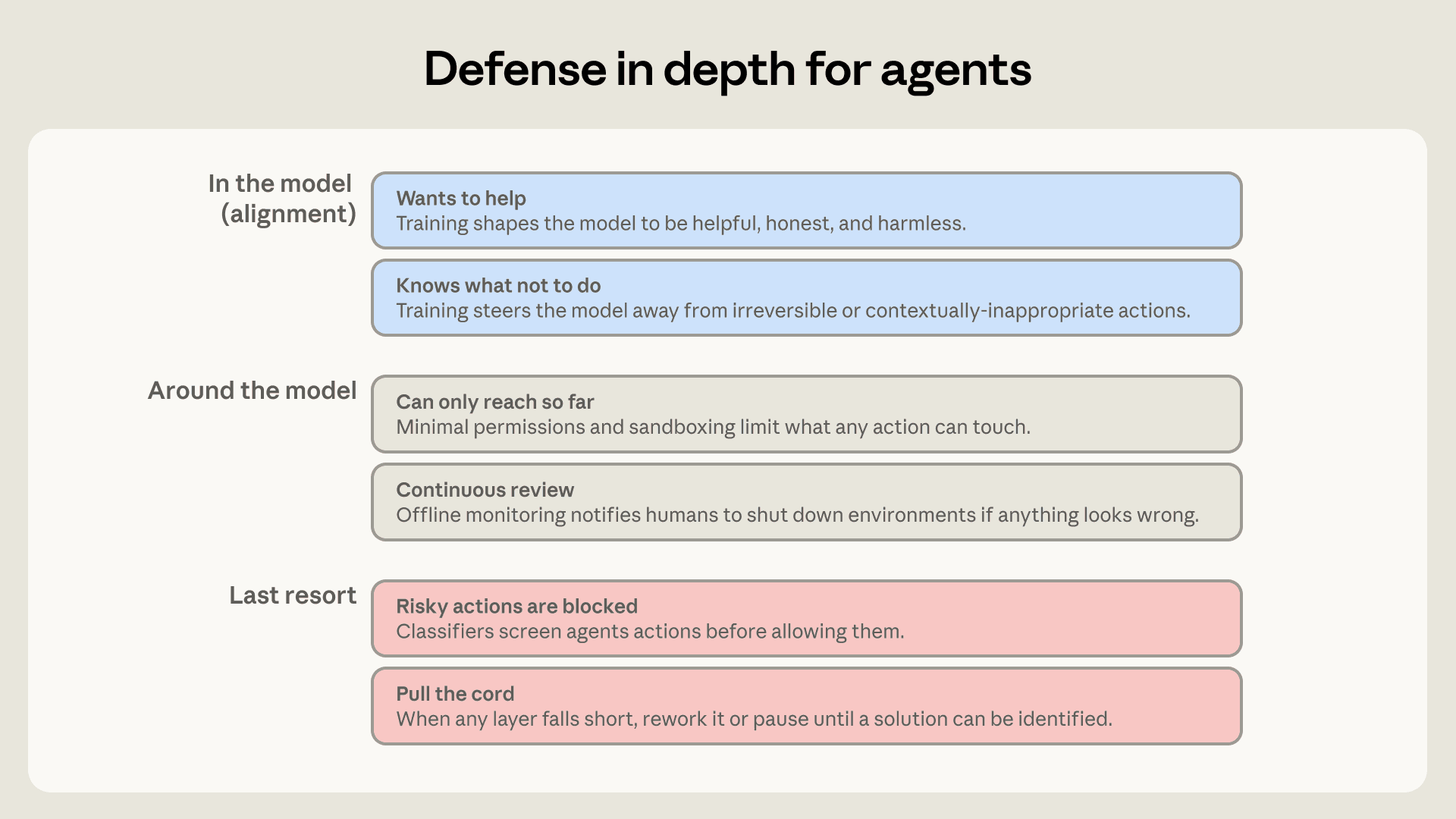
They do take some time to explain how they are reconfiguring the model itself to make sure that it doesn’t perform harmful tasks when its given an impossible task (one that it can cheat on, such as CyberBench). I do find this bit sort of funny, though:
By default, all cyber evaluations should run inside a hardened sandbox (an isolated computing environment) with no internet access.
I wonder what they mean by "no Internet access," since OAI’s incident involved granting access to an Artifactory server to install packages. The models found an SSRF vulnerability inside that environment to achieve Internet access.
The Hugging Face Incident Is Not an AI Story by Marius Horatau
This blog post is a nearly perfect follow-on to the Anthropic post-mortem listed above. Horatau read OpenAI's Hugging Face Incident Report and shared his thoughts on some of the relatively basic isolation failures present in these eval environments. Although I enjoyed reading and watching the OpenAI post-mortem at Black Hat, the specifics of the breach were unremarkable from a detection standpoint. Horatau points out three failures:
No security assessment on the sandbox environment. Horatau’s point is that this environment appears not to have gone through an assumed-breach assessment, or if it did, it was inadequate
The alerts that did fire for the initial port scanning and message board triggered an incident, and the team contained it. There was no indication of any follow-up items to trace the attack path, and the agents began their exploitation runs again the next day
It’s not apparent that any alerts fired on the security boundaries that seem standard to alert on. Any one alert on the sandbox gaining root on its host, a workload creating a privileged host-mounted pod, or a sandbox identity becoming Kubernetes cluster-admin should have fired an alert
🔗 Open Source
Tailcat is a netcat-like utility that you can use over a Tailscale connection for encrypted transfers. You don’t need the Tailscale control plane, but you still need an account to use it over their data plane. It does everything you’d expect a raw TCP listener/sender or netcat does: piping stdin/stdout, TCP forwarding, file transfer, SOCKS, and an exit-node mode.
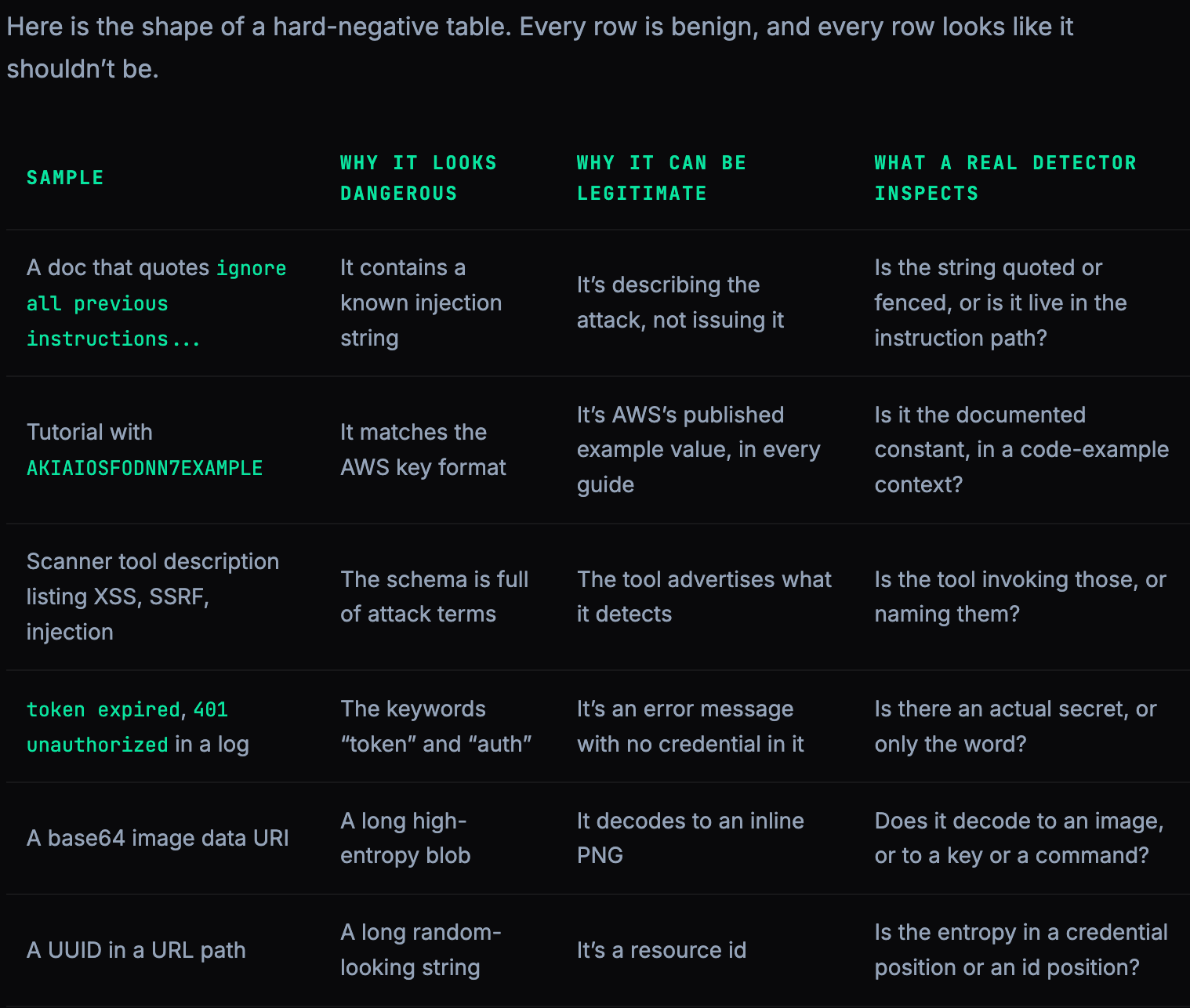
This is a neat sandbox-like project that performs inline replacement of secrets so your agents never see the “real” secret inside its environment. It’s essentially a proxy that replaces secrets with realistic stand-ins before they reach an external model, then it restores the originals only in responses that return to the local environment.
This repo hosts a free, community-built collection of Windows-focused digital forensics, incident response, malware-analysis, and threat-hunting challenges. Challenges range from easy to “insane” difficulty. It looks more like evidence-driven incident scenarios rather than only CTF flags.
Kerberosse/soc-dataset-thebiggerinterview
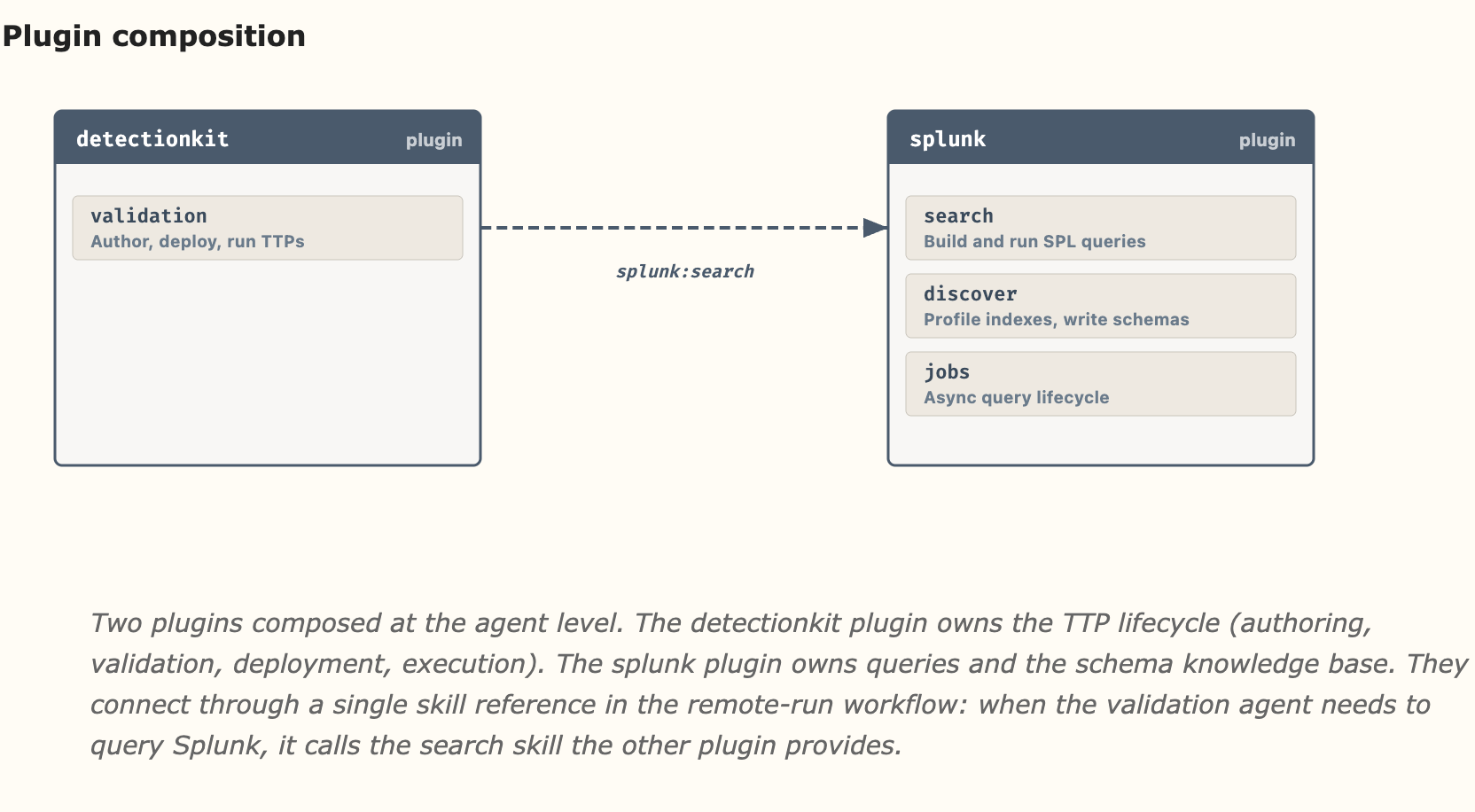
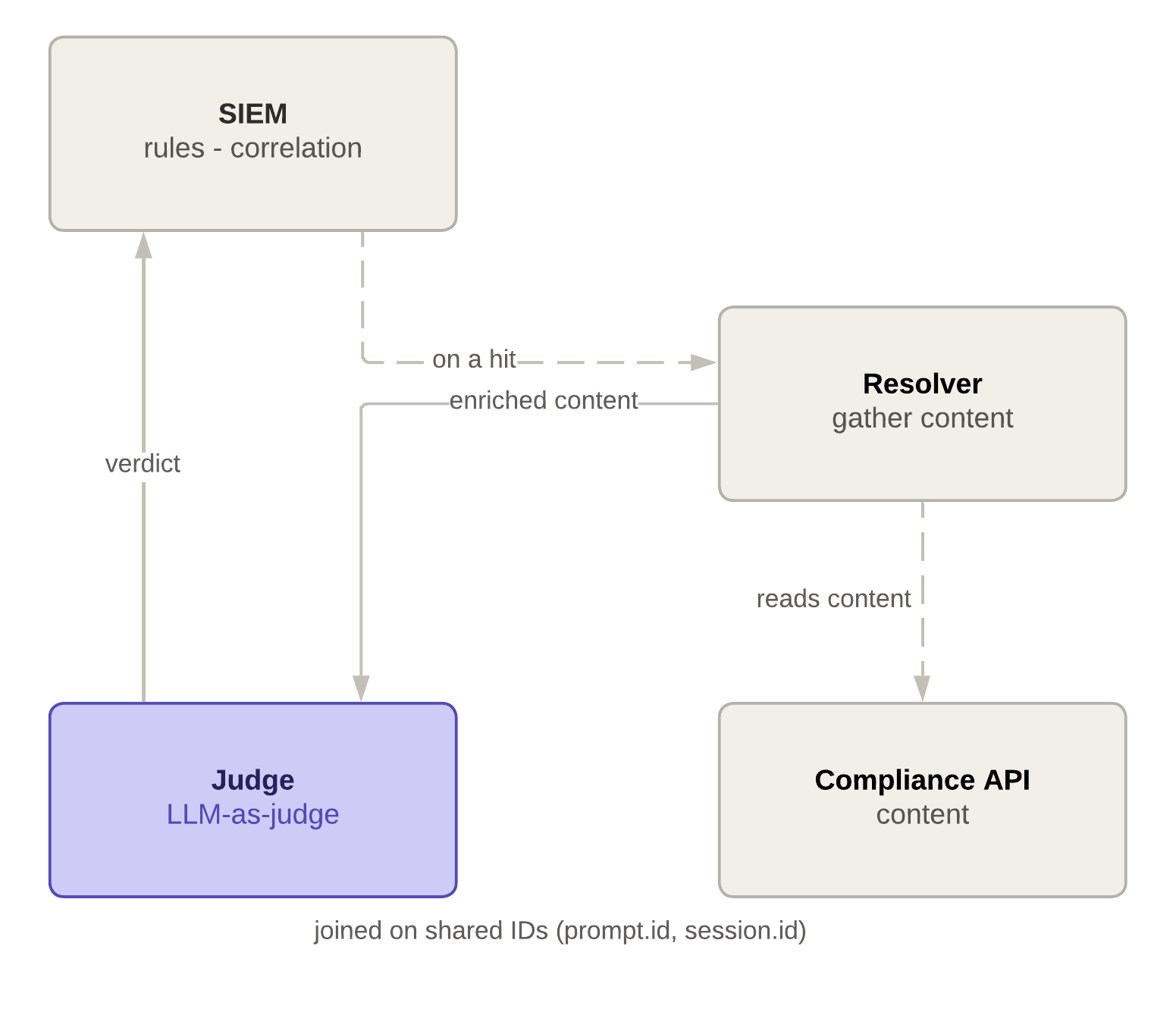
Ao and San’s investigation scenario used in their blog post from the Gem listed above. Sets up a local Splunk instance, ingests over 2 million events, and indexes them so you can point your own agents at it for evals.
Detection Engineering Weekly is a reader-supported publication. To receive new posts and support my work, consider becoming a free or paid subscriber.