❌

Reading view

How the Meta Settlement Silences Youth Activism

Since its integration into our digital world, social media has played a pivotal role in youth organizing and social mobilization. Yet, people’s access to these platforms is increasingly coming under threat from courts and legislatures under the guise of protecting young people online—presenting a significant hindrance to youth organizing.  

In a major recent example, Meta settled in a lawsuit with 52 states and territories regarding the use of Instagram and Facebook by young people. The settlement will require Meta, and pressure other non-Meta owned platforms like TikTok and YouTube, to embed age gating practices into every product while also requiring restrictions on the accounts of people under-18, such as a two-hour daily time limit and content restrictions.   

Youth Power on Social Media 

Young people have been using social media for political advocacy and community organizing for more than a decade. From organizing protests speaking out against police brutality, to organizing nationwide school walkouts demanding safety in schools from gun violence, and striking to demand lawmakers take action to protect the climate, social media has become an instrumental tool for youth to both speak out and connect with other young activists.  

Instagram has become especially useful for activism online by young people. The features on the app make it a helpful tool for being able to efficiently and quickly spread awareness, which is especially important when people need to share real-time information. For example, 17-year-old Darnella Frazier’s video on Facebook showed the world the murder of George Floyd. 

The impact of youth activism online is also evident on non-Meta owned platforms, with services like TikTok and YouTube being particularly prevalent spaces for young people to share their stories, build movements, and amplify collective engagement.

However, in a digital world operating under the settlement’s new guidelines, young people risk not being able to read crucial news due to the content being labeled as “age-inappropriate,” which has already happened for teenagers in Australia under its social media ban.  

A two-hour daily time limit and a block on Meta’s apps between midnight and 6am leaves little room for young activists to organize rapid response efforts. Being unable to see likes on a post will make it difficult to gauge the effectiveness of their campaigns.   

Add to this what we already know about Meta’s content policies which claim to “protect children” and keep sites “family-friendly” but instead label content like LGBTQ+ content as “adult” or “harmful,” youth will be left with no choice in what content they see once the ‘age-appropriate’ content filter is turned on by default. One recent report noted that Meta had hidden posts that reference LGBTQ+ hashtags like #lesbian, #bisexual, #gay, #trans, and #queer for users with the sensitive content filter on. This would specifically curtail the efforts of young activists doing work on comprehensive sex education.   

Global Trends 

Measures like this are being discussed across the globe, but not all courts have taken such a short-sighted approach. In August, the French Constitutional Council got a lot right in its decision to strike down the country’s legislation banning under-15s from social media for infringing free expression and communication for everyone online, not just young people.  

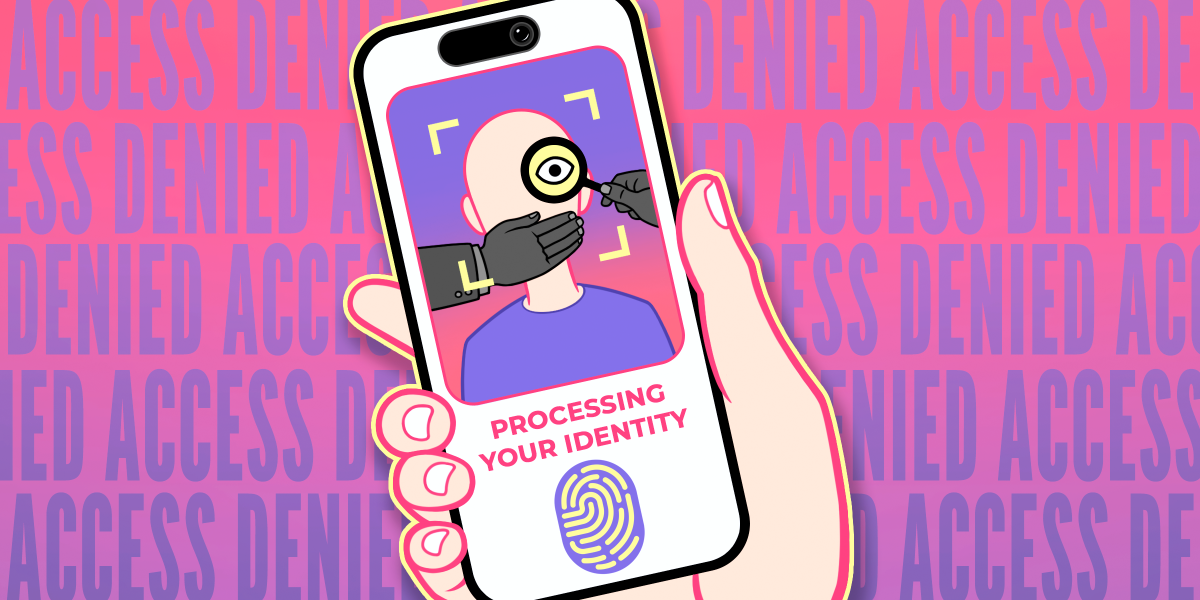
The French Court also called attention to its infringement on privacy as the legislation would have forced people of all ages to hand over government IDs, face scans, and other sensitive information to prove their age and access online content.  

Requiring this much data from users puts activists in danger of even more surveillance. Meta has already previously complied with demands from law enforcement to hand over the messages of users. The amount of personal information that will be logged and that could be demanded via a warrant from police to stifle or investigate activists’ actions or plans could cause a chilling effect, forcing advocates to pause or terminate their work.  

This is egregious because these systems misidentify or lock out people of color, people with disabilities, and trans or gender-nonconforming individuals whose IDs may not match their chosen name or align with what the system expects them to look like upon verification. And it’s often these communities that benefit from online organizing the most, especially for marginalized youth as social media can often be the only place to organize and build community. 

What Young People Deserve 

The settlement generates headlines, but it will not solve the core problem. Instead of tackling Meta’s surveillance capitalism business model that turns all online content into potential profit and centers lining the company’s pockets over protecting the speech and privacy of users, this settlement gives the tech giant an opportunity to carve out a new digital world that prioritizes its own needs, not those of young people.  

As we’ve been calling attention to in other contexts, this will force young people into digital isolation—curtailing vital access to news and resources for health and development. It also completely ignores the calls of youths themselves who favor digital literacy and education over surveillance and government control.   

Young people deserve a better internet than one regulated through panic. They deserve better than the government or Big Tech getting to decide how they use social media and what they can or cannot be exposed to or learn about. They deserve better than having their right to free expression minimized. This must not be lost in the pursuit of building a better and safer online ecosystem and environment.   
  •  

"We Want Texans to Know Their Rights": Q&A with Mayday Health on the Impact of Surveillance on Abortion Care

Last May, EFF reported that a sheriff’s office in Texas searched data from more than 83,000 automated license plate reader (ALPR) cameras to track down a woman suspected of self-managing an abortion. ALPRs are promoted as tools for keeping communities safe by finding missing persons and locating stolen vehicles, but this case showed how ALPRS can be weaponized to investigate people’s private healthcare decisions. And these aren’t the only tools in the surveillance arsenal: others include location tracking tools like Locate X, which can show a person’s visit to an abortion clinic, or search histories which might be used as evidence of a person’s interest in obtaining abortion pills. Taken together, these tools create a dangerous surveillance pipeline that threatens everyone’s health privacy. 

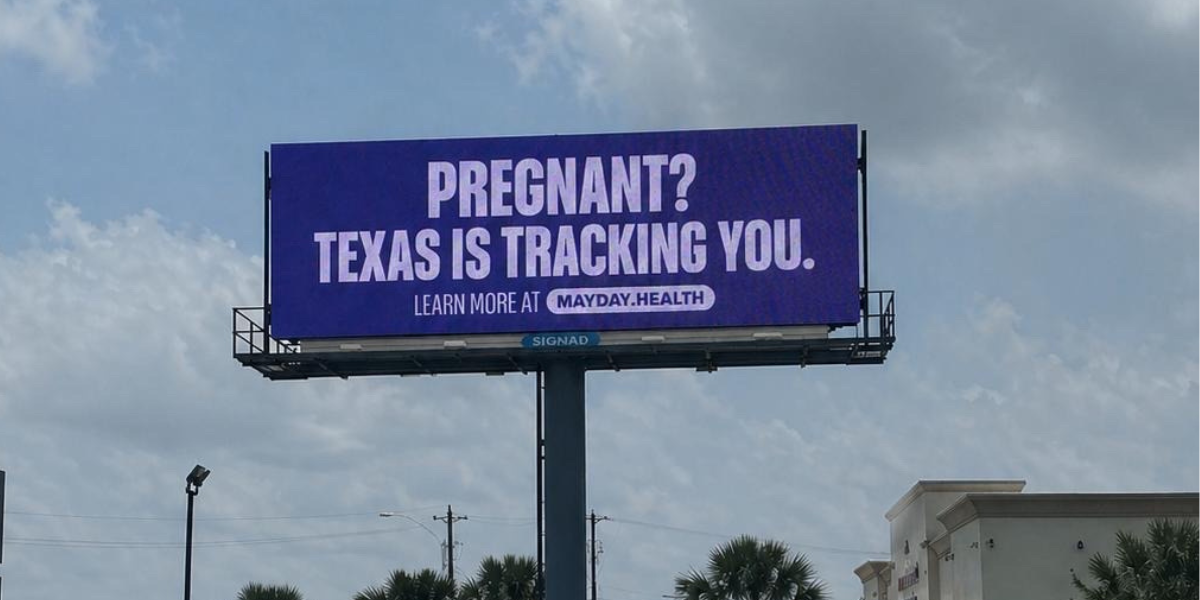
Too often, though, the public is unaware of the threat, and one nonprofit is working to change that. Following EFF and 404 Media’s report on Texas’s use of Flock cameras, eye-catching billboards popped up in Houston, warning drivers that if they’re pregnant, the state of Texas could be tracking them.  


Photo provided by Mayday Health

These billboards came from Mayday Health, a nonprofit dedicated to sharing information about abortion pills, birth control, and gender-affirming care. We spoke with Leo Raisner, Executive Director of Mayday Health, about the billboards to learn more about the campaign and organization and to discuss how surveillance affects reproductive freedom. 

***

THOMAS: Why did Mayday Health start this campaign in Texas?  

RAISNER: Well, we read the incredible reporting coming from EFF about Texas's surveillance. We want Texans to know their rights, to know their options, and to know that there are organizations and people who have their back. So we decided to put up a few billboards around the Houston area to remind people that they still have options.  

Digital advertising in the space, as I know you're well aware of, faces enormous platform restrictions from Meta and Google, whereas billboards reach people in the physical world without algorithmic gatekeeping and without requiring anyone to search for information. So at the very least, if a driver's passing by the billboard, we’re spreading information that they should be careful that they might be surveilled, and also there are different options. There's a website where they can come learn more about those options. 

THOMAS: And how have the billboards been received so far? Have you heard anything from folks in the Houston area yet?    

RAISNER: Yeah, we've heard some messages of support on social media DMs. We're just thrilled about how many drivers these messages are going to reach. They'll be up for 4 weeks, and are expected to hit over 1,000,000 drivers during that 4-week campaign period.    

THOMAS: Are there other ways that Mayday Health has seen surveillance systems impact people seeking healthcare?  

RAISNER: You know, we go all over the country and talk to folks who are seeking reproductive healthcare options in states where clinics are banned, and we direct folks to our website where they can learn more about abortion pills. We make privacy very central to how we operate. Privacy is not just an afterthought for us. When people arrive at our website, we direct them to the Digital Defense Fund, which offers people privacy and security resources as they're navigating reproductive healthcare in states where they might be being surveilled. We don't collect cookies, we don't collect identifying information from visitors to our site. We want people to know their options, and we don't have any interest in knowing who they are.  

THOMAS: Why do you think the work of the digital rights movement is so important to the work of the reproductive health rights and justice movement?  

RAISNER: I mean, those two movements are inextricably linked. The anti-abortion movement is using every tool in their toolbox to prevent people from getting the healthcare access they need, whether that's surveilling people online or closing down brick-and-mortar clinics, but we encourage people to visit Mayday Health and learn that they still have options no matter where they live.  

THOMAS: Is there anything else that you would like the readers of our blog to know about Mayday Health?    

RAISNER: I'd love for people to know that abortion pills are FDA approved. They're safe, they're effective, and they're available through the mail. 

*** 

EFF has said it time and time again – surveillance and reproductive freedom cannot coexist. Whether the tracking occurs over the internet or through license plate reader systems with over 83,000 cameras, it is an invasion of privacy. Protecting our digital privacy is more critical now than ever. Help EFF fight back against this digital dragnet and protect reproductive freedom for all by making a donation. 

  •  

EFF is Leaving X

After almost twenty years on the platform, EFF is logging off of X. This isn’t a decision we made lightly, but it might be overdue. The math hasn’t worked out for a while now.

The Numbers Aren’t Working Out

We posted to Twitter (now known as X) five to ten times a day in 2018. Those tweets garnered somewhere between 50 and 100 million impressions per month. By 2024, our 2,500 X posts generated around 2 million impressions each month. Last year, our 1,500 posts earned roughly 13 million impressions for the entire year. To put it bluntly, an X post today receives less than 3% of the views a single tweet delivered seven years ago. 

We Expected More

When Elon Musk acquired Twitter in October 2022, EFF was clear about what needed fixing. 

We called for: 

  • Transparent content moderation: Publicly shared policies, clear appeals processes, and renewed commitment to the Santa Clara Principles
  • Real security improvements: Including genuine end-to-end encryption for direct messages
  • Greater user control: Giving users and third-party developers the means to control the user experience through filters and interoperability.

Twitter was never a utopia. We've criticized the platform for about as long as it’s been around. Still, Twitter did deserve recognition from time to time for vociferously fighting for its users’ rights. That changed. Musk fired the entire human rights team and laid off staffers in countries where the company previously fought off censorship demands from repressive regimes. Many users left. Today we're joining them. 

"But You're Still on Facebook and TikTok?" 

Yes. And we understand why that looks contradictory. Let us explain. 

EFF exists to protect people’s digital rights. Not just the people who already value our work, have opted out of surveillance, or have already migrated to the fediverse. The people who need us most are often the ones most embedded in the walled gardens of the mainstream platforms and subjected to their corporate surveillance. 

Young people, people of color, queer folks, activists, and organizers use Instagram, TikTok, and Facebook every day. These platforms host mutual aid networks and serve as hubs for political organizing, cultural expression, and community care. Just deleting the apps isn't always a realistic or accessible option, and neither is pushing every user to the fediverse when there are circumstances like:

  • You own a small business that depends on Instagram for customers.
  • Your abortion fund uses TikTok to spread crucial information.
  • You're isolated and rely on online spaces to connect with your community.

Our presence on Facebook, Instagram, YouTube, and TikTok is not an endorsement. We've spent years exposing how these platforms suppress marginalized voices, enable invasive behavioral advertising, and flag posts about abortion as dangerous. We’ve also taken action in court, in legislatures, and through direct engagement with their staff to push them to change poor policies and practices.

We stay because the people on those platforms deserve access to information, too. We stay because some of our most-read posts are the ones criticizing the very platform we're posting on. We stay because the fewer steps between you and the resources you need to protect yourself, the better. 

We'll Keep Fighting. Just Not on X

When you go online, your rights should go with you. X is no longer where the fight is happening. The platform Musk took over was imperfect but impactful. What exists today is something else: diminished, and increasingly de minimis. 

EFF takes on big fights, and we win. We do that by putting our time, skills, and our members’ support where they will effect the most change. Right now, that means Bluesky, Mastodon, LinkedIn, Instagram, TikTok, Facebook, YouTube, and eff.org. We hope you follow us there and keep supporting the work we do. Our work protecting digital rights is needed more than ever before, and we’re here to help you take back control.

  •  
❌