โŒ

Reading view

From WarGames to Cyberwar

How Nations Hack, Why Attribution Fails, and What AI Changes

Executive Summary:
Code War author Allie Mellen, argues that cyberwarfare must be understood through a human and geopolitical lens to close the knowledge gap between the security community and the public.

Disclaimer:
This post reflects the perspectives shared in the book Code War: How Nations Hack, Spy, and Shape the Digital Battlefield, and does not represent the views of the publisher of this blog.


The summer of 1983, President Reagan watched WarGames at Camp David and couldn't get it out of his head. A week later, he walked into a White House meeting with cabinet members and Congress and launched into a detailed plot summary of a Matthew Broderick movie about a teenager who nearly hacks the world into nuclear war. The room full of defense experts sat uncomfortably, suppressing smirks. Then Reagan turned to General John Vessey, Chairman of the Joint Chiefs, and asked if something like that could actually happen.

Vessey came back a week later with an answer: "Mr. President, the problem is much worse than you think."

Fifteen months after that, Reagan signed a classified presidential directive titled "National Policy on Telecommunications and Automated Information Systems Security" โ€“ the first federal policy of its kind. A movie had done what years of expert warnings hadn't: It made the most powerful person in the world stop and ask the right question.

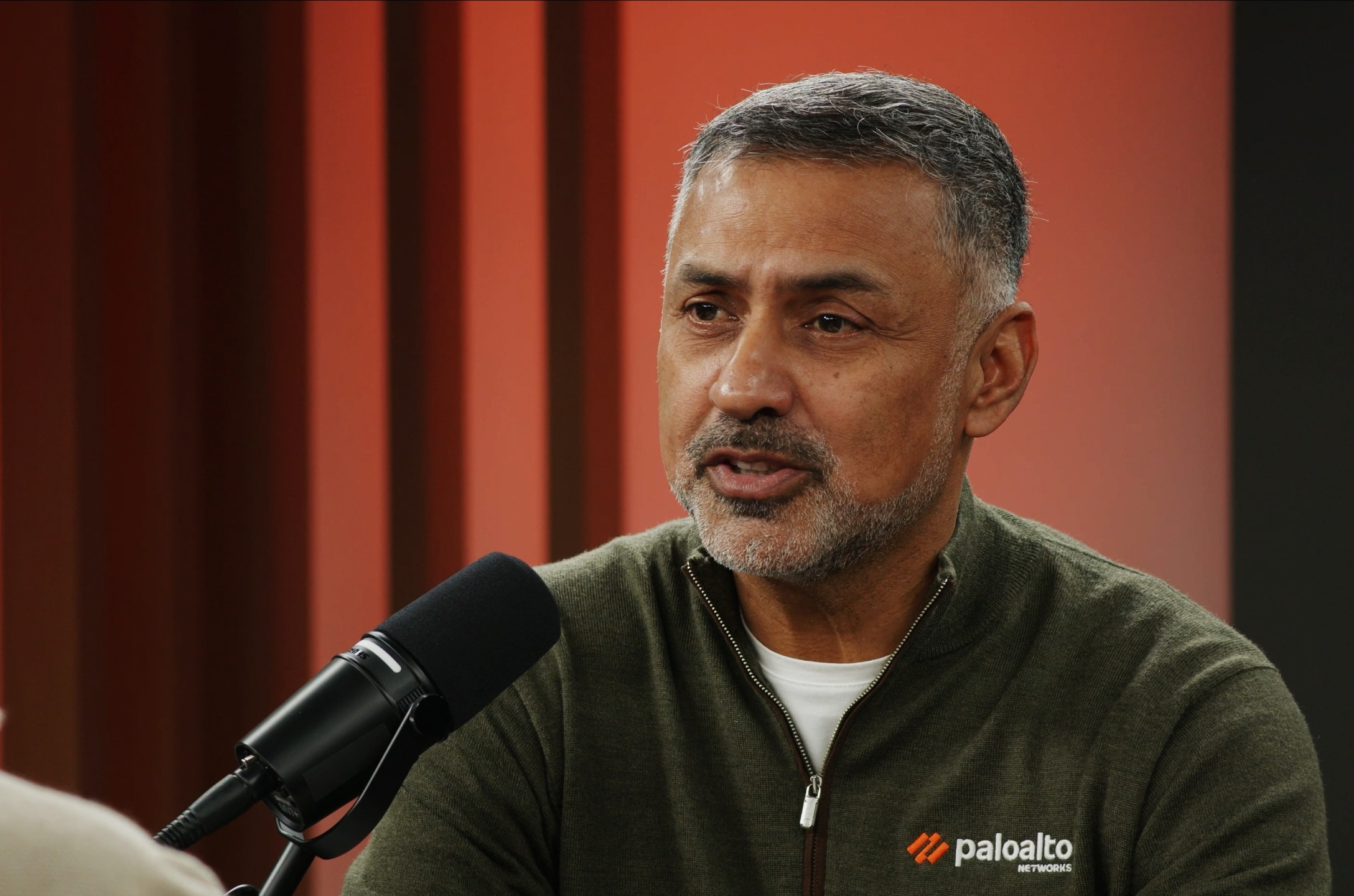
Allie Mellen, author of Code War: How Nations Hack, Spy, and Shape the Digital Battlefield, loves to tell this story, and it captures exactly why she wrote the book. In a conversation recorded at RSA 2025, Mellen joined Threat Vector host, David Moulton, to talk about nation-state threats, attribution pitfalls, and why the security industry's biggest problem isn't technical.

"They're human stories, and if we can communicate them that way to the general public, then we'll get more people interested in cybersecurity, invested in cybersecurity, and invested in protecting their data."

That gap, between what the security community understands and what everyone else grasps, is the core problem Mellen set out to solve. And in today's geopolitical moment, closing it has never been more urgent.

Every Nation Hacks Differently

One of the central arguments in Code War is that you can't understand a nation's cyber behavior without understanding its history, doctrine and social contract. China, Russia, Iran, North Korea and the U.S. each approach offensive and defensive cyber operations from completely different starting points, and those differences matter enormously to defenders.

China operates with patience. Its attacks tend to be low and slow, focused on long-term espionage rather than loud disruption. But that changes sharply in its own region, where operations targeting Taiwan are aggressive and relentless. Russia, by contrast, is bombastic; they want you to know it was Russia. Its influence operations have been some of the most effective in modern history, studied and imitated by Iran and others.

Interestingly, the very system China built to protect itself has become a liability in one specific domain. Because Chinese operators live behind the Great Firewall, without access to western social media, they lack the cultural fluency that makes Russian disinformation so effective. "They try to use memes, but it's like โ€˜uncanny valleyโ€™," Mellen explains. "They just slightly miss every time and so it doesn't go viral." The walled garden that gives China control over its own population makes it harder to manipulate everyone else's.

Attribution Is a Geopolitical Tool, Not Just a Technical One

Mellen is careful about attribution, and she wants defenders to be too. The standard technical signals (coding language, infrastructure patterns, operational hours) are necessary but not sufficient. Nation-states, especially the U.S., have developed tools specifically designed to mimic other actors' signatures. AI will make that problem significantly worse.

But the bigger issue is motivation. Mellen walks through a case from the Olympics where an attack was initially attributed to North Korea, even though North Korea was actively trying to normalize relations at the time by sending Kim Jong Un's sister to the games. The actual perpetrator was Russian, using a false flag to obscure its involvement. The lesson: Attribution requires asking not just "who has the technical capability?" but "who has the motive right now, given everything happening geopolitically?"

The pitfalls are real:

  • Tools once used exclusively by intelligence agencies are now publicly available, making code signatures unreliable.
  • Working-hours analysis is easy to spoof, especially for sophisticated actors.
  • Government-controlled research in adversarial nations can deliberately skew attribution findings.
  • False flag operations are increasingly sophisticated and harder to disentangle.

Why Your Data Is a Geopolitical Asset

One of the more powerful sections of the conversation centers on a question Mellen hears constantly: why would China care about my data?

Her answer cuts through the dismissiveness. These nations aren't collecting data out of idle curiosity. They're willing to constrain companies for it, invest billions in infrastructure for it, and in some cases, far worse. "Whether you wanna be involved in that system or not, you are involved in that system," she says. "And so you can either choose to take control of your information in that environment, or you can just pretend like it's not your problem."

The historical context she offers is striking. One of the driving forces behind GDPR in the EU was the collective memory of how Nazi Germany used data to target Jewish people during the Holocaust. Europe built privacy protections into law because it had seen what happens when governments gain unrestricted access to population data. That's not an abstract concern. It's a lesson written in history that the rest of the world is still catching up to.

AI Makes Everything Harder

Mellen isn't optimistic about the trajectory. Attribution is about to get much harder. Attacks are about to get much more dynamic. And AI is the reason for both.

She points to research on Chinese state-sponsored actors using AI to orchestrate attacks across the full kill chain, with only a couple of human checkpoints in the loop. The implication isn't just faster attacks. It's more adaptive malware that can adjust to different operating environments, more convincing disinformation that clears the cultural context bar, and reconnaissance-to-exploitation cycles that move faster than most defenders can process.

The constraints that have always slowed sophisticated attackers โ€“ understanding the operating system, identifying vulnerabilities, crafting exploits, mimicking attribution โ€“ all get easier with AI. All of that becomes more dynamic. And most enterprises, Mellen acknowledges, are not yet equipped to respond effectively.

The investment required is in the basics the industry has always struggled to get right, executed now at a pace and scale that demands automation and AI on the defensive side. Fighting AI with AI isn't a vendor talking point. It's the only math that works.

More to Explore

The nation-state threats Mellen describes aren't theoretical. Unit 42 responded to more than 750 major incidents in 2025. See what they found. Download the 2026 Global Incident Response Report.

Listen to the full conversation with Allie Mellen, author of Code War, on the Threat Vector podcast

The post From WarGames to Cyberwar appeared first on Palo Alto Networks Blog.
  •  

39 Seconds โ€” That's How Long It Takes to Lose Your Data

Not hours. Not days. It takes thirty-nine seconds from initial access to data exfiltration.

That stat, pulled from Unit 42ยฎ research, isn't hypothetical. It's what defenders are up against right now, while most organizations are still building security teams around manual detection and response workflows that were never designed to operate at machine speed.

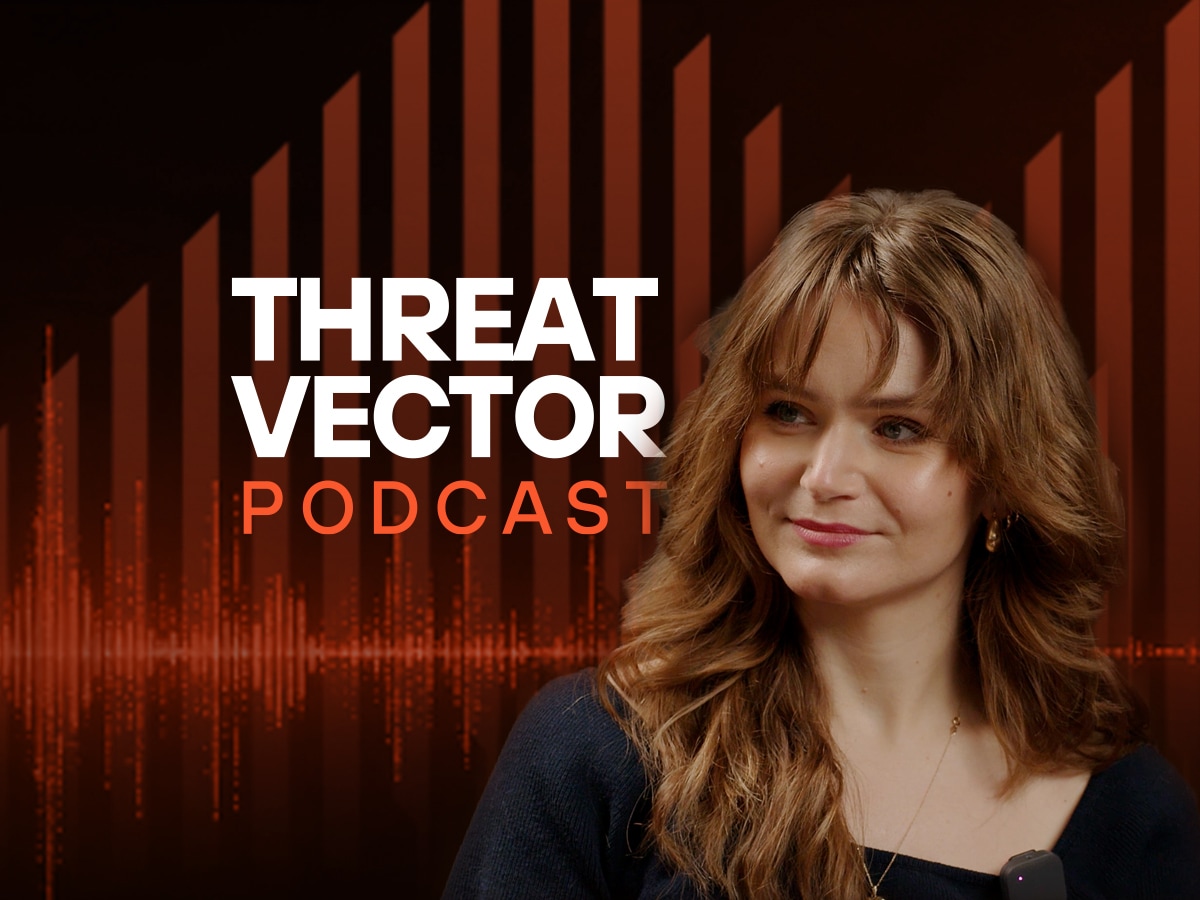
Wendi Whitmore, Chief Security Intelligence Officer at Palo Alto Networks, put it plainly in a recent conversation on the Threat Vector podcast, recorded live at RSA this year:

If you're applying a manual detection and response capability, you are going to be beat by the attacker every day.

It's the kind of sentence that should make security budgets move faster.

The Threat Landscape Doesn't Wait for Organizational Consensus

Whitmore has spent nearly 25 years tracking nation-state actors, and she's unequivocal about what's changed. The adversaries today aren't just better funded and more sophisticated. They're faster, and increasingly AI-powered.

Consider what's converging right now:

Chinese nation-state groups like Volt Typhoon and Salt Typhoon have been operating with near-surgical patience inside critical infrastructure, leveraging existing administrative tools to avoid detection. Volt Typhoon is focused on military prepositioning in power grids, water systems and telecommunications. Salt Typhoon has been systematically collecting intelligence from those same networks. Neither group announces itself with novel malware. They disappear into environments using the tools already there.

Meanwhile, threat actors tied to Iran are operating with entirely different objectives: tactical disruption and destruction. And financially motivated cybercriminal groups are automating ransomware campaigns at a pace that has compressed attack timelines from weeks to minutes.

Every CISO is being asked to defend against all of them simultaneously, while also managing their organization's AI expansion, and doing it without adding headcount.

Speed Is the New Perimeter

When Whitmore references the 39-second exfiltration window, she's pointing at something structural, not just alarming. It reflects how completely the attacker's operational tempo has shifted.

The 72-minute data breach figure from Unit 42 Incident Response data is equally striking: From initial access to full data theft in the time it takes to sit through a decent movie. A 400-times year-over-year increase in exfiltration speed isn't a trend. It's a fundamental change in the physics of an attack.

"There is no way that we are going to defeat these adversaries if we are working at manual speed," Whitmore explained. The answer isn't just more analysts. It's fighting AI with AI, letting machines handle the volume and velocity, so humans can focus on the problems that actually require human judgment.

Two Sides of the Same AI Problem

Here's where the conversation gets more nuanced and more important.

Most of the AI-in-security conversation focuses on the offensive side: adversaries using generative AI to craft convincing phishing lures, accelerate reconnaissance and automate attack sequences. That's real, and it's accelerating.

But Whitmore raised the other half of the problem, one that gets far less attention: The attack surface that organizations are creating by deploying AI without securing it.

Innovation of AI doesn't so far outpace the security of AI.

This is the outcome she wants to see. Right now, that's not what's happening. Business pressure to deploy AI quickly is outrunning the security architecture required to protect it. Every new AI deployment touching production data, cloud APIs and enterprise systems expands the attack surface. Shadow AI, prompt injection, model poisoning: These are not future threat vectors. They're present tense.

The distinction Whitmore draws is useful: AI for cybersecurity (faster detection, automated response, reduced analyst burden) needs to advance in parallel with cybersecurity for AI (securing the models, prompts and data pipelines that organizations are building on). One without the other creates exactly the kind of asymmetry attackers will exploit.

Visibility Is Where It Starts

Whether the conversation is about defending against nation-state actors or securing AI deployments, Whitmore keeps returning to the same foundation of visibility.

Not complexity. Not more tools. Visibility is a single, unified view of what's happening across endpoints, networks, cloud and AI systems, thatโ€™s fast enough to matter when the window is measured in seconds, not days.

For SOC teams, that means being able to detect and contain a threat before a compromise of one system becomes an enterprise-wide event. For CISOs thinking about AI governance, it means understanding what's being deployed, what's being prompted, and where the data is going before an incident surfaces for them.

The organizations Whitmore sees succeeding aren't the ones with the largest security budgets. They're the ones with the clearest picture of their environment, and the architecture to act on it in real time.

The Win Looks Different Now

Perhaps the most important reframe in the conversation is that the objective is no longer to prevent every attack. That goal is not achievable against adversaries operating at AI speed with nation-state resources.

The win is resilience. Detecting fast and containing fast. Keeping one compromised endpoint from becoming an enterprise-wide breach.

That shift in framing, from prevention to rapid recovery, has significant implications for how security teams are built, how AI is integrated into workflows, and how CISOs make the case for investment to leadership that still thinks in terms of keeping attackers out.

The adversaries already know the perimeter is gone. The question is whether your defense strategy has caught up.

Want to Dig in More?

Listen to the full interview here.

The Unit 42 2026 Global Incident Response Report goes deep on the threat trends shaping how modern attacks unfold. If you want the data behind the headlines, start here. Download the Report โ†’

The post 39 Seconds โ€” That's How Long It Takes to Lose Your Data appeared first on Palo Alto Networks Blog.
  •  

When Security Becomes an Afterthought

Why AI's Biggest Risk Isn't Technical

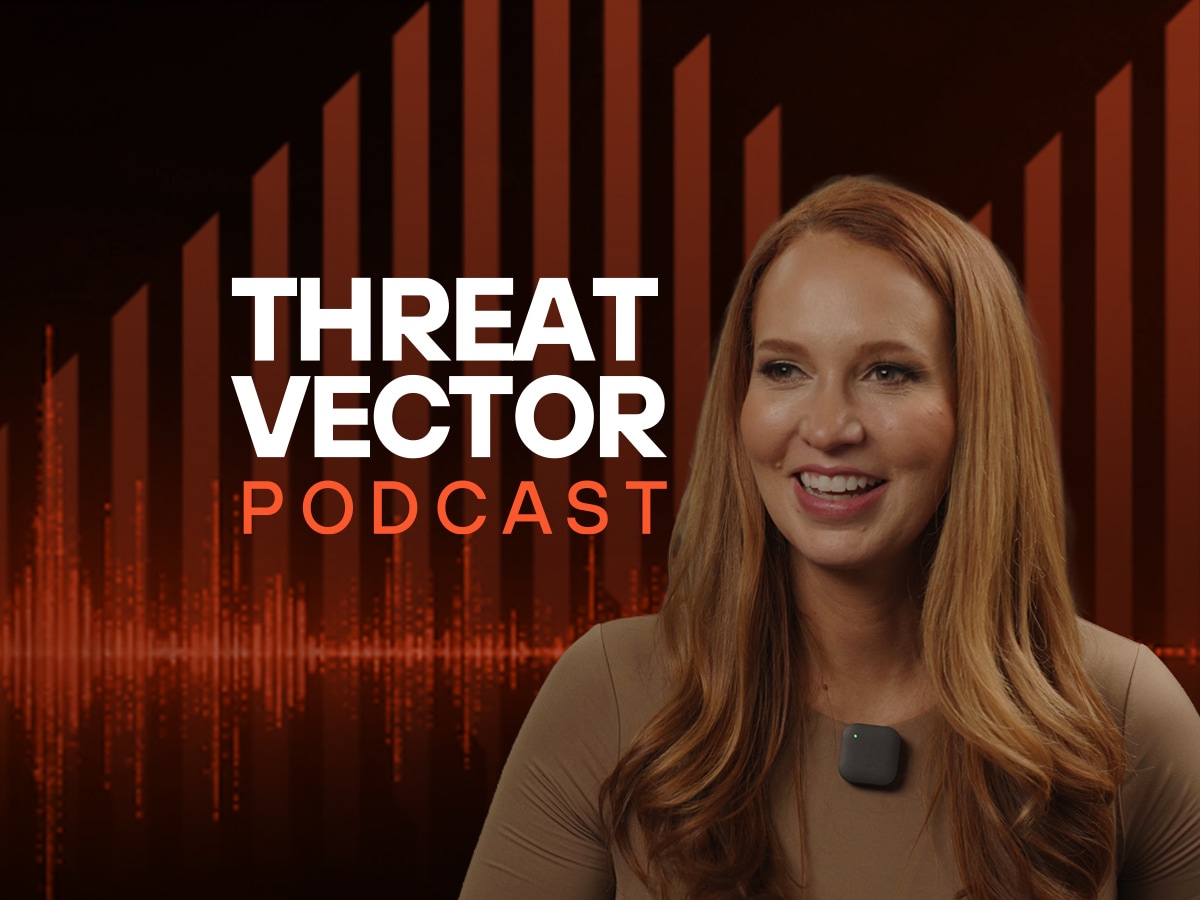
This article is based on a conversation with Nikesh Arora on the 100th episode of the Threat Vector podcast.

David Moulton interviews Nikesh Arora
David Moulton interviews Nikesh Arora on the Threat Vector podcast.

"Most technologists think about technology, not about cybersecurity," Nikesh Arora says. "Cybersecurity is kind of like insurance. Let's go make great things happen, and let's make sure on the way we purchase insurance."

Coming from the CEO of the world's largest cybersecurity company, it's the quiet part said out loud, and it explains why AI deployment is racing ahead while security scrambles to keep up.

Earlier this year, Arora spoke with a CIO entirely focused on AI deployment challenges: building viable products, training models, measuring customer impact. Security never came up once. "If you're still going through the motion, trying to understand, โ€˜Can I actually make this thing work?โ€™ You're not worried about security," Arora notes. The logic is brutal but consistent: Why secure something that might not even function?

In the Threat Vector podcastโ€™s 100th episode milestone, Arora speaks with host David Moulton:

  • Why the gap between innovation and security keeps widening.
  • How to read inflection points before they're obvious.
  • What separates organizations that prepare from those that scramble.

The Gap That Keeps Growing

The disconnect isn't new. It's the same psychology that makes airport security feel like overhead โ€“ necessary friction that slows down what should be seamless. But with AI, the gap is widening at an unprecedented pace.

Consider the infrastructure buildup happening right now. Nvidia has become a $4 trillion company selling chips that can't stay in stock. Hundreds of billions of dollars are flowing into AI-computer infrastructure. Cloud providers are buying out entire methane gas companies to power their data centers.

Yet organizations are treating AI security as something to bolt on later. That same CIO told Arora: "We worked on some stuff ourselves, and we're just jerry-rigging some things to make sure this happens securely."

Arora's response:

Jerry rig, production, and security don't work together as three terms.

Reading Signals Before They're Obvious

Arora has watched enough technology cycles to recognize the pattern. "You start seeing signs early, and then you look around, you don't see enough impact. You say, okay, maybe this is going to be just a passing shower. But you don't realize that over time this thing's getting more and more momentum."

The signs around AI are adding up:

  • Individual behavior has shifted.
    Arora went from never talking to ChatGPT or Gemini to conducting 10-15 conversations daily. During a recent Tokyo trip, he used Gemini as his primary navigation tool, asking it to rank sumo wrestling shows for his kids rather than "trying to go read 14 websites and figure out what makes sense."
  • The spend is massive and accelerating.
    Not just chips, entire energy infrastructures are being rebuilt to support AI compute needs.
  • Consumer and enterprise adoption are both surging.
    From coding assistants to business analysis, use cases are expanding faster than security models can adapt.

"This thing's going to change our life fundamentally," Arora tells Moulton. "We're not seeing it at scale in our customers just yet. That doesn't mean we can sit back and wait."

Arora understands the risks involved in being late to new technology.

You have to not just anticipate where the trend is going. You have to prepare your organization and the resources to get there. Otherwise, the risk is that Silicon Valley will go fund those people who are thinking purely about the new world... and one of them's going to hit. Then you'll be two years behind with no organization, no resources deployed against it.

The Bets That Paid Off

When Arora joined Palo Alto Networks seven and a half years ago, he wrote two words on a piece of paper: cloud and AI. The company was a firewall business. Those two inflection points would require fundamental transformation, and, just as with AI now, being late was not an option.

If you don't get the network transformation right, 80% of our business will falter.

That insight drove a strategic bet on moving from point products to platform thinking, consolidating security tools rather than adding to the sprawl.

The platform approach wasn't about vendor consolidation for its own sake. It was about correlation. Unit 42ยฎ data shows that 70% of incidents now span three or more attack surfaces. When attacks move across endpoints, networks, cloud services and applications simultaneously, fragmented security creates gaps that attackers exploit ruthlessly.

Today we have coverage for 80 plus percent of the industry, which means our customers can come talk to us about a myriad of problems, and we can actually cross-correlate across all the different things we do.

With AI deployments touching every part of the technology stack, that cross-correlation becomes essential. Data flows between training environments and production systems. Models access APIs across cloud and on premises infrastructure. Applications consume AI services from multiple providers. Security that can't see and correlate across that entire landscape will miss the threats that matter most.

First Principles Over Tradition

What drives Arora's ability to spot inflection points isn't just pattern recognition, it's his refusal to accept how things have always been done.

His pet peeve: "Somebody said, well, this is how we've traditionally done it." The response reveals his approach: "You use the word traditional. I use the historical context saying, yeah, sure, they used to dig fields with picks and shovels, and now they use tractors."

This thinking drove Palo Alto Networks to reimagine SOC performance. The industry accepted four days as the normal time to detect and remediate security incidents. Arora called that unacceptable. "We need to get it to be real time."

The result was a fundamentally different architecture that analyzes data as it arrives rather than waiting for problems to appear, enabling 1-minute detection and response instead of four days.

Traditionally, SOCs would analyze the problem when the problem appeared. We said forget it. We're going to analyze everything to see if there's a problem. That architecture fundamentally transformed what we do compared to everybody else in the market.

The same first-principles approach needs to apply to AI security. Organizations can't simply extend existing security models and hope they work.

What Comes Next

With ransomware attacks now completing in as little as 25 minutes (100 times faster than just three years ago, according to Unit 42 research) reactive security simply can't keep pace. Organizations need security that thinks and responds at machine speed, built into AI deployments from day one.

"AI has become the biggest inflection point in current technology," Arora observes. Organizations are too busy deploying to worry about security. That's human nature. But it's also the moment when security teams need to stay in lockstep.

The question isn't whether to secure AI, it's whether security will be designed in or bolted on. The former takes strategic thinking now. The latter takes crisis management later.

Our job at Palo Alto and our industry is to make sure as they go build these experimental ideas into real production capability that we're staying in lockstep with them and saying, โ€˜Oh, by the way, here's something that can secure what you just built in a way that is not gonna get you into trouble.โ€™

Listen to the full conversation between Nikesh Arora and David Moulton, senior director of thought leadership for Cortexยฎ and Unit 42, on the 100th episode of Threat Vector.

The post When Security Becomes an Afterthought appeared first on Palo Alto Networks Blog.

  •  
โŒ