❌

Normal view

We All Deserve a Better Internet, Not A Smaller One

10 September 2026 at 21:12
Bans Like California’s Don’t Fix What’s Wrong With Social Media Companies

SAN FRANCISCO - Technology and the laws that regulate it should support and empower young people. California’s AB 1709 - signed into law today by Gov. Gavin Newsom - falls far short of this goal, say the Electronic Frontier Foundation (EFF) and its allies.   

Using technology is how we learn and build community in today’s world. Laws such as AB 1709, a functional ban on social media use for people under the age of 16, instead cut young people off from essential information and experiences. That particularly harms those already facing increased challenges, who often find safety in supportive online communities that they can’t always access in the physical world.  

"California should be passing laws to ensure that technology really works for people of all ages, not enacting social media bans that cut young people off from digital lifelines, communities, and speech," said EFF Associate Director of State Affairs Rindala Alajaji. "Denying minors access to digital forums - or stripping out basic tools needed to navigate them - is not going to help make young people safer or healthier in the AI age."  

Research shows social media bans are ineffectual, while also denying young people opportunities to develop their own voices and perspectives—to share their art, practice religion or engage in politics.   

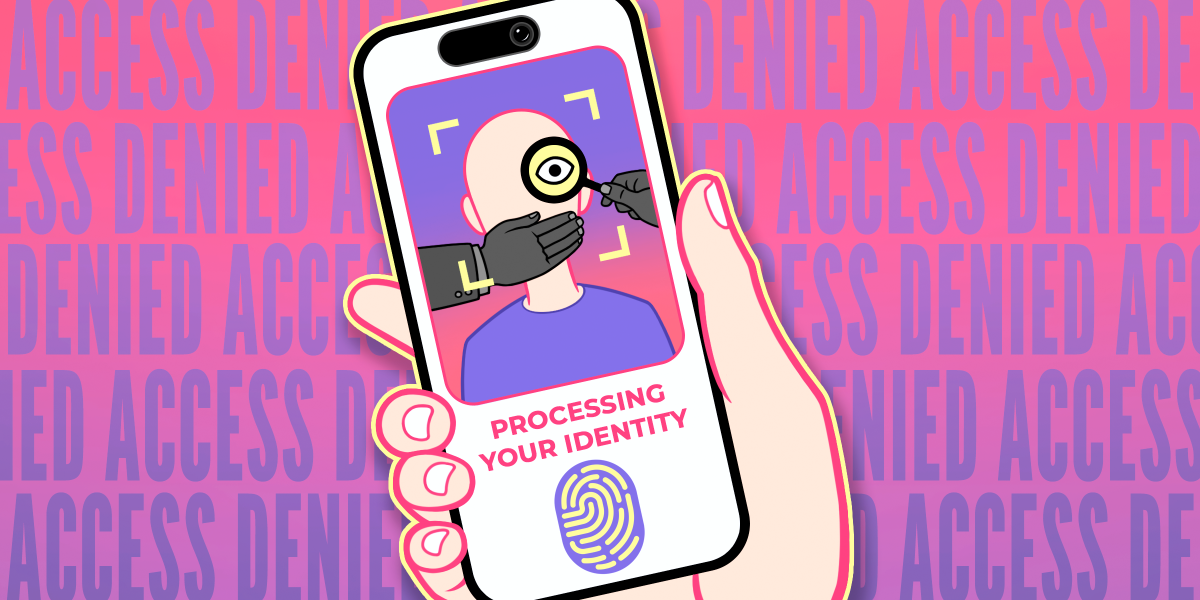
Age-gating requirements also force everyone to give up more personal information. To verify who can pass through their online gates, companies will collect even more data, and this further concentrates power in the hands of companies, rather than protecting people.  

AB 1709 is also inconsistent with rights to free expression and California will be spending resources to defend a law tied up in court. Instead, we should redouble our efforts to get technology laws right—and support the passage of new robust privacy laws that target surveillance business models. That’s how we protect everyone in the AI age.   

Young people should be able to use technology in safe and healthy ways. The Golden State should model the gold standard laws that ensure technology works for everyone, rather than shut down access to digital forums in ways that do more harm than good. 

"Social media bans like AB1709 make kids less safe, while undermining privacy and freedom of expression for everyone,” said Evan Greer, Director of Fight for the Future. “Young people have been on the forefront of every social movement throughout history that has led to positive social change. We need policies that empower young people rather than silencing them. These kid-focused bans are a gift to Big Tech giants, allowing them to continue operating their harmful business model while incentivizing them to collect even more data. California lawmakers should be ashamed. They didn't do anything to protect the kids, they just used kids as pawns to make good headlines."  

“In a world of increasing stigma and marginalization for LGBTQ+ families, AB 1709 continues that trend by stripping people with LGBTQ+ parents of the ability to meet and build community with one another on the internet” said Jordan Wilson, Executive Director of COLAGE. “Beyond obstructing the right of youth with LGBTQ+ parents to access information, this bill places an undue burden on all Californians by forcing age verification at a time when digital privacy rights are being eroded globally. We cannot ‘protect children’ by stripping them of their primary avenue for connection.” 

Contact: 
Rindala
Alajaji
Associate Director of State Affairs

2026 EFF Award Winners: Access Now, 7amleh – The Arab Center for the Advancement of Social Media, DeFlock, and New Media Rights

9 September 2026 at 18:00

EFF is pleased to announce that Access Now, 7amleh – The Arab Center for the Advancement of Social Media, DeFlock, and New Media Rights have received 2026 EFF Awards for their vital work in ensuring that technology supports freedom, justice, and innovation for all people. 

The EFF Awards recognize specific and substantial technical, social, economic, or cultural contributions in diverse fields including journalism, art, digital access, legislation, technology development, and law. 

For the past 30 years, the EFF Awards—previously known as the Pioneer Awards—have recognized and honored key leaders in the fight for freedom and innovation online. Started when the internet was new, the Awards now reflect the fact that the online world has become both a necessity in modern life and a continually evolving set of tools for communication, organizing, creativity, and increasing human potential.  

Supporting a global community advancing digital rights, defending digital access in crisis zones, empowering communities to take action against surveillance, and providing free legal assistance for creators and consumers to fight back against digital threats are high callings that help bring about a better tech future for all. We are pleased to honor these organizations with 2026 EFF Awards. 

Access Now – Fostering Change in Human Rights and Technology

Access Now logo

Access Now, founded in 2009 as an emergency response team helping Iranian activists get back online and communicate safely, has grown into one of the world’s foremost organizations defending and extending the digital rights of people and communities at risk and supporting the global fight against technological repression.  

Its 24/7 Digital Security Helpline offers real-time, direct technical assistance and advice to civil society groups and activists, media organizations, journalists and bloggers, and human rights defenders. It provides grants to frontline organizations working with people and communities most impacted by digital rights violations. It educates decision makers and pressures the powerful. And it organizes RightsCon, a leading annual summit on human rights in the digital age, where activists, technologists, policymakers, business leaders, journalists, philanthropists, researchers, and artists can connect, collaborate, and drive change at the intersection of human rights and technology. 

7amleh – The Arab Center for the Advancement of Social Media – Defending and Advancing Digital Access and Rights Across the MENA Region

7amleh logo7amleh - The Arab Center for the Advancement of Social Media protects and expands digital access and rights for Palestinians and across the MENA region. The nonprofit investigates and monitors challenges to digital rights, focusing on internet access, privacy, freedom of expression and association online. It builds the capacity of activists, human rights defenders, and civil society organizations to provide training about digital rights, gender sensitive digital security, and effective online advocacy.  

7amleh also advocates for changes to the digital rights policies and practices of governments, corporations and other influential institutions and individuals locally, regionally and internationally. It plans and manages advocacy and awareness-raising campaigns and builds networks and coalitions to promote access to safe, fair and free online spaces. For example, 7amleh has led the #ReconnectGaza campaign, supported by dozens of international NGOs including EFF, to restore full internet access in Gaza – a crucial lifeline for residents, journalists, activists, and first responders.  

DeFlock – Exposing the ALPR Surveillance Network

DeFlock logo

DeFlock is an open-source, volunteer-powered project that maps surveillance devices across the world, helping communities hold their governments and surveillance vendors accountable and understand where and how they're being watched. Founded in 2024 by software engineer and privacy advocate Will Freeman, DeFlock shines a light on the widespread use of automated license plate reader (ALPR) technology and the threats it poses to personal privacy and civil liberties.  

DeFlock resources help people request public records, speak to local lawmakers, and take action against ALPR surveillance. Its work has helped foster a national grassroots community of anti-surveillance activists fighting back against this dangerous surveillance technology. 

New Media Rights – Helping Creators Fight Back Against IP Bullies

New Media Rights logo

New Media Rights (NMR) is a San Diego-based nonprofit program of California Western School of Law dedicated to defending digital rights through legal services, education, and public policy advocacy. Since its inception, NMR has been at the forefront of protecting creators, entrepreneurs, and internet users from digital threats such as copyright abuse, online harassment, and privacy violations. 

In addition to providing free legal assistance, NMR has produced hundreds of freely available video and written legal education guides for creators and consumers, including the Fair Use App for filmmakers and video creators. It has participated in regulatory proceedings on net neutrality, Digital Millennium Copyright Act anti-circumvention, and copyright reform. Its work has also helped support access to public information and greater business and government accountability. 

Mobile Ad Software Encourages Location Data Sharing, EFF Report Finds

4 August 2026 at 21:30
Developers Must Beware of Ad Libraries that Betray Users’ Privacy

SAN FRANCISCO – Some software development kits (SDKs) provided by advertising companies to help developers monetize their apps are automatically feeding users’ location data into systems that location data brokers use to track people, an Electronic Frontier Foundation (EFF) report found. 

EFF began investigating the location-sharing practices of various advertising SDKs to better understand the pipeline from mobile apps to location data brokers. The probe revealed how such SDKs can facilitate and encourage location data sharing – without users’ knowledge or meaningful consent – through privacy-invasive defaults, financial incentives, and unclear documentation.    

“Defaults matter, not just for users, but for app developers as well. If app developers don’t pay close attention to the location-sharing settings of their advertising tools, they could inadvertently expose users’ location information,” EFF Staff Technologist Lena Cohen said. “Users can take extra steps to defend their location privacy, but they shouldn’t have to. Developers, regulators, and legislators must act to stop apps from leaking users’ location to advertising companies and data brokers.” 

Cohen and EFF Senior Staff Technologist Bill Budington reviewed the public developer documentation of dozens of widely used advertising SDKs to identify how they handle and communicate with developers about location data.  

In their analysis, they highlighted four advertising SDKs that collect and share a user's location by default for ad targeting whenever the user has given the app location permissions: InMobi, BidMachine, Verve’s HyBid, and Huawei’s Petal Ads. But EFF’s focus on these four does not mean that other SDKs adequately protect location data or that developers never choose to share location data when it’s not the default. In fact, advertising SDKs not discussed in this investigation have been criticized and sued for collecting location data without valid user consent.  

“When developers let advertising SDKs collect location data, they’re putting users at risk of more than just creepy ads,” Budington said. “Location information sourced from the advertising industry has been used for ICE investigations, global spy tools, outing a gay priest, tracking union organizers, and tracking US military personnel. Developers have a responsibility to protect their users’ from these harms, regardless of advertising SDKs’ default settings.” 

For the EFF report: https://www.eff.org/deeplinks/2026/07/developers-beware-ad-libraries-betray-your-users-location-privacy

For more on location data brokers: https://www.eff.org/issues/location-data-brokers 

For more on SDKs: https://www.eff.org/deeplinks/2022/06/how-federal-government-buys-our-cell-phone-location-data   

Contact: 
William
Budington
Senior Staff Technologist
Lena
Cohen
Staff Technologist

❌