Normal view

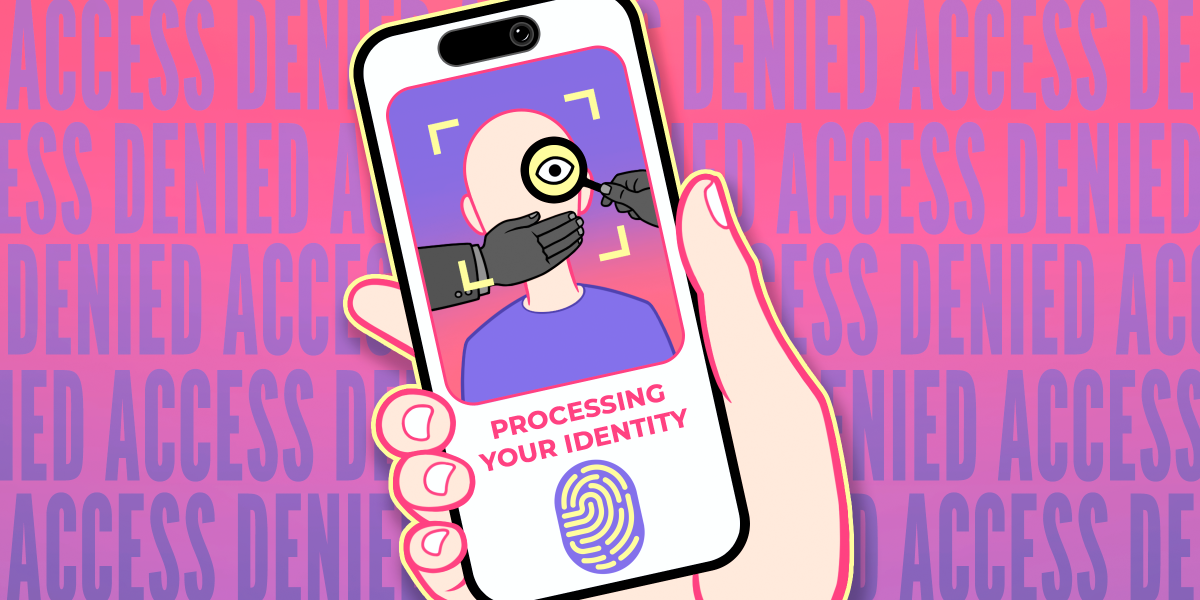
The CHATBOT Act Forces One Parenting Model On Every Family

31 July 2026 at 21:06

Artificial intelligence is rapidly changing education, and the way people search for information. Parents, teenagers, teachers, and schools are struggling with tough questions about when AI should, and should not, be used. It makes sense for Congress to hold hearings and examine how AI should be used by minors. But the recently introduced CHATBOT Act answers those questions with a one-size-fits-all mandate governing how teenagers access AI through federally prescribed parental monitoring systems. 

The Bill Requires AI Companies To Build Family Monitoring Systems 

Parents are approaching AI in different ways. Some closely supervise how their children use chatbots, while others might set more general rules about technology. Many families are still figuring out what role AI should play in schoolwork and everyday life. 

The CHATBOT Act would take that decision away from families and AI providers. Instead of letting families and AI providers decide what parental controls should look like, Congress would require every covered AI chatbot to build the same federally prescribed “family account” system. 

As part of the required parental-consent process for teens, AI companies must offer parents a "family account" that provides access to a "full record of the conversations and activity" of teen users and tools to "monitor, analyze, and understand, at scale" those conversations. They must also send alerts if a teen attempts to bypass or disable parental controls. 

This isn’t simply an optional parental-control feature. The bill requires every covered AI provider to build this monitoring infrastructure, and present it as part of the parental consent process. Congress is prescribing a single, highly invasive model of how families should supervise teenagers’ use of AI. 

The CHATBOT Act Creates New Privacy Risks For Families 

Parents and families have different ideas about how much independence teenagers should have. Understandably, they also have very different expectations for 8-year olds, 13-year-olds, and 17-year-olds. The CHATBOT Act effectively requires AI providers to build the same monitoring architecture for users of very different ages. 

And this mandated data collection will create new privacy and security risks. Once Congress requires AI companies to create a permanent, centralized record of teen AI conversations for parental review, that will be a valuable vault of extremely personal information. That raises serious questions about what would happen in cases where someone else gains access to it through account compromise, family disputes, or other security failures. 

The vast archives of conversations created by the government-mandated family accounts won't be interesting only to parents. They will become valuable targets for hackers, identity thieves, civil litigants, and anyone else seeking access to the deeply personal information of others. The CHATBOT Act requires the records to exist, but addresses none of those risks. 

Families are still figuring out what role AI should play in schoolwork and everyday life. Congress shouldn’t freeze one answer into federal law by requiring every AI company to build the same prescribed monitoring system. 

The CHATBOT Act Applies A Children’s Law To Teenagers 

The CHATBOT Act takes the basic structure of COPPA, a nearly 30-year-old law that applies to children aged 12 and under, and applies the same “verifiable parental consent” to older teenagers. 

That’s a dramatic expansion of the law. Congress enacted COPPA to prevent kids from handing over detailed personal information to online services without making sure parents approved. For nearly three decades, Congress has required parental consent before websites collect personal information from any user under 13. COPPA is not simple to comply with, which is why so many internet companies, large and small, simply bar kids under 13 from having accounts. That includes major social media sites and AI. Facebook, Instagram, TikTok, X, YouTube, Snapchat, Discord, Spotify, and blogging platforms like WordPress all keep out users under 13. Children under 13 are also not allowed to use Microsoft Co-Pilot, Google Gemini, or ChatGPT. Anthropic does not allow users under 18 to use its AI model, Claude. In cases where younger kids maintain social media accounts despite the rules, studies show the vast majority of them are creating those accounts with parental consent.  

In short, COPPA’s protections against collecting personal information from minors without parental consent already apply to the AI services CHATBOT Act seeks to regulate. Worse, the CHATBOT Act takes COPPA’s privacy protections and inverts them—it will result in AI services likely collecting more information about young users. 

But the CHATBOT Act extends that model to high school students using AI assistants that are rapidly becoming tools for learning, research, writing, coding, and creative work. It then mandates specific, invasive surveillance tools that go well beyond anything COPPA requires. 

The bill requires providers to offer these “family accounts,” with these specific features, as a default for teenagers. By doing so, CHATBOT effectively treats a high school senior the same way it treats an elementary school student. 

Supporters may argue that parents of teens don’t have to create a family account. But every family with a teenager will still have to go through the bill’s parental-consent process before a teenager can use a covered AI system. Providers will need practical ways to verify that an adult is, in fact, the teenager’s parent. And parents of kids under 13 have no option to consent to their kids’ use of an AI systemthe bill’s only option is to create a family account.

Congress should not extend the COPPA parental-permission model to millions of older teenagers, and it would be harmful to do so. The government does not require COPPA-style parental permission before a 17-year-old checks out a library book, uses Wikipedia, types search terms into Google, or reads a newspaper online. It shouldn’t require parental permission simply because the same question gets asked of an AI assistant. 

The CHATBOT Act Will Pressure AI Companies To Check Users’ Ages 

The bill says it doesn’t require age verification. But like many recent “kids online safety” bills, it imposes obligations that depend on a company knowing whether a user is under 18. 

Specifically, the bill requires AI systems to either disable access to young kids, get parental consent, or the creation of a family account if a service has reason to believe a user is a minor. The standard means that services don’t need to have actual knowledge of a user’s age to be later held liable for improperly letting them use their AI tools. That creates a practical problem. Given the potential liability of getting something wrong, AI companies will likely require stricter forms of age verification to figure out who is under 13, a teenager, and who is a parent. Some providers might ask for government-issued identification.  Other companies may rely on age estimation systems that use facial scans or other signals to guess a user’s age. Neither of these approaches is good for users’ privacy or security. One collects more information than is necessary, and the other inevitably makes mistakes. 

Congress shouldn’t force companies into that choice, or families into this position. In the name of protecting children, the CHATBOT Act will result in online services collecting even more information from kids and families, creating privacy and security risks. Parents who want family accounts like those described in the bill should be free to choose AI services that offer them. But Congress shouldn’t pressure every provider to collect more information about everyone’s age simply to comply with the law. 

A Better Way Forward

Congress doesn't have to choose between doing nothing and creating a sweeping new federal parental-monitoring mandate. Existing law allows regulators to police deceptive AI products, protect children's privacy under COPPA, and hold companies accountable when they market unsafe or misleading products to families. 

Lawmakers have urged the FTC to crack down on AI-enabled toys that make unsubstantiated educational claims or illegally collect children's data. Those are regulatory actions that can be taken right now. 

Finally, the FTC is currently investigating how AI companies test their products, protect children and teens, comply with COPPA, and enforce age restrictions. The results of that inquiry could be useful guidance to Congress, and to the public debate around these issues. 

Cracking down on bad actors, while learning more about how families are already making decisions about AI use, is a much better path forward than building one, federally-prescribed model of parenting or product design.

Why Are Gay Bars Building Databases of Their Patrons?

28 July 2026 at 18:19

Recent reports have raised alarm about the use of PatronScan, an ID-checking and face-scanning system, at multiple LGBTQ+ bars in San Francisco’s Castro neighborhood. Much of the attention has focused on reports that the system photographs patrons as they enter venues and questions about whether those images are used for facial recognition.

A broader privacy concern also deserves scrutiny. For years, PatronScan has marketed itself not just as an ID-verification tool, but as a system that allows bars and clubs to identify patrons, keep records about them, and share information across venues. As one news article published in 2019 documented, PatronScan built a network that allowed participating bars to flag patrons and share information about them with other establishments. 

And in California, it’s not at all clear how PatronScan’s business model of scanning IDs and sharing the information from those scans with other bars comports with the law. California’s ID privacy law, which was amended in 2018 to add ID “scans,” states that no businesses shall “retain or use” any information from a scanned ID card except for limited purposes such as to verify age, comply with a legal requirement, or prevent fraud. 

A venue cannot claim to be a safe space while feeding its patrons’ data to a third party database.

Californians should be deeply concerned about businesses that collect information from government-issued IDs and use it to build databases about where people go, whom they associate with, and whether they should be allowed into other public gathering places. That concern is especially strong in LGBTQ+ spaces, which have long served as refuges for people to go without being tracked, monitored, or put on lists. 

We reached out to Patronscan with questions regarding their practices and their views on California ID law. They referred us to their published FAQ question “Is Patronscan privacy compliant in California?” which claims that the use of Patronscan kiosks is legal in California. They also said “Patronscan does not do facial recognition in North America, or any kind of automated analysis of the ID or the live photo image.” 

The California Legislature Has Investigated PatronScan’s Business Model 

In 2018, the California Legislature published bill analyses (on that year's AB 2769) that went into detail about PatronScan’s business. Reviewing PatronScan's own materials, the California Senate Judiciary Committee found that the company had collected and retained information on 561,087 customers in Sacramento alone during the first five months of 2018—a remarkable figure for a city whose population had only recently topped 500,000.

Lawmakers also found that at that time, PatronScan retained information for at least 90 days or longer in some cases, shared information among participating bars, and maintained bans that lasted an average of more than 19 years. A PatronScan “Public Safety Report” used 10,000 scans collected on a single day to report on “where customers live, how far they have traveled, and how many different venues the customers patronized.” 

This was not simply checking IDs at the door. PatronScan was building a database. 

An immigrants’ rights group, the Coalition for Human Immigrant Rights (CHIRLA), wrote about its concern at the time with these growing ID databases, saying that “placing individuals on a database that labels them a "threat to public safety" has “significant immigration consequences that could lead to deportation, revoking of current status, or denial of future immigration relief.” 

Today, Patronscan states that it retains personal information about all customers for 21 days, and about flagged customers for up to five years. This includes the customer’s name, date of birth, photograph, gender, and zip code. It also includes the dates and times that the customer entered particular bars. Such databases are a grave privacy threat. Personal data is routinely stolen by thieves, misused by a company’s employees, seized by government agencies, and diverted to new purposes by a company’s executives. 

California Law Still Bans ID-Scan Databases, And Bars Should Follow That Law

In 2018, California lawmakers closed what they viewed as a loophole. Existing law already prohibited businesses from retaining or using information obtained when they “swiped” a driver's license, except for the narrow purposes of legal requirements (like a judicial warrant) or “preventing fraud, abuse, or material misrepresentation.” 

After reviewing companies like PatronScan, the Legislature amended the law to make clear that the same restrictions that apply to businesses that “swipe” ID cards also apply when those IDs are “scanned.” PatronScan opposed that change, arguing it wanted to preserve the ability to share information among bars so participating venues could decide whether to admit patrons.

The bill became law anyway. Yet PatronScan continues to market and sell a system that apparently retains information from scanned IDs, and allows participating venues to flag patrons and share information across its network. 

At a minimum, that raises serious questions about how those practices fit with California's existing ID privacy law. Bar and nightlife venue owners who utilize PatronScan should think twice about its effects on their customers, and consider going back to standard, visual ID checks. These physical checks have been effective at keeping underage patrons out of 21-and-over venues for decades, and don’t present the serious privacy dangers of creating a private database of bar patrons. 

For venues serving vulnerable communities like immigrants or the LGBTQ+ community, the stakes of using this technology are even higher. It’s disappointing and alarming to see some of California’s more well-known LGBTQ+ nightlife spots instead lining up as PatronScan’s early adopters. A venue cannot claim to be a safe space while feeding its patrons’ data to a third party database. These businesses should reject PatronScan, return to the standard ID checks that every other bar has been able to utilize, and prove to their customers that their privacy and security still matters. 

The KIDS Act Would Require Age Checks To Get Online

25 June 2026 at 08:40

Within the next week, Congress is preparing to vote on the KIDS Act, a sprawling package of legislation that seeks to control Americans’ web browsing and private messaging. The package includes a revised version of the Kids Online Safety Act, or KOSA, combined with a collection of other internet bills, study bills, reporting requirements, and new regulations. Instead of debating any of these proposals on their merits, lawmakers are attempting to move them all at once under an ultra-expedited process. 

The package of cobbled-together bills is a mess, with different age-gating schemes for different services, using different standards. It’s a lot of complexity, and a lot of legal risk. Faced with that, many companies will conclude that the safest option is restrictive age-checking practices across their entire platforms.

Buried inside the KIDS Act are provisions that will push online services to verify all users’ ages, require government-directed moderation policies for online speech, and even create new rules about private and encrypted communications. While supporters continue to claim this bill protects minors online, its requirements come at the expense of privacy, free expression, and the ability of people of all ages to use the internet without revealing sensitive data. 

Take action

Tell Congress to reject this age-gating bill

The KIDS Act Pressures Platforms to Check Everyone's Age

Supporters of KOSA have said the bill doesn’t require age verification. And technically, the KOSA section of the bill does say that KOSA shouldn’t be read to require age verification. 

But if you read the rest of the bill, that disclaimer starts to look hollow. 

Throughout the KOSA section of the legislation, special protections, controls, messaging settings, and parental tools are required whenever a website or app “knows or should have known” a user is a child (defined in the bill as anyone under 13) or a teen (defined as anyone between 13 and 16 years old). 

The problem is a website operator doesn’t need actual knowledge that a user is a minor to get in legal trouble. It applies when a platform “knows or should have known” a user’s age—a low, negligence-style standard of knowledge. If an online service gets it wrong, it’s going to be up to courts and regulators to decide, after the fact, if an online service “should” have known a user was 16. 

To try to avoid liability, services will have to determine which users are teenagers and which are not. Most won’t be able to simply trust their users. They’ll have to collect more information about age, before any lawsuit or government action arises. Some companies may respond by requesting driver's licenses or passports. Others will rely on age-estimation systems that attempt to guess users' ages by looking at existing activity or doing facial scans. Existing estimation systems make mistakes when estimating children’s ages correctly, which is a big problem when that is the population KOSA is trying to protect. And the systems fail more frequently for people of color, people with disabilities, and trans and nonbinary people.

The bill’s authors seem to know this is a problem. On the one hand, the new KOSA section says age verification is not required. On the other, it repeatedly imposes obligations that depend on knowing whether a user is under 17. But a disclaimer doesn’t magically eliminate legal risk, especially for smaller services and startups that can’t afford to defend lawsuits or fight regulators.  

Take action

The "KIDS Act" Is an Age Surveillance Bill

KOSA is not the only part of this package that creates age-verification pressure. The SAFE BOTS Act, like KOSA, goes back to the standard that if a service “knows or should have known” that a user is a minor it can’t offer certain chatbot features. 

The SCREEN Act requires services that host sexually explicit content to determine whether users are “more likely than not” under the relevant age limit, before allowing access to certain content. 

The consequences of this liability will not be limited to minors. If websites and apps are expected to reliably identify teenagers, adults will be asked to prove they are adults. The result is a less private internet for everyone.

The KIDS Act Pressures Platforms To Police Lawful Speech 

The new version of KOSA removes the bill’s infamous "duty of care" provision, a significant change. The revised KOSA requires covered platforms to "establish, implement, maintain, and enforce" policies and procedures addressing several categories of content and conduct. 

Some categories, such as true threats and sexual exploitation, involve unlawful activity. Others are much broader. The bill specifically requires policies addressing the "sale or use" of narcotic drugs, tobacco products, cannabis products, gambling, and alcohol. It also restricts discussions around financial fraud.

Sounds straightforward enough. Then you remember how people actually talk—online and off. Can teens discuss addiction and recovery? Can a 15-year-old post that she’s worried she has a friend who is drinking too much? Can they seek advice about a parent’s gambling problem, or get help if they or a family member have been scammed? Can they participate in harm-reduction communities or discuss substance abuse treatment? All of these young people would be engaging in lawful speech when discussing topics covered by KOSA’s enumerated harms. 

The bill does not directly ban those conversations. But it places platforms under huge pressure to create and enforce moderation policies around broad categories of lawful speech. Faced with legal risk, many services will inevitably choose to remove that speech or restrict those discussions to spaces where they know only adults can participate. We’ve seen this movie before. When legal risk goes up, platforms will take down more speech. 

The KIDS Act Regulates Private Messages, Too 

Several provisions of the bill create new rules around direct messages, disappearing or “ephemeral” messages, and AI chat services. 

The bill includes language stating that certain KOSA requirements should not be construed to override strong encryption. But the protection is incomplete. The carve-out applies to certain features and messaging controls, but doesn’t apply to KOSA’s separate requirement that platforms "address" a list of harms to minors. 

The KIDS Act never answers an obvious question: how exactly is a platform supposed to address those activities if they’re inside encrypted communications that it can’t read? That will create pressure for providers to weaken private communications or limit features on encrypted private services. 

That approach is especially troubling when it comes to ephemeral messaging. Disappearing messages are not a “loophole” or a dangerous design trick. They are a useful privacy feature that allows online conversations to function more like ordinary real-world conversations, which are not preserved forever in a permanent database.

Like many other parts of the KIDS Act, these private messaging provisions also depend on websites and apps knowing who is a minor and who is not. The result is more age checks, more restrictions, and less privacy online.

Take action

Tell congress: no online age checkpoints

❌