Normal view

The CHATBOT Act Forces One Parenting Model On Every Family

31 July 2026 at 21:06

Artificial intelligence is rapidly changing education, and the way people search for information. Parents, teenagers, teachers, and schools are struggling with tough questions about when AI should, and should not, be used. It makes sense for Congress to hold hearings and examine how AI should be used by minors. But the recently introduced CHATBOT Act answers those questions with a one-size-fits-all mandate governing how teenagers access AI through federally prescribed parental monitoring systems. 

The Bill Requires AI Companies To Build Family Monitoring Systems 

Parents are approaching AI in different ways. Some closely supervise how their children use chatbots, while others might set more general rules about technology. Many families are still figuring out what role AI should play in schoolwork and everyday life. 

The CHATBOT Act would take that decision away from families and AI providers. Instead of letting families and AI providers decide what parental controls should look like, Congress would require every covered AI chatbot to build the same federally prescribed “family account” system. 

As part of the required parental-consent process for teens, AI companies must offer parents a "family account" that provides access to a "full record of the conversations and activity" of teen users and tools to "monitor, analyze, and understand, at scale" those conversations. They must also send alerts if a teen attempts to bypass or disable parental controls. 

This isn’t simply an optional parental-control feature. The bill requires every covered AI provider to build this monitoring infrastructure, and present it as part of the parental consent process. Congress is prescribing a single, highly invasive model of how families should supervise teenagers’ use of AI. 

The CHATBOT Act Creates New Privacy Risks For Families 

Parents and families have different ideas about how much independence teenagers should have. Understandably, they also have very different expectations for 8-year olds, 13-year-olds, and 17-year-olds. The CHATBOT Act effectively requires AI providers to build the same monitoring architecture for users of very different ages. 

And this mandated data collection will create new privacy and security risks. Once Congress requires AI companies to create a permanent, centralized record of teen AI conversations for parental review, that will be a valuable vault of extremely personal information. That raises serious questions about what would happen in cases where someone else gains access to it through account compromise, family disputes, or other security failures. 

The vast archives of conversations created by the government-mandated family accounts won't be interesting only to parents. They will become valuable targets for hackers, identity thieves, civil litigants, and anyone else seeking access to the deeply personal information of others. The CHATBOT Act requires the records to exist, but addresses none of those risks. 

Families are still figuring out what role AI should play in schoolwork and everyday life. Congress shouldn’t freeze one answer into federal law by requiring every AI company to build the same prescribed monitoring system. 

The CHATBOT Act Applies A Children’s Law To Teenagers 

The CHATBOT Act takes the basic structure of COPPA, a nearly 30-year-old law that applies to children aged 12 and under, and applies the same “verifiable parental consent” to older teenagers. 

That’s a dramatic expansion of the law. Congress enacted COPPA to prevent kids from handing over detailed personal information to online services without making sure parents approved. For nearly three decades, Congress has required parental consent before websites collect personal information from any user under 13. COPPA is not simple to comply with, which is why so many internet companies, large and small, simply bar kids under 13 from having accounts. That includes major social media sites and AI. Facebook, Instagram, TikTok, X, YouTube, Snapchat, Discord, Spotify, and blogging platforms like WordPress all keep out users under 13. Children under 13 are also not allowed to use Microsoft Co-Pilot, Google Gemini, or ChatGPT. Anthropic does not allow users under 18 to use its AI model, Claude. In cases where younger kids maintain social media accounts despite the rules, studies show the vast majority of them are creating those accounts with parental consent.  

In short, COPPA’s protections against collecting personal information from minors without parental consent already apply to the AI services CHATBOT Act seeks to regulate. Worse, the CHATBOT Act takes COPPA’s privacy protections and inverts them—it will result in AI services likely collecting more information about young users. 

But the CHATBOT Act extends that model to high school students using AI assistants that are rapidly becoming tools for learning, research, writing, coding, and creative work. It then mandates specific, invasive surveillance tools that go well beyond anything COPPA requires. 

The bill requires providers to offer these “family accounts,” with these specific features, as a default for teenagers. By doing so, CHATBOT effectively treats a high school senior the same way it treats an elementary school student. 

Supporters may argue that parents of teens don’t have to create a family account. But every family with a teenager will still have to go through the bill’s parental-consent process before a teenager can use a covered AI system. Providers will need practical ways to verify that an adult is, in fact, the teenager’s parent. And parents of kids under 13 have no option to consent to their kids’ use of an AI systemthe bill’s only option is to create a family account.

Congress should not extend the COPPA parental-permission model to millions of older teenagers, and it would be harmful to do so. The government does not require COPPA-style parental permission before a 17-year-old checks out a library book, uses Wikipedia, types search terms into Google, or reads a newspaper online. It shouldn’t require parental permission simply because the same question gets asked of an AI assistant. 

The CHATBOT Act Will Pressure AI Companies To Check Users’ Ages 

The bill says it doesn’t require age verification. But like many recent “kids online safety” bills, it imposes obligations that depend on a company knowing whether a user is under 18. 

Specifically, the bill requires AI systems to either disable access to young kids, get parental consent, or the creation of a family account if a service has reason to believe a user is a minor. The standard means that services don’t need to have actual knowledge of a user’s age to be later held liable for improperly letting them use their AI tools. That creates a practical problem. Given the potential liability of getting something wrong, AI companies will likely require stricter forms of age verification to figure out who is under 13, a teenager, and who is a parent. Some providers might ask for government-issued identification.  Other companies may rely on age estimation systems that use facial scans or other signals to guess a user’s age. Neither of these approaches is good for users’ privacy or security. One collects more information than is necessary, and the other inevitably makes mistakes. 

Congress shouldn’t force companies into that choice, or families into this position. In the name of protecting children, the CHATBOT Act will result in online services collecting even more information from kids and families, creating privacy and security risks. Parents who want family accounts like those described in the bill should be free to choose AI services that offer them. But Congress shouldn’t pressure every provider to collect more information about everyone’s age simply to comply with the law. 

A Better Way Forward

Congress doesn't have to choose between doing nothing and creating a sweeping new federal parental-monitoring mandate. Existing law allows regulators to police deceptive AI products, protect children's privacy under COPPA, and hold companies accountable when they market unsafe or misleading products to families. 

Lawmakers have urged the FTC to crack down on AI-enabled toys that make unsubstantiated educational claims or illegally collect children's data. Those are regulatory actions that can be taken right now. 

Finally, the FTC is currently investigating how AI companies test their products, protect children and teens, comply with COPPA, and enforce age restrictions. The results of that inquiry could be useful guidance to Congress, and to the public debate around these issues. 

Cracking down on bad actors, while learning more about how families are already making decisions about AI use, is a much better path forward than building one, federally-prescribed model of parenting or product design.

Don’t Repeat NY’s 3D Printing Blunder

14 July 2026 at 21:52

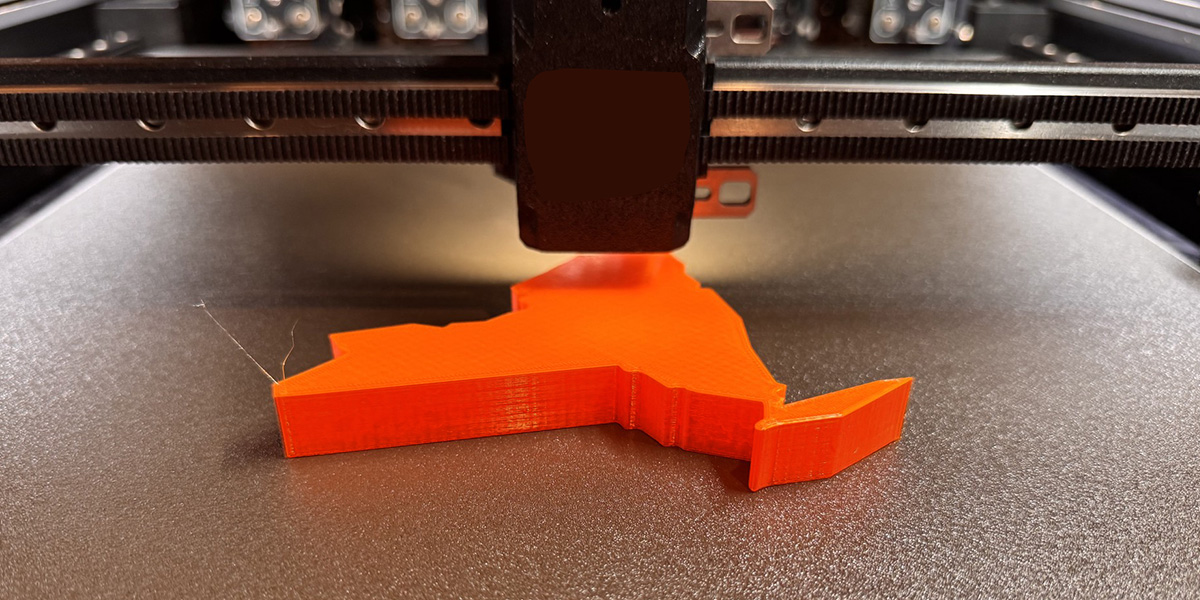
This year the state of New York had the dubious honor of being the first to pass a controversial provision to mandate all 3D printers come with surveillance and censorship. That means not only is there a ticking clock to protect every artist, researcher, engineer, and hobbyist in the state, but there is a real risk of other states thoughtlessly following suit—prior to the New York rules even taking effect.

We, along with many other experts, already warned about this bill buried in the state’s crowded budget process. Hundreds of our supporters and 3D printing enthusiasts in New York reached out to their representatives hoping to kill this farcical bill. While there were some welcome amendments in response to the outcry, Albany passed it anyway.

It might be well-intentioned, but bills like these sell a fantasy that can only have an untold negative impact on the privacy, free expression, and consumer rights of anyone using these general purpose devices. Behind the banner of reducing gun violence, which is nearly always committed with commercial firearms, New York lawmakers have passed draconian legislation that will let manufacturers lock in users and collect their data.

Now that the bill has passed and been signed by Governor Hochul, let’s look at two important ways the final legislation changed since we last wrote about it, and why states like California shouldn’t make the same mistake.

Reduced Risk for Lawful File Sharing 

The New York bill includes language that criminalizes access to firearm print files, a proposal correctly dropped by states like Colorado due to First Amendment concerns. While this made it through to the passed legislation, a few wins were still gained.

Originally the legislation threatened felony charges for the storing and sharing of files, potentially impacting researchers, artists, and journalists with no intention of printing a firearm component. These charges were downgraded to a Class A misdemeanor.

Two provisions criminalized file sharing. The first of the two provisions criminalizing this file sharing, which pertains to the sale or distribution of files in the state, gained an important exception for when a sender has a reasonable belief that the recipient won’t illegally print these components. However the second provision, pertaining to criminalizing file possession, complicates this. Under 2.12 of the subpart, people who possess the file with intent to share the files do not clearly get this same reasonable belief exception.

In other words, if you share one of these files the actual sharing is covered by the exception, but the law makes it ambiguous whether possessing those same files is covered when you intend to share them.

While this exception could have created some breathing room for researchers and journalists operating in good faith, this slapdash bill language leaves plenty of ambiguity and potential speech-chilling effects. However, these changes do offer a modicum of harm reduction in this unconstitutional law.

Saving Face by Preserving Online Sale

Originally the bill had a strange requirement for all 3D printers and Computer Numerical Control, or CNC, machines to be sold and delivered face-to-face, with no exception. That would have meant a major barrier to access, particularly for people in agricultural and rural areas of the state who uniquely benefit from in-home fabrication and repair. It also would have meant a major inconvenience for businesses using these devices. For everyone though, it meant fewer retailers to choose from and facing more stigma for using these devices. 

Fortunately this was dropped from the bill entirely. 

Next Step: We Find Out What Was Actually Passed

In addition to being buried in the complicated legislative process of the NY budget and avoiding proper scrutiny, this bill also kicked the can down the road in determining what exactly is being mandated. In many respects, legislators passed a vibe. We’ll see how the actual law be developed over the next year by a working group with no mandated transparency to the public. Further, they have no obligation to ensure consumer safeguards in developing this state-mandated censorware.

We are still concerned by the possibility of a biased working group acting in the interest of manufacturers or facing pressure to accept consumer harms in the standards they produce. Our remaining hope is this working group convened by the Department of State and the state university system is composed of actual experts who are aware of how unfeasible and harmful this mandate is, and prevent it from being realized.

The Fight Continues

New York is the first to go down this path of state-mandated censorship and surveillance software on 3D printers, but it’s far from the only one to entertain it. It is now more urgent that we fiercely oppose this trend in other states, like California,  as they attempt to join the bandwagon—before even seeing the real-world impacts. 

Take action

Don’t Let California Repeat NY’s Mistake

We cannot allow this to be the foundation for future restrictions on speech and design, or serve as a playbook for the state and corporations to wrest control over our tools.

Sony Nerfs Videogame Ownership

13 July 2026 at 19:30

Legal intern Suzanne Castillo co-authored of this post.

Playstation’s decision to kill physical game discs is the latest attack on our diminishing rights to access and engage with culture digitally. Rent-seeking corporations and negligent lawmakers share the blame — and they can do better. 

We’ve seen the same playbook used in the move to digital distribution of  film, TV, and music: draw in customers with the convenience of a digital download, then limit physical access and move the goalpost on what it actually means to “own” a piece of media. The end goal is to turn the customer into a renter, stuck making regular subscription payments for access. Gamers are right to sound the alarm, and we must take this moment to fight for digital ownership before it’s too late.

Disk Space Invaders

Depriving gamers of physical discs leads to another obvious and immediate cost: data.  Unlike other digital media like film and TV, video games require a ton of storage. Access to high speed internet is still abysmal in the US, making the high-speeds needed for digital game downloads a luxury some of us may take for granted. For many, a modern game can take days and exceed their data caps. 

This made physical discs, particularly for the biggest AAA titles, a logical choice that also largely spared gamers from losing traditional ownership rights. With physical disks, the cost of storing the game was included in the purchase.

Own or Be Pwned

Limiting customers to digital copies also pushes gamers further into rent-only copyright culture.

Physical media comes with a "right of first sale," which means you can lawfully share, resell, alter, or destroy your own copy of a copyrighted work. This right has also helped protect the emergence of alternative community servers, and emulator addition of online play to games from the dial up era.

But courts have held that digital media doesn't carry the same right, meaning no such protection is afforded to digital purchases. Your ability to freely share games with friends or pass them on to family members becomes totally subject to the whims of the distributor. 

So, for example, a digital-only approach effectively guts the second-hand market for games. Saving some money with a used game and recouping the costs by reselling are no longer an option. Even with steep discounts and holiday sales, this raises the minimum cost of engaging with the medium at all.

The inevitable conclusion of the move to digital-only purchases is to lock gamers into  subscription models, making their access totally dependent on the distributor — or, several distributors, as we’ve seen with major TV and movie streamers. A handful of companies actually own the games, and your only option is to regularly pay for fractured libraries of games you may never play and will never truly own.

Achievement Locked

Since digital games are easy to copy, distributors and publishers argue that they are in an arms race against piracy. The irony is that law-abiding customers consistently suffer collateral damage. 

Most digital distributors lock down the content they offer with restrictive user agreements and digital rights management (DRM) software. DRM software, in particular, imposes onerous controls on the game — like forcing internet connection for single player games or modifications that harm performance — and can even introduce serious privacy and security concerns. Any gamer or researcher in the US who wants to reduce this burden by removing or modifying that DRM risks a lawsuit, thanks to Section 1201 of the Digital Millennium Copyright Act (DMCA). This federal law makes it illegal to alter DRM software, and is a beloved tool for companies trying to restrict how we can lawfully use our purchases — whether it’s a copy of the newest tractor simulator or a literal tractor

And since much of this DRM is tied to user accounts, ownership of a game is also revocable and modifiable for any number of reasons outside of your control. Error in your subscription payment? Your account got hacked? Licensing deal falls through with a major publisher? Developers want to kill the game in an update? All of this can limit or change your ability to access the game long after your so-called “purchase.”

Level-up Ownership

Policymakers can and should work to restore our ownership rights for the digital age. 

That starts with legal protections ensuring that the same rights that apply to physical media apply to digital media. Next up? Reform Section 1201 of the DMCA to clarify that it does not forbid fair uses.  

At the state level, we need meaningful consumer protections. Some promising models include California’s AB 1921, which would clarify what customers are actually paying for on digital storefronts and ensure some protections for maintaining discontinued games. The gaming industry has done its best to kill the bill, including claiming that private community servers are illegal

If you bought it, you should own it, and EFF will continue working to mitigate some of the worst harms of the DMCA 1201, defending modders, and fighting deceptive licensing that makes culture less free.

We Can Still Stop California’s 3D Printer Surveillance Scheme

26 June 2026 at 17:05

Ignoring EFF’s warnings about the dangers and impossibility of implementing a new mandate for 3D print surveillance software, the California State Assembly has signed off on legislation to do just that. In the process, legislators amended the bill to make it even more confusing, while failing to address the risks to privacy, speech, and consumer rights. We must renew our call on legislators to drop this bill as it heads to the state senate, and protect the tools of creators in the state.

Take action

Tell CA Senators to stand with creators

What’s changed about the bill?

Since we first wrote about AB  2047, a bill targeting 3D printers for the rare, impractical, and already outlawed practice of manufacturing firearms without a license, it has picked up several amendments. Some are welcome changes, but most have only highlighted the technocratic absurdity of the proposed scheme. Our core concernsthat this mandate censors lawful speech, builds out corporate surveillance, and criminalizes open source experimentationhave not been remedied. 

Removes criminalization of resale

Starting with one silver lining, the current bill includes a carveout for the private resale of devices. The original bill would have made it a criminal offense for an individual to resell 3D printers purchased before this mandated censorship and surveillance software. This is a clear win for the 3D-printing community, but it is unfortunately not enough.

Ineffective carveouts for open source

One of the most dangerous aspects of the bill is that it criminalizes individual users for common practices, like creating and using alternative open source programs with their 3D printer. New amendments provide a carveout for the use of an open source tool, but only if it includes compliant censorship software. The bill burdens open source developers with ambiguous and unrealistic standards for print blocking, and continues to create a chilling effect for open source users.

Removes any actual requirement to work

To reiteratethere is no world where the mandated technology actually works as intended. It will both block lawful use of 3D printers, and allow firearms to be printed by anyone determined to do so. There is no amendment that can change this reality.

Instead, the current bill simply drops the pretense that this mandate is expected to work. The performance standard of algorithms changed from “effectively prevent[ing] a technically skilled user from evading [the algorithm]” to “substantially reduce the likelihood of foreseeable circumvention attempts…” The bill will still require all prints to be surveilled, but instead of testing efficacy against a skilled user, it just plays whack-a-mole with the (literally) infinite number of circumventions that any user can employ. 

Further, the bill now leaves us with an unclear process that relies on non-governmental third parties to define standards, and now relies on manufacturers and resellers to self-police.

Hollywood gets a cut

The bill includes yet another carve out for commercial users. This time for the entertainment industry, which makes extensive use of 3D printers for props and costumes. 

That’s fine for big studios, but it leaves out indie filmmakers, cosplayers, and many other small creators. 

This is simply a defensive edit to limit corporate opposition. There isn’t a clear division in 3D-printing between consumer and commercial tools. These are general purpose tools which might be picked up by a prop department of a big studio, or an artist getting ready for Comic Con. Indeed consumer level products are not only used by amateur artists and engineers developing their skills. Commercial 3D printers, like their traditional 2D equivalents, are frequently used in workplaces, as well as by professionals honing their skills or just trying to get some work done at home. 

Commercial carveouts hands printer manufacturers the ability to sell a more expensive tier of printers, locking-in and up-charging their commercial customers. Some of those customers will choose to buy general retail versions, but that carries its own price: increased risk of IP theft as all printed files are surveilled the same way they are for hobbyists. That means a real risk of businesses leaking any prototypes or new designs to not only the printer manufacturer, but potentially snooping governments and/or the general public through data breaches.

Demand  your senator oppose AB 2047

This updated version of AB 2047 downgrades performance standards and removes oversight while still threatening privacy and choice for users of 3D printers. A printer surveillance system won’t work for its intended purpose, and will only harm law abiding users. 

Act now to demand your senators to vote no on this ineffective and invasive bill.

Take action

Tell CA Senators to stand with creators

❌