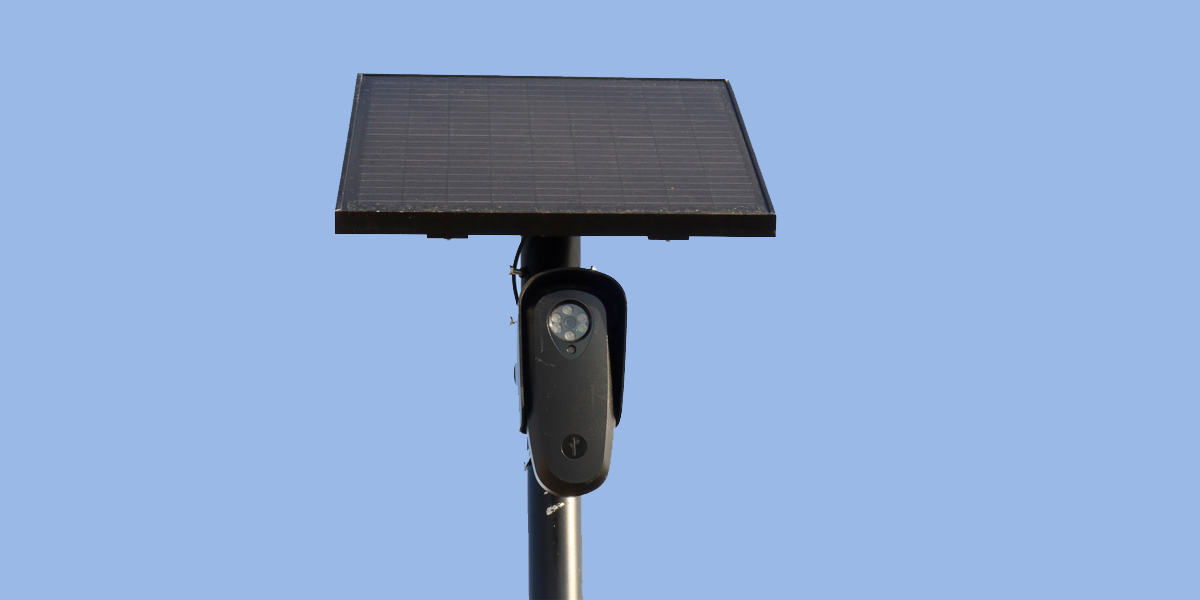
An EFF analysis of millions of searches of Flock Safety automated license plate reader (ALPR) data by police has uncovered a troubling pattern: in the absence of a warrant requirement to search ALPR databases, law enforcement agencies have moved beyond specific investigations to use these surveillance networks for virtually any whim.
Our findings suggest that the absence of a warrant requirement has fostered a culture of unrestricted access to sensitive location data, allowing agencies to leverage that data beyond the scope of specific criminal investigations.
As a refresher: Law enforcement agencies lease or purchase camera systems from Flock Safety and then mount them by the side of the road and at intersections to document every vehicle that passes, including the plate, make, model, color and distinguishing characteristics, along with the date, time and location of where it was seen.
Law enforcement's talking points—often scripted by the company itself—trumpet their role in solving high-stakes crimes. But the data reveals a different story. What they're not saying is that ALPRs are also frequently used for extremely low-level investigations, such as verifying whether a student lives within a particular school zone. In some cases, police have even used this tech to conduct employment background checks and investigations into loud music complaints. Recently, a motorcyclist was even targeted for simply holding a cell phone while riding.
The reach of this ALPR surveillance is amplified by the nature of the indiscriminate sharing these technologies encourage. Most agencies choose to share broadly, often as part of a nationwide pool, making it common for a single city's system to be searched hundreds of thousands of times each month. By analyzing these "network audit logs," privacy advocates and journalists have uncovered evidence of the technology being used to surveil protesters, abortion-seekers, immigrants, and even ethnic Roma populations.
While these high-profile abuses are shocking, the more mundane uses are also problematic, signaling a massive, unchecked mission creep that has turned an alleged “crime-fighting” tool into a universal tracker of everyone’s movements.
Residency Checks
School systems in the U.S. conduct "residency verification" investigations of their parents or guardians to ensure enrolled children live in the district. To carry out these checks, some school districts have enlisted law enforcement officers for help, leveraging ALPR databases to track the comings and goings of families across the region.
Buford City Schools in Georgia, which serves only about 6,000 students, illustrates the scale of this prying. Between January 2025 and March 2026, school police ran more than 375 searches where officers listed school residency verification, or simply "RV," as the reason for the search. That accounts for more than half of all ALPR searches in that period, and in those three months of 2026, three-quarters of all searches were related to residency verification.
School officials stand by the searches. "[B]ecause Buford City Schools is a highly sought-after district, we experience ongoing challenges with residency fraud," a spokesperson told Appen Media, which shared the email with EFF. "Flock Safety is one of the tools we use to verify residency and protect the integrity of the Buford City School System for families who live within the district."
A search of ALPR data will show a lot more than whether a family lives within the right zone. In these Buford cases, officers ran some searches across more than 5,800 different networks nationwide. Every time a plate is searched, it can reveal personal information about a family: when they go to the doctor, when they go to worship, when they go out at night, and where they travel on vacation. None of that is the school district's business, and these searches are a huge invasion of privacy.
While Buford was by the far the most prolific, it wasn't the only agency to run school residency checks. For example, Delhi Township Police Department (DTPD) in Ohio ran 35 searches related to students in five schools in a three-month period during spring 2025, and similarly stood by the practice, citing a warning given to parents that submitting a false statement of residency may be a felony.
After EFF sent an inquiry to DTPD, the agency conducted a brief investigation and found that "these searches were not done to verify residency upon submission, but to investigate cases where it was believed the form was filled out with false information." DTPD did not say what kind of evidence was required to establish suspicion before an ALPR query, nor did it offer information on how many of these investigations turned out to be justified.
However, the official told EFF: "in response to your inquiry, the department will be implementing a change to how these queries are documented in the Flock system and internally, to increase accountability and help avoid any confusion moving forward."
Other agencies that ran school residency searches include Cortland Police Department in Ohio and Lincoln Police Department in Alabama. Several agencies also ran searches with "residency," "residency investigation" or "residency verification" as the reason, but that could refer to a number of public services. These agencies include Ridgeland Police Department in Mississippi, Fairfield County Sheriff's Office in South Carolina, Manteno Police Department in Illinois, Illinois Department of Natural Resources, and Mora County Sheriff's Office in New Mexico.
Background Checks
Few people would imagine that applying for a government job would open you up to an ALPR search. Yet, several law enforcement agencies ran searches through the Flock network related to employment.
For example:
- Jefferson County Sheriff's Office in Missouri ran six searches across 2,853 networks, documenting "employment" in the reason field.
- Little Elm Police Department in Texas ran 10 searches across 6,306 networks, documenting "EMPLOYMENT" in the reason field.
- Ridgeland Police Department in Mississippi ran two searches across more than 6,000 networks documenting "employment background inv" in the reason field.
- Texas City Police Department, Texas ran three searches across 728 networks, documenting "pre employment background" in the reason field.
- Zion Police Department in Illinois ran a research across 585 networks documenting "Employee Background" in the reason field.
Davidson Police Department in North Carolina logged a search listed as "Employment Background," but in response to an inquiry from EFF, the chief described this as "poor choice of words by our investigator." He further stated that the agency does not use ALPRs as part of employment background checks, but in this case, the agency shared that a potential violation of a protective order came to light during a background check, hence the reference to it in the search log.
In addition to the agencies mentioned, several agencies ran searches that simply referred to "background check" or "background checks," which could be related to employment or perhaps some other issue, such as a concealed weapons permit, for example. These include Avon Police Department in Indiana, Rockford Police Department in Illinois, San Bernardino County Sheriff's Office in California, and Seaford Police Department in Delaware.
Noise Complaints
Many people have probably been irritated at some point or another by a car blasting a deep bassline or even the infamous "whistle tip." Some may have even called the cops to complain about a neighbor’s house party. But that's a far cry from the types of serious crimes that Flock and its customers have claimed that the ALPR systems would be used to solve.
Yet, EFF identified 26 agencies where officers felt it was appropriate to pry into a driver's life because of a noise complaint, ranging from house parties to loud exhausts to just "music":

Some of these agencies searched upwards of 6,500 networks’ cameras—the equivalent of launching a nationwide goose chase over a booming subwoofer or a busted muffler.
When Mission Creep Is Just Plain Creepy
An observant reader of this report may have noticed that Ridgeland Police Department in Mississippi ran searches in all three of the categories we reported above.
However, after the city first installed the Flock Safety cameras, the then-police chief told the press that the technology helps solve cases that range from "theft to crimes of violence"—without disclosing that the range would extend much further.
When police and salespeople trot out cherry-picked cases to argue that a mass surveillance technology is an "important" tool, they obfuscate that it's a convenient shortcut around due process. For serious crimes, police can already go through the standard legal process: making the case to a judge on why they should get a search warrant for location data, whether it's from cell phones or service providers. But police treat ALPR databases as if no such threshold exists, giving them free rein to track a person’s movements without a sliver of judicial oversight.
When police and salespeople trot out cherry-picked cases to argue that a mass surveillance technology is an "important" tool, they obfuscate that it's a convenient shortcut around due process.
"This is the same as if I put a police officer on the side of the road with a pen and a notepad and he writes down every license plate number that drives by,” the former chief said, repeating a commonly circulated talking point.
That rhetoric may sound reasonable if we were just talking about a single camera on a street corner, but Ridgeland now operates more than 50 cameras—the equivalent of one for every 500 residents—and maintains access to tens of thousands more.
If the chief had stood in front of the city’s aldermen and asked for permission to search more than 20,000 cameras so his officers could investigate the high crime of "music," it’s quite unlikely that they would have been nodding their heads along.
Ridgeland Police Department did not respond to EFF’s requests for comment.

 Login
Login