โŒ

Normal view

Move Fast, Surveil Things

4 June 2026 at 22:08

Update, June 8, 2026: Following widespread public scrutiny and WIREDโ€™s critical reporting, Meta has stripped the unactivated facial recognition code from its latest Meta AI app update.

Meta has deployed facial recognition code to millions of their always-on surveillance glasses, according to new reporting by Wired. EFFโ€™s Threat Lab was able to confirm that the facial recognition code is present through static analysis of the application.ย 

This dangerous new Meta functionality stores faceprints as a series of 2,048 numbers uniquely representing the positioning of a personโ€™s facial features. When this feature is activated, it will convert every new face in the sightlines of the surveillance glasses into a series of numbers, and compare it to all the existing faceprints in the userโ€™s database.

Wired and EFF confirmed that the code is present and active, though not yet exposed to consumers. Another researcher confirmed that when they manually added a face to the app database by connecting the phone to a computer in debug mode and issuing a few commands, the glasses would subsequently detect that face when it came into view.ย 

Meta has already paid $650 million to settle a BIPA lawsuit challenging mass facial recognition of every photo posted to its platform, a feature which it has since shut down.ย 

Despite the billions of reasons not to, Meta seems to have created the capacity to turn their customers into a distributed surveillance machine. This is just one more reason to think twice before buying or using Metaโ€™s surveillance glasses.ย 

Considering that Meta previously wrote in an internal document that they want to launch facial recognition โ€œduring a dynamic political environment where many civil society groups that we would expect to attack us would have their resources focused on other concerns," this invasive new feature doesn't come as a surprise. But Meta's surveillance plans won't escape public scrutiny that easily, and we'll be watching if this feature is rolled out to the public.ย 

Bend the beam like Beckham to defeat anti-jamming tech

3 June 2026 at 22:57
Wireless jamming attacks are on the rise. Rice University researchers have shown how self-curving radio beams can make a jammer appear to be somewhere it isn't, potentially undermining some anti-jamming defenses. Jamming relies on flooding a wireless receiver with noise that denies service. Some modern receivers identify and block jamming attempts using direction-of-arrival (DoA) estimation technology that pinpoints the jammer's direction and directs an array null that blocks signals emanating in the jammerโ€™s direction. Were a jammer to transmit a self-curving beam, however, it could fool DoA-based anti-jamming defenses by appearing to come from somewhere else entirely, and that's exactly what the Rice researchers demonstrated. Rice electrical and computer engineering professor Edward Knightly and doctoral student Caroline Spindel presented a paper [PDF] last month in which they demonstrated a curving-beam jamming attack that caused "catastrophic bit-error-rate degradation" while also "fool[ing] the receiver's DoA estimator," preventing conventional DoA-based defenses from stopping the interference. Knightly and Spindel have done prior research developing wireless technology that could bend beams around objects to increase signal strength - particularly useful for short-range millimeter wave signals - and found that the same technology could be used to deploy jammers that are far harder to locate. Spindel gave the perfect analogy in a recent Rice press release about the research for understanding how curved beams confuse DoA estimators by considering a soccer ball kick to the head. โ€œImagine being hit on the right side of your head by a soccer ball - you would naturally look to the right,โ€ Spindel said. โ€œIf the ball actually curved through the air, like a David Beckham free kick, then it was kicked from somewhere else entirely.โ€ Were Sir David to keep moving and kicking curveballs at your head youโ€™d probably spot him eventually, but it might take a minute, and a few more smacks, to stop him. A signal jammer at radio-wave distances will probably be far harder to spot, and it wonโ€™t even have to move: Knightly and Spindel were able to create the illusion that the jammer was mobile by modulating the beam parameters from a stationary position, making it even more difficult to locate the jamming signal and negating the point of blindly searching for the best spot to point an array null. Conventional recovery methods used to block jamming completely failed in laboratory tests, Spindel said. โ€œThis is the first demonstration of a jammer that cannot be reliably localized and the first time self-curving wireless beams have been used as an attack,โ€ Knightly added. The pair sees their research not just as a way to point out a serious threat to wireless signals - GPS jamming of aircraft is on the rise, for example - but also something that can inform the direction of future wireless technologies as we move toward the 6G era. Until then, however, thereโ€™s the potential for even more devastating jamming attacks to come. ยฎ

Putin sends submarines to survey Britain's subsea cables. UK deploys Royal Navy, mobilizes parliamentary draftsmen

1 June 2026 at 12:48
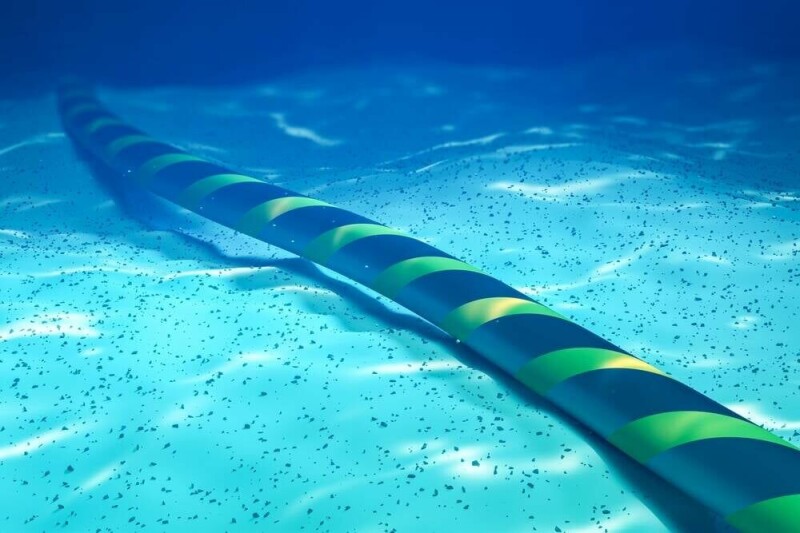
The British government wants stronger protection for subsea internet cables following a surge in Russian activity near UK waters, but its latest proposals lean heavily on fines and prison sentences rather than direct defensive action. Plans - outlined in a speech by Baroness Liz Lloyd, Minister for Digital Economy ahead of a consultation - include tougher penalties for recklessly damaging undersea cables, operator security obligations and emergency powers allowing government to compel businesses to better protect their infrastructure. In April, the Royal Navy and Royal Air Force tracked Russian submarines on a covert reconnaissance near critical undersea infrastructure. According to reports, Russia deployed an Akula-class attack submarine as a decoy while two specialist vessels from Directorate of Deep Sea Research - known as Glavnoye Upravlenie Glubokovodnikh Issledovanii (GUGI) - surveyed the UK's cable routes. โ€œTheir mission was to survey our cables in peacetime, so they could more easily sabotage them in a conflict,โ€ Lloyd said in a speech delivered at the Royal United Services Institute (RUSI). โ€œThey wanted this operation to be secret, but they failed." In light of this, the government is reviewing whether the UKโ€™s security and resilience arrangements are strong enough, the Defence, Science and Technology Laboratory said. UK Parliament's Joint Committee on National Security Strategy (JCNSS) last year told the government it is "too timid" in its approach to protecting Britainโ€™s cable connections, and must do a better job. Measures proposed include tightening the law so ship owners and operators that recklessly damage subsea internet cables face tougher penalties. Cable operators could be landed with extra obligations to ensure they take steps to prevent, detect and respond to security incidents in a consistent and timely manner. โ€œThe UK already has strong protections in place for our subsea cables, but in a more uncertain world we cannot stand still,โ€ said Lloyd. "As hostile activity by Russia and others grows, protecting these cables matters more than ever for our economy, security and daily lives.โ€ Some 64 cables connect Britain to the global internet, and when one breaks, repair vessels are typically on scene within eight days. Historically, most cable faults have stemmed from fishing activity or dragging anchors, not sabotage. The Royal Navy unveiled its Atlantic Bastion program last year to supplement its sub-hunting ships with a force of uncrewed, autonomous vessels. The aim is that enemy submarines in the North Atlantic have nowhere to hide. This is in its early stages, with ยฃ14 million committed so far for testing and development. The latest proposals will be outlined a white paper published later this year. Separately, the UK, US, and Australia announced this weekend that their AUKUS partnership will jointly develop sensor and weapons payloads for uncrewed underwater vehicles, which is another building block for protecting seabed infrastructure. ยฎ

โŒ