Login
Login


Congress's Crusade to Age Gate the Internet: 2025 in Review
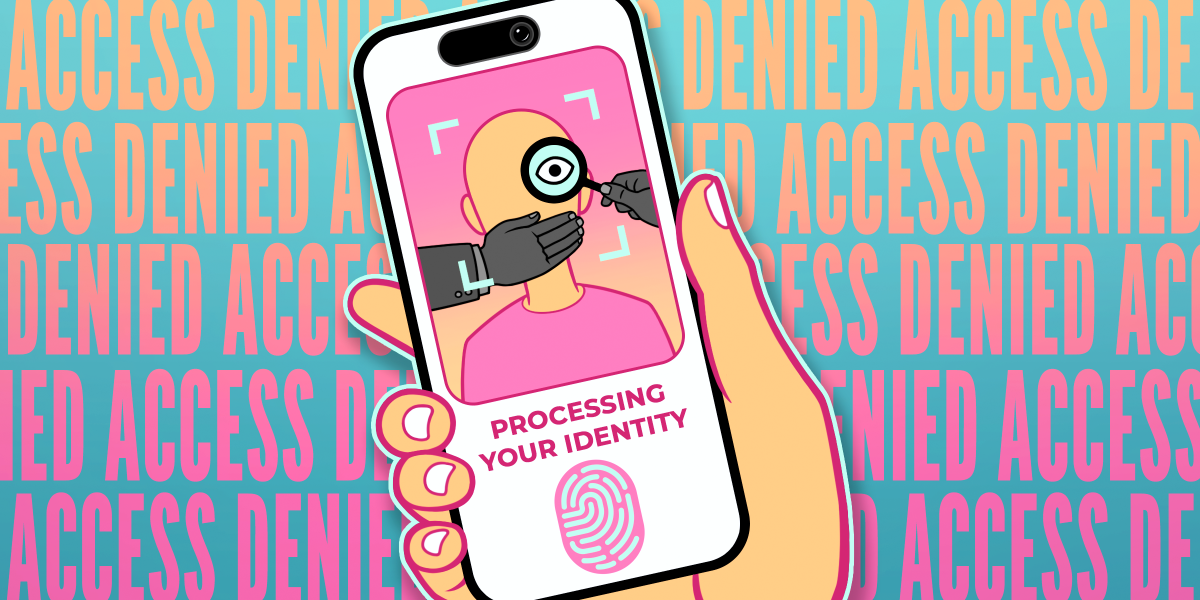
In the name of 'protecting kids online,' Congress pushed forward legislation this year that could have severely undermined our privacy and stifled free speech. These bills would have mandated invasive age-verification checks for everyone online—adults and kids alike—handing unprecedented control to tech companies and government authorities.
Lawmakers from both sides of the aisle introduced bill after bill, each one somehow more problematic than the last, and each one a gateway for massive surveillance, internet censorship, and government overreach. In all, Congress considered nearly twenty federal proposals.
For us, this meant a year of playing legislative whack-a-mole, fighting off one bad bill after another. But more importantly, it meant building sustained opposition, strengthening coalitions, and empowering our supporters—that's you!—with the tools you need to understand what's at stake and take action.
Luckily, thanks to this strong opposition, these federal efforts all stalled… for now.
So, before we hang our hats and prepare for the new year, let’s review some of our major wins against federal age-verification legislation in 2025.
The Kids Online Safety Act (KOSA)
Of the dozens of federal proposals relating to kids online, the Kids Online Safety Act remains the biggest threat. We, along with a coalition of civil liberties groups, LGBTQ+ advocates, youth organizations, human rights advocates, and privacy experts, have been sounding the alarm on KOSA for years now.
First introduced in 2022, KOSA would allow the Federal Trade Commission to sue apps and websites that don’t take measures to restrict young people’s access to certain content. There have been numerous versions introduced, though all of them share a common core: KOSA is an unconstitutional censorship bill that threatens the speech and privacy rights of all internet users. It would impose a requirement that platforms “exercise reasonable care” to prevent and mitigate a sweeping list of harms to minors, including depression, anxiety, eating disorders, substance use, bullying, and “compulsive usage.” Those prohibitions are so broad that they will sweep up online speech about the topics, including efforts to provide resources to adults and minors experiencing them. The bill claims prohibit censorship based on “the viewpoint of users,” but that’s simply a smokescreen. Its core function is to let the federal government sue platforms, big or small, that don’t block or restrict content that someone later claims contributed to one of these harms.
In addition to stifling online speech, KOSA would strongly incentivize age-verification systems—forcing all users, adults and minors, to prove who they are before they can speak or read online. Because KOSA requires online services to separate and censor aspects of their services accessed by children, services are highly likely to demand to know every user’s age to avoid showing minors any of the content KOSA deems harmful. There are a variety of age determination options, but all have serious privacy, accuracy, or security problems. Even worse, age-verification schemes lead everyone to provide even more personal data to the very online services that have invaded our privacy before. And all age verification systems, at their core, burden the rights of adults to read, get information, and speak and browse online anonymously.
Despite what lawmakers claim, KOSA won’t bother big tech—in fact, they endorse it! The bill is written so that big tech companies, like Apple and X, will be able to handle the regulatory burden that KOSA will demand, while smaller platforms will struggle to comply. Under KOSA, a small platform hosting mental health discussion boards will be just as vulnerable as Meta or TikTok—but much less able to defend itself.
The good news is that KOSA’s momentum this Congress was waning at best. There was a lot of talk about the bill from lawmakers, but little action. The Senate version of the bill, which passed overwhelmingly last summer, did not even make it out of committee this Congress.
In the House, lawmakers could not get on the same page about the bill—so much so that one of the original sponsors of KOSA actually voted against the bill in committee in December.
The bad news is that lawmakers are determined to keep raising this issue, as soon as the beginning of next year. So let’s keep the momentum going by showing them that users do not want age verification mandates—we want privacy.
Don't let congress censor the internet
Threats Beyond KOSA
KOSA wasn’t the only federal bill in 2025 that used “kids’ safety” as a cover for sweeping surveillance and censorship mandates. Concern about possible harms of AI chatbots dominated policy discussion this year in Congress.
One of the most alarming proposals on the issue was the GUARD Act, which would require AI chatbots to verify all users’ ages, prohibit minors from using AI tools, and implement steep criminal penalties for chatbots that promote or solicit certain harms. As we wrote in November, though the GUARD Act may look like a child-safety bill, in practice it’s an age-gating mandate that could be imposed on nearly every public-facing AI chatbot—from customer-service bots to search-engine assistants. The GUARD Act could force countless AI companies to collect sensitive identity data, chill online speech, and block teens from using some of the digital tools that they rely on every day.
Like KOSA, the GUARD Act would make the internet less free, less private, and less safe for everyone. It would further consolidate power and resources in the hands of the bigger AI companies, crush smaller developers, and chill innovation under the threat of massive fines. And it would cut off vulnerable groups’ ability to use helpful everyday AI tools, further fracturing the internet we know and love.
With your help, we urged lawmakers to reject the GUARD Act and focus instead on policies that provide more transparency, options, and comprehensive privacy for all users.
Beating Age Verification for Good
Together, these bills reveal a troubling pattern in Congress this year. Rather than actually protecting young people’s privacy and safety online, Congress continues to push a legislative framework that’s based on some deeply flawed assumptions:
- That the internet must be age-gated, with young people either heavily monitored or kicked off entirely, in order to be safe;
- That the value of our expressive content to each individual should be determined by the state, not individuals or even families; and
- That these censorship and surveillance regimes are worth the loss of all users’ privacy, anonymity, and free expression online.
We’ve written over and over about the many communities who are immeasurably harmed by online age verification mandates. It is also worth remembering who these bills serve—big tech companies, private age verification vendors, AI companies, and legislators vying for the credit of “solving” online safety while undermining users at every turn.
We fought these bills all through 2025, and we’ll continue to do so until we beat age verification for good. So rest up, read up (starting with our all-new resource hub, EFF.org/Age!), and get ready to join us in this fight in 2026. Thank you for your support this year.
This article is part of our Year in Review series. Read other articles about the fight for digital rights in 2025.