Normal view

Facial Recognition at Madison Square Garden

31 July 2026 at 13:08

Last month, the story broke (alternate link) that Madison Square Garden uses facial recognition software on everyone entering the facility, and—among other groups—flags activists that oppose using facial recognition.

Turns out that the system was shut off for Taylor Swift’s wedding.

Evan Greer—one of the people that MSG alerts on—comments:

Ironically, Swift herself has reportedly used facial recognition at her own concerts to identify stalkers. This “privacy for me, surveillance for thee” attitude feels like a perfect encapsulation of the future we’re already living in: one where wealthy elites can afford privacy, while the rest of us are forced to live in a corporate surveillance panopticon.

Whatever privacy measures Swift had in place for the wedding seems to have worked. No photos have leaked online.

Axon Is Another License Plate Surveillance Company

28 July 2026 at 13:06

Governments are switching, but I’m not sure it makes a difference:

…some municipalities, including Denver, Colorado, are ditching their Flock arrays. But keep in mind that if they’re only switching from Flock to another brand of license-plate readers, like Axon, it’s like a gambling addict trying to kick the habit by switching from FanDuel to DraftKings.

[…]

Despite what you may read on the Flock website, Axon cameras are pretty effective when it comes to hoovering up personal details that can go far beyond your license plate numbers. That means a municipality that opts for Axon cameras instead of Flock units won’t necessarily reduce the amount privacy its citizens lose through their use.

Cognyte Sells a Mobile Cell Surveillance Van

27 July 2026 at 13:04

Yet another Israeli mass surveillance company:

Made by Israeli surveillance company Cognyte, the tech simulates a mobile phone tower, which forces nearby phones to connect to it. That enables cops to keep tabs on any phones in the vicinity ­ whether they’re owned by a suspect in a case or not. Cognyte’s contract with the state of Texas reveals that the simulator, called FalcoNet, can be concealed within the vehicles, hidden in a backpack for on-foot missions or attached to a helicopter. It’s the same technology as the infamous Stingray, one of the original cell-site simulators made by defense giant L3Harris.

Why live chat agents can read your messages before you hit “Send” | Kaspersky official blog

24 July 2026 at 18:18

Virtually every website selling products or services features a live chat widget. It usually appears as a small window in the corner of your screen, complete with an agent’s name and picture.

Sometimes these chats simply collect tickets for tech support or sales to process. But often there’s a real person on the other end of the screen. And here’s where many users get an unwelcome surprise: agents can see absolutely everything you type into the chat box, even if you have no intention of sending it. In this article, we break down why this happens and what you can do about it.

All in the name of customer experience

It’s all thanks to a feature known as live typing preview, or real-time typing view, which exists under one name or another in almost every popular customer chat platform. Here’s how the developer of LiveAgent, a customer support system used by more than 40 000 companies, describes it in its blog: “This live chat typing preview allows agents to anticipate questions and deliver faster responses. Additionally, real-time chat monitoring enables supervisors to oversee chat interactions, ensuring quality and timeliness.”

While that might sound helpful and harmless to some, having their unsent messages watched without their permission can trigger outright panic for others. To make matters worse, it’s almost impossible to tell whether the website uses the feature. That is, unless the chat agent admits it to you directly… or replies to a message you decided not to send.

As an alternative, you can run a quick test: type out a message in the chat box, wait 15 seconds, and see if the agent starts typing a response. If they do, you’re almost certainly dealing with real-time typing view. Whether to continue that conversation is up to you. Most importantly, never type personal information into a chat box — even if you are doing so from a Kaspersky Premium device.

Real-time typing view is just the tip of the iceberg. In reality, websites collect far more information than you might think. You’re likely already familiar with cookies, and have probably asked yourself at least once, “Should I accept these or not?” We answer that and other questions in our post Taking the biscuit: why hackers like cookies so much.

Tracking techniques that use web beacons and tracking pixels are not as widely known. To learn why they’re a concern and how to turn them off, check out our post Who is tracking you on the web and how.

Another technology that remains largely unknown to the general public is session replay scripts. These tools allow website owners to watch a recording of your visit: how fast you moved your cursor, where you clicked, which pages you browsed, and what you added to your shopping cart.

Of course, the primary goal of session replay is the same as real-time typing view: improving customer and user experience. It helps companies analyze your behavior, identify friction points, and make improvements. If a customer fails to complete a checkout or encounters a technical issue, developers can review the recording of their session to pinpoint what went wrong.

In theory, it sounds helpful enough: “We will collect a small amount of data about you to make the site better for you.” In practice, however, this approach comes with significant risks for users.

What’s the catch?

The primary risk here lies in whether websites collect this data legally, how they store it, and whether they share it with anyone. While you can usually gauge legality by reading their privacy policy, the terms of data storage and sharing are often described vaguely.

On top of that, users rarely realize an agent can read their message before it’s actually sent. If you change your mind about asking a question, edit a sentence, or delete your text entirely, that doesn’t mean no one saw the draft. Unlike cookies, opting out of this technology is practically impossible. Most chat widgets simply don’t offer a setting to disable typing previews.

As for tracking pixels, web beacons, and session replays, they’re essentially a form of digital surveillance. Beyond collecting vast amounts of data, they can also slow down your device’s performance. Even worse, if attackers compromise a website’s analytics system, they can gain access to this data, reconstruct your path through the site, and uncover details that can be leveraged in future attacks. To learn more about how scammers pull off these tricks and how social engineering works, check out our post They’re reading you like a book: scammers’ favorite tricks.

While you can’t prevent a potential breach on a third-party website, you can — and should — take steps to secure your own browsing session.

What you can do about it

First and foremost, pay close attention to what you type in a chat box. It’s critical never to share personal data, credit card numbers, logins, passwords, or any other sensitive information with live chat agents.

Beyond that, there’s always a risk of landing on a phishing site and entering your account credentials there. To prevent this, we recommend using our security solutions, which block visits to malicious and suspicious websites. We also suggest storing your credentials in Kaspersky Password Manager — our password manager won’t let you auto-fill saved logins and passwords on a fake site.

Users of Kaspersky Standard, Kaspersky Plus, and Kaspersky Premium have access to our Private Browsing feature (on Windows and macOS). It prevents third-party services from tracking your online activity and collecting real-time information about what you do on websites.

To minimize the risk of data leaks, keep these tips in mind:

  • Never type anything into a chat box that you aren’t prepared to send. On almost every website, the agent can see your text while you type, so deleting a message is no guarantee it stays private.
  • Keep in mind that your activity on a website may be recorded. These recordings can capture your clicks, page navigation, and form inputs. Treat every website as if your actions are being watched.
  • Pay attention to privacy policies. Reputable companies typically state whether they use analytics tools, session recording, or third-party support services.
  • Approach chat interactions with caution. Real-life rules apply here as well: never share verification codes, passwords, phone numbers, or other sensitive details in a chat.
  • Be smart about accepting cookies. Taking a moment to check what information a website collects is well worth the effort — it helps you make an informed choice about whether you’re comfortable sharing that data.

Tired of endless digital tracking? Here’s how you can protect yourself and your data:

Hundreds of Drone-as-First-Responder Programs Could Soon Be Launched Across the Country

24 July 2026 at 00:00

Police departments across the country are lining up to launch drone-as-first-responder (DFR) programs, and hundreds have cleared a necessary hurdle toward making deployment a reality, expanding aerial surveillance and data collection even in areas patrol officers typically can't reach.

As of February 2026, over 1,000 public safety agencies—including police, fire, and other emergency management agencies—had received Federal Aviation Administration (FAA) waivers needed to automate drone operations and launch a DFR program, according to a recent Freedom of Information Act (FOIA) release listing agencies that have obtained Part 91 waivers since the FAA streamlined and sped up the process in April 2025.

The changes led to a massive increase in the number of waivers issued. Only 976 DFR waivers had been granted since the first DFR program launched in 2018 through April 2025, according to an FAA representative. The agency issued more waivers between April 2025 and February 2026 than it had in the previous seven years combined.

A map illustrating the locations of police departments and other public safety agencies that have received Part 91 waivers, making it possible for them to launch drone-as-first-responder programs. (This map image links to Google Maps, which is governed by Google's privacy policy)

The new FAA process for waivers and the rush of police departments to obtain them signifies a shift in law enforcement's use of drones: from human-operated aerial surveillance to AI-based autonomous drone use. 

Typically, a drone operator is only permitted to fly in areas that can still be seen by the pilot, and that drone pilot needs to be certified under FAA Part 107. To fly drones “Beyond Visual Line of Sight” (BVLOS) requires additional approval from the FAA, as do flights above 200 feet, due to the risk of colliding with planes and other aircrafts. Without such approval, an officer could not pilot a drone from a desk inside a building and fly it to a call across the city because they could not possibly have line of sight on the drone. 

FAA rules for police drones also required a human operator to manually fly the device to a scene, but DFR technology has become a more common and more automated police technology. DFR programs increasingly rely on artificial intelligence to automate drone flights from launchpads placed around the city, often atop municipal buildings, and make it possible for one drone operator to “fly” multiple devices at once. Though not every police department that has received BVLOS has launched a DFR program yet, by going through this process, every department on this list has signified it has strong enough interest to clear the necessary regulatory hurdles.

Police departments and the companies that sell DFR equipment claim that these drones make it easier for officers to establish “situational awareness” of a scene before they arrive. Early drone adoption centered on similar claims, particularly related to high-risk situations like vehicular accidents or incidents involving an armed suspect. However, these kinds of situations may make up only a small portion of deployments, which often occur in response to low-risk calls for service related to unhoused people, mental health concerns, and loud music, as a Government Technology analysis of the system in Chula Vista, California, found. 

DFR programs have become important sources of revenue for companies like Flock Safety and Axon, the latter of which reported that its DFR platform has become one of the company’s fastest growing sectors. Axon is also known for products like the TASER and the Fusus camera system that lets police integrate viewing of public and private cameras. 

Footage from drone flights is streamed back to a police office, and it can be stored, shared, and analyzed like other video. Turning drone footage into fodder for automated license plate reader (ALPR) networks, for example, requires very little additional software, and Flock Safety was quietly able to turn its drones into “flying ALPRs” last year

The normalization of police DFR programs jeopardizes privacy in communities across the country. As flying cameras, drones can capture footage from areas typically inaccessible to a casual patrol officer—backyards, roofs, through windows—at distances that leave subjects of surveillance completely unaware of the spy in the sky. A recent leak of drone footage from the San Francisco Police Department illustrated the ease with which surreptitious drone flights could observe innocent individuals for minutes without them realizing it. EFF's Atlas of Surveillance contains a list of police departments with drones, including those with DFR programs.

While daytime DFR use grows, police departments are exploring other ways to expand overhead surveillance. In October 2024, the Campbell Police Department in California announced it had received the first FAA approval for BVLOS operations at night, claiming it was the “first to incorporate radar technology with electro-optical sensors to enhance airspace monitoring, enabling a single remote pilot to safely deploy drones both day and night.”  

As communities consider drone use, it’s crucial that they have a say in whether the program is acquired at all, not just how it's run once purchased. Throughout the process, police should be transparent with the community and comply with local regulations about its adoption.

Many cities provide portals that log the flight paths and reasons for each drone flight, often in real time, an important transparency practice. In California, under AB 481, police departments are required to provide advance notice of intent to acquire drones, establish policies before they’re procured, and provide annual updates on their uses—giving communities and city councils the opportunity, before any contract is signed, to weigh in or object to the acquisition itself. 

For police departments and communities considering drone use, clear policies on appropriate use, transparency around deployment, and regular re-evaluation—including the choice to discontinue a program that isn't working—are all vital for protecting people’s privacy and security. 

An Explosion of Surveillance Towers is Coming to U.S. Borders, Costing Over $1 Billion

20 July 2026 at 21:25

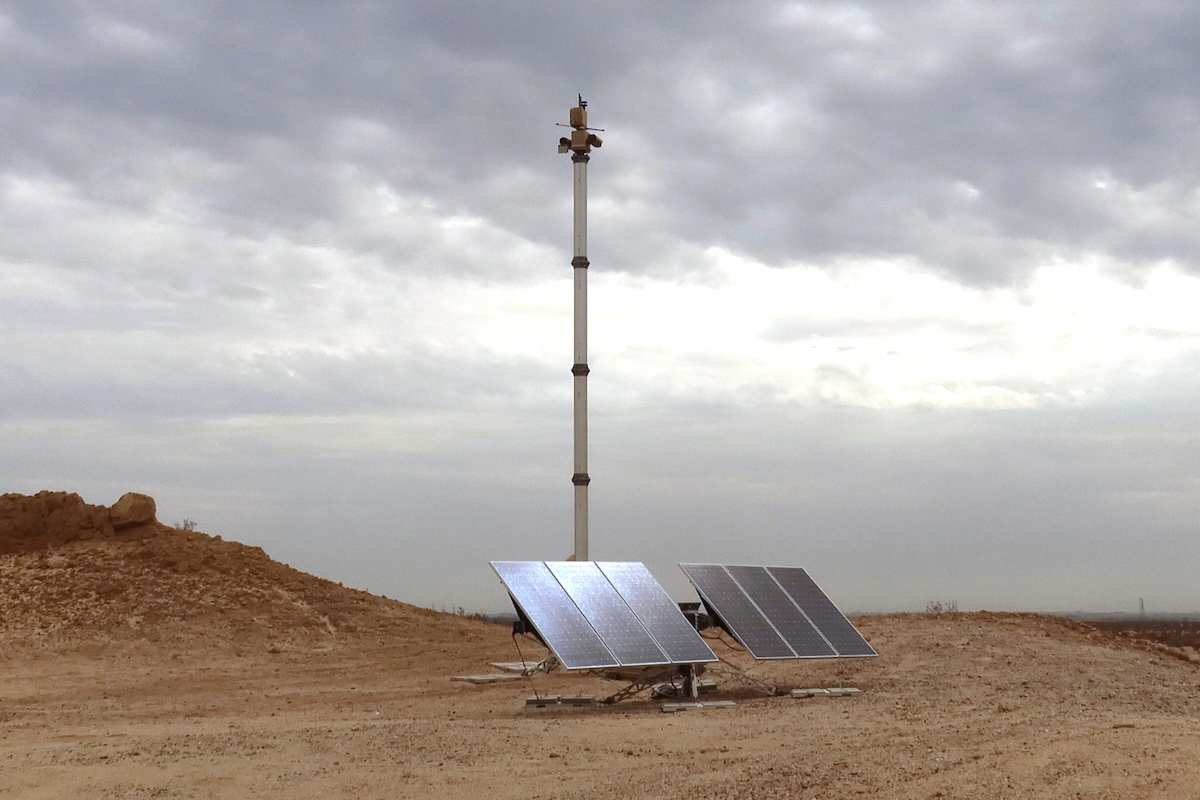
A new report from the Government Accounting Office reveals that the Department of Homeland Security (DHS) plans to nearly triple the number of surveillance towers along U.S. borders, from the current 830 to 2,300 by 2034.

DHS expects to expend $1 billion in taxpayer dollars for this dangerous expansion of a surveillance network indiscriminately trained on towns, school playgrounds, backyards, and vehicles—threatening the privacy and civil liberties of everyone in the border regions.

The towers are planned as part of DHS component Customs and Border Protection’s (CBP) Integrated Surveillance Tower (IST) program, which captures images of people and vehicles. The IST program operates autonomous surveillance towers, consisting of autonomous surveillance towers, consisting of AI-based systems using radar, thermal infrared and optical systems to track targets over long distances; integrated fixed towers, optimized for surveilling foot traffic and vehicles; and remote video surveillance systems, which can often be found very close to the border fence in Arizona, including residential neighborhoods where cameras are capable of spying on homes on both sides of the border. (For a description and photos of these technologies, see EFF’s updated guide to surveillance at the U.S.-Mexico Border.)

DHS expects to purchase more long-range autonomous towers and to upgrade existing towers with autonomous capabilities. The $1 billion comes from the so-called One Big Beautiful Act—a massive tax and spending law that President Trump signed in 2025, the report says.

The explosive expansion of border surveillance is a digital dumpster fire for human rights and civil liberties. It’s not just surveillance towers; drones, aerostats, surveillance vehicles, ground sensors, game cameras, and license plate readers are also part of the vast taxpayer-funded infrastructure that threatens all those who live, work, or seek refuge in the borderlands. This technology isn’t exclusive to U.S. federal agencies: it’s also deployed by state and local law enforcement, and even by governments on the Mexican side.

Since 2022, EFF has studied and mapped surveillance technology along the U.S.-Mexico border using public records research, open-source intelligence, and fact-finding trips, and created a handy interactive map to provide researchers and journalists with the tools they need to analyze the impact of U.S. border security policy. We have also documented the different types of surveillance technology in a zine, "Surveillance Technology at the U.S.-Mexico Border." We updated the publication earlier this year to help people identify the machinery of homeland security by adding more models of surveillance towers, newly deployed military tech, and a gallery of disguised trail cams and automated license plate readers.

EFF’s work includes defending the rights of individuals whose devices have been searched or seized upon entering the country; pushing back on the collection of biometric and social media identifiers; and developing digital security guidance for people crossing borders.

With the web of surveillance tech at the borders about to explode, EFF will continue to investigate and expose it and find ways to fight back with the communities that live in the shadow of this technological threat to human rights.

Victory! Flock Ends Rollout of Audio “Distress Detection” of Human Voices

17 July 2026 at 19:05

Reversing course, Flock Safety—the surveillance technology vendor most known for its extensive network of automated license plate readershas announced that it will end a pilot for its acoustic gunshot detection devices to identify signs of “human distress.”

...public pressure can sometimes work to influence both companies and lawmakers that control a city’s purse strings to discontinue or divest from harmful products...

In October 2025, EFF warned the public that Flock was rolling out a new feature called “Distress Detection” that would be deployed through their acoustic gunshot detection devices (formerly known as Flock Raven, now called Audio Detection). This feature purported to use high-powered microphones scattered throughout a city to search for sounds of human distress, with original advertisements from the product indicating it would search for “screaming.” (Since the publication of our original blog post, Flock quietly amended the ad on this webpage to say “distress” instead of “screaming.”)

Now, Flock has published a blog post stating that “[a]fter careful consideration and community consultation, we decided to remove the feature.” Good riddance. 

We said it when the product was announced and we’ll say it again: this was a misguided and dangerous feature because of the civil liberties concerns it poses, the possibility it could summon armed police to every loud interaction happening on the street, and because in several places this type of spying would be illegal under state eavesdropping laws

We were not quiet about this potential new feature. Flock even mentioned our concern about Distress Detection in an attempt to rebut our opposition to the mass surveillance their products enable.

The suspension of Distress Detection, however, does not mean that these high-powered microphones are now magically safe or beyond our concern. Acoustic gunshot detection is still a dangerous and often highly inaccurate technology that has resulted in real world harm, as in Chicago where it resulted in police shooting at children lighting fireworks. As Flock itself states, “No acoustic system is perfect, and we don't claim otherwise.” But police response to a situation where they believe guns are actively in use seems like a pretty high-stakes situation to be making, selling, and deploying technology known to be imperfect. Flock’s devices also listen for more than just gunshots. Their marketing materials admit to be listening for “community disruption,” which includes “non-violent” threats like car sideshows and fireworks. 

Flock’s failed attempt to roll out Distress Detection teaches us a few important lessons about the current state of police surveillance. First, we should not assume that just because these companies are large and well-funded, that does not ensure that they are complying with local privacy laws before floating new products to customers. Second, companies roll out and police adopt invasive technology under the justification that it will be used to address our society’s very worst crimes. However, both the companies and police will leverage deployed surveillance infrastructure to introduce new uses without necessarily seeking the consent or approval of the public. Gunshot detecting microphones eventually being used to listen for screaming is exactly the type of mission creep that we’ve seen happen with other pieces of surveillance technology, including Flock’s license plate readers. Finally, gun violence is too serious and complex of an issue to purport to solve with one flawed piece of technology. It has become too easy for police and cities to listen to the fancy marketing pitches of tech companies claiming they’re going to solve all crime instead of doing the hard work of addressing the root causes of societal issues. And, in the meantime, that technology creates more problems and hazards for the communities they blanket in police surveillance. 

As we’ve also seen with people across the country pushing back on Flock license plate reader contracts in their communities, public pressure can sometimes work to influence both companies and lawmakers that control a city’s purse strings to discontinue or divest from harmful products. Flock’s decision to end “Distress Detection” for human voices is a win.  

How the Watch Dogs Video Game Series Mirrored and Predicted Real-World Digital Rights Issues

17 July 2026 at 17:01

When Ubisoft's Watch Dogs 2 was released in 2016, it was a headtrip for those of us working on digital-rights issues in the Bay Area. During the day, I'd fight tech-authoritarianism from EFF's San Francisco offices and then, at night, I'd fight tech-authoritarianism in an uncanny simulation of San Francisco from my home gaming console.  

Watch Dogs 2 is an open-world video game that follows a hacktivist collective called Dedsec as they take on surveillance tech and discriminatory AI systems that are being controlled by tech bros, government contractors, and corrupt cops. The game's missions often felt like they were ripped from the pages of EFF's Deeplinks blog.  

EFF’s mission is defending civil liberties in the digital world, and we do that with activists, technologists, and lawyers. If you've ever dreamt of joining Dedsec, you should definitely join us as a member.  

 Join the movement to Take Back CTRL.  

In fact, we've even got the same merch aesthetic. I cosplayed as the lead character, Marcus, at Dragon Con, and no one even knew I was in costume. 

Dave (left) as Marcus takes a selfie with a Wrench cosplayer at Dragon Con 2018.

To commemorate Watch Dog 2's 10th anniversary, I'll be speaking on a panel at San Diego Comic-Con reflecting on how the game predicted tech issues we're facing today. Organized by Mia Ginae of The Mighty Hostess and Black in Gaming, we've got voice actors Ruffin Prentiss lll and Shawn Baichoo, cinematic producer Timmy Fisher, and music producer Hudson Mohawke, who did the soundtrack, with Mia Ginae moderating. That's at 3:15 PM on Friday, July 24 in room 6BCF. 

Watch Dogs 2 panel at San Diego Comic-Con

But not everyone can get to Comic-Con and I certainly have more to say that can fit in. So here are a few ways where Watch Dogs 2 mirrored our work back then and foresaw what we're facing today.

Check out our full San Diego Comic Schedule, including panels and a meet-up. 

Insecure Surveillance Cameras 

One of the signature gameplay elements of the Watch Dogs series is the ability for your character to hack into nearby security cameras from your phone and use that to gain a strategic advantage over hostile adversaries. 

About a year before, that's exactly the issue that we were working on. EFF Technologist Cooper Quintin and I used the service Shodan to identify a slew of automated license plate readers (ALPRs) that Louisiana police had left unprotected on the internet. We found that the controls were open to anyone to manipulate and, just like in the game, you could watch the live video feeds.

Shodan screencap of unprotected ALPR feeds

We didn't use the data to acquire a skill point or collectible outfit. Instead, we forced police agencies to lock down their equipment and then used what we learned to persuade then Gov. Bobby Jindal to veto a bill that would have created a new statewide surveillance dragnet.  

This issue still persists today. Most recently, security researchers Benn Jordan and Jon “GainSec” Gaines, and the award-winning journalists at 404 Media, uncovered how at least 60 pan-tilt-zoom cameras from the vendor Flock Safety were left exposed online.

Cell-Site Simulators 

In Watch Dogs 2 there's a mission called "Stolen Signals," in which Marcus and his best friend Wrench are trying to locate "stingrays," police devices that gather nearby cell-phone data by masquerading as legit cellular towers. We call these "cell-site simulators" (CSSs) and they're are an extremely alarming mass surveillance technology that allows police to track individual users through their phone identifiers. We've long advocated that this should require a search warrant.   

Like Dedsec, we also had initiated a project to do the exact same thing. And in true Dedsec fashion, we also gave it a pop-culture name: Crocodile Hunter, an homage to wildlife expert Steve Irwin, who had famously died after a stingray attack.  

But while Marcus was running around Telegraph Hill, staff technologist Cooper Quintin and I were running around downtown San Francisco, testing out our own device for detecting suspicious cell phone towers during Salesforce's annual Dreamforce conference. And while we didn't find a CSS that day, we did find a mobile surveillance tower that a start-up had set up for the event.

Cooper Quintin, EFF's own "Wrench," testing out Crocodile Hunter at Dreamforce

Cooper Quintin, EFF's own 'Wrench,' testing out Crocodile Hunter at Dreamforce

Today, that project has evolved into Rayhunter, which allows anyone to use a cheap mobile hotspot to detect the type of cellular anomalies associated with CSSs. We're proud to say that now there's a whole international Dedsec-style network of researchers using this technology to look for surveillance at protests, at the border, and in metropolitan areas 

Security Robots 

Throughout the game, Marcus encounters a number of autonomous pickle-shaped security robots wandering the city. At one point, Wrench reprograms one to become "Wrench Jr," a bona fide member of the Dedsec team.  

In real life, these robots are made by a company called Knightscope, and EFF started shining light on them in 2020-2021, when they were first being deployed by companies and government agencies.

A Knightscope robot patrols a casino parking lot in Reno, Nevada.

Today, law enforcement is pursuing weaponized robots and drones, and EFF is at the forefront to stop this dystopian reality. In fact, in December 2022, we successfully fought for San Francisco to ban the police department from weaponizing drones. In 2024, New York Police Department also retired its subway robot.

A Citywide Surveillance "Operating System" 

In the Watch Dog series, one of the ominous developments is CTOS 2.0 (Central Operating System 2.0). Through this system, Blume, a government contractor, tries to collect a massive amount of data through citywide sensors and infrastructure, and to combine all that data into one unifiedand totally insecureanalytics system.  

At the time we'd only just begun to see this idea floated, with a limited number of cities trying tools like Palantir's Gotham to manage data.  

Today, it is a frighteningly competitive market, particularly when it comes to law enforcement surveillance. For example, both Axon and Flock Safety are trying to offer products that integrate with every function of policing that sound like CTOs. In fact, Flock Safety product is literally titled, "Flock OS."

Fusus demonstrated at a police chief's conference.

Meanwhile, Axon's camera networking product, "Fusus," sounds like it came straight from the Watch Dogs' writers room. Fusus allows for central live-streaming of all types of surveillance cameras in a city, including body-worn cameras, which was another prediction from the Watch Dog series that came true.  

EFF has been part of many local battles to reject Flock and Axon surveillance systems, and we've also advocated against recent efforts at the federal level to consolidate government data.  

Join the Fight Against Authoritarian Tech 

Watch Dogs 2's protagonists aren't just the merry band of core hackers: It's a distributed movement spread across the region and social media. The sequel, Watch Dogs Legion, is even designed so that every single person in the city of London is a potential playable Dedsec member, ready to take on tech tyranny with whatever skills they have.  

That's also our philosophy: If you use tech, if you're affected by tech, this is your fight. And it's time to take back control. 

There are a lot of ways to do this. You can become a member by donating. You can contact public officials through our Action Center. You can join the thousands of volunteers who are helping gather data on surveillance through our Atlas of Surveillance project. You can also hunt cell-site simulators with usand help improve our codethrough the Rayhunter project.  

And just like Watch Dogs 2, this is a game we can win if we work together.

Victory! Supreme Court Says Constitution Protects People’s Location Data

29 June 2026 at 19:25

You have an expectation of privacy in location data that reveals your movements in the physical world, and even short-term surveillance of these movements is a search subject to the Fourth Amendment, the U.S. Supreme Court ruled today in Chatrie v. United States 

The case involved geofence warrants, a form of dragnet surveillance police have used to vacuum up location data from electronic devices of people who happen to be in the vicinity of a crime. EFF had joined the American Civil Liberties Union, the ACLU of Virginia, and the Center on Privacy & Technology at Georgetown Law in filing an amicus brief in the case. 

JOIN EFF

The decision in Chatrie is important: It is the first digital surveillance decision by the Court since its landmark 2018 ruling Carpenter v. United States, which involved prolonged tracking of people’s movements using cell phone location data. The new case expands that ruling by confirming that even shorter-term surveillance of location data can constitute a search because it can still reveal “private matters,” including “a wealth of detail about a person’s familial, political, professional, religious, and sexual associations.”  

The case is also important because the Court also recognized the records generated by the apps on a user’s phone—records we necessarily share with third-party tech company—are a user’s “own” and require Fourth Amendment protection. This is true, regardless of whether those records are “emails, documents, photographs, [ ] calendars” or location data. This will likely have broad implications for data generated by other apps on our phones, even if we click “agree” to sharing that data with third-party tech companies.  

Geofence warrants don’t name a suspect or a specific individual or device the way typical warrants do. Instead, they compel companies—almost always Google—to provide information on every electronic device in a given area during a given time period. This creates a high risk of suspicion falling on innocent people and can reveal sensitive and private information about where individuals have traveled in the past. 

Geofence warrants are the digital equivalent of police going person to person, home to home, without suspicion that any device holder has a connection to a crime. This turns innocent bystanders into suspects, just for being in the wrong place at the wrong time.  

In Chatrie, a 2019 geofence warrant compelled Google to search the accounts of all its hundreds of millions of users to see if any one of them was within a radius police drew around a Northern Virginia crime scene. This area amounted to several football fields in size and encompassed numerous homes, businesses, and a church. 

A federal district court in Virginia in 2022 held that the geofence warrant plainly violated  the Fourth Amendment. If the police want to get information on every device in the area, they must also establish probable cause to search every person in the area, the court said. The judge noted the government lacked particularized probable cause as to every individual within the geofence, which swept up innocent people and covered over 70,000 square meters in a busy area. 

The decision set an important precedent in finding the warrant overbroad and unconstitutional and was later followed by a 2024 federal Fifth Circuit Court of Appeals ruling holding that geofence warrants are “categorically prohibited by the Fourth Amendment.” However, the Chatrie lower court allowed the government to use the evidence it obtained because it relied on the warrant in “good faith.” A much divided en banc panel of the U.S. Court of Appeals for the Fourth Circuit in 2025 affirmed this “good faith” finding in the lower court’s opinion. 

Google in 2023 announced changes to how it stores location data, with the effect of eventually making it impossible for the company to respond to geofence warrants. Since July 2025, mass geofence searches of Google users’ location data have not been possible.  

However, Google is not the only company collecting location data, nor the only way for police to access mass amounts of data on people with no connection to a crime. As we’ve written about extensively, data brokers collect and aggregate location data from many different apps on our phones and provide that data to police. And police can use “cell tower dump” warrants to get access to data on everyone within range of specific cell towers. Suspicionless searches like these drag a net through vast swaths of information in hopes of identifying previously unknown suspects—ensnaring innocent bystanders along the way. 

Chatrie could have wide-ranging implications beyond location data as well. The Supreme Court affirmed that app data is subject to the Fourth Amendment, because users “reasonably view” it as their own and reasonably expect it “to be shielded from the ‘inquisitive eyes’ of the government.” Justice Gorsuch, in an opinion concurring in the judgment, called location data a user’s “personal property,” no different from myriad other “effects” explicitly protected by the text of the Fourth Amendment.  As the Court concluded, “the point of carrying smartphones is to use what is on them,” so the Fourth Amendment has to protect more than just location data generated by the act of carrying the phone itself. 

The Court ultimately did not decide whether the particular warrant at issue in Chatrie was “reasonable” or whether the “good faith” doctrine applied. The case now heads back to the Fourth Circuit Court of Appeals to address these questions.  

But regardless of how the Fourth Circuit rules on remand, this Chatrie opinion will shape how lower courts address police access to location and other data going forward. We look forward to citing Chatrie to press future courts to recognize broad Fourth Amendment protections for user data.

Lawmakers Must Act Now to Prevent Armed Police Drones

26 June 2026 at 17:22

This is not science fiction. It’s not premature. If towns, cities, states, or the federal government want to act to rein in the emergence of armed police drones and robots, we have precious little time. In the absence of substantial regulation around when and how domestic law enforcement in the United States can deploy force using drones, the companies that markets technology to law enforcement have been moving. It’s past time concerned people take notice. Cities should not procure weaponized drones or robots, and multi-purpose drones and robots should be restricted from causing harm. 

Since 2021, EFF has been advocating against the use of armed robots or drones by law enforcement. This call has become more urgent as companies are moving in to take advantage of the lax regulatory landscape.

This month, two disturbing developments raised concerns that we might be on the verge of a larger trend of drone militarization. The first is that the CEO of Skydio, one of the most prolific vendors of police drones in the United States, signaled that the company has a more permissive attitude toward arming their drones in some contexts than many people expected. When asked on a podcast about the public perception that the company had restrictions around letting the military arm their drones, CEO Adam Bry said, “This is an area where I’ve gotten some things wrong. We said some things previously that led folks externally and internally to believe that, for example, we would prevent the military from putting weapons on our drones […] It’s very easy to sit back in a Silicon Valley office and think that we’re very smart, that we know the technology, and the idea of using it for X, Y, or Z thing seems evil or bad, so we’re going to write a policy or ban people from doing it. I think that’s ultimately misguided.”

Simply put: he is signaling that Skydio will not implement restrictions on their customers’ use of their devices. 

Bry was specifically asked about the military arming drones but the question reveals a disturbing truth: whether police arm drones domestically is currently based more on the internal ethical commitments of companies than it is any laws created by elected officials. Combining Skydio’s huge amount of police contracts, including supplying entire fleets for Drone as First Responders (DFR) programs, and the tendency of military technologies like surveillance aerostats to get redeployed on U.S. soil, creates a real recipe for the emergence of armed police drones. 

The other piece on the chess board to keep our eye on is the introduction of weaponized drones as a tool of school safety. A company called Campus Guardian Angel will run pilot programs in schools in Georgia and Florida in Fall 2026 to introduce drones that are designed to swarm, distract, crash into, and even shoot irritants at potential school shooters. This comes just years after a large national backlash that got the large police tech company Axon to pause its development of drones armed with tasers as a solution to school shootings. 

Although it may be obvious to some people, it’s worth saying again: antagonizing an active shooter with a small drone is a dangerous idea. In chaotic situations, deploying physical harm via drone is likely to get bystanders or good samaritans hurt by accident. It is also unproven that this technology will work to distract or deter an actual school shooter–especially when the demonstrations we see online revolve around crashing drones into stationary mannequins in pristine, controlled conditions. Another important question: What would happen if a potential shooter shoots at the small moving drone and endangers the people fleeing behind it? After all, in the demonstrations we’ve seen it is unclear if these drones have the ability to see what is behind them.  This is an unproven and potentially dangerous method of combating the very serious problem of gun violence in schools, and it’s one that helps to normalize armed drones as a solution to other policing problems as well. 

These developments also mean It’s not enough to follow San Francisco’s lead, which became the first city to change its policy regarding how robots could be used in order to ban police from using deadly force via robots in 2022. A robust and effective policy must include both drones and robots (not one or the other), and it has to explicitly prevent drones and robots from deploying any body harm — including deadly force and less-lethal measures like kinetic strikes, pepper spray, rubber bullets, or tasers. In addition, cities and states should not procure weaponized drones and robots. 

Since 2021, EFF has been advocating against the use of armed robots or drones by law enforcement. This call has become more urgent as companies are moving in to take advantage of the lax regulatory landscape. We cannot continue to rely solely on the good will of companies that make their money selling technology to police departments to protect us from dangerous police technology. Lawmakers need to act now. 

Are Your Local Police Using Flock Safety ALPRs to Scan for Immigrants?

25 June 2026 at 18:00

When a car passes an automated license plate reader (ALPR), its plate is captured and instantly compared against a list of vehicles that police are actively looking for or that police have identified for real-time surveillance. These are called “hotlists,” and EFF has learned that one used by agencies across the country targets immigrants on behalf of Immigration and Customs Enforcement (ICE). 

Agencies using Flock Safety ALPR systems commonly allow the plates their cameras collect to be compared against the FBI's National Crime Information Center (NCIC) hotlists. These hotlists are broken into "topics," such as "Gang or Suspected Terrorist," "Stolen Vehicle," and "Missing Person." 

Flock Safety told EFF via email: "Local agencies add/remove license plates from the NCIC list. The FBI curates the NCIC list, and pushes it out to local agencies. Once the list leaves the FBI, they do not see any agency alerts. They only see when a local agency adds or removes plates from the list."

But one list is different: The "Immigration Violator" hotlist is populated exclusively by ICE, and it is the only agency authorized to enter or maintain records in this system, according to the NCIC operator manual. It includes license plates associated with administrative warrants, which are issued by ICE agents without judicial review. The manual further describes the data:

The Immigration Violator File contains records on criminal aliens who have been deported for drug trafficking, firearms trafficking, or serious violent crimes and on foreign-born individuals who have violated some section of the Immigration and Nationality Act.

And: 

If the ICE has reasonable grounds to believe that the subject may be operating a particular vehicle or a vehicle bearing a particular license plate, the vehicle and/or license data may be included in the record.

Buried in the Flock Safety administrative interface, there is a drop-down menu where agencies select which NCIC topics to subscribe to. If Immigration Violator is selected, the local agency will receive an alert that a vehicle ICE is looking for has been sighted. According to Flock Safety, ICE itself does not get an alert, although the local agency may contact ICE to let them know. Many agencies also participate or collaborate with immigration enforcement (through, for example, 287(g) agreements) and may take steps to stop a vehicle based on one of these alerts. 

In many places, using ALPRs for immigration enforcement is against city or state law–or at minimum, against agency policy. But using this hotlist is immigration enforcement. 

For example, Sparks Police Department's ALPR transparency portal lists immigration enforcement among the "prohibited uses." Yet, records show Sparks utilizes ICE's Immigration Violator hotlist.

Many agencies publicly acknowledge using NCIC hotlists, but don't publish which ones. So, EFF filed public records requests with agencies around the country to figure how to identify at least which agencies may be using the Immigration Violator hotlist. Here are links to the documents from the 13 agencies that have responded so far. 

Agencies with the Immigration Violators Hotlist Enabled

Agencies Using NCIC Hotslists, But Immigration Violators Is Disabled

Knowing whether your agency has this box checked isn't just useful information—it's the kind of evidence that can change how officials vote when a contract comes up for renewal. So, how can you find out if your local agency is using the Immigration Violator list? It takes some digging, and you may not be successful. But here's what has worked for us in some instances. 

STEP 1: Conduct background research. 

The first questions you want to try to answer are: 

  • Does your local agency use Flock Safety ALPRs, and if so, 
  • Are they using NCIC hotlists? 

To answer the first question, here are two sites to try: 

  • AtlasofSurveillance.org - This is an EFF project to catalog the technologies law enforcement agencies use. You can search for your agency to see if they use ALPR.

A result from the Atlas of Surveillance

  • EyesonFlock.com  - This site includes an index of every agency that maintains a Flock Safety "Transparency Portal." These portals often disclose what hotlists an agency uses. You'll want to look for your agency, then click the outbound link to their transparency portal, if they have one. 

A screengrab of the Eyes on Flock interface

Once you're on the transparency portal, you'll want to look for two things. 

  • Is "immigration enforcement" a prohibited use? If it is, you might find that the agency is violating its own policies. 

Prohibited uses section of a Flock Safety transparency report

  • Does the agency list "NCIC" as one of its hot lists? 

Hotlists alerted on screengrab

Not all agencies disclose this information, so even if you don't find anything, you can move on to these next steps. 

STEP 2: File a public records request. 

Every state has a law that allows the public to request information from the government. This can often be done by emailing the police department or sheriff’s office, using the agency's online public records portalYou can usually find these emails or portals quickly online by searching for the agency's website and contact information. You can also subscribe to a service like MuckRock, which is how we filed these requests

We have developed language to request the hotlist topics. It doesn't always work, due to differences in how agencies interpret public records laws, but it is still worth a shot. 

Note: This is template language. A Google doc version is available here (Google's Privacy Policy applies). 

To Whom It May Concern:

Pursuant to the [INSERT LOCAL PUBLIC RECORDS LAW - FIND THAT HERE], I hereby request the following information:

- The NCIC topics that the agency has selected.

Within the Flock Safety ALPR administrative controls for hotlists, there is an NCIC drop-down menu to allow an agency to choose which NCIC "Topics" it will alert on. For example, "Gang or Suspected Terrorist" or "Missing Person." 

You may provide this as a print out or a screen grab, or simply copy-paste the selected items. If you'd prefer to do a full CSV export, that is also acceptable but may take more effort.

I leave the format at your discretion, but I would prefer to use as little of your agency's resources as possible for this request. You can see an example here: https://www.documentcloud.org/documents/28277589-20260414084201725/

The requested documents will be made available to the general public, and this request is not being made for commercial purposes.

In the event that there are fees, I would be grateful if you would inform me of the total charges in advance of fulfilling my request. I would prefer the request filled electronically, by e-mail attachment if available or CD-ROM if not.

Thank you in advance for your anticipated cooperation in this matter. Please do not hesitate to contact me with any questions at [CONTACT DETAILS].

Sincerely,

[Your Name]

STEP 3: Wait for a response.

Depending on the agency and the state law, it may take anywhere from days to weeks to receive a response. 

If the agency provides the records, they might look something like this: 

A screengrab of a list of NCIC hotlist topics

If "Immigration Violator" is checked, then yes–police are scanning vehicles for immigration enforcement. 

You can then put this information to work, sharing it with local reporters or bringing it directly to city officials who have the authority to modify, restrict, or cancel your agency's Flock contract. This is especially important if the agency has the box checked but also claims ALPR data is not used for immigration enforcement. Government officials like easy fixes, and "uncheck the box" is about as easy as it gets. But remember: If that's where it stops, the infrastructure for immigration surveillance stays fully intact, and the system is one policy, personnel change, or error away from being switched back on.

In many cases, you will not receive records. The agency may claim it's protected under legal exemptions or that it is not actually a public record under state law. For example, we received rejections from the Abington Police Department in Massachusetts and the Akron Police Department in Ohio.

If that happens, push back politely. You can explain that many other agencies across the country have produced this information and that it would greatly help inform the public. You can try contacting the police department's public information officer. Another option is alerting local press that the agency is refusing to disclose basic information about a public surveillance system, shutting residents out of decisions about how that system is being used. If you have the resources and time, you may also consider litigating a denial or lack of response.

You can also email your city council or board of supervisors member. Explain why this matters: The law enforcement agency may be facilitating immigration enforcement in secret, potentially in violation of its own policies. Ask them to use their oversight authority to demand answers from the agency, including pressing the vendor directly. Elected officials hold real leverage here: In most cities, either the council or the city manager controls the contract, and both are accountable to the public. If your agency's contract is up for renewal—or if a new pilot program is on the horizon—this is exactly the kind of information that should be part of that public debate before officials sign anything.

While we have filed dozens of these requests, we need locals to help gather even more. Drop us a line with the records you receive (or don't) at aos@eff.org

Flock Cameras Can Surveil Cars Without License Plates

3 July 2026 at 13:15

This is from a 2024 company presentation:

Officers can also tap into data showing a car’s decals, bumper stickers, back and top racks—along with temporary and unique state tags.

Flock calls it a “Vehicle Fingerprint” and it’s touted as a way for law enforcement officials to get more information “even when you don’t have full plate information,” the company’s presentation shows.

The company gives police officers the ability to search that data as well, to “build stronger cases with less information upfront.” That includes being able to locate multiple vehicles law enforcement officials believe are moving together and what Flock calls a “multi geo search.”

This kind of thing is older than AI; I wrote about it in my 2014 book Beyond Fear. Edward Snowden revealed that the NSA was using cell phone location data to track phones that were habitually near each other.

As bad as Flock is, remember that anyone with broad access to cell phone location data can do the same thing.

Papa Johns Surveillance-Based Advertising

1 July 2026 at 12:53

Papa Johns is spying on people’s buying activities to predict when they are low on food:

The pizza chain recently tapped NBCUniversal, Instacart and the dentsu-owned media agency Carat for help reaching consumers when they’re low on groceries—and thus more likely to be swayed by a mouth-watering ad. The idea is to reach hungry consumers by “knowing what is in their fridge without being too creepy,” said Carrie Drinkwater, chief investment officer at Carat.

To achieve that goal, NBCU and Instacart created a custom audience of shoppers who regularly purchase grocery staples on Instacart, such as eggs, milk, meat and produce. Based on that data, Papa Johns can determine which days of the week certain consumers are likely to run out of groceries and serve them an ad on NBCU streaming content accordingly. The brand served custom creatives to consumers based on their food preferences—such as whether they buy meat regularly—with QR codes and calls to action such as, “Light on groceries?” or “Empty fridge?”

Back in 2012, we learned (from Target and its campaign that detects when someone is pregnant) that the trick is to hide the knowledge in other, wrong, information. So the way for Papa John’s to not be “too creepy” is to deliberately get it wrong sometimes.

But still, ugh.

The Realities of AI Video Surveillance

30 June 2026 at 14:05

The Financial Times has a good article on how AI is changing the capabilities of video surveillance, with information from both Israel/Iran and Russia.

I wrote about this sort of thing a few years ago, how AI enables mass spying in the way that computers and networks enabled mass surveillance. The interesting development in the article is that AI allows people to ask natural language questions about video footage to AIs—and AIs can answer them.

In contrast with older tools restricted to a few dozen preset searches, these new tools allow an almost unlimited range of enquiries by enabling language-based searches on video.

That lets intelligence officers hunt through massive streams of videos using simple search terms, such as two men handing a bag to each other; a person who has changed their appearance, or has changed clothes multiple times in a day; or a vehicle that has recently been painted over, or has driven past the same spot several times in a short period.

“This is the holy grail of surveillance,” said a European official whose country uses the technology on its cities. “We are able to look for behaviour, not objects ­ it has created a world of new possibilities.”

EFFecting Change: LGBTQ+ Solidarity Against the Tide of Surveillance

16 June 2026 at 01:35

LGBTQ+ communities are facing an escalating wave of censorship and targeted surveillance, but we can push back through mutual solidarity. Join us live to learn how safer virtual spaces get built, how platform policies and government pressure are reshaping the digital landscape, and what platform accountability actually looks like. Our panel will share ideas for direct action and concrete strategies you can bring back to your community. Whether you’re an activist, an ally, or just paying attention, this conversation is for you. Join the livestream online followed by live Q&A.

EFFecting Change Livestream Series:
LGBTQ+ Solidarity Against the Tide of Surveillance
Wednesday, June 17th
9:00 am - 10:00 am Pacific - Check Local Time
Livestream followed by Q&A

RSVP Today
This event is LIVE and FREE!


About the Speakers

Paige Collings
As a lawyer, digital policy activist and community organizer, Paige works to dismantle systems of oppression and advance collective liberation. Her work focuses on highlighting how state surveillance and corporate restrictions stifle marginalized communities and perpetuate historic injustices and harm. She has worked with activists across the globe to facilitate systemic change by speaking truth to power and creating spaces for alternative imaginations; and her writing on digital justice has been featured in Wired, Politico, Teen Vogue, the Daily Beast and more.

Jillian C. York
Jillian is EFF's Director for International Freedom of Expression, based in London. Her work examines state and corporate censorship and its impact on culture and human rights, with a focus on historically marginalized communities. At EFF, she organizes coalitions, writes about and researches topics related to freedom of expression, leads the Speaking Freely interview series, and contributes to various other areas of the organization's work. Jillian is the author of Silicon Values: The Future of Free Speech Under Surveillance Capitalism (Verso, 2021), a contributor to several academic volumes, and has written for MIT Technology Review, The Guardian, and WIREDamong others. She is also a visiting professor at the College of Europe Natolin in Warsaw, and a regular speaker at global events.

Soatok Dreamseeker
Soatok Dreamseeker is a gay furry security engineer. He blogs about applied cryptography on his blog, Dhole Moments, and is developing key transparency to enable end-to-end encryption on the Fediverse. His puns are 100% whole groan.

Luísa Franco Machado
Luísa Franco Machado is an award-winning international expert in digital rights and data justice. She has also been a technical advisor in data governance and AI ethics for governments, NGOs, and international organizations worldwide, including the UN, OECD.AI, GIZ, and others. Luísa has carried on policy research at the London School of Economics and Political Science (LSE) and Sciences Po Paris on the intersection between technology and socio-economic development. In 2022, the United Nations recognized them as a global Young Leader for the Sustainable Development Goals (SDGs) among more than 6,500 advocates. In 2025 she was featured in Apolitical's Government AI 100 list as a rising star.

The FCC Wants to Eliminate Burner Phones

15 June 2026 at 13:01

A proposed FCC rule would kill burner phones: phones whose accounts are not attached to a particular person.

The FCC plans to do this by legally forcing the country’s telecoms to store a wealth of personal information about essentially all phone customers, including a government issued identification number and their physical address, alarming privacy advocates and civil rights activists who compare the measures to those from authoritarian countries where it can be difficult to buy a mobile phone plan without giving up your identity.

The proposed change would drastically shake up how people obtain phone plans in the U.S., and have all sorts of privacy and cybersecurity knock-on effects. The FCC is proposing the data collection partly as a way to combat scammers, with telecoms being required to collect other information on business and foreign customers like the intended use case of their bulk phone plan purchase and their IP address. But the changes would mean telecoms collect data on all new and renewing customers, and the FCC provides a long list of other things that the collected data could help authorities with.

Alternate link.

Enhanced License Plate Tracking

11 June 2026 at 13:01

The surveillance company Leonardo wants more data:

A surveillance company plans to add sensors to automatic license plate readers (ALPRs) that would mean the devices, as well as capture the license plate of passing vehicles, would also sweep up unique identifiers of mobile phones, wearables, and other Bluetooth-enabled devices in those cars, potentially letting law enforcement identify specific drivers or passengers.

The technology, called SignalTrace, would turn ALPR cameras from devices focused on tracking cars to ones that can more readily track the location of particular people. ALPR cameras have become a commonly deployed technology all across the U.S.; SignalTrace would make some of those cameras capable of collecting much more data.

Yes, it’s bad that more companies are collecting this level of surveillance data. But all of this pales in comparison to the type and quantity of data our smartphones already collect about us.

Alternate link.

VICTORY: Meta Strips Facial Recognition Code From Smart Glasses App After Public Outcry

9 June 2026 at 01:32

Just days after a damning WIRED report exposed that Meta had quietly embedded facial recognition technology (FRT) code into millions of phones, the tech giant has quietly acquiesced in demands to reverse course.

Last week, researchers identified code in Meta AI, a companion app for its line of smart glasses, that could convert images of faces into unique biometric signatures to identify strangers in public. EFF’s Threat Lab verified these findings through static analysis, and reminded consumers to think twice before buying or using Meta’s surveillance glasses. 

Just as quietly as Meta embedded this code, the app’s June 5th app update appears to have quietly removed all those features and systems. Gone is the face-recognition technology, the code meant to trigger “Person recognized” alerts, and the machine learning models and databases  designed to detect, digitize, and store the biometric signatures of people users engage with.

When WIRED broke the news last week, Meta’s executives immediately went on the defensive. Yet, their actions speak louder than their tweets: less than 48 hours after the public caught wind of their plans, Meta quietly launched an update to scrub nearly all traces of the FRT system from their app.

But this quiet deletion of code does not equal a permanent change of heart. Meta previously used face recognition, and stopped only after it faced the legal and financial consequences. Now the company has refused to answer WIRED’s inquiries on whether it plans to bring the NameTag system back in the future, or what they did with any data they may have already collected during internal testing. 

There are billions of reasons not to turn Meta’s customers into a distributed surveillance machine. This whiplash behavior proves exactly why we cannot rely on the "good will" of Big Tech to protect our digital rights. We need robust, enforceable consumer privacy laws, complete with a private right of action that allows everyday people to sue companies that violate their biometric privacy.

While we won this round, Meta's FRT ambitions probably aren't going away. EFF will keep watching.

Move Fast, Surveil Things

4 June 2026 at 22:08

Update, June 8, 2026: Following widespread public scrutiny and WIRED’s critical reporting, Meta has stripped the unactivated facial recognition code from its latest Meta AI app update.

Meta has deployed facial recognition code to millions of their always-on surveillance glasses, according to new reporting by Wired. EFF’s Threat Lab was able to confirm that the facial recognition code is present through static analysis of the application. 

This dangerous new Meta functionality stores faceprints as a series of 2,048 numbers uniquely representing the positioning of a person’s facial features. When this feature is activated, it will convert every new face in the sightlines of the surveillance glasses into a series of numbers, and compare it to all the existing faceprints in the user’s database.

Wired and EFF confirmed that the code is present and active, though not yet exposed to consumers. Another researcher confirmed that when they manually added a face to the app database by connecting the phone to a computer in debug mode and issuing a few commands, the glasses would subsequently detect that face when it came into view. 

Meta has already paid $650 million to settle a BIPA lawsuit challenging mass facial recognition of every photo posted to its platform, a feature which it has since shut down

Despite the billions of reasons not to, Meta seems to have created the capacity to turn their customers into a distributed surveillance machine. This is just one more reason to think twice before buying or using Meta’s surveillance glasses. 

Considering that Meta previously wrote in an internal document that they want to launch facial recognition “during a dynamic political environment where many civil society groups that we would expect to attack us would have their resources focused on other concerns," this invasive new feature doesn't come as a surprise. But Meta's surveillance plans won't escape public scrutiny that easily, and we'll be watching if this feature is rolled out to the public. 

❌