Normal view

Move Fast, Surveil Things

4 June 2026 at 22:08

Update, June 8, 2026: Following widespread public scrutiny and WIRED’s critical reporting, Meta has stripped the unactivated facial recognition code from its latest Meta AI app update.

Meta has deployed facial recognition code to millions of their always-on surveillance glasses, according to new reporting by Wired. EFF’s Threat Lab was able to confirm that the facial recognition code is present through static analysis of the application. 

This dangerous new Meta functionality stores faceprints as a series of 2,048 numbers uniquely representing the positioning of a person’s facial features. When this feature is activated, it will convert every new face in the sightlines of the surveillance glasses into a series of numbers, and compare it to all the existing faceprints in the user’s database.

Wired and EFF confirmed that the code is present and active, though not yet exposed to consumers. Another researcher confirmed that when they manually added a face to the app database by connecting the phone to a computer in debug mode and issuing a few commands, the glasses would subsequently detect that face when it came into view. 

Meta has already paid $650 million to settle a BIPA lawsuit challenging mass facial recognition of every photo posted to its platform, a feature which it has since shut down

Despite the billions of reasons not to, Meta seems to have created the capacity to turn their customers into a distributed surveillance machine. This is just one more reason to think twice before buying or using Meta’s surveillance glasses. 

Considering that Meta previously wrote in an internal document that they want to launch facial recognition “during a dynamic political environment where many civil society groups that we would expect to attack us would have their resources focused on other concerns," this invasive new feature doesn't come as a surprise. But Meta's surveillance plans won't escape public scrutiny that easily, and we'll be watching if this feature is rolled out to the public. 

Chilling Effects

29 May 2026 at 13:02

Younger Americans have soured on the second Donald Trump presidency, but they are not protesting it.

Despite an unpopular Iran war and an even more unpopular Trump administration, college campus protests nationwide have gone silent. And at many schools, student activism is virtually nonexistent.

This silence comes in the wake of a relentless Trump administration war on campus speech that has involved lawsuits, arrests, deportations and expulsions.

Reports cite a range of complicated factors for the restraint, from apathy to technology-induced incapacity. But as public policy and law and social science experts, we believe students aren’t protesting for a very simple reason: They are afraid. They are self-censoring and disengaging from campaign activism to avoid punitive measures.

In law and social science, we call this impact a chilling effect—the behavioral tendency for people in face of a threat to self-censor and restrain their activities for self-protection.

It’s increasingly clear to us that these impacts are not incidental or ancillary to Trump administration policy. Rather, the chilling effects are the point. This is the closest thing to a consistent governing strategy in Trump’s second term.

The broader chill of Trump threats

Chilling effects can be subtle, but today they are everywhere. And it’s not just students who are chilled by Trump administration threats.

Professors are censoring themselves in lectures and rewriting syllabuses. Researchers are stripping grant applications of words that might attract federal scrutiny, or abandoning the topics entirely. Media outlets are modifying their news coverage to avoid Trump lawsuits or sanctions.

Law enforcement and regulatory agencies are refusing to investigate Trump-aligned actors inside or outside government, and major national law firms are declining cases challenging Trump administration policies.

Publishers are “stepping back” from LGBTQ+ books and other progressive subjects. Many in targeted immigrant communities are afraid to leave home to go to work or school.

In most cases, these people and institutions are not being specifically targeted or threatened by Trump. But they are afraid, and their fear is doing the administration’s work for it. They stay silent, avoid attention and confrontation, and look the other way. In other cases, they change their speech and behavior to accommodate or conform to the administration’s worldview.

Of course, there are counterexamples, such as the winter protests in Minneapolis in response to brutality by agents with U.S. Immigration and Customs Enforcement, and the recent “No Kings” rallies. But even here, the broader but less visible trend—chilling effects—is evident.

For instance, in recent reporting on the latest No Kings rallies, many media outlets observed that students were noticeably missing, despite the Trump administration’s unpopularity among younger Americans.

A persistent strategy

We believe none of this is by accident.

In a new book, “Chilling Effects: Repression, Conformity, and Power in the Digital Age,” one of us—Jon Penney—explains how law, technology, and state and corporate power are weaponized to chill and repress, and the dangers this poses for the United States and other democratic societies. The other—Bruce Schneier—has extensively studied the security infrastructure enabling this.

What we see isn’t gratuitous government cruelty, chaos or vengeance. Instead, we see a persistent strategy to maximize fear and chilling effects in ways that are corrosive to freedom and democracy.

Research suggests that surveillance, personal threats, uncertainty and abuse of power are key factors in doing so. The federal government has a clear and systematic pattern of employing these very mechanisms across a number of domains far beyond campuses.

They are evident in militarized raids by Immigration and Customs Enforcement and in journalists being arrested and indicted for reporting on protests. They are made clear in the long list of political enemies the Trump administration has investigated or threatened, including the Federal Reserve chairman. And they can also be seen in the weaponization of technology, including ramping up surveillance to target critics and protestors.

Corrosive to freedom and democracy

History offers some guidance on impacts.

During the McCarthy era, overreaching laws, surveillance, and public and private sector reprisals ostensibly targeted alleged communists. But the real aim was often to suppress progressive journalists, trade unions and political opposition.

In the 1960s, these same tactics were reused by Southern states to chill the Civil Rights Movement. Historians have written about how the widespread fear and conformity of these periods reshaped American society in enduring ways, including the destruction of progressive political movements and both delaying and muting the Civil Rights Movement itself.

When such state threats are systematized, they can foment a broader climate of fear, self-censorship and conformity. In that climate, dissenting speech, political opposition, democratic mobilization and other checks on power become increasingly difficult, even dangerous. It is no surprise, for instance, that Trump critics regularly admit to self-censorship, fearing for their safety.

Chilling effects are thus not only repressive—causing self-censorship—but productive. They produce conforming and compliant speech and behavior, which can have longer-term social impacts. They not only undermine protected rights and suppress accountability but can promote social change—even without a popular mandate to do so.

This latter point is often missed. It explains Trump’s assaults on universities and cultural institutions such as the Kennedy Center for the Arts and the Smithsonian. Often dismissed as peculiar Trump obsessions, they are fully consistent with Project 2025—the sweeping policy blueprint for Trump’s second term authored by a coalition of conservative groups and its call to target the “institutions of American civil society” and “wield federal power” to “reverse” decades of progressive cultural advancements.

In the near term, this means an increasingly weakened democratic society, with the government and its patrons enjoying freedom to pursue their objectives. Over the long term, this can mean a changed society as more conformist and compliant speech and culture become more widely accepted and entrenched.

Not inevitable

In our view, this future is not inevitable, just as the McCarthy era “Red Scare” and violent civil rights era repression were not. In both cases, fear and chilling effects were resisted in law and civil society, as they can be today.

But the central mechanisms—surveillance, uncertainty, personal threats and abuse of power—would need to be addressed. For instance, new legislation could ensure justice for lawless government actors and constrain surveillance. Courts can block abuses of federal power, including illegal arrests, detentions and mass citizen databases.

The media, lawyers and civil society can hold the government accountable. And students, teachers, universities and cultural institutions can resist the tendency to self-censor and conform.

The citizen mobilization in Minnesota and the No Kings rallies are examples of that. But to resist chilling effects and their dangers over the long term, this would have to be the norm, not the exception.

This essay was written with Jon Penney, and originally appeared in The Conversation.

More License Plate Reader Mission Creep: School Residency Verification, Background Checks, and Noise Complaints

26 May 2026 at 23:23

An EFF analysis of millions of searches of Flock Safety automated license plate reader (ALPR) data by police has uncovered a troubling pattern: in the absence of a warrant requirement to search ALPR databases, law enforcement agencies have moved beyond specific investigations to use these surveillance networks for virtually any whim.

Our findings suggest that the absence of a warrant requirement has fostered a culture of unrestricted access to sensitive location data, allowing agencies to leverage that data beyond the scope of specific criminal investigations.

As a refresher: Law enforcement agencies lease or purchase camera systems from Flock Safety and then mount them by the side of the road and at intersections to document every vehicle that passes, including the plate, make, model, color and distinguishing characteristics, along with the date, time and location of where it was seen. 

Law enforcement's talking points—often scripted by the company itself—trumpet their role in solving high-stakes crimes. But the data reveals a different story. What they're not saying is that ALPRs are also frequently used for extremely low-level investigations, such as verifying whether a student lives within a particular school zone. In some cases, police have even used this tech to conduct employment background checks and investigations into loud music complaints. Recently, a motorcyclist was even targeted for simply holding a cell phone while riding.

The reach of this ALPR surveillance is amplified by the nature of the indiscriminate sharing these technologies encourage. Most agencies choose to share broadly, often as part of a nationwide pool, making it common for a single city's system to be searched hundreds of thousands of times each month. By analyzing these "network audit logs," privacy advocates and journalists have uncovered evidence of the technology being used to surveil protesters, abortion-seekers, immigrants, and even ethnic Roma populations

While these high-profile abuses are shocking, the more mundane uses are also problematic, signaling a massive, unchecked mission creep that has turned an alleged “crime-fighting” tool into a universal tracker of everyone’s movements. 

Residency Checks

School systems in the U.S. conduct "residency verification" investigations of their parents or guardians to ensure enrolled children live in the district. To carry out these checks, some school districts have enlisted law enforcement officers for help, leveraging ALPR databases to track the comings and goings of families across the region. 

Buford City Schools in Georgia, which serves only about 6,000 students, illustrates the scale of this prying. Between January 2025 and March 2026, school police ran more than 375 searches where officers listed school residency verification, or simply "RV," as the reason for the search. That accounts for more than half of all ALPR searches in that period, and in those three months of 2026, three-quarters of all searches were related to residency verification. 

School officials stand by the searches. "[B]ecause Buford City Schools is a highly sought-after district, we experience ongoing challenges with residency fraud," a spokesperson told Appen Media, which shared the email with EFF. "Flock Safety is one of the tools we use to verify residency and protect the integrity of the Buford City School System for families who live within the district."

A search of ALPR data will show a lot more than whether a family lives within the right zone. In these Buford cases, officers ran some searches across more than 5,800 different networks nationwide. Every time a plate is searched, it can reveal personal information about a family: when they go to the doctor, when they go to worship, when they go out at night, and where they travel on vacation. None of that is the school district's business, and these searches are a huge invasion of privacy. 

While Buford was by the far the most prolific, it wasn't the only agency to run school residency checks. For example, Delhi Township Police Department (DTPD) in Ohio ran 35 searches related to students in five schools in a three-month period during spring 2025, and similarly stood by the practice, citing a warning given to parents that submitting a false statement of residency may be a felony. 

After EFF sent an inquiry to DTPD, the agency conducted a brief investigation and found that "these searches were not done to verify residency upon submission, but to investigate cases where it was believed the form was filled out with false information." DTPD did not say what kind of evidence was required to establish suspicion before an ALPR query, nor did it offer information on how many of these investigations turned out to be justified. 

However, the official told EFF: "in response to your inquiry, the department will be implementing a change to how these queries are documented in the Flock system and internally, to increase accountability and help avoid any confusion moving forward."

Other agencies that ran school residency searches include Cortland Police Department in Ohio and Lincoln Police Department in Alabama. Several agencies also ran searches with "residency," "residency investigation" or "residency verification" as the reason, but that could refer to a number of public services. These agencies include Ridgeland Police Department in Mississippi, Fairfield County Sheriff's Office in South Carolina, Manteno Police Department in Illinois, Illinois Department of Natural Resources, and Mora County Sheriff's Office in New Mexico. 

Background Checks

Few people would imagine that applying for a government job would open you up to an ALPR search. Yet, several law enforcement agencies ran searches through the Flock network related to employment. 

For example:

  • Jefferson County Sheriff's Office in Missouri ran six searches across 2,853 networks, documenting "employment" in the reason field.
  • Little Elm Police Department in Texas ran 10 searches across 6,306 networks, documenting "EMPLOYMENT" in the reason field.
  • Ridgeland Police Department in Mississippi ran two searches across more than 6,000 networks documenting "employment background inv" in the reason field.
  • Texas City Police Department, Texas ran three searches across 728 networks, documenting "pre employment background" in the reason field. 
  • Zion Police Department in Illinois ran a research across 585 networks documenting "Employee Background" in the reason field. 

Davidson Police Department in North Carolina logged a search listed as "Employment Background," but in response to an inquiry from EFF, the chief described this as "poor choice of words by our investigator." He further stated that the agency does not use ALPRs as part of employment background checks, but in this case, the agency shared that a potential violation of a protective order came to light during a background check, hence the reference to it in the search log.

In addition to the agencies mentioned, several agencies ran searches that simply referred to "background check" or "background checks," which could be related to employment or perhaps some other issue, such as a concealed weapons permit, for example. These include Avon Police Department in Indiana, Rockford Police Department in Illinois, San Bernardino County Sheriff's Office in California, and Seaford Police Department in Delaware.

Noise Complaints

Many people have probably been irritated at some point or another by a car blasting a deep bassline or even the infamous "whistle tip." Some may have even called the cops to complain about a neighbor’s house party. But that's a far cry from the types of serious crimes that Flock and its customers have claimed that the ALPR systems would be used to solve. 

Yet, EFF identified 26 agencies where officers felt it was appropriate to pry into a driver's life because of a noise complaint, ranging from house parties to loud exhausts to just "music": 

A table of agencies and their searches that relate to noise complaints.

Some of these agencies searched upwards of 6,500 networks’ cameras—the equivalent of launching a nationwide goose chase over a booming subwoofer or a busted muffler. 

When Mission Creep Is Just Plain Creepy

An observant reader of this report may have noticed that Ridgeland Police Department in Mississippi ran searches in all three of the categories we reported above.

However, after the city first installed the Flock Safety cameras, the then-police chief told the press that the technology helps solve cases that range from "theft to crimes of violence"—without disclosing that the range would extend much further.

When police and salespeople trot out cherry-picked cases to argue that a mass surveillance technology is an "important" tool,  they obfuscate that it's a convenient shortcut around due process. For serious crimes, police can already go through the standard legal process: making the case to a judge on why they should get a search warrant for location data, whether it's from cell phones or service providers. But police treat ALPR databases as if no such threshold exists, giving them free rein to track a person’s movements without a sliver of judicial oversight.

When police and salespeople trot out cherry-picked cases to argue that a mass surveillance technology is an "important" tool,  they obfuscate that it's a convenient shortcut around due process.

"This is the same as if I put a police officer on the side of the road with a pen and a notepad and he writes down every license plate number that drives by,” the former chief said, repeating a commonly circulated talking point. 

That rhetoric may sound reasonable if we were just talking about a single camera on a street corner, but Ridgeland now operates more than 50 cameras—the equivalent of one for every 500 residents—and maintains access to tens of thousands more. 

If the chief had stood in front of the city’s aldermen and asked for permission to search more than 20,000 cameras so his officers could investigate the high crime of "music," it’s quite unlikely that they would have been nodding their heads along. 

Ridgeland Police Department did not respond to EFF’s requests for comment.

Digital Hopes, Real Power: How the Arab Spring Fueled a Global Surveillance Boom

8 April 2026 at 10:22

This is the third installment of a blog series reflecting on the global digital legacy of the 2011 Arab uprisings. You can read the first post here, and the second here.

When people recall the 2011 uprisings across the Middle East and North Africa (MENA), they often picture crowded squares, raised phones, and the feeling that the internet had finally shifted the balance of power toward ordinary people. But the past decade and a half is also a story about how governments, companies, and platforms turned those same tools into the backbone of a powerful state surveillance apparatus.

For activists, journalists, everyday users, that means now living with a constant threat. The phone in your pocket, the platforms you organize on, and the systems you rely on for safety and connection can be weaponized at the flip of a switch. A global surveillance industry has treated repression by many MENA governments as a growth opportunity, and the tactics refined there now shape digital authoritarianism worldwide. This essay traces how that shift unfolded: security agencies upgraded older systems of repression with new surveillance tools and permanent monitoring infrastructure; cybercrime laws and mercenary spyware markets turned digital control into standard operating procedure; and biometrics, facial recognition, and ‘smart city’ projects laid the groundwork for AI‑driven surveillance that now shapes protests, borders, and everyday life far beyond the region. 

Remembering the Arab Spring means seeing the events of 2011 as both a remarkable moment of movement history when people leveraged networked tools in their fight for freedom and the beginning of a long, grinding effort to turn those same tools into mechanisms of state control.

Old‑School Repression, New‑School Tools

Long before Facebook and Twitter, regimes in countries like Egypt and Syria already knew how to crush dissent. They leaned on informant networks, physical surveillance, and wiretaps, backed by emergency laws that let security agencies monitor and detain critics with almost no restraint. Research on the use of surveillance technology in MENA shows that, even before the Arab Spring, states were layering early digital tools like internet monitoring, deep packet inspection, and interception centers on top of that older machinery of control.

At the same time, connectivity was racing ahead. Cheap smartphones and social media suddenly let people share information at scale, coordinate protests, and broadcast abuses in real time. In 2011, EFF described both the excitement around “Facebook revolutions” and the early signs that governments were scrambling to upgrade their capacity to watch and disorganize popular dissent.

After the uprisings, Western critics endlessly debated how much credit to give social media itself. While in the background, security agencies across several MENA states reached a much simpler conclusion: if networked communication can help topple a dictator, then they needed to embed themselves deep inside those networks. Analyses of the rise of digital authoritarianism in MENA show how quickly officials pivoted from being surprised by online organizing to building systems to monitor and pre‑empt it.

In the years after 2011, governments across the region poured money into tools that let them systematically watch what people said and did on major platforms. Foreign vendors set up monitoring centers and interception systems that let security agencies block tens of thousands of sites, scrape and analyze social media at scale, monitor activist pages and online communities, and track activists in real time. They built a new, pre‑emptive model of digital control, one that assumes the state should see as much as possible, as early as possible.

As we noted in 2011, exporting permanent surveillance infrastructure to already‑abusive governments doesn’t “modernize” public safety; it locks in an architecture of control that is primed to abuse dissidents, journalists, and marginalized communities.

Domestic Lawfare and Cyber-Mercenaries

After the uprisings, a number of governments also rewrote the rules that govern online life. Cybercrime laws, “fake news” provisions, and overbroad public‑order and ‘morality’ offences gave prosecutors and security agencies legal cover to act with impunity. Governments in Saudi Arabia, Tunisia, Jordan, and Egypt combined counterterrorism, cybercrime, defamation, and protest laws into a legal thicket designed to make online dissent feel dangerous and costly. Morality laws and cybercrime provisions are used to target queer and trans people based on identity and expression.​

At the United Nations, a new global cybercrime convention now risks baking this logic into international law. The convention was adopted by the UN General Assembly in late 2024, despite serious human rights concerns raised by civil society. Echoing our partners, EFF warned at the time that the UN cybercrime draft convention remained too flawed to adopt and urged states to reject the draft language because it legitimized expansive surveillance powers and criminalized legitimate expression, security research, and everyday digital practices around the world. While on paper, these instruments gesture to “public safety” objectives, in practice they function as pathways for state security agencies to monitor, prosecute, and silence the communities most at risk. For state-targeted communities, that makes being visible online a calculated risk, not a neutral choice.​​

Criminal codes are only half the story; mercenary tech is the other. As governments worldwide looked for ways to outpace their critics, a parallel market emerged to help them infiltrate and take over devices. Companies like NSO Group marketed Pegasus and similar tools as off‑the‑shelf capabilities for governments that wanted to hack a target’s cellphones or other devices to read messages, turn on microphones, and monitor entire social networks while bypassing the courts. 

In 2019, UN Special Rapporteur David Kaye called for a global moratorium on the sale and transfer of private surveillance tools until real, enforceable safeguards exist. Two years later, forensic work by Amnesty and media partners showed how the same spyware used to hack phones of Palestinian human‑rights defenders was used to surveil journalists, activists, lawyers, and political opponents across dozens of countries

Regional groups responded by demanding an end to the sale of surveillance technology to autocratic governments and security agencies, arguing that you cannot keep selling “lawful intercept” tools into systems where law itself is an instrument of repression. Commercial spyware is at the center of digital repression, not at its margins. Surveillance vendors are not neutral suppliers. Safeguards remain weak, fragmented, or nonexistent in most of the countries buying these tools, yet vendors continue seeking new contracts and new militarized “use cases.” Put bluntly, the companies that design, market, and maintain these systems precisely because they enable this kind of control profit from (and help entrench) authoritarian power.

Biometrics, Facial Recognition, and AI‑Powered Surveillance Cities

On top of this rapidly intensifying interception and spyware stack, governments and companies began layering biometrics and face recognition into everyday systems, creating pathways for bulk data collection, automated analysis, and risk profiling. In parts of MENA, national ID schemes, border and migration controls, and centralized biometric databases have been rolled out in environments with weak or captured data‑protection laws, making it easy to link people’s movements, services, and political activity to a single, persistent identifier.​

Humanitarian programs are not exempt from this protocol. In Jordan, Syrian refugees have been required to submit iris scans and biometric data to access cash assistance and food, turning “consent” into a precondition for survival. When access to aid depends on enrollment in centralized biometric systems, any breach, misuse, or repurposing of that data can have severe, life‑altering consequences for people who have no realistic way to opt out. Investigations into surveillance‑tech firms complicit in abuses in MENA show that vendors profit from supplying biometric and surveillance tools for migration management and internal security, even when those tools are used in discriminatory or abusive ways.​

Like elsewhere, mass surveillance technologies in MENA were first piloted on people who were already criminalized or made vulnerable by poverty. But their use quickly expanded from narrow, security‑framed deployments to routine use in city streets. As hardware sensors, cameras, and data storage got cheaper, “smart city” surveillance systems promised seamless security and services, and it became easier and less politically contentious to keep these systems running everywhere, all the time.​

Unlike targeted hacking tools, these broad, city‑wide surveillance infrastructures erase any practical line between people under investigation and the broad public, normalizing bulk, indiscriminate monitoring of public space and everyday movement. In the Gulf, facial recognition and dense sensor networks are increasingly built into high‑profile “smart city” and mega‑project plans that lean heavily on biometric and AI‑driven monitoring. These are security‑first development projects where biometric and sensor infrastructures are designed from the outset to embed policing, migration control, and commercial tracking into the urban fabric. In this vision of the Gulf’s “smart city” future—often sold as seamless services and digital opportunity—“smart” is the branding, and pervasive monitoring is the operating principle.​​

EFF has consistently opposed government use of face recognition and biometric surveillance, in some instances calling for outright bans. In contexts that treat peaceful dissent as a security threat, embedding biometric surveillance into everyday infrastructure locks in a balance of power that favors militarized policing and state control. That infrastructure is now the starting point for a new set of risks. Surveillance systems built over the last decade are being repackaged as the foundation for a new generation of “AI‑enabled” defense and security products. 

Companies that once focused on video management or perimeter security now advertise “defense applications” for AI‑driven situational awareness and threat detection, using computer‑vision models to scan camera feeds, compare against existing watchlists, and flag “suspicious” people or behaviors in real time. Drone and sensor platforms are being upgraded with embedded AI that tracks and classifies targets autonomously and with “drone‑based AI threat detection and intelligent situational awareness,” turning aerial surveillance into a continuous data feed for security agencies and militaries. In smart‑city and defense expos from the Gulf to Europe and North America, similar systems are marketed as neutral efficiency upgrades or tools to “protect critical infrastructure,” even where they are explicitly designed to scale up border enforcement, protest surveillance, and internal security operations.

As these systems are folded into AI‑driven defense products, the line between “civilian” infrastructure and militarized surveillance disappears, turning streets, borders, and aid sites into continuous input for security operations. That is the landscape that human rights and accountability efforts now have to confront.

Templates of Control, Networks of Resistance

The patterns established in heavily securitized MENA states after the Arab Spring now shape how states monitor and crush more recent uprisings, from Iran’s use of location data and facial recognition to track down protesters to long‑running crackdowns elsewhere in the region. This model of “digital authoritarianism” built on spyware, data‑hungry ID systems, platform control, and emergency‑style security laws has emerged everywhere from Latin America to Eastern Europe to here in the United States. As the new UN Cybercrime Convention moves toward implementation, its broad offences and surveillance powers risk turning this ad hoc toolkit into a formal template for cross‑border data‑sharing, repression, and an all‑purpose global surveillance instrument.

For people on the ground, none of this is theoretical. Human‑rights defenders, journalists, and ordinary users across the region face arrest, long prison sentences, and exile based on their digital traces. In that context, commercial spyware is not a marginal issue but part of the core machinery of repression. Pegasus has been used to hack journalists’ phones through zero‑click exploits and compromise human‑rights defenders and watchdog organizations themselves, including staff at Amnesty’s Pegasus Project partners and Human Rights Watch. These deployments give practical effect to the “cybercrime” and “terrorism” frameworks described earlier: person‑by‑person campaigns against particular communities, contacts, and networks, rather than “neutral,” generalized security measures.

Under these conditions, everyday security becomes a second job. People describe carrying multiple phones, keeping one for relatively “clean” uses and others for riskier conversations, splitting identities across platforms, using coded language, and moving their organizing off mainstream services when possible. Pushing this burden onto users is a political choice: states, platforms, and vendors could build systems that are safe by design; instead, they externalize risk to the people they watch and punish.

Even against that backdrop, civil society organizations have refused to capitulate to security agencies and vendors. Regional coalitions have demanded strict export controls and outright bans on selling intrusive surveillance tech to autocratic governments. Advocates have also pushed companies to do more than box‑ticking “due diligence.” Work with surveillance‑tech firms in the context of migration and border control has repeatedly shown that most are still far from serious human‑rights assessments, let alone willing to turn down these lucrative contracts.

Many of the same governments that have been critical of others on the issue of human rights have hosted or licensed companies that build these tools, in some cases buying similar capabilities for their own security agencies. European authorities, for instance, have investigated FinFisher’s export of spyware “made in Germany” to Turkey and other non‑EU governments. Meanwhile, the NSO Group has at least 22 Pegasus contracts with security and law‑enforcement agencies in 12 EU countries. This is a transnational industry, not a localized problem.

Against near impossible odds, people continue finding pathways to freedom. The global surveillance sector reinforces the same hierarchies and violence that people have found ways to survive for generations. Queer activists and others at the sharpest edges of this system have had to develop their own forms of resistance, including against biometric and data‑driven targeting. Encryption, circumvention tools, and security training are not silver bullets, but they remain essential for anyone trying to organize, document abuses, or simply exist online with a bit less risk. Resources like EFF’s Surveillance Self‑Defense are one piece of that ecosystem, alongside trainers and groups who have been doing this work on the ground for years.​

Defending the Future of Digital Dissent

The Arab Spring is often remembered through images of packed squares and hopeful tweets. But contending with its aftermath means confronting the surveillance architecture built in its shadow: laws that turn online speech into a crime, spyware and biometric systems that turn phones and faces into tracking beacons, and platform practices that routinely sacrifice the people most at risk. None of that is inevitable, and none of it is confined to one part of the world.

Accountability has to reach both governments and the companies that profit from arming them with these tools. That means pushing for far stronger limits on how surveillance tech is built, sold, and deployed; demanding meaningful transparency when these systems are used; and defending the tools people rely on to communicate and organize safely, including robust encryption and secure channels. It also means taking direction from the people and communities who have been navigating and resisting this landscape for years.

Surveillance itself is transnational: tools, playbooks, and data moves across borders as easily as money. And so we, too, continue our work, documenting abuses, sharing security knowledge, and collectively organizing against these violent systems.

This is the third installment of a blog series reflecting on the global digital legacy of the 2011 Arab uprisings. Read the rest of the series here.

Traffic Violation! License Plate Reader Mission Creep Is Already Here

26 March 2026 at 21:19

A new report from 404 Media sheds light on how automated license plate readers (ALPRs) could be used beyond the press releases and glossy marketing materials put out by law enforcement agencies and ALPR vendors. In December 2025, Georgia State Patrol ticketed a motorcyclist for holding a cell phone in his hand. According to the report, the ticket read, “CAPTURED ON FLOCK CAMERA 31 MM 1 HOLDING PHONE IN LEFT HAND.” 

If you’re thinking that this sounds outside of the scope of what ALPRs are supposed to do, you’re right. In November 2025, Flock Safety, the maker of the ALPR in question, wrote a post about how they definitely are in compliance with the Fourth Amendment to the U.S. Constitution. In this post, which highlighted what ALPRs are and what they are not, the company writes: “What it is not: Flock ALPR does not perform facial recognition, does not store biometrics, cannot be queried to find people, and is not used to enforce traffic violations.” (emphasis added)

Well, apparently their customers never got the memo and apparently the technology’s design does not explicitly prevent behavior the company officially and publicly disavows. 

Or at least this used to be the case: Flock now lists six different companies providing traffic enforcement technology on its “Partner program”  site. Public records also show that speed enforcement cameras have been connected to Flock's ALPR network. 

EFF and other privacy advocates have long warned about mission creep when it comes to surveillance infrastructure. Police often swear that a piece of technology will only be used in a particular set of circumstances or to fight only the most serious crimes only to utilize it to fight petty crimes or watch protests.  

We continue to urge cities, states, and even companies to end their relationship with Flock Safety because of the incompatibility between the mass surveillance it enables and its inability to protect civil liberties—including preventing mission creep.

Predator spyware disables iOS camera and microphone indicators | Kaspersky official blog

20 March 2026 at 12:17

Cybersecurity researchers have taken a close look at the inner workings of the Predator spyware, developed by the Cyprus-based company Intellexa. Rather than focusing on how the spyware initially infects a device, this latest research zooms in on how the malware behaves once a device has already been compromised.

The most fascinating discovery involves the mechanisms the Trojan uses to hide iOS camera and microphone indicators. By doing so, it can covertly spy on the infected user. In today’s post, we break down what Predator spyware actually is, how the iOS indicator system is designed to work, and how this malware manages to disable these indicators.

What Predator is, how it works, and what… Alien has to do with it

We previously took a deep dive into the most notorious commercial spyware out there in a dedicated feature — where we discussed the star of today’s post, Predator, among the others. You can check out that earlier post for a detailed review of this spyware, but for now, here’s a quick refresher on the essentials.

Predator was originally developed by a North Macedonian company named Cytrox. It was later acquired by the aforementioned Intellexa, a Cyprus-registered firm owned by a former Israeli intelligence officer — a truly international spy games collaboration.

Strictly speaking, Predator is the second half of a spyware duo designed to monitor iOS and Android users. The first component is named Alien; it’s responsible for compromising a device and installing Predator. As you might’ve guessed, these pieces of malware are named after the famous Alien vs. Predator franchise.

An attack using Intellexa’s software typically begins with a message containing a malicious link. When the victim clicks it, they’re directed to a site that leverages a chain of browser and OS vulnerabilities to infect the device. To keep things looking normal and avoid raising suspicion, the user is then redirected to a legitimate website.

Besides Alien, Intellexa offers several other delivery vehicles for landing Predator on a target’s device. These include the Mars and Jupiter systems, which are installed on the service provider’s side to infect devices through a man-in-the-middle attack.

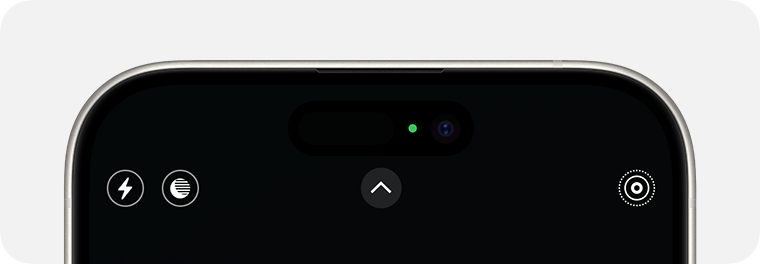
Predator spyware for iOS comes packed with a wide array of surveillance tools. Most notably, it can record and transmit data from the device’s camera and microphone. Naturally, to keep the user from catching on to this suspicious activity, the system’s built-in recording indicators — the green and orange dots at the top of the screen — must be disabled. While it’s been known for some time that Predator could somehow hide these alerts, it’s only thanks to this research that we know how exactly it pulls it off.

How the iOS camera and microphone indicator system works

To understand how Predator disables these indicators, we first need to look at how iOS handles them. Since the release of iOS 14 in 2020, Apple devices have alerted users whenever the microphone or camera is active by displaying an orange or green dot at the top of the screen. If both are running simultaneously, only the green dot is shown.

Microphone usage indicator in iOS

In iOS 14 and later, an orange dot appears at the top of the screen when the microphone is in use. Source

Just like other iOS user interface elements, recording indicators are managed by a process called SpringBoard, which is responsible for the device’s system-wide UI. When an app starts using the camera or microphone, the system registers the change in that specific module’s state. This activity data is then gathered by an internal system component, which passes the information to SpringBoard for processing. Once SpringBoard receives word that the camera or microphone is active, it toggles the green or orange dot on or off based on that data.

Camera usage indicator in iOS

If the camera is in use (or both the camera and microphone are), a green dot appears. Source

From an app’s perspective, the process works like this: first, the app requests permission to access the camera or microphone through the standard iOS permission mechanism. When the app actually needs to use one or both of these modules, it calls the iOS system API. If the user has granted permission, iOS activates the requested module and automatically updates the status indicator. These indicators are strictly controlled by the operating system; third-party apps have no direct access to them.

How Predator interferes with the iOS camera and microphone indicators

Cybersecurity researchers analyzed a captured version of Predator and uncovered traces of multiple techniques used by the spyware’s creators to bypass built-in iOS mechanisms and disable recording indicators.

In the first approach — which appears to have been used during early development — the malware attempted to interfere with the indicators at the display stage right after SpringBoard received word that the camera or microphone was active. However, this method was likely deemed too complex and unreliable by the developers. As a result, this specific function remains in the Trojan as dead code — it’s never actually executed.

Ultimately, Predator settled on a simpler, more effective method that operates at the very level where the system receives data about the camera or microphone being turned on. To do this, Predator intercepts the communication between SpringBoard and the specific component responsible for collecting activity data from these modules.

By exploiting the specific characteristics of Objective-C — the programming language used to write the SpringBoard application — the malware completely blocks the signals indicating that the camera or microphone has been activated. As a result, SpringBoard never receives the signal that the module’s status has changed, so it never triggers the recording indicators.

How to lower your risk of spyware infection

Predator-grade spyware is quite expensive, and typically reserved for high-stakes industrial or state-sponsored espionage. On one hand, this means defending against such a high-tier threat is difficult — and achieving 100% protection is likely impossible. On the other hand, for these same reasons, the average user is statistically unlikely to be targeted.

However, if you’ve reason to believe you’re at risk from Predator or Pegasus-class spyware, here are a few steps you can take to make an attacker’s job much harder:

  • Don’t click suspicious links from unknown senders.
  • Regularly update your operating system, browsers, and messaging apps.
  • Reboot your device occasionally. A simple restart can often help “lose the tail”, forcing attackers to reinfect the device from scratch.
  • Install a reliable security solution on all the devices you use.

For a deeper dive into staying safe, check out security expert Costin Raiu’s post: Staying safe from Pegasus, Chrysaor and other APT mobile malware.

Curious about other ways your smartphone might be used to spy on you? Check out our related posts:

Victory! Tenth Circuit Finds Fourth Amendment Doesn’t Support Broad Search of Protesters’ Devices and Digital Data

27 February 2026 at 07:03

In a big win for protesters’ rights, the U.S. Court of Appeals for the Tenth Circuit overturned a lower court’s dismissal of a challenge to sweeping warrants to search a protester’s devices and digital data and a nonprofit’s social media data.

The case, Armendariz v. City of Colorado Springs, arose after a housing protest in 2021, during which Colorado Springs police arrested protesters for obstructing a roadway. After the demonstration, police also obtained warrants to seize and search through the devices and data of Jacqueline Armendariz Unzueta, who they claimed threw a bike at them during the protest. The warrants included a search through all of her photos, videos, emails, text messages, and location data over a two-month period, as well as a time-unlimited search for 26 keywords, including words as broad as “bike,” “assault,” “celebration,” and “right,” that allowed police to comb through years of Armendariz’s private and sensitive data—all supposedly to look for evidence related to the alleged simple assault. Police further obtained a warrant to search the Facebook page of the Chinook Center, the organization that spearheaded the protest, despite the Chinook Center never having been accused of a crime.

The district court dismissed the civil rights lawsuit brought by Armendariz and the Chinook Center, holding that the searches were justified and that, in any case, the officers were entitled to qualified immunity. The plaintiffs, represented by the ACLU of Colorado, appealed. EFF—joined by the Center for Democracy and Technology, the Electronic Privacy Information Center, and the Knight First Amendment Institute at Columbia University—wrote an amicus brief in support of that appeal.

In a 2-1 opinion, the Tenth Circuit reversed the district court’s dismissal of the lawsuit’s Fourth Amendment search and seizure claims. The court painstakingly picked apart each of the three warrants and found them to be overbroad and lacking in particularity as to the scope and duration of the searches. The court further held that in furnishing such facially deficient warrants, the officers violated “clearly established” law and thus were not entitled to qualified immunity. Although the court did not explicitly address the First Amendment concerns raised by the lawsuit, it did note the backdrop against how these searches were carried out, including animus by Colorado Springs police leading up to the housing protest.

It is rare for appellate courts to call into question any search warrants. It’s even rarer for them to deny qualified immunity defenses. The Tenth Circuit’s decision should be celebrated as a big win for protesters and anyone concerned about police immunity for violating people’s constitutional rights. The case is now remanded back to the district court to proceed—and hopefully further vindicate the privacy rights we all have in our devices and digital data.

San Jose Can Protect Immigrants by Ending Flock Surveillance System

17 February 2026 at 19:55

(This appeared as an op-ed published February 12, 2026 in the San Jose Spotlight, written by Huy Tran (SIREN), Jeffrey Wang (CAIR-SFBA), and Jennifer Pinsof.)

As ICE and other federal agencies continue their assault on civil liberties, local leaders are stepping up to protect their communities. This includes pushing back against automated license plate readers, or ALPRs, which are tools of mass surveillance that can be weaponized against immigrants, political dissidents and other targets.

In recent weeks, Mountain View, Los Altos Hills, Santa Cruz, East Palo Alto and Santa Clara County have begun reconsidering their ALPR programs. San Jose should join them. This dangerous technology poses an unacceptable risk to the safety of immigrants and other vulnerable populations.

ALPRs are marketed to promote public safety. But their utility is debatable and they come with significant drawbacks. They don’t just track “criminals.” They track everyone, all the time. Your vehicle’s movements can reveal where you work, worship and obtain medical care. ALPR vendors like Flock Safety put the location information of millions of drivers into databases, allowing anyone with access to instantly reconstruct the public’s movements.

But “anyone with access” is far broader than just local police. Some California law enforcement agencies have used ALPR networks to run searches related to immigration enforcement. In other situations, purported issues with the system’s software have enabled federal agencies to directly access California ALPR data. This is despite the promises of ALPR vendors and clear legal prohibitions.

Communities are saying enough is enough. Just last week, police in Mountain View decided to turn off all of the city’s Flock cameras, following revelations that federal and other unauthorized agencies had accessed their network. The cameras will remain inactive until the City Council provides further direction.

Other localities have shut off the cameras for good. In January, Los Altos Hills terminated its contract with Flock following concerns about ICE. Santa Cruz severed relations with Flock, citing rising tensions with ICE. Most recently, East Palo Alto and Santa Clara County are reconsidering whether to continue their relationships with Flock, given heightened concern for the safety of immigrant communities.

California law prohibits local police from disclosing ALPR data to out-of-state or federal agencies. But at least 75 California police agencies were sharing these records out-of-state as recently as 2023. Just last year, San Francisco police allowed access to out-of-state agencies and 19 searches were related to ICE.

Even without direct access, ICE can exploit local ALPR systems. One investigation found more than 4,000 cases where police had made searches on behalf of federal law enforcement, including for immigration investigations.

Increasing the risk is that law enforcement routinely searches these networks without first obtaining a warrant. In San Jose, police aren’t required to have any suspicion of wrongdoing before searching ALPR databases, which contain a year’s worth of data representing hundreds of millions of records. In a little over a year, San Jose police logged more than 261,000 ALPR searches, or nearly 700 searches a day, all without a warrant.

Two nonprofit organizations, SIREN and CAIR California, represented by Electronic Frontier Foundation and the ACLU of Northern California, are currently suing to stop San Jose’s warrantless searches of ALPR data. But this is only the first step. A better solution is to simply turn these cameras off.

San Jose cannot afford delay. Each day these cameras remain active, they collect sensitive location data that can be misused to target immigrant families and violate fundamental freedoms. It is a risk materializing across California. City leaders must act now to shut down ALPR systems and make clear that public safety will not come at the expense of privacy, human dignity or community trust.

3D Printer Surveillance

12 February 2026 at 13:01

New York is contemplating a bill that adds surveillance to 3D printers:

New York’s 2026­2027 executive budget bill (S.9005 / A.10005) includes language that should alarm every maker, educator, and small manufacturer in the state. Buried in Part C is a provision requiring all 3D printers sold or delivered in New York to include “blocking technology.” This is defined as software or firmware that scans every print file through a “firearms blueprint detection algorithm” and refuses to print anything it flags as a potential firearm or firearm component.

I get the policy goals here, but the solution just won’t work. It’s the same problem as DRM: trying to prevent general-purpose computers from doing specific things. Cory Doctorow wrote about it in 2018 and—more generally—spoke about it in 2011.

“Free” Surveillance Tech Still Comes at a High and Dangerous Cost

11 February 2026 at 19:00

Surveillance technology vendors, federal agencies, and wealthy private donors have long helped provide local law enforcement “free” access to surveillance equipment that bypasses local oversight. The result is predictable: serious accountability gaps and data pipelines to other entities, including Immigration and Customs Enforcement (ICE), that expose millions of people to harm.

The cost of “free” surveillance tools — like automated license plate readers (ALPRs), networked cameras, face recognition, drones, and data aggregation and analysis platforms — is measured not in tax dollars, but in the erosion of civil liberties. 

The cost of “free” surveillance tools is measured not in tax dollars, but in the erosion of civil liberties.

The collection and sharing of our data quietly generates detailed records of people’s movements and associations that can be exposed, hacked, or repurposed without their knowledge or consent. Those records weaken sanctuary and First Amendment protections while facilitating the targeting of vulnerable people.   

Cities can and should use their power to reject federal grants, vendor trials, donations from wealthy individuals, or participation in partnerships that facilitate surveillance and experimentation with spy tech. 

If these projects are greenlit, oversight is imperative. Mechanisms like public hearings, competitive bidding, public records transparency, and city council supervision aid to ensure these acquisitions include basic safeguards — like use policies, audits, and consequences for misuse — to protect the public from abuse and from creeping contracts that grow into whole suites of products. 

Clear policies and oversight mechanisms must be in place before using any surveillance tools, free or not, and communities and their elected officials must be at the center of every decision about whether to bring these tools in at all.

Here are some of the most common methods “free” surveillance tech makes its way into communities.

Trials and Pilots

Police departments are regularly offered free access to surveillance tools and software through trials and pilot programs that often aren’t accompanied by appropriate use policies. In many jurisdictions, trials do not trigger the same requirements to go before decision-makers outside the police department. This means the public may have no idea that a pilot program for surveillance technology is happening in their city. 

The public may have no idea that a pilot program for surveillance technology is happening in their city.  

In Denver, Colorado, the police department is running trials of possible unmanned aerial vehicles (UAVs) for a drone-as-first-responder (DFR) program from two competing drone vendors: Flock Safety Aerodome drones (through August 2026) and drones from the company Skydio, partnering with Axon, the multi-billion dollar police technology company behind tools like Tasers and AI-generated police reports. Drones create unique issues given their vantage for capturing private property and unsuspecting civilians, as well as their capacity to make other technologies, like ALPRs, airborne. 

Functional, Even Without Funding 

We’ve seen cities decide not to fund a tool, or run out of funding for it, only to have a company continue providing it in the hope that money will turn up. This happened in Fall River, Massachusetts, where the police department decided not to fund ShotSpotter’s $90,000 annual cost and its frequent false alarms, but continued using the system when the company provided free access. 

 Police technology companies are developing more features and subscription-based models, so what’s “free” today frequently results in taxpayers footing the bill later.

In May 2025, Denver's city council unanimously rejected a $666,000 contract extension for Flock Safety ALPR cameras after weeks of public outcry over mass surveillance data sharing with federal immigration enforcement. But Mayor Mike Johnston’s office allowed the cameras to keep running through a “task force” review, effectively extending the program even after the contract was voted down. In response, the Denver Taskforce to Reimagine Policing and Public Safety and Transforming Our Communities Alliance launched a grassroots campaign demanding the city “turn Flock cameras off now,” a reminder that when surveillance starts as a pilot or time‑limited contract, communities often have to fight not just to block renewals but to shut the systems off.

 Importantly, police technology companies are developing more features and subscription-based models, so what’s “free” today frequently results in taxpayers footing the bill later. 

Gifts from Police Foundations and Wealthy Donors

Police foundations and the wealthy have pushed surveillance-driven agendas in their local communities by donating equipment and making large monetary gifts, another means of acquiring these tools without public oversight or buy-in.

In Atlanta, the Atlanta Police Foundation (APF) attempted to use its position as a private entity to circumvent transparency. Following a court challenge from the Atlanta Community Press Collective and Lucy Parsons Labs, a Georgia court determined that the APF must comply with public records laws related to some of its actions and purchases on behalf of law enforcement.
In San Francisco, billionaire Chris Larsen has financially supported a supercharging of the city’s surveillance infrastructure, donating $9.4 million to fund the San Francisco Police Department’s (SFPD) Real-Time Investigation Center, where a menu of surveillance technologies and data come together to surveil the city’s residents. This move comes after the billionaire backed a ballot measure, which passed in March 2025, eroding the city’s surveillance technology law and allowing the SFPD free rein to use new surveillance technologies for a full year without oversight.

Free Tech for Federal Data Pipelines

Federal grants and Department of Homeland Security funding are another way surveillance technology appears free to, only to lock municipalities into long‑term data‑sharing and recurring costs. 

Through the Homeland Security Grant Program, which includes the State Homeland Security Program (SHSP) and the Urban Areas Security (UASI) Initiative, and Department of Justice programs like Byrne JAG, the federal government reimburses states and cities for "homeland security" equipment and software, including including law‑enforcement surveillance tools, analytics platforms, and real‑time crime centers. Grant guidance and vendor marketing materials make clear that these funds can be used for automated license plate readers, integrated video surveillance and analytics systems, and centralized command‑center software—in other words, purchases framed as counterterrorism investments but deployed in everyday policing.

Vendors have learned to design products around this federal money, pitching ALPR networks, camera systems, and analytic platforms as "grant-ready" solutions that can be acquired with little or no upfront local cost. Motorola Solutions, for example, advertises how SHSP and UASI dollars can be used for "law enforcement surveillance equipment" and "video surveillance, warning, and access control" systems. Flock Safety, partnering with Lexipol, a company that writes use policies for law enforcement, offers a "License Plate Readers Grant Assistance Program" that helps police departments identify federal and state grants and tailor their applications to fund ALPR projects. 

Grant assistance programs let police chiefs fast‑track new surveillance: the paperwork is outsourced, the grant eats the upfront cost, and even when there is a formal paper trail, the practical checks from residents, councils, and procurement rules often get watered down or bypassed.

On paper, these systems arrive “for free” through a federal grant; in practice, they lock cities into recurring software, subscription, and data‑hosting fees that quietly turn into permanent budget lines—and a lasting surveillance infrastructure—as soon as police and prosecutors start to rely on them. In Santa Cruz, California, the police department explicitly sought to use a DHS-funded SHSP grant to pay for a new citywide network of Flock ALPR cameras at the city's entrances and exits, with local funds covering additional cameras. In Sumner, Washington, a $50,000 grant was used to cover the entire first year of a Flock system — including installation and maintenance — after which the city is on the hook for roughly $39,000 every year in ongoing fees. The free grant money opens the door, but local governments are left with years of financial, political, and permanent surveillance entanglements they never fully vetted.

The most dangerous cost of this "free" funding is not just budgetary; it is the way it ties local systems into federal data pipelines. Since 9/11, DHS has used these grant streams to build a nationwide network of at least 79–80 state and regional fusion centers that integrate and share data from federal, state, local, tribal, and private partners. Research shows that state fusion centers rely heavily on the DHS Homeland Security Grant Program (especially SHSP and UASI) to "mature their capabilities," with some centers reporting that 100 percent of their annual expenditures are covered by these grants. 

Civil rights investigations have documented how this funding architecture creates a backdoor channel for ICE and other federal agencies to access local surveillance data for their own purposes. A recent report by the Surveillance Technology Oversight Project (S.T.O.P.) describes ICE agents using a Philadelphia‑area fusion center to query the city’s ALPR network to track undocumented drivers in a self‑described sanctuary city.

Ultimately, federal grants follow the same script as trials and foundation gifts: what looks “free” ends up costing communities their data, their sanctuary protections, and their power over how local surveillance is used.

Protecting Yourself Against “Free” Technology

The most important protection against "free" surveillance technology is to reject it outright. Cities do not have to accept federal grants, vendor trials, or philanthropic donations. Saying no to "free" tech is not just a policy choice; it is a political power that local governments possess and can exercise. Communities and their elected officials can and should refuse surveillance systems that arrive through federal grants, vendor pilots, or private donations, regardless of how attractive the initial price tag appears. 

For those cities that have already accepted surveillance technology, the imperative is equally clear: shut it down. When a community has rejected use of a spying tool, the capabilities, equipment, and data collected from that tool should be shut off immediately. Full stop.

And for any surveillance technology that remains in operation, even temporarily, there must be clear rules: when and how equipment is used, how that data is retained and shared, who owns data and how companies can access and use it, transparency requirements, and consequences for any misuse and abuse. 

“Free” surveillance technology is never free. Someone profits or gains power from it. Police technology vendors, federal agencies, and wealthy donors do not offer these systems out of generosity; they offer them because surveillance serves their interests, not ours. That is the real cost of “free” surveillance.

No One, Including Our Furry Friends, Will Be Safer in Ring's Surveillance Nightmare

10 February 2026 at 22:11

Amazon Ring’s Super Bowl ad offered a vision of our streets that should leave every person unsettled about the company’s goals for disintegrating our privacy in public.

In the ad, disguised as a heartfelt effort to reunite the lost dogs of the country with their innocent owners, the company previewed future surveillance of our streets: a world where biometric identification could be unleashed from consumer devices to identify, track, and locate anything — human, pet, and otherwise.

The ad for Ring’s “Search Party” feature highlighted the doorbell camera’s ability to scan footage across Ring devices in a neighborhood, using AI analysis to identify potential canine matches among the many personal devices within the network. 

Amazon Ring already integrates biometric identification, like face recognition, into its products via features like "Familiar Faces,” which depends on scanning the faces of those in sight of the camera and matching it against a list of pre-saved, pre-approved faces. It doesn’t take much to imagine Ring eventually combining these two features: face recognition and neighborhood searches. 

Ring’s “Familiar Faces” feature could already run afoul of biometric privacy laws in some states, which require explicit, informed consent from individuals before a company can just run face recognition on someone. Unfortunately, not all states have similar privacy protections for their residents. 

Ring has a history of privacy violations, enabling surveillance of innocents and protestors, and close collaboration with law enforcement, and EFF has spent years reporting on its many privacy problems.

The cameras, which many people buy and install to identify potential porch pirates or get a look at anyone that might be on their doorstep, feature microphones that have been found to capture audio from the street. In 2023, Ring settled with the Federal Trade Commission over the extensive access it gave employees to personal customer footage. At that time, just three years ago, the FTC wrote: “As a result of this dangerously overbroad access and lax attitude toward privacy and security, employees and third-party contractors were able to view, download, and transfer customers’ sensitive video data for their own purposes.”

The company has made law enforcement access a regular part of its business. As early as 2016, the company was courting police departments through free giveaways. The company provided law enforcement warrantless access to people’s footage, a practice they claimed to cut off in 2024. Not long after, though, the company established partnerships with major police companies Axon and Flock Safety to facilitate the integration of Ring cameras into police intelligence networks. The partnership allows law enforcement to again request Ring footage directly from users. This supplements the already wide-ranging apparatus of data and surveillance feeds now available to law enforcement. 

This feature is turned on by default, meaning that Ring owners need to go into the controls to change it. According to Amazon Ring’s instructions, this is how to disable the “search party” feature: 

  1. Open the Ring app to the main dashboard.
  2. Tap the menu (☰).
  3. Tap Control Center.
  4. Select Search Party.
  5. Tap Disable Search for Lost Pets. Tap the blue Pet icon next to "Search for Lost Pets" to turn the feature off for each camera. (You also have the option to "Disable Natural Hazards (Fire Watch)" and the option to tap the blue Flame icon next to Natural Hazards (Fire Watch) to turn the feature on or off for each camera.)

The addition of AI-driven biometric identification is the latest entry in the company’s history of profiting off of public safety worries and disregard for individual privacy, one that turbocharges the extreme dangers of allowing this to carry on. People need to reject this kind of disingenuous framing and recognize the potential end result: a scary overreach of the surveillance state designed to catch us all in its net.

EFFecting Change: Get the Flock Out of Our City

9 February 2026 at 23:31

Flock contracts have quietly spread to cities across the country. But Flock ALPR (Automated License Plate Readers) erode civil liberties from the moment they're installed. While officials claim these cameras keep neighborhoods safe, the evidence tells a different story. The data reveals how Flock has enabled surveillance of people seeking abortions, protesters exercising First Amendment rights, and communities targeted by discriminatory policing.

This is exactly why cities are saying no. From Austin to Cambridge to small towns across Texas, jurisdictions are rejecting Flock contracts altogether, proving that surveillance isn't inevitable—it's a choice.

Join EFF's Sarah Hamid and Andrew Crocker along with Reem Suleiman from Fight for the Future and Kate Bertash from Rural Privacy Coalition to explore what's happening as Flock contracts face growing resistance across the U.S. We'll break down the legal implications of the data these systems collect, examine campaigns that have successfully stopped Flock deployments, and discuss the real-world consequences for people's privacy and freedom. The conversation will be followed by a live Q&A. 

EFFecting Change Livestream Series:
Get the Flock Out of Our City
Thursday, February 19th
12:00 PM - 1:00 PM Pacific
This event is LIVE and FREE!

RSVP Today


Accessibility

This event will be live-captioned and recorded. EFF is committed to improving accessibility for our events. If you have any accessibility questions regarding the event, please contact events@eff.org.

Event Expectations

EFF is dedicated to a harassment-free experience for everyone, and all participants are encouraged to view our full Event Expectations.

Upcoming Events

Want to make sure you don’t miss our next livestream? Here’s a link to sign up for updates about this series: eff.org/ECUpdates. If you have a friend or colleague that might be interested, please join the fight for your digital rights by forwarding this link: eff.org/EFFectingChange. Thank you for helping EFF spread the word about privacy and free expression online. 

Recording

We hope you and your friends can join us live! If you can't make it, we’ll post the recording afterward on YouTube and the Internet Archive!

How to protect yourself from Bluetooth-headset tracking and the WhisperPair attack | Kaspersky official blog

21 January 2026 at 12:41

A newly discovered vulnerability named WhisperPair can turn Bluetooth headphones and headsets from many well-known brands into personal tracking beacons — regardless of whether the accessories are currently connected to an iPhone, Android smartphone, or even a laptop. Even though the technology behind this flaw was originally developed by Google for Android devices, the tracking risks are actually much higher for those using vulnerable headsets with other operating systems — like iOS, macOS, Windows, or Linux. For iPhone owners, this is especially concerning.

Connecting Bluetooth headphones to Android smartphones became a whole lot faster when Google rolled out Fast Pair, a technology now used by dozens of accessory manufacturers. To pair a new headset, you just turn it on and hold it near your phone. If your device is relatively modern (produced after 2019), a pop-up appears inviting you to connect and download the accompanying app, if it exists. One tap, and you’re good to go.

Unfortunately, it seems quite a few manufacturers didn’t pay attention to the particulars of this tech when implementing it, and now their accessories can be hijacked by a stranger’s smartphone in seconds — even if the headset isn’t actually in pairing mode. This is the core of the WhisperPair vulnerability, recently discovered by researchers at KU Leuven and recorded as CVE-2025-36911.

The attacking device — which can be a standard smartphone, tablet or laptop — broadcasts Google Fast Pair requests to any Bluetooth devices within a 14-meter radius. As it turns out, a long list of headphones from Sony, JBL, Redmi, Anker, Marshall, Jabra, OnePlus, and even Google itself (the Pixel Buds 2) will respond to these pings even when they aren’t looking to pair. On average, the attack takes just 10 seconds.

Once the headphones are paired, the attacker can do pretty much anything the owner can: listen in through the microphone, blast music, or — in some cases — locate the headset on a map if it supports Google Find Hub. That latter feature, designed strictly for finding lost headphones, creates a perfect opening for stealthy remote tracking. And here’s the twist: it’s actually most dangerous for Apple users and anyone else rocking non-Android hardware.

Remote tracking and the risks for iPhones

When headphones or a headset first shake hands with an Android device via the Fast Pair protocol, an owner key tied to that smartphone’s Google account is tucked away in the accessory’s memory. This info allows the headphones to be found later by leveraging data collected from millions of Android devices. If any random smartphone spots the target device nearby via Bluetooth, it reports its location to the Google servers. This feature — Google Find Hub — is essentially the Android version of Apple’s Find My, and it introduces the same unauthorized tracking risks as a rogue AirTag.

When an attacker hijacks the pairing, their key can be saved as the headset owner’s key — but only if the headset targeted via WhisperPair hasn’t previously been linked to an Android device and has only been used with an iPhone, or other hardware like a laptop with a different OS. Once the headphones are paired, the attacker can stalk their location on a map at their leisure — crucially, anywhere at all (not just within the 14-meter range).

Android users who’ve already used Fast Pair to link their vulnerable headsets are safe from this specific move, since they’re already logged in as the official owners. Everyone else, however, should probably double-check their manufacturer’s documentation to see if they’re in the clear — thankfully, not every device vulnerable to the exploit actually supports Google Find Hub.

How to neutralize the WhisperPair threat

The only truly effective way to fix this bug is to update your headphones’ firmware, provided an update is actually available. You can typically check for and install updates through the headset’s official companion app. The researchers have compiled a list of vulnerable devices on their site, but it’s almost certainly not exhaustive.

After updating the firmware, you absolutely must perform a factory reset to wipe the list of paired devices — including any unwanted guests.

If no firmware update is available and you’re using your headset with iOS, macOS, Windows, or Linux, your only remaining option is to track down an Android smartphone (or find a trusted friend who has one) and use it to reserve the role of the original owner. This will prevent anyone else from adding your headphones to Google Find Hub behind your back.

The update from Google

In January 2026, Google pushed an Android update to patch the vulnerability on the OS side. Unfortunately, the specifics haven’t been made public, so we’re left guessing exactly what they tweaked under the hood. Most likely, updated smartphones will no longer report the location of accessories hijacked via WhisperPair to the Google Find Hub network. But given that not everyone is exactly speedy when it comes to installing Android updates, it’s a safe bet that this type of headset tracking will remain viable for at least another couple of years.

Want to find out how else your gadgets might be spying on you? Check out these posts:

AI-Powered Surveillance in Schools

19 January 2026 at 13:02

It all sounds pretty dystopian:

Inside a white stucco building in Southern California, video cameras compare faces of passersby against a facial recognition database. Behavioral analysis AI reviews the footage for signs of violent behavior. Behind a bathroom door, a smoke detector-shaped device captures audio, listening for sounds of distress. Outside, drones stand ready to be deployed and provide intel from above, and license plate readers from $8.5 billion surveillance behemoth Flock Safety ensure the cars entering and exiting the parking lot aren’t driven by criminals.

This isn’t a high-security government facility. It’s Beverly Hills High School.

Baton Rouge Acquires a Straight-Up Military Surveillance Drone

16 January 2026 at 21:30

The Baton Rouge Police Department announced this week that it will begin using a drone designed by military equipment manufacturer Lockheed Martin and Edge Autonomy, making it one of the first local police departments to use an unmanned aerial vehicle (UAV) with a history of primary use in foreign war zones. Baton Rouge is now one of the first local police departments in the United States to deploy an unmanned aerial vehicle (UAV) with such extensive surveillance capabilities — a dangerous escalation in the militarization of local law enforcement.

This is a troubling development in an already long history of local law enforcement acquiring and utilizing military-grade surveillance equipment. It should be a cautionary tale that prods  communities across the country to be proactive in ensuring that drones can only be acquired and used in ways that are well-documented, transparent, and subject to public feedback. 

Baton Rouge bought the Stalker VXE30 from Edge Autonomy, which partners with Lockheed Martin and began operating under the brand Redwire this week. According to reporting from WBRZ ABC2 in Louisiana, the drone, training, and batteries, cost about $1 million. 

Baton Rouge Police Department officers stand with the Stalker VXE30 drone in a photo shared by the BRPD via Facebook.

All of the regular concerns surrounding drones apply to this new one in use by Baton Rouge:

  • Drones can access and view spaces that are otherwise off-limits to law enforcement, including backyards, decks, and other areas of personal property.
  • Footage captured by camera-enabled drones may be stored and shared in ways that go far beyond the initial flight.
  • Additional camera-based surveillance can be installed on the drone, including automated license plate readers and the retroactive application of biometric analysis, such as face recognition.

However, the use of a military-grade drone hypercharges these concerns. Stalker VXE30's surveillance capabilities extend for dozens of miles, and it can fly faster and longer than standard police drones already in use. 

“It can be miles away, but we can still have a camera looking at your face, so we can use it for surveillance operations," BRPD Police Chief TJ Morse told reporters.

Drone models similar to the Stalker VXE30 have been used in military operations around the world and are currently being used by the U.S. Army and other branches for long-range reconnaissance. Typically, police departments deploy drone models similar to those commercially available from companies like DJI, which until recently was the subject of a proposed Federal Communications Commission (FCC) ban, or devices provided by police technology companies like Skydio, in partnership with Axon and Flock Safety

Additionally troubling is the capacity to add additional equipment to these drones: so-called “payloads” that could include other types of surveillance equipment and even weapons. 

The Baton Rouge community must put policies in place that restrict and provide oversight of any possible uses of this drone, as well as any potential additions law enforcement might make. 

EFF has filed a public records request to learn more about the conditions of this acquisition and gaps in oversight policies. We've been tracking the expansion of police drone surveillance for years, and this acquisition represents a dangerous new frontier. We'll continue investigating and supporting communities fighting back against the militarization of local police and mass surveillance. To learn more about the surveillance technologies being used in your city, please check out the Atlas of Surveillance.

How Hackers Are Fighting Back Against ICE

8 January 2026 at 23:16

Read more about how ICE has spent hundreds of millions of dollars on surveillance technology to spy on anyone—and potentially everyone—in the United States, and how to follow the Homeland Security Spending Trail..

ICE has been invading U.S. cities, targeting, surveilling, harassing, assaulting, detaining, and torturing people who are undocumented immigrants. They also have targeted people with work permits, asylum seekers, permanent residents (people holding “green cards”), naturalized citizens, and even citizens by birth. ICE has spent hundreds of millions of dollars on surveillance technology to spy on anyoneand potentially everyonein the United States. It can be hard to imagine how to defend oneself against such an overwhelming force. But a few enterprising hackers have started projects to do counter surveillance against ICE, and hopefully protect their communities through clever use of technology. 

Let’s start with Flock, the company behind a number of automated license plate reader (ALPR) and other camera technologies. You might be surprised at how many Flock cameras there are in your community. Many large and small municipalities around the country have signed deals with Flock for license plate readers to track the movement of all cars in their city. Even though these deals are signed by local police departments, oftentimes ICE also gains access

Because of their ubiquity, people are interested in finding out where and how many Flock cameras are in their community. One project that can help with this is the OUI-SPY, a small piece of open source hardware. The OUI-SPY runs on a cheap Arduino compatible chip called an ESP-32. There are multiple programs available for loading on the chip, such as “Flock You,” which allows people to detect Flock cameras and “Sky-Spy” to detect overhead drones. There’s also “BLE Detect,” which detects various Bluetooth signals including ones from Axon, Meta’s Ray-Bans that secretly record you, and more. It also has a mode commonly known as “fox hunting” to track down a specific device. Activists and researchers can use this tool to map out different technologies and quantify the spread of surveillance. 

There’s also the open source Wigle app which is primarily designed for mapping out Wi-Fi, but also has the ability to make an audio alert when a specific Wi-Fi or Bluetooth identifier is detected. This means you can set it up to get a notification when it detects products from Flock, Axon, or other nasties in their vicinity. 

One enterprising YouTuber, Benn Jordan, figured out a way to fool Flock cameras into not recording his license plate simply by painting some minor visual noise on his license plate. This is innocuous enough that any human will still be able to read his license plate, but it completely prevented Flock devices from recognizing his license plate as a license plate at the time. Some states have outlawed drivers obscuring their license plates, so taking such action is not recommended. 

Jordan later went on to discover hundreds of misconfigured Flock cameras that were exposing their administrator interface without a password on the public internet. This would allow anyone with an internet connection to view a live surveillance feed, download 30 days of video, view logs, and more. The cameras pointed at parks, public trails, busy intersections, and even a playground. This was a massive breach of public trust and a huge mistake for a company that claims to be working for public safety.

Other hackers have taken on the task of open-source intelligence and community reporting. One interesting example is deflock.me and alpr.watch, which are crowdsourced maps of ALPR cameras. Much like the OUI-SPY project, this allows activists to map out and expose Flock surveillance cameras in their community. 

There have also been several ICE reporting apps released, including apps to report ICE sightings in your area such Stop ICE Alerts, ICEOUT.org, and ICE Block. ICEBlock was delisted by Apple at the request of Attorney General Pam Bondi, a fact we are suing over. There is also Eyes Up, an app to securely record and archive ICE raids, which was taken down by Apple earlier this year. 

Another interesting project documenting ICE and creating a trove of open-source intelligence is ICE List Wiki which contains info on companies that have contracts with ICE, incidents and encounters with ICE, and vehicles ICE uses. 

People without programming knowledge can also get involved. In Chicago, people used whistles to warn their neighbors that ICE was present or in the area. Many people 3D-printed whistles along with instructional booklets to hand out to their communities, allowing a wider distribution of whistles and consequently earlier warnings for their neighbors. 

Many hackers have started hosting digital security trainings for their communities or building web sites with security advice, including how to remove your data from the watchful eyes of the surveillance industry. To reach a broader community, trainers have even started hosting trainings on how to defend their communities and what to do in an ICE raid in video games, such as Fortnight

There is also EFF’s own Rayhunter project for detecting cell-site simulators, about which we have written extensively. Rayhunter runs on a cheap mobile hotspot and doesn’t require deep technical knowledge to use.

It’s important to remember that we are not powerless. Even in the face of a domestic law enforcement presence with massive surveillance capabilities and military-esque technologies, there are still ways to engage in surveillance self-defense. We cannot give into nihilism and fear. We must continue to find small ways to protect ourselves and our communities, and when we can, fight back. 

EFF is not affiliated with any of these projects (other than Rayhunter) and does not endorse them. We don’t make any statements about the legality of using any of these projects. Please consult with an attorney to determine what risks there may be. 

Join EFF

Help protect digital privacy & free speech for everyone

❌