Normal view

Don’t Repeat NY’s 3D Printing Blunder

14 July 2026 at 21:52

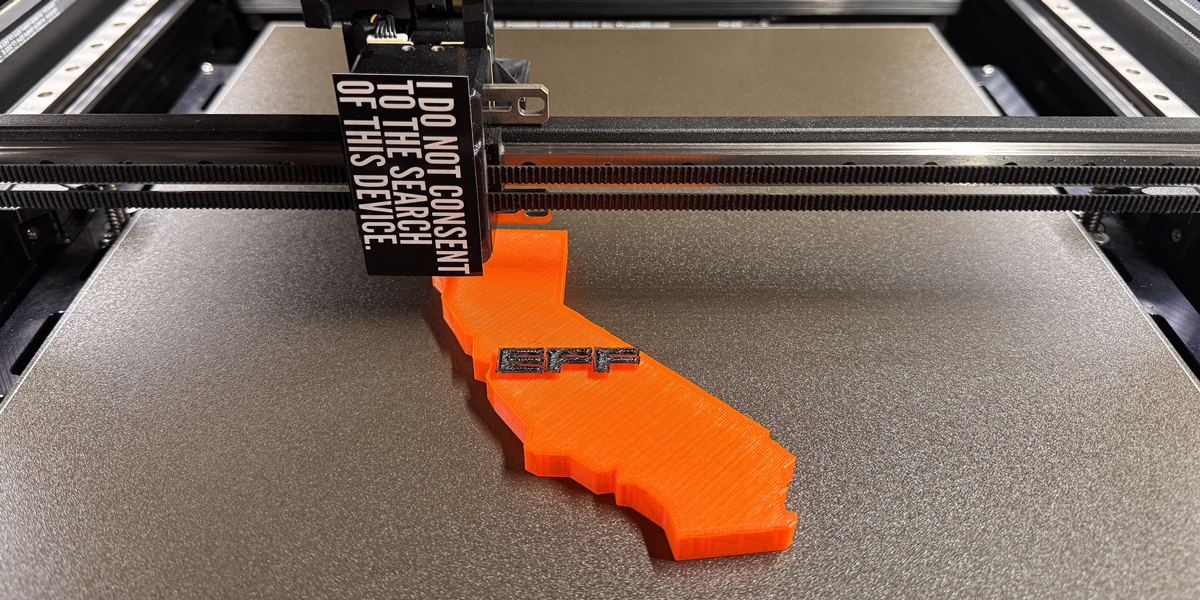
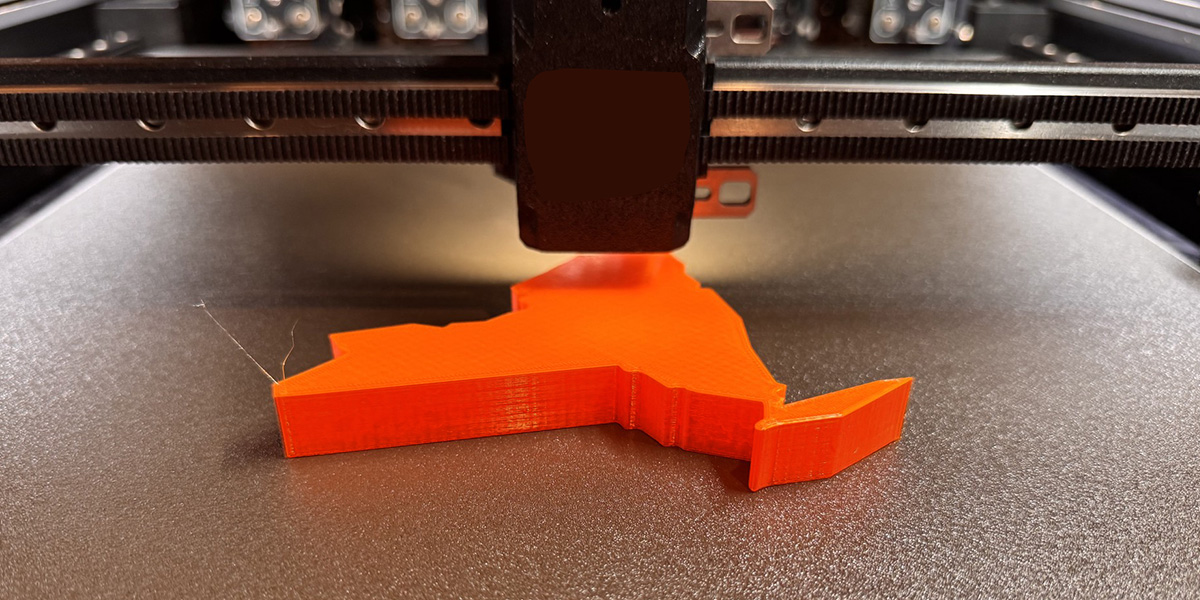
This year the state of New York had the dubious honor of being the first to pass a controversial provision to mandate all 3D printers come with surveillance and censorship. That means not only is there a ticking clock to protect every artist, researcher, engineer, and hobbyist in the state, but there is a real risk of other states thoughtlessly following suit—prior to the New York rules even taking effect.

We, along with many other experts, already warned about this bill buried in the state’s crowded budget process. Hundreds of our supporters and 3D printing enthusiasts in New York reached out to their representatives hoping to kill this farcical bill. While there were some welcome amendments in response to the outcry, Albany passed it anyway.

It might be well-intentioned, but bills like these sell a fantasy that can only have an untold negative impact on the privacy, free expression, and consumer rights of anyone using these general purpose devices. Behind the banner of reducing gun violence, which is nearly always committed with commercial firearms, New York lawmakers have passed draconian legislation that will let manufacturers lock in users and collect their data.

Now that the bill has passed and been signed by Governor Hochul, let’s look at two important ways the final legislation changed since we last wrote about it, and why states like California shouldn’t make the same mistake.

Reduced Risk for Lawful File Sharing 

The New York bill includes language that criminalizes access to firearm print files, a proposal correctly dropped by states like Colorado due to First Amendment concerns. While this made it through to the passed legislation, a few wins were still gained.

Originally the legislation threatened felony charges for the storing and sharing of files, potentially impacting researchers, artists, and journalists with no intention of printing a firearm component. These charges were downgraded to a Class A misdemeanor.

Two provisions criminalized file sharing. The first of the two provisions criminalizing this file sharing, which pertains to the sale or distribution of files in the state, gained an important exception for when a sender has a reasonable belief that the recipient won’t illegally print these components. However the second provision, pertaining to criminalizing file possession, complicates this. Under 2.12 of the subpart, people who possess the file with intent to share the files do not clearly get this same reasonable belief exception.

In other words, if you share one of these files the actual sharing is covered by the exception, but the law makes it ambiguous whether possessing those same files is covered when you intend to share them.

While this exception could have created some breathing room for researchers and journalists operating in good faith, this slapdash bill language leaves plenty of ambiguity and potential speech-chilling effects. However, these changes do offer a modicum of harm reduction in this unconstitutional law.

Saving Face by Preserving Online Sale

Originally the bill had a strange requirement for all 3D printers and Computer Numerical Control, or CNC, machines to be sold and delivered face-to-face, with no exception. That would have meant a major barrier to access, particularly for people in agricultural and rural areas of the state who uniquely benefit from in-home fabrication and repair. It also would have meant a major inconvenience for businesses using these devices. For everyone though, it meant fewer retailers to choose from and facing more stigma for using these devices. 

Fortunately this was dropped from the bill entirely. 

Next Step: We Find Out What Was Actually Passed

In addition to being buried in the complicated legislative process of the NY budget and avoiding proper scrutiny, this bill also kicked the can down the road in determining what exactly is being mandated. In many respects, legislators passed a vibe. We’ll see how the actual law be developed over the next year by a working group with no mandated transparency to the public. Further, they have no obligation to ensure consumer safeguards in developing this state-mandated censorware.

We are still concerned by the possibility of a biased working group acting in the interest of manufacturers or facing pressure to accept consumer harms in the standards they produce. Our remaining hope is this working group convened by the Department of State and the state university system is composed of actual experts who are aware of how unfeasible and harmful this mandate is, and prevent it from being realized.

The Fight Continues

New York is the first to go down this path of state-mandated censorship and surveillance software on 3D printers, but it’s far from the only one to entertain it. It is now more urgent that we fiercely oppose this trend in other states, like California,  as they attempt to join the bandwagon—before even seeing the real-world impacts. 

Take action

Don’t Let California Repeat NY’s Mistake

We cannot allow this to be the foundation for future restrictions on speech and design, or serve as a playbook for the state and corporations to wrest control over our tools.


Sony Nerfs Videogame Ownership

13 July 2026 at 19:30

Legal intern Suzanne Castillo co-authored of this post.

Playstation’s decision to kill physical game discs is the latest attack on our diminishing rights to access and engage with culture digitally. Rent-seeking corporations and negligent lawmakers share the blame — and they can do better. 

We’ve seen the same playbook used in the move to digital distribution of  film, TV, and music: draw in customers with the convenience of a digital download, then limit physical access and move the goalpost on what it actually means to “own” a piece of media. The end goal is to turn the customer into a renter, stuck making regular subscription payments for access. Gamers are right to sound the alarm, and we must take this moment to fight for digital ownership before it’s too late.

Disk Space Invaders

Depriving gamers of physical discs leads to another obvious and immediate cost: data.  Unlike other digital media like film and TV, video games require a ton of storage. Access to high speed internet is still abysmal in the US, making the high-speeds needed for digital game downloads a luxury some of us may take for granted. For many, a modern game can take days and exceed their data caps. 

This made physical discs, particularly for the biggest AAA titles, a logical choice that also largely spared gamers from losing traditional ownership rights. With physical disks, the cost of storing the game was included in the purchase.

Own or Be Pwned

Limiting customers to digital copies also pushes gamers further into rent-only copyright culture.

Physical media comes with a "right of first sale," which means you can lawfully share, resell, alter, or destroy your own copy of a copyrighted work. This right has also helped protect the emergence of alternative community servers, and emulator addition of online play to games from the dial up era.

But courts have held that digital media doesn't carry the same right, meaning no such protection is afforded to digital purchases. Your ability to freely share games with friends or pass them on to family members becomes totally subject to the whims of the distributor. 

So, for example, a digital-only approach effectively guts the second-hand market for games. Saving some money with a used game and recouping the costs by reselling are no longer an option. Even with steep discounts and holiday sales, this raises the minimum cost of engaging with the medium at all.

The inevitable conclusion of the move to digital-only purchases is to lock gamers into  subscription models, making their access totally dependent on the distributor — or, several distributors, as we’ve seen with major TV and movie streamers. A handful of companies actually own the games, and your only option is to regularly pay for fractured libraries of games you may never play and will never truly own.

Achievement Locked

Since digital games are easy to copy, distributors and publishers argue that they are in an arms race against piracy. The irony is that law-abiding customers consistently suffer collateral damage. 

Most digital distributors lock down the content they offer with restrictive user agreements and digital rights management (DRM) software. DRM software, in particular, imposes onerous controls on the game — like forcing internet connection for single player games or modifications that harm performance — and can even introduce serious privacy and security concerns. Any gamer or researcher in the US who wants to reduce this burden by removing or modifying that DRM risks a lawsuit, thanks to Section 1201 of the Digital Millennium Copyright Act (DMCA). This federal law makes it illegal to alter DRM software, and is a beloved tool for companies trying to restrict how we can lawfully use our purchases — whether it’s a copy of the newest tractor simulator or a literal tractor

And since much of this DRM is tied to user accounts, ownership of a game is also revocable and modifiable for any number of reasons outside of your control. Error in your subscription payment? Your account got hacked? Licensing deal falls through with a major publisher? Developers want to kill the game in an update? All of this can limit or change your ability to access the game long after your so-called “purchase.”

Level-up Ownership

Policymakers can and should work to restore our ownership rights for the digital age. 

That starts with legal protections ensuring that the same rights that apply to physical media apply to digital media. Next up? Reform Section 1201 of the DMCA to clarify that it does not forbid fair uses.  

At the state level, we need meaningful consumer protections. Some promising models include California’s AB 1921, which would clarify what customers are actually paying for on digital storefronts and ensure some protections for maintaining discontinued games. The gaming industry has done its best to kill the bill, including claiming that private community servers are illegal

If you bought it, you should own it, and EFF will continue working to mitigate some of the worst harms of the DMCA 1201, defending modders, and fighting deceptive licensing that makes culture less free.

We Can Still Stop California’s 3D Printer Surveillance Scheme

26 June 2026 at 17:05

Ignoring EFF’s warnings about the dangers and impossibility of implementing a new mandate for 3D print surveillance software, the California State Assembly has signed off on legislation to do just that. In the process, legislators amended the bill to make it even more confusing, while failing to address the risks to privacy, speech, and consumer rights. We must renew our call on legislators to drop this bill as it heads to the state senate, and protect the tools of creators in the state.

Take action

Tell CA Senators to stand with creators

What’s changed about the bill?

Since we first wrote about AB  2047, a bill targeting 3D printers for the rare, impractical, and already outlawed practice of manufacturing firearms without a license, it has picked up several amendments. Some are welcome changes, but most have only highlighted the technocratic absurdity of the proposed scheme. Our core concernsthat this mandate censors lawful speech, builds out corporate surveillance, and criminalizes open source experimentationhave not been remedied. 

Removes criminalization of resale

Starting with one silver lining, the current bill includes a carveout for the private resale of devices. The original bill would have made it a criminal offense for an individual to resell 3D printers purchased before this mandated censorship and surveillance software. This is a clear win for the 3D-printing community, but it is unfortunately not enough.

Ineffective carveouts for open source

One of the most dangerous aspects of the bill is that it criminalizes individual users for common practices, like creating and using alternative open source programs with their 3D printer. New amendments provide a carveout for the use of an open source tool, but only if it includes compliant censorship software. The bill burdens open source developers with ambiguous and unrealistic standards for print blocking, and continues to create a chilling effect for open source users.

Removes any actual requirement to work

To reiteratethere is no world where the mandated technology actually works as intended. It will both block lawful use of 3D printers, and allow firearms to be printed by anyone determined to do so. There is no amendment that can change this reality.

Instead, the current bill simply drops the pretense that this mandate is expected to work. The performance standard of algorithms changed from “effectively prevent[ing] a technically skilled user from evading [the algorithm]” to “substantially reduce the likelihood of foreseeable circumvention attempts…” The bill will still require all prints to be surveilled, but instead of testing efficacy against a skilled user, it just plays whack-a-mole with the (literally) infinite number of circumventions that any user can employ. 

Further, the bill now leaves us with an unclear process that relies on non-governmental third parties to define standards, and now relies on manufacturers and resellers to self-police.

Hollywood gets a cut

The bill includes yet another carve out for commercial users. This time for the entertainment industry, which makes extensive use of 3D printers for props and costumes. 

That’s fine for big studios, but it leaves out indie filmmakers, cosplayers, and many other small creators. 

This is simply a defensive edit to limit corporate opposition. There isn’t a clear division in 3D-printing between consumer and commercial tools. These are general purpose tools which might be picked up by a prop department of a big studio, or an artist getting ready for Comic Con. Indeed consumer level products are not only used by amateur artists and engineers developing their skills. Commercial 3D printers, like their traditional 2D equivalents, are frequently used in workplaces, as well as by professionals honing their skills or just trying to get some work done at home. 

Commercial carveouts hands printer manufacturers the ability to sell a more expensive tier of printers, locking-in and up-charging their commercial customers. Some of those customers will choose to buy general retail versions, but that carries its own price: increased risk of IP theft as all printed files are surveilled the same way they are for hobbyists. That means a real risk of businesses leaking any prototypes or new designs to not only the printer manufacturer, but potentially snooping governments and/or the general public through data breaches.

Demand  your senator oppose AB 2047

This updated version of AB 2047 downgrades performance standards and removes oversight while still threatening privacy and choice for users of 3D printers. A printer surveillance system won’t work for its intended purpose, and will only harm law abiding users. 

Act now to demand your senators to vote no on this ineffective and invasive bill.

Take action

Tell CA Senators to stand with creators

The Open Social Web Needs Section 230 to Survive

28 April 2026 at 22:59

If you want to overthrow Big Tech, you’ll need Section 230. The paradigm shift being built with the Open Social Web can put communities back in control of social media infrastructure, and finally end our dependency on enshitified corporate giants. But while these incumbents can overcome multimillion-dollar lawsuits, the small host revolution could be picked off one by one without the protections offered by 230.

The internet as we know it is built on Section 230, a law from the 90s that generally says internet users are legally responsible for their own speech — not the services hosting their speech. The purpose of 230 was to enable diverse forums for speech online, which defined the early internet. These scattered online communities have since been largely captured by a handful of multi-billion dollar companies that found profit in controlling your voice online. While critics are rightly concerned about this new corporate influence and surveillance, some look to diminishing Section 230 as the nuclear option to regain control. 

The thing is, that would be a huge gift to Big Tech, and detrimental to our best shot at actually undermining corporate and state control of speech online. 

Dethroning Big Tech

We’re fed up with legacy social media trapping us in walled gardens, where the world's biggest companies like Google and Meta call the shots. Our communities, and our voices, are being held hostage as billionaires’ platforms surveil, betray, and censor us. We’re not alone in this frustration, and fortunately, people are collaborating globally to build another way forward: the Open Social Web. 

This new infrastructure puts the public’s interest first by reclaiming the principles of interoperability and decentralization from the early internet. In short, it puts protocols over platforms and lets people own their connections with others. Whether you choose a Fediverse app like Mastodon or an ATmosphere app like Bluesky, your audience and community stay within reach. It’s a vision of social media akin to our lives offline: you decide who to be in touch with and how, and no central authority can threaten to snuff out those connections. It’s social media for humans, not advertisers and authoritarians.

Behind that vision is a beautiful mess of protocols bringing open social media to life. Each protocol is a unique language for applications, determining how and where messages are sent. While this means there is great variety to these projects, it also means everyone who spins up a server, develops an app, or otherwise hosts others’ speech has skin in the game when it comes to defending Section 230.

What exactly is Section 230?

Section 230 protects freedom of expression online by protecting US intermediaries that make the internet work. Passed in 1996 to preserve new bubbling communities online, 230 enshrined important protections for free expression and the ability to block or filter speech you don’t want on your site. One portion is credited as the “26 words that created the internet”:

“No provider or user of an interactive computer service shall be treated as the publisher or speaker of any information provided by another information content provider.” 

In other words, this bipartisan law recognizes that speech online relies on intermediaries — services that deliver messages between users — and holding them potentially liable for any message they deliver would only stifle that speech. Intuitively, when harmful speech occurs, the speaker should be the one held accountable. The effect is that most civil suits against users and services based on others' speech can quickly be dismissed, avoiding the most expensive parts of civil litigation. 

Section 230 was never a license to host anything online, however. It does not protect companies that create illegal or harmful content. Nor does Section 230 protect companies from intellectual property claims

What Section 230 has enabled is the freedom and flexibility for online communities to self-organize. Without the specter of one bad actor exposing the host(s) to serious legal threats, intermediaries can moderate how they see fit or even defer to volunteers within these communities.

Why the Open Social Web Needs Section 230

The superpower of decentralized systems like the Fediverse is the ability for thousands of small hosts to each shoulder some of the burdens of hosting. No single site can assert itself as a necessary intermediary for everyone; instead, all must collaborate to ensure messages reach the intended audience. The result is something superior to any one design or mandate. It is an ecosystem that is greater than the sum of its parts, resilient to disruptions, and enables free experimentation with different approaches to community governance.

The open social web’s kryptonite though, is the liability participants can face as intermediaries. A greater potential for liability comes with more interference from powerful interests in the form of legal threats, more monetary costs, and less space for nuance in moderation. And in practice, participants may simply stop hosting to avoid those risks. The end result is only the biggest and most resourced options can survive.

This isn’t just about the hosts in the Open Social Web, like Mastodon instances or Bluesky PDSes. In the U.S., Section 230’s protections extend to internet users when they distribute another person’s speech. For example, Section 230 protects a user who forwards an email with a defamatory statement. On the open social web, that means when you pass along a message to others through sharing, boosting, and quoting, you’re not liable for the other user’s speech. The alternative would be a web where one misclick could open you up to a defamation lawsuit.

Section 230 also applies to the infrastructure stack, too, like Internet service providers, content delivery networks, and domain or hosting providers. Protections even extend to the new experimental infrastructures of decentralized mesh networks.

Beyond the existential risks to the feasibility of indie decentralized projects in the United States, weakening 230 protections would also make services worse. Being able to customize your social media experience from highly-curated to totally laissez-faire in the open social web is only possible when the law allows space for private experiments in moderation approaches. The algorithmically driven firehose forced on users by antiquated social media giants is driven by the financial interests of advertisers, and would only be more tightly controlled in a post-230 world.

Defending 230

Laws aimed at changing 230 protections put decentralized projects like the open social web in a uniquely precarious position. That is why we urge lawmakers to take careful consideration of these impacts. It is also why the proponents and builders of a better web must be vigilant defenders of the legal tools that make their work possible. 

The open social web embodies what we are protecting with Section 230. It’s our best chance at building a truly democratic public interest internet, where communities are in control.

Stop New York's Attack on 3D Printing

16 April 2026 at 22:31

New York's proposed 2026-2027 budget currently includes provisions that will require all 3D printers sold in the state to run print-blocking censorware—software that surveils every print for forbidden designs. This policy would also create felony charges for possessing or sharing certain design files. The vote on the state budget could happen as early as next week, so New Yorkers need to act fast and demand that their Assemblymembers and Senators strip this provision from the budget.

Take action

Tell Your Representative to Stand with Creators

State legislators across the US are rushing to regulate 3D-printed firearms under the syllogism something must be done; there, I've done something.” The most reckless of these proposals is a mandate for manufacturers to implement print blocking on all 3D printers. We, and other experts, have already pointed out that this algorithmic print blocking is simply unfeasible and will only serve to stifle competition, free expression, and privacy. While most detrimental to the creative communities lawfully using these printers, every New Yorker will be impacted by this blow to innovation.

This policy is unfortunately buried in Part C of the New York State’s proposed budget for the 2026-2027 fiscal year (S.9005 / A.10005), which is urgently moving toward a vote after facing extensive delays. It’s also bundled with a policy that would allow felony charges to be brought against researchers and journalists for sharing design files restricted by the state.  The worst of these impacts won’t be known until after it is negotiated behind closed doors, with no safeguards for creative expression or privacy.

Researchers and Journalists Could Face Felony Charges

Part C Subpart A of the budget includes two particularly concerning provisions: §2.10 and 2.11. These threaten Class E felony charges for distributing or possessing 3D-printer files that would produce firearm parts with a 3D printer or CNC machine. 

Under these provisions merely sharing a print file with any of them could result in criminal charges

The first provision, 2.10, makes it a felony to sell or distribute files that can produce major firearm components to someone who is not a federally and NY-licensed gunsmith. Under 2.11, it’s also a felony to possess these files if you intend to illegally print a firearm or share them with someone you believe is not permitted to own or smith a firearm.

A journalist reporting on 3D-printed guns. A researcher studying printable firearms. An artist incorporating parts into a new work commenting on gun culture. Under these provisions merely sharing a print file with any of them could result in criminal charges, even if no one involved intends to assemble a firearm.

Criminalizing information doesn’t work. Someone intent on illegally printing a firearm is already subject to charges for that act. Adding felony liability for simply possessing a file or design piles on additional charges while doing nothing to stop printing. New charges for someone distributing these files won’t make them inaccessible to lawbreakers, but they will have a chilling effect on legitimate and entirely legal work. 

Unsurprisingly, a similar law was proposed and subsequently scrapped in Colorado due to First Amendment concerns. We recommend New York do the same.

Take action

Tell Your Representative to Stand with Creators

Mandated Surveillance, Less Access

Part C Subpart B would require every 3D printer and CNC machine sold in New York to include algorithms that scan your design files and block prints the system identifies as producing firearm components. Furthermore, all sales and deliveries of these machines must be made face-to-face. 

Unlike other bills we have seen, there are no exceptions to this mandate. These restrictions apply to sales to researchers, commercial manufacturers, and—oddly enough—federally and state-licensed gunsmiths.

Applying these restrictions to CNC machine sellers is particularly absurd. These cousins of 3D printers, which make 3D objects by removing materials, are often tens of thousands of dollars and used by commercial manufacturers. Automotive, aerospace, medical manufacturers, and many others industries will be subject to the in-person sales, surveillance risk, and all the other problems with these print-blocking algorithms introduce.

Industries will be subject to the in-person sales, surveillance risk, and all the other problems

Even limiting the focus to individual buyers—hobbyists and artists who use these machines at home—this restriction to face-to-face sales comes with its own issues. Beyond unnecessarily complicating the use of printers in the state, this barrier to access will hit rural New Yorkers the hardest. People in rural or remote locations can stand to benefit from the saved time and costs of printing useful parts at home. With this restriction, they will need to drive to one of the few retailers who actually sell this equipment and settle for the models they stock. 

That is, if sellers continue to stock these printers despite the risk. Subpart B §§ 2.3 and 2.5 open sellers up to liability, including anyone on the second-hand market, for selling out-of-date printers. Meanwhile, buyers hoping to illegally print firearms can simply build their own printer with widely available equipment.

The Law Won’t Work as Advertised 

Here’s what makes Subpart B of the New York budget particularly reckless: the technology it mandates is not capable of doing what it is supposed to. 

There is very little detail provided about requirements for the mandated algorithms. What the bill does outline boils down to this: the algorithms must evaluate print files to determine whether they would produce a firearm or illegal firearm parts, and if so, block the print. In an attempt to enable this, New York state would also create and maintain a library of forbidden files with tightly restricted access. 

We’ve already gone over why this idea simply won’t work. Design files are trivially easy to modify, split into segments, or otherwise alter to evade pattern detection. Even if printers fully rendered and analyzed the print with cloud-based AI, any number of design or post-print tricks can be used to dodge detection. Meanwhile, such fuzzy AI interpretation will rapidly increase the percentage of lawful prints censored. 

Firearms aren’t a highly specific design like paper currency; these proposed algorithms are futilely attempting to block an infinite number of designs capable of—or that can be made capable of—the few simple mechanical functions that make up a firearm. 

This group has no peer review requirements, so it could easily be loaded with profiteers or incumbent manufacturers

As we’ve said before: the internet always routes around censorship. Anyone determined to print a prohibited object has straightforward workarounds. The people who get surveilled and blocked are the people trying to follow the law.

The bill aims to enforce this impossible mandate by creating a working group to define the actual technical requirements of enforcement—but only after the law passes. This group has no peer review requirements, so it could easily be loaded with profiteers or incumbent manufacturers who are already lining up to participate. These incumbents stand to profit from shutting out new competitors and locking in users to their devices, and sellers into their platform, subjecting both to the type of enshittification seen with Digital Rights Management (DRM) software. There are also no safeguards in the law to prevent the most surveillance-heavy approaches to print scanning, or to stop this censorship infrastructure from being further weaponized against lawful speech.

On the other hand, unbiased experts in open-source manufacturing in the working group can at best pause the clock by showing such algorithms are unfeasible. That is, until a new snake oil company comes along to restart it. 

New York Won't Be the Last Stop 

New York is one of the largest consumer markets in the country. When it mandates a feature in hardware, manufacturers hardly ever build a New York-only version. They build the New York version and sell it globally. A print-blocking mandate adopted in New York will become the national standard in practice.

New Yorkers deserve more than this rush job buried in a budget bill. This is an unfeasible tech solution, built without the consumer protections that would be required of any serious policy proposal, and creates new costs and inconveniences amidst a protracted annual budget process. It also threatens First Amendment protections. This policy will take shape without consumer guardrails, behind closed doors, and risks the worst outcomes for grassroots innovation and creativity enabled by these machines. Worse still, these practices can become the norm across other states and among 3D-printer manufacturers worldwide. 

Your representatives could vote on this ill-conceived measure in the next week.  If you're a New Yorker, email your legislators now, and tell them to strip this measure from the budget today. 

Take action

Tell Your Representative to Stand with Creators

The Dangers of California’s Legislation to Censor 3D Printing

14 April 2026 at 00:07

California’s bill, A.B. 2047, will not only mandate censorware — software which exists to bluntly block your speech as a user — on all 3D printers; it will also criminalize the use of open-source alternatives. Repeating the mistakes of Digital Rights Management (DRM) technologies won’t make anyone safer. What it will do is hurt innovation in the state and risk a slew of new consumer harms, ranging from surveillance to platform lock-in. California must stand with creators and reject this legislation before it’s too late.

3D printing might evoke images of props from blockbuster films, rapid prototyping, medical research, or even affordable repair parts. Yet for a growing number of legislators, the perceived threat of “ghost guns” is a reason to impose restrictions on all 3D printers. Despite 3D printing of guns already being rare and banned under existing law, California may outright criminalize any user having control over their own device. 

This bill is a gift for the biggest 3D printer manufacturers looking to adopt HP’s approach to 2D printing: criminalize altering your printer’s code, lock users into your own ecosystem, and let enshittification run its course. Even worse, algorithmic print blocking will never work for its intended purpose, but it will threaten consumer choice, free expression, and privacy.

A misstep here can have serious repercussions across the whole 3D printing industry, lead the way for more bad bills, and leave California with an expensive and ineffective bureaucratic mess.

What’s in the California Proposal?

Compared to the Washington and New York laws proposed this year, California’s is the most troubling. It criminalizes open source, reduces consumer choice, and creates a bureaucratic burden.

Criminalizing Open Source and User Control

A.B. 2047 goes further than any other legislation on algorithmic print-blocking by making it a misdemeanor for the owners of these devices to disable, deactivate, or otherwise circumvent these mandated algorithms. Not only does this effectively criminalize use of any third-party, open-source 3D printer firmware, but it also enables print-blocking algorithms to parallel anti-consumer behaviors seen with DRM.

Manufacturers will be able to lock users into first-party tools, parts, and “consumables” (analogous to how 2D printer ink works). They will also be able to mandate purchases through first-party stores, imposing a heavy platform tax. Additionally, manufacturers could force regular upgrade cycles through planned obsolescence by ceasing updates to a printer’s print-blocking system, thereby taking devices out of compliance and making them illegal for consumers to resell. In short, a wide range of anti-consumer practices can be enforced, potentially resulting in criminal charges.

Independent of these deliberate harms manufacturers may inflict, DRM has shown that criminalizing code leads to more barriers to repair, more consumer waste, and far more cybersecurity risks by criminalizing research.

Less Consumer Choice

The bill favors incumbent manufacturers over newer competitors and over the interests of consumers.

Less-established manufacturers will need to dedicate considerable time and resources to implementing the ineffective solutions discussed above, navigating state approval, and potentially paying licensing fees to third-party developers of sham print-blocking software. While these burdens may be absorbed by the biggest producers of this equipment, it considerably raises the barrier to entry on a technology that can otherwise be individually built from scratch with common equipment. The result is clear: fewer options for consumers and more leverage for the biggest producers. 

Retailers will feel this pinch, but the second-hand market will feel it most acutely. Resale is an important property right for people to recoup costs and serves as an important check on inflating prices. But under this bill, such resale risks misdemeanor penalties. 

The bill locks users into a walled garden; it demands manufacturers ensure 3D printers cannot be used with third-party software tools. By creating barriers to the use of popular and need-specific alternatives, this legislation will limit the utility and accessibility of these devices across a broad spectrum of lawful uses.

Bureaucratic Burden 

A.B. 2047’s title 21.1 §3723.633-637 creates a print-blocking bureaucracy, leaning heavily on the California Department of Justice (DOJ). Initially, the DOJ must outline the technical standards for detecting and blocking firearm parts, and later certify print-blocking algorithms and maintain lists of compliant 3D printers. If a printer or software doesn’t make it through this red tape, it will be illegal to sell in the state.

The bill also requires the department to establish a database of banned blueprints that must be blocked by these algorithms. This database and printer list must be continually maintained as new printer models are released and workarounds are discovered, requiring effort from both the DOJ and printer manufacturers. 

For all the cost and burden of creating and maintaining such a database, those efforts will inevitably be outpaced by rapid iterations and workarounds by people breaking existing firearms laws.

Not just California

Once implemented, this infrastructure will be difficult to rein in, causing unintended consequences. The database meant for firearm parts can easily expand to copyright or political speech. Scans meant to be ephemeral can be collected and surveilled. This is cause for concern for everyone, as these levers of control will extend beyond the borders of the Golden State.

While California is at the forefront of print blocking, the impacts will be felt far outside of its borders. Once printer companies have the legal cover to build out anti-competitive and privacy-invasive tools, they will likely be rolled out globally. After all, it is not cost-effective to maintain two forks of software, two inventories of printers, and two distribution channels. Once California has created the infrastructure to censor prints, what else will it be used for?

As we covered in “Print Blocking Won’t Work” these print-blocking efforts are not only doomed to fail, but will render all 3D printer users vulnerable to surveillance either by forcing them into a cloud scanning solution for “on-device” results, or by chaining them to first-party software which must connect to the cloud to regularly update its print blocking system.

This law demands an unfeasible technological solution for something that is already illegal. Not only is this bad legislation with few safeguards, it risks the worst outcomes for grassroots innovation and creativity—both within the state and across the global 3D printing community.

California should reject this legislation before it’s too late, and advocates everywhere should keep an eye out for similar legislation in their states. What happens in California won't just stay in California.

Print Blocking is Anti-Consumer - Permission to Print Part 1

2 April 2026 at 19:56

This is the first post in a series on 3D print blocking, for the next entry check out Print Blocking Won't Work - Permission to Print Part 2

When legislators give companies an excuse to write untouchable code, it’s a disaster for everyone. This time, 3D printers are being targeted across a growing number of states. Even if you’ve never used one, you’ve benefited from the open commons these devices have created—which is now under threat.

This isn’t the first time we’ve gone to bat for 3D printing. These devices come in many forms and can construct nearly any shape with a variety of materials. This has made them absolutely crucial for anything from life-saving medical equipment, to little Iron Man helmets for cats, to everyday repairs. For decades these devices have been a proven engine for innovation, while democratizing a sliver of manufacturing for hobbyists, artists, and researchers around the world.

For us all to continue benefiting from this grassroots creativity, we need to guard against the type of corporate centralization that has undermined so much of the promise of the digital era.  Unfortunately some state legislators are looking to repeat old mistakes by demanding printer vendors install an enshittification switch.

In the U.S, three states have recently proposed that commercial 3D-printer manufacturers must ensure their printers only work with their software, and are responsible for checking each print for forbidden shapes—for now, any shape vendors consider too gun-like. The 2D equivalent of these “print-blocking” algorithms would be demanding HP prevent you from printing any harmful messages or recipes. Worse still, some bills can introduce criminal penalties for anyone who bypasses this censorware, or for anyone simply reselling their old printer without these restrictions. 

If this sounds like Digital Rights Management (DRM) to you, you’ve been paying attention. This is exactly the sort of regulation that creates a headache and privacy risk for law-abiding users, is a gift for would-be monopolists, and can be totally bypassed by the lawbreakers actually being targeted by the proposals.

Ghosting Innovation

“Print blocking” is currently coming for an unpopular target: ghost guns. These are privately made firearms (PMFs) that are typically harder to trace and can bypass other gun regulations. Contrary to what the proposed regulations suggest, these guns are often not printed at home, but purchased online as mass-produced build-it-yourself kits and accessories.

Scaling production with consumer 3D printers  is expensive, error-prone, and relatively slow.  Successfully making a working firearm with just a printer still requires some technical know-how, even as 3D printers improve beyond some of these limitations. That said, many have concerns about unlicensed firearm production and sales. Which is exactly why these practices are already illegal in many states, including all of the states proposing print blocking. 

Mandating algorithmic print-blocking software on 3D printers and CNC machines is just wishful thinking. People illegally printing ghost guns and accessories today will have no qualms with undetectably breaking another law to bypass censoring algorithms. That’s if they even need to—the cat and mouse game of detecting gun-like prints might be doomed from the start, as we dive into in this companion post.

Meanwhile, the overwhelming majority of 3D-printer users do not print guns. Punishing innovators, researchers, and hobbyists because of a handful of outlaws is bad enough, but this proposal does it by also subjecting everyone to the anticompetitive and anticonsumer whims of device manufacturers.

Can’t make the DRM thing work

We’ve been railing against Digital Rights Management (DRM) since the DMCA made it a federal crime to bypass code restricting your use of copyrighted content. The DRM distinction has since been weaponized by manufacturers to gain greater leverage over their customers and enforce anti-competitive practices

The same enshittification playbook applies to algorithmic print blockers. 

Restricting devices to manufacturer-provided software is an old tactic from the DRM playbook, and is one that puts you in a precarious spot where you need to bend to the whims of the manufacturer.  Only Windows 11 supported? You need a new PC. Tools are cloud-based? You need a solid connection. The company shutters? You now own an expensive paperweight—which used to make paperweights.

It also means useful open source alternatives which fit your needs better than the main vendor’s tools are off the table. The 3D-printer community got a taste of this recently, as manufacturer Bambu Labs pushed out restrictive firmware updates complicating the use of open source software like OrcaSlicer. The community blowback forced some accommodations for these alternatives to remain viable. Under the worst of these laws, such accommodations, and other workarounds, would be outlawed with criminal penalties.

People are right to be worried about vendor lock-in, beyond needing the right tool for the job. Making you reliant on their service allows companies to gradually sour the deal. Sometimes this happens visibly, with rising subscription fees, new paywalls, or planned obsolescence. It can also be more covert, like collecting and selling more of your data, or cutting costs by neglecting security and bug fixes.

With expensive hardware on the line, they can get away with anything that won’t make you pay through the nose to switch brands.

Indirectly, this sort of print-blocking mandate is a gift to incumbent businesses making these printers. It raises the upfront and ongoing costs associated with smaller companies selling a 3D printer, including those producing new or specialized machines. The result is fewer and more generic options from a shrinking number of major incumbents for any customer not interested in building their own 3D printer.

Reaching the Melting Point

It’s already clear these bills will be bad for anyone who currently uses a 3D printer, and having alternative software criminalized is particularly devastating for open source contributors. These impacts to manufacturers and consumers culminate into a major blow to the entire ecosystem of innovation we have benefited from for decades. 

But this is just the beginning. 

Once the infrastructure for print blocking is in place, it can be broadened. This isn’t a block of a very specific and static design, like how some copiers block reproductions of currency. Banning a category of design based on its function is a moving target, requiring a constantly expanding blacklist. Nothing in this legislation restricts those updates to firearm-related designs. Rather, if we let proposals like this pass, we open the door to the database of forbidden shapes for other powerful interests.

Intellectual property is a clear expansion risk. This could look like Nintendo blocking a Pikachu toy, John Deere blocking a replacement part, or even patent trolls forcing the hand of hardware companies. Repressive regimes, here or abroad, could likewise block the printing of "extreme" and “obscene” symbols, or tools of resistance like popular anti-ICE community whistles

Finally, even the most sympathetic targets of algorithmic censorship will result in false positives—blocking 3D-printer users’ lawful expression. This is something proven again and again in online moderation. Whether by mistake or by design, a platform that has you locked in has little incentive to offer remedies to this censorship. And these new incentives for companies to surveil each print can also impose a substantial chilling effect on what the user chooses to create.

While 3D printers aren’t in most households, this form of regulation would set a dangerous precedent. Government mandating on-device censors which are maintained by corporate algorithms is bad. It won’t work. It consolidates corporate power. It criminalizes and blocks the grassroots innovation and empowerment which has defined the 3D-printer community. We need to roundly reject these onerous restraints on creation. 

Rent-Only Copyright Culture Makes Us All Worse Off

23 January 2026 at 01:27

We're taking part in Copyright Week, a series of actions and discussions supporting key principles that should guide copyright policy. Every day this week, various groups are taking on different elements of copyright law and policy, and addressing what's at stake, and what we need to do to make sure that copyright promotes creativity and innovation.

In the Netflix/Spotify/Amazon era, many of us access copyrighted works purely in digital form – and that means we rarely have the chance to buy them. Instead, we are stuck renting them, subject to all kinds of terms and conditions. And because the content is digital, reselling it, lending it, even preserving it for your own use inevitably requires copying. Unfortunately, when it comes to copying digital media, US copyright law has pretty much lost the plot.

As we approach the 50th anniversary of the 1976 Copyrights, the last major overhaul of US copyright law, we’re not the only ones wondering if it’s time for the next one. It’s a high-risk proposition, given the wealth and influence of entrenched copyright interests who will not hesitate to send carefully selected celebrities to argue for changes that will send more money, into fewer pockets, for longer terms. But it’s equally clear that and nowhere is that more evident than the waning influence of Section 109, aka the first sale doctrine.

First sale—the principle that once you buy a copyrighted work you have the right to re-sell it, lend it, hide it under the bed, or set it on fire in protest—is deeply rooted in US copyright law. Indeed, in an era where so many judges are looking to the Framers for guidance on how to interpret current law, it’s worth noting that the first sale principles (also characterized as “copyright exhaustion”) can be found in the earliest copyright cases and applied across the rights in the so-called “copyright bundle.”

Unfortunately, courts have held that first sale, at least as it was codified in the Copyright Act, only applies to distribution, not reproduction. So even if you want to copy a rented digital textbook to a second device, and you go through the trouble of deleting it from the first device, the doctrine does not protect you.

We’re all worse off as a result. Our access to culture, from hit songs to obscure indie films, are mediated by the whims of major corporations. With physical media the first sale principle built bustling second hand markets, community swaps, and libraries—places where culture can be shared and celebrated, while making it more affordable for everyone.

And while these new subscription or rental services have an appealing upfront cost, it comes with a lot more precarity. If you love rewatching a show, you may be chasing it between services or find it is suddenly unavailable on any platform. Or, as fans of Mad Men or Buffy the Vampire Slayer know, you could be stuck with a terrible remaster as the only digital version available

Last year we saw one improvement with California Assembly Bill 2426 taking effect. In California companies must now at least disclose to potential customers if a “purchase” is a revocable license—i.e. If they can blow it up after you pay. A story driving this change was Ubisoft revoking access to “The Crew” and making customers’ copies unplayable a decade after launch. 

On the federal level, EFF, Public Knowledge, and 15 other public interest organizations backed Sen. Ron Wyden’s message to the FTC to similarly establish clear ground rules for digital ownership and sales of goods. Unfortunately FTC Chairman Andrew Ferguson has thus far turned down this easy win for consumers.

As for the courts, some scholars think they have just gotten it wrong. We agree, but it appears we need Congress to set them straight. The Copyright Act might not need a complete overhaul, but Section 109 certainly does. The current version hurts consumers, artists, and the millions of ordinary people who depend on software and digital works every day for entertainment, education, transportation, and, yes, to grow our food. 

We realize this might not be the most urgent problem Congress confronts in 2026—to be honest, we wish it was—but it’s a relatively easy one to solve. That solution could release a wave of new innovation, and equally importantly, restore some degree of agency to American consumers by making them owners again.

❌