Login
Login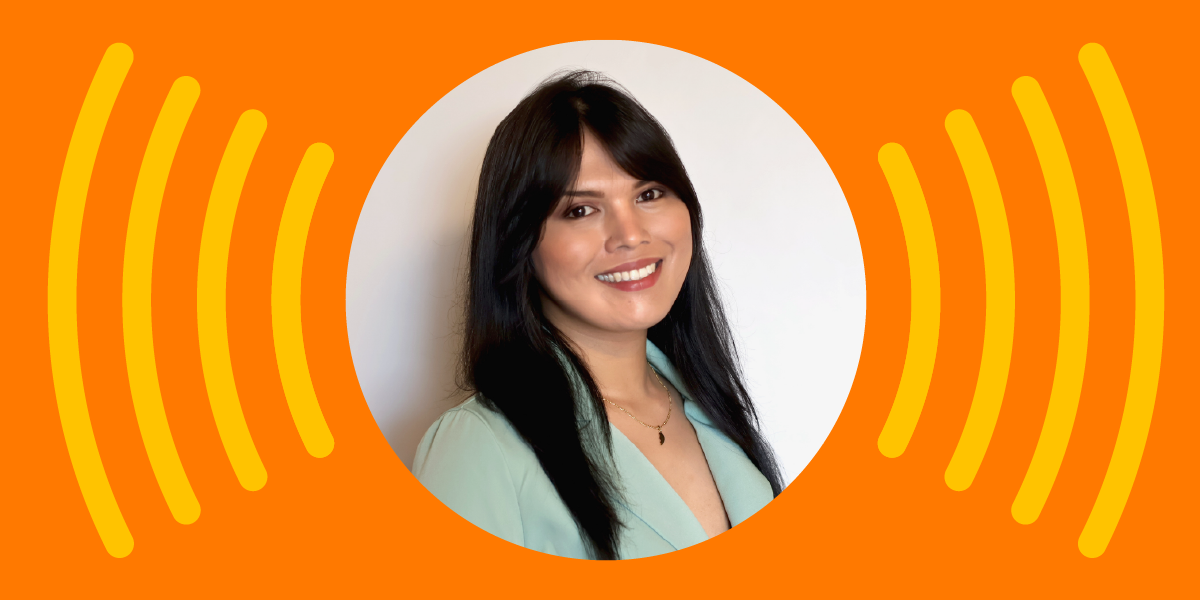


Speaking Freely: Dr. Jean Linis-Dinco
Dr. Jean Linis-Dinco is an activist-researcher working at the intersection of human rights and technology. Born in the Philippines and shaped by firsthand experience with inequality and state violence, Jean has spent her life pushing back against systems that profit from oppression. She refuses to accept a world where tech is just another tool for corporate gain. Instead, she fights for technologies and policies that put people before profit and justice before convenience. Jean earned her PhD in Cybersecurity from the University of New South Wales, Canberra, where she exposed how governments weaponized propaganda and disinformation during the Rohingya crisis in Myanmar. She currently serves as the Digital Rights Advisor for the Manushya Foundation.
David Greene: Welcome. To get started can you just introduce yourself to folks?
Jean Linis-Dinco: I'm not very good at introducing myself and I rarely do so within the context of work because I always believe that people are more than their jobs.
But first, I would like to thank you for this opportunity to share my thoughts. I've learned this kind of introduction from Kumu Vicky Holt Takamine in Hawai’i. She taught me how to introduce myself beyond titles.
So, my name is Jean, my waters are the West Philippine Sea, and I was born and raised in the land of resistance, one of the original eight provinces that revolted against Spain as they are represented by the eight rays of the sun on the Philippine flag. My ancestors fought for the freedom of the Filipino people against Spanish colonial rule, before we became subjugated once again, this time under the United States for another 48 years. The impacts of that history continue to reverberate through the domestic and international policies that ultimately pushed me out of my own country as an overseas Filipino worker.
DG: Can you tell us a bit about Manushya Foundation?
JLD: Absolutely. Manushya Foundation is a women-led organization that works with activists and human rights defenders who are targeted, who face harassment and transnational repression for their work. My work with them is on the policy and advocacy side in relation to their digital rights portfolio. It involves challenging laws and policies that criminalize freedom of expression or freedom of speech online.
It also means confronting the role of private corporations and private platforms. Because that power is rarely transparent. Big tech power is often unaccountable, as we've seen in recent years. Working in a civil society organization like Manushya, you get involved with the work on the ground and take part in grassroot-led advocacy confronting corporate abuse.
In my work, I have met people from all sorts of backgrounds. And across those encounters, I've noticed some troubling trends in some civil society organizations. There are heaps of civil society leaders who are very keen to have a seat at the table with big tech companies. It’s often hidden behind the language of ‘stakeholder engagement’. We refuse to do that at Manushya Foundation. We don’t want to be used as a rubber stamp for decisions that have already been made behind NDAs or decisions where communities most affected by these technologies were never even in the room to begin with.
I think civil society organizations should not allow themselves to be drawn into that orbit. That is very contentious in this era, because I feel like civil society bought the story that big tech could be partners in progress. We walked into their boardrooms, signing NDAs as if proximity to power meant that we were shaping it. And we've seen how in the end we're actually just giving them legitimacy. They turn our critiques and our statements to endorsements. I don't think there is any progressive form of collaboration with big tech companies that is not extractive, because the uncomfortable truth is that not everyone who wants a seat at the table is there to change what is being served.
DG: I, as someone who participates in multi-stakeholder things all the time, I completely hear that criticism. One of the things I've said is, multi-stakeholder engagement as a member of civil society takes a few forms. One, you're in the room, but you don't have a seat at the table. Two, you have a seat at the table, but you don't have a microphone. And three, they give you a microphone, but they leave the room when you talk. When we as civil society do engage, we have to be very, very intentional about ensuring it’s effective engagement. We've left many things that were “multi-stakeholder” because it was actually just NGO-washing. You know, it was only so they could say that we were sort of invited to the cocktail party afterwards.
I've heard from you before that Manushya has a bit of a regional focus. Would you say it has a feminist focus or is it broader in terms of marginalized communities?
JLD: At its core, Manushya is a decolonial intersectional feminist organization. What that means is that we are fundamentally concerned with systems of power. In our work, we always ask who holds the power? Who is crushed by it? And who has been deliberately kept from it?
Personally, I am critical of lean-in feminism, which was popularized by a certain Meta executive. I do not agree with that kind of feminism, because it tells us women that if we just work harder, speak louder within existing power structures, we will be free. But free to do what, exactly? To participate in the same system that exploits people? The women who can afford to lean in are women who already occupy a certain class position that makes them legible to power. And most of them are white women who already have the capacity or already have a standing in society to be listened to.
I cannot lean in. Because lean-in feminism was never designed for women like me.
And then there is girl boss feminism, which I am also very, very critical of. Because more often than not, the women who call themselves girl bosses or self-made are not actually self-made. Behind every ‘self-made’ woman is a hidden economy of invisible labor. Often, they have maids. And often, those maids are Filipino women, women like my mother. Girl boss feminism is about one woman’s liberation built on another woman's bondage. I think it is absurd to call it feminism when it is basically just class warfare with better branding.
So, yes. It gets very personal.
DG: Why don’t you tell us what freedom of expression and free speech mean to you?
JLD: Well, there is this concept of freedom of speech and freedom of expression, and it is viewed as something abstract because we cannot see speech. It is intangible. We can hear it, but we cannot see it. It's not something that we hold. It is not like food, water or housing. That is precisely the problem. Because at its core freedom of expression must be understood through material conditions.
What that means is that it dies in the structures that govern who gets heard, who gets punished, who gets killed, who is made disappeared, whose voices are treated as disposable. I would say freedom of expression must be understood as inseparable from justice because I do not believe anyone can claim to defend freedom of expression while tolerating systems that silence through fear, that silence through poverty, that silence through surveillance. Because a person working two jobs to make ends meet, a person targeted by the state, a person whose community is over-policed, I don't think they stand on equal ground with a media mogul or a political elite.
The definition of free expression must move beyond the question of whether speech is allowed. The real foundation of freedom of expression and freedom of speech is who can speak without consequences and who pays the price for doing so. It demands responsibility and it's not a shield for domination, because when speech is used to dehumanize or to incite violence or to reinforce structures of oppression, the imperialism of domination, then that participates in harm.
A serious commitment to freedom requires us to confront that harm and not hide behind languages of rights while ignoring the realities of power.
DG: How do you see that? What's the example of how that plays out, for instance in the digital rights realm now?
JLD: Well, there is, as you know—one could say it's even more evident in the United States—the “freedom of speech absolutist” as we’ve seen through Elon Musk. I don’t think he actually believes in freedom of speech at all. Because from what it appears, what he only cares about is maintaining the conditions under which people who look like him get to speak.
Speech does not exist in a vacuum. It is always in service of something.
The question is what kind of society are we actually building? I want a society where people can speak truthfully about the conditions and be heard, where dissent is not criminalized and where expression becomes a force for transformation rather than a tool for control. Free speech is a collective condition and not an individual right. It is inseparable from the question of what kind of society we are building. Because you cannot suddenly say that you are for freedom of expression while owning the platform that decides whose speech is amplified and whose is buried by an algorithm designed to serve capital. Building that society requires dismantling the structures that have always decided who gets to speak and who gets disappeared for saying the wrong thing to the wrong people.
DG: It always bothers me when I hear someone like Musk being called like a free speech absolutist, because, first of all, he’s certainly not an absolutist. I actually don't know anyone who is an absolutist. But also, I don't even think he cares about free speech that much. I think that's what we see in the US a lot now, people for whom it's not a sincere belief, but they get to speak as part of their privilege. There are also other people who think they deserve the privilege to speak because, societally, they've never been subjected to controls. When they see their community of people, who historically have been able to speak, and if it's not like that, that strikes them as the most horrible infringement on freedom of speech because it disturbs their view of privilege and who speaks. And when they see marginalized voices get silenced, it doesn't bother them because that's their norm. That's how I see it.
JLD: I'm here on a fellowship in the UK and my main study is on the American conquest of the Philippines through national language processing. And it's really interesting. I said during my talk that the United States no longer needs to use Nazi Germany as a metaphor to describe their contemporary politics. You know, American people just need to read history books not written by white men.
DG: Okay, let's dive into the age verification stuff. I think that age verification and age mandates and age regulations trying to age gate the internet are really interesting examples of the interplay between freedom of speech and a broader repression of rights. I met you at Digital Rights in Asia Pacific Assembly (DRAPAC) 2025, and I want to just give you a platform here to share your views on age verification. I was really moved by your statement at DRAPAC and what you all published on your website.
JLD: I wrote that piece at a time when Australia was pushing through that legislation. And now, we are now seeing a lot of Southeast Asian countries following that route. It always just takes one domino to fall for everyone to follow, doesn’t it?
But, what surprised me is how there’s also a lot of defeatism among some civil society organizations. I feel like they already accepted the logic of the state. There’s always this preemptive surrendering the ground on which the struggle should be taking place. And I realized the same thing is happening again.
I was on a call recently with a group of civil society organizations and someone floated the idea of supporting identity verification on social media in the Philippines as a way to counter disinformation. She came from a different understanding of the political economy, but the moment I heard it, I was disappointed. The argument is dangerous and it plays with fire because it assumes that anonymity is the problem. It assumes that the solution is to hand the state and the corporations even more power, more information, more control, and give them even more ability to track and discipline people.
I feel like this is the same trend we see with age-gating, because the claim with identity verification in the context of the Philippines, that it can be used responsibly if there are guardrails. That’s gambling with people’s lives. There has never been a single historical precedent where the state doesn't expand monitoring powers when it can once the door is open to surveillance. I don't think any guardrails will ever hold.
Civil society groups who entertain the idea of breaking anonymity to solve misinformation are rehearsing a dangerous illusion because anonymity is not a luxury. And it feels like it is being framed that way. Anonymity is a response to the political conditions where speaking freely can cost you your life. It exists because the risks are there and they are not imagined.
DG: I do think there are some people who look at age-gating from a good place. Would you say you see age verification mandates as just inevitably being tools of oppression for marginalized young people?
JLD: Above everything, it shifts the Overton window toward the broader acceptance of surveillance. In political science, when we say we're shifting the Overton window, we mean the space of political debate in public discourse is being narrowed. And now we are seeing it move towards the same old thing of, ‘if you have nothing to hide, you have nothing to worry about.’ And when you shift the Overton window towards the broader acceptance of surveillance, we're doing something very simple and very dangerous. And it turns intrusive monitoring into a normal routine of everyday life. It starts with policies that redefine surveillance as safety. Then age-gating will be established through technical infrastructure that of course can be repurposed later.
Any system capable of verifying age is also capable of verifying identity, tracking behavior, matching accounts to real people, and storing data that can be accessed by literally anyone. These policies teach people to internalize the idea that anonymity is suspicious. I think that is the most dangerous part of it--how that cultural shift is getting more and more powerful, because it moves us, the public, towards believing that only those with nothing to hide deserve rights. Then what comes next after that? Surveillance becomes a default condition for digital participation. If you cannot enter a platform without proving who you are, then surveillance becomes a prerequisite for basic communication.
Then, of course, the most powerful shift is the desensitization of younger generations to being monitored. We are raising children in a system where every login requires identity checks, they will grow into adults who assume that constant tracking is normal. Then this is what shifting the Overton window looks like in practice, because once you accept that premise, you have already surrendered the most important ground. The fight is no longer about whether surveillance should exist, but how much of it you're willing to tolerate. And we know the people who pay the price are not men in suits.
DG: Then who does pay the price?
JLD: It is always the working class children and working class families. The homeless youth who rely on social media to find food, to find a place to shower. The homeless youth who rely on social media to find community and get jobs. Then we have queer young people who are also getting locked out of spaces where they could find community. And we're locking them out of those spaces because it's ‘for their safety.’
DG: So even if there was magic tech that could solve the verification part in a completely privacy protective way, you still can't get around the infringement on the rights of young people. That seems to be the goal of the law.
JLD: Yeah, absolutely. Because why do you need to age-gate social media if it's not for control? We always frame things like this as protection under the guise of paternalism. But deep inside, we see how it is a tool to control a young population who are just now getting very politically active. And I feel like--as I'm now a geriatric millennial--people of my age and older generation have betrayed the younger generation for doing this at this precarious time, where there is a genocide happening, where there are countries being bombed. We are in a time of conflicts started by rich men, amid an ecological collapse, and our concern is children being online? Let’s not rob the children of today of their future. Age gating punishes the young for crises they did not create, whilst protecting those truly responsible from accountability.
The reality outside of social media will not go away even if kids are shut off from it. We need to confront the truth that the conditions that ruin childhood are not on social media. They are bombs, poverty, divisive politics. They're due to how we’re killing public funding and putting it through private corporations, lining the pockets of billionaires in the name of what? That is the main problem of our society, but we're not addressing that. We're just locking kids out of social media, because it's easier to do that than to address the fact that society needs an overhaul.
DG: And I think what we've seen with Australia is a lot of talk about how kids can evade the protections, whether they're using VPNs or somehow faking the ID and so all age-gating is doing is adding friction to the process. And that tends to have highly discriminatory effects also, right?
JLD: Friction might be a minor obstacle for a wealthy child with supportive parents, but friction keeps a different child off the internet. A wealthy child might have the technical means to buy a workaround to allow them to have access. There was a story in the news about an influencer family who just moved out of the country because of the age-restricted social media ban. This is the reality—people who have the means to move will move. And those who have no means to move, those who are struggling just to put food on the table—will just stay. This is anti-poor. Age gating is anti-poor.
DG: Okay, switching gears just a little bit. Was there any sort of personal experience you've had with freedom of expression that has informed how you think about the issue? Was there any kind of formative experience where you felt censored or witnessed censorship happening to someone else that really informs how you think about it now or made you care about the issue deeply?
JLD: I don't think there's one specific personal experience, per se, that has shaped how I feel about freedom and liberty in general. Growing up in the Philippines, you're forced to care, especially if you're in a working-class neighborhood like where I grew up. At an early age you realize how unfair the world is. And at first, you think that it is just unfair that the other children in my classroom families can afford a pencil case and we cannot.
It was also very difficult to fit in in the Philippines. I was labeled a troublemaker as a child. And I think some of that is actually still reminiscent of what I am today. I remember my sixth-grade history teacher approached me after reading an essay I wrote about the Philippines. She said that I should tone down my language because it will get me in trouble later in life. And I didn't understand what she meant by that. I didn't listen to her, clearly.
But that instinct stayed with me and I think it followed me through life. It followed me here—you know, the idea that you should say it, but not like that. Speak, but don't disrupt. Critique, but don't offend. And I think this is where my relationship with liberty and freedom or, specifically, freedom of expression kind of took place. It was not one defining moment, but it's in a series of small friction, as you called it. Because over time, you realize that the pressure to soften your voice never disappears. And I don't think it ever will. And I chose not to then, and I choose not to now. And there’s a lot of consequences that come with that. I don't think I will be invited to a lot of panels or keynotes. But it's a hill I'm willing to die on.
This is also the same pattern we see at a larger scale in the Philippines. You see communities speak out about land or about labor and then suddenly they are surveilled, they're either disappeared or dead. I realized quickly that freedom of expression exists on paper, but in practice it depends on who you are.
DG: Do you think there are situations where it might be appropriate for governments, or even companies, to limit freedom of expression? And if the answer is yes, what might those be?
JLD: Freedom of speech should always demand a responsibility. It has always existed within structures of power that determine whose speech is protected. So when we ask whether speech should be limited, we have to first ask. limited by whom, and in whose interest?
But I don't think the government or corporations can do that. Corporations’ end goal is always profit. And governments have historically used the language of limitation to silence the very people who dare to challenge their authority.
I believe in community-based understanding of how we actually could solve this problem, because, in the end, our relationship with our community is the core of our identity. And through those moments of interactions, we can see the freedom of speech is collective. It is always tied to building a society where people can speak truthfully, and dissent is not criminalized. It’s a matter of making sure that we understand that freedom and liberty is not an individual issue, but it’s something that affects the whole community.
DG: You’re saying this is more about community norms or our broader social compact.
JLD: When I say the community must decide, I am not offering you a utopia. I am offering you a different site of struggle. One that centers the people who have always known, in their bodies, what dehumanizing language does before it becomes dehumanizing violence. We have seen this dynamic in the way hate speech fuels violence back home in the Philippines, against indigenous communities, queer people, Muslims in Mindanao and the urban poor. Because language becomes permission that activates the system of policing and militarization already pointed at the most vulnerable. The main boundaries must be rooted in the politics of liberation, not the politics of control. Speech that punches up, that reveals injustice, that challenges power, that speech must be protected. But speech that punches down, that facilitates state violence, that dehumanizes people, I think that must be confronted, if not challenged or destroyed. We have to stop pretending that those two forms of speech are morally equivalent.
DG: Okay, last question, one that we like to ask everyone. Who's your free speech hero? And why?
JLD: This is actually a really tough question for me because I don't actually think I have one, to be honest. I want to push back on the idea of having a single hero. Because, freedom of speech—any freedom or liberty that we have today—has never been secured by one individual alone. It has been fought for by movements. The eight-hour workday, unions, women's suffrage, despite that it was just white women who were first able to vote, and so on and so forth. It was fought for by movements, by working class people, whose names we often forget. Because a lot of movements in history, the public memory of a movement narrows it down to a single figure, often male. Movement starts from the people, because the movement would not be sustained without the drive of the working people who dedicated free, unpaid labor for it to succeed. Because without them, I don't think there would be any movement to speak of. Without them there's no platform from which any of these figures could actually emerge.