Normal view

Admiring Our Heroes for International Women’s Day: Five Women In Tech That EFF Admires

In honor of International Women’s Day, we asked five women at EFF about women in digital rights, freedom of expression, technology, and tech activism who have inspired us.  

Anna Politkovskaya 

Jillian York, Activist 
This International Women’s Day, I want to honor the memory of Anna Politkovskaya, the Russian investigative journalist who relentlessly exposed political and social abuses, endured harassment and violence for her work, and was ultimately killed for telling the truth. I had just started my career when I learned of her death, and it forced me to confront that freedom of expression isn’t an abstract principle but rather something people risk—and sometimes lose—their lives for. 

Her story reminds me that journalism at its best is an act of moral courage, not just a profession. In the face of threats, poison, and relentless pressure to stay silent, she chose to continue writing about what she saw, insisting that ordinary people’s lives were worth the world’s attention. She refused to compromise with power, even when she knew it could cost her life. To me, defending freedom of expression means defending those like Anna who bear witness to injustice, prioritize truth, and hold power to account for those whose voices are silenced.  

Cindy Cohn 

Corynne McSherry, Legal Director 
There are so many women who have shaped tech history—most of whom are still unsung heroes—that it’s hard to single out just one. But it’s easier this year because it’s a chance to celebrate my boss, Cindy Cohn, before she leaves EFF for her next adventure.  

Cindy has been fighting for our digital rights for 30 years, leading EFF’s legal work and eventually the whole organization. She helped courts understand that code is speech deserving of constitutional protections at a time when many judges weren’t entirely sure what code even was. She led the fight against NSA spying, and even though outdated and ill-fitting doctrines like the state secrets privilege prevented courts from ruling on the obvious unconstitutionality of the NSA’s mass surveillance program, the fight itself led to real reforms that have expanded over time.   

I’ve worked closely with her for much of her EFF career, starting in 2005 when we sued Sony for installing spyware in millions of computers, and I’ve seen firsthand her work as a visionary lawyer, outstanding writer, and tireless champion for user privacy, free expression, and innovation. She’s also warm and funny, with the biggest heart in the world, and I’m proud to call her a friend as well as a mentor.  

Donate to Support EFF's Work

Your donations empower EFF to do even more.

Jane

Sarah Hamid, Activist 
When talking about women in tech, we usually mean founders, engineers, and executives. But just as important are the women who quietly built the practices that underpin today’s movement security culture. 

For as long as social movements have organized in the shadow of state surveillance, women have been designing the protocols, mutual aid networks, and information flows that keep people alive. Those threats feel ever-escalating: fusion‑center monitoring of protests, federal agencies infiltrating and subpoenaing encrypted Signal and social media chats, prosecutors mining search histories.  

In the late 1960s and early 1970s, the underground Jane abortion counseling service—formally the Abortion Counseling Service of Women’s Liberation—built what we would now recognize as a feminist infosec project for abortion access. Jane connected an estimated 11,000 people with safer abortions before Roe v. Wade, using a single public phone number—Call Jane—paired with code names, compartmentalized roles, and minimal records so no one person held the full story of who needed care, who was providing it, and where. When Chicago police raided the collective in 1972, members destroyed their index‑card files rather than let them become a ready‑made map of patients and helpers—an analog secure‑deletion choice that should feel familiar to anyone who has ever wiped a phone or locked down a shared drive. 

The lesson we should take from Jane is a set of principles that still hold in our encrypted‑but‑insecure present: Collect less, separate what you do collect, and be ready to burn the file box. When a search query, a location ping, or a solidarity post can become evidence, treating information as both lifeline and liability is not paranoia—it is care work.  

Ebele Okobi

Babette Ngene, Director of Public Interest Technology 
In the winter of 2013, I had just landed my first job at the intersection of tech and human rights, working for a prominent nonprofit and I was encouraged to attend regular tech and policy events around town. One such event on internet governance was happening at George Washington University,  focusing on multi-stakeholder engagement on internet policy and governance issues, with companies, nonprofits, and government representatives in attendance. I was inexperienced with these topics, and I’ll admit I was a bit intimidated. 

Then I saw her. She was the only woman on the opening panel, an African woman, an accomplished woman. Not only was she a respected lawyer at Yahoo at the time, but her impressive background, presence, and confident speaking style immediately inspired me. She made me feel like I, too, belonged in that room and could become a powerful voice. 

Ebele Okobi would go on to become one of the most powerful and respected voices in the tech and human rights space, known for her advocacy for digital rights and responsible innovation across Africa and the broader global majority during her tenure at Facebook. Beyond her corporate advocacy, Ebele has consistently championed ethical technology and social justice. She embodies the leadership qualities I value most: empathy, speaking truth to power, integrity, and authenticity. 

I remain in the tech and human rights space because I saw her, because seeing her made me feel seen. Representation truly does matter.  

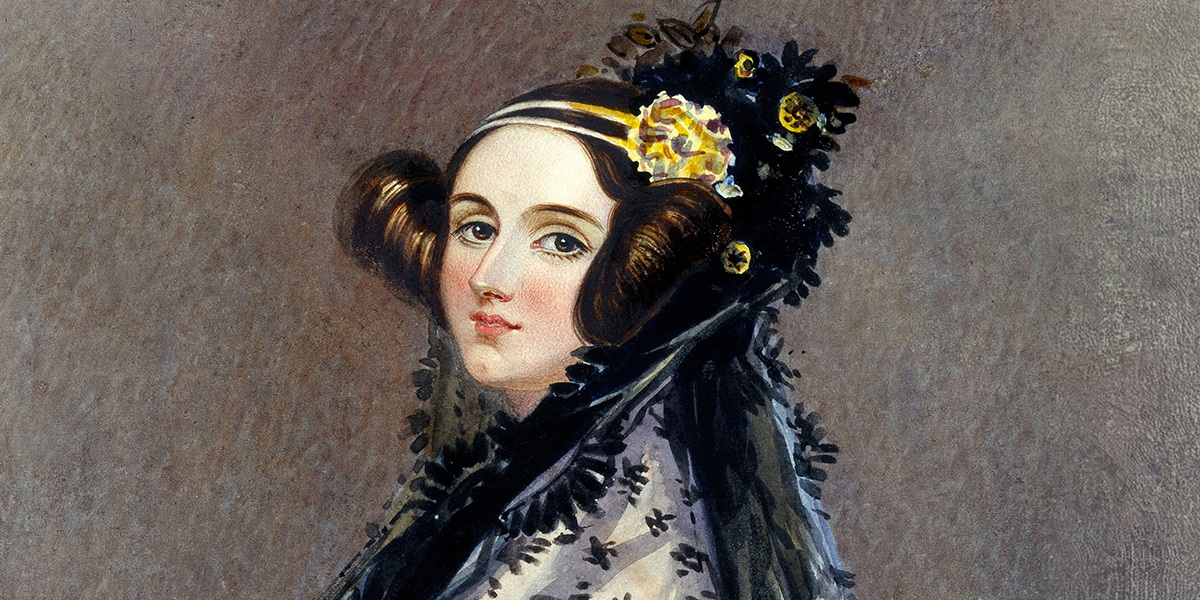
Ada Lovelace 

Allison Morris, Chief Development Director 
I’m not a lawyer, activist, or technologist; I’m a fundraiser and a lover of stories. And what storyteller at EFF couldn’t help but love Ada Lovelace? The daughter of Lord Byron—the human embodiment of Romanticism—Ada was an innovator in math and science and, ultimately, the writer of the first computer program.  

Lovelace saw the potential in Charles Babbage’s theoretical General Purpose Computer (which was never actually built) and created the foundations of modern computing long before the digital age. In creating the first computer code, Lovelace took Babbage’s concept of a machine that could perform mathematical calculations and realized that it could manipulate symbols as well as numbers. 

Given the expectations of women in her time and the controversy of what work should be attributed to Lovelace as opposed to the man she often worked with, I can’t help but be inspired by her story.  

Women in tech deserve more and brighter spotlights. At EFF, we’ve had the honor of celebrating some of our heroes at our annual EFF Awards, including many women who are leading the digital rights community. For International Women’s Day, we also highlighted the contributions of just a few of these recipients from the last decade, whose work to protect privacy, speech, and creativity online has had a global impact.

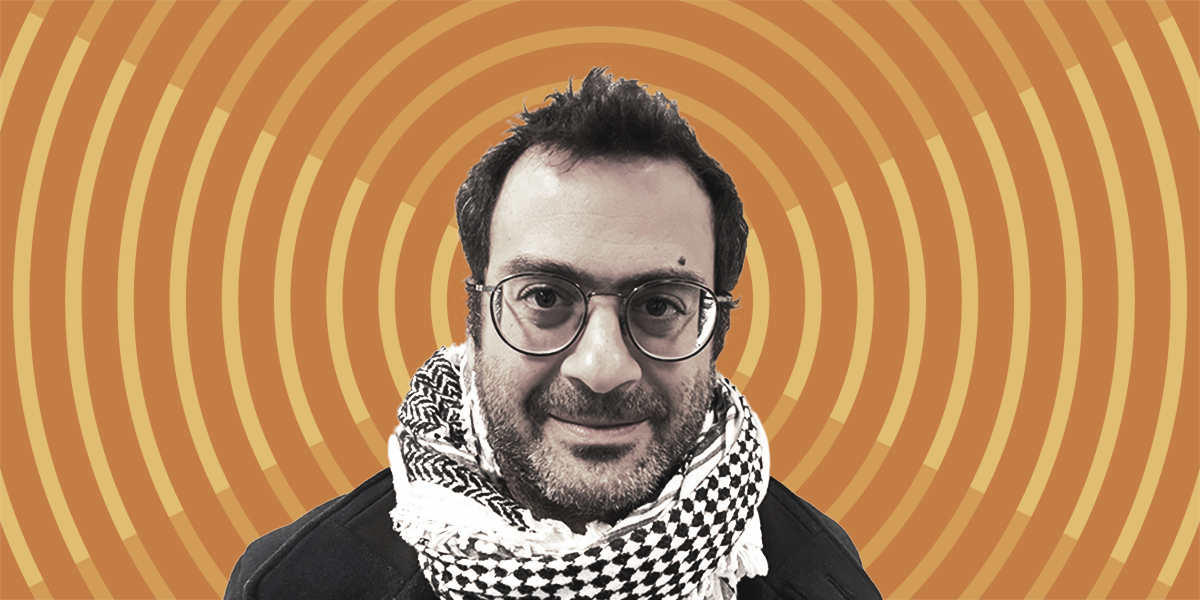
Speaking Freely: Yazan Badran

10 February 2026 at 18:39

Interviewer: Jillian York

Yazan Badran is an assistant professor in international media and communication studies at the Vrije Universiteit Brussel, and a researcher at the Echo research group. His research focuses on the intersection between media, journalism and politics particularly in the MENA region and within its exilic and diasporic communities.

*This interview has been edited for length and clarity. 

Jillian York: What does free speech or free expression mean to you?

Yazan Badran: So I think there are a couple of layers to that question. There's a narrow conception of free speech that is related to, of course, your ability to think about the world.

And that also depends on having the resources to be able to think about the world, to having resources of understanding about the world, having resources to translate that understanding into thoughts and analysis yourself, and then being able to express that in narratives about yourself with others in the world. And again, that also requires resources of expression, right?

So there's that layer, which means that it's not simply the absence of constraints around your expression and around your thinking, but actually having frameworks that activate you expressing yourself in the world. So that's one element of free expression or free speech, or however you want to call it. 

But I feel that remains too narrow if we don't account also for the counterpart, which is having frameworks that listen to you as you express yourself into the world, right? Having people, institutions, frameworks that are actively also listening, engaging, recognizing you as a legitimate voice in the world. And I think these two have to come together in any kind of broad conception of free speech, which entangles you then in a kind of ethical relationship that you have to listen to others as well, right? It becomes a mutual responsibility from you towards the other, towards the world, and for the world towards you, which also requires access to resources and access to platforms and people listening to you.

So I think these two are what I, if I want to think of free speech and free expression, I would have to think about these two together. And most of the time there is a much narrower focus on the first, and somewhat neglecting the second, I think.

JY: Yeah, absolutely. Okay, now I have to ask, what is an experience that shaped these views for you?

YB: I think two broad experiences. One is the…let's say, the 2000s, the late 2000s, so early 2010 and 2011, where we were all part of this community that was very much focused on expression and on limiting the kind of constraints around expression and thinking of tools and how resources can be brought towards that. And there were limits to where that allowed us to go at a certain point.

And I think the kind of experiences of the Arab uprisings and what happened afterwards and the kind of degeneration across the worlds in which we lived kind of became a generative ground to think of how that experience went wrong or how that experience fell short.

And then building on that, I think when I started doing research on journalism and particularly on exiled journalists and thinking about their practice and their place in the world and the fact that in many ways there were very little constraints on what they could do and what they could voice and what they could express, et cetera.

Not that there are no constraints, there are always constraints, but that the nature of constraints were different - they were of the order of listening; who is listening to this? Who is on the other side? Who are you engaged in a conversation with? And that was, from speaking to them, a real kind of anxiety that came through to me.

JY: I think you're sort of alluding to theory of change…

YB: Yes, to some extent, but also to…when we think about our contribution into the world, to what kind of the normative framework we imagine. As people who think about all of these structures that circulate information and opinion and expressions, et cetera, there is often a normative focus, where there should be, about opening up constraints around expression and bringing resources to bear for expression, and we don't think enough of how these structures need also to foster listening and to foster recognition of these expressions.

And that is the same with, when we think about platforms on the internet and when we think about journalism, when we think about teaching… For example, in my field, when we think about academic research, I think you can bring that framework in different places where expression is needed and where expression is part of who we are. Does that make sense?

JY:  Absolutely. It absolutely makes sense. I think about this all the time. I'm teaching now too, and so it's very, very valuable. Okay, so let's shift a little bit. You're from Syria. You've been in Brussels for a long time. You were in Japan in between. You have a broad worldview, a broad perspective. Let’s talk about press freedom.

YB: Yeah, I've been thinking about this because, I mean, I work on journalism and I'm trying to do some work on Syria and what is happening in Syria now. And I feel there are times where people ask me about the context for journalistic work in Syria. And the narrow answer and the clear answer is that we've never had more freedom to do journalism in the country, right? And there are many reasons. Part of it is that this is a new regime that perhaps doesn't still have complete control over the ground. There are differentiated contexts where in some places it's very easy to go out and to access information and to speak to people. In other places, it's less easy, it's more dangerous, etc. So it's differentiated and it's not the same everywhere.

But it's clear that journalists come out and in from Syria. They can do their job relatively unmolested, which is a massive kind of change, contrast to the last thirteen or fourteen years where Syria was an information black hole. You couldn't do anything.

But that remains somewhat narrow in thinking about journalism in Syria. What is journalism about Syria in this context? What kind of journalism do we need to be thinking about? In a place that is in, you know, ruins, if not material destruction, then economic and societal disintegration, et cetera. So there are, I think, two elements. Sure, you can do journalism, but what kind of journalism is being done in Syria? I feel that we have to be asking a broader question about what is the role of information now more broadly in Syria? 

And that is a more difficult question to answer, I feel. Or a more difficult question to answer positively. Because it highlights questions about who has access to the means of journalism now in Syria? What are they doing with it? Who has access to the sources, and can provide actual understanding about the political or economic developments that are happening in the country. Very few people who have genuine understanding of the processes are going into building a new regime, a new state. In general, we have very, very little access. There are few avenues to participate and gain access to what is happening there.

So sure, you can go on the ground, you can take photos, you can speak to people, but in terms of participating in that broader nation-building exercise that is happening; this is happening at a completely different level to the places that we have access to. And with few exceptions, journalism as practiced now is not bringing us closer to these spaces. 

In a narrow sense, it's a very exciting time to be looking at experiments in doing journalism in Syria, to also be seeing the interaction between international journalists and local journalists and also the kind of tensions and collaborations and discussion around structural inequalities between them; especially from a researcher’s perspective. But it remains very, very narrow. In terms of the massive story, which is a complete revolution in the identity of the country, in its geopolitical arrangement, in its positioning in the world, and that we have no access to whatsoever. This is happening well over our heads—we are almost bystanders. 

JY:  That makes sense. I mean, it doesn't make sense, but it makes sense. What role does the internet and maybe even specifically platforms or internet companies play in Syria? Because with sanctions lifted, we now have access to things that were not previously available. I know that the app stores are back, although I'm getting varied reports from people on the ground about how much they can actually access, although people can download Signal now, which is good. How would you say things have changed online in the past year?

YB:  In the beginning, platforms, particularly Facebook, and it's still really Facebook, were the main sphere of information in the country. And to a large extent, it remains the main sphere where some discussions happen within the country.

These are old networks that were reactivated in some ways, but also public spheres that were so completely removed from each other that opened up on each other after December. So you had really almost independent spheres of activity and discussion. Between areas that were controlled by the regime, areas that were controlled by the opposition, which kind of expanded to areas of Syrian refugees and diaspora outside.

And these just collapsed on each other after 8th of December with massive chaos, massive and costly chaos in some ways. The spread of disinformation, organic disinformation, in the first few months was mind-boggling. I think by now there's a bit of self-regulation, but also another movement of siloing, where you see different clusters hardening as well. So that kind of collapse over the first few months didn't last very long.

You start having conversations in isolation of each other now. And I'm talking mainly about Facebook, because that is the main network, that is the main platform where public discussions are happening. Telegram was the public infrastructure of the state for a very long time, for the first six months. Basically, state communication happened through Telegram, through Telegram channels, also causing a lot of chaos. But now you have a bit more stability in terms of having a news agency. You have the television, the state television. So the importance of Telegram has waned off, but it's still a kind of parastructure of state communication, it remains important.

I think more structurally, these platforms are basically the infrastructure of information circulation because of the fact that people don't have access to electricity, for example, or for much of the time they have very low access to bandwidth. So having Facebook on their phone is the main way to keep in touch with things. They can't turn on the television, they can't really access internet websites very easily. So Facebook becomes materially their access to the world. Which comes with all of the baggage that these platforms bring with them, right? The kind of siloing, the competition over attention, the sensationalism, these clustering dynamics of these networks and their algorithms.

JY: Okay, so the infrastructural and resource challenges are real, but then you also have the opening up for the first time of the internet in many, many years, or ever, really. And as far as I understand from what friends who’ve been there have reported, is that nothing being blocked yet. So what impact do you see or foresee that having on society as people get more and more online? I know a lot of people were savvy, of course, and got around censorship, but not everyone, right?

YB: No, absolutely, absolutely not everyone. Not everyone has the kind of digital literacy to understand what going online means, right? Which accounts for one thing, the avalanche of fake information and disinformation that is now Syria, basically.

JY: It's only the second time this has happened. I mean, Tunisia is the only other example I can think of where the internet just opened right up.

YB: Without having gateways and infrastructure that can kind of circulate and manage and curate this avalanche of information. While at the same time, you have a real disintegration in the kind of social institutions that could ground a community. So you have really a perfect storm of a thin layer of digital connectivity, for a lot of people who didn't have access to even that thin layer, but it's still a very thin layer, right? You're connecting from your old smartphone to Facebook. You're getting texts, et cetera, and perhaps you're texting with the family over WhatsApp. And a real collapse of different societal institutions that also grounded you with others, right? The education system, of different clubs and different neighborhoods, small institutions that brought different communities together of the army, for example, universities, all of these have been disrupted over the past year in profound ways and along really communitarian ways as well. I don't know the kind of conditions that this creates, the combination of these two. But it doesn't seem like it's a positive situation or a positive dynamic.

JY:  Yeah, I mean, it makes me think of, for example, Albania or other countries that opened up after a long time and then all of a sudden just had this freedom.

YB: But still combined, I mean, that is one thing, the opening up and the avalanche, and that is a challenge. But it is a challenge that perhaps within a settled society with some institutions in which you can turn to, through which you can regulate this, through which you can have countervailing forces and countervailing forums for… that’s one thing. But with the collapse of material institutions that you might have had, it's really creating a bewildering world for people, where you turn back and you have your family that maybe lives two streets away, and this is the circle in which you move, or you feel safe to move.

Of course, for certain communities, right? That is not the condition everywhere. But that is part of what is happening. There's a real sense of bewilderment in the kind of world that you live in. Especially in areas that used to be controlled by the regime where everything that you've known in terms of state authority, from the smallest, the lowliest police officer in your neighborhood, to people, bureaucrats that you would talk to, have changed or your relationship to them has fundamentally changed. There's a real upheaval in your world at different levels. And, you know, and you're faced with a swirling world of information that you can't make sense out of.

JY: I do want to put you on the spot with a question that popped into my head, which is, I often ask people about regulation and depending on where they're working in the world, especially like when I'm talking to folks in Africa and elsewhere. In this case, though, it's a nation-building challenge, right? And so—you're looking at all of these issues and all of these problems—if you were in a position to create press or internet regulation from the ground up in Syria, what do you feel like that should look like? Are there models that you would look to? Are there existing structures or is there something new or?

YB:  I think maybe I don't have a model, but I think maybe a couple of entry points that you would kind of use to think of what model of regulation you want is to understand that there the first challenge is at the level of nation building. Of really recreating a national identity or reimagining a national identity, both in terms of a kind of shared imaginary of what these people are to each other and collectively represent, but also in terms of at the very hyper-local level of how these communities can go back to living together.

And I think that would have to shape how you would approach, say, regulation. I mean, around the Internet, that's a more difficult challenge. But at least in terms of your national media, for example, what is the contribution of the state through its media arm? What kind of national media do you want to put into place? What kind of structures allow for really organic participation in this project or not, right? But also at the level of how do you regulate the market for information in a new state with that level of infrastructural destruction, right? Of the economic circuit in which these networks are in place. How do you want to reconnect Syria to the world? In what ways? For what purposes?

And how do you connect all of these steps to open questions around identity and around that process of national rebuilding, and activating participation in that project, right? Rather than use them to foreclose these questions.

There are also certain challenges that you have in Syria that are endogenous, that are related to the last 14 years, to the societal disintegration and geographic disintegration and economic disintegration, et cetera. But on top of that, of course, we live in an information environment that is, at the level of the global information environment, also structurally cracking down in terms of how we engage with information, how we deal with journalism, how we deal with questions of difference. These are problems that go well beyond Syria, right? These are difficult issues that we don't know how to tackle here in Brussels or in the US, right? And so there's also an interplay between these two. There's an interplay between the fact that even here, we are having to come to terms with some of the myths around liberalism, around journalism, the normative model of journalism, of how to do journalism, right? I mean, we have to come to terms with it. The last two years—of the Gaza genocide—didn't happen in a vacuum. It was earth shattering for a lot of these pretensions around the world that we live in. Which I think is a bigger challenge, but of course it interacts with the kind of challenges that you have in a place like Syria.

JY: To what degree do you feel that the sort of rapid opening up and disinformation and provocations online and offline are contributing to violence?

YB: I think they're at the very least exacerbating the impact of that violence. I can't make claims about how much they're contributing, though I think they are contributing. I think there are clear episodes in which the kind of the circulation of misinformation online, you could directly link it to certain episodes of violence, like what happened in Jaramana before the massacre of the Druze. So a couple of weeks before the Druze, there was this piece of disinformation that led to actual violence and that set the stage to the massive violence later on. During the massacres on the coast, you could also link the kind of panic and the disinformation around the attacks of former regime officers and the effects of that to the mobilization that has happened. The scale of the violence is linked to the circulation of panic and disinformation. So there is a clear contribution. But I think the greater influence is how it exacerbates what happens after that violence, how it exacerbates the depth, for example, of divorce between between the population of Sweida after the massacre, the Druze population of Sweida and the rest of Syria. That is tangible. And that is embedded in the kind of information environment that we have. There are different kinds of material causes for it as well. There is real structural conflict there. But the kind of ideological, discursive, and affective, divorce that has happened over the past six months, that is a product of the information environment that we have.

JY: You are very much a third country, 4th country kid at this point. Like me, you connected to this global community through Global Voices at a relatively young age. In what ways do you feel that global experience has influenced your thinking and your work around these topics, around freedom of expression? How has it shaped you?

YB: I think in a profound way. What it does is it makes you to some extent immune from certain nationalist logics in thinking about the world, right? You have stakes in so many different places. You've built friendships, you've built connections, you've left parts of you in different places. And that is also certainly related to certain privileges, but it also means that you care about different places, that you care about people in many different places. And that shapes the way that you think about the world - it produces commitments that are diffused, complex and at times even contradictory, and it forces you to confront these contradictions. You also have experience, real experience in how much richer the world is if you move outside of these narrow, more nationalist, more chauvinistic ways of thinking about the world. And also you have kind of direct lived experience of the complexity of global circulation in the world and the fact, at a high level, it doesn't produce a homogenized culture, it produces many different things and they're not all equal and they're not all good, but it also leaves spaces for you to contribute to it, to engage with it, to actively try to play within the little spaces that you have.

JY: Okay, here’s my final question that I ask everyone. Do you have a free speech hero? Or someone who's inspired you?

YB: I mean, there are people whose sacrifices humble you. Many of them we don't know by name. Some of them we do know by name. Some of them are friends of ours. I keep thinking of Alaa [Abd El Fattah], who was just released from prison—I was listening to his long interview with Mada Masr (in Arabic) yesterday, and it’s…I mean…is he a hero? I don’t know but he is certainly one of the people I love at a distance and who continues to inspire us.

JY: I think he’d hate to be called a hero.

YB: Of course he would. But in some ways, his story is a tragedy that is inextricable from the drama of the last fifteen years, right? It’s not about turning him into a symbol. He's also a person and a complex person and someone of flesh and blood, etc. But he's also someone who can articulate in a very clear, very simple way, the kind of sense of hope and defeat that we all feel at some level and who continues to insist on confronting both these senses critically and analytically.

JY: I’m glad you said Alaa. He’s someone I learned a lot from early on, and there’s a lot of his words and thinking that have guided me in my practice. 

YB: Yeah, and his story is tragic in the sense that it kind of highlights that in the absence of any credible road towards collective salvation, we're left with little moments of joy when there is a small individual salvation of someone like him. And that these are the only little moments of genuine joy that we get to exercise together. But in terms of a broader sense of collective salvation, I think in some ways our generation has been profoundly and decisively defeated.

JY:  And yet the title of his book, “you have not yet been defeated.”

YB: Yeah, it's true. It's true.

JY: Thank you Yazan for speaking with me.

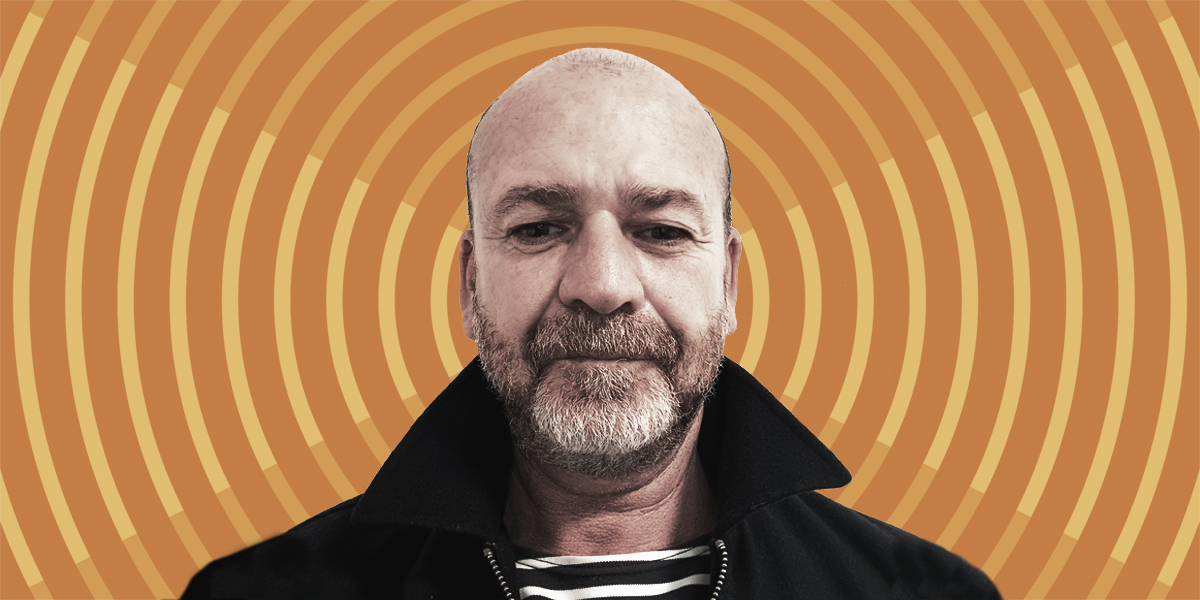
Speaking Freely: Sami Ben Gharbia

19 December 2025 at 18:28

Interviewer: Jillian York

Sami Ben Gharbia is a Tunisian human rights campaigner, blogger, writer and freedom of expression advocate. He founded Global Voices Advocacy, and is the co-founder and current publisher of the collective media organization Nawaat, which won the EFF Award in 2011

Jillian York: So first, what is your personal definition, or how do you conceptualize freedom of expression?

Sami Ben Gharbia: So for me, freedom of expression, it is mainly as a human. Like, I love the definition of Arab philosophers to human beings, we call it “speaking animal”. So that's the definition in logic, like the science of logic, meditated on by the Greeks, and that defines a human being as a speaking animal, which means later on. Descartes, the French philosopher, describes it like the Ergo: I think, so I am. So the act of speaking is an act of thinking, and it's what makes us human. So this is my definition that I love about freedom of expression, because it's the condition, the bottom line of our human being. 

JY: I love that. Is that something that you learned about growing up?

SBG: You mean, like, reading it or living?

JY: Yeah, how did you come to this knowledge?

SBG: I read a little bit of logics, like science of logic, and this is the definition that the Arabs give to define what is a human being; to differentiate us from, from plants or animals, or, I don't know, rocks, et cetera. So the humans are speaking, animals, 

JY: Oh, that's beautiful. 

SBG: And by speaking, it's in the Arabic definition of the word speaking, it's thinking. It's equal to thinking. 

JY: At what point, growing up, did you realize…what was the turning point for you growing up in Tunisia and realizing that protecting freedom of expression was important?

SBG: Oh, I think, I was born in 1967 and I grew up under an authoritarian regime of the “father” of this Tunisian nation, Bourghiba, the first president of Tunisia, who got us independence from France. And during the 80s, it was very hard to find even books that speak about philosophy, ideology, nationalism, Islamism, Marxism, etc. So to us, almost everything was forbidden. So you need to hide the books that you smuggle from France or from libraries from other cities, et cetera. You always hide what you are reading because you do not want to expose your identity, like you are someone who is politically engaged or an activist. So, from that point, I realized how important freedom of expression is, because if you are not allowed even to read or to buy or to exchange books that are deemed to be controversial or are so politically unacceptable under an authoritarian regime, that's where the fight for freedom of expression should be at the forefront of of any other fights. That's the fight that we need to engage in in order to secure other rights and freedoms.

JY: You speak a number of languages, at what point did you start reading and exploring other languages than the one that you grew up speaking?

SBG: Oh, I think, well, we learn Arabic, French and English in school, and like, primary school, secondary school, so these are our languages that we take from school and from our readings, etc, and interaction with other people in Tunisia. But my first experience living in a country that speaks another language that I didn't know was in Iran. So I spent, in total, one and a half years there in Iran, where I started to learn a fourth language that I really intended to use. It's not a Latin language. It is a special language, although they use almost the same letters and alphabet with some difference in pronunciation and writing, but but it was easy for an Arab speaking native Tunisian to learn Farsi due to the familiarity with the alphabets and familiarity with the pronunciation of most of the alphabet itself. So, that's the first case where I was confronted with a foreign language. It was Iran. And then during my exile in the Netherlands, I was confronted by another family of languages, which is Dutch from the family of Germanic languages, and that's the fifth language that I learned in the Netherlands. 

JY: Wow. And how do you feel that language relates to expression? For you?

SBG: I mean…language, it's another word. It's another universe. Because language carries culture, carries knowledge, carries history, customs. So it's a universe that is living. And once you learn to speak a new language, actually, you embrace another culture. You are more open in the way of understanding and accepting differences between other cultures, and I think that's how it makes your openness much more elastic. Like you accept other cultures more, other identities, and then you are not afraid anymore. You're not scared anymore from other identities, let's say, because I think the problem of civilization and crisis or conflict starts from ignorance—like we don't know the others, we don't know the language, we don't know the customs, the culture, the heritage, the history. That's why we are scared of other people. So the language is the first, let's say, window to other identity and acceptance of other people

JY: And how many languages do you speak now?

SBG: Oh, well, I don't know. Five for sure, but since I moved to exile a second time now, to Spain, I started learning Spanish, and I've been traveling a lot in Italy, started learning some some Italian, but it is confusing, because both are Latin languages, and they share a lot of words, and so it is confusing, but it is funny. I'm not that young to learn quickly, but I'm 58 years old, so it's not easy for someone my age to learn a new language quickly, especially when you are confused about languages from the same family as Latin.

JY: Oh, that's beautiful, though. I love that. All right, now I want to dig into the history of [2011 EFF Award winner] Nawaat. How did it start?

SBG: So Nawaat started as a forum, like in the early 2000s, even before the phenomena of blogs. Blogs started later on, maybe 2003-4, when they became the main tools for expression. Before that, we had forums where people debate ideas, anything. So it started as a forum, multiple forums hosted on the same domain name, which is Nawaat.org and little by little, we adopted new technology. We moved it. We migrated the database from from the forum to CMS, built a new website, and then we started building the website or the blog as a collective blog where people can express themselves freely, and in a political context where, similar to many other countries, a lot of people express themselves through online platforms because they are not allowed to express themselves freely through television or radio or newspaper or magazines in in their own country. 

So it started mainly as an exiled media. It wasn't journalistically oriented or rooted in journalism. It was more of a platform to give voices to the diaspora, mainly the exiled Tunisian diaspora living in exile in France and in England and elsewhere. So we published Human Rights Reports, released news about the situation in Tunisia. We supported the opposition in Tunisia. We produced videos to counter the propaganda machine of the former President Ben Ali, etc. So that's how it started and evolved little by little through the changing in the tech industry, from forums to blogs and then to CMS, and then later on to to adopt social media accounts and pages. So this is how it started and why we created it that like that was not my decision. It was a friend of mine, we were living in exile, and then we said, “why not start a new platform to support the opposition and this movement in Tunisia?” And that's how we did it at first, it was fun, like it was something like it was a hobby. It wasn't our work. I was working somewhere else, and he was working something else. It was our, let's say hobby or pastime. And little by little, it became our, our only job, actually.

JY: And then, okay, so let's come to 2011. I want to hear now your perspective 14 years later. What role do you really feel that the internet played in Tunisia in 2011?

SBG: Well, it was a hybrid tool for liberation, etc. We know the context of the internet freedom policy from the US we know, like the evolution of Western interference within the digital sphere to topple governments that are deemed not friendly, etc. So Tunisia was like, a friend of the West, very friendly with France and the United States and Europe. They loved the dictatorship in Tunisia, in a way, because it secured the border. It secured the country from, by then, the Islamist movement, et cetera. So the internet did play a role as a platform to spread information and to highlight the human rights abuses that are taking place in Tunisia and to counter the narrative that is being manipulated then by the government agency, state agency, public broadcast channel, television news agency, etc. 

And I think we managed it like the big impact of the internet and the blogs by then and platforms like now. We adopted English. It was the first time that the Tunisian opposition used English in its discourse, with the objective to bridge the gap between the traditional support for opposition and human rights in Tunisia that was mainly was coming from French NGOs and human rights organization towards international support, and international support that is not only coming from the traditional, usual suspects of Human Rights Watch, Amnesty International, Freedom House, et cetera. Now we wanted to broaden the spectrum of the support and to reach researchers, to reach activists, to reach people who are writing about freedom elsewhere. So we managed to break the traditional chain of support between human rights movements or organizations and human rights activists in Tunisia, and we managed to broaden that and to reach other people, other audiences that were not really touching what was going on in Tunisia, and I think that's how the Internet helped in the field of international support to the struggle in Tunisia and within Tunisia. 

The impact was, I think, important to raise awareness about human rights abuses in the country, so people who are not really politically knowledgeable about the situation due to the censorship and due to the problem of access to information which was lacking in Tunisia, the internet helped spread the knowledge about the situation and help speed the process of the unrest, actually. So I think these are the two most important impacts within the country, to broaden the spectrum of the people who are reached and targeted by the discourse of political engagement and activism, and the second is to speed the process of consciousness and then the action in the street. So this is how I think the internet helped. That's great, but it wasn't the main tool. I mean, the main tool was really people on the ground and maybe people who didn't have access to the internet at all.

JY: That makes sense. So what about the other work that you were doing around that time with the Arabloggers meetings and Global Voices and the Arab Techies network. Tell us about that.

SBG: Okay, so my position was the founding director of Global Voices Advocacy, I was hired to found this, this arm of advocacy within Global Voices. And that gave me the opportunity to understand other spheres, linguistic spheres, cultural spheres. So it was beyond Tunisia, beyond the Arab world and the region. I was in touch with activists from all over the world. I mean by activists, I mean digital activists, bloggers that are living in Latin America or in Asia or in Eastern Europe, et cetera, because one of the projects that I worked on was Threatened Voices, which was a map of all people who were targeted because of their online activities. That gave me the opportunity to get in touch with a lot of activists.

And then we organized the first advocacy meeting. It was in Budapest, and we managed to invite like 40 or 50 activists from all over the world, from China, Hong Kong, Latin America, the Arab world, Eastern Europe, and Africa. And that broadened my understanding of the freedom of expression movement and how technology is being used to foster human rights online, and then the development of blog aggregators in the world, and mainly in the Arab world, like, each country had its own blog aggregator. That helped me understand those worlds, as did Global Voices. Because Global Voices was bridging the gap between what is being written elsewhere, through the translation effort of Global Voices to the English speaking world and vice versa, and the role played by Global Voices and Global Voices Advocacy made the space and the distance between all those blogospheres feel very diminished. We were very close to the blogosphere movement in Egypt or in Morocco or in Syria and elsewhere. 

And that's how, Alaa Abd El Fattah and Manal Bahey El-Din Hassan and myself, we started thinking about how to establish the Arab Techies collective, because the needs that we identified—there was a gap. There was a lack of communication between pure techies, people who are writing code, building software, translating tools and even online language into Arabic, and the people who are using those tools. The bloggers, freedom of expression advocates, et cetera. And because there are some needs that were not really met in terms of technology, we thought that bringing these two words together, techies and activists would help us build new tools, translate new tools, make tools available to the broader internet activists. And that's how the Arab Techies collective was born in Cairo, and then through organizing the Arabloggers meetings two times in Beirut, and then the third in Tunisia, after the revolution. 

It was a momentum for us, because it, I think it was the first time in Beirut that we brought bloggers from all Arab countries, like it was like a dream that was really unimaginable but at a certain point, but we made that happen. And then what they call the Arab revolution happened, and we lost contact with each other, because everybody was really busy with his or her own country's affairs. So Ali was really fully engaged in Egypt myself, I came back to Tunisia and was fully engaged in Tunisia, so we lost contact, because all of us were having a lot of trouble in their own country. A lot of those bloggers, like who attended the Arab bloggers meetings, few of them were arrested, few of them were killed, like Bassel was in prison, people were in exile, so we lost that connection and those conferences that brought us together, but then we've seen SMEX like filling that gap and taking over the work that started by the Arab techies and the Arab bloggers conference.

JY: We did have the fourth one in 2014 in Amman. But it was not the same. Okay, moving forward, EFF recently published this blog post reflecting on what had just happened to Nawaat, when you and I were in Beirut together a few weeks ago. Can you tell me what happened?

SBG: What happened is that they froze the work of Nawaat. Legally, although the move wasn't legal, because for us, we were respecting the law in Tunisia. But they stopped the activity of Nawaat for one month. And this is according to an article from the NGO legal framework, that the government can stop the work of an NGO if the NGO doesn't respect certain legal conditions; for them Nawaat didn't provide enough documentation that was requested by the government, which is a total lie, because we always submit all documentation on time to the government. So they stopped us from doing our job, which is what we call in Tunisia, an associated media. 

It's not a company, it's not a business. It's not a startup. It is an NGO that is managing the website and the media, and now it has other activities, like we have the online website, the main website, but we also have a festival, which is a three day festival in our headquarters. We have offline debates. We bring actors, civil society, activists, politicians, to discuss important issues in Tunisia. We have a quality print magazine that is being distributed and sold in Tunisia. We have an innovation media incubation program where we support people to build projects through journalism and technology. So we have a set of offline projects that stopped for a month, and we also stopped publishing anything on the website and all our social media accounts. And now what? It's not the only one. They also froze the work of other NGOs, like the Tunisian Association of Democratic Women, which is really giving support to women in Tunisia. Also the Tunisian Forum for Social and Economic Rights, which is a very important NGO giving support to grassroots movements in Tunisia. And they stopped Aswat Nissa, another NGO that is giving support to women in Tunisia. So they targeted impactful NGOs. 

So now what? It's not an exception, and we are very grateful to the wave of support that we got from Tunisian fellow citizens, and also friendly NGOs like EFF and others who wrote about the case. So this is the context in which we are living, and we are afraid that they will go for an outright ban of the network in the future. This is the worst case scenario that we are preparing ourselves for, and we might face this fate of seeing it close its doors and stop all offline activities that are taking place in Tunisia. Of course, the website will remain. We need to find a way to keep on producing, although it will really be risky for our on-the-ground journalists and video reporters and newsroom team, but we need to find a solution to keep the website alive. As an exiled media it's a very probable scenario and approach in the future, so we might go back to our exile media model, and we will keep on fighting.

JY: Yes, of course. I'm going to ask the final question. We always ask who someone’s free speech hero is, but I’m going to frame it differently for you, because you're somebody who influenced a lot of the way that I think about these topics. And so who's someone that has inspired you or influenced your work?

SBG: Although I started before the launch of WikiLeaks, for me Julian Assange was the concretization of the radical transparency movement that we saw. And for me, he is one of the heroes that really shaped a decade of transparency journalism and impacted not only the journalism industry itself, like even the established and mainstream media, such as the New York Times, Washington Post, Der Spiegel, et cetera. Wikileaks partnered with big media, but not only with big media, also with small, independent newsrooms in the Global South. So for me, Julian Assange is an icon that we shouldn't forget. And he is an inspiration in the way he uses technology to to fight against big tech and state and spy agencies and war crimes.

❌