Normal view

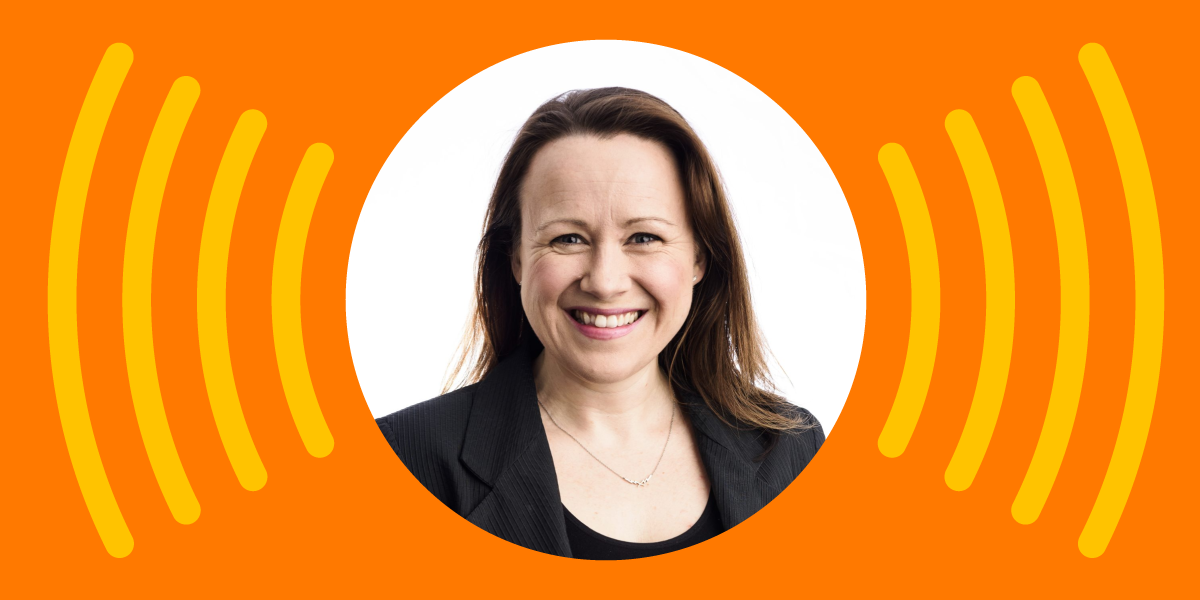
Speaking Freely: Lizzie O'Shea

23 April 2026 at 21:56

Lizzie O’Shea is an Australian lawyer, author, and the founder and chair of Digital Rights Watch, which advocates for freedom, fairness, and fundamental rights in the digital age. She sits on the board of Blueprint for Free Speech, and in 2019 was named a Human Rights Hero by Access Now.

Interviewer: Jillian York

Jillian York: Hi, good morning, or rather, good evening for you.

Lizzie O’Shea: Hi Jillian, it's great to be here. 

JY: I'm going to start with asking a question that I try to kick off every interview with, which is, what does free speech or free expression mean to you?

LO: Yes, so Digital Rights Watch, which is the organization I founded and I chair, is focused on fundamental rights and freedoms in the online world. And so freedom of speech is obviously a big part of that. It's obviously a very vexed right, partly because of its heritage and interpretation in places like the United States, which sometimes sits in contrast culturally to other parts of the world. Certainly, if you ask Australians about it, they do not want to have a culture of free speech that looks like the United States. 

Australians understand that freedom of expression is a really important component of democracy. So one of my jobs is to make the claim that curtailing freedom of speech, including in online settings, can have a real impact on democracy. And I think that's fundamentally true, and you don't want to wait until it's too late to be able to make that argument, to ensure that the policies are in place to protect that freedom. So I think it's a really important freedom. It's got a vexed history and expression in the modern online world, but many people still instinctively understand that those in power see speech as something that is important to challenging their authority, and so it can be a really important place to fight back and protect democracy and other rights from being impacted by those who hold power at the moment.

JY: I want to ask you about your book. You're a critic of techno-utopianism. Your book, Future Histories, came out right before the pandemic, if I recall, and it looks to the past for lessons for our technological and cultural future. I really appreciated your take on Elon Musk. So I guess what I want to ask you about is two things. What, in your view, has changed since you wrote it?

LO: Yeah, that's a really interesting question. I must admit, I was thinking about it the other day whether some of what I wrote really holds up. And I think the fundamentals are still true, in the sense that I still believe that a lot of the discussions and debates we have about technology today are presented as fundamentally novel when they are very old, ancient discussions and debates about how power should be distributed through society, and how technology enables that kind of power distribution or works against it, right? So I feel like that fundamental analysis, whatever contribution to the field, is still valid, of course. In some ways though, those technical systems have become more opaque, like the artificial intelligence industry and how that's been built off the back of years of exploitation of personal information and centralization of power in technology companies. Those things have become more powerful and concentrated and difficult to understand—if you're not deep in the weeds—beyond an instinctive understanding that something's going a bit wrong, perhaps. 

So in some ways those trends have exacerbated things in ways that I think many other contributors, yourself included, have brought a really important set of analyses to these discussions. More generally, though, one of my fundamental understandings of how I frame some of these arguments is that there are two sources of power, right? Government power and corporate power that really shape how the online world is developing. And post-pandemic, there's a lot greater skepticism, criticism, and outright distrust of government authorities seeking to do work to protect people from some of those corporate excesses. Now that's obviously something that is much more part of American culture as opposed to European culture, and in Australia, we sit somewhere in between. But that skepticism and that mistrust of institutions, I don't know that that serves us well. I'm somebody who does treat with criticism policies put forward by government, because I think it's our job as civil society people, as people part of a social movement that want to have rights at the center of our society, to be critical of those in power and make sure that they're being held accountable. But that mistrust has fundamentally shifted how possible it is to do that in an effective way. And I think that poses real challenges for people who want to see government policy look different to how it is and how you can bring people into a sense of trust, investing in a democratic rights based society, rather than rejection and cynicism being the overriding, overriding kind of factor in how they shape their political arguments. Which is a real challenge, I think, for people like us who rely on some of that mistrust and skepticism in order to fuel the fire of some of these campaigns, but do want to see people still invested in democratic processes.

JY: Yeah, absolutely. So speaking of policies, you're in Australia, where the government's enacted some of the strictest social media laws for minors in the world, I would say. In one of our most recent interviews, which was with Jacob Mchangama, we talked about how the comparison of social media to Big Tobacco is spreading, and this idea that there's no utility in social media for minors, that it's a net harm. I'm curious what your thoughts are on that, and then we can dive into the more nitty gritty bits of the Australian law.

LO: I think that's a great place to start, because the overwhelming sense in how this policy was presented to the public in Australia is that this is a very dangerous place for young people to be, and that desperate times call for desperate measures. “We don't have time to fix these spaces. We need to just restrict access.” It's described as a delay. Many, including me, describe it as a ban for under 16 year olds. So what has been very interesting in this discussion is who's been left out of the conversation. And if you talk to young people—and there are many organizations working with young people—and you talk to them about what they use social media for, they often say that they wish adults understood that they used it for different reasons, or they're scared about different things than what adults think they might be scared of. And so that kind of fundamental failure of communication, which I suppose is not a surprise, when these people don't actually have the power to vote, have the power to do things a normal legal person would do, is somewhat unsurprising.

But when you're making policy about these people, that can be quite impactful, it can have very detrimental impacts. And if you take a human rights approach, that is your job to think about the negative impact on human rights, and what you're going to do about it, it's not really good enough. And this has been an experiment that Australia has led on, very much, looking for headlines, for a perception of boldness. Some of that claim is legitimate in the sense that they want to be seen to be taking action, and a lot of people feel very concerned that governments aren't prepared to take action against big tech companies. So, some of that is a valid feeling. But I think in this context, we lose so much when we don't actually listen to the people affected, and listen to the myriad ways in which they use social media. Some things they're concerned about, some things they find harmful, some things they're really sick of. But there's so many ways in which they use it to find a sense of community, to find a sense of empowerment, to talk to people they would never otherwise be able to access, sometimes because they're isolated, socially, geographically, whatever it may be, and it's so disappointing to me that that kind of part of the conversation was not had as we debated this particular policy.

JY:  So, what do you think some of the harms are for youth who can't access social media? What are young people losing out on? Who is harmed by these laws?

LO:  It's a great question. When we do a human rights analysis, we have to think about who's harmed by a particular policy, even if we think it's overall justified on a utilitarian ground, say it's better off for everyone overall who's harmed, is a really important question, and so much of that has been absent from this discussion. So it's not just me. It's like hundreds and hundreds of experts in Australia and organizations that represent many, many people, have provided commentary and input into this process and expressed many concerns about this policy, and there's a few different ways in which people are harmed. 

So the first thing, of course, is that if you require that age verification occur, you're engaging in a privacy violation for many people, there are cyber security risks with collecting that kind of information. There's deterrent effects and the like. Now that may not concern you, or you may think that's a justifiable kind of infringement on privacy rights, but I think that's worth mentioning. It is quite significant, especially in a world in which age verification doesn't tend to work very well on any measure. There are very serious cybersecurity risks that have been associated with age verification processes and the like. So it's certainly not nothing. The other set of people that are harmed are particularly vulnerable people. 

There's a variety of people who are still accessing social media. So it looks like about seven in ten of young people on the early data who had social media accounts are still accessing social media now. Now these are early figures, so there's a lot to be said for looking at how this works in a year's time, for example. But I think one of the interesting things to think about is when those people, young people, who are on still on social media—in breach of this ban or in defiance of this ban, however you want to put it—might need to engage in help seeking behavior, there may be a deterrent there, because they know that the law is they're not supposed to be accessing social media. So that is a selection of young people that we're particularly concerned about. And then, more generally, of course, there's a whole cohort of people who are particularly vulnerable. Maybe they're LGBTIQ, maybe they're in an isolated geographic area, far away from a city. Maybe they're experiencing harm at home and have no one to talk to about it. There's all sorts of ways in which young people use social media to manage their own challenges, harms, difficulties, and very effectively. They find people to talk to about their problems when other people may not be available to them. And that is an issue that is hard to map, right? We know that there's been an increase in calls to things like Kids Helpline, which does what it says on the tin. So those kinds of things have seen an increase. But I think that is something that is harder to map, but still very, very important, and may result in people going to other parts of the internet as well to seek help in different ways that might also not be very safe for them. 

More generally it's worth remembering that if platforms can say with some confidence, from a policy perspective, that young people are no longer on their platform, there is less incentive to design for them as well, which is another associated problem. Now, it remains unclear as to how platforms are dealing with that issue, especially in light of the most recent data, which suggests that a lot of young people remain on the platforms. But that's an issue. Do we then allow platforms to no longer design in a way that respects the autonomy of young people, the safety of them, their security and the like, because they have special needs and interests and all those sorts of things. So that's another problem. There's lots of operational problems. There's lots of conceptual ones. I don't think many of these have been considered or accounted for in the process.

JY: Absolutely, those are the same things that worry me as well. Okay, let's talk about the campaign. So what has the pushback to this, to the law, looked like, and what changes were you calling for?

LO: Well, if I can Jillian, what I might start with is where the push came from. Because I think that's quite instructive. One of the key sets of institutions that were pushing for this ban were mainstream news organizations, and we're learning a bit more about this over time, but the Murdoch press and other large news organizations in Australia—Australia has one of the most concentrated media environments in the world—were pushing for this ban. There was a petition run on one of their websites that was gathering tens of thousands of signatures. There were also others. Then there was a lot of advocacy towards specific kinds of political leaders in the country, and then a kind of competitive race to see who could be the most extreme in terms of putting forward a policy. But it's certainly the case that this very powerful set of actors in our democracy, at least, were a key driver of this campaign for a social media ban for young people. Now, I think there's a sense of moralism about it, a sense of desperation about it, tapping into genuine fears from parents, you know, and the like. And you know, The Anxious Generation, the book by Jonathan Haidt, has obviously been very influential with many people, but the research is still a bit unclear, right? About what this all means. And lots and lots of researchers will tell you that that book isn't making a reasonable argument based on the data that we have, right? So, it's a very febrile environment for this kind of discussion, and those kinds of institutional actors were incredibly important in getting this on the political agenda.

We then had an electoral campaign, definitely a vision that conservative politics would push for this. So labor politics, you know, center left politics pushed for it, and won the election, right? Not on this issue alone, but it was in that environment in which this policy was developed. There was a very small amount of time for submissions, for policy discussion about it. Initially, the government had said they weren't going to do it because they were concerned that the age verification technology wasn't up to scratch. That changed very, very quickly, and then the policy was introduced. I think it was in six days, some very small amount of time. So many different child rights organizations, academics, institutions, filed policy submissions to discuss this, did a lot of advocacy work, but the passage of time between the announcement of the proposal and the passage of the legislation was extremely short, and what followed has been a year of discussion around whether this was a good thing, a year of testing age verification technology, often finding it wanting, but setting up a set of of preferred providers that platforms could use in order to satisfy the legislative requirements. A lot of lobbying from platforms as to whether they're in or out. There was a big discussion about whether YouTube should be in or out. And a lot of back room dealing between relevant politicians and big tech companies. So the whole thing is very unseemly, and we're now in the world where it's been introduced, a lot of failure for it to actually operationalize now. Now, it may be that that changes over time, but that's quite telling, right? 

It's telling also because I don't think all parents particularly like this proposal either. It's very popular, but there's certainly a section of parents that are facilitating their children's continued access to social media. And I think that's interesting in itself. Part of what it is—something we were talking about actually earlier in our conversation—people don't like governments telling them how to parent their children. That has taken some very negative expressions in parts of the world, you know, resistance to things like the availability of medicine and treatment for kids who might be trans. But in this context, it's like, “I'm not going to let the government tell me that I can't let my kid on social media.” So, I don't think it's clarified much in the debate in terms of understanding how platforms behave towards young people, what they could do better, of which there's many things, and then how we get to the world in which children are able to be online but better protected. I'm not sure this proposal has contributed to that. It's really muddied the waters about what the government is capable of doing, what it should be doing, and what platforms, you know, what should be the process that platforms go through when thinking about designing for children.

JY: That's such a great answer. Thank you. And actually, that brings me to another question, which is so in your ideal world, taking this law, being able to throw it out the window if you want…What would you what would you want to see, not just from social media, but from from the platforms, from governments, both for the sake of youth, but also, you know, for all of us.

LO: I think that is the exact right question to be asking, and it's a good time that we've managed to talk now, because actually, in the interim, what's come out is at the first draft that we've got of a Children's Online Privacy Code. And to me, that is really revealing, because it is designed to apply to all services that might be accessed by children, like all online services, and it has a really kind of sophisticated understanding of what consent might look like, where you need help with getting consent, when it comes to parents or adults that are supportive in your life. And then at different ages that might look a bit different, like you might get notified if consent has been refused by your caregiver, for example, if you've wanted to do something. So there's a more sophisticated understanding of what consent looks like, and a range of different restrictions on when private, when personal information can be collected and used.

It's got things in it that I don't particularly like. I would like to see a prohibition on the commercial exploitation of children's personal information, because I don't think any targeted advertising is justified, for example. And I think that kind of measure of that commercial exploitation is hugely problematic. I think we have to think about what deletion looks like. I think you should have a right to deletion, for example. But you know, we also have to respect that children grow into young adults, that making decisions at 16 might look quite different to when they're three. So what you do with their personal information, how they carry that forward into their adult lives might be different depending on the age and so that kind of privacy reform actually is the fundamental thing. I’m sure your listeners don’t need reminding of this.

That is my favorite right. Because I think restricting access to personal information is a rights-respecting way to improve the online environment for everybody. And what I think is really interesting about this Children's Online Privacy Code that is still in draft form, is that all these things should be available to adults as well. Like adults in Australia don't have the right to deletion at the moment. We don't have a right to comprehensively know where our information has traveled and to delete it. You know, look, we have fewer rights than Californians, for example, certainly fewer rights than Europeans. What this code has highlighted is that, in fact, all people should be enjoying this kind of protection that comes from restricting access and use of personal information and giving people more control over that, because that personal information is the raw material of the business model, and it leads to a very loose approach to its collection and leads to many negative downstream consequences, I would argue, including business models that prioritize engagement, that prioritize and monetize polarizing, extremist content, mis- and disinformation.

I think we could have a real crack at trying to ameliorate some of these problems, or certainly reduce their impact, if we started that fundamental raw material that fuels the business model. So that, I think, is a really telling alternative that we're now considering as a society, and I like to think that people will come to an understanding that you can you can find ways to elevate improve the online world, particularly for young people, without restricting their access to that online world in a way that is empowering for them, rather than patronizing or infantilizing. 

JY: I completely agree, and I think it's funny that people often see privacy and expression at odds with each other, when actually I think privacy enhances expression.

LO: I think it makes spaces safer, makes people freer to be able to say what they think, but also to have those discussions in ways that are more meaningful, that can help find connections, even across divisions, rather than exploiting that division for profit, which is so much of the current business model.

JY: Are there any other things happening in Australia that EFF’s readers should know about?

LO: Well, we're about to go through the second tranche of our privacy reform. So we did engage in our first tranche of privacy reform. We have a Privacy Act that was passed in 1988 and hasn't been meaningfully updated in the decades since. So we got a few small changes, which included the enabling provision to allow a Children's Online Privacy Code to be developed, which is why we're getting the benefit of that now. But we're about to see a range of different privacy laws introduced. What the content is, of course, will be the subject of a lot of discussion and debate. We're going to argue for the right to deletion, the right to a private right of action for privacy harms, better processes for consent, and improved definitions of personal information to really bring Australia in line with lots of other similar jurisdictions around the world. And we're really keen to advance that for all the reasons that I just mentioned. 

The other big change that I think is coming is that, you know, which is perhaps more on topic for this conversation, is that we've had this online safety policy that is constantly being touted as the first in the world, and world leading and this and that, and it's really been a very flawed and vexed process working out how we could develop codes that were designed to govern how certain services were provided in the digital age, in line with safety expectations. There’s been a lot of focus on complaints and take down notices and things like that, there's obviously been that vexed litigation with Elon Musk, trying to get him to take down a particular video, and ultimately, the failure of our regulators to succeed on that front, I think, probably correctly, because giving a regulator in Australia the right to take down content from anywhere in the world seems to me a very concerning development, if that was allowed to proceed. So this history of online safety, it's been a big part of successive Australian governments’ identities. We're about to see the introduction of a digital duty of care. So that's certainly the stated position of government. What that looks like in practice, I think will be really interesting. 

I like the idea of a digital duty of care. I like the idea of a flexible, overarching concept. What the content is, though, will be really important. So what I would like to see is proactive disclosure of harm or risk of harm, and then actions taken by platforms to do it. So more onus on platforms to provide transparency about what they know about how their online spaces are being used and what might be harmful. I mean, there's a question around whether we'll see an introduction of a civil right, something similar following from the litigation that’s taken place in California and New Mexico, and that is going to be leading, really, multiple claims that are being made all around the country in the US, against companies like Meta and Google and other social media platforms. So I think there may be a flow-on effect from that, as in, it might turn into a civil right to sue for failure to meet the requirements of digital duty of care. But I'm really interested to hear from any of your listeners, or anyone who's working in this space about what the content should be of that digital duty of care, because there's obviously limits as well. Like it can be not rights-respecting, and we're interested in making sure that's not the case. And I think there's probably a range in which it could be more protective or less and working out how to do that—there are examples from around the world, but that's going to be something I reckon we could use help with that we want to get right and make use of that opportunity as best we can. 

The last thing I'll say, I suppose, is that our government is always looking for ways to deal with mis- and disinformation, and that comes with real risks of censorship. And so, I think there's a strong argument to focus on privacy reform, because it's a rights-respecting reform as an antidote to mis- and disinformation. Greater transparency on platforms—I think about how they prioritize content in your feed, for example, can be useful, or reporting on what content is really popular, like ad libraries. There's all sorts of ways in which we can introduce greater transparency, but I do worry that as governments around the world feel emboldened to do so, they might look for more ways to to remove content, to be more involved in content moderation policies that have the real potential to to become censorship if we're not careful. So that's the other abiding concern I've got about Australian policy at the moment.

JY: One of my big concerns now too, is all of these authoritarian governments watching Australia, watching the UK, and enacting laws that are modeled on, but much more severe than than the ones in those places? Do you share that concern? 

LO:  Yeah. I mean, the other way in which it's come about in Australia, certainly like anti-doxxing laws, which, at the moment, we've got laws on our books that came about attached to a privacy reform. I'm hesitant to say it's a privacy reform, because it's not, but it's very egregious. It's a criminal offense to disclose basic details about someone online, if it's done with a set of intents and the like, about their particular status as a group, and that, I think you could drive a truck through in terms of how you could interpret it, right? There's such a wide variance, and bringing a proceeding against someone like prosecuting them for that is such a life altering experience. And I think if governments did want to focus on particular activists. And I'm particularly thinking of, you know, the way it was framed was certainly around the the discussion and debate about the genocide unfolding in Gaza. Like, I think, particularly about that movement, they're very vulnerable to crackdowns by government for speech that is perceived to be unacceptable by government. 

And I'm not even trying to debate it. I think there's certainly antisemitic commentary occurring in Australia, and indeed, there have been some people, like genuine Nazis arrested, which, you know is, is a different kettle of fish. But I think progressive movements, not just the defense of Palestine movement, but lots of other progressive movements are a particular risk of those kinds of laws. But I think mis- and disinformation is the other vehicle. So we have to be very careful about giving platforms, giving regulators both the mandate and then the authority to police content based on particular criteria. And often what they talk about, or they talked about in proposals that have now died in Australia, were things like public health issues. So, you know, that's a particular consent that drives a lot of people who are very concerned about the years of Covid up the wall. So it inspires a lot of reaction to it. But I think there's lots of ways in which undermining political stability is put forward as a proposal, as a justification for removing content. That's just so broad that I think you could really start to see censorship. It's just not good enough. I just don't think we can tolerate those kinds of proposals. I like to think that's not the case in Australia, but I just think there's a tendency among governments now to see this as an opportunity. It's an anxiety lots people have about mis- and disinformation, and so they draw on that as a mandate to act. And I think we should be very cautious about those proposals.

JY: Definitely. Okay, I’m going to ask the final question that I ask everyone. Who is your free speech or free expression hero? Or someone from history, or even someone personal who has influenced you?

LO: There’s a chapter in my book where I talk about the Paris Commune, which happened a long time ago, but I still think it’s a really interesting experiment in applied democracy. This is when a bunch of communauts took over Paris and started doing things differently in a variety of different ways. Gustave Coubert is this artist who’s leading the artist collective during this time, and I always found him entertaining because he would paint things that weren’t expected. So, often, nudes that were considered quite scandalous because they were everyday women who weren’t angelic or Madonna-esque in their style, but he’s got a very famous painting of female genitalia—

JY: Yes! Facebook took it down! [laughs]

LO: Exactly. It’s always been a very confrontational image. People find it sexist sometimes, because they think it’s very pornographic. I understood it differently. It’s called “The Origin of the World,” so I sort of see it as a force of giving life. Interpret however you like, the point is that Facebook couldn’t tolerate it and took it down. There’s a nice little bit of litigation where a schoolteacher had a page where he was teaching people that art, and Facebook could just not tolerate this art. In my mind, it was so telling that a communaut from hundreds of years before was basically revealing, as an expert troll almost, how conservatives—someone like Mark Zuckerberg—view, and how he shapes these platforms. And how they subtly reshape what we think is appropriate, what we think is free, what we think is within the realms of good society. And that you really do need artists telling you that that might not be true, and they’re some of the most effective actors at revealing that about those who hold power, like reshaping our understanding about what acceptable debate is, and how we can show power to be exercised in our online world, where in other circumstances it might be quite okay.

I love that story, and I love the communauts. There’s a lot of beautiful writing about them, there’s a beautiful book called Communal Luxury where they talk about all the different ways in which they were trying to reimagine their society and do it collectively, from things like having the first union of women but also having the design of clothes and furniture look different. I want to see a world in which people take that power in both the micro and macro and start to reshape their society in really creative ways. And I feel like digital technology has the real capability of allowing that to occur and I want to revive that sense of concrete democracy rather than just delegated democracy or deferred representative democracy where you tell someone else what you want but don’t have a say in a lot of decisions. And so, that really grassroots idea of democracy is something, and I think we’re in a world in which that could really occur with the assistance of digital technology. It’s a matter of working out how to bring it into being. And that’s what I see this movement as doing. People with digital rights as being their primary concern are trying to recreate that world so that there’s more communal, collective spaces for discussing what the future should look like.

EFF Calls on Kuwait to Release Journalist Ahmed Shihab-Eldin

15 April 2026 at 17:04

EFF calls on the Kuwaiti government to immediately release journalist Ahmed Shihab-Eldin. An award-winning journalist and television host who worked for Al Jazeera for many years, Shihab-Eldin—a dual American-Kuwaiti citizen—was arrested in Kuwait on March 3 while visiting family. The Committee to Protect Journalists (CPJ) reported yesterday that it is believed he has been charged with spreading false information, harming national security, and misusing his mobile phone.

According to the Guardian, Shihab-Eldin published footage of a U.S. Air Force F-15 E Strike Eagle crash, and posted to his Substack about the incident, noting that video circulating online showed local residents assisting the crash survivors. 

Kuwait is one of several countries that has recently cracked down on reporting amidst the ongoing war. Kuwait’s Ministry of Interior posted on X on March 3—the same day Shihab-Eldin was arrested—warning people in the country “not to photograph or publish any clips or information related to missiles or relevant locations.” Earlier this month, the UN Office of the High Commissioner for Human Rights (OHCHR) highlighted a new decree in Kuwait banning the circulation of reports that seek to “undermine the prestige of the military” or erode public trust in it. 

As reported by local media, the decree states that “those who intentionally publish statements or news or circulate false reports and rumors about military authorities resulting in weakening the trust in them and their morale, in addition to undermining their prestige, are punishable by three to 10 years in jail and a fine between KD 5,000 and 10,000.” The decree also imposes a penalty ranging from seven years to life imprisonment for “authorized people who cause financial loss or damage to the military authorities while carrying out a transaction, operation, project or case or obtaining any profit from such deals.”

In contrast to neighboring Gulf states, Kuwait has historically allowed the press to operate with relative freedom, and even introduced a law in 2020 protecting the right to access information. In practice, however, the government exercises considerable control over the media. Furthermore, there are several laws, including cybercrime legislation introduced in 2016, that restrict freedom of expression.

EFF is deeply concerned that Ahmed has not been seen nor heard from in nearly six weeks. We call on the government of Kuwait to immediately release Ahmed Shihab-Eldin. 


Digital Hopes, Real Power: The Rise of Network Shutdowns

15 April 2026 at 13:38

This is the fourth installment of a blog series reflecting on the global digital legacy of the 2011 Arab uprisings. You can read the rest of the series here.

Iran’s internet has been intermittently disrupted for months. After years of bombardment, Gaza’s telecommunications infrastructure remains fragile. In India, recurring shutdowns and throttling have become a routine response to protests and unrest, cutting millions off from news, work, and basic services. Across dozens of other countries, governments increasingly treat connectivity itself as something that can be weaponized—cut, slowed, or selectively restored to shape what people can see, say, and share. In 2024 alone, authorities imposed 304 internet shutdowns across 54 countries—the highest number ever recorded.

In 2011, when protesters in Tunisia, Egypt, and beyond used social media to broadcast their uprisings to the world, many observers heralded a new era of networked freedom. Governments, however, responded quickly by developing and refining systems of control that have only grown more sophisticated over time. Today’s landscape of regulation, blackouts, and degraded networks reflects that trajectory, as early experiments in censorship and disruption have hardened into a durable system of control—what began as an emergency measure has become a normalized infrastructure of control.

A Brief History of Internet Shutdowns

Egypt’s 2011 internet shutdown wasn’t the first. Although the government’s heavy-handed response after just two days of protests caught the world’s attention, Guinea, Nepal, Myanmar, and a handful of other countries had previously enacted shutdowns. But Egypt marked a turning point. In the years that followed, shutdowns increased sharply worldwide, suggesting that governments had taken note—adopting network disruptions as a tactic for suppressing dissent and limiting the flow of information within and beyond their borders.

On January 28, 2011, at 12:34 a.m. local time, five of Egypt’s internet service providers (ISPs) shut down their networks. At least one provider—Noor, which also hosted the Egyptian stock exchange—remained online, leaving only about 7% of the country connected. 

In the aftermath of President Hosni Mubarak’s resignation, rights groups sought to understand how such a sweeping shutdown had been possible—and how future incidents might be prevented. There was no centralized “kill switch.” Instead, authorities leveraged the country’s highly consolidated telecommunications sector, which all operate by government license. With only a handful of ISPs, a small number of directives was enough to bring most of the network offline.

In the years following Egypt’s 2011 shutdown, telecommunications companies—many of which had been directly implicated in enabling state-ordered disruptions—began to organize around a shared set of human rights challenges. Beginning that same year, a group of operators and vendors quietly convened to examine how the UN Guiding Principles on Business and Human Rights applied to their sector, particularly in contexts where government demands could translate into sweeping restrictions on access. By 2013, this effort had formalized into the Telecommunications Industry Dialogue, bringing together major global firms to develop common principles on freedom of expression and privacy and, through a partnership with the Global Network Initiative, engage more directly with civil society. The initiative reflected a growing recognition that telecom companies—unlike platforms—operate at a critical chokepoint in the network. But it also underscored the limits of voluntary approaches: while the Dialogue helped establish shared norms, it did little to constrain the legal and political pressures that continue to drive shutdowns—or to prevent companies from complying with them.

From Emergency Measure to Legal Authority

If the early aughts were defined by improvised shutdowns, the years since have seen governments formalize their power to control networks. What was once exceptional is now often embedded in law.

In India, the 2017 Temporary Suspension of Telecom Services Rules—issued under the Telegraph Act—provided a clear legal pathway for cutting connectivity. The Telecommunications Act, 2023, further entrenched the government’s ability to enact shutdowns, granting the central and state governments, or “authorised officers” the power to suspend telecommunications services in the interest of public safety or sovereignty, or during emergencies. The government has used these measures repeatedly, particularly in Jammu and Kashmir. India’s Software Freedom Law Centre’s Shutdown Tracker shows India as instigating more than 900 shutdowns, 447 of which were in Jammu and Kashmir.

In Kazakhstan, shutdowns have also become common. Over the years, the government has passed legislation that allows state agencies to shut down the internet. The 2012 law on national security enabled the government to disrupt communications channels during anti-terrorist operations and to contain riots. In 2014 and 2016, laws were further amended to expand the number of actors able to shut down the internet without a court decision, and a government decree in 2018 enabled shutdowns in the event of a “social emergency.” 

Elsewhere, governments have built or expanded legal and technical frameworks that enable similar control over information flows. Ethiopia’s state-dominated telecom sector has facilitated sweeping shutdowns during periods of conflict, including the war in Tigray, where the internet was disconnected for more than two years. In Iran, authorities have developed regulatory and infrastructural capacity to isolate domestic networks from the global internet, allowing them to restrict external visibility while maintaining limited internal connectivity. This year alone, Iranians have spent one third of the year offline. And amidst the ongoing war, Iranian officials have made it clear that the internet is a privilege for those who toe the government’s official line.

Even where laws do not explicitly authorize shutdowns, broadly worded provisions around national security or public order are routinely used to justify them. The result is a growing legal architecture that treats network disruptions not as extraordinary measures, but as standard tools for managing populations.

When that authority is exercised over a population beyond a state’s own citizens, the consequences can be even more severe. Israel’s Ministry of Communications controls the flow of communications in and out of Palestine and has used that power to shut down internet access during periods of conflict. Over the past two and a half years, Gaza has experienced repeated outages, and experts now estimate that roughly 75% of its telecommunications infrastructure has been damaged—leaving essential services severely disrupted.

Elections and the Expansion of Control

Historically, most blackouts have occurred during moments of intense political tension. But authorities are increasingly using them as a tool to preempt dissent.

In 2024, as more than half the world’s population headed to the polls, shutdowns followed. That year alone, authorities imposed 304 internet shutdowns across 54 countries—the highest number ever recorded, surpassing the previous record set just a year earlier. The geographic spread also widened significantly, with shutdowns affecting more countries than ever before. The Comoros imposed a shutdown for the first time, while other countries, such as Mauritius, instituted broad bans on social media platforms during elections.

At least 24 countries holding elections in 2024 had a prior history of shutdowns, putting billions of people at risk of disruptions during critical democratic moments.

What stands out is not just the scale, but the normalization. Notably, the number of shutdowns in 2025 broke the record set the year prior. Whereas network disruptions were once a rare occurrence, they are now a routine measure, increasingly treated by authorities as a standard response to periods of heightened political sensitivity. 

Civil Society Fights Back

Governments use all sorts of justifications—national security, curbing the spread of disinformation, and even preventing students from cheating on exams—for internet shutdowns. But civil society is watching, and documenting, network disruptions and their impact on citizens.

In 2016, as shutdowns became an increasingly common tool of state control, Access Now launched the #KeepItOn campaign to coordinate global advocacy against network disruptions. The campaign includes a coalition composed of 345 advocacy groups (including EFF), research centers, detection networks, and others who work together to report on, and fight back against, internet shutdowns. Anyone can get involved by signing on to campaign action alerts, sharing their story, or reporting a shutdown in their jurisdiction.

Ending this harmful practice remains the goal. In 2016, the UN passed a landmark resolution supporting human rights online and condemning internet shutdowns, and UN agencies have continued to warn against the practice. But the fight to change government practices remains an uphill battle, leading civil society—and even companies—to get creative. 

During repeated shutdowns in Gaza, grassroots efforts mobilised to distribute eSIMs so Palestinians could stay connected. In 2024, EFF recognized Connecting Humanity, a Cairo-based non-profit providing eSIM access in Gaza, with its annual award for its vital work. Satellite internet such as Starlink has been supplied to people in Ukraine and Iran, though it, too, is not immune to state control. Alongside these efforts, civil society continues to share practical guidance on circumventing shutdowns and maintaining access to information.

EFF’s mission is to ensure that technology supports freedom, justice, and innovation for all people of the world—and we’ll continue to fight back against internet shutdowns wherever they occur.

This is the fourth installment of a blog series reflecting on the global digital legacy of the 2011 Arab uprisings. Read the rest of the series here.

War as a Pretext: Gulf States Are Tightening the Screws on Speech—Again

13 April 2026 at 17:29

War does not only reshape borders. It also reshapes what can be seen, said, and remembered. 

When governments invoke “misinformation” during wartime, they often mean something simpler: speech they do not control. Since the escalation of conflict between the United States, Israel, Iran, and related spillover attacks in the Gulf, several governments have intensified efforts to silence dissent and restrict the flow of information.

Journalism under pressure

For journalists, the space to operate—already constrained in much of the Gulf—is narrowing further. Across the region, several countries (including the UAE, Qatar, and Jordan) have restricted access to conflict areas, warned of legal consequences for publishing footage, and drawn red lines around wartime reporting. These measures weaken independent coverage, elevate official narratives, and make it harder for the public to get an accurate account of events on the ground.

Reporters Without Borders has documented an intensifying crackdown on journalists across Gulf countries and Jordan, including restrictions on reporting, legal threats, and heightened risks for those who deviate from official narratives. This aligns with the broader warning from the UN that repression of civic space and freedom of expression has significantly deepened across the region during the war.

Criminalizing speech, one post at a time

For ordinary internet users, the restrictions are just as severe. Since February, hundreds of people have reportedly been arrested across the region for social media activity linked to the war. In many Gulf states, the legal infrastructure enabling this is already well-established: expansive cybercrime and media laws criminalize vaguely defined offenses such as “spreading rumors,” “undermining public order,” or “insulting the state”. In wartime, these provisions become catch-all tools: flexible enough to apply to nearly any form of dissent.

In Bahrain, authorities have reportedly cracked down on people who protested or shared footage of the conflict online. The Gulf Centre for Human Rights has reported 168 arrests in the country tied to protests and online expression, with defendants potentially facing serious prison terms if convicted.

In the UAE, authorities have arrested nearly 400 people for recording events related to the conflict and for circulating information they described as misleading or fabricated. Police have claimed this material could stir public anxiety and spread rumors, and state-linked reporting has described the crackdown as part of a broader effort to defend the country from digital misinformation.

Saudi Arabia has also intensified restrictions, issuing a statement on March 2 banning the sharing of rumors or videos of unknown origin, and issuing a campaign discouraging residents from taking or posting photos. The campaign included a hashtag that reads “photography serves the enemy.” Journalists have been prevented from documenting the aftermath of airstrikes on the country. Kuwait, Qatar, and Jordan have adopted similar restrictions on wartime imagery and reporting.

Qatar’s Interior Ministry has arrested more than 300 people for filming, circulating, or publishing what the ministry deemed to be misleading information. Taken together, these measures show how quickly wartime speech is being folded into existing legal systems designed to punish dissent.

The regional playbook

What’s striking is how consistent these measures are across different countries. As we recently wrote, governments across the broader region have enacted sweeping cybercrime and media laws over the past fifteen years, which they are now putting to use. Across different countries, the same tools are being used: existing laws, fresh bans on sharing wartime imagery, and tighter restrictions on journalists and reporting. The vocabulary changes slightly from place to place, but the logic is the same: national security, public order, rumors, and social stability are justifications for control.

This is not just a series of isolated incidents. It is a regional playbook for silencing critics and narrowing the public record. Gulf states have long relied on censorship and surveillance; the war has simply made those methods easier to justify and harder to challenge.

From “digital hopes” to digital control

As we’ve documented in our ongoing blog series, digital platforms were once seen—at least in part—as spaces that could expand public discourse in the region. But as we’ve also argued, those early “digital hopes” have given way to systems of regulation and control. 

The current crackdown is a continuation of that trajectory, not a temporary departure from it. States are not just reacting to the war; they are leveraging it to consolidate long-standing ambitions to dominate the digital public sphere.

It may be tempting to see these measures as temporary, but emergency powers—like the one enacted in Egypt following the 1981 assassination of Anwar Sadat that lasted for more than three decades—have a way of sticking around. Legal precedents that are set during wartime often become normalized—or reinvoked during times of crisis, as occurred in 2015, when France brought back a 1955 law related to the Algerian War of Independence amidst the Paris attacks.

And the stakes are high. As we’ve seen in Syria and Ukraine, regulations and platform policies can cause wartime human rights documentation to disappear. When journalists are constrained and eyewitness footage is criminalized, accountability is weakened. And when arrests become widespread, people learn to self-censor.

Protecting freedom of expression in times of conflict is a requirement for accountability, not a concession to disorder. When people can document, report, and share information freely, it becomes harder for abuses to be hidden behind official narratives. Even in wartime, the public interest is best served by defending the space to tell the truth, not by silencing speech.

EFF’s Submission to the UN OHCHR on Protection of Human Rights Defenders in the Digital Age

2 April 2026 at 13:29

Governments around the world are adopting new laws and policies aimed at addressing online harms, including laws intended to curb cybercrime and disinformation, and ostensibly protect user safety. While these efforts are often framed as necessary responses to legitimate concerns, they are increasingly being used in ways that restrict fundamental rights.

In a recent submission to the United Nations Office of the High Commissioner for Human Rights, we highlighted how these evolving regulatory approaches are affecting human rights defenders (HRDs) and the broader digital environment in which they operate.

Threats to Human Rights Defenders

Across multiple regions, cybercrime and national security laws are being applied to prosecute lawful expression, restrict access to information, and expand state surveillance. In some cases, these measures are implemented without adequate judicial oversight or clear safeguards, raising concerns about their compatibility with international human rights standards.

Regulatory developments in one jurisdiction are also influencing approaches elsewhere. The UK’s Online Safety Act, for example, has contributed to the global diffusion of “duty of care” frameworks. In other contexts, similar models have been adopted with fewer protections, including provisions that criminalize broadly defined categories of speech or require user identification, increasing risks for those engaged in the defense of human rights.

At the same time, disruptions to internet access—including shutdowns, throttling, and geo-blocking—continue to affect the ability of HRDs to communicate, document abuses, and access support networks. These measures can have significant implications not only for freedom of expression, but also for personal safety, particularly in situations of conflict or political unrest.

The expanded use of digital surveillance technologies further compounds these risks. Spyware and biometric monitoring systems have been deployed against activists and journalists, in some cases across national borders. These practices result in intimidation, detention, and other forms of retaliation.

The practices of social media platforms can also put human rights defenders—and their speech—at risk. Content moderation systems that rely on broadly defined policies, automated enforcement, and limited transparency can result in the removal or suppression of speech, including documentation of human rights violations. Inconsistent enforcement across languages and regions, as well as insufficient avenues for redress, disproportionately affects HRDs and marginalized communities.

Putting Human Rights First

These trends underscore the importance of ensuring that regulatory and corporate responses to online harms are grounded in human rights principles. This includes adopting clear and narrowly tailored legal frameworks, ensuring independent oversight, and providing effective safeguards for privacy, expression, and association.

It also requires meaningful engagement with civil society. Human rights defenders bring essential expertise on the local and contextual impacts of digital policies, and their participation is critical to developing effective and rights-respecting approaches.

As digital technologies continue to shape civic space, protecting the individuals and communities who rely on them to advance human rights remains an urgent priority.

You can read our full submission here.

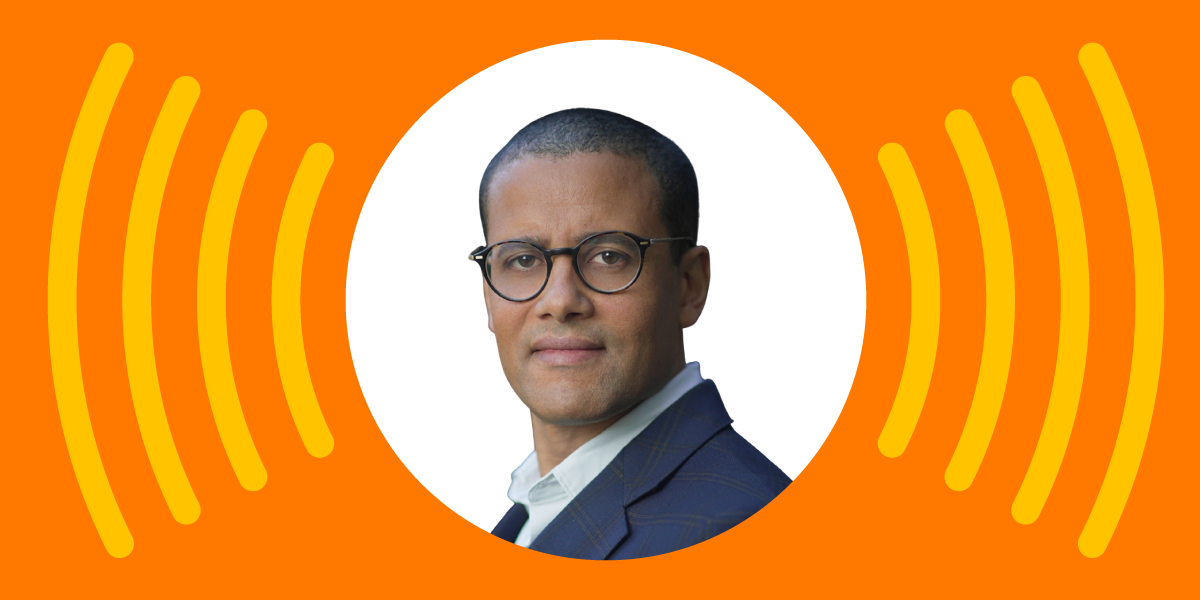
Speaking Freely: Jacob Mchangama

2 April 2026 at 11:17

Interviewer: Jillian York

Jacob Mchangama is a Danish lawyer, human-rights advocate, and public commentator. He is the founder and director of Justitia, a Copenhagen-based think tank focusing on human rights, freedom of speech, and the rule of law. His new book with Jeff Kosseff, The Future of Free Speech: Reversing the Global Decline of Democracy's Most Essential Freedom, comes out on April 7th.

Jillian York: Welcome, Jacob. I'm just going to kick off with a question that I ask everyone, which is: what does free speech mean to you?

Jacob Mchangama: I like to use the definition that Spinoza, the famous Dutch renegade philosopher, used. He said something along the lines, and I'm paraphrasing here, that free speech is the right of everyone to think what they want and say what they think, or the freedom to think what they want and say what they think. I think that's a pretty neat definition, even though it may not be fully exhaustive from sort of a legal perspective, I like that. 

JY: Excellent. I really like that. I'd like to know what personally shaped your views and also what brought you to doing this work for a living. 

JM: I was born in Copenhagen, Denmark, which is a very liberal, progressive, secular country. And for most of my youth and sort of young adulthood, I did not think much about free speech. It was like breathing the air. It was essentially a value that had already been won. This was up until sort of the mid-naughties. I think everyone was sort of surfing the wave of optimism about freedom and democracy at that time. 

And then Denmark became sort of the epicenter of a global battle of values over religion, the relationship between free speech and religion with the whole cartoon affair. And that's really what I think made me think deep and hard about that, that suddenly people were willing to respond to cartoonists using crayons with AK-47s and killings, but also that a lot of people within Denmark suddenly said, “Well, maybe free speech doesn't include the right to offend, and maybe you're punching down on a vulnerable minority,” which I found to be quite an unpersuasive argument for restricting free speech. 

But what's also interesting was that you saw sort of how positions on free speech shifted. So initially, people on the left were quite apprehensive about free speech because they perceived it to be about an attack on minorities, in this case, Muslim immigrants in Denmark. Then the center right government came into power in Denmark, and then the narrative quickly became, well, we need to restrict certain rights of hate preachers and others in order to defend freedom and democracy. And then suddenly, people on the right who had been free speech absolutists during the cartoon affair were willing to compromise on it, and people on the left who had been sort of, well, “maybe free speech has been taken too far” were suddenly adamant that this was going way too far, and unfortunately, that is very much with us to this day. It's difficult to find a principled, consistent constituency for free speech. 

JY: That's a great way of putting it. I feel like, with obvious differences from country to country, it feels like that kind of polarization is true everywhere, including the bit about flipping sides. I guess my next question, then, is: what do you feel like most people get wrong about free speech?

JM: I think there's a tendency—and I'm talking especially in the West, in the traditional free and open democracies—I think there's a huge tendency to take all the benefits of free speech for granted and focus myopically on the harms, real and perceived, of speech. I mean, just the fact that you and I can sit here, you know, I don't know where you are in the world, but you and I can have a direct, live, uncensored conversation…that is something that you know was unimaginable not that long ago, and we just take that for granted. We take it for granted that we can have access to all the information in the world that would previously have required someone to spend years in libraries, traveling the world, finding rare manuscripts.

We take it for granted, but this is the difference between us and say dissidents in Iran or Russia or Venezuela. We take it for granted that we can go online and vent against our governments and say things, and we can also vent things on social issues that might be deeply offensive to other people, but generally we don't face the risk of being imprisoned or tortured. But that's just not the case in many other countries. 

So, I think those benefits, and also, I would say, when you look at the historical angle, every persecuted or discriminated against group that has sought and achieved a higher degree of equal dignity, equal protection under the law, has relied on speech. First they relied on speech, then they could rely on free speech at some point, but initially they didn't have free speech right? So whether it's abolitionist the civil rights movement in the United States, you know my good friend Jonathan Rauch, who was sort of at the forefront of of securing same sex marriage in the United States, knows that was a fight that very much relied on speech. And women's rights…fierce women, who would protest outside the White House and burn in effigy figures of the President, would go to prison. Women didn't have political power. They didn't have guns. They didn't have economic power, they had speech, and that's what you need, to petition the government, to shine a light on abuse, to rally other allies and so on. And I think unfortunately, we've unlearned those hugely important precedents for why we have free speech today. 

JY: I’m definitely going to come back to that. But first I want to ask you about the new book you have coming out with Jeff Kosseff, The Future of Free Speech: Reversing the Global Decline of Democracy's Most Essential Freedom. I'm very excited, I’ve pre-ordered it. 

So, in light of that, I’ve got a two part question: First, what are some of the trends that concern you the most about what’s going on today? And then, what do you think we need to do to ensure that there is a future for free speech?

JM: So first of all, I was thrilled to be able to write it with Jeff, because Jeff is such an authority on First Amendment section 230 issues. But from the personal perspective, you could say that this book sort of continues where my previous book on the history of free speech finishes.

And so, based on the idea that we are living through a free speech recession that has become particularly acute in this digital age, where we see what I term as various waves of elite panic that lead to attempts to impose sort of top down controls on online speech in particular—and this is not only in the countries where you'd expect it, like China and Russia and Iran, but increasingly also in open democracies that used to be the heartland of free speech—there's a tendency, I think, in democracies, to view free speech no longer as sort of a competitive advantage against authoritarian states, or a right that would undermine authoritarians, but as sort of a Trojan horse which allows the enemies of democracies, both at home and abroad, to weaponize free speech against democracy, and so that's why the overwhelming

legislative initiatives and framing of free speech is often “this is a danger.” This is something we need to do something about. We need to do something about disinformation. We need to do something about hate speech. We need to do something about extremism. We need to do something about, you know, we need to have child safety laws. We need age verification. And you know, you know the list all too well. 

JY: I do, absolutely.

JM: Where I think where free speech advocates often fall short, is that we're very good at sort of talking about the slippery slope and John Stuart Mill and all these things, and that's important, but very often we don't have compelling proposals to sell to people who are not sort of civil libertarians at heart, and who are generally in favor of free speech, but who are frightened about particular developments at particular manifestations of speech that they think have become so dangerous to you know, freedom, democracy, whatever interest that they're willing to compromise free speech. 

And so we try to point to some concrete examples of—giving life to the old cliché—fighting bad speech with better speech. So some of those examples are counter speech. There are some great examples. One of them is from Brazil, where there was a black weather woman who was the first black weather woman to be sort of on a prominent TV channel, and she was met with brutal racism. So, you know, what should have been a happy moment for her became quite devastating. And so there was this NGO that printed billboards of these very nasty racist comments, blurred the identity of the user who had said it, but then put them in the neighborhoods where these people lived. So that was a very powerful way to confront Brazilians with the fact that, you know, racism is alive. It's right here in your neighborhood. And you know they used the N word and everything, and nothing was censored in terms of this racism, which was put right in front of it of everyone, and it actually led to a lot of people sort of deleting their comments and someone apologizing, and led to, I think, a fruitful debate in Brazilian society. 

Then you have other types of counter speech. One of them is a Swedish journalist called Mina Dennert. She started the “I am here” movement. So it's a counter speech movement, which I think spans 150,000 volunteers across 15 countries. And they use counter speech online, typically on Meta platforms, I think, where they essentially gather together and push back against hate speech, not necessarily to convince the speaker that they're wrong, but to give support to those who are the victims, but also to essentially convince what is often termed the movable middle, to show them that there are people who disagree with racist hate speech, and there's actually empirical data to suggest that these can be effective strategies. You can also use humor. 

Daryl Davis is a very extreme example. He's a black jazz musician who has made it his life mission to befriend members of the KKK. And he has converted around 200 members of the KKK, to essentially leave it and he does that by just having a conversation. Because if your worldview is that blacks are inferior and should not enjoy equal rights, and you have a conversation with someone in a way where it becomes impossible for you to uphold that worldview, because the person in front of you is clearly someone who's intelligent, articulate, who can counter all your your preconceived notions, then it becomes very difficult to uphold that worldview right? And you can imagine that those members who leave the KKK then become agents of change within their former communities. 

So there are various counter speech strategies that have shown a promise, and at the Future of Free Speech [think tank] that I direct, we've developed these toolkits, and we do teachings around the world, I think we've translated them into nine or ten languages. So it's not a panacea, obviously, to everything that's going on, but it's something quite practical, I think. And the good thing about it is also that it doesn't depend on an official definition of hate speech. If you're concerned about a particular type of speech, you can use counter speech to counter it. But you're not engaging in censorship, and we don't have to agree on what the definition of hate speech is. In that way, it’s hopefully an empowering tool. 

And another example: we talk about how Taiwan has been quite an inspiring case for using crowd sourced fact checking, for using sort of a bottom up approach to fighting disinformation from China, but also around Covid, so zero lockdowns and no centralized censorship, and they’re doing better than a lot of Western democracies that use more illiberal methods and the crowd sourced fact checking pioneered in Taiwan is what inspired Bird Watch on Twitter prior to its being taking over by Elon Musk, and which is now community notes on X, which I actually think for all the things you might dislike about X, is a feature that is quite promising. 

JY: Definitely.  I absolutely agree with that, and I'm really glad you mentioned your previous book, which I loved, and the idea of a free speech recession. 

You’ve done so much of this work all over the world, and have learned from people in different places and tried to understand the challenges they’re facing in terms of free speech. We actually started this project, Speaking Freely, primarily to share those different perspectives and to bring them to our readership, the majority of which comes from the U.S. What I’d like to ask you, then, is what do you feel that we in the “West” or in more open societies have to learn from free speech activists in the rest of the world?

JM: Just…the bravery of say, Iranians who now face complete—and this was even before the attacks by the US and Israel—complete internet bans. But who have also relied on social media platforms and digital creativity to circumvent official propaganda and censorship. I think those types of societies provide sort of a real time experiment, right? You know, okay, we have we have social media, and it's messy, and sometimes it's ugly, and sometimes some of these tech companies do things that we disapprove of, but you know the cure in terms of further government control, for instance, let's say, getting rid of section 230, adding age verification laws, trying to create exceptions to the First Amendment in cyberspace…we have societies where that is happening, albeit, of course, at a very extreme scale. But would you really trade the freedoms, however messy they are, for that kind of society? 

And then, I also worry a lot about the state of affairs in Europe, where I'm from, where it's not unusual if you're in Germany, to have the police show up at your door if you've insulted a powerful politician. For the book, I interviewed an Israeli, Jewish woman who lives in Berlin. She's on the far left and very opposed to to Israel's policies, and she's been arrested four times for for protesting with a plaque that says, “as an Israeli Jew, stop the genocide in Gaza.” And again, you can agree or disagree whether there's a genocide, but that's just political speech. Yet the optics of a Jew—an Israeli, Jewish woman—being arrested by German police in Berlin in the name of fighting antisemitism is, I think, absurd, right? 

JY: I’m laughing only because I think I’ve said that exact sentence in an interview with the German press.

JM: But this is the reality right now. And I think it's also a good example of the fact that there have been people on the left in Europe who have said, well, we need to do something about the far right. And therefore it's okay to crack down, you know, use hate speech laws and so on. And then October 7 happened, and suddenly you see a lot of minorities and people on the left who are becoming the targets of laws against hate speech or glorification of terrorism and so on and so forth. And I think that's a powerful case for why you want a pretty hard nosed principle of consistent protection of free speech, also online. And, given the priorities of the current administration in the United States, I think that if the First Amendment and section 230 were not in place in the United States, the kind of laws that you have in Europe would be very moldable for the current administration to go after. I mean, it’s already going after its enemies, real and perceived, but it often loses in court exactly because of constitutional protections, including the First Amendment. But if that protection wasn't there, they would be much more successful, I think, in going after speech that they don't like.

JY: That’s such a fantastic answer, and I’m in total agreement. I was actually living in Berlin until quite recently and saw quite a bit of that firsthand. It’s really troubling. 

I want to shift course for a moment. We hopefully have some young people reading this as well, and I think right now in this moment where age verification proposals are happening everywhere—which we at EFF are really concerned about—it’s important to speak to them as well. What advice would you give to young readers who are coming of age around the topic of free speech and who are interested in doing this sort of work?

JM: I think young people are obviously immersed in the digital age, and some of them may never have opened a physical book. I don't know. Maybe it's a Boomer prejudice when I say that, but, but, I don't think it's a stretch to imagine that the vast majority of speech and expression that they're confronted with is through devices of a sort. I think it's crucial to understand that, you know, the system of free speech was developed before that, and so not to focus solely on thinking about free speech only through the lens of the digital age. What came before it is really important to give you some perspective.

So that’s one thing, but I also have two kids, aged 13 and 16, so I’ve thought a lot and fought a lot about some of these issues. I understand where some of the age verification concerns come from. I have parental controls on my children's phones and devices, and try to control it as best as possible, because I do think there can be harms if you spend too much time. But on the other hand, I would also say—and this goes back to the harms and benefits—sometimes there's this analogy that people want to make that social media is like tobacco, which I think is such a poor comparison, because, you know, no one in the world would disagree that tobacco is extremely harmful, right? It's cancerous and all kinds of other things. There are no benefits to tobacco, but social media access, I think, is very different. For instance, I moved to the United States with my family three years ago. My children had no problem speaking English, doing well in school because of YouTube. They could speak almost with the accent, they were immersed into cultural idioms, and they could learn stuff. And also in terms of connections, they have friends back home, it would be very difficult for them to stay in touch the same way that they can now and have connections, if it wasn't due to technology. And so I think that social media for minors also has benefits that make it very, very different from the tobacco analogy. 

Plus, I also think, and here I'm pointing my finger at Jonathan Haidt, that some of the evidence that is being pushed for these kinds of bans seem not to reflect scientific consensus, and that there's a lot of subject matter experts who actually think that the case is much more muddled than than the message that he has pushed in his best selling book, but which is now going the rounds. 

But it amazed me to look at. First of all, let me say I've admired Jonathan Haidt for a long time. I loved his previous work, but I just feel like his crusade on social media for minors and age verification is…in a certain sense, he's gone down some of the roads that he warned against in some of his previous books, in terms of motivated reasoning and confirmation bias and so on. But I saw Jonathan Haidt praise the Minister of Digital Affairs for Indonesia for their age verification bill that is supposed to come into effect now. Indonesia is a country that right now, I think, has a bill in place that will give further powers to the government to ban LGBT content, and what’s the justification? Protecting children. It is a country where someone uploaded a Tiktok video where they said an Islamic prayer before eating pork…two years in prison, right? So it's a country that is in the lower half of Freedom House's Freedom on the Net rankings. So it's amazing to me that a good liberal Democrat like Jonathan Haidt would essentially lend his legitimacy to a country like Indonesia when no one, no serious person, can be in doubt that these kinds of laws will be used and abused by a country like Indonesia to crack down on religious and political, sexual minorities and dissent in general.

JY: Absolutely. And that actually fits really well with something that I've been thinking a lot about too. I know you've written a lot about the Brussels effect and I'm trying to look at the ways in which a similar effect—not necessarily coming from Brussels, of course—is shaping internet regulation in different directions, in terms of laws influencing other laws.

Now, in terms of laws influencing other laws, age verification is, I think, one of the big ones. I mean, seeing these laws modeled after things that the UK or Australia or the U.S. has proposed, and then, just being made so much worse, and then sometimes echoing back here as well. And I think Indonesia is such a great example of that.

JM: Yeah. I mean, Australia sort of opened the Pandora’s box, and everyone is rushing in now, and I think the consequences are likely to be grave, and I think it fits into another issue which I think is even more concerning, that is this rehabilitation or of the concept of digital sovereignty. If you went back 10 years ago and talked about digital sovereignty, you would say, “Well, this is something that they do in China or Russia,” but now digital sovereignty is shouted from the rooftops in Brussels and democracies. 

And you know, I could maybe understand, if digital sovereignty meant, yes, we're going to protect our critical infrastructure, or we don't want to be overly reliant on American tech platforms, given the Trump administration's hostility towards Europe. But digital sovereignty now essentially means a concept of sovereignty which asserts that governments and institutions like the European Union have powers to determine what types of information and ideas their citizens should be confronted with. Now look up Article 19 in the Universal Declaration of Human Rights, what does it say? Everyone has the right to free expression, which includes, and I'm paraphrasing here, the right to share and impart ideas across frontiers, regardless of media, right? You know this. So now we're reverting back to an idea of free expression, which says that the government can now control what type of information that…if a foreign government or information that purports to undermine democratic values in a society, then the government has a right to censor it or require that an intermediary take mitigating steps towards it. I mean, I think that is really a recipe for disaster.

JY: I’m so glad you talked about that. I don’t even think everyone talking about digital sovereignty is working with the same definition. 

JM: No no, digital sovereignty can mean a lot of things. But there’s no doubt that it’s now being stretched to also include pure information and ideas rather than critical infrastructure or industrial policy where it may have a more benign role to play.

JY: Absolutely. Well, we’ve covered a lot of territory, so I’m going to ask you my favorite question, the one we ask everyone: Who is your free speech hero?

JM: I think my free speech hero would be Frederick Douglass. To me, he’s just someone who epitomizes not only being a principled defender of free speech, but someone who did free speech in practice. In his autobiography—he wrote three, I think—but in one of them there’s a foreword by the great abolitionist William Lloyd Garrison, and he describes watching and listening to Frederick Douglass give one of his first public speeches in Nantucket in 1841 and Garrison describes the impact that Douglass had on this crowd and he says something along the lines of: “I think I never hated slavery so much as in that very moment.” So you can almost feel the impact of Douglass’s speech, and that’s the gold standard, right, for what speech can do and why it should be free.

JY: Such a great answer. Thank you.

JM: Thank you.


Digital Hopes, Real Power: From Revolution to Regulation

1 April 2026 at 15:20

This is the second installment of a blog series reflecting on the global digital legacy of the 2011 Arab uprisings. You can read the first post here.

From Russia—where wartime censorship and more stringent platform controls have choked dissenting voices—to Nigeria, with its aggressive takedown orders turning social media into political battlegrounds, and to Turkey, where sweeping “disinformation” laws have made platforms heavily policed spaces, freedom of expression online is under attack. Per Freedom House’s 2023 Freedom on the Net Report, 66% of internet users live where political or social sites are blocked, and 78% are in countries where people have been arrested for online posts. New social media regulations have emerged in dozens of countries in the past year alone.

The online landscape looks markedly different than it did fifteen years ago. Back then, social media was still new and largely free from legal restrictions: platforms moderated content in response to user reports, governments rarely targeted them directly, and blocks (when they happened) were temporary, with censorship mostly focused on whole websites that VPNs or proxies could easily bypass. The internet was far from free, but governments’ crude tactics left space for circumvention.

Those early restrictions, as crude as they were, marked the start of a rapid evolution in online censorship. Governments like Thailand, which blocked thousands of YouTube videos in 2007 over critical content, and Turkey, which demanded takedowns from YouTube before blocking the site entirely, tested legal and technical pressures to mute dissent and force platforms’ compliance. By 2011, governments weren't just reacting—they had learned to pressure platforms into becoming instruments of state censorship, shifting their playbooks from blunt blocks to sophisticated systems of control that simple VPNs could no longer reliably bypass. Governments across the region were watching closely, and by the time the 2011 uprisings began, they were prepared to respond.

Looking Back

After learning that a Facebook page—We Are All Khaled Said, honoring a young man killed by police brutality—sparked Egypt’s street protests, Western media hailed online platforms as engines of democracy. Revolution co-creator Wael Ghonim told a journalist: “This revolution started on Facebook.” That claim was debated and contested for years; critically, Facebook had suspended the page two months earlier over pseudonyms violating its real-name policy, restoring it only after advocates intervened. 

Once the protests moved to the streets, Egypt’s government—alert to social media’s power—quickly blocked Facebook and Twitter, then enacted a near-total shutdown (more on that in part 4 of this series). As history shows, the measures didn’t stop the revolution, and Egyptian president Hosni Mubarak stepped down. For a brief moment, freedom appeared to be on the horizon. Unfortunately, that moment was short-lived.

Egypt’s Digital Dystopia

Just as the Egyptian military government quashed revolution in the streets, they also shut down  online civic space. Today, Egypt’s internet ranks low on markers of internet freedom. The military government that has ruled Egypt since 2013 has imprisoned human rights defenders and enacted laws—including 2015’s Counter-terrorism Law and 2018’s Cybercrime Law—that grant the state broad authority to suppress speech and prosecute offenders.

The 2018 law demonstrates the ease with which cybercrime laws can be abused. Article 7 of the law allows for websites that constitute “a threat to national security” or to the “national economy” to be blocked. The Association of Freedom of Thought and Expression (AFTE) has criticized the loose definition of “national security” contained within the law, as “everything related to the independence, stability, security, unity and territorial integrity of the homeland.” Notably, individuals can also be penalized—and sentenced to up to six months imprisonment—for accessing banned websites.

Articles 25, which prohibits the use of technology to “infringe on any family principles or values in Egyptian society,” and 26, which prohibits the dissemination of material that “violates public morals,” have been used in recent years to prosecute young people who use social media in ways in which the government disapproves. Many of those prosecuted have been young women; for instance, belly dancer Sama Al Masry was sentenced to three years in prison and fined 300,000 Egyptian pounds under Article 26.

Beyond Egypt: Regional Trends

Egypt’s trajectory reflects a wider regional and global pattern. In the years following the uprisings, governments moved quickly to formalize legal authority over digital space, often under the banner of combating cybercrime, terrorism, or “false information.” These laws often contain vaguely worded provisions criminalizing “misuse of social media” or “harming national unity,” giving authorities wide discretion to prosecute speech.

In Qatar and Bahrain, a social media post can result in up to five years in jail. In 2018, prominent Bahraini human rights defender Nabeel Rajab was convicted of “spreading false rumours in time of war”, “insulting public authorities”, and “insulting a foreign country” for tweets he posted about the killing of civilians in Yemen and sentenced to five years imprisonment

Two years later, Qatar amended its penal code by setting criminal penalties for spreading “fake news.” Article 136 (bis) sets criminal penalties for broadcasting, publishing, or republishing “rumors or statements or false or malicious news or sensational propaganda, inside or outside the state, whenever it is intended to harm national interests or incite public opinion or disturb the social or public order of the state” and sets a punishment of a maximum of five years in prison, and/or 100,000 Qatari riyals. The penalty is doubled if the crime is committed in wartime.

Now, as war has once again reached the region, these laws are being put to the test. Bahraini authorities have arrested at least 100 people in relation to protests or expression related to the war, while Qatar has arrested more than 300 people on charges of spreading “misleading information.”

And in the UAE, at least 35 people—most or all of whom are foreign nationals—have been arrested and “accused of spreading misleading and fabricated content online that could harm national defence efforts and fuel public panic,” according to the Times of India. The arrests fall under the UAE’s 2022 Federal Decree Law No. 34 on Combating Rumours and Cybercrimes which—says Human Rights Watch—is, along with the country’s Penal Code, “used to silence dissidents, journalists, activists, and anyone the authorities perceived to be critical of the government, its policies, or its representatives.”

From Regional Practice to Global Pattern

Today roughly four out of five countries worldwide have enacted cybercrime legislation, a dramatic expansion over the past decade, with many governments adopting or revising such laws in the years following the Arab uprisings. 

Outside the region, other nations have repurposed these laws to police speech. In Nigeria, journalists have been detained under the Cybercrime Act, with dozens of prosecutions documented since 2015. Bangladesh’s Digital Security Act has been used in thousands of cases—including hundreds against journalists—while in Uganda, authorities have prosecuted political critics under computer misuse laws for social media posts. 

Cybercrime laws are only one piece of a broader toolkit that governments now deploy to control digital spaces. Over the past decade, authorities have introduced sweeping “disinformation” laws, platform liability rules, age verification laws, and data localization requirements that force companies to store data domestically or appoint legal representatives within national jurisdictions. These measures give governments leverage over global technology firms, enabling them to demand faster content removals, obtain user data, or threaten steep fines and throttling if platforms fail to comply. Rather than relying solely on blunt instruments like blocking entire websites, states increasingly govern speech through layered regulatory systems that pressure platforms to police users on the state’s behalf.

The platforms too have changed. The same social media companies that were once championed as tools of democratic mobilization now operate in more constrained environments—and often act as willing participants in repressing speech. Facing financial penalties and the prospect of being blocked entirely, many companies expanded compliance with takedown requests after 2011, as can be seen in the companies’ own transparency reports. They later invested heavily in automated technologies that remove vast quantities of content before it is ever publicly available.

Rights groups around the world, including EFF, have warned that these dynamics disproportionately impact historically marginalized and vulnerable groups, as well as journalists and other human rights defenders. Research by the Palestinian digital rights organization 7amleh and reporting by Human Rights Watch have documented how content moderation policies, government pressure, and opaque enforcement mechanisms increasingly converge—leaving activists, journalists, and human rights defenders caught between state censorship and platform governance.

The New Architecture of Repression

Looking back now, it’s clear that, fifteen years ago, governments were caught off guard. They crudely blocked platforms, shut down networks, and scrambled to contain movements they did not fully understand. But in the years since, states have systematically adapted, transforming what were once reactive measures into durable systems of control.

Today’s controls are embedded in law, outsourced to platforms, and justified through the language of security, safety, and order. Cybercrime statutes, disinformation frameworks, and platform regulations form a layered architecture that allows states to shape online expression at scale while maintaining a veneer of legality. In this system, repression is often procedural, bureaucratic, and continuous.

The question is no longer whether the internet can enable dissent, but whether it can still sustain it under these conditions.

This is the second installment of a blog series reflecting on the global digital legacy of the 2011 Arab uprisings. Read the rest of the series here.

Digital Hopes, Real Power: Reflecting on the Legacy of the Arab Spring

25 March 2026 at 12:07

This is the first installment of a blog series reflecting on the global digital legacy of the 2011 Arab uprisings.

A new generation of protesters, raised on social media and often fluent in the tools of digital dissent, has taken to the streets in recent months and years. In Bangladesh, Iran, Togo, France, Uganda, Nepal, and more than a dozen other countries, young people have harnessed digital tools to mobilize at scale, shape political narratives, and sustain movements that might once have been easier to ignore or suppress.

The tools at their disposal are vast, allowing them to coordinate quickly and turn local grievances into visible, transnational moments of dissent. But each new tactic is met in turn: governments now implement draconian regulations and deploy sophisticated surveillance systems, content manipulation, and automated censorship to pre-empt, predict, and punish collective action. 

This cycle of digital empowerment and repression is not new. In many ways, its roots can be traced to the 2011 uprisings that rippled across the Middle East and North Africa. Often referred to as the “Arab Spring,” these movements didn’t just reshape politics…they transformed how we talk about the internet, and how governments respond in times of protest, crisis, and conflict. Fifteen years later, the legacy of that moment still defines the terms of resistance and control in the digital age.

At the time, we were sold the comforting narrative that the internet would help bring about democracy, that connectivity itself was revolutionary, and that Silicon Valley’s products—particularly social media platforms—were aligned with the people. It was a narrative that tech executives were sometimes happy to amplify and certain Western governments were happy to believe. 

But the same networks that helped protesters to organize and broadcast their demands beyond their own borders laid the groundwork for new forms of repression. Over the years, the same tools that were once celebrated as tools of dissent have become instruments for tracking, harassing, and prosecuting dissenters.

This series examines the digital legacy of the 2011 uprisings that shook the region: how governments refined censorship and surveillance after 2011, how platforms alternately resisted and enabled those efforts, and how a new generation of civil society has pushed back.

"Over the years, the same tools that were once celebrated as tools of dissent have become instruments for tracking, harassing, and prosecuting dissenters."

When Tunisian fruit vendor Mohamed Bouazizi set himself on fire on December 17, 2010, after repeated harassment by local officials, he could not have known the chain reaction his act would spark. After nearly twenty-three years in power, President Zine El Abidine Ben Ali faced a public fed up with repression. Protests spread across Tunisia, ultimately forcing him to flee.

In his final speech, Ben Ali promised reforms: a freer press and fewer internet restrictions. He left before either materialized. For Tunisians, who had lived for years under normalized censorship both online and off, the promises rang hollow.

At the time, Tunisia’s internet controls were among the most restrictive in the world. Reporting by the exiled outlet Nawaat documented a sophisticated filtering regime: DNS tampering, URL blocking, IP filtering, keyword censorship. Yet despite that machinery, Tunisians built a resilient blogging culture, often relying on circumvention tools to push information beyond their borders. When protests began—and before international media caught up—they were ready.

Eleven days after Ben Ali fled, Egyptians took to the streets. International headlines rushed to label it a “Twitter revolution,” mistaking a tool for a movement. Egypt’s government drew a similar conclusion. On January 26, authorities blocked Twitter and Facebook. The next day, they shut down the internet almost entirely, a foreshadowing of what we’d see fifteen years later in Iran.

As Egyptians fought to free their country from President Hosni Mubarak’s autocratic rule, protests swept across the region to Bahrain, where demonstrators gathered at the Pearl Roundabout before facing a brutal crackdown; to Syria, where early calls for reform spiraled into one of the most devastating conflicts of the century; to Morocco, where the February 20 Movement pushed for constitutional change. Outside of the region, movements took shape in Spain, Greece, Portugal, Iceland, the United States, and beyond.

In each context, digital platforms helped circulate images, testimonies, and tactics across borders. They created visibility—and, in turn, inspired a playbook. Governments watched not only their own populations but one another, quickly learning how to disrupt networks, identify organizers, and seize back control of the narrative.

Cause and Effect

To be clear, the internet didn’t create these movements. Decades of repression, corruption, labor organizing, and grassroots activism did. Later research confirmed what many in the region already understood: digital tools helped people share information and coordinate action, but they were neither the spark nor the engine of revolt.

But regardless, the myth of the “Twitter revolution” had consequences. The breathless coverage, and rapid policy reactions that followed shaped state strategy around the world. Governments across the region and well beyond invested heavily in surveillance technologies, developed new legal mechanisms, increased their own social media presence, and found ways to influence platforms. Internet blackouts, once rare, became a normalized tool of crisis response. And companies were forced into increasingly public decisions about whether to resist state pressure or comply.

When it comes to the internet, the legacy of the 2011 uprisings that swept the region and beyond is a story about power: how states moved to consolidate control online, how platforms—often under pressure—have narrowed the space for dissent, and how civil society has been forced to evolve to defend it.

This five-part series will take a deeper look at how the internet as a space for dissent and for hope has changed over the past fifteen years throughout the region and well beyond.  

❌