Normal view

San Francisco: Don’t Fall for Industry Defense of Surveillance Pricing

28 July 2026 at 23:55

The concept of “surveillance pricing” is just one part of a much larger problem and business model: corporations maximizing their profits by invading our privacy. The all-too-common business model is to systematically harvest, collate, and store as much of our personal data as possible, and then monetize it through use and sale. When it comes to surveillance pricing, that looks like corporations offering the same product to two different people at two different prices, based on harvested personal information. That's why EFF supports A.B. 2654, authored by Assemblymember Chris Ward, which bans this harmful practice. 

As an organization based in San Francisco, EFF was proud to learn that the San Francisco Board of Supervisors had also introduced a resolution to similarly support the legislation. However,  we were disappointed to learn the San Francisco Board of Supervisors has since stalled a vote on the resolution stating their own support for A.B. 2654 after receiving an email from the San Francisco Chamber of Commerce criticizing the bill using well-worn and debunked concerns. We’ve sent the Supervisors a letter asking them to reconsider.

Banning surveillance pricing would be good for consumers. The FTC has found that companies will set higher prices based on personal information. “For instance,” the FTC found last year, “if a consumer is profiled as a new parent, the consumer may intentionally be shown higher-priced baby thermometers on the first page of their in-app search results, based on their residential zip code and time of purchase.” Let's say that again: the U.S. government has found that companies may seek to use surveillance pricing to charge parents searching for a thermometer in the middle of the night more money in a time of need.

Privacy is a human right, not something that people should understand as a currency to give away or protect based on how it will impact the price of groceries. EFF has long opposed pay-for-privacy schemes, in which a company charges a higher price to a customer who refuses to submit to processing of their personal data. Surveillance pricing is another version of that practice. You should never have to worry that your privacy rights depend on how much you make.

At a time when prices for everyday goods continue to climb, some surveillance pricing defenders note that using personal information could lead to lower prices for some consumers. Yet some recent studies indicate there will be losers and winners  based on factors such as whether a consumer is willing or able to switch products. Who loses or wins also will turn on the accuracy of the underlying data – yet surveillance pricing is often based on false information.

That said, even if surveillance pricing has the capability to lead to lower prices (which it often doesn't) we oppose it as just another way that corporations try to make customers pay for their privacy.

The San Francisco Chamber of Commerce’s concerns are fully addressed in the text of A.B. 2654. The Chamber raises questions about how businesses will comply with the law. But the bill is quite clear: “a retailer shall not engage in surveillance pricing.” It also has a clear definition of what “surveillance pricing” is. The banned practice is defined as: “[i] a customized price for a good for a specific consumer or group of consumers, [ii] based, in whole or in part, on personally identifiable information collected through electronic surveillance,” including if that information is “acquired from a third party.” In other words, “surveillance pricing” is a customized price based on personal information.

The SF  Chamber’s letter also asks about the bill's “treatment of discounts and loyalty programs.” In this way, too, A.B. 2654 is quite clear. The bill includes three broad carveouts that ensure it doesn't disrupt loyalty programs and discounts:

  • First, for price differences “based solely on costs associated with providing the good to different consumers.”
  • Second, for a discount offered to a consumer who is taking steps to terminate a service.
  • Third, for a discount, conspicuously posted on a retailer’s website, that is uniformly available based on (1) criteria anyone can meet, such as signing up for a mailing list, (2) membership in a broadly defined group, such as seniors, or (3) participation in a loyalty program.

An opt-in senior discount to the movies is not the problem. The systematic collection of all of our personal information to determine whether someone is a senior and if so whether they should pay more or less for that matinee is. 

As we said in our blog post outlining our support for this bill:

Surveillance pricing is very similar to online behavioral advertising, a business practice that EFF urges governments to ban. Both practices incentivize all businesses to collect as much of our personal data as possible, in order to later monetize it. Both practices lead some businesses to collate and store our data into dossiers about us for later use. Both practices use these surveillance-based dossiers to manipulate and limit our economic choices, by altering the advertisements and prices we see online.

We urge the San Francisco Board of Supervisors to join the coalition of groups that support A.B. 2564, and stand against companies mining our personal information to charge us different prices for the same thing. 

You can read our letter to the Supervisors here.

Victory! Flock Ends Rollout of Audio “Distress Detection” of Human Voices

17 July 2026 at 19:05

Reversing course, Flock Safety—the surveillance technology vendor most known for its extensive network of automated license plate readershas announced that it will end a pilot for its acoustic gunshot detection devices to identify signs of “human distress.”

...public pressure can sometimes work to influence both companies and lawmakers that control a city’s purse strings to discontinue or divest from harmful products...

In October 2025, EFF warned the public that Flock was rolling out a new feature called “Distress Detection” that would be deployed through their acoustic gunshot detection devices (formerly known as Flock Raven, now called Audio Detection). This feature purported to use high-powered microphones scattered throughout a city to search for sounds of human distress, with original advertisements from the product indicating it would search for “screaming.” (Since the publication of our original blog post, Flock quietly amended the ad on this webpage to say “distress” instead of “screaming.”)

Now, Flock has published a blog post stating that “[a]fter careful consideration and community consultation, we decided to remove the feature.” Good riddance. 

We said it when the product was announced and we’ll say it again: this was a misguided and dangerous feature because of the civil liberties concerns it poses, the possibility it could summon armed police to every loud interaction happening on the street, and because in several places this type of spying would be illegal under state eavesdropping laws

We were not quiet about this potential new feature. Flock even mentioned our concern about Distress Detection in an attempt to rebut our opposition to the mass surveillance their products enable.

The suspension of Distress Detection, however, does not mean that these high-powered microphones are now magically safe or beyond our concern. Acoustic gunshot detection is still a dangerous and often highly inaccurate technology that has resulted in real world harm, as in Chicago where it resulted in police shooting at children lighting fireworks. As Flock itself states, “No acoustic system is perfect, and we don't claim otherwise.” But police response to a situation where they believe guns are actively in use seems like a pretty high-stakes situation to be making, selling, and deploying technology known to be imperfect. Flock’s devices also listen for more than just gunshots. Their marketing materials admit to be listening for “community disruption,” which includes “non-violent” threats like car sideshows and fireworks. 

Flock’s failed attempt to roll out Distress Detection teaches us a few important lessons about the current state of police surveillance. First, we should not assume that just because these companies are large and well-funded, that does not ensure that they are complying with local privacy laws before floating new products to customers. Second, companies roll out and police adopt invasive technology under the justification that it will be used to address our society’s very worst crimes. However, both the companies and police will leverage deployed surveillance infrastructure to introduce new uses without necessarily seeking the consent or approval of the public. Gunshot detecting microphones eventually being used to listen for screaming is exactly the type of mission creep that we’ve seen happen with other pieces of surveillance technology, including Flock’s license plate readers. Finally, gun violence is too serious and complex of an issue to purport to solve with one flawed piece of technology. It has become too easy for police and cities to listen to the fancy marketing pitches of tech companies claiming they’re going to solve all crime instead of doing the hard work of addressing the root causes of societal issues. And, in the meantime, that technology creates more problems and hazards for the communities they blanket in police surveillance. 

As we’ve also seen with people across the country pushing back on Flock license plate reader contracts in their communities, public pressure can sometimes work to influence both companies and lawmakers that control a city’s purse strings to discontinue or divest from harmful products. Flock’s decision to end “Distress Detection” for human voices is a win.  

Lawmakers Must Act Now to Prevent Armed Police Drones

26 June 2026 at 17:22

This is not science fiction. It’s not premature. If towns, cities, states, or the federal government want to act to rein in the emergence of armed police drones and robots, we have precious little time. In the absence of substantial regulation around when and how domestic law enforcement in the United States can deploy force using drones, the companies that markets technology to law enforcement have been moving. It’s past time concerned people take notice. Cities should not procure weaponized drones or robots, and multi-purpose drones and robots should be restricted from causing harm. 

Since 2021, EFF has been advocating against the use of armed robots or drones by law enforcement. This call has become more urgent as companies are moving in to take advantage of the lax regulatory landscape.

This month, two disturbing developments raised concerns that we might be on the verge of a larger trend of drone militarization. The first is that the CEO of Skydio, one of the most prolific vendors of police drones in the United States, signaled that the company has a more permissive attitude toward arming their drones in some contexts than many people expected. When asked on a podcast about the public perception that the company had restrictions around letting the military arm their drones, CEO Adam Bry said, “This is an area where I’ve gotten some things wrong. We said some things previously that led folks externally and internally to believe that, for example, we would prevent the military from putting weapons on our drones […] It’s very easy to sit back in a Silicon Valley office and think that we’re very smart, that we know the technology, and the idea of using it for X, Y, or Z thing seems evil or bad, so we’re going to write a policy or ban people from doing it. I think that’s ultimately misguided.”

Simply put: he is signaling that Skydio will not implement restrictions on their customers’ use of their devices. 

Bry was specifically asked about the military arming drones but the question reveals a disturbing truth: whether police arm drones domestically is currently based more on the internal ethical commitments of companies than it is any laws created by elected officials. Combining Skydio’s huge amount of police contracts, including supplying entire fleets for Drone as First Responders (DFR) programs, and the tendency of military technologies like surveillance aerostats to get redeployed on U.S. soil, creates a real recipe for the emergence of armed police drones. 

The other piece on the chess board to keep our eye on is the introduction of weaponized drones as a tool of school safety. A company called Campus Guardian Angel will run pilot programs in schools in Georgia and Florida in Fall 2026 to introduce drones that are designed to swarm, distract, crash into, and even shoot irritants at potential school shooters. This comes just years after a large national backlash that got the large police tech company Axon to pause its development of drones armed with tasers as a solution to school shootings. 

Although it may be obvious to some people, it’s worth saying again: antagonizing an active shooter with a small drone is a dangerous idea. In chaotic situations, deploying physical harm via drone is likely to get bystanders or good samaritans hurt by accident. It is also unproven that this technology will work to distract or deter an actual school shooter–especially when the demonstrations we see online revolve around crashing drones into stationary mannequins in pristine, controlled conditions. Another important question: What would happen if a potential shooter shoots at the small moving drone and endangers the people fleeing behind it? After all, in the demonstrations we’ve seen it is unclear if these drones have the ability to see what is behind them.  This is an unproven and potentially dangerous method of combating the very serious problem of gun violence in schools, and it’s one that helps to normalize armed drones as a solution to other policing problems as well. 

These developments also mean It’s not enough to follow San Francisco’s lead, which became the first city to change its policy regarding how robots could be used in order to ban police from using deadly force via robots in 2022. A robust and effective policy must include both drones and robots (not one or the other), and it has to explicitly prevent drones and robots from deploying any body harm — including deadly force and less-lethal measures like kinetic strikes, pepper spray, rubber bullets, or tasers. In addition, cities and states should not procure weaponized drones and robots. 

Since 2021, EFF has been advocating against the use of armed robots or drones by law enforcement. This call has become more urgent as companies are moving in to take advantage of the lax regulatory landscape. We cannot continue to rely solely on the good will of companies that make their money selling technology to police departments to protect us from dangerous police technology. Lawmakers need to act now. 

The 702 Ultimatum: Warrant Requirement or Bust

10 June 2026 at 21:25

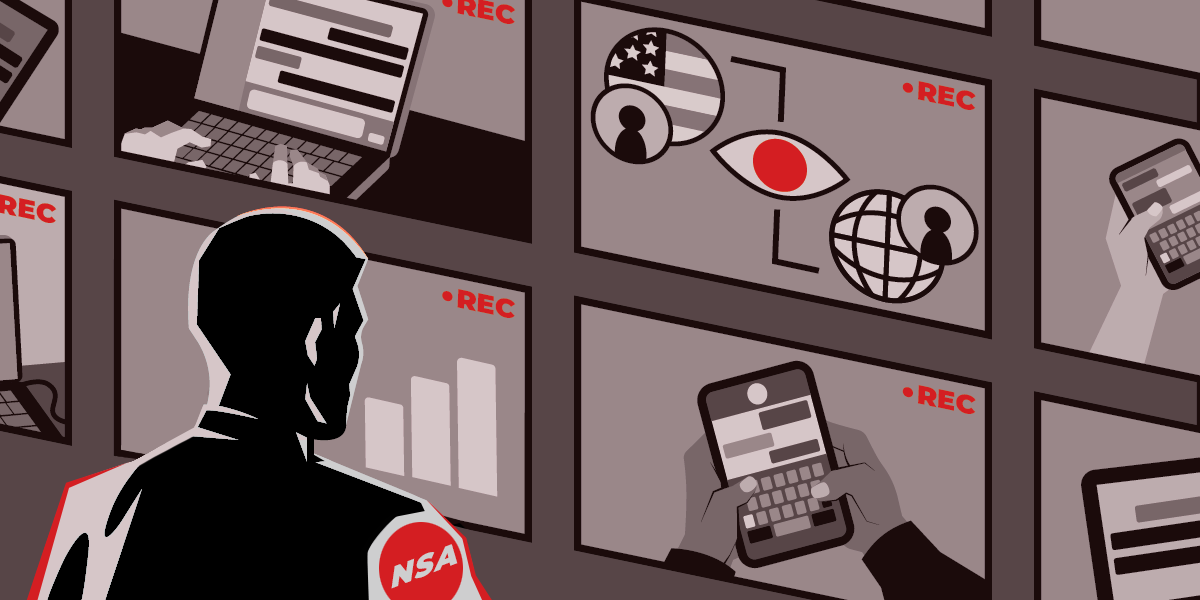
For months now, Congress has been kicking the ball down the road—temporarily postponing the expiration of the mass surveillance authority Section 702 of FISA in hopes that some consensus could be reached. Now, with the deadline looming, the stakes have never been higher. Nearly every time the statute has come up for renewal, the people demanding privacy and civil liberties have had to compromise, but with current negotiations seemingly at  an impasse, it’s time for surveillance maximalist lawmakers to come to the table. 

We say to the Intelligence Community crowd: Section 702 should require a warrant before the Federal Bureau of Investigation can look at digital communications collected from Americans. If not, we should let the whole thing expire.

This is a serious proposition. The intelligence community can keep a useful national security surveillance tool if and only if they make FBI agents get a warrant signed by a judge before they sift through and read out private communications. A warrant requirement is not the only demand EFF has been making for changing Section 702, but it is the most important reform and it should happen before there is any more reauthorization of the policy. 

For too long, the FBI has been able to piggyback on a major national security tool as an unconstitutional backdoor way of reading Americans’ communications. 702 collects communications going to, from, or between people in other countries—including when they are contacted by people in the United States. Mass surveillance is just that—mass. It’s lacking any of the individualized suspicion that our legal system is based on. 

Take action

TELL congress: 702 Needs Reform

So, what’s been happening?

On one side are surveillance hawks and intelligence community-devotees who think the mass surveillance of Americans is an acceptable, even valuable, product of this authority. This bipartisan coalition of privacy deniers think that 702 should be extended without any change, and they seem to be willing to let the authority expire rather than compromise with the lawmakers and public that are demanding common-sense reforms. They’ve been given a number of chances to pass bills that would implement some key incremental reforms, but those opportunities have not moved the needle. 

On the other side of the debate is a bipartisan coalition of people who understand that this authority can no longer operate as is. Section 702 is rife with problems, loopholes, and compliance issues that need fixing. The National Security Agency collects full conversations being conducted by and with overseas targets—including conversations by and with Americans in the U.S.—and stores them in massive databases. The NSA then allows other agencies, specifically the FBI, to access untold amounts of that information. In turn, the FBI takes a “finders keepers” approach to this data: they reason that since it's already collected under one law, it’s OK for them to see it. If the FBI wanted to get that data on their own, it would require them to get a warrant signed by a judge certifying that there is probable cause. Instead, under current practice, the FBI can query and even read the U.S. side of that communication without a warrant. What’s more, victims of this surveillance won’t know and have very few ways of finding out that their communications have been surveilled.

Complicating this matter more is that the Trump administration has announced Bill Pulte as the new Director of National Intelligence, whose job it will be to oversee and direct U.S. intelligence agencies. This is particularly concerning because of Pulte’s history of using private information held by the government as a political weapon. In his FHFA role, he has accused several of the President’s political foes and targets—including New York State Attorney General Letitia James, U.S. Sen. Adam Schiff, D-Calif., and Federal Reserve governor Lisa Cook—of mortgage fraud based on private data held by his agency. Because of his looming appointment, many Democrats have vowed not to reauthorize Section 702 unless he is removed from the position. They shouldn’t stop there—they should use that leverage to demand a warrant requirement. The integrity of the people in charge of a program should not be the only thing that stands between Americans and violations of their civil liberties. 

What happens if 702 expires? 

As the New York Times reports, “The law, however, has a built-in safety net for a temporary lapse that allows the surveillance program to endure until annual certifications issued by the nation’s intelligence court expire, though such a scenario could invite legal challenges. The court recertified the program in March, meaning the N.S.A. could continue to operate the program through March 2027 even if the statute were to expire.” 

If Section 702 does stay expired past March 2027, the United States government will likely revert to using other programs and authorities to justify the surveillance of overseas national security targets, namely 12333, a shadowy executive order from the 1980s that gives the U.S. government nearly unlimited power to spy on people overseas.  Even if this does come to pass, standing our ground on warrant requirements and allowing Section 702 to expire  is important for several reasons. First, just because the government continues surveillance under a different authority does not mean it is legally justified in doing so—this was the lesson of the post 9/11 Presidential Surveillance Program, which was only retroactively immunized by Congress. Second, seeing how the government responds to the end of Section 702 might give us opportunities to push for transparency in other parts of information collection and better understand how the inner workings of the intelligence apparatus pivot and adapt as new legal authorities take precedence. 

Where do we go from here? 

Every few years, for almost two decades now, we’ve been fighting to reform Section 702 so that it will no longer enable the warrantless mass surveillance of Americans. A bipartisan coalition in Congress supports this goal, but the White House and Congressional leadership won’t listen. It’s past time we make at least one serious reform to a mass surveillance law that has been abused for decades. Tell your elected official: Put a warrant requirement in Section 702 or let it expire.

Take action

TELL congress: 702 Needs Reform

Congress Must Reject New Insufficient 702 Reauthorization Bill

27 April 2026 at 23:55

Speaker Johnson has introduced a new fig leaf over the American surveillance state, the Foreign Intelligence Accountability Act. Introduced with only days to go before Section 702 of the Foreign Intelligence Surveillance Act (FISA) expires and the U.S. government loses one of its most invasive surveillance programs, the bill does nothing to make any of the substantial changes privacy advocates have been asking for --- most notably, it fails to give us a real warrant requirement for the FBI to snoop through the private conversations of people on U.S. soil.  

Section 702 needs to be reauthorized by Congress every few years. These reauthorizations give us a chance to tinker with the language of the law and introduce some much-needed reforms. This attempt at reauthorization has been particularly fraught, but there is still time for Congress to include real protection for Americans’ civil liberties and rights. We need to make sure that when an FBI agent wants to look through Americans’ conversations scooped up as part of a national security intelligence program, they need a warrant signed by a judge just as if they were trying to search your email account or your house. 

This new bill mandates that a civil liberties protection officer at the Director of National Intelligence review all queries of U.S. persons made by the FBI under this program to make sure no laws have been broken. It’s bad enough to let the intelligence community police itself, and what’s more, the assessment for illegality would be made after a U.S. person has already been spied on. This is hardly the reform we need and will likely just lead to continued abuse with no real accountability or consequences.  

The bill “prohibits targeting United States persons,” but so does current law. This “change” does absolutely nothing to address what’s really happening—which is that surveillance of people in the United States is usually justified as “incidental” because Americans aren’t the “target” of the surveillance. The bill does not create a warrant requirement, it does not create any new transparency requirements, and it does not protect Americans’ privacy.  

We urge Congress, and we urge you to write to your Congresspeople, to tell them this: Reject the surveillance state’s latest smokescreen known as the Foreign Intelligence Accountability Act and keep pushing for real reforms.  

Keep Pushing: We Get 10 More Days to Reform Section 702

17 April 2026 at 21:26

In a dramatic middle-of-the-night stand off, a bipartisan set of lawmakers pushing for true reform and privacy protections for Americans bought us some more time to fight! They are holding out for, at a minimum, the requirement of an actual probable cause warrant for FBI access to information collected under the mass spying program known as 702.


A reauthorization with virtually no changes was defeated because a core group of lawmakers held strong; they know that people are hungry for real reform that protects the privacy of our communications. We now have a 10-day extension to continue to push Congress to pass a real reform bill. 


The Lawmakers rallied late Thursday night to reject a proposed amendment that made gestures at privacy protections, but it would not have improved on the status quo and would have reauthorized Section 702 for five more years to boot. 

Take action

TELL congress: 702 Needs Reform

Section 702 is rife with problems, loopholes, and compliance issues that need fixing. The National Security Agency collects full conversations being conducted by and with targets overseas – including by and with Americans in the U.S. –  and stores them in massive databases. The NSA then allows other agencies, including the Federal Bureau of Investigation, to access untold amounts of that information. In turn, the FBI takes a “finders keepers” approach to this data: they reason that since it's already collected under one law, it’s OK for them to see it. 

Under current practice, the FBI can query and even read the U.S. side of that communication without a warrant. What’s more, victims of this surveillance  won’t even know and have very few ways of finding out that their communications have been surveilled. EFF and other civil liberties advocates have been trying for years to know when data collected through Section 702 is used as evidence against them.  

Reforming Section 702 is even more urgent because of revelations hinted at by Senator Ron Wyden’s public statements concerning a “secret interpretation” of the law that enables surveillance of Americans, and a public  “Dear Colleague” letter he sent to fellow Senators about FBI abuse of Section 702. 

That’s right—the way the government conducts mass surveillance is so secret and unaccountable even the way they interpret the law is classified. 

 “In many cases these will be law-abiding Americans having perfectly legitimate, often sensitive, conversations,” Wyden wrote. “These Americans could include journalists, foreign aid workers, people with family members overseas - even women trying to get abortion medication from an overseas provider. Congress has an obligation to protect our country from foreign threats and protect the rights of these and other Americans.” 

We have 10 days to make it clear to Congress: 702 needs real reforms. Not a blanket  reauthorization. Not lip service to change. Real reform.

Take action

TELL congress: 702 Needs Reform

We Need You: Our Privacy Cannot Afford a Clean Extension of Section 702

10 April 2026 at 15:50

We go through this every couple of years: Section 702 of the Foreign Intelligence Surveillance Act (FISA), which of Americans’ communications with foreign persons overseas is up for renewal. As always, Congress can reauthorize it with or without changes, or just let it expire. We know, we know, it’s a pain to have to do this every few years–but it gives us a chance to lift the hood of this behemoth tool of government surveillance and tinker with how it works. That’s why it’s so important right now to urge your Member of Congress not to pass any bill that reauthorizes Section 702 without substantial reforms.   

Take action

TELL congress: 702 Needs Reform

Section 702 is rife with problems, loopholes, and compliance issues that need fixing. The National Security Agency (NSA) collects full conversations being conducted by surveillance targets overseas and stores them, allowing the Federal Bureau of Investigation (FBI) to operate in a “finders keepers” mode of surveillance—they reason that it's already collected, so why can’t they look at those conversations? There, the FBI can query and even read the U.S. side of that communication without a warrant. The problem is, people who have been spied on by this program won’t even know and have very few ways of finding out. EFF and other civil liberties advocates have been trying for years to know when data collected through Section 702 is used as evidence against them.  

There’s simply no excuse for any Member of Congress to support a "clean" reauthorization of Section 702. Anyone who votes to do so does not take your privacy seriously. Full stop.  

The intelligence community and its defenders in Congress, as always, seem more interested in defending their rights to read your private communications than in protecting your right to privacy. It’s not really a compromise between safety and privacy if it's always your privacy that gets sacrificed. Now, we’re drawing a line in the sand: Congress cannot pass a clean extension.  

Use this EFF tool to write to your Member of Congress and tell them not to pass a clean reauthorization of Section 702.  

Take action

TELL congress: 702 Needs Reform

Traffic Violation! License Plate Reader Mission Creep Is Already Here

26 March 2026 at 21:19

A new report from 404 Media sheds light on how automated license plate readers (ALPRs) could be used beyond the press releases and glossy marketing materials put out by law enforcement agencies and ALPR vendors. In December 2025, Georgia State Patrol ticketed a motorcyclist for holding a cell phone in his hand. According to the report, the ticket read, “CAPTURED ON FLOCK CAMERA 31 MM 1 HOLDING PHONE IN LEFT HAND.” 

If you’re thinking that this sounds outside of the scope of what ALPRs are supposed to do, you’re right. In November 2025, Flock Safety, the maker of the ALPR in question, wrote a post about how they definitely are in compliance with the Fourth Amendment to the U.S. Constitution. In this post, which highlighted what ALPRs are and what they are not, the company writes: “What it is not: Flock ALPR does not perform facial recognition, does not store biometrics, cannot be queried to find people, and is not used to enforce traffic violations.” (emphasis added)

Well, apparently their customers never got the memo and apparently the technology’s design does not explicitly prevent behavior the company officially and publicly disavows. 

Or at least this used to be the case: Flock now lists six different companies providing traffic enforcement technology on its “Partner program”  site. Public records also show that speed enforcement cameras have been connected to Flock's ALPR network. 

EFF and other privacy advocates have long warned about mission creep when it comes to surveillance infrastructure. Police often swear that a piece of technology will only be used in a particular set of circumstances or to fight only the most serious crimes only to utilize it to fight petty crimes or watch protests.  

We continue to urge cities, states, and even companies to end their relationship with Flock Safety because of the incompatibility between the mass surveillance it enables and its inability to protect civil liberties—including preventing mission creep.

The SAFE Act is an Imperfect Vehicle for Real Section 702 Reform

9 March 2026 at 21:27

The SAFE act, introduced by Senators Mike Lee (R-UT) and Dick Durbin (D-IL), is the first of many likely proposals we will see to reauthorize Section 702 of the Foreign Intelligence Surveillance Act (FISA) Amendments Act of 2008and while imperfect, it does propose a litany of real and much-needed reforms of Big Brother’s favorite surveillance authority. 

The irresponsible 2024 reauthorization of the secretive mass surveillance authority Section 702 not only gave the government two more years of unconstitutional surveillance powers, it also made the policy much worse. But, now people who value privacy and the rule of law get another bite at the apple. With expiration for Section 702 looming in April 2026, we are starting to see the emergence of proposals for how to reauthorize the surveillance authorityincluding calls from inside the White House for a clean reauthorization that would keep the policy unchanged. EFF has always had a consistent policy: Section 702 should not be reauthorized absent major reforms that will keep this tactic of foreign surveillance from being used as a tool of mass domestic espionage. 

What is Section 702?

Section 702 was intended to modernize foreign surveillance of the internet for national security purposes. It allows collection of foreign intelligence from non-Americans located outside the United States by requiring U.S.-based companies that handle online communications to hand over data to the government. As the law is written, the intelligence community (IC) cannot use Section 702 programs to target Americans, who are protected by the Fourth Amendment’s prohibition on unreasonable searches and seizures. But the law gives the intelligence community space to target foreign intelligence in ways that inherently and intentionally sweep in Americans’ communications.

We live in an increasingly globalized world where people are constantly in communication with people overseas. That means, while targeting foreigners outside the U.S. for “foreign intelligence Information” the IC routinely acquires the American side of those communications without a probable cause warrant. The collection of all that data from U.S telecommunications and internet providers results in the “incidental” capture of conversations involving a huge number of people in the United States.

But, this backdoor access to U.S. persons’ data isn’t “incidental.” Section 702 has become a routine part of the FBI’s law enforcement mission. In fact, the IC’s latest Annual Statistical Transparency Report documents the many ways the Federal Bureau of Investigation (FBI) uses Section 702 to spy on Americans without a warrant. The IC lobbied for Section 702 as a tool for national security outside the borders of the U.S., but it is apparent that the FBI uses it to conduct domestic, warrantless surveillance on Americans. In 2021 alone, the FBI conducted 3.4 million warrantless searches of US person’s 702 data.

The Good

Let’s start with the good things that this bill does. These are reforms EFF has been seeking for a long time and their implementation would mean a big improvement in the status quo of national security law.

First, the bill would partially close the loophole that allows the FBI and domestic law enforcement to dig through 702-collected data’s “incidental” collection of the U.S. side of communications. The FBI currently operates with a “finders keeper” mentality, meaning that because the data is pre-collected by another agency, the FBI believes it can operate with almost no constraints on using it for other purposes. The SAFE act would require a warrant before the FBI looked at the content of these collected communications. As we will get to later, this reform does not go nearly far enough because they can query to see what data on a person exists before getting a warrant, but it is certainly an improvement on the current system. 

Second, the bill addresses the age-old problem of parallel construction. If you’re unfamiliar with this term, parallel construction is a method by which intelligence agencies or domestic law enforcement find out a piece of information about a subject through secret, even illegal or unconstitutional methods. Uninterested in revealing these methods, officers hide what actually happened by publicly offering an alternative route they could have used to find that information. So, for instance, if police want to hide the fact that they knew about a specific email because it was intercepted under the authority of Section 702, they might use another method, like a warranted request to a service provider, to create a more publicly-acceptable path to that information. To deal with this problem, the SAFE Act mandates that when the government seeks to use Section 702 evidence in court, it must disclosure the source of this evidence “without regard to any claim that the information or evidence…would inevitably have been discovered, or was subsequently reobtained through other means.” 

Next, the bill proposes a policy that EFF and other groups have nonetheless been trying to get through Congress for over five years: ending the data broker loophole. As the system currently stands, data brokers who buy and sell your personal data collected from smartphone applications, among other sources, are able to sell that sensitive information, including a phone’s geolocation, to the law enforcement and intelligence agencies. That means that with a bit of money, police can buy the data (or buy access to services that purchase and map the data) that they would otherwise need a warrant to get. A bill that would close this loophole, the Fourth Amendment is Not For Sale Act passed through the House in 2024 but has yet to be voted on by the Senate. In the meantime, states have taken it upon themselves to close this loophole with Montana being the first state to pass similar legislation in May 2025. The SAFE Act proposes to partially fix the loophole at least as far as intelligence agencies are concerned. This fix could not come soon enoughespecially since the Office of the Director of National Intelligence has signaled their willingness to create one big, streamlined, digital marketplace where the government can buy data from data brokers. 

Another positive thing about the SAFE Act is that it creates an official statutory end to surveillance power that the government allowed to expire in 2020. In its heyday, the intelligence community used Section 215 of the Patriot Act to justify the mass collection of communication records like metadata from phone calls. Although this legal authority has lapsed, it has always been our fear that it will not sit dormant forever and could be reauthorized at any time. This new bill says that its dormant powers shall “cease to be in effect” within 180 of the SAFE Act being enacted. 

What Needs to Change 

The SAFE Act also attempts to clarify very important language that gauges the scope of the surveillance authority: who is obligated to turn over digital information to the U.S. government. Under Section 702, “electronic communication service providers” (ECSP) are on the hook for providing information, but the definition of that term has been in dispute and has changed over timemost recently when a FISA court opinion expanded the definition to include a category of “secret” ECSPs that have not been publicly disclosed.  Unfortunately, this bill still leaves ambiguity in interpretation and an audit system without a clear directive for enforcing limitations on who is an ECSP or guaranteeing transparency. 

As mentioned earlier, the SAFE Act introduces a warrant requirement for the FBI to read the contents of Americans’ communications that have been warrantlessly collected under Section 702. However, the law does not in its current form require the FBI to get a warrant before running searches identifying whether Americans have communications present in the database in the first place. Knowing this information is itself very revealing and the government should not be able to profit from circumventing the Fourth Amendment. 

When Congress reauthorized Section 702 in 2014, they did so through a piece of policy called the Reforming Intelligence and Securing America Act (RISAA). This bill made 702 worse in several ways, one of the most severe being that it expanded the legal uses for the surveillance authority to include vetting immigrants. In an era when the United States government is rounding up immigrants, including people awaiting asylum hearings, and which U.S officials are continuously threatening to withhold admission to the United States from people whose politics does not align with the current administration, RISAA sets a dangerous precedent. Although RISAA is officially expiring in April, it would be helpful for any Section 702 reauthorization bill to explicitly prohibit the use of this authority for that reason. 

Finally, in the same way that the SAFE Act statutorily ends the expired Section 215 of the Patriot Act, it should also impose an explicit end to “Abouts collection” a practice of collecting digital communications, not if their from suspected people, but if their are “about” specific topics. This practice has been discontinued, but still sits on the books, just waiting to be revamped. 

Weasel Words: OpenAI’s Pentagon Deal Won’t Stop AI‑Powered Surveillance

6 March 2026 at 17:03

OpenAI, the maker of ChaptGPT, is rightfully facing widespread criticism for its decisions to fill the gap the U.S. Department of Defense (DoD) created when rival Anthropic refused to drop its restrictions against using its AI for surveillance and autonomous weapons systems. After protests from both users and employees who did not sign up to support government mass surveillanceearly reports show that ChaptGPT uninstalls rose nearly 300% after the company announced the dealSam Altman, CEO of OpenAI, conceded that the initial agreement was “opportunistic and sloppy.” He then re-published an internal memo on social media stating that additions to the agreement made clear that “Consistent with applicable laws, including the Fourth Amendment to the United States Constitution, National Security Act of 1947, [and] FISA Act of 1978, the AI system shall not be intentionally used for domestic surveillance of U.S. persons and nationals.”

Trouble is, the U.S. government doesn’t believe “consistent with applicable laws” means “no domestic surveillance.” Instead, for the most part, the government has embraced a lax interpretation of “applicable law” that has blessed mass surveillance and large-scale violations of our civil liberties, and then fought tooth and nail to prevent courts from weighing in. 

"After all, many of the world’s most notorious human rights atrocities have historically been “legal” under existing laws at the time."

“Intentionally” is also doing an awful lot of work in that sentence. For years the government has insisted that the mass surveillance of U.S. persons only happens incidentally (read: not intentionally) because their communications with people both inside the United States and overseas are swept up in surveillance programs supposedly designed to only collect communications outside the United States. 

The company’s amendment to the contract continues in a similar vein, “For the avoidance of doubt, the Department understands this limitation to prohibit deliberate tracking, surveillance, or monitoring of U.S. persons or nationals, including through the procurement or use of commercially acquired personal or identifiable information.” Here, “deliberate” is the red flag given how often intelligence and law enforcement agencies rely on incidental or commercially purchased data to sidestep stronger privacy protections.

Here’s another one: “The AI System shall not be used for unconstrained monitoring of U.S. persons’ private information as consistent with these authorities. The system shall also not be used for domestic law-enforcement activities except as permitted by the Posse Comitatus Act and other applicable law.” What, one wonders, does “unconstrained” mean, precisely—and according to whom? 

Lawyers sometimes call these “weasel words” because they create ambiguity that protects one side or another from real accountability for contract violations. As with the Anthropic negotiations, where the Pentagon reportedly agreed to adhere to Anthropic’s red lines only “as appropriate,” the government is likely attempting to publicly commit to limits in principle, but retain broad flexibility in practice.

OpenAI also notes that the Pentagon promised the NSA would not be allowed to use OpenAI’s tools absent a new agreement, and that its deployment architecture will help it verify that no red lines are crossed. But secret agreements and technical assurances have never been enough to rein in surveillance agencies, and they are no substitute for strong, enforceable legal limits and transparency.

OpenAI executives may indeed be trying, as claimed, to use the company’s contractual relationship with the Pentagon to help ensure that the government should use AI tools only in a way consistent with democratic processes. But based on what we know so far, that hope seems very naïve.

Moreover, that naïvete is dangerous. In a time when governments are willing to embrace extreme and unfounded interpretations of “applicable laws,” companies need to put some actual muscle behind standing by their commitments. After all, many of the world’s most notorious human rights atrocities have historically been “legal” under existing laws at the time. OpenAI promises the public that it will  “avoid enabling uses of AI or AGI that harm humanity or unduly concentrate power,” but we know that enabling mass surveillance does both.     

OpenAI isn’t the only consumer-facing company that is, on the one hand, seeking to reassure the public that they aren’t participating in actions that violate human rights while, on the other, seeking to cash in on government mass surveillance efforts.  Despite this marketing double-speak, it is very clear that companies just cannot do both. It’s also clear that companies shouldn’t be given that much power over the limits of our privacy to begin with. The public should not have to rely on a small group of people—whether CEOs or Pentagon officials—to protect our civil liberties.

The Anthropic-DOD Conflict: Privacy Protections Shouldn’t Depend On the Decisions of a Few Powerful People

3 March 2026 at 22:35

The U.S. military has officially ended its $200 million contract with AI company Anthropic and has ordered all other military contractors to cease use of their products. Why? Because of a dispute over what the government could and could not use Anthropic’s technology to do. Anthropic had made it clear since it first signed the contract with the Pentagon in 2025 that it did not want its technology to be used for mass surveillance of people in the United States or for fully autonomous weapons systems. Starting in January, that became a problem for the Department of Defense, which ordered Anthropic to give them unrestricted use of the technology. Anthropic refused, and the DoD retaliated.

There is a lot we could learn from this conflict, but the biggest take away is this: the state of your privacy is being decided by contract negotiations between giant tech companies and the U.S. government—two entities with spotty track records for caring about your civil liberties. It’s good when CEOs step up and do the right thing—but it's not a sustainable or reliable solution to build our rights on. Given the government’s loose interpretations of the law, ability to find loopholes to surveil you, and willingness to do illegal spying, we needs serious and proactive legal restrictions to prevent it from gobbling up all the personally data it can acquire and using even routine bureaucratic data for punitive ends.

Imposing and enforcing such those restrictions is properly a role for Congress and the courts, not the private sector. 

The companies know this. When speaking about the specific risk that AI poses to privacy, the CEO of Anthropic Dario Amodei said in an interview, “I actually do believe it is Congress’s job. If, for example, there are possibilities with domestic mass surveillance—the government buying of bulk data has been produced on Americans, locations, personal information, political affiliations, to build profiles, and it’s not possible to analyze all of that with AI—the fact that that is legal—that seems like the judicial interpretation of the Fourth Amendment has not caught up or the laws passed by Congress have not caught up.” 

The example he cites here is a scarily realistic one—because it’s already happening. Customs and Border Protection has tapped into the online advertising world to buy data on Americans for surveillance purposes. Immigration and Customs Enforcement has been using a tool that maps millions of peoples’ devices based on purchased cell phone data. The Office of the Director of National Intelligence has proposed a centralized data broker marketplace to make it easier for intelligence agencies to buy commercially available data. Considering the government’s massive contracts with a bunch of companies that could do analysis, including Palantir, a company which does AI-enabled analysis of huge amounts of data, then the concerns are incredibly well founded. 

But Congress is sadly neglecting its duties. For example, a bill that would close the loophole of the government buying personal information passed the House of Representatives in 2024, but the Senate stopped it.  And because Congress did not act, Americans must rely on a tech company CEO has to try to protect our privacy—or at least refuse to help the government violate it.

Privacy in the digital age should be an easy bipartisan issue. Given that it’s wildly popular (71% of American adults are concerned about the government's use of their data and among adults that have heard of AI 70% have little to no trust in how companies use those products) you would think politicians would be leaping over each other to create the best legislation and companies would be promising us the most high-end privacy protecting features. Instead, for the time being, we are largely left adrift in a sea of constant surveillance, having to paddle our own life rafts.

EFF has, and always will, fight for real and sustainable protections for our civil liberties including  a world where our privacy does not rest upon the whims of CEOs and back room deals with the surveillance state. 

Tech Companies Shouldn’t Be Bullied Into Doing Surveillance

25 February 2026 at 00:42

The Secretary of Defense has given an ultimatum to the artificial intelligence company Anthropic in an attempt to bully them into making their technology available to the U.S. military without any restrictions for their use. Anthropic should stick by their principles and refuse to allow their technology to be used in the two ways they have publicly stated they would not support: autonomous weapons systems and surveillance. The Department of Defense has reportedly threatened to label Anthropic a “supply chain risk,” in retribution for not lifting restrictions on how their technology is used. According to WIRED, that label would be, “a scarlet letter usually reserved for companies that do business with countries scrutinized by federal agencies, like China, which means the Pentagon would not do business with firms using Anthropic’s AI in their defense work.”

Anthropic should stick by their principles and refuse to allow their technology to be used in the two ways they have publicly stated they would not support: autonomous weapons systems and surveillance.

In 2025, reportedly Anthropic became the first AI company cleared for use in relation to classified operations and to handle classified information. This current controversy, however, began in January 2026 when, through a partnership with defense contractor Palantir, Anthropic came to suspect their AI had been used during the January 3 attack on Venezuela. In January 2026, Anthropic CEO Dario Amodei wrote to reiterate that surveillance against US persons and autonomous weapons systems were two “bright red lines” not to be crossed, or at least topics that needed to be handled with “extreme care and scrutiny combined with guardrails to prevent abuses.” You can also read Anthropic’s self-proclaimed core views on AI safety here, as well as their LLM, Claude’s, constitution here

Now, the U.S. government is threatening to terminate the government’s contract with the company if it doesn’t switch gears and voluntarily jump right across those lines.  

Companies, especially technology companies, often fail to live up to their public statements and internal policies related to human rights and civil liberties for all sorts of reasons, including profit. Government pressure shouldn’t be one of those reasons. 

Whatever the U.S. government does to threaten Anthropic, the AI company should know that their corporate customers, the public, and the engineers who make their products are expecting them not to cave. They, and all other technology companies, would do best to refuse to become yet another tool of surveillance.

AI Police Reports: Year In Review

23 December 2025 at 18:00

In 2024, EFF wrote our initial blog about what could go wrong when police let AI write police reports. Since then, the technology has proliferated at a disturbing rate. Why? The most popular generative AI tool for writing police reports is Axon’s Draft One, and Axon also happens to be the largest provider of body-worn cameras to police departments in the United States. As we’ve written, companies are increasingly bundling their products to make it easier for police to buy more technology than they may need or that the public feels comfortable with. 

We have good news and bad news. 

Here’s the bad news: AI written police reports are still unproven, untransparent, and downright irresponsible–especially when the criminal justice system, informed by police reports, is deciding people’s freedom. The King County prosecuting attorney’s office in Washington state barred police from using AI to write police reports. As their memo read, “We do not fear advances in technology – but we do have legitimate concerns about some of the products on the market now... AI continues to develop and we are hopeful that we will reach a point in the near future where these reports can be relied on. For now, our office has made the decision not to accept any police narratives that were produced with the assistance of AI.” 

In July of this year, EFF published a two-part report on how Axon designed Draft One to defy transparency. Police upload their body-worn camera’s audio into the system, the system generates a report that the officer is expected to edit, and then the officer exports the report. But when they do that, Draft One erases the initial draft, and with it any evidence of what portions of the report were written by AI and what portions were written by an officer. That means that if an officer is caught lying on the stand – as shown by a contradiction between their courtroom testimony and their earlier police report – they could point to the contradictory parts of their report and say, “the AI wrote that.” Draft One is designed to make it hard to disprove that. 

In this video of a roundtable discussion about Draft One, Axon’s senior principal product manager for generative AI is asked (at the 49:47 mark) whether or not it’s possible to see after-the-fact which parts of the report were suggested by the AI and which were edited by the officer. His response (bold and definition of RMS added): 

So we don’t store the original draft and that’s by design and that’s really because the last thing we want to do is create more disclosure headaches for our customers and our attorney’s offices—so basically the officer generates that draft, they make their edits, if they submit it into our Axon records system then that’s the only place we store it, if they copy and paste it into their third-party RMS [records management system] system as soon as they’re done with that and close their browser tab, it’s gone. It’s actually never stored in the cloud at all so you don’t have to worry about extra copies floating around.”

Yikes! 

All of this obfuscation also makes it incredibly hard for people outside police departments to figure out if their city’s officers are using AI to write reports–and even harder to use public records requests to audit just those reports. That’s why this year EFF also put out a comprehensive guide to help the public make their records requests as tailored as possible to learn about AI-generated reports. 

Ok, now here’s the good news: People who believe AI-written police reports are irresponsible and potentially harmful to the public are fighting back. 

This year, two states have passed bills that are an important first step in reigning in AI police reports. Utah’s SB 180 mandates that police reports created in whole or in part by generative AI have a disclaimer that the report contains content generated by AI. It also requires officers to certify that they checked the report for accuracy. California’s SB 524 went even further. It requires police to disclose, on the report, if it was used to fully or in part author a police report. Further, it bans vendors from selling or sharing the information a police agency provided to the AI. The bill also requires departments to retain the first draft of the report so that judges, defense attorneys, or auditors could readily see which portions of the final report were written by the officer and which portions were written by the computer.

In the coming year, anticipate many more states joining California and Utah in regulating, or perhaps even banning, police from using AI to write their reports. 

This article is part of our Year in Review series. Read other articles about the fight for digital rights in 2025.

❌