Normal view

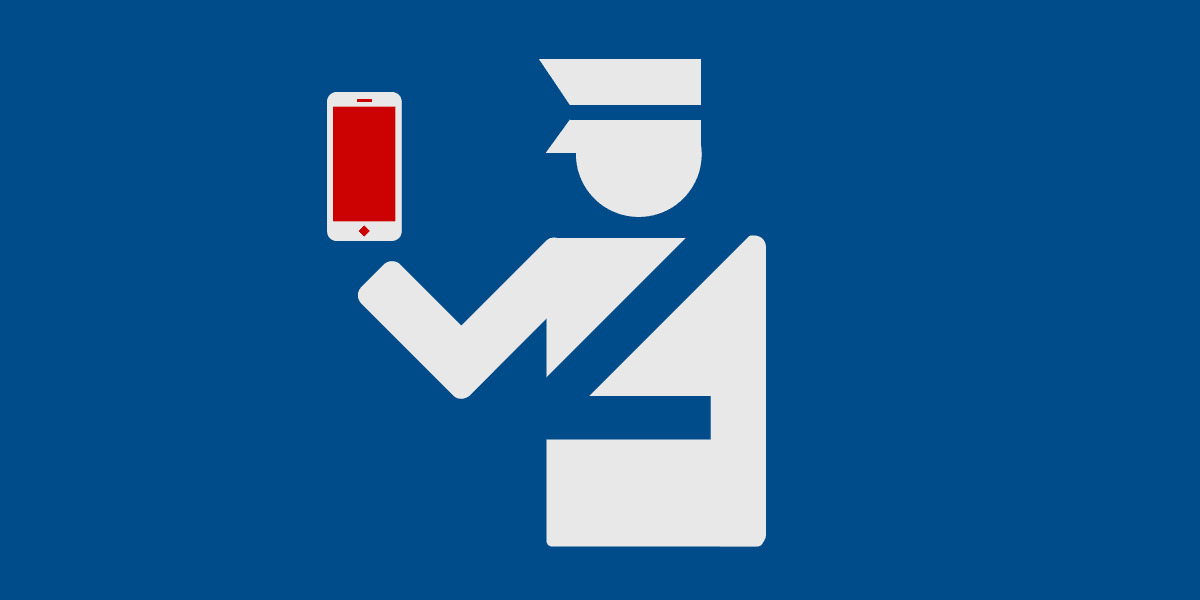
The Fourth Circuit Says Border Agents Can Search Your Phone By Hand, No Suspicion Required

23 July 2026 at 00:30

Legal intern Suzanne Castillo was the principal author of this post.

The Fourth Circuit issued a disappointing opinion in U.S. v. Belmonte Cardozo, a case in which EFF filed an amicus brief, alongside the national ACLU, its Maryland, North Carolina, South Carolina, and Virginia affiliates, and the National Association of Criminal Defense Lawyers (NACDL).

We argued that electronic device searches at the border should require a warrant based on probable cause, but at minimum, regardless of whether an officer searches by hand or with forensic software that plugs into a device and downloads its entire contents for search, the same Fourth Amendment standard should apply to all device searches at the border.

Unfortunately, the court rejected that argument and ruled that a lower standard applies to manual searches, allowing the government to conduct extraordinarily invasive electronic device searches without any suspicion of wrongdoing, simply because the border officer chooses to search by hand rather than with a forensic tool.

The Border Search Exception Meets Your Phone

The Fourth Amendment requires that government searches of persons or property be reasonable, which usually means obtaining a warrant based on probable cause from a judge.

But a warrantless search can still be reasonable if it falls within an exception to the warrant requirement, including the exception that allows officers to search your belongings at the border. The border search exception allows warrantless searches of persons or property crossing the U.S. border, including the functional equivalent of the border such as international airports, given the government’s interests in controlling who and what may enter the country.

Historically, courts have categorized border searches of luggage, vehicles, and personal effects as “routine” and thus reasonable even if conducted without any suspicion that the traveler has engaged in wrongdoing; courts have also held that more invasive “nonroutine” searches, such as certain body searches and searches that damage property, require reasonable suspicion.

But a person’s privacy interests in the personal data on a phone or laptop are extraordinarily different than their limited privacy interests in the contents of their suitcase.

The Supreme Court addressed cell phone privacy in Riley v. California (2014), holding that the search-incident-to-arrest exception to the warrant requirement did not apply to cell phones, thereby generally requiring a warrant for phone searches, at least at the interior of the country. The court recognized the unprecedented privacy interests people have in their cell phones and how even brief manual searches can reveal the “sum of an individual’s private life,” including our political affiliations, religious beliefs, sexuality, and more. Accordingly, the Supreme Court held that because electronic device searches bear “little resemblance” to searches of bags or physical containers, they should be evaluated differently.

Following Riley, the Fourth Circuit considered two border device search cases involving forensic searches, in which border officers used external software to extract and analyze a device’s data.

In U.S. v. Kolsuz (2018), the Fourth Circuit held that a forensic search of a cell phone at the border “must be considered a nonroutine border search, requiring some measure of individualized suspicion” of a transnational offense, but the court declined to decide whether the standard is only reasonable suspicion or instead a probable cause warrant.

Then in U.S. v. Aigbekaen (2019), the Fourth Circuit held that a forensic device search at the border in support of a purely domestic law enforcement investigation requires a warrant. The court also reiterated the general Kolsuz rule for a forensic border-related device search: the “Government must have individualized suspicion of an offense that bears some nexus to the border search exception's purposes of protecting national security, collecting duties, blocking the entry of unwanted persons, or disrupting efforts to export or import contraband.”

In Belmonte Cardozo, manual searches were finally before the court.

A Disappointing Decision

Jose Belmonte Cardozo was already on the U.S. government’s radar when he traveled from Bolivia to the U.S. and was met by a U.S. Customs and Border Protection (CBP) officer at Washington Dulles International Airport. The officer manually searched his cell phone and found child sexual abuse material (CSAM), considered “digital contraband,” leading to Belmonte Cardozo’s arrest and criminal prosecution.

At issue on appeal was what standard should apply to manual device searches at the border. The Fourth Circuit held that, unlike forensic searches, manual searches are “routine” and thus reasonable under the Fourth Amendment without a warrant or individualized suspicion.

The court’s holding hinged on four differences between manual and forensic searches: (1) in a manual search, a person does the searching, not a machine; (2) a manual search’s breadth depends on the officer’s time and energy, while forensic searches are comprehensive; (3) manual searches reveal only what a user can typically access, while forensic searches can uncover deleted files, cached fragments, metadata, and more; and (4) manual searches are subject to an officer’s fading memory or imperfect notes, while forensic searches create a permanent copy.

But in identifying these technical differences, the court never explains why they justify a lower standard for manual searches.

The Fourth Circuit’s holding is problematic because, as we argued in our amicus brief, manual searches reach the same categories of data as forensic searches—data that can reveal highly personal aspects of our identities and our lives. It does not matter if a search is conducted by an agent’s thumbs or by software: the end result is equally as invasive, therefore all device searches should fall under the warrant requirement, or at least the same Fourth Amendment standard.

The court repeatedly emphasized that the search here lasted only two minutes, suggesting that the time-limited search was not privacy-invasive. But an individual’s privacy interests in their personal data don’t change based on how their phone is searched or how long. Scrolling for two minutes through someone’s personal text messages or photos is an invasion of privacy that may reveal intimate details about the person even in that short period of time.

Moreover, as devices’ native search functions improve, manual searches can surface personal information in seconds through keyword searches, even for photos, where it might have taken an hour of scrolling to find the same information, further showing that a time-limited search is not necessarily less privacy-invasive. What matters is not the breadth of the search itself, but the unprecedented (and growing) breadth of data on our phones.

A Silver Lining

There’s one silver lining: by relying on the fact that the search lasted two minutes, the Fourth Circuit left open the possibility that lengthier manual searches could trigger heightened suspicion requirements. But until a clear line is drawn, border officers within the Fourth Circuit’s jurisdiction can use manual searches to sidestep heightened Fourth Amendment standards that would otherwise apply. In the meantime, EFF will keep fighting against extraordinarily invasive warrantless, suspicionless device searches at the border, and for robust privacy standards to protect our most personal data.


EFF and Allies: X’s FTC Petition to Waive Privacy Violation Order Should be Rejected

2 July 2026 at 17:04

X Corp. should not be able to escape privacy compliance because it changed its name. 

On May 15, X Corp. filed a petition before the Federal Trade Commission (FTC) to set aside or modify an order issued in 2022 requiring the company to report regularly to the FTC for its violations of user data. The order or “consent decree” is a result of misleading the platforms’ 140 million users by using private information given to secure accounts, like phone numbers and email addresses, for targeted advertising. It also fined the company $150 million for the infraction. As part of an open comments period, EFF and allies including Demand Progress Education Fund (DPEF), National Consumers League (NCL) and Electronic Privacy Information Center (EPIC) call on the FTC to reject this petition.

The 2022 order was a renewal of an order stemming from a previous violation. Back in 2011, Twitter (now X) reached a settlement with the FTC after the regulator found Twitter had failed to secure users’ personal information, resulting in exposure of that data to hackers. The settlement banned the company from misrepresenting its data protection measures, required it to set up safeguards on user data, and regularly report its security posture for twenty years. The renewal updated the expiration of X’s obligations to 2042, but if the FTC accepts X's petition, it would end much sooner.

In arguing to set aside the order, X remarks that since the order in 2011 it has “built an entirely new privacy and information security program staffed by new personnel operating under new leadership with a … philosophy grounded on the importance of privacy and information security.” 

These sweeping assurances that corporate restructuring led to a fundamental change in X’s policy and practices around user data should be met with a healthy dose of skepticism, given evidence to the contrary. For example, the company’s quiet rollout integrated its AI model Grok with the platform in 2024, trained (without meaningful consent) on X user data. The company was also subject to a massive data breach in 2025. Even if a rotation of leadership led to prioritizing privacy and information security, our letter highlights that this would not be sufficient grounds to remove the order, “because the FTC orders bind the corporate entity. Those obligations do not dissolve when the employees who negotiated or administered it depart.”

X argues that its entry into the AI space should be reason not to continue the oversight, claiming that “terminating the Order is critical to advancing American leadership in artificial intelligence.” Here again, broad-stroke claims that the guardrails in place “[diverts] engineering resources from innovation to compliance paperwork” ignores the dangers that AI introduces to user data. Far from being a reason to waive the order, clever attacks on models trained on user data has the ability to supercharge the types of secondary use violations that led to the 2022 order renewal. After all, an entire art has been developed around engineering LLM prompts to reveal the data a model was originally trained on.

Our response to X’s petition debunks many claims the company uses in its arguments. For example, there’s little evidence the order placed an undue financial burden on X. In our letter, we note that the compliance cost is merely “a rounding error against the $200 billion valuation of X Corp. following the xAI merger.”

Strong safeguards on our information require eagle-eyed oversight when that data is abused and misused for profiteering ventures. X’s actions not only showed us this in the past, but continue to do so in the present day. We and our civil society partners urge the FTC to take the clear, sensible path and reject X’s petition.

Move Fast, Surveil Things

4 June 2026 at 22:08

Update, June 8, 2026: Following widespread public scrutiny and WIRED’s critical reporting, Meta has stripped the unactivated facial recognition code from its latest Meta AI app update.

Meta has deployed facial recognition code to millions of their always-on surveillance glasses, according to new reporting by Wired. EFF’s Threat Lab was able to confirm that the facial recognition code is present through static analysis of the application. 

This dangerous new Meta functionality stores faceprints as a series of 2,048 numbers uniquely representing the positioning of a person’s facial features. When this feature is activated, it will convert every new face in the sightlines of the surveillance glasses into a series of numbers, and compare it to all the existing faceprints in the user’s database.

Wired and EFF confirmed that the code is present and active, though not yet exposed to consumers. Another researcher confirmed that when they manually added a face to the app database by connecting the phone to a computer in debug mode and issuing a few commands, the glasses would subsequently detect that face when it came into view. 

Meta has already paid $650 million to settle a BIPA lawsuit challenging mass facial recognition of every photo posted to its platform, a feature which it has since shut down

Despite the billions of reasons not to, Meta seems to have created the capacity to turn their customers into a distributed surveillance machine. This is just one more reason to think twice before buying or using Meta’s surveillance glasses. 

Considering that Meta previously wrote in an internal document that they want to launch facial recognition “during a dynamic political environment where many civil society groups that we would expect to attack us would have their resources focused on other concerns," this invasive new feature doesn't come as a surprise. But Meta's surveillance plans won't escape public scrutiny that easily, and we'll be watching if this feature is rolled out to the public. 

Getting Digital Fairness Right: EFF's Recommendations for the EU's Digital Fairness Act

4 May 2026 at 17:33

Digital Fairness in the EU

The next few years will be decisive for EU digital policymaking. With major laws like the Digital Services Act, the Digital Markets Act, and the AI Act now in place, the EU is entering an enforcement era that will show whether these rules are rights-respecting or drift toward overreach and corporate control. With the proposed EU’s Digital Fairness Act (DFA), the Commission is now turning to increasingly visible risks for users, such as dark patterns and exploitative personalization. Its “Digital Fairness Fitness Check” makes clear that existing consumer rules need updating to reflect how digital markets operate today.

But not all proposed solutions point in the right direction. Regulators are already flirting with measures that rely on expanded surveillance, such as age verification mandates—surface-level fixes that risk undermining fundamental rights while offering little more than a false sense of protection.

For EFF, digital fairness means addressing the root causes of harm, not requiring platforms to exert more control over their users. It means safeguarding privacy, freedom of expression, and the rights of users and developers.

If the DFA is to make a real difference, it must tackle structural imbalances. Lawmakers should focus on two interlocking principles. First, prioritize privacy. Reforms should address harms driven by surveillance-based business models, alongside deceptive design practices that impair informed choices. Second, strengthen user sovereignty, which is also a necessary precondition for European digital sovereignty more broadly. Strengthening user sovereignty means taking measures that address user lock-in, coercive contract terms, and manipulative defaults that limit users’ ability to freely choose how they use digital products and services.

Together, these principles would support the EU’s objectives of consistent consumer protection, fair markets, and a more coherent legal framework. If implemented properly, the EU could address power imbalances and build trust in Europe’s digital economy.

Ban Dark Patterns

Dark patterns are practices that impair users’ ability to make informed and autonomous decisions. Many companies deploy these tactics through interface design to steer choices and influence behavior. Their impact goes beyond poor consumer decisions. Dark patterns push users to share personal data they would not otherwise disclose and undermine autonomy by making alternatives harder to access.

The DFA should address this by clearly prohibiting misleading interfaces that distort user choice in commercial contexts. While the Digital Services Act introduced a definition, it only partially bans such practices and leaves gaps across existing consumer law rules. The DFA should close these gaps by, at the very least, introducing explicit prohibitions and clearer enforcement rules, without resorting to design mandates.

Tackle Commercial Surveillance

At the core of digital unfairness lies the pervasive collection and use of personal data. Surveillance and profiling drive many of the harms regulators are trying to address, from dark patterns to exploitative personalization. The DFA should tackle these incentives directly by reducing reliance on surveillance-based business models. These practices are fundamentally incompatible with privacy and fairness, and they distort digital markets by rewarding data exploitation rather than quality of service. At a minimum, the DFA should address unfair profiling and surveillance advertising by strengthening privacy rights and banning pay-for-privacy schemes. Users should not have to trade their data or pay extra to avoid being tracked. Accordingly, the DFA should support the recognition of automated privacy signals by web browsers and mobile operating systems, which give users a better way to reject tracking and exercise their rights. Practices that override such signals through banners or interface design should be considered unfair.

Addressing surveillance and profiling also protects children, since many online harms are tied to the collection and exploitation of their data. Systems that serve ads or curate content often rely on intrusive profiling practices, raising concerns about privacy and fairness, particularly when applied to minors. Rather than turning to invasive age verification, the focus should be on limiting data use by default.

Strengthen User Sovereignty

There is a major gap in how EU law addresses user autonomy in digital markets: many digital products and services still restrict what people can do with what they pay for through opaque or one-sided licensing terms, technical protection measures, and remote controls. These mechanisms increasingly limit lawful use, modification, or access after purchase, allowing providers to revoke access, disable functionalities, or degrade performance over time. In practice, this turns ownership into a conditional rental.

Consumers must be able to use and resell digital goods without hidden limitations and with clear licensing terms. Too often, technical and contractual lock-ins, including remote lockouts and unilateral restrictions on functionality, erode that control. Recent legal reforms show that progress is possible. Rules such as those under the Digital Markets Act have begun to curb technical and contractual barriers and promote user choice. However, many restrictions persist.

The DFA must address these practices by targeting unfair post-sale restrictions and strengthening users’ ability to control and switch services. This means setting clear limits on unfair terms and misleading practices, alongside robust transparency on how digital services function over time. It should also strengthen interoperability and support user control, allowing people to access third-party applications and to let trusted applications act on their behalf, reducing lock-in and expanding meaningful choice in how users interact with digital services.

EFF to 9th Circuit (Again): App Stores Shouldn’t Be Liable for Processing Payments for User Content

24 April 2026 at 00:05

EFF filed an amicus brief for the second time in the U.S. Court of Appeals for the Ninth Circuit, arguing that allowing cases against the Apple, Google, and Facebook app stores to proceed could lead to greater censorship of users’ online speech.

Our brief argues that the app stores should not lose Section 230 immunity for hosting “social casino” apps just because they process payments for virtual chips within those apps. Otherwise, all platforms that facilitate financial transactions for online content—beyond app stores and the apps and games they distribute—would be forced to censor user content to mitigate their legal exposure.

Social casino apps are online games where users can buy virtual chips with real money but can’t ever cash out their winnings. The three cases against Apple, Google, and Facebook were brought by plaintiffs who spent large sums of money on virtual chips and even became addicted to these games. The plaintiffs argue that social casino apps violate various state gambling laws.

At issue on appeal is the part of Section 230 that provides immunity to online platforms when they are sued for harmful content created by others—in this case, the social casino apps that plaintiffs downloaded from the various app stores and the virtual chips they bought within the apps.

Section 230 is the foundational law that has, since 1996, created legal breathing room for internet intermediaries (and their users) to publish third-party content. Online speech is largely mediated by these private companies, allowing all of us to speak, access information, and engage in commerce online, without requiring that we have loads of money or technical skills.

The lower court hearing the case ruled that the companies do not have Section 230 immunity because they allow the social casino apps to use the platforms’ payment processing services for the in-app purchasing of virtual chips.

However, in our brief we urged the Ninth Circuit to reverse the district court and hold that Section 230 does apply to the app stores, even when they process payments for virtual chips within the social casino apps. The app stores would undeniably have Section 230 immunity if sued for simply hosting the allegedly illegal social casino apps in their respective stores. Congress made no distinction—and the court shouldn’t recognize one—between hosting third-party content and processing payments for the same third-party content. Both are editorial choices of the platforms that are protected by Section 230.

We also argued that a rule that exposes internet intermediaries to potential liability for facilitating a financial transaction related to unlawful user content would have huge implications beyond the app stores. All platforms that facilitate financial transactions for third-party content would be forced to censor any user speech that may in any way risk legal exposure for the platform. This would harm the open internet—the unique ability of anyone with an internet connection to communicate with others around the world cheaply, easily, and quickly.

The plaintiffs argue that the app stores could preserve their Section 230 immunity by simply refusing to process in-app purchases of virtual chips. But the plaintiffs’ position fails to recognize that other platforms don’t have such a choice. Etsy, for example, facilitates purchases of virtual art, while Patreon enables artists to be supported by memberships. Platforms like these would lose Section 230 immunity and be exposed to potential liability simply because they processed payments for user content that a plaintiff argues is illegal. That outcome would threaten the entire business models of these services, ultimately harming users’ ability to share and access online speech.

The app stores should be protected by Section 230—a law that protects Americans’ freedom of expression online by protecting the intermediaries we all rely on—irrespective of their role as payment processors.

Banning New Foreign Routers Mistargets Products to Fix Real Problem

8 April 2026 at 21:24

On March 23, the FCC issued an update to their Covered List, a list of equipment banned from obtaining regulatory approval necessary for U.S. sale (and thus effectively a ban on sale of new devices), to include all new routers produced in foreign countries unless they are specifically given an exception by the Department of Defense (DoD) or DHS. The Commission cited “security gaps in foreign-made routers” leading to widespread cyberattacks as justification for the ban, mentioning the high-profile attacks by Chinese advanced persistent threat actors Volt, Flax, and Salt Typhoon. Although the stated intention is to stem the very real threat of domestic residential routers being commandeered to initiate attacks and act as residential proxies, this sweeping move serves as a blunt instrument that will impact many harmless products. In addition to being far too broad, it won’t even affect many vulnerable devices that are most active in these types of attacks: IoT and connected smart home devices.

Previously, the FCC had changed the Covered List to ban hardware by specific vendors, such as telecom equipment produced by companies Huawei and Hytera in 2021. This new blanket ban, in contrast, affects the importation and sale of almost all new consumer routers. It does not affect consumer routers produced in the United States, like Starlink in Texas. While some of the affected routers will be vulnerable to compromises that hijack the devices and use them for cybercrime and attacks, this ban does not distinguish between companies with a track-record of producing vulnerable products and those without. As a result, instead of incentivizing security-minded production, this will only limit the options consumers have to US-based manufacturers not affected by the ban—even those that lack stellar security reputations themselves.

While the sale of vulnerable routers in the U.S. will not stop, the announcement quoted an Executive Branch determination that foreign produced routers introduce “a supply chain vulnerability that could disrupt the U.S. economy, critical infrastructure, and national defense.” Yet this move does nothing to address the growing number of connected devices involved in the attacks this ban aims to address. As we have previously pointed out, supply chain attacks have resulted in no-name Android TV boxes preloaded with malware, sold by retail giants like Amazon, fuelling the massive Kimwolf and BADBOX 2 fraud and residential proxy botnets. Banning the specific models and manufacturers we know produce dangerous devices putting its purchasers at risk, rather than issuing blanket bans punishing reputable brands that do better, should be the priority.

With the FCCs top commissioner appointed by the President, this ban comes as other parts of the administration impose tariffs and issue dozens of trade-related executive orders aimed at foreign goods. A few larger companies with pockets deep enough to invest in manufacturing plants within the U.S. may see this as an opportune moment, while others not as well poised to begin U.S. operations may attempt to curry enough favor to be added to the DoD or DHS exception lists. At best, this will result in the immediate effect of an ill-targeted policy that does little to improve domestic cybersecurity posture. At worst, it entrenches existing players and deepens problematic quid-pro-quo arrangements.

American consumers deserve better. They deserve the assurance that the devices they use, whether routers or other connected smart home devices, are built to withstand attacks that put themselves and others at risk, no matter where they are manufactured. For this, a nuanced, careful consideration of products (such as was part of the FCC’s 2023-proposed U.S. Cyber Trust Mark) is necessary, rather than blanket bans.

Another Court Rules Copyright Can’t Stop People From Reading and Speaking the Law

8 April 2026 at 20:13

Another court has ruled that copyright can’t be used to keep our laws behind a paywall. The U.S. Court of Appeals for the Third Circuit upheld a lower court’s ruling that it is fair use to copy and disseminate building codes that have been incorporated into federal and state law, even though those codes are developed by private parties who claim copyright in them. The court followed the suggestions EFF and others presented in an amicus brief, and joined a growing list of courts that have placed public access to the law over private copyright holders’ desire for control.

UpCodes created a database of building codes—like the National Electrical Code—that includes codes incorporated by reference into law. ASTM, a private organization that coordinated the development of some of those codes, insists that it retains copyright in them even after they have been adopted into law, and therefore has the right to control how the public accesses and shares them. Fortunately, neither the Constitution nor the Copyright Act support that theory. Faced with similar claims, some courts, including the Fifth Circuit Court of Appeals, have held that the codes lose copyright protection when they are incorporated into law. Others, like the D.C. Circuit Court of Appeals in a case EFF defended on behalf of Public.Resource.Org, have held that, whether or not the legal status of the standards changes once they are incorporated into law, making them fully accessible and usable online is a lawful fair use.

In this case, the Third Circuit found that UpCodes’s copying of the codes was a fair use, in a decision closely following the D.C. Circuit’s reasoning. Fair use turns on four factors listed in the Copyright Act, and the court found that all four favored UpCodes to some degree.

On the first factor, the purpose and character of the use, the court found that UpCodes’s use was “transformative” because it had a separate and distinct purpose from ASTM—informing people about the law, rather than just best practices in the building industry. No matter that UpCodes was copying and disseminating entire safety codes verbatim—using the codes for a different purpose was enough. And UpCodes being a commercial venture didn’t change the outcome either, because UpCodes wasn’t charging for access to the codes.

On the second factor, the nature of the copyrighted work, the Third Circuit joined other appeals courts in finding that laws are facts, and stand at “the periphery of copyright’s core protection.” And this included codes that were “indirectly” incorporated—meaning that they were incorporated into other codes that were themselves incorporated into law.

The third factor looks at the amount and substantiality of the material used. The court said that UpCodes could not have accomplished its purpose—providing access to the current binding laws governing building construction—without copying entire codes, so the copying was justified. Importantly, the court noted that UpCodes was justified in copying optional parts of the codes as well as “mandatory” sections because both help people understand what the law is.

Finally, the fourth factor looks at potential harm to the market for the original work, balanced against the public interest in allowing the challenged use. The court rejected an argument frequently raised by copyright holders—that harm can be assumed any time materials are posted to the internet for all to access. Instead, the court held that when a use is transformative, a rightsholder has to bring evidence of harm, and that harm will be balanced against the public benefit. Because “enhanced public access to the law is a clear and significant public benefit,” and ASTM hadn’t shown significant evidence that UpCodes had meaningfully reduced ASTM’s revenues, the fourth factor was at least neutral. It didn’t matter to the court that ASTM offered to provide copies of legally binding standards to the public on request, because “the mere possibility of obtaining a free technical standard does not nullify the public benefits associated with enhanced access to law.”

This is a good result that will expand the public’s access to the laws that bind us—something that’s more important than ever given recent assaults on the rule of law. In the future, we hope that courts will recognize that codes and standards lose copyright when they are incorporated into law, so that people don’t have to spend years and legal fees litigating fair use just to exercise their rights.

Congress Is Dropping the Ball with a Clean Extension of FISA

20 March 2026 at 23:20

Two years ago, Congress passed the “Reforming Intelligence and Securing America” Act (RISAA) that included nominal reforms to Section 702 of the Foreign Intelligence Surveillance Act (FISA). The bill unfortunately included some problematic expansions of the lawbut it also included a relatively big victory for civil liberties advocates: Section 702 authorities were only extended for two years, allowing Congress to continue the important work of negotiating a warrant requirement for Americans as well as some other critical reforms

However, Congress clearly did not continue this work. In fact, it now appears that Congress is poised to consider another extension of this program without even attempting to include necessary and common sense reforms. Most notably, Congress is not considering a requirement to obtain a warrant before looking at data on U.S. persons that was indiscriminately and warrantlessly collected. House Speaker Mike Johnson confirmed that “the plan is to move a clean extension of FISA … for at least 18 months.” 

Even more disappointing, House Judiciary Chair Jim Jordan, who has previously been a champion of both the warrant requirement and closing the data broker loophole, told the press he would vote for a clean extension of FISA, claiming that RISAA included enough reforms for the moment.

It’s important to note RISAA was just a reauthorization of this mass surveillance program with a long history of abuse. Prior to the 2024 reauthorization, Section 702 was already misused to run improper queries on peaceful protesters, federal and state lawmakers, Congressional staff, thousands of campaign donors, journalists, and a judge reporting civil rights violations by local police. RISAA further expanded the government’s authority by allowing it to compel a much larger group of people and providers into assisting with this surveillance. As we said when it passed, overall, RISAA is a travesty for Americans who deserve basic constitutional rights and privacy whether they are communicating with people and services inside or outside of the US.

Section 702 should not be reauthorized without any additional safeguards or oversight. Fortunately, there are currently three reform bills for Congress to consider: SAFE, PLEWSA, and GSRA. While none of these bills are perfect, they are all significantly better than the status quo, and should be considered instead of a bill that attempts no reform at all. 

Mass spyingaccessing a massive amount of communications by and with Americans first and sorting out targets second and secretlyhas always been a problem for our rights.  It was a problem at first when President George W. Bush authorized it in secret without Congressional or court oversight. And it remained a problem even after the passage of Section 702 in 2008 created the possibility of  some oversight. Congress was right that this surveillance is dangerous, and that's why it set Section 702 up for regular reconsideration. That reconsideration has not occurred, even as the circumstances of the NSA, Justice Department, and FBI leadership, have radically changed. Reform is long overdue, and now it's urgent.  

❌