Normal view

Senior scams topped $4.8 billion in 2024: What to watch out for

25 August 2025 at 16:58

Americans aged 60 and older lost $4.8 billion in 2024 to scammers, according to a report released by the FBI. These figures represent real people, real families, and life-changing financial devastation.

The impact extends beyond just the numbers. The average loss among people over the age of 60 was $83,000, more than four times the average overall loss in 2024. This disparity highlights why seniors have become prime targets for sophisticated scam operations.

Why seniors are targeted

Cybercriminals specifically target older adults for several reasons. Many seniors have accumulated substantial savings over their lifetimes, own their homes outright, and maintain good credit scores. Additionally, some may be less familiar with modern technology and digital security practices, making them more vulnerable to online deception.

The 5 scams draining senior bank accounts

1. Tech support fraud

Tech support scams happen when scammers pose as representatives of legitimate businesses like banks and utility companies. They reach out in various ways, including phone calls, texts and pop-up windows. They claim there’s an issue with a device or account and ask to send a fee to fix it. These fake alerts provide phone numbers that connect victims to scammers who then request remote access to computers and payment for unnecessary “repairs.”

2. Romance scams

Lonely seniors looking for love and companionship can easily fall victim to romance fraud. Criminals create fake profiles on dating sites and social media. These scammers build emotional relationships over weeks or months before requesting money to be wired or transferred to them for emergencies or travel expenses. Romance scams cost seniors $277 million (up 16% from 2022) according to the FTC’s latest report.

3. Grandparent scams

One of the most disturbing trends is the grandparent emergency scam. Fraudsters use AI to clone the voice of a grandchild in distress. Grandma or Grandpa gets a fake call from someone who sounds just like their grandchild saying need of money for bail, medical emergencies, or another crisis. They often request that the victim keep the call secret and send money immediately through wire transfers or gift cards. These scams work because they create emotional urgency.

4. Investment fraud

Older adults report losing more money, $538 million—a 34% increase over 2022, to investment scams than any other type of fraud. These scams often originate from phone calls, emails, social media, or events where fraudsters promise “guaranteed” high returns with little to no risk. Many schemes use urgency (“act now before it’s too late”), pose as financial advisors, or an affinity group related to their community or church. Seniors may fall for them because they sound safe and tailored to their situation, making it difficult to distinguish between legitimate opportunities and fraudulent ones until it’s too late.

5. Government impersonation scams

Scammers pose as representatives from Medicare, Social Security, or the IRS, claiming there are problems with benefits or threatening legal action unless immediate payment is made. For example, a call, text or social media message from someone who says they work at the Social Security Administration. They threaten to suspend the senior’s Social Security number or stop their Social Security payments unless they send them money owed. This type of claim is a scheme to steal both identity and money.  Social Security numbers can’t be suspended, and government agencies will never ask to be paid via wire transfer, cryptocurrency or payment apps.

Signs that it might be a scam

  • Unexpected phone calls or pop-ups claiming a computer is infected
  • Requests for immediate payment via wire transfer, gift cards, or cryptocurrency
  • High-pressure tactics demanding quick decisions
  • Unsolicited romantic interest from strangers online
  • Claims of emergency situations involving family members
  • Promises of unrealistic investment returns

How Webroot can help protect seniors

Modern cybersecurity solutions are essential for protecting seniors online. Webroot’s Total Protection offers multiple layers of protection specifically designed to combat the threats seniors face most.

Antivirus protection: Webroot’s advanced threat detection identifies and blocks malicious websites, phishing attempts, and dangerous downloads before they can cause harm.

Identity protection: Identity, credit, and financial accounts monitoring for fraud, with up $1M in fraud expense and stolen funds reimbursement.

Dark Web monitoring: This feature monitors personal information and alerts users if their data appears on the dark web or in data breaches.

Secure browsing: Webroot automatically warns users about suspicious websites and blocks access to known scam sites.

Password management: Strong, unique passwords are crucial for online safety, and Webroot’s password manager makes it easy to maintain secure accounts across all devices.

The importance of community awareness

The epidemic of attacks on seniors requires community-wide awareness and action.

Family members should regularly discuss online safety with senior relatives, helping them understand current scam tactics without creating fear or limiting their digital independence. Community organizations, libraries, and senior centers host educational workshops about cybersecurity and scam prevention. Seniors should check local events to learn more.

Moving forward safely

The digital world offers tremendous benefits for seniors, from staying connected with family to accessing healthcare and financial services online. The goal The goal for seniors isn’t to avoid technology but to use it safely and confidently.

By combining awareness, education, and robust cybersecurity tools like Webroot, seniors can enjoy the advantages of modern technology while staying protected from those who would exploit their trust and generosity. When something seems too good to be true or creates a sense of urgency, seniors should take time to verify information and consult with trusted family members or friends.

The fight against elder fraud requires vigilance from entire communities, but with the right tools and knowledge, families and communities can help protect their most vulnerable members from these devastating crimes.

Additional resources:

The cost of romance fraud

Spotting grandparent scams

AARP 2025 fraud and scams survey

Webroot solutions

The post Senior scams topped $4.8 billion in 2024: What to watch out for appeared first on Webroot Blog.
Mobile security matters: Protecting your phone from text scams

9 May 2025 at 17:13

It all starts so innocently. You get a text saying “Your package couldn’t be delivered. Click here to reschedule.”  Little do you know, clicking that link could open the door for scammers to steal your identity, empty your bank account, or even plant malicious software (malware) on your device. Unless you know what to look out for, one little tap on the wrong text could cost you money and peace of mind.

Text scams, also known as smishing (SMS + phishing), are on the rise. These fraudulent  messages are sent by cybercriminals and are showing up more often and getting harder to spot. The goal is to get you to give up sensitive personal details that can be used to hack into your accounts, and they are alarmingly successful. The Federal Trade Commission reports that in 2024, consumers lost $470 million to scams that started with text messages.

Watch out for these common scams

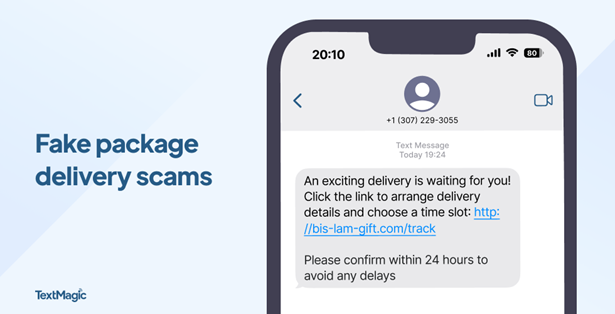
Package delivery alerts

Package delivery alerts are the most common text scam. They often impersonate trusted delivery services like UPS, FedEx, and USPS. They claim there’s a delivery problem, then try to trick you into acting quickly by creating a sense of urgency. Because so many of us shop online and have packages delivered regularly, this is a scam that’s easy to fall for. Instead of clicking a link in a suspicious text, go directly to the delivery service’s website and enter your tracking number manually.

Tip: Messages like “Click now to avoid fees” are a red flag that you should make you think twice.

Screenshot of mobile phone screen displaying an example of a package delivery scam.
Photo credit: TextMagic

Unpaid toll alerts

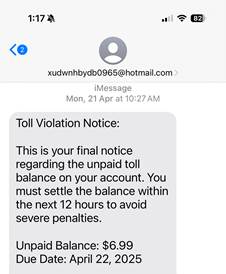
These scams claim you have an overdue toll charge and demand that you click a link to make a payment or you’ll be hit with late charges. Don’t do it! These scammers are trying to gather personal data like your driver’s license number and credit card information so they can steal from you. Remember, fake texts are often sent from phone numbers or email addresses you do not recognize, so never click on a link sent from an unknown number.

Mobile phone screen displaying example of a text scam involving a toll violation.

Bank account alerts

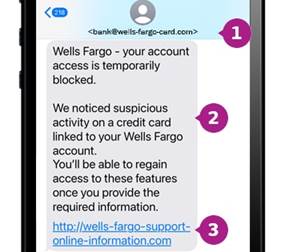
These scams look like they’re from your bank and claim there’s an issue with your funds.  You’re asked for sensitive information like bank logins and passwords, which can be used to drain your bank account. They direct you to click a fake link or call a phony number to resolve it.

Tip: Most major banks, including Chase, Wells Fargo and Bank of America, will never ask for personal or account information via text.

Mobile phone screen with an example of a text scam.
Photo credit: Wells Fargo

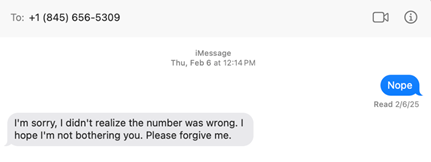
Wrong number texts

Wrong number texts are designed to seem like a legitimate accident. They start with a simple text like “Hi Mary, are we still on for Thursday?” and you respond “Sorry, wrong number.” The unknown person then tries to start up a friendly conversation, with the goal of establishing a connection and sometimes even cultivating a romantic relationship. It’s common for these cybercriminals to try and con you into a fraudulent investment like a cryptocurrency scam.

Text showing an example of a text scam involving a fake wrong number.

Task scams

Task scams are fake job opportunities. You get a text promising online work with lucrative pay and flexibility. The offer may entail fun tasks like getting paid to shop, but the purpose is to lure you into sharing personal information like your social security number, which can be used to steal your identity. As always, if something sounds too good to be true, it probably is.

Text showing an example of a text scam involving a fake job recruiter.

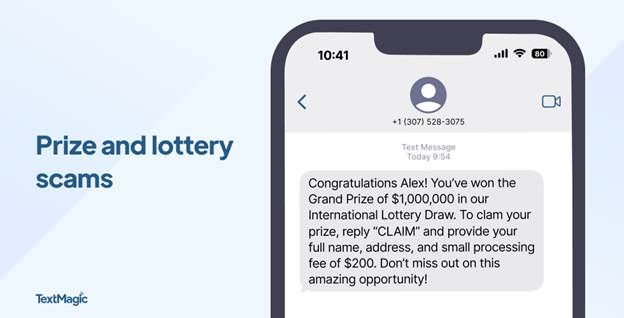
Prize or gift card scams

It’s easy to feel lucky if you get a text claiming you’ve won a prize, a gift card or other type of reward. Sadly, many people fall for this type of fraud. These messages appear to be from legitimate retailers like Amazon, Walmart or Target. They say things like “You’ve been selected for a $100 gift card!” and tell you to click a link to claim your prize. These scams often work because they generate a sense of excitement and urgency, but they’re just another way to trick you into clicking and entering personal or payment information. In reality, there’s no prize – just a phishing site or malware ready to steal your data.

Screenshot of mobile phone screen displaying an example of a fake prize win.
Photo credit: TextMagic

Mobile security checklist

Most of us use our phones for everything – banking, shopping, messaging, and storing personal information. That makes them a treasure trove of sensitive data and a high-value target for cyberthieves. Here are some tips to help you strengthen your mobile security against text scams and other types of fraud.

  • Don’t click: If you get a text from an unknown sender, do not click on any links. Reach out to the company using a confirmed phone number or website to check if it’s a legitimate message.
  • Don’t share: Never share any of your personal or financial information via text. Remember that if someone is asking you to do this, they’re most likely a scammer.
  • Fight the fear: Be wary about responding to a text that sounds urgent or threatening. Scammers love to take advantage by creating a sense of fear.
  • Stay updated: By keeping your phone’s software up to date, you’ll always have the latest security patches. This is an important tool for protecting against viruses and other malware.
  • Stay vigilant: If something seems too good to be true, it likely is. You probably haven’t won that latest iPhone, especially if you don’t remember entering a contest. Always take a moment to think critically before acting.
  • Use strong passwords: Long, complex and unique passwords are a cornerstone of mobile security. Webroot solutions include password managers that help you stay safe while simplifying your life.
  • Enable two-factor authentication (2FA): Use two-factor authentication on your accounts, especially for banking and email.
  • Scan regularly: Scan your device on a regular basis with trusted security software. Whether you’re using Android or iOS, Webroot Mobile Security offers automatic scanning of apps and updates, as well as real-time protection against phishing and malicious websites.
  • Use a VPN: Consider usinga VPN (Virtual Private Network) to protect your personal information when you’re on public Wi-Fi. Webroot Secure VPN provides safe browsing and online transactions for enhanced privacy and data security.

Text scams are a sneaky way for hackers to get access on your private data, but you don’t have to fall prey to them. By staying alert to the subtle signs of text scams and arming yourself with the security of Webroot, you can stay safe from the latest mobile threats. Browse, shop, and bank with confidence, knowing that your phone — and everything on it — is protected.

Introducing Text Scams Detection on Webroot Mobile Security for Android!

Stay one step ahead of scammers with Webroot’s latest feature: Text Scams Detection. Our advanced technology scans incoming text messages for suspicious links and fraudulent content, protecting you from phishing attempts and malicious schemes like fake delivery tracking links or fraudulent bank notifications. With real-time alerts and flagging, you can confidently navigate your digital world without the fear of falling victim to text scams. Download Webroot Mobile Security for Android today and experience peace of mind like never before!

Explore Webroot plans or Download Mobile Security for Android now from My Account.

Looking for more information and solutions?

Top Text Scams

The Strategy Behind Phishing Texts

How to Spot and Report Text Scams

Putting a Stop to Spam Texts

Protect Yourself from Text Scams

The Value of a VPN

Protecting Your Digital Life

The post Mobile security matters: Protecting your phone from text scams appeared first on Webroot Blog.

❌