

Normal view

Received — 27 January 2026 Microsoft Security Blog

Security strategies for safeguarding governmental data

26 January 2026 at 18:00

The Deputy CISO blog series is where Microsoft  Deputy Chief Information Security Officers (CISOs) share their thoughts on what is most important in their respective domains. In this series, you will get practical advice, tactics to start (and stop) deploying, forward-looking commentary on where the industry is going, and more. In this blog you will hear directly from Microsoft’s Deputy Chief Information Security Officer (CISO) for Government and Trust, Tim Langan, about our mindset concerning cyber defense for government spaces.

When taking on the challenge of cyber defense for government, you have to first understand the severity of the cyberthreat landscape. While private businesses are routine targets of a diverse set of threat actors, breaching government entities is frequently an objective for powerful state-sponsored threat actors. And the focus of these extremely well-funded groups goes beyond national governments; state and local governments are regularly targeted as well, often with high rates of success. This is a new status quo for everyone who touches government mission spaces, and it’s a reality that isn’t likely to go away any time soon.

The cyberthreats we face today will look and act differently next month and next year. As threats evolve, we must evolve to face them. In order to meet threat actors where they are today and to best plan for what they will be capable of in the future, Microsoft is taking a comprehensive look at how we approach cyberthreats across our entire landscape. In the months since joining Microsoft as Deputy CISO for Government and Trust, countering this type of persistent, advanced cyberthreat in the government space has been my focus. In real world terms, this means not only examining every detection, every alert, and every security tool with a critical eye, but also looking at how we fundamentally approach cyber health, security practices, and organizational partnerships, starting from the ground up.

The nature of the cyberthreats we face

Threat actors and nation-state actors from every region are increasingly targeting cloud assets with greater sophistication and persistence. In response, we are strongly emphasizing the shift from reactive to more proactive cyber defense measures. This strategy, known as “defend forward,” where Microsoft actively seeks out and mitigates cyberthreats, promotes continual identification and response before cyberthreats can impact Microsoft or our customers. Through Microsoft’s Cybersecurity Governance Council model, we can promote deep integration between the teams with greatest visibility into emergent cyberthreats and the leaders accountable for delivering secure outcomes across Microsoft.  

Another critical component of getting ahead of threats is a continual commitment to open communication with customers, government partners, and even industry counterparts when it comes to cyberthreats. This helps us enhance the security of the global computing ecosystem as a whole. This approach—proactive, collaborative, and transparent—is crucial to remaining ahead of sophisticated, evolving cyberthreats. That also means we need to work together consistently within Microsoft to ensure each one of us is making security part of how we work every day.

As my office expands its engagements with the government, we are committed to listening to our customers’ security needs, increasing our opportunities to share threat information, and hearing their security priorities and challenges first-hand. Internally, because we’ve increased focus on partnerships, we can communicate security perspectives directly into engineering prioritization and planning cycles. This also allows us to more rapidly share cyberthreat information and actions. Every time we learn something new through threat detection and response in one arena, the combination of solutions and tactics we used to counter that cyberthreat can be more readily applied for everyone.

Accelerating secure solutions

As Deputy CISO for Government and Trust, I have the opportunity to be an evangelist for cybersecurity as an accelerator for our government customers. Improving our internal security practices through programs like the Secure Future Initiative means applying security principles consistently across all domains, including high compliance scenarios like United States Federal and Defense sectors. The idea of “secure by design” means integrating security and compliance elements into our development process. Concepts like “paved paths,” where cybersecurity is embedded into established development pathways, also streamline the development process and incentivize engineers to adopt security best practices. When we think about security and compliance as “built-in” versus “bolt-on,” we create the potential of meeting government security and regulatory requirements much earlier in the process, meaning we have opportunities to securely accelerate delivery of products, tooling, and protections to government customers of all sizes. 

The unique perspective of the Cybersecurity Governance Council  

Prior to coming to Microsoft, I was responsible for the FBI’s Criminal, Cyber, Crisis Response and International Operations divisions, along with Victim Services. Even as my role has changed, I understand that the mission and key elements for strong cyber defense remain the same. Cybersecurity is the ultimate team sport, and as a Deputy CISO, I’m uniquely positioned with my fellow Deputy CISOs to share information and research, keeping the lines of communication open around the clock. Collaboration and transparency in this way are pillars of Microsoft’s cybersecurity mission to ensure a comprehensive defense against cyberthreats, and really they’re also critical to establishing a basis of trust with our customers. In 2024, Microsoft Chief Executive Officer Satya Nadella wrote “We recognize that trust is earned, not given. And we remain committed to earning trust every day, spanning cybersecurity, trustworthy AI, privacy, and digital safety.”1 These words are a North Star guiding the ways we think about delivering security and innovation to our government partners, and above all, in supporting our customers in their security journeys.

Microsoft
Deputy CISOs

To hear more from Microsoft Deputy CISOs, check out the OCISO blog series:

To stay on top of important security industry updates, explore resources specifically designed for CISOs, and learn best practices for improving your organization’s security posture, join the Microsoft CISO Digest distribution list.

Man with smile on face working with laptop

Learn more

To hear more from Microsoft Deputy CISOs, check out the OCISO blog series. To stay on top of important security industry updates, explore resources specifically designed for CISOs, and learn best practices for improving your organization’s security posture, join the Microsoft CISO Digest distribution list.

Learn more about the Microsoft Secure Future Initiative.

To learn more about Microsoft Security solutions, visit our website. Bookmark the Security blog to keep up with our expert coverage on security matters. Also, follow us on LinkedIn (Microsoft Security) and X (@MSFTSecurity) for the latest news and updates on cybersecurity.


1Microsoft 2024 Annual Report

The post Security strategies for safeguarding governmental data appeared first on Microsoft Security Blog.
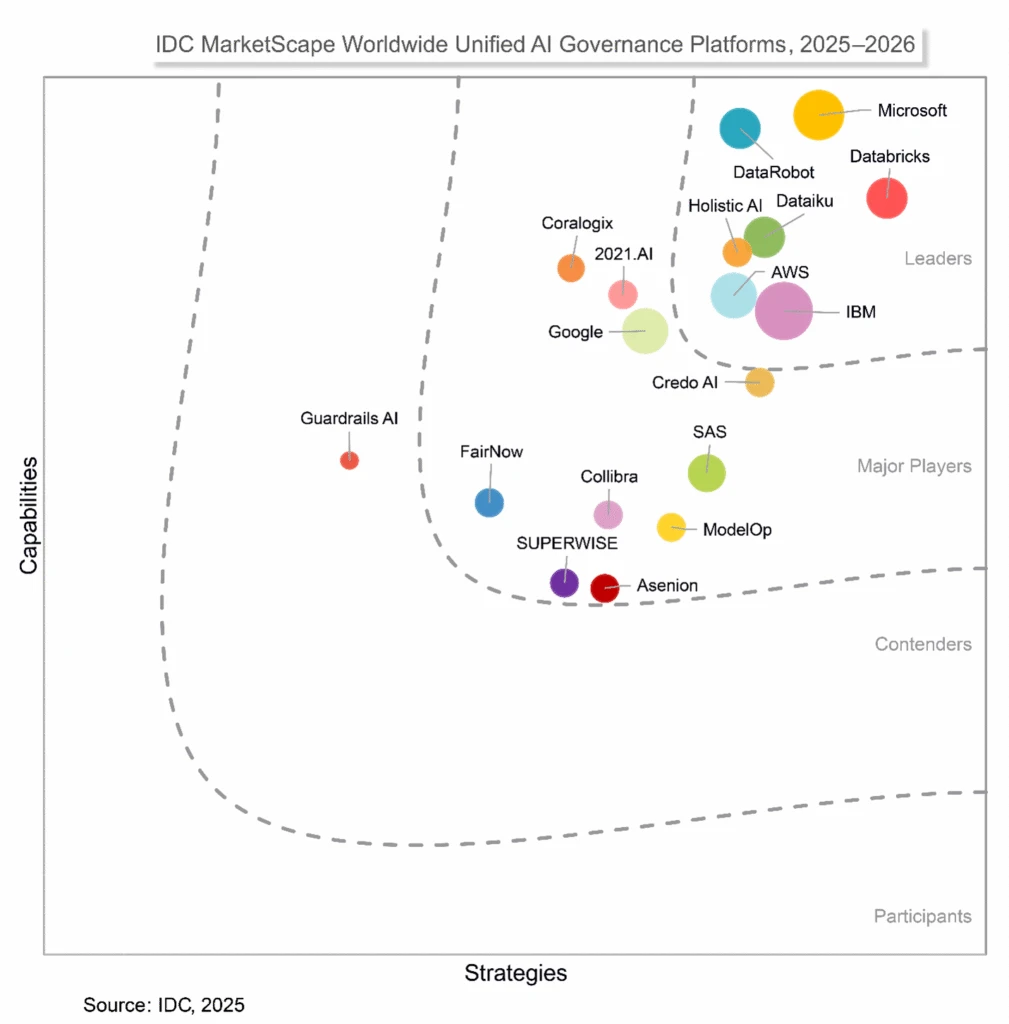
Microsoft named a Leader in IDC MarketScape for Unified AI Governance Platforms

As organizations rapidly embrace generative and agentic AI, ensuring robust, unified governance has never been more critical. That’s why Microsoft is honored to be named a Leader in the 2025-2026 IDC MarketScape for Worldwide Unified AI Governance Platforms (Vendor Assessment (#US53514825, December 2025). We believe this recognition highlights our commitment to making AI innovation safe, responsible, and enterprise-ready—so you can move fast without compromising trust or compliance.

A graphic showing Microsoft's position in the Leaders section of the IDC report.
Figure 1. IDC MarketScape vendor analysis model is designed to provide an overview of the competitive fitness of technology and suppliers in a given market. The research methodology utilizes a rigorous scoring methodology based on both qualitative and quantitative criteria that results in a single graphical illustration of each supplier’s position within a given market. The Capabilities score measures supplier product, go-to-market and business execution in the short term. The Strategy score measures alignment of supplier strategies with customer requirements in a three- to five-year timeframe. Supplier market share is represented by the size of the icons.

The urgency for a unified AI governance strategy is being driven by stricter regulatory demands, the sheer complexity of managing AI systems across multiple AI platforms and multicloud and hybrid environments, and leadership concerns for risk related to negative brand impact. Centralized, end-to-end governance platforms help organizations reduce compliance bottlenecks, lower operational risks, and turn governance into a strategic driver for responsible AI innovation. In today’s landscape, unified AI governance is not just a compliance obligation—it is critical infrastructure for trust, transparency, and sustainable business transformation.

Our own approach to AI is anchored to Microsoft’s Responsible AI standard, backed by a dedicated Office of Responsible AI. Drawing from our internal experience in building, securing, and governing AI systems, we translate these learnings directly into our AI management tools and security platform. As a result, customers benefit from features such as transparency notes, fairness analysis, explainability tools, safety guardrails, regulatory compliance assessments, agent identity, data security, vulnerability identification, and protection against cyberthreats like prompt-injection attacks. These tools enable them to develop, secure, and govern AI that aligns with ethical principles and is built to help support compliance with regulatory requirements. By integrating these capabilities, we empower organizations to make ethical decisions and safeguard their business processes throughout the entire AI lifecycle.

Microsoft’s AI Governance capabilities aim to provide integrated and centralized control for observability, management, and security across IT, developer, and security teams, ensuring integrated governance within their existing tools. Microsoft Foundry acts as our main control point for model development, evaluation, deployment, and monitoring, featuring a curated model catalog, machine learning oeprations, robust evaluation, and embedded content safety guardrails. Microsoft Agent 365, which was not yet available at the time of the IDC publication, provides a centralized control plane for IT, helping teams confidently deploy, manage, and secure their agentic AI published through Microsoft 365 Copilot, Microsoft Copilot Studio, and Microsoft Foundry.

Deeply embedded security systems are integral to Microsoft’s AI governance solution. Integrations with Microsoft Purview provide real-time data security, compliance, and governance tools, while Microsoft Entra provides agent identity and controls to manage agent sprawl and prevent unauthorized access to confidential resources. Microsoft Defender offers AI-specific posture management, threat detection, and runtime protection. Microsoft Purview Compliance Manager automates adherence to more than 100 regulatory frameworks. Granular audit logging and automated documentation bolster regulatory and forensic capabilities, enabling organizations in regulated industries to innovate with AI while maintaining oversight, secure collaboration, and consistent policy enforcement.

Guidance for security and governance leaders and CISOs

To empower organizations in advancing their AI transformation initiatives, it is crucial to focus on the following priorities for establishing a secure, well-governed, and scalable AI framework. The guidance below provides Microsoft’s recommendations for fulfilling these best practices:

CISO guidanceWhat it meansHow Microsoft delivers
Adopt a unified, end‑to‑end governance platformEstablish a comprehensive, integrated governance system covering traditional machine learning, generative AI, and agentic AI. Ensure unified oversight from development through deployment and monitoring.Microsoft enables observability and governance at every layer across IT, developer, and security teams to provide an integrated and cohesive governance platform that enables teams to play their part from within the tools they use. Microsoft Foundry acts as the developer control plane, connecting model development, evaluation, security controls, and continuous monitoring. Microsoft Agent 365 is the control plane for IT, enabling discovery, security, deployment, and observability for agentic AI in the enterprise. Microsoft Purview, Entra, and Defender integrate to deliver consistent full-stack governance across data, identity, threat protection, and compliance.
Industry‑leading responsible AI infrastructureImplement responsible AI practices as a foundational part of engineering and operations, with transparency and fairness built in.Microsoft embeds its Responsible AI Standards into our engineering processes, supported by the Office of Responsible AI. Automatic generation of model cards and built-in fairness mechanisms set Microsoft apart as a strategic differentiator, pairing technical controls with mature governance processes. Microsoft’s Responsible AI Transparency Report provides visibility to how we develop and deploy AI models and systems responsibility and provides a model for customers to emulate our best practices.
Advanced security and real‑time protectionProvide robust, real-time defense against emerging AI security threats, especially for regulated industries.Microsoft’s platform features real-time jailbreak detection, encrypted agent-to-agent communication, tamper-evident audit logs for model and agent actions, and deep integration with Defender to provide AI-specific threat detection, security posture management, and automated incident response capabilities. These capabilities are especially critical for regulated sectors.
Automated compliance at scaleAutomate compliance processes, enable policy enforcement throughout the AI lifecycle, and support audit readiness across hybrid and multicloud environments.Microsoft Purview streamlines compliance adherence for regulatory requirements and provides comprehensive support for hybrid and multicloud deployments—giving customers repeatable and auditable governance processes.

We believe we are differentiated in the AI governance space by delivering a unified, end-to-end platform that embeds responsible AI principles and robust security at every layer—from agents and applications to underlying infrastructure. Through native integration of Microsoft Foundry, Microsoft Agent 365, Purview, Entra, and Defender, organizations benefit from centralized oversight and observability across the layers of the organization with consistent protection and operationalized compliance across the AI lifecycle. Our comprehensive approach removes disparate and disconnected tooling, enabling organizations to build trustworthy, transparent, and secure AI solutions that can start secure and stay secure. We believe this approach uniquely differentiates Microsoft as a leader in operationalizing responsible, secure, and auditable AI at scale.

Strengthen your security strategy with Microsoft AI governance solutions

Agentic and generative AI are reshaping business processes, creating a new frontier for security and governance. Organizations that act early and prioritize governance best practices—unified governance platforms, build-in responsible AI tooling, and integrated security—will be best positioned to innovate confidently and maintain trust.

Microsoft approaches AI governance with a commitment to embedding responsible practices and robust security at every layer of the AI ecosystem. Our AI governance and security solutions empower customers with built-in transparency, fairness, and compliance tools throughout engineering and operations. We believe this approach allows organizations to benefit from centralized oversight, enforce policies consistently across the entire AI lifecycle, and achieve audit readiness—even in the rapidly changing landscape of generative and agentic AI.

Explore more

To learn more about Microsoft Security solutions, visit our website. Bookmark the Security blog to keep up with our expert coverage on security matters. Also, follow us on LinkedIn (Microsoft Security) and X (@MSFTSecurity) for the latest news and updates on cybersecurity.

The post Microsoft named a Leader in IDC MarketScape for Unified AI Governance Platforms appeared first on Microsoft Security Blog.

❌