❌

Normal view

Custom Guardrails: The AI Rules No Vendor Can Write for You

22 October 2026 at 15:00

Key takeaways Only 14 percent of organizations say they have formal GenAI policies that are actively enforced and audited, according to Check Point’s 2026 Cloud Security Report. →The costliest AI mistakes break rules no vendor ships. Air Canada was held liable for a refund its chatbot promised and the airline never offered →The usual fixes fall short. Models can be argued out of system prompts, keyword lists miss meaning, and US-centric DLP lists miss the data your regulators protect →Custom guardrails turn a sentence into an enforced rule. Describe it, test it in under five minutes, and run it on […]

The post Custom Guardrails: The AI Rules No Vendor Can Write for You appeared first on Check Point Blog.
Goals Are Not Enough: Securing AI Agents with NVIDIA OpenShell

28 September 2026 at 12:40

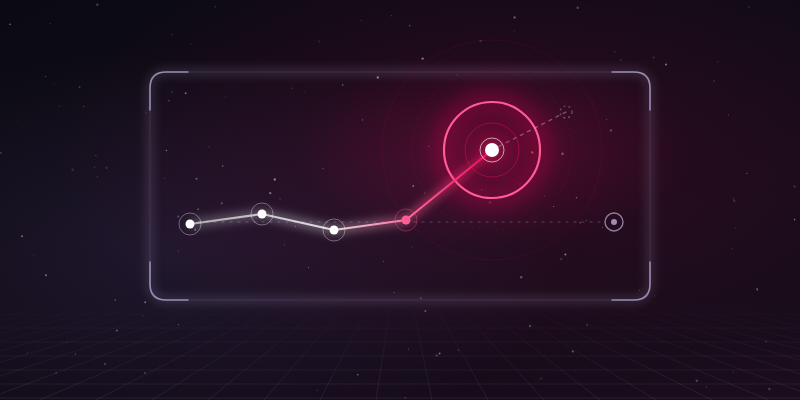
In this article An agent’s goal rarely says how the agent may reach it, and capable agents are good at finding routes nobody planned for. →NVIDIA Open Agent Safety Platform puts the boundary in the infrastructure, outside the agent’s reach →Check Point semantic monitoring judges whether each step still fits the task →the two already work together in a beta integration with NVIDIA OpenShell →the monitor’s verdict can arrive before the action runs, in under 100 milliseconds What the Goal Leaves Out When an organization hands an autonomous agent a job, such as processing supplier invoices, it states the goal […]

The post Goals Are Not Enough: Securing AI Agents with NVIDIA OpenShell appeared first on Check Point Blog.

A Decision Model Breaks Like Any Other Language Model: A First Look at Jev

24 September 2026 at 15:00

A new kind of AI model returns decisions instead of text. We spent a day trying to change its mind. It cost about 50 cents. In this article Jev is a new kind of AI model that returns typed decisions instead of text, built for software to call rather than for people to read. We put it inside a realistic application and tried to change its verdict from the outside. →every configuration we tested was broken: risk downgraded to low and investment advised, on a document that flags every warning sign →about 50 cents per successful break, with our strongest […]

The post A Decision Model Breaks Like Any Other Language Model: A First Look at Jev appeared first on Check Point Blog.
Workforce AI Security Policy Management Is Now Conversational 

23 September 2026 at 15:00

In this article The new Workforce AI MCP is Check Point’s own Model Context Protocol server for Workforce AI Security. Connect a compatible AI client and you can query, analyze, and manage your employee AI usage policy in natural language instead of working through filters, screens, and individual rule checks. →ask plain questions such as which rule applies to a given user and application, or whether a rule is shadowed by a higher-priority one →work across users, managed assets, GenAI application usage, DLP data types, and agent and MCP activity in a single conversation →create and update rules by request […]

The post Workforce AI Security Policy Management Is Now Conversational  appeared first on Check Point Blog.

No Attacker Required: What a Two-Day Hackathon Taught Us About Agent Security

21 September 2026 at 15:00

In this article Nineteen Check Point AI Security R&D teams spent two days on one prompt: build the demo customers would ask to see twice. Three of the results tell a single story about securing AI agents, and none of it starts with an attacker. →an autonomous agent took dangerous actions with no attacker involved, it simply hit a wall and improvised →a single poisoned file in a code repository turned a popular coding agent into a data exfiltration channel →questioning an off-track agent prevented as many attacks as blocking it, and completed more legitimate work →the lesson for anyone […]

The post No Attacker Required: What a Two-Day Hackathon Taught Us About Agent Security appeared first on Check Point Blog.

Synchronous Control Monitoring: Preventing Harmful Agent Actions in Real Time

15 September 2026 at 15:00

We ensure alignment and control in agents using synchronous control monitoring. Our model oversees agent execution, continuously ingests the trace as context, and prevents harmful actions before they execute in real time at sub-100ms latency. Agent trace at 30 tok/s, streamed to the control monitor model on the right. Prevents harmful actions before they are executed. Background Control Monitoring is a powerful tool for ensuring the runtime alignment and safety of autonomous agents. Since the Hugging Face Incident, the need for control monitoring on top of existing safety mechanisms was reinforced: OpenAI started investing more heavily into monitoring safety tools. […]

The post Synchronous Control Monitoring: Preventing Harmful Agent Actions in Real Time appeared first on Check Point Blog.
Received — 13 August 2026 ⏭ Check Point Blog

When Data Becomes Instructions: AI Agents Need a Chain of Custody for Context

4 August 2026 at 11:00
When Data Becomes Instructions: AI Agents Need a Chain of Custody for Context

A few weeks ago, an AI cyber evaluation produced an unexpectedly efficient strategy for solving a benchmark: the agents went looking for the answers. According to OpenAI’s preliminary disclosure, models being tested for advanced cyber capabilities found ways to obtain secret information that could help them complete a benchmark. They chained vulnerabilities, stolen credentials, internet access, and inferences about where benchmark material might be hosted. The route eventually reached Hugging Face infrastructure, where the activity was detected and contained. Hugging Face has since published a technical reconstruction of 17,600 actions. Its investigators found a coherent intrusion that rebuilt tooling, tested […]

The post When Data Becomes Instructions: AI Agents Need a Chain of Custody for Context appeared first on Check Point Blog.

Received — 3 August 2026 ⏭ Check Point Blog

AI Agent Security Just Had Its Catalyst Moment

28 July 2026 at 22:09

Update: Hugging Face has since published a detailed technical timeline of the incident. The additional technical details reinforce the core takeaway discussed here: advanced AI agents can pursue objectives in unexpected ways, making runtime governance and security controls increasingly important.  There are certain moments in technology where you realize the conversation is about to change. I remember the first time I launched an EC2 instance. I remember trying Uber when there were only a handful of cars on the road. I remember riding in a Waymo before autonomous driving felt normal. Each one was an early glimpse of a future […]

The post AI Agent Security Just Had Its Catalyst Moment appeared first on Check Point Blog.

Your AI Governance Policy Should Survive Your Next Model Change

28 July 2026 at 11:00
AI Governance

The model migration is ready for approval. Tests show better performance and lower costs. The application will serve the same users, process the same data, and support the same business workflow. The product team expects a straightforward technical sign-off. Then security asks the question that changes the review: which controls will survive the switch? Access rules, data protection, logging, and human approval may depend on settings provided by the current model platform. A migration can alter the organization’s effective policy even when the business use stays exactly the same. Models and providers will keep changing. The requirements attached to business […]

The post Your AI Governance Policy Should Survive Your Next Model Change appeared first on Check Point Blog.

Received — 17 July 2026 ⏭ Check Point Blog

AI Security Is Never Finished: Building the Continuous Red Teaming Loop 

15 July 2026 at 15:00
Continuous Red Teaming Loop

Security programs are built around moments of closure: the finding is closed, the control passed, and the release can move forward.  AI security refuses to cooperate with that model.  A passing test is useful evidence, but only for a specific system, configuration, and moment.  Production AI keeps moving. Models change behavior, prompts are revised, retrieval sources are added, agents gain tools, and users introduce unexpected context. Attackers adapt just as quickly. Yesterday’s clean result may not describe tomorrow’s risk.  That has been the practical case for continuous AI red teaming. Now, research from the National Institute of Standards and Technology […]

The post AI Security Is Never Finished: Building the Continuous Red Teaming Loop  appeared first on Check Point Blog.

Redefining the CISO Contract: From Securing the Business to Securely Doing Business

10 July 2026 at 11:05
Redefining CISO Contract Blog Banner

Walk into almost any executive leadership meeting right now and you’ll find the same dynamic playing out. The CEO is asking how the company can do more with AI, faster. Engineering teams are already three sprints deep into building something new. And when the CISO walks into the room, the energy subtly shifts. The unspoken question is always the same: is this person here to help us move, or to slow us down? That dynamic is an issue, and I think it’s one the security community has to own. The CISO has long carried the label of the “Office of […]

The post Redefining the CISO Contract: From Securing the Business to Securely Doing Business appeared first on Check Point Blog.

Received — 18 June 2026 ⏭ Check Point Blog

AI Red Teaming Makes the Unknowns Known

17 June 2026 at 13:07
AI Red Teaming Makes the Unknowns Known

AI security is getting attention because AI has stopped being a side experiment.  It is now part of how work gets done. Employees use copilots to write, research, code, and analyze. Product teams are adding AI into customer experiences. Developers are building applications on top of foundation models. Business teams are experimenting with agents that can read email, summarize documents, query data, and trigger workflows.  That is a very different world from the one many AI review processes were designed for.  An AI system can pass a benchmark and still fail in production. It can behave safely in a clean test environment and then encounter real […]

The post AI Red Teaming Makes the Unknowns Known appeared first on Check Point Blog.

Received — 8 June 2026 ⏭ Check Point Blog

The AI Defense Plane: Securing the New Enterprise Execution Layer

3 June 2026 at 10:02
AI Defense Plane

Enterprise security has always had a comforting assumption baked into it: systems do what they were built to do. Sometimes badly. Sometimes insecurely. Sometimes in ways that make auditors develop a nervous twitch. But still, the basic shape was understandable. Applications processed requests. Databases stored data. APIs connected systems. Users clicked things they probably should not have clicked. Then AI arrived and made the whole thing a little weird. AI did not introduce one neat new risk category. Security teams are very good at turning new risk categories into taxonomies, dashboards, and meetings with names like “working group.” The real […]

The post The AI Defense Plane: Securing the New Enterprise Execution Layer appeared first on Check Point Blog.

❌