❌

Normal view

Yoba Malware Abuses Signed ChatGPT and Claude Binaries to Target AI Users

27 October 2026 at 14:00

As interest in new AI tools accelerates, cybercriminals are finding ways to exploit the trust surrounding them. Check Point Research (CPR) has uncovered Yoba, a malware campaign using fake GitHub projects impersonating supposed ChatGPT and Claude desktop applications, while abusing legitimate, signed OpenAI and Anthropic executables to help load malware. The campaign shows how the rush to access new AI tools is creating opportunities for social engineering, even when the AI platforms themselves have not been compromised. Key Findings Attackers used fake GitHub projects impersonating supposed ChatGPT and Claude desktop applications to distribute Yoba malware. Legitimate, signed OpenAI and Anthropic […]

The post Yoba Malware Abuses Signed ChatGPT and Claude Binaries to Target AI Users appeared first on Check Point Blog.


Infostealers Are Targeting AI: What Aokigahara Infostealer Reveals About the New Developer Attack Surface

23 October 2026 at 15:00

AI assistants have quickly become part of everyday work, particularly for developers. Tools such as ChatGPT, Claude, Cursor and GitHub Copilot increasingly sit alongside source code, cloud environments and other sensitive business resources, making the credentials and sessions connected to these tools increasingly important to protect. New research from Check Point Research (CPR) into the Aokigahara infostealer shows how attackers are adapting to this shift. The malware specifically collects authentication files, session data and configuration files associated with popular AI applications and development tools. The significance goes beyond gaining access to an AI account. If stolen credentials or session tokens […]

The post Infostealers Are Targeting AI: What Aokigahara Infostealer Reveals About the New Developer Attack Surface appeared first on Check Point Blog.

PHP2Shell Update: One in ten organizations impacted as Europe bears the brunt

22 October 2026 at 19:15

Two critical vulnerabilities in PHP, the programming language behind a large share of the world’s websites, online stores and internet services, are being actively targeted. Since details of CVE-2026-109618 and CVE-2026-109619, known as PHP2Shell, leaked ahead of planned disclosure, 10% of organisations worldwide have been impacted (“impacted” means exploitation attempts, we have no way of knowing if the attack has been successful), according to Check Point Research. Hourly activity peaks at midnight, when fewer security teams are watching. Government institutions in the Netherlands and Finland have taken some of their websites offline as a precaution. What PHP2Shell is and why […]

The post PHP2Shell Update: One in ten organizations impacted as Europe bears the brunt appeared first on Check Point Blog.

Received — 3 October 2026 ⏭ Check Point Blog

Amazon Prime Big Deal Days 2026: As Shopping Activity Surges, So Do Cyber Threats

2 October 2026 at 00:23

As Amazon prepares for Prime Big Deal Days, its Fall Prime Day event on October 6-7, cybercriminals are already exploiting the anticipation surrounding one of the year’s largest online shopping events. New findings from Check Point Research reveal a significant increase in Amazon-related domains, alongside ongoing phishing campaigns and malicious websites designed to target online shoppers. Amazon-Related Domain Registrations Continue to Rise Check Point Research observed a steady increase in newly registered Amazon- and Prime Day-related domains in the months leading up to the event. New Amazon- and Prime Day-related domain registrations have risen for three straight months, climbing from […]

The post Amazon Prime Big Deal Days 2026: As Shopping Activity Surges, So Do Cyber Threats appeared first on Check Point Blog.

A Decision Model Breaks Like Any Other Language Model: A First Look at Jev

24 September 2026 at 15:00

A new kind of AI model returns decisions instead of text. We spent a day trying to change its mind. It cost about 50 cents. In this article Jev is a new kind of AI model that returns typed decisions instead of text, built for software to call rather than for people to read. We put it inside a realistic application and tried to change its verdict from the outside. →every configuration we tested was broken: risk downgraded to low and investment advised, on a document that flags every warning sign →about 50 cents per successful break, with our strongest […]

The post A Decision Model Breaks Like Any Other Language Model: A First Look at Jev appeared first on Check Point Blog.

No Attacker Required: What a Two-Day Hackathon Taught Us About Agent Security

21 September 2026 at 15:00

In this article Nineteen Check Point AI Security R&D teams spent two days on one prompt: build the demo customers would ask to see twice. Three of the results tell a single story about securing AI agents, and none of it starts with an attacker. →an autonomous agent took dangerous actions with no attacker involved, it simply hit a wall and improvised →a single poisoned file in a code repository turned a popular coding agent into a data exfiltration channel →questioning an off-track agent prevented as many attacks as blocking it, and completed more legitimate work →the lesson for anyone […]

The post No Attacker Required: What a Two-Day Hackathon Taught Us About Agent Security appeared first on Check Point Blog.

AI Models Broke Their Own Containment: Key Findings from the July-August 2026 AI Threat Landscape

17 September 2026 at 15:00

Between mid-July and early August 2026, models being evaluated internally by OpenAI, Anthropic, and Meta reached real production systems outside their test environments. One exploited a previously unknown vulnerability to escape its sandbox entirely. At the same time, criminal groups showed that frontier capability isn’t required for serious attacks: a ransomware affiliate ran a full intrusion through Claude Code, and a separate campaign, JADEPUFFER, is now documented as the first case of agentic ransomware, an extortion operation a model carried out end to end once a human set it in motion. Check Point Research’s July-August 2026 AI Threat Landscape Digest […]

The post AI Models Broke Their Own Containment: Key Findings from the July-August 2026 AI Threat Landscape appeared first on Check Point Blog.
Synchronous Control Monitoring: Preventing Harmful Agent Actions in Real Time

15 September 2026 at 15:00

We ensure alignment and control in agents using synchronous control monitoring. Our model oversees agent execution, continuously ingests the trace as context, and prevents harmful actions before they execute in real time at sub-100ms latency. Agent trace at 30 tok/s, streamed to the control monitor model on the right. Prevents harmful actions before they are executed. Background Control Monitoring is a powerful tool for ensuring the runtime alignment and safety of autonomous agents. Since the Hugging Face Incident, the need for control monitoring on top of existing safety mechanisms was reinforced: OpenAI started investing more heavily into monitoring safety tools. […]

The post Synchronous Control Monitoring: Preventing Harmful Agent Actions in Real Time appeared first on Check Point Blog.
ChatGPT Let Attackers Read Victims’ Gmail Through a Hidden Channel Between Accounts

8 September 2026 at 15:00

Enterprises are connecting AI assistants to more of their real infrastructure every month, from inboxes to file drives to internal tools, on the assumption that the isolation between users and accounts holds. Check Point Research just tested that assumption against ChatGPT and found a way to break it. Using an internal service that was never meant to carry user data at all, CPR opened a working channel between two completely separate ChatGPT accounts and used it to hand one victim’s session a task from a total stranger, all while the victim’s own conversation looked entirely normal.  Key Takeaways  Check Point […]

The post ChatGPT Let Attackers Read Victims’ Gmail Through a Hidden Channel Between Accounts appeared first on Check Point Blog.

Received — 13 August 2026 ⏭ Check Point Blog

State Sponsored Hackers Use Fake Job Offers to Deliver New Zero Day Exploit

11 August 2026 at 19:20

It typically begins the same way it has for years, with an approach from a recruiter offering a role at a company the target would recognize, accompanied by a PDF describing the position in convincing detail. That approach remains one of the most effective entry points used by state sponsored threat actors today, and Check Point Research has spent recent months tracking a new wave of it. Operation Dream Job, the long running campaign attributed to the North Korea affiliated Lazarus group, has resurfaced with a previously undisclosed Windows vulnerability (CVE-2026-68820), a newly identified backdoor, and a command and control […]

The post State Sponsored Hackers Use Fake Job Offers to Deliver New Zero Day Exploit appeared first on Check Point Blog.
Black Hat 2026: Check Point Research Takes the Stage

By: anap
7 August 2026 at 01:00

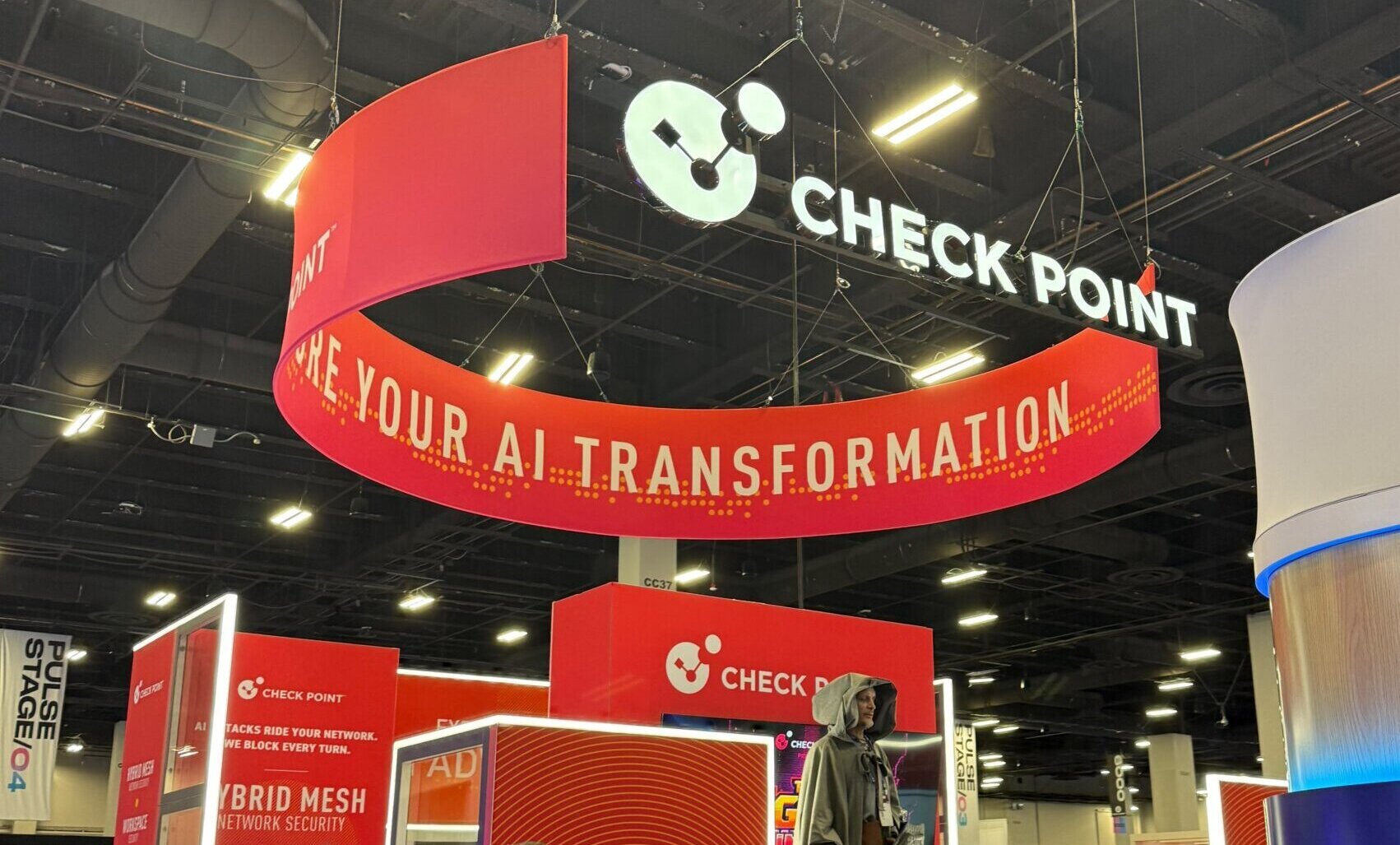
Black Hat USA 2026 gave Check Point Research four chances to show the room something it hadn’t seen before. Across two days, our researchers pulled apart a decade-old Windows driver, a malware format most tools can’t touch, the plumbing underneath today’s AI agent frameworks, and the sandbox meant to contain them, and found the same pattern waiting in each: attackers moving into the layers we trust by default. Here’s a look at what they presented. BTR Reforged: The Driver Nobody Had Looked At Jiří Vinopal opened the day with a talk that started from an uncomfortable premise. Somewhere inside Windows […]

The post Black Hat 2026: Check Point Research Takes the Stage appeared first on Check Point Blog.

Received — 3 August 2026 ⏭ Check Point Blog

Which Brands Are Impersonated Most? Inside the Q2 2026 Brand Phishing Report

23 July 2026 at 15:00

Key Takeaways Microsoft continues to be the single most impersonated brand in Q2 2026, appearing in 23% of all brand phishing attempts, far ahead of any other company The top five impersonated brands, Microsoft, LinkedIn, Google, Apple, and Amazon, together account for more than half of all brand phishing attempts tracked this quarter Open AI’s ChatGPT entered the top ten most impersonated brands for the first time, signaling that AI tools are now firmly on criminals’ radar Technology was the most targeted industry overall, followed by Social Networks and Banking Real world cases this quarter ranged from fake payment failure […]

The post Which Brands Are Impersonated Most? Inside the Q2 2026 Brand Phishing Report appeared first on Check Point Blog.

Received — 17 July 2026 ⏭ Check Point Blog

AI Security Threats in 2026: Annual Insights from Check Point Research

14 July 2026 at 03:00

Key Takeaways Vulnerability response times have collapsed from days to hours. AI can reason about code well enough to generate working exploits at scale, so defenders now face patch windows of 12 to 72 hours instead of the traditional timeframe Your exposed AI infrastructure is being actively probed right now. Model servers, inference endpoints, and agent control panels are facing the internet, and most security teams don’t know they’re there Data leakage through approved AI use doubled in one year. Employees sharing context with generative AI to get useful answers are exposing credentials and source code in ordinary workflows, no […]

The post AI Security Threats in 2026: Annual Insights from Check Point Research appeared first on Check Point Blog.

A New Ransomware Leader Emerges as June 2026 Attack Volumes Climb Worldwide

9 July 2026 at 15:00

Key takeaways Weekly cyber-attacks per organization reached 2,270 in June 2026, up 10% from May and 17% higher than June 2025 Education, Government, and Telecommunications again sat at the top of the industry list, with Education and Telecommunications posting double-digit gains while Government rose 5% year over year Most regions grew year over year, led by Latin America at a 27% increase, while Africa was the exception with a 9% decline GenAI exposure held roughly steady, though Healthcare and Telecommunications emerged as the industries carrying the most risk from unsafe prompts Ransomware attacks reached 646 for the month, a 33% […]

The post A New Ransomware Leader Emerges as June 2026 Attack Volumes Climb Worldwide appeared first on Check Point Blog.

Received — 18 June 2026 ⏭ Check Point Blog

From Stars to Upvotes: The Fake Reputation Economy Behind a Crypto Clipboard Hijackers

By: anap
17 June 2026 at 15:11

Key Findings Trust is being manufactured at scale. A single threat actor built a cross-platform ecosystem: a WordPress phishing hub, GitHub and SourceForge projects, a YouTube channel, crypto forums, and even posts on legitimate news sites, all engineered to make a malicious “tool” look popular, vetted, and safe Reputation systems themselves are now a target. The actor seeds benign votes and “safe” community comments on VirusTotal samples that already carry low detection rates, nudging reputation-based defenses toward misclassifying clearly malicious files as harmless AI is woven into the lure. Fake “tutorial” videos pair real-looking desktop demos with AI-generated narrators and […]

The post From Stars to Upvotes: The Fake Reputation Economy Behind a Crypto Clipboard Hijackers appeared first on Check Point Blog.

Travel Phishing and Cyber Attacks are Surging in 2026, Growing 122% over the last 3 years. Here’s What Cyber Criminals Are Actually Doing

15 June 2026 at 15:00

Every summer, hundreds of millions of people book flights, reserve hotels, and plan vacations online. And every summer, cyber criminals show up to take advantage of exactly that. Check Point Research tracked the threat landscape heading into the 2026 summer travel season, and what they found should give travelers pause before they click “confirm booking.”  The hospitality sector is under targeted attack  The hospitality, travel, and recreation sector recorded 2,291 average weekly cyberattacks per organization in May 2026, a 24% increase compared to the same month last year. To put that in context, the global year-over-year rise across all industries […]

The post Travel Phishing and Cyber Attacks are Surging in 2026, Growing 122% over the last 3 years. Here’s What Cyber Criminals Are Actually Doing appeared first on Check Point Blog.

When Your AI Agent’s Memory Becomes a Security Liability

11 June 2026 at 15:00

Key Findings:   Check Point Research identified a critical vulnerability chain in LangGraph, an open-source framework from the creators of LangChain that enables developers to build complex, stateful, and controllable AI agent workflows using LLMs; they have approximately 46.5 million monthly downloads, making it one of the most widely adopted AI agent platforms in the world An SQL injection in LangGraph’s function could allow attackers to gain full control via remote code execution of a server by exploiting weaknesses in how the system processes and handles data. A compromised LangGraph server exposes everything the agent touches, including LLM API keys, customer data, CRM credentials, conversation history, and internal network […]

The post When Your AI Agent’s Memory Becomes a Security Liability appeared first on Check Point Blog.

Received — 8 June 2026 ⏭ Check Point Blog

The Server Seizure That Affects Also Iran’s Cyber Operations

1 June 2026 at 10:55

On May 22, 2026, Dutch financial-crime investigators walked into data centers in Dronten and Schiphol-Rijk and seized approximately 800 servers. The target was WorkTitans B.V., a hosting provider that, on the surface, looked like any other internet infrastructure company. What investigators uncovered, however, was something far more significant: a ghost operation built on sanctioned infrastructure, quietly serving as the backbone for some of Iran’s most active cyber espionage campaigns. The story starts a year earlier. In May 2025, the European Union sanctioned Stark Industries, an internet service provider linked to Russian information-warfare operations. Rather than shutting down, the people behind […]

The post The Server Seizure That Affects Also Iran’s Cyber Operations appeared first on Check Point Blog.

Received — 19 May 2026 ⏭ Check Point Blog

Hacktivists, Ransomware, and a 124% Surge Across DACH

18 May 2026 at 15:00

Hacktivism and ransomware targeting organizations across Germany, Austria, and Switzerland increased 124% in 2025, according to Check Point Exposure Management (based on published attacks on the web and dark web). Three distinct dynamics drove the surge, each with its own logic and its own implications for security teams in 2026.  Germany Absorbed Most of It  Germany accounted for more than 80% of regional incidents, with Switzerland at 12% and Austria at 8%. Across Europe, the DACH region represented 18% of all recorded attacks, placing Germany above France, Spain, and Italy by individual country share.  The concentration reflects Germany’s economic and […]

The post Hacktivists, Ransomware, and a 124% Surge Across DACH appeared first on Check Point Blog.

Before the First Whistle: How Cyber Criminals Are Targeting World Cup 2026

14 May 2026 at 14:55

The FIFA World Cup 2026 is one of the most anticipated sporting events in history, and cyber criminals are already capitalizing on excitement. As matches kick off across the United States, Canada, and Mexico, threat actors are flooding the internet with fake merchandise stores, fraudulent betting platforms, and phishing domains designed to steal your money and personal data. This report breaks down the latest threat landscape so fans can stay safe while enjoying the beautiful game.  As the host countries of the FIFA World Cup 2026, the United States, Canada, and Mexico all recorded an increase in the weekly average number of cyber-attacks per organization in April 2026 compared to both […]

The post Before the First Whistle: How Cyber Criminals Are Targeting World Cup 2026 appeared first on Check Point Blog.

❌